PERSPECTIVE: Cycling and Pedestrian Safety - A Progressive Movement

by Sean Alexander The majority of population within the United States utilizes automobiles for transportation.  Connecticut has the smallest percentage of people walking to work among states in the Northeast, and is one of two states with the smallest percentage of people who bicycle to work.  Although bicyclists account for less than 1% of all commuters, biking to work has increased by 60% in the last decade.CT perspective

In 2014, the Vulnerable User Bill took effect in CT and new legislation in 2016 seeks to increase fines for failure to yield.  These are stepping stones that are bringing the cyclists and pedestrians of Connecticut our deserved safety on the streets.

Although laws and bills like these are passed everyday, it is up to the authorities to enforce them.  Most importantly, it is the motorists and cyclist’s responsibility to see these rules are not just safety guidelines to follow when we see fit, but to proactively live by these rules.  When someone makes a mistake by causing a collision by speeding, forgetting to yield the right of way or disregarding a stop sign, this is no accident.  I’ve learned not to characterize such mistakes as accidents.

In 2011, my wife neaq1rly lost her life due to the carelessness and irresponsibility of a negligent driver who failed to obey the stop sign and also failed to avoid colliding with a cyclist.  My wife’s journey to this date has been exceedingly long and tortuously painful.  She has endured nearly 30 arduous surgeries and has been left with a body and mind crippled with pain and post traumatic stress.

Gaylord Rehabilitation Center is where Colleen began to rebuild her new life with her new scar stricken body.  Everyone has ups and downs during life’s journey, whether it bestows its appearance as emotionally or physically painful.  Colleen has said and will continue to say, “Everything is relative”, when someone complains of having a bad day and then realizing everything Colleen has endured.

Let me tell you, my wife has suffered an unfathomable amount of pain during this recovery process.

Jody Williams is a Nobel peace laureate and Vermont native whom Colleen and I have become friends with.  During an extreme low point in Colleen’s recovery at Gaylord’s, she recalled a quote of Jody’s, “Emotion without action is irrelevant”.  Colleen then used those enabling words and became a tool to build change starting at Gaylord’s Rehabilitation Center to q2organize a bike tour to raise money for their program.  Nearly 10 months later, the bike tour raised $12,000, which went toward purchasing four recumbent bicycles.

During the last several years, we have become cycling and safety advocates within our community.  Most recently, we joined the Board of Directors of Bike Walk CT and have become State Coordinators for the Ride of Silence.  Being tapped into these gateways of advocating for safety, our hearts and souls can feel some relief knowing we are providing ourselves as catalysts for change.

____________________________________________

Sean Alexander is a devoted husband, avid triathlete, shares the importance of laughter and works to make a positive impact in the world.   A graduate of Stetson University where he studied Marketing, he has seen first-hand what happens when drivers are careless on roadways, and has made it his passion to educate cyclists and motorists alike about mutual respect and safety.  Sean speaks about the role of care giving which encompasses nutrition, health and exercise and the importance to take care of oneself in order to care for others.

PERSPECTIVE commentaries by contributing writers appear each Sunday on Connecticut by the Numbers.

LAST WEEK: Highway Winter Maintenance Pay off?  Safety!


CT to Offer Digital Media Education to Create Employment Pathway

Connecticut’s push to strengthen its digital media workforce continues this summer, with the second year of the Digital Media CT (DMCT) summer training program, developed in partnership by the Connecticut Office of Film, Television & Digital Media and the University of Connecticut. The program is aimed at high school juniors and seniors, current college students, college graduates with majors in communications/film/television, veterans, and professionals who want to explore digital media. The four-week and two-week programs, which both begin on July 9, are designed for individuals with a demonstrated interest in digital media who want to develop the basic skills necessary to potentially seek work in the industry or augment their current skill set.

DMCT students will explore the industry’s many facets learning about media production for web, film, television, games, communications and marketing, and receive specialized skills and hands-on experience needed to pursue careers in the digital media industry. Tracks include 3D Animation, Game Design, Motion Graphics Design, Social Media Management and Web Design.brand

All DMCT classes will be hosted at the University of Connecticut Stamford Campus and taught by UConn's Digital Media & Design faculty and complemented with lectures from local/regional professionals and industry experts. This approach is designed to “provide students with the valuable and unique opportunity to build relationships with accomplished practitioners in respective fields.”

The training will be presented in classroom format and will provide a comprehensive introductory overview of the digital media industry, disciplines, and processes. Each of the various sections of the program will feature daily introductory seminars focused on digital art and technology. Both day and evening programs are offered to accommodate current students and those with a flexible day schedule, as well as working professionals.

stamfordxpert guest lecturers from Connecticut companies will speak regarding subjects and crafts not included in the general curriculum.  Officials indicate that upon successful completion of the DMCT, trainees will have completed a portfolio worthy project consistent with their selected track and representative of their work and learning. They will also receive a certificate of completion from the Connecticut Office of Film, Television & Digital Media for their selected track.

The cost for the four-week session, 9:30 – 4:30 daily, is $500; the intensive two-week, Monday-Friday, evening session is $250.

CTThe state’s Office of Film, Television and Digital Media supports and enhances Connecticut’s film, television and digital media industry. The film office is the statewide contact for motion picture, television and digital media production and serves as liaison between production companies, state agencies, municipalities, production facilities, local crew and vendors. The Office also administers the tax credit programs designed to incentivize the development of the industry here in Connecticut.

The Associated Press recently reported that Connecticut’s tax credit program provided $91.5 million in tax credits to 36 production companies that spent an estimated $348 million in fiscal year 2015 in the state on qualified digital and TV productions. The credit covers up to 30 percent of what's spent in Connecticut, ranging from salaries to rental equipment, according to the AP report.  The news story also indicated that the state’s job training emphasis in recent years has shifted from film-related jobs to television and digital media.

"We still have films that are shooting here, but really the lion's share of the production activity in the state is split between television and digital media. It's sort of our niche. That's sort of where we hunt," said George Norfleet, director of the Office of Film, Television and Digital Media, told the AP.

Blue Sky Studios, the digital animation studio in Greenwich, relocated to Connecticut from Westchester County, N.Y. in 2009, and Connecticut is home to ESPN, World Wrestling Entertainment, NBC Sports and NBCUniversal, which tapes Maury and the Jerry Springer Show at the Stamford Media Production Center in downtown Stamford.

More information is available from DMCT courses info@DigitalMediaCT.com or 860-270-8198.

13 CT School Districts Named Among Nation’s Best in Music Education

Thirteen Connecticut school districts are among 476 districts across the United States being recognized as among the Best Communities for Music Education (BCME) for 2016. Now in its 17th year, BCME recognizes outstanding efforts by teachers, administrators, parents, students and community leaders who work together to ensure access to music learning for all students as part of the school curriculum. The nearly 500 districts selected were culled from the nation’s 13,515 school districts.  The Connecticut districts selected are:BCME_16Logo

  • Bethel Public School
  • Bristol Public Schools
  • Canton Public Schools
  • Cheshire Public Schools
  • Glastonbury Public Schools
  • Newington School District
  • Newtown Public Schools
  • Simsbury Public Schools
  • Southington Public Schools
  • Torrington Public Schools
  • West Hartford Public Schools
  • Westport Public Schools
  • Wilton Public Schools

An additional 118 school districts, including Windsor in Connecticut, were named Support Music Merit Schools.

The NAMM Foundation advances active participation in music making across the lifespan by supporting scientific research, philanthropic giving and public service programs.  Founded in 2006, The NAMM Foundation represents the generosity and philanthropy of the music products industry.namm-logo

The organization’s website, citing a 2015 national report, indicates that 83% of teachers and 73% of parents do not see music education as a luxury, and believe that cuts to music programs are detrimental to student success.  Citing an earlier study, Namm points out that students in high-quality school music programs score higher on standardized tests compared to students in schools with deficient music education programs, regardless of the socioeconomic level of the school or school district.

brochureTo qualify for the Best Communities designation, school districts provided detailed information about funding, graduation requirements, music class participation, instruction time, facilities, support for the music program, and community music-making programs.

Studies have shown that there is a correlation exists between the amount of music training and the amount of improvement in reading fluency in children, and that music training improves scores in spatial-temporal reasoning used in higher levels of science and math.

In furtherance of music education, the NAMM Foundation and the Make Music Alliance are inviting interested businesses and organizations to organize a Make Music Day event. The annual global festival of music, “encourages first-time and seasoned music makers to come together on the longest day of the year to ‘Just Play’ and it is the perfect occasion to bring all people together to make music,” officials said.

Make Music Day is an annual celebration that occurs each June 21, when people in more than 700 cities around the world make music together on the summer solstice.


header_0

Four CT Community Health Centers Earn $1 Million Federal Grants to Expand Care

The federal Department of Health and Human Services (DHHS) has awarded Charter Oak Health Center, Inc. (COHC), located in the south end of Hartford, with a federal grant of $1 million to increase its capacity for patient care, one of four community health centers in the state to receive the federal grants. Grants of $1 million were awarded to three additional Connecticut community health centers:

  • Fair Haven Community Health Clinic in New Haven
  • Cornell Scott-Hill Health Corporation in New Haven
  • First Choice Health Center in East Hartford

The grants to the four facilities in Connecticut are anticipated to extend program services to an additional 18,776 patients, according to DHHS.  Nationally, over $260 million in funding is to be provided to 290 health centers in 45 states, the District of Columbia, and Puerto Rico for facility renovation, expansion, or construction.clinic image

Health centers will use this funding to increase their patient capacity and to provide additional comprehensive primary and preventive health services to medically underserved populations.

"We are truly excited about the award," said Nichelle A. Mullins, President and CEO of COHC. “It is an honor and a great responsibility to serve our patients and community.  It is a significant accomplishment to be recognized on a national level for our quality of care. Our mission since 1978 is to offer health care services to our community and with the funding from this grant we will be able to improve and expand our specialty services.”

COHC currently offers a wide range of services from primary medical care, to specialty services including women’s health and gynecology, pediatric care, podiatry, dental and eye care as well as nutrition and wellness therapy. The center offers urgent care services where the patients can be seen quickly rather than in hospital emergency departments. There is also an on-site pharmacy and bilingual services in all areas of care.

According to Health and Human Services Secretary Sylvia M. Burwell, “With these awards, health centers will be able to do things like increase their hours of operation, hire more behavioral health providers, add dental facilities, better treat patients with opioid use disorders, and help people get coverage through the Health Insurance Marketplace and make the journey from coverage to primary care.”

providersIn 2015, Charter Oak Health Center was one of 12 community health centers in the state to receive Expanded Service Awards from the Health Resources and Service Administration (HRSA) Health Center Program within the Department of Health and Human Services.

“Health centers are cornerstones of the communities they serve,” said Secretary Burwell.  “These awards will empower health centers to build more capacity and provide needed health care to hundreds of thousands of additional individuals and their families.”

The national grant was initiated in 2009, allowing health centers to add 6 million more patients. Health centers provide high quality preventive and primary health care to patients regardless of their ability to pay. Approximately 1 in 14 people in the U.S. relies on a HRSA-funded health center for medical care.

Nearly 1,400 health centers operate 9,800 service delivery sites in every U.S. state, D.C., Puerto Rico, the Virgin Islands and the Pacific Basin; these health centers employ more than 170,000 staff who provide care for nearly 23 million patients across the nation.charter oak

Charter Oak Health Center, Inc.  (COHC) was founded in 1978 and is an urban, 501(c) (3) federally qualified, Joint Commission-accredited, nonprofit community health center that serves the Greater Hartford, Connecticut Metropolitan Area and surrounding communities - Hartford itself being the poorest of the nation's cities with a population of greater than 100,000.

COHC is located in a medically underserved area (MUA) with an underserved population (MUP) and a health professional shortage area (HPSA). COHC is the only community health celogonter located in southern Hartford and provides Medical, Dental, and Behavioral Health services to over 18,000 patients annually.

Cornell Scott-Hill Health Center is a federally qualified community health center established in 1968 in a collaboration between the community and Yale School of Medicine. The first community health center in Connecticut, the Cornell Scott-Hill Health Center has a long history of serving New Haven neighborhoods, which are among the most disadvantaged in the State. Cornell Scott-Hill Health Center also provides health care services to those from West Haven, Ansonia, Derby, Seymour, Shelton, Naugatuck and Oxford.FirstChoiceLogo-300x164

East Hartford Community HealthCare changed its name to First Choice Health Centers in recognition of growth as a regional provider of primary care services.  First Choice provides health care to 17,453 patients who made 67,663 visits in 2014. First Choice provides comprehensive primary care from newborn through adult and elderly services. The Center offers family practice, internal medicine, pediatrics, dentistry, nutrition, sonography, and in 2011 added podiatry followed by optometry in 2012 and behavioral health services in 2014.

logo_0With locations in New Haven and East Haven, Fair Haven Community Health Clinic provide comprehensive primary health care, delivered through innovative and alternative systems of health delivery.  Healthcare teams provide access to ongoing care throughout our patients' lifetime, including preventative health services, chronic disease management, and acute illness treatment. Fair Haven began in August 1971, under the leadership of a community advocacy agency called the Alliance for Latin American Progress, opening in a local elementary school two evenings a week.  The Clinic, also renamed, grew steadily in the decades since, expanding services and patients served.

link to FOX 61 news story.


https://youtu.be/j80B4ckjOT8

health centers serve


Connecticut Is 2016’s 2nd Best State for Working Dads; Two Norwalk Businesses Earn Spot Among Nation’s Top 50 for New Dads

Working fathers in Connecticut are in a great place, according to a newly released analysis.  Connecticut is ranked only behind only Minnesota as the 2nd Best State for Working Dads, a glimpse of good news as Father’s Day approaches. Nearly 93 percent of dads with kids younger than 18 in the labor force, according to the personal-finance website WalletHub, which conducted an in-depth analysis of the Best & Worst States for Working Dads.fathers day

The top 10 states were Minnesota, Connecticut, Vermont, Massachusetts, New Jersey, Wisconsin, Iowa, Kansas, Virginia and North Dakota.  At the bottom of the list were Mississippi, West Virginia, Alaska and Nevada.

WalletHub analyzed the work-life balance, health conditions, financial well-being and child-rearing environments for working dads in the 50 U.S. states and the District of Columbia, using 20 key metrics, which range from day care quality to male life expectancy.

To identify the best and worst states for working dads, WalletHub analyzed the various factors in the work-life balance that affect paternal roles in the 50 states and the District of Columbia, focused on four key dimensions of fatherhood: 1) Economic & Social Well-Being, 2) Work-Life Balance, 3) Child Care and 4) Health.  Among the 20 factors included were parental leave policy, commute time, day care quality, pediatric services, median income, unemployment rate, and mental health.wallethub

Leading to its overall ranking of second in the analysis, Connecticut was 13th in “economic and social well-being,” third in “work-life balance,” eighth in “child care,” and third in “health.”  Among the sub-categories, Connecticut was:

  • 2nd – Male Life Expectancy at Birth
  • 2nd – % of Kids Younger than 18 with Dad Present Living in Poverty
  • 2nd – “Parental Leave Policy” Score
  • 6th – Access to Pediatric Services
  • 6th – % of Men Who Report Adequate or Any Physical Activity
  • 7th – Male Uninsured Rate
  • 14th – Average Freshman Graduation Rate for Men
  • 16th – Mortality Rate due to Heart Disease per 100,000 Men
  • 17th – Mean Hours Worked per Day Among Males
  • 19th - Median Income for Families (Dad Present) with Kids Younger than 18 Years, Adjusted for Cost of Living

50 new dadsAmong the nation’s top businesses for new dad, an analysis by the website Fatherly, determined that two Connecticut-based companies – alcoholic beverages producer Diageo and financial data and analysis provider FactSet, earned slots in the top 50.  Fatherly is a digital lifestyle guide for men entering parenthood.

Just a handful of states had companies on the list:  California (18), New York (9), Oregon (4), Massachusetts (3) and Georgia, North Carolina, Washington DC, and Connecticut, with two each.

Norwalk’s Diageo ranked 34th, and was praised for policies that include “employees receive up to 8 hours of school activity leave (up to 40 hours per year) so you won’t have to miss your kid’s big game or school play.”  FactSet, headquartered in Norwalk, ranked 46th.  The company was praised because it “recently upped it’s paternity leave from one week to 4.”  FactSet has 8,000 employees in 21 countries.  Diageo is a global leader in beverage alcohol with iconic brands in spirits, beer and wine, producing well-known brands from more than 200 sites in over 30 countries.

The top companiesdiagio factset were Netflix, Spotify, Facebook, Patagonia, Bank of America, Pinterest, Google, Microsoft, Twitter, Airbnb, Johnson & Johnson, Accenture, MasterCard, Intuit and Intel.

In addition, nine small businesses described as “leading the way,” were change.org (San Francisco), Laughing Planet Café (Portland), Upworthy (New York), Blue Corona (Maryland),  Badger Balm (New Hampshire), Square Root (Austin), Able Lending (Austin), Happy Family (New York) and ustwo (New York).

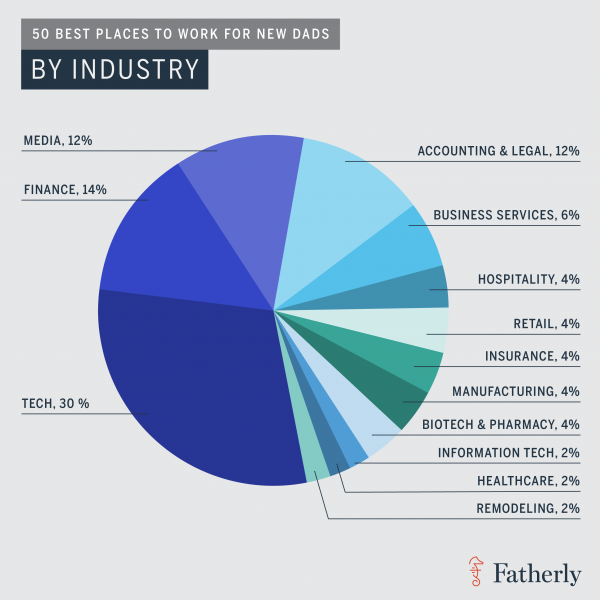
When Fatherly’s 50 Best Places To Work For New Dads was a year ago, nearly half the companies featured offered between one and 2 Fatherly_BestDadJobs_Sendoff-01-1weeks of paid leave to fathers. Twelve months later, 7.5 weeks is the average, 35 percent of companies offer between 6 and 8 weeks, and another 12 companies offer between 10 weeks and a full year, the website pointed out, attributing much of the increase to tech companies, which make up nearly a third of companies on the top 50 list.

Data used to create the WalletHub report were obtained from the U.S. Census Bureau, the U.S. Bureau of Labor Statistics, the Council for Community and Economic Research, the Centers for Disease Control and Prevention, the National Center for Education Statistics, the National Partnership for Women & Families, the American Urological Association, the Social Science Research Council, Child Care Aware of America and WalletHub research.

NHL Considers Las Vegas and Quebec, Not Hartford

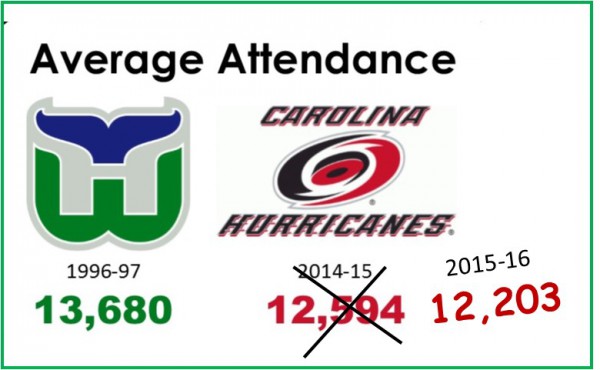
Apparently, it’s all about the lease.  Rumors continue to fly about the possible relocation or sale of the Carolina Hurricanes of the National Hockey League, but Hurricanes owner Peter Karmanos, who moved the team formerly known as the Hartford Whalers there two decades ago, says they’re staying put. The Hockey News is reporting that no team in the league has had worse attendance this season than the Hurricanes, whose average attendance has been 12,203 this past season. That’s more than 1,000 fewer fans than Arizona’s attendance, and Carolina is the only team in the league consistently selling less than two-thirds of the maximum attendance at home. In fact, the Hurricanes’ average of 65.3 percent capacity is the lowest by more than 12 percent.cities

In Forbes’ annual franchise valuations, the Hurricanes were ranked 28th at a value of $225 million, the News reported. Only the Arizona Coyotes and Florida Panthers were given a lower valuation by Forbes. In addition, Forbes said the Hurricanes had an operating income of -11.7 million, which ranked behind only the Panthers and New York Islanders.

“We have commitments that we value (in Carolina). We have an excellent lease, I love (PNC Arena) and I am deeply committed to this market,” Karmanos was quoted as saying in quashing rumors that the team was headed to Quebec, where an NHL-ready arena is waiting. attendence updated

A Las Vegas-based website, sinbin.vegas, reports that “their lease runs through 2024. He receives 100% of all parking and concessions for all non-North Carolina State events and a discount on utilities.”  Las Vegas has also been rumored for a franchise relocation or expansion team, and was one of two cities (Quebec was the other) to formally apply for an expansion franchise late last year.

The website reiterates that the Hurricanes are filling only 65% percent of the PNC Arena in Raleigh, which lists a capacity of 18,680. “The obvious reason is because the Hurricanes will once again not take part in the postseason…which doesn’t inspire the folks of Raleigh to attend… which sparks talk of relocation. To give this proper perspective the Columbus Blue Jackets are second from the bottom while filling only 77.7 percent of the Nationwide Arena.

NESN reported in March that, according to NHL commissioner Gary Bettman, “We have two applications, one from Quebec City and one from Las Vegas. That’s exactly what we expected when we began the process, that those would be the two applications we’d have.” Quebec City has a brand-new arena that opened last fall, but would be the smallest market in the league.  It would also add another Eastern city, in a league that currently has an imbalance in Eastern teams, but has promised not to move teams from the mid-west, including Detroit, into a Western conference under realignment.

Veteran hockey journalist Stan Fischler is reporting that the NHL “could very well put teams in tiny Quebec City and sprawling Las Vegas; and likely will make that decision in June.”

A return to Hartford is not on the NHL radar.  As Hartford Courant columnist Jeff Jacobs pointed out last summer, when the NHL expansion process began, “without anyone willing to pay a whopping $500 million expansion fee the league owners want, bid or not there is no way — zero, zero, zero way — the NHL would select Hartford in 2015.”  Or 2016, apparently.  And 2017 is not looking good either.

PNC_Arena

PERSPECTIVE: Highway Winter Maintenance Pay off? Safety!

by Eric Jackson, PhD and Donald Larsen, PE In Connecticut, as in many other snow belt states, the state Department of Transportation (CTDOT) as well as local Public Works Departments (DPWs) can suddenly be thrust into the spotlight (or the hot seat) when winter storms hit, particularly when driving conditions deteriorate.  Our daily exposure to lightning fast activities and information, which allow us to assess situations aCT perspectivend form opinions rapidly have altered our expectations.

Interestingly, as little as ten years ago, when a winter storm would make travel hazardous and place our busy lives on hold, we seemed able to adapt, maybe wait a day, adjust and move on.  Today’s society has little patience for travel delays and the “privilege” to travel is now seen as more of a right.

Fortunately, the CTDOT does not view this challenge as insurmountable and has used foresight and innovation to keep winter travel as safe as possible.  Since the winter seaq1son of 2006/2007 CTDOT has changed the way winter maintenance is performed.  They have discontinued the use of abrasives (such as sand) and phased in methods known as ‘anti-icing’ strategies [1].  These strategies have been honed and polished continually over the past ten years.
The Connecticut Academy of Science and Engineering (CASE) prepared a report for the Connecticut General Assembly in 2015 that evaluated winter maintenance strategies employed at CTDOT.  This study reviewed CTDOT’s anti-icing effects on safety, the environment, and corrosion of vehicles and highway infrastructure.  The entire report can be found at http://www.ctcase.org/reports/  [2].  The safety implications of these changes were analyzed using the Connecticut Crash Data Repository (CTCDR), a motor vehicle crash database housed at the University of Connecticut.

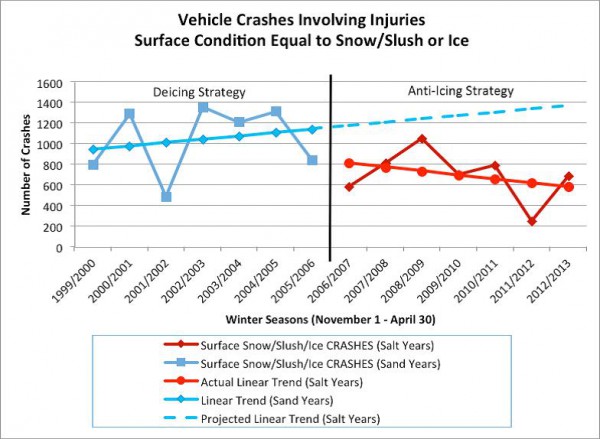
An analysis of vehicle crashes over thirteen winter seasons, 1999 to 2013, was conducted to try and evaluate the impact of anti-icing on safety (see chart).  A comparison of crashes, specifically for state-maintained roads during winter seasons, indicates that injuries declined by 19.2%, on average, since anti-icing strategies were implemented.  When crashes on snow/slush or ice surface conditions were examined the average reduction in crashes with nonfatal injuries was an even more dramatic, 33.5%. graph

CHART: Motor vehicle crashes involving nonfatal injuries with pavement surface condition equal to snow/slush or ice on Connecticut state-maintained roadways.

The reduction in the number of motor vehicle crashes with nonfatal injuries is a significant finding because according to a study by Qiu et al at the University of Iowa the rate of crashes on snow can be 84% higher than on dry pavement [3].  With an estimated cost in 2010 (from the National Highway Traffic Safety Administration) of $276,000 per non-incapacitating injury, [4] society- including everyone that travels - benefits from this significant reduction in injurious crashes.

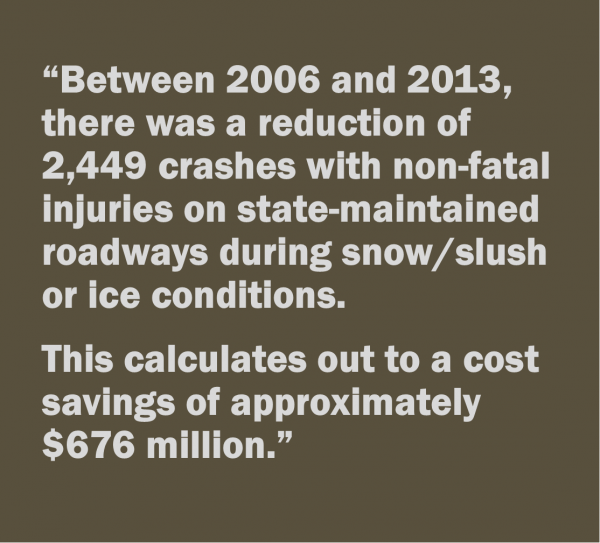
Between 2006 and 2013, there was a reduction of 2,449 crashes with nonfatal injuries on Connecticut state-maintained roadways during snow/slush or ice conditions.  This calculates out to a cost savings of approximately $676 million.*q2

Other ongoing research throughout the world shows that plowing is still the most cost effective way to clear the roadways of snow and ice.  Abrasives such as sand, grit or stone dust do not remove the snow or ice, and only delay the inevitable need for removal or melting.

However, the anti-icing techniques – the scientific application of deicing chemicals such as salt and other materials - provide a very important aid to snow/ice removal operations, preventing ice and snow from bonding to paved surfaces.  With anti-icing, the time period with snow covered roads – which are those critical times when crashes are most likely to occur - is also reduced.

From the estimated savings shown, it is important that CTDOT and the local municipal DPWs continue to improve winter maintenance by employing state-of-the-art equipment for chemical applications, timely snow and ice removal, and using weather monitoring stations as well as advanced weather prediction services and models. It appears that from the safety benefits alone, the continued expenditures made on winter maintenance have paid off.  Reducing the negative economic impact that results when people and goods don’t move is another benefit.

The CTCDR is available to anyone wishing to view motor vehicle crash statistics in Connecticut, for any type of crash, under any road conditions.  Connecticut is one of the few states that maintains a publicly accessible crash database.  It is highly recommended that if you have an interest in crash data, visit http://ctcrash.uconn.edu/ [5].

____________________________________

Dr. Eric Jackson is an Associate Research Professor in the School of Engineering at the University of Connecticut and is Director of the Connecticut Transportation Safety Research Center.  Donald Larsen PE, is a Temporary University Specialist at the Connecticut Transportation Institute at UConn and former Supervising Engineer with the Connecticut Department of Transportation

PERSPECTIVE commentaries by contributing writers appear each Sunday on Connecticut by the Numbers.

LAST WEEK: Do Community College Students Go Begging?

______________

[1]   CTDOT Staff, An Overview of Snow and Ice Control Operations on State Highways in Con­necticut, Office of Maintenance, Bureau of Highway Operations, Connecticut Department of Transportation, Newington, CT, June 2015.

[2]   Mahoney, J., D. Larsen, E. Jackson, K. Wille, T. Vadas, and S. Zinke, Winter Highway Maintenance Operations: Connecticut, Publication CT-2289-F-15-1, CTDOT, Connecticut Academy of Science and Engineering, July 2015. http://www.ctcase.org/reports/WinterHighway2015/winter-highway-2015.pdf

[3]   Qiu, L., and W. Nixon, Effects of Adverse Weather on Traffic Crashes, Transportation Research Record: Journal of the Transportation Research Board, No. 2055, Transportation Research Board of the National Academies, Washington, D.C., 2008, pp. 139-146.

[4]  Blincoe, L. J., Miller, T. R., Zaloshnja, E., & Lawrence, B. A., The Economic and Societal Impact of Motor Vehicle Crashes, 2010, National Highway Traffic Safety Administration, USDOT, Washington, DC, Report No. DOT HS 812 013, May 2014, (rev. 2015, May).

[5]   Connecticut Crash Data Repository, Connecticut Transportation Institute, University of Connecticut, Storrs, CT. Website. http://ctcrash.uconn.edu/ (Accessed May 5, 2016).

*   For purposes of this calculation, each crash was arbitrarily assigned one non-incapacitating injury.

This article is based on a study conducted by the Connecticut Academy of Science and Engineering on behalf of the Connecticut Department of Transportation.  Eric Jackson and Donald Larsen served as members of the Research Team from the Connecticut Transportation Institute at the University of Connecticut.  Access the full study report, an executive summary, and briefing at http://www.ctcase.org/reports/index.html

Six State Commissions, Victims of Budget Consolidations, Disappear After Decades-Long Record of Achievement

After 43 years, the ironically-named Permanent Commission on the Status of Women began the organization’s final newsletter with an ironic observation:  “the PCSW had its most successful legislative session ever, celebrating the passage of four bills instrumental in protecting women's health and safety.” The PCSW is one of six legislative commissions eliminated in a last-minute budget compromise at the end of the legislative session a month ago.  The six ceased to exist on Thursday (June 9).  In their place will be two Commissions, each a mash-up of three of the organizations.

Wiped from the roster of state agencies are the PCSW, Legislative Commission on Aging, Commission on Children, Latino and Puerto Rican Affairs Commission, African American Affairs Commission and Asian Pacific American Affailogo-for-webrs Commission.  Replacing them will be the Commission on Women, Children and Seniors and a Commission that merges the Latino, African-American and Asian Pacific American Commissions.
All staff members were effectively laid off, some applied for the handful of jobs that are to exist in support of the new Commissions.  The volunteer Commissioners will be holdovers, meaning that 63 Commissions will remain in place to set policy direction.

The 23 year old Commission on Aging was eliminated as Connecticut rapidly approaches a new, long-term reality—older adults will comprise an increasingly large proportion of the population.  At least 20 percent of almost every town’s population in the state will be 65 years of age or older by 2025, with some towns exceeding 40 percent.  Already, Connecticut is the 7th oldest state in the nation.Official_Logo_md

The Asian Pacific American Affairs Commission, the most recent of the six, was established in 2008 to respond to a growing population in Connecticut.  With the smallest budget, the agency struggled to gain traction, and was just beginning to fulfill its mission when the end arrived.  Connecticut's Asian American population grew from 95,368 in 2000 to 157,088 in 2010 – a 65% increase. Asians represent the majority minority in 40 percent of Connecticut school districts, according to the Commission. apacc_logo5-300x151

The Permanent Commission on the Status of Women was formed in 1973 to study and improve Connecticut women’s economic security, health and safety; to promote consideration of qualified women to leadership positions; and to work toward the elimination of gender discrimination.

Over the next four decades, the organization played a pivotal role in the passage of more than 50 significant pieces of legislation, often placing Connecticut at the forefront of progress towards greater justice or equal treatment for women.

That was certainly true in 2016, in what turned out to be, as was once said in a different context, the best of times and the worst of times.  This year, PCSW advocated for major initiatives that gained legislative approval:

  • Allow judges to remove firearms during temporary restraining orders in domestic violence;
  • Make affirmative consent the standard for investigating alleged campus sexual assaults;
  • Establish a working group to study possible labor violations in the nail salon industry;
  • Eliminate the discriminatory tax on feminine hygiene products and diapers;
  • Dramatically strengthen anti-trafficking laws by: shifting the focus of arrests in prostitution cases to the "demand side"; raising penalties against buyers of sex; removing the "mistake of age" defense; and requiring hotels and motels to keep records of those who rent rooms by the hour; and
  • Give judges authority to remove parental rights from rapists in cases of clear and convincing evidence of sexual assault resulting in pregnancy.

Established in 1997, the mission of the African-American Affairs Commission (AAAC) was to improve and promote the economic development, education, health and political well-being of the African-American community in the State of Connecticut.  The Commission has been at the forefront of a range of issues impacting the African American community in Connecticut, and its demise occurs when race relations and equal opportunity remain under heavy scrutiny in Connecticut and across the country.   AAAC Logo

Glenn A. Cassis Executive Director of the African-American Affairs Commission, when the consolidation plan was announced, said merging the panels will cause "irreparable damage to the African-American community in Connecticut."

"The elimination of AAAC tells the African-American community that their issues are not important to the state,'' Cassis wrote in an open letter to the leaders of the General Assembly. "The message that resonates is that despite the successful efforts of the past to eliminate the disparities that exist for this constituency in education, health, economic development, criminal justice and incarceration, and social well-being have become marginalized. Years of progress made has been cut short from being fully impacted to the level that this growing segment of Connecticut’s population deserves and expects."

downloadThe Latino and Puerto Rican Affairs Commission (LPRAC) was created by an act of the Connecticut General Assembly (CGA) in 1994. This 21 member non-partisan commission is mandated to make recommendations to the CGA and the Governor for new or enhanced policies that will foster progress in achieving health, safety, educational success, economic self-sufficiency, and end discrimination in Connecticut.  As of 2014, the state’s Hispanic population exceeded 500,000, about 15 percent of the state’s overall population.

In an Open Letter, LPRAC Executive Director Werner Oyanadel said “The decision to eliminate LRPAC does not in any way diminish the significant pride of the Commissioners and LPRAC staff, present and past, in the far-reaching and often ground-breaking work that has been accomplished to advance the quality of life for our state’s steadily growing Latino population.”  He added that “the end of a distinguished and impactful decades-long history does not diminish or eviscerate the landmark laws, policy-changing research and enduring impact of LPRAC on countless families, businesses and individuals of Hispanic heritage, and all the citizens of Connecticut.”

The Commission on Children, established in 1985, was borne of the legislature’s desire for the development of “policies that would ensure the health, safety, and education of Connecticut children.”  Said long-time Executive Director Elaine Zimmerman: “We feel we’ve succeeded beyond anyone’s wildest hopes, taking a leading role in issues as important—and diverse—as closing the achievement gap in reading, school climate, immunization, disaster planning for families, school readiness, children’s mental health, home visitation, youth employment, equity, and poverty reduction.landmarks

One of the testimonials on the PCSW website, said succinctly: “The commission boldly tackles the issues that matter to my survival and prosperity! Their work to identify and eradicate inequality (whether of the deliberate kind or not), to serve as a public voice for women’s issues which are underrepresented in all public spheres, and to engage the public is integral in working toward a fair and just society.”

Regarding the state’s Latino population, Oyanadel said “the successor combined Commission will not be nearly the same; we can only hope that its impact will not be diluted or weakened, though we are concerned that our community will have a softer voice advocating for those issues of particular importance in and impact on the Latino community.”

Back in 2011, when consolidations and eliminations were under consideration by legislators, but ultimately not approved, as was the case repeatedly since the 2008 recession, Gov. Malloy told the CT Mirror: "If they asked my advice, I'd consolidate a bunch of them."

And in 2016, it came to pass.