PERSPECTIVE: Self Control is the Best Control

by Marvin Weisbord and Sandra Janoff One of the great motivational discoveries of the twentieth century is that people who coordinate and control their own work produce greater economic and social results than those who do not. Many leaders, though they might deny it, act as though they prefer control to results. How do we know? They impose coordination and control from above. They have never experienced the alternative: control from within.

Running large-group strategic-planning meetings in the 1990s, we soon recognized that we preferred results to control. We could not control scores of people working in the same room toward a plan that incorporates all of their experiences and aspirations. We found that we got the best results by focusing everyone on the same goal, creating structures for self-managing, and getting out of the way.

That way of leading proved harder than we imagined. Our biggest challenge was controlling ourselves—holding back, waiting, listening, opening doors, and letting people learn their own capabilities. Doing that meant setting the bar higher.  We had given ourselves a new leadership challenge. We had to overturn the conventions we inherited. As we became more confident of consistent results, we began inviting others to try leading in new ways.

We have now helped thousands of people access the advanced skills presented here—“advanced” in the sense of adding new capabilities to your repertoire. These skills need not replace anything you do now. If you are trying some of them for the first time, however, you will indeed be “overturning convention” if you employ them to plan, organize, motivate, and control.

We settled on eight core skills after much iteration. You could easily make our list longer.  These are skills that reinforce one another, that we could use anywhere, and that led people to do more than they dreamed they could. Best of all, we could bring them to bear on any given day. You can do likewise if you are willing to experiment.  But are you?

More than 50 years ago, Douglas McGregor, a professor at the Massachusetts Institute of Technology, wrote an all-time best seller, The Human Side of Enterprise. His was the famous Theory X, Theory Y book. McGregor described how our assumptions about human nature determine how we lead. Theory X assumes that most people are dependent, dislike work, and require close supervision. Theory Y assumes that most people enjoy work, want to learn, and welcome responsibility. Each theory is a self-fulfilling prophecy. The tighter the control, the narrower the jobs, and the less judgment people exercise, the more helpless, inept, and dependent they become.

“They act like children,” says the boss.  “He treats us like children,” say the employees.

By contrast, people who have discretion, broad skills, accurate information, and opportunities for growth motivate themselves. From birth we carry the seeds of both theories. Babies come into the world helpless and dependent—and also curious and eager to learn. When (unconscious) Theory X assumptions dominate an organization, they translate into dysfunctional policies, procedures, and structures. They discourage the behavior leaders want to instill.

On the other hand, we have seen people around the globe act out (unconscious) Theory Y assumptions. Under the right conditions, they rediscover natural impulses they had since birth, impulses nourished by unconventional policies, procedures, and structures. People respond to jobs that foster autonomy and growth. Structure includes determining who is allowed to do what. That is something you can control. It involves encouraging people to take initiative beyond their job descriptions. It means enabling communication up, down, and sideways, not just top to bottom. It means turning supervisors into coaches. It means insisting on integrating meetings between departments rather than putting up with silos.

Much organizational conflict is structural. People act the way their jobs require. Salespeople emphasize interpersonal skills. They spend time in small talk before getting down to business. Production workers relate to their machines. They skip the small talk and solve the problem. The structural strategy is to encourage people to maintain their functional differences.
This includes appointing people to integrating roles, using project coordinators, and having cross-functional mechanisms such as product teams and ad hoc problem-solving teams that head off conflict.  In our book “Lead More, Control Less,” we show how to develop the following skills:

  • Gain more control by controlling less
  • Get others to share responsibility
  • Change the structures under which people interact without struggling to change the people
  • Demonstrate how getting the “whole system” to explore the “whole elephant” leads to high motivation and fast implementation
  • Use anxiety and authority projections to build respect and improve teamwork
  • Resolve conflicts and lead people to find where they are 100 percent in agreement
  • Experience what you can accomplish by trying out actions that may not come naturally

We emphasize a stubborn reality: Change means doing something you never did before. That is the message from ordinary leaders in business, education, health care, and community building who discovered new capabilities in themselves. We quote them throughout the book.  You may find changing structure ahead of behavior a stretch if you are used to managing personal styles, attitudes, motivations, and extrinsic rewards.  Each chapter advocates an advanced leadership skill and principles of action that you can try out every day:

  1. Control Structure, Not People
  2. Let Everyone Be Responsible
  3. Consider Anxiety “Blocked Excitement”
  4. Avoid “Taking It Personally”
  5. Disrupt Fight or Flight
  6. Include the Right People
  7. Experience the “Whole Elephant”
  8. Surface Unspoken Agreements

We invite you to travel with us down a road where people perform better the more you let go. If you go far enough, you will discover higher performance, greater self-control in others, and greater freedom for yourself. When you see the results you are getting, you will need no further proof.

________________________________

Marvin Weisbord and Sandra Janoff are co-authors of “Lead More, Control Less.” Janoff will be speaking on February 23 at Leadership Greater Hartford’s Lessons in Leadership program. Book excerpt published with permission of Berrett-Koehler Publishers.

Changing Leadership Atop Leading Philanthropy Organizations

Two leading organizations in Connecticut’s philanthropic community are at the crossroads of leadership changes.  The Connecticut Council for Philanthropy (CCP) has announced the end of its national search for a new leader with the selection of Karla Fortunato to be its new president, effective May 1.  The Hartford Foundation for Public Giving, one of the nation’s largest community foundations, has embarked on its own national search, and announced that Yvette Meléndez has been appointed interim president, effective March 20, as that search process continues. Fortunato comes to CCP after 13 years at the Health and Environmental Funders Network (HEFN), a national alliance of 60 philanthropic organizations based in Rockville, MD.

As director of HEFN, she has managed its programming, outreach, and operations, promoting collaboration on shared goals among its members.  Fortunato previously served as associate director of policy for Health Care for All in Boston, engaging in policy research, communications, and campaigns, and as a consultant for The Public Policy Institute, also in Boston.

"Karla's experience in building alliances among funders and engaging in public policy outreach make her ideally suited to lead our organization," said Judith Meyers, chair of CCP's Board of Directors. "She is a proven leader with a strong vision of how to mobilize the power of philanthropy to effect positive change--and she has a true passion for the work."

Fortunato graduated magna cum laude from the Randolph-Macon Woman's College in Virginia and earned an MBA (also magna cum laude) from George Washington University. She serves on the Health Leadership Circle of MomentUs, a campaign for climate change solutions. She served as a member of the Serving Communities Committee of the National Conversation on Public Health and Chemical Exposures and as a citizen representative on the Montgomery County Citizen's Advisory Board. A native of Connecticut, she and her family look forward to relocating here from their current home in Jacksonville, Florida.

The Connecticut Council for Philanthropy (CCP) is an association of grantmakers committed to promoting and supporting effective philanthropy for the public good. CCP's 114 members are foundations (private, corporate, community), business and corporate giving programs, bank trusts, donor-advised funds, individual philanthropists and those serving the philanthropic sector. CCP members annually grant more than $858 million from assets of more than $7.6 billion.

Meléndez has served on the Hartford Foundation's board for close to 12 years, the last three as chair. She has more than 30 years of successful managerial experience in state government, higher education and at Hartford Healthcare, from which she is recently retired. She will take a leave of absence from the board during this time, and will serve as interim until a new president is named. Meléndez is not a candidate for the position. Linda J. Kelly announced her retirement as president of the Hartford Foundation for Public Giving, last March, effective next month, after 10 years leading the organization.

The Hartford Foundation for Public Giving is the community foundation for Hartford and 28 surrounding communities.  In 2015, the Foundation celebrated ninety years of grantmaking in the Greater Hartford region, made possible by the gifts of generous individuals, families and organizations.  It has awarded grants of more than $680 million since its founding in 1925.

PHOTO:  Karla Fortunato (left), Yvette Meléndez (right)

Health Consultants For Pre-School Age Children Can Improve Health; Report Urges Policy Changes in CT

Research shows that the presence of a health consultant, usually a nurse by training, in child care centers leads to positive outcomes including improved nutrition, better sanitation and infection control, increases in access to preventive health care, specialty health care, mental health care, and oral health services. That’s according to a report by the Child Health and Development Institute (CHDI), which recommends health consultation as a “key strategy for integrating health into early learning systems and maximizing the contribution of early learning programs to children’s healthy development.”

“We rely on child care health consultants to ensure children’s health and safety in early care settings according to child care licensing regulations, but these providers are not fully supported nor utilized by our child health systems,” said Lisa Honigfeld, co-author of the report and vice president for health at CHDI. “Policy reform can strengthen and expand the role of child care health consultants to connect parents, child health providers, and child care centers to better promote health and developmental outcomes for children.”

CHDI’s “IMPACT, Promoting Children’s Health in Early Care and Education Settings by Supporting Health Consultation,” summarizes research on the role and benefits of health consultation in early learning settings, and reviews policies, regulations, training, and payment structures used in Connecticut and other states. The report concludes that Child Care Health Consultants (CCHC) can be “instrumental in contributing to the achievement of pediatric population health goals in Connecticut by monitoring the health of young children at the community level and contributing to community health system efforts.”

The 30-page report provides a framework for Connecticut to integrate health into early learning systems by taking advantage of opportunities presented as part of the state's overall health reform efforts. Recommendations include:

  1. Develop infrastructure within the State to support health consultation with training, reimbursement, and quality improvement.
  2. Strengthen licensing requirements to collect and report detailed health consultation information for all licensed child care sites.
  3. Advocate for inclusion of CCHCs in Connecticut’s health reform plans.
  4. Use a multi-disciplinary oversight group to develop a system of health consultation services to the meet the needs of Connecticut’s child care programs.

The report notes that a majority of children younger than age five spend “significant time” in early care and education settings, with more than 98,000 children enrolled in licensed child care centers, Head Start programs, and family child care homes.

“Unlike mental health consultation,” the report states, “overall health consultation is not supported with state level infrastructure and payments for health consultants to early Childhood Education sites. For private child care or preschool programs, the cost to hire a health consultant is borne by the program, with no system in place to ensure the quality of the CCHC workforce or ensure that health consultation is implemented to maximize the health and safety of children in child care.”


Connecticut regulations allow child care sites to employ a registered nurse, advance practice registered nurse, physician, or physician assistant to serve as the site’s health consultant.  Child care licensing requires child care sites that serve children ages three to five have quarterly health consultation visits.

Indicating that “several states and initiatives are testing innovations to better support integration of primary care medical services and community services,” the report suggests that “Connecticut, too, is poised to promote increased cross-sector collaboration in early childhood,” citing the establishment in 2013 of the Office of Early Childhood at the state level, which brought under one roof a range of services and responsibilities that had been housed in a number of different state agencies.

In most states, including Connecticut, a CCHC is typically a licensed registered nurse, according to a survey of states undertaken for the report.  Two states (Hawaii and Indiana) require that the CCHC be a physician, the research found, and four states (Illinois, Maine, Maryland, and North Carolina) allow licensed practical nurses to be health consultants. North Carolina allows other disciplines (sanitarian, nutritionist, and dietician) to be trained and credentialed as a health consultant.

The report points out that “CCHCs need specialized training, skill sets, and experience to address health issues for individual children and for the group setting as a whole. They also need to be aware of health and community resources so they can link child care facilities and families to appropriate services when needed. Programs with a significant number of non-English speaking families benefit from the services of a CCHC who is culturally sensitive and knowledgeable about community health resources for parents’/guardians’ native cultures and languages.”

The Child Health and Development Institute of Connecticut (CHDI), a subsidiary of the Children’s Fund of Connecticut, is a not-for-profit organization working “to ensure all children have a strong start in life with ongoing supports to ensure their optimal health and well-being.” CHDI advocates for “effective policies, stronger systems, and innovative practices.”

Combating Opioid Epidemic in Connecticut Schools - Officials Team Up for Educators Workshop

The Connecticut Association of Schools (CAS), in partnership with the U.S. Attorney's Office, the FBI, the Drug Enforcement Agency (DEA), and victims of drug abuse, will be offering a one-half day workshop for administrators, teachers, and counselors on the devastating opioid epidemic that is growing in severity in Connecticut an across the country. This video-based educational program is designed for high schools and geared specifically for teens and adolescents, officials explain, and will be accompanied by an educator’s discussion guide. The guides will be available for participants to immediately use in a variety of educational settings.

Projections for 2016 by the State Medical Examiner indicate that close to 900 people died of accidental drug overdoses in Connecticut. That is almost three times the number of people who died in car accidents last year, organizers point out. Even more devastating, they note, is the fact that a majority of these deaths are of young people ages 18 to 25, many of whom developed an addiction to opioids after misusing prescription pills while in their teens or early adolescence. Sports injuries, dental pain and other illnesses are common reasons for the original prescription.

According to the Centers for Disease Control and Prevention, opioids were involved in 33,091 deaths nationwide in 2015, and opioid overdoses have quadrupled since 1999.Significant increases in drug overdose death rates from 2014 to 2015 were primarily seen in the Northeast and South Census Regions. States with statistically significant increases in drug overdose death rates from 2014 to 2015 included Connecticut, Florida, Illinois, Kentucky, Louisiana, Maine, Maryland, Massachusetts, Michigan, New Hampshire, New Jersey, New York, North Carolina, Ohio, Pennsylvania, Rhode Island, Tennessee, Washington, and West Virginia.  In Connecticut, between 2014 and 2015 the rate increased by 25 percent.  

Recognizing that law enforcement is only one facet of the solution, the U.S. Attorney’s Office is fighting this epidemic on several fronts, including criminal prosecution and outreach to schools for prevention, officials said. The office has formed a Heroin Education Action Team (HEAT), which includes parents of local overdose victims, to further assist in this effort.

Opioid Epidemic in CT – Stemming the Tide” will take place on March 3, 2017, 8:30 to 11:00 a.m., at the CAS-CIAC Conference Center in Cheshire.  Registration deadline is February 24, 2017; the cost is $15.00

CAS officials are also calling for schools to show, “as soon as possible, and no later than the end of the school year,” videos about the crisis.

“Please ensure that every student in your high school sees at least one of the following two films,” the association urges:

  • 1) a 15-minute film called The Opioid Crisis Hits Home: Stories from Connecticut that can also be used to educate educators, parents and the general public about the opioid epidemic; and
  • 2) the FBI/DEA documentary film Chasing the Dragon: The Life of an Opiate Addict, which is 45-minutes long and accompanied by an educator’s discussion guide geared specifically to teens and adolescents.

Since last September, a number of Assistant U.S. Attorneys have partnered with parents of overdose victims, young recovering addicts, FBI, DEA, and local law enforcement to facilitate Chasing the Dragon presentations at high schools in Milford, New Haven, Danbury, Plymouth, Shelton, East Hartford and New Fairfield.

The films “are provided as a public service for the sole purpose of saving lives,” officials underscore. School officials can schedule an opioid awareness presentation by contacting  Assistant U.S. Attorneys Vanessa Avery or Robert Spector at 203-821-3700.

The Connecticut Association of Schools,  a non-profit, tax-exempt educational organization, has grown to represent well over 800 of Connecticut’s public and parochial schools.

Whalers Hartford Attendance 20 Years Ago Exceeds Islanders in Brooklyn

For Hartford hockey fans of the Whalers vintage, a peek at this year’s National Hockey League (NHL) attendance figures are either demoralizing or encouraging – or both.  It has been two decades since the Whalers were uprooted by ownership, replanted in North Carolina and renamed the Hurricanes, and two weeks since Gov. Dannel Malloy and Hartford Mayor Luke Bronin took their first shot at the now Brooklyn-based New York Islanders. Lowest attendance in the NHL this year belongs to the Carolina Hurricanes, at 12,025 through 24 home games, followed at the bottom of the league by the Islanders, averaging 12,829 through 32 home games, as of this week.

Last year, the 2015-16 season, the Hurricanes averaged 12,203 for their 41 home games, last in the league, while the Islanders were third lowest in the NHL at 13,626.  Both are lower than the Whalers average attendance in their final season in Hartford, nearly two decades ago.

In comparison, the top teams in the league this year for home attendance are the Chicago Black Hawks, averaging 21,669 and Montreal Canadians, seeing 21,288 per game thus far this year.

In their final season on Long Island at the Nassau Coliseum in 2015-16, the Islanders average home attendance was 15,189, an increase from the immediate previous seasons.  The Carolina Hurricanes had the second lowest attendance in the league that year, at 12,594.  During the 2012-13 season, the Islanders attendance was the lowest in the 30-team league, at 13,306.

With more than 1,000 obstructed seats in the Barclay Center arena that the Islanders share with the New York Nets in Brooklyn, rumors have circulated since last year of a possible move to a new arena in Queens built for hockey, unlike the Islanders current home, first and foremost a basketball arena.  There has been local opposition to that possibility.  Recent published reports have also indicated that the Barclay Center and Islanders could part company after the 2018-19 season or a year earlier if the team decides to relocate.

With no official word one way or the other, Connecticut officials are taking their shot, with a possible assist from a $250 million makeover of the XL Center, former home of the Whalers.  That proposal must be approved by the state legislature, a tall order at a time when the state budget deficit is approaching $2 billion.

In the Whalers’ final season in Hartford, 1996-97, attendance at the Hartford Civic Center had grown to 87 percent of capacity, with an average attendance of 13,680 per game.  Published reports suggest that the average attendance was, in reality, higher than 14,000 per game by 1996-97, but Whalers ownership did not count the skyboxes and coliseum club seating because the revenue streams went to the state, rather than the team.  Attendance increased for four consecutive years before management moved the team from Hartford. (To 10,407 in 1993-94, 11,835 in 1994-95, 11,983 in 1995-96 and 13,680 in 1996-97.)

During the team’s tenure in Hartford, average attendance exceeded 14,000 twice – in 1987-88 and 1986-87, when the team ranked 13th in the league in attendance in both seasons.

In recent years, the Islanders have been at or near the bottom of the league in home attendance:

  • 2015-16       28th
  • 2014-15      25th
  • 2013-14      26th
  • 2012-13      30th
  • 2011-12      29th
  • 2010-11      30th
  • 2009-10      29th

Whalers merchandise continues to sell well, despite the team not having played a single game in this century.  Whalers merchandise was Reebok's top selling non-current NHL team, according to published reports in 2015. While the company has expanded its lineup to include Whalers logos from different eras, the Hartford Business Journal reported, gear featuring the team's original logo remained the most popular and continues to be offered on the NHL Official Shop website, on multiple websites and in retail locations in the U.S. and Canada.

The Connecticut officials said “this is a ready market anxious for an NHL team, eager to fill seats, buy merchandise, and support your team,” reminding Islanders officials that ““Your AHL affiliate is in nearby Bridgeport, allowing quick and easy access to your minor-league players, and represents a footing in Connecticut of the Islander franchise.”

The NHL has given no indication that it will approve a move out of the New York market, according to NBC Sports, although Commissioner Gary Bettman has said that the teams owners “are reviewing the situation and looking very seriously at what their options are.”

The only statement released by Islanders ownership after receiving the letter last week from Malloy and Bronin said the team does “look forward to another great year of New York Islanders hockey at Barclays Center next season.”  No word on what might, or might not, occur after that.

CT’s Cuban-American Population Is Centered in Bridgeport, As Immigration to U.S. From Cuba Grows

The number of Cubans entering the U.S. has picked up dramatically since former President Barack Obama announced a renewal of ties with the island nation in late 2014, a Pew Research Center analysis of government data shows. The U.S. has since opened an embassy in Havana, a move supported by a large majority of Americans, and public support is growing for ending the trade embargo with Cuba, according to Pew surveys. Outside of Florida, the New York metropolitan area – including Connecticut - is home to the most Cuban Americans.  More than 10,600 Cuban-Americans call Connecticut home, according to U.S. Census 2014 data. The city with the largest Cuban population is Bridgeport, with more than 1,000 residents of Cuban heritage, according to published reports.

According to the website ZipAlas, the Connecticut communities with the largest percentage of Cuban residents among local their residents include Bridgeport, Hartford, Stratford, Westport, New Britain, Bolton, Stamford, Weston, New Haven, and West Hartford.

Overall, 56,406 Cubans entered the U.S. via ports of entry in fiscal year 2016, up 31 percent from fiscal 2015 when 43,159 Cubans entered the same way, according to the U.S. Customs and Border Protection data reported by Pew. Fiscal 2015 saw an even larger surge, as Cuban entries jumped 78 percent over 2014, when 24,278 Cubans entered the U.S.

There are 2 million Hispanics of Cuban ancestry living in the U.S. today, the fourth largest Hispanic origin group behind Mexicans, Puerto Ricans and Salvadorans. But population growth for this group is now being driven by Cuban Americans born in the U.S. The share of foreign born among Cubans in the U.S. declined from 68 percent in 2000 to 57 percent as of 2015, Pew reported. The Cuban population in the United States has steadily grown, accelerating from 737,000 in 1990 to 1,144,000 in 2013, according to the Migration Policy Institute.

According to the 2014 American Community Survey (ACS), 923,111 foreign-born Hispanics of Cuban origin lived in Florida, 47,016 in New Jersey, 30,398 in Texas, 28,436 in California, and 24,898 in New York, the Center for Immigration Studies reported.

The Cuban Lyceum of Bridgeport -- Liceo Cubano de Bridgeport- celebrated its 60th year in 2014, the Connecticut Post reported.  Founded in 1954 on the East Side of Bridgeport, the organization continues as the longest running Hispanic social club in all of New England, according to local leaders. The Lyceum was officially incorporated on July 21, 1954, created to “promote unity, understanding and friendship among all Cuban and others Spanish-speaking people,” and “provide a welcomed place for newly relocated Cubans in the United States,” to continue the traditions of Cuban culture.

Bridgeport Police Chief A.J. Perez was born in Cuba migrated with his family as a youngster to the United States in 1968, according to published reports.  He joined the Bridgeport Police Department in 1983 and became Chief of Police last year, the first Cuban-American police chief in the state’s history.


First Television, Now Picture Books – Contributors to Less Healthy Eating Among Children

Concerns about the impact of television promoting products such as snack food and soda have been well documented for some time, but academic research is now suggesting another culprit for childhood obesity and a growing lack of healthy eating among youngsters. Children’s picture books – the books filled with brightly colored drawings and basic themes that are staples of bedtime stories, pre-school readings and local story hours.  How they depict food – and eating – has led a UConn researcher to raise red flags.

The study – conducted by Jane Goldman, professor emerita in UConn’s Department of Human Development and Family Studies, and Lara Descartes, a former assistant professor with the department and now a professor of Family Studies at Brescia University College in Canada – found that while the ratio of healthy to unhealthy foods depicted in books is higher than it is on television, books more often link positive events and concepts – such as love and nurturing – to treats, such as ice cream and baked goods, rather than fruits or vegetables.

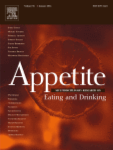
The findings were first published a year ago in the journal Appetite and were the subject of presentations last fall by Goldman and Descartes at the University of California at Irvine and a global conference on food in the United Kingdom, and reported this month by UConn Today.

“It’s not that you shouldn’t have ice cream in books, but people should be aware of what the underlying message is,” Goldman said. “What are the messages children are getting about foods when a picture book is read to them, and are those messages related to the obesity epidemic among children?”

The researchers evaluated 100 picture book titles in Scholastic’s “Favorite Books for Preschoolers” collection – a mix of classics and newer titles, fiction and non-fiction. Sixty-nine of the 100 books in the collection included one or more food items in the text and/or illustrations. Although “the ratio of healthy foods to nutrient-poor foods was higher in the books,” according to the researchers, there was bad news as well as good in their findings.

Goldman and Descartes first identified books in which food is mentioned one or more times – 48 titles fit into that category – and others in which food is a theme or sub-theme, a group that included 21 titles. The pages on which food is mentioned were then coded based on the placement of the food, or centrality; the level of emotion expressed, or affect; and the number of times, or frequency, with which the food is mentioned. Using characters’ expressions as a guide, researchers assigned a rating of positive, negative, or neutral to each food reference.

The researchers found that vegetables are depicted in more than a third of the books and centrally portrayed in more than half, but only 18 percent of the depictions received a positive “affect” rating.  Conversely, sweetened baked goods are both centrally positioned, and have a positive “affect” about 80 percent of the time.  And ice cream, although not in many books, always was associated with positive outcomes - five of the seven times ice cream is mentioned, it’s offered as a treat, to make someone feel better, or as a happy ending.  Among the other findings:

  • Almost all 69 picture books in the sample depict one or more healthy foods.
  • Twenty-nine (42 percent) depict only healthy foods; and thirty-three (48 percent) depict both healthy and nutrient-poor food, but the majority of the depictions are healthy foods.
  • Fruits, while depicted in more than half the books, are most often in the background, and only one-third of fruit depictions received a positive “affect” rating.

The researchers say it’s important to look at the context in which foods are presented as well as the frequency, observing that the people they interviewed rarely noticed that food was mentioned in children’s books, nor what messages were being conveyed, UConn Today reported.

Goldman was not surprised, UConn Today reported, that many of the picture books surveyed in the study portrayed sweet and comparatively unhealthy foods as very desirable or that they were associated with positive outcomes.  When nutrient- poor foods are presented both frequently and positively, she indicated, it may well contribute to children’s view of them as more desirable.  This is especially likely given the fact that picture books are just one part of a child’s total media consumption and that television content is known to promote a positive association with nutrient-poor foods.

“What we hope the study  does is make people aware of how food is presented in picture books, in the same way they have become aware of how gender roles are presented in books,” Goldman says. “Books are a tool we use all the time, so how can we use books to promote healthy ideas about food. In early childhood there is an emphasis on helping children read and on healthy eating and lifestyle, so why not think about the messages in books that support or contradict that healthy lifestyle message.”

Norwalk, Stamford Gain New Businesses, Taking From Each Other

Octagon Inc., a sports and entertainment marketing and talent management agency, is relocating its headquarters to the Shippan Landing complex in Stamford. The company, which is moving from Norwalk, has signed an 11-year lease to occupy 57,009 square feet across the entire third floor and a section of the second floor of the property at 290 Harbor Drive along the Stamford waterfront. The move apparently comes without state financial incentives, and comes months after another corporate citizen made the reverse move – from Stamford to Norwalk – with a boost from state incentives.  Less than 15 miles and 15 minutes apart, two of Fairfield County’s leading cities are experiencing the corporate version of “Trading Places.”

Crius Energy, through its wholly owned subsidiary Regional Energy Holdings, announced plans last year to move its headquarters from Stamford to Norwalk, placing 200 jobs in the city and committing to add 225 more over the next four years, according to an announcement in May from the Governor’s Office.

Officials said the company – launched in Connecticut – has become one of the largest independent energy retailers in the United States, supplying electricity, natural gas and solar energy products to more than 900,000 customers across 19 states and the District of Columbia, including 100,000 in Connecticut. According to officials, Crius also has operations in Florida, Texas and Australia.  They had outgrown their Stamford facility, which led to plans for a $29 million project in Norwalk, to include the renovation of 48,000 square feet of an existing building. 

To encourage the move, the state Department of Economic and Community Development (DECD) said it would provide a 10-year, $8 million low-interest loan to support the project, funding that can be used for fixtures and equipment and leasehold improvements. Crius is also eligible for up to $2 million in tax credits through the Urban and Industrial Sites Reinvestment Tax Credit Program, as well as a $100,000 grant to train employees, according to state officials.

The Crius Energy website points out that “Although based in Connecticut, many members of our leadership team have relocated great distances to become a part of Crius Energy. Together, they bring more than a century of combined industry and functional expertise as well as a deep-rooted passion for transforming the retail energy sector.”

It was a year and a half ago, in May 2015, that the first lease signing was announced for the then newly-renovated five story, 185,000 s/f office building within the 17-acre Shippan Landing waterfront office park in Stamford. That tenant was Stamford-based Workpoint, a provider of co-working environments geared to the needs of media firms along with independents and professionals.

Published reports indicated that since being acquired in 2012 by George Comfort & Sons in a partnership venture with Angelo Gordon & Company, the six-building, 758,000 s/f office park, formerly known as Harbor Plaza, saw an extensive repositioning and modernization program, which was then nearing completion. Workpoint leased a total of 15,173 s/f, including a 1,000 s/f multicamera studio with green screen, control room, and editing facilities on the building’s second floor, according to published reports at the time.

“Shippan Landing continues to be the preferred destination for some of the nation’s top creative companies and we are pleased to welcome Octagon to our tenant roster,” said Peter S. Duncan, president and CEO of George Comfort & Sons.  Among Octagon’s many clients are household names from the sports world - Stephen Curry of the Golden State Warriors, members of the World Series champion Chicago Cubs and other major league players, current and retired, and Olympic gymnast Simone Biles.

Shippan Point offers what the company describes as “truly is the best business location in the Stamford area,” with “spectacular grounds and magical stretching views.”

Back in 2013, the state Bond Commission approved $1 million in borrowing to help an emergency home repair company move its headquarters from Stamford to Norwalk.  The bonding was aimed at assisting the HomeServe USA Corporation in relocating its headquarters as part of an agreement to create 130 jobs and maintain another 109. In addition to a $1 million grant, the company was also eligible for a $3 million, partially forgivable, loan and up to $5 million in tax credits, local media reported.  The company’s customer call center is located in Tennessee.

And last May, the State Bond Commission approved $22 million in grants and loans for the world's largest hedge fund despite what press reports described as bipartisan complaints that the wealthy company can afford the move without state incentives.  The commission voted 7-2 to award the package to Bridgewater Associates, a financial industry powerhouse operated by Greenwich billionaire Ray Dalio, one of the nation's wealthiest individuals.

At the time, state officials indicated that the financial package helped to prevent the company from potentially relocating from Connecticut to nearby Westchester, N.Y.  The money was expected to be used to renovate and expand the firm's Westport headquarters, along with operations in Wilton and Norwalk, published reports explained. In addition to the loan, Bridgewater was said to also be eligible for two grants: $3 million for energy-efficiency upgrades and $2 million for job-training efforts.  The state apparently initially offered Bridgewater $130 million in loans and grants but the amount was scaled back after the company scrapped plans to build a new corporate complex in Stamford, south of I-95, in the face of local opposition, reports indicated.

https://youtu.be/7mfWZhlN4rE


Legislatures Consider Changes in Transportation Safety in CT, Nationwide

The National Conference of State Legislatures (NCSL), in cooperation with the National Highway Traffic Safety Administration, is tracking legislation on a range of traffic safety subjects that have been introduced in the 50 states and the District of Columbia – and is providing updates on the organization’s website.  The site reflects 14 proposed bills in Connecticut, being considered in the General Assembly session that began last month.   Traffic safety topics being tracked nationwide include: Aggressive Driving, Automated Enforcement/Photo Monitoring, Child Passenger Protection, Distracted Driving, Driver’s Licensing, Impaired Driving, Motorcycle Safety, Pedestrian and Bicycle Safety, School Bus Safety, Seatbelts and Occupant Protection, Senior Drivers Issues, Slow-Medium speed vehicles, Speed Limits, and Teen Driver Issues.

Among the proposals being considered in Connecticut is one that would require three-point seat safety belts for school buses and require passengers of a school bus to wear seat safety belts.  A similar proposal would require three-point seat safety belts for school buses that are model year 2019 or newer.  NCSL reports that 20 state legislatures are considering a variety of school bus safety proposals. 

Three proposals would increase fines for distracted driving offenses, including texting or using a hand-held mobile telephone while driving, and one calls for additional funds to be appropriated to the state Department of Emergency Services and Public Protection to “combat distracted driving.”  Connecticut is one of 14 states that have seen distracted driving bills suggested. 

Legislative proposals also include one that would mandate the use of helmets by motorcycle operators and passengers, and another that would regulate the operation of high-speed and low-speed electric bicycles in the state. Twenty-six states in addition to Connecticut have motorcycle safely proposals under consideration.

Members of the legislature’s Planning and Development Committee will consider proposals that call for modifications to urban street design guidelines, in order to “improve the safety, economic life and vibrancy of urban streets.”

Among the nation’s states, the largest number of legislative proposals relate to impaired driving, followed by motorcycle safety, pedestrian and bike safety, drivers licensing, drivers licensing, and school bus safety.

Forty-seven states have begun their 2017 legislative sessions.

PERSPECTIVE: Taking Risks, Serving Customers Key to Sustaining Success

by Mickey Herbert A few years ago, I was asked to talk to a group about my career as an entrepreneur.  I had never considered myself an entrepreneur, but I realized that I had taken risks in my professional life that were, in retrospect, pretty significant.  Here’s what I had to say regarding risk taking and a company's corporate culture.

My parents were always my mentors, teaching me integrity, and how to be respectful of others.  I'm not sure how they taught me to be a risk taker, but somehow, I think I got that from them too. 

Nobody in my family had ever gone to college, and I remember when my Swarthmore College acceptance letter came in the mail to our home my father took it to work before I even saw it. He wanted to show it to all the PhD's he worked for at the U. S. Naval Research Laboratory.

He hadn't finished college because of WWII, but he had learned glass blowing in the Navy and he was the only one who could build those lasers they designed.  He was also a terrific athlete, a football and baseball player in the mold of Babe Ruth, who might have played professional sports except he opted to be the first kid on his block to enlist after Pearl Harbor.

So, in a very real sense, he encouraged me to take the risks he never had the opportunity to take.  Above all else, he wanted me to go to college and/or to play professional baseball, the two life choices that had eluded him because of the war.

Throughout my life, I have always wanted to live up to the person my father wanted me to be - indeed, to be the person he wanted to be if circumstances in our country were different, almost 80 years ago.

To quote Mark Twain, one of our state's most famous citizens, who died over 100 years ago, "Twenty years from now, you will be more disappointed by the things you didn't do than by the ones you did.  So, throw off the bowlines.  Sail away from the safe harbor.  Catch the trade winds in your sails.  Explore, Dream, Discover.

So, with a firm sense of right and wrong, but no money to speak of, I went off to college in Pennsylvania, foregoing, by the way, an opportunity to sign a professional baseball contract. After college, I went straight to the Harvard Business School, then to New York City for a couple years before I headed to Minnesota - where I didn't know a single person in the upper Midwest.

Six years later, I set sail for Connecticut where, again, I did not know a single person in this state, but I was determined to become a successful CEO of a new health plan which would challenge Blue Cross and Blue Shield - Connecticut's dominant health insurer - covering most of our state's 3.5 million residents. I also took advantage of an opportunity to play fast-pitch softball with the Raybestos Cardinals in Stratford, the defending national fast-pitch champions at that time.

Management guru Tom Peters has said that the greatest predictor of one's success in business is one's willingness to take risks.  I used to have a sign in my office which said "Mistakes don't matter, it's the response to error that counts".  In other words, I believe we should all be risk takers, and not be afraid to make mistakes; but when you do make one (and I've made a few doozies in my life), learn from it so you won't make that mistake again.

Because I was a CEO from 1976 to 2010 (and am now one again), I had the incredible opportunity over three and a half decades to define the corporate culture at three companies - PHS, the Bridgeport Bluefish and ConnectiCare. In looking back, I realize that so much of what made these three companies special is very simple.  Peter Drucker once said that successful management is doing a few simple things and doing them well.  For me, it was figuring out what business we were in, and then sticking to the knitting. 

  • At PHS, and then again at ConnectiCare, we determined that our business was delivering the highest quality, affordable health care, with unsurpassed customer service, to the citizens of our region. Notice that I said nothing about health insurance. At PHS, we had a slogan, "Intensive Caring" that we trademarked and ingrained into every employee we hired.
  • At ConnectiCare, our slogan, and theme song, was "You Know Us by Heart" which carried the very same message.
  • At the Bluefish, we determined at the very outset that we were in the business of delivering the highest quality, affordable, family entertainment to the citizens of our region. Notice I didn't say anything about professional baseball.  We made the ballpark a happy, happening place where people wanted to be, a veritable town meeting place, a place where they could be proud to be in and from, Bridgeport, a place where something was going wonderfully right in a city that had often seen things go wrong.

At all three companies, we made all kinds of decisions to increase our likelihood of success, not the least of which was to hire the best people we could, provide them with extraordinary training, and then empower them to go out and make decisions on their own.  What I guess it is about more than anything else is having a totally-focused, customer-friendly culture.

I feel very fortunate to be able now, at the Bridgeport Regional Business Council, to continue the legacy.

______________________________

Mickey Herbert is President and CEO of the Bridgeport Regional Business Council