CT Has 5th Largest Drop in State & Local Government Employment

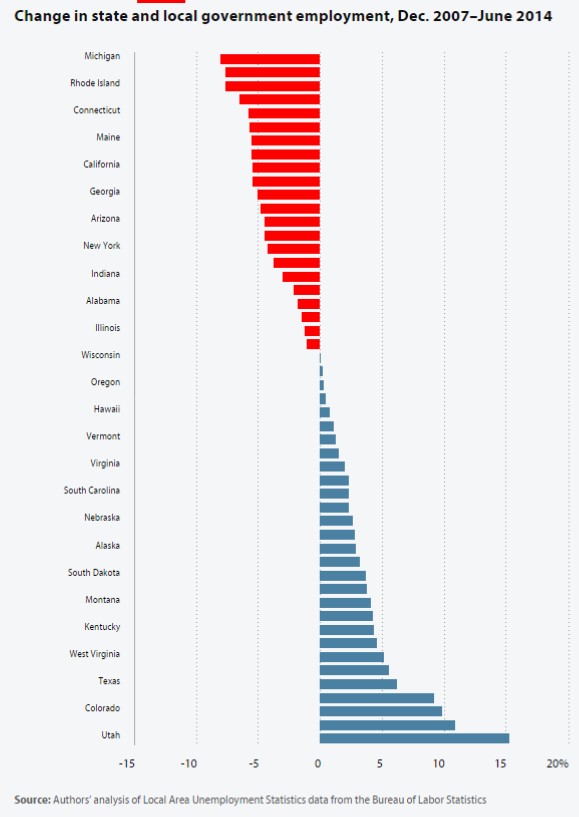
The drop in state and local government employment in Connecticut was the 5th largest in the nation between December 2007 and June 2014, according to data released by the Economic Policy Institute using data compiled by the Bureau of Labor Statistics. Connecticut’s government employment levels dropped 5.8 percent during the period.  Larger decreases in local and state government employees came in Michigan, 8 percent drop; Louisiana, 7.6 percent; Rhode Island, 7.6 percent; and Nestatesvada, 6.5 percent. Nationwide, 21 states saw a reduction in government employees, the remaining states had an increase in staffing during the six-and-a-half year period.

Among the states with the largest increases in public sector jobs were Utah, Colorado, North Carolina, Texas, Wyoming, West Virginia, Delaware and Kentucky.

While some state lawmakers attempted to preserve public-sector jobs—such as by raising taxes on the wealthy—too many chose to slash vital investments in the public sector, the Economic Policy Institute indicated, weakening the critical services provided by police, firefighters, teachers, and social workers.epi_logo

Since the start of the Great Recession in December 2007, 28 states plus the District of Columbia have added state and local government jobs, while 22 states have cut public sector workers. (see chart)

The Economic Policy Institute (EPI) is a nonprofit, nonpartisan think tank created in 1986 to  include the needs of low- and middle-income workers in economic policy discussions.  Washington, D.C.-based EPI conducts research and analysis on the economic status of working America.

Nationally, the state and local public sector had roughly 412,000 fewer jobs in July 2014 than it did in December 2007, and nearly 600,000 jobs fewer than at its peak in July 2008, the research found.

Connecticut Ranks #9 in MacArthur Fellows, Shows Net Gain of “Geniuses”

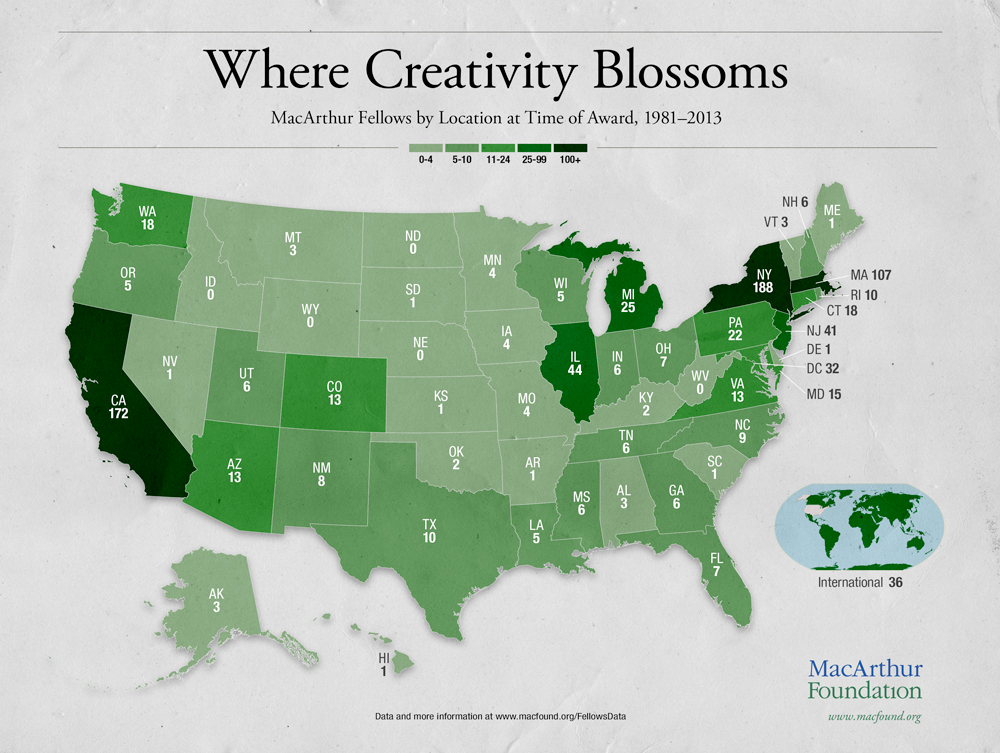
Each year, the MacArthur Foundation provides grants to some of the most talented minds in the country to provide them with the resources to pursue incredibly creative projects that just might change the world.  That’s why they’re often called the “genius awards.”  And it turns out that Connecticut ranks in the top 10 in recipients. Connecticut, with 18 recipients living in the state at the time of the award, ranks behind only New York (188), California (172), Massachusetts (107), Illinois (44), New Jersey (41), District of Columbia (32), Michigan (25), and Pennsylvania (22).  Tied with Connecticut ranking 9th is Washington state (18).

at time of _AwardThe MacArthur Foundation recently released data that shows where the 897 exceptionally creative individuals who have been recognized since 1981 were born, where they lived at the time they received the award and how mobile they are. This is the first time the data has been compiled and made publicly available.

This year's recipients will be announced on Sept. 17. The MacArthur Fellows Program awards unrestricted $625,000 fellowships to talented individuals who have shown extraordinary originality and dedication in their creative pursuits and a marked capacity for self-direction. Chicago-based MacArthur is one of the nation's largest independent foundations.

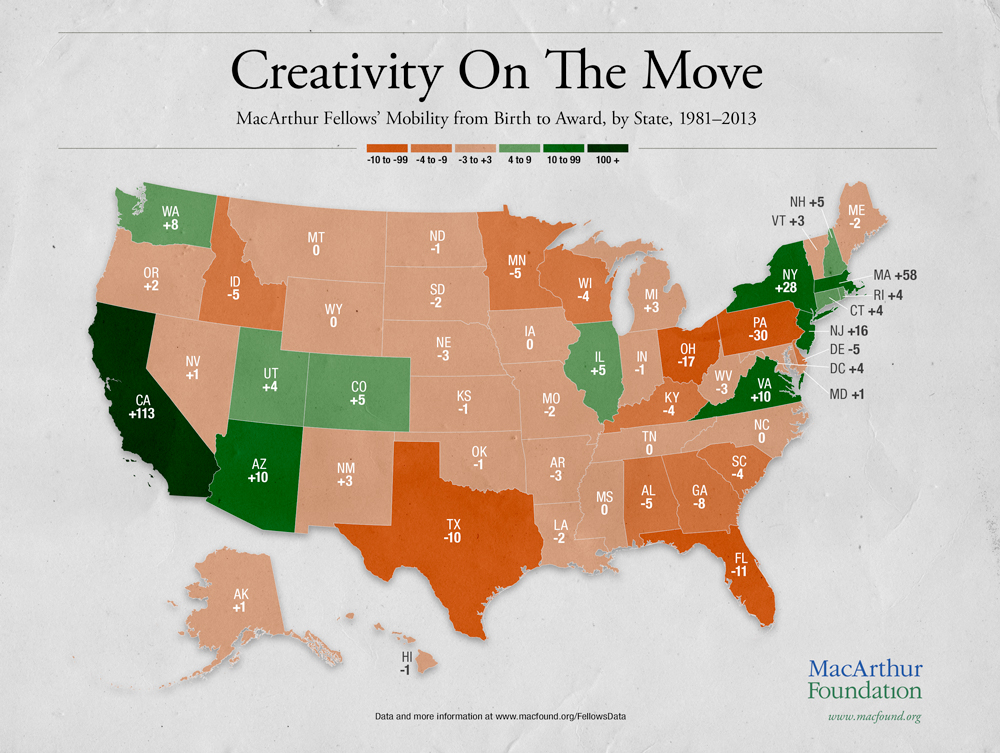
Another interesting finding is that MacArthur Fellows tend to not stay in one place. They will more likely end up somewhere other than their birthplace by the time they receive their award. California is the most popular state for fellows to move to with 113 new residents, followed by Massachusetts (58), New York (28), New Jersey (16) and a tie between Virginia and Arizona (10 each).  Connecticut also shows a net gain, at plus four.  Nationwide, 20 states reflect net gains, the remaining states have tended to lose future geniuses.

Nevada, Wyoming and Vermont, are the only states never to have produced a MacArthur Fellow.

The most recent Connecticut recipient is Daniel Spielman, a computer scientist at Yale University, selected in 2012. As the Henry Ford II Professor of Computer Science, Mathematics and Applied Science, Spielman “is a theoretical computer scientist studying abstract questions that nonetheless affect the essential aspects of daily life in modern society—how we communicate and how we measure, predict, and regulate our environment and our behavior,” according to the MacArthur profile of his selection.

In 2009, Richard Prum, an ornithologist at Yale University was among the 24 selected.  In his work, Prum draws from a wide spectrum of disciplines, including developmental biology, optical physics, molecular genetics, phylogenetics, paleontology, and behavior ecology, to address central questions about bird development, evolution, and behavior.

Officials note t hat innovative people tend to cluster near cultural centers and hotbeds of technological and scientific research, such as states with large cities like New York, California and Massachusetts, which may explain the mobility patterns of the fellows.  That may also have influenced Connecticut push in recent years into the biotechnology field and related disciplines.on the move  net plus

The data also highlight the contribution of immigrants to the creative culture of the United States. Nearly a quarter of MacArthur Fellows were born outside of the country. Though Fellows must be citizens or residents of the United States, their countries of origin span the globe.

Historian and 2003 Fellow Anders Winroth was born in Sweden and was teaching at Yale University at the time of the award, for example. The data indicates that 79% of the Fellows lived, at the time of the award, outside the state where they were born.  By way of comparison, according to recent U.S. Census Bureau data, approximately 30% of the general population and 42% of the college-educated population live outside the state where they were born.

An overwhelming number (169) of fellows were born in New York.  Other top states include California (59), Pennsylvania (52), Massachusetts (29) and Illinois (39). However, if you look at the data by per capita, those states are joined by Connecticut, Delaware, Rhode Island, Idaho, Montana and South Dakota, due to their relatively small populations.

The John D. and Catherine T. MacArthur Foundation, according to its website, “supports creative people and effective institutions committed to building a more just, verdant, and peaceful world. In addition to selecting the MacArthur Fellows, the Foundation works to defend human rights, advance global conservation and security, make cities better places, and understand how technology is affecting children and society.”

Daniel Spielman VIDEO (You Tube)     Richard Prum VIDEO (You Tube)


As CT Workforce Ages, Employers Look to Attract Young Workers, Seek State Policy Support

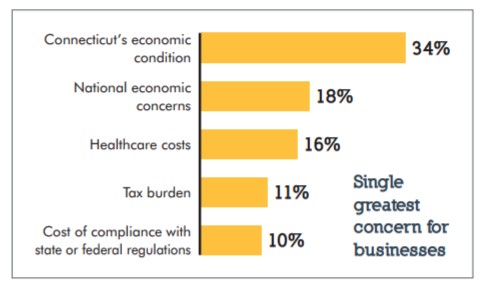
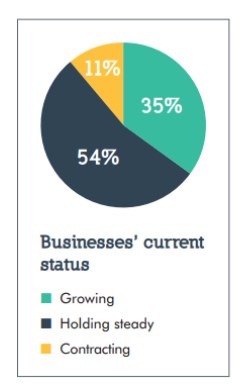
The good news:  three times as many Connecticut businesses say they are growing rather than contracting, innovation and investment in technology is strong and three-quarters of manufacturers surveyed say they are exporting. Those are among the lead findings in a survey of Connecticut businesses conducted by BlumShapiro and the Connecticut Business and Industry Association. While the 2014 Survey of Connecticut Businesses shows optimism that Connecticut’s business landscape continues to improve, there remain concerns about the economy and the ability to create jobs in Connecticut, as well as signs that the state’s workforce continues to get older. In fact, one in four respondents are facing a wave of retirements over the next decade, with at least 40% of their workforce aged 55 or older.CTbusiness survey

“Connecticut’s workforce is aging, with 53% of our respondents reporting that 20% or more of their workforce is 55 or above. There is much to be optimistic about in this survey, but the aging workforce is certainly a challenge we continue to face,” pointed out Joseph Kask, Office Managing Partner of BlumShapiro’s West Hartford office.

While 38% of companies offer flexible work hours, only 8% offer telecommuting. One in four respondents also has specific practices or policies designed to attract and retain younger workers, including internships, tuition reimbursement, high entry-level wages, apprenticeships, and school/college recruitment programs.  Many companies employ apprentices (34%), interns (57%), and temps (58%), and eight in ten companies (79%) plan to hire these workers for permanent positions.

The survey shows slightly greater anticipated demand for mid-level employees than entry level or line workers. Among businesses of all types, workforce demand through 2015 is concentrated on mid-level employees (33% of companies say this is their area of greatest demand) followed by entry-level employees (29%), line workers (28%), managers (8%), and executive leadership (2%).Other highlights of this year’s survey include:

  • 35% of businesses surveyed indicate they are growing; 11% indicate they are contracting.
  • 46% of businesses surveyed introduced new products or services in the past 12 months; 47% of them plan on introducing new products or services in the next 12 months.
  • Three-quarters of manufacturers surveyed are exporting.
  • 52% of businesses surveyed say the most important step policymakers can take to enhance business in Connecticut is lowering taxes; 24% say it is reducing regulations, and 11% say it is cutting government regulations.
  • 27% of businesses surveyed say technology is the greatest single investment, 23% say it is employee training, and 23% say it is property and facilities.

concern When asked how Connecticut should address the shortage of skilled workers, 32% of businesses surveyed say the state should reduce the cost of living, 28% say the state should support trade schools, 20% say the state should support education overall, and 20% say there should be incentive for training programs.business steady;

The industries included in the survey include manufacturing, professional services, construction, retail, hospitality/tourism, wholesale, insurance, finance, real estate and software/technology.  Nearly one-third of the respondents were in the manufacturing sector.

CBIA is Connecticut’s leading business organization, with 10,000 member companies.  BlumShapiro is the largest regional accounting, tax and business consulting firm based in New England, with Connecticut offices in West Hartford and Shelton.

Hartford Region Ranks #4 in USA in Digital Coupon Clicking, Survey Says

Coupons are fast-becoming money savers that are clicked, not clipped, and in few regions is that more the trend than in Greater Hartford.  Newly released data indicates that the Hartford-West Hartford-East Hartford market ranks #4 in the nation in the level of click activity, just behind New York, Boston and Philadelphia. According to results of a survey conducted by RetailMeNot, a leading digital offers destination, in conjunction with The Omnibus Company, the number of Americans who rely mostly on mobile coupons has been steadily increasing, as traditional scissor-clipped declines.

The study found that over the past four years, the use of printable coupons has dropped to 58 percent in 2014 from 73 percent in 2010. However, digital coupon usage has increased substantially as the world has gone more digital with online (27% in 2014 vs. 16% in 2010) and mobile (15% in 2014 vs. 4% in 2010) coupon usage.DigitalCoupon1

The latest edition of the company’s Shoppers Trend Report revealed that nearly all Americans (96 percent) are coupon users, and retailers and brands are steadily moving their marketing promotions to more mobile and digital formats. A separate survey of retail executives in May 2014, also conducted by The Omnibus Company, found that 75 percent of retailers believe that digital advertising delivers a higher ROI than offline advertising, including circulars and direct mail.

September has been designated as National Coupon Month, and based on the level of coupon click activity in ratio with each city’s population, the Northeast is leading the way.  Rounding out the top ten after New York, Boston, Philadelphia and Hartford are Providence, Baltimore, Pittsburgh, Washington, Tampa and Buffalo.

Western communities appear to lag in their savings activity, with the Las Vegas, Phoenix and Denver areas representing the bottom of the active-coupon-user list. In fact, the New York, Boston and Philadelphia areas appear to be four times more active than the Denver area at couponing, according to survey analysts.

In the top 10 active couponing cities, clothing and food categories ranked consistently at the top for click activity, followed by electronics and home and garden.Coupon

“Our survey findings show how a consumer’s mobile phone is becoming a key device within their savings tool kit as millions of shoppers increasingly take advantage of digital offers, promotions and sales opportunities.” says Trae Bodge, senior lifestyle editor for The Real Deal by RetailMeNot.

They survey also found that printable coupon usage for 18- to 34-year-olds dropped significantly in the past four years (40% in 2014 vs. 57% in 2010), and online coupon usage nearly tripled for those ages 50+ over the past four years (18% in 2014 vs. 7% in 2010).

According to the survey deep discounts aren’t the only deals that shoppers appreciate, as more than 2 in 5 (43%) coupon users consider discounts up to 25 percent to be a good deal. Respondents said they are most interested in deals that offer a specific dollar amount off of their purchase (30%).  The survey also shows that interest in different types of deals varies by region.

  • Coupon users living in the Northeast are more likely than those living in other regions to be most interested in receiving a specific percentage off a purchase (28% vs. 18% of the rest of the country).
  • Those living in the South are more likely than those living elsewhere (26% vs. 15% of the rest of the country) to be most interested in “buy one, get one free” deals.

In an August 2014 commissioned study conducted by Forrester Consulting on behalf of RetailMeNot, an overwhelming 59 percent of respondents stated that out of all the different types of promotions a retailer can employ, digital coupons still sway them the most when it comes to influencing a purchasing decision. The study also found that:

  • 63 percent of respondents agreed that digital coupons “close the deal” for them when undecided on a purchase,
  • More than 90 percent of smartphone and tablet users redeem their digital coupons within several days,retailmenot_logo_lg
  • Nearly 7 in 10 consumers (68%) said they strongly believe that digital coupons have a positive impact on a retailer’s brand
  • 68 percent state that coupons generate loyalty

RetailMeNot, Inc. operates what the company describes as the world’s largest marketplace for digital offers, and for the 12 months ended June 30, 2014, the company had more than 625 million visits to its websites.  See the complete list of the top 50 cities.

Top Cities (and Surrounding Metro Areas) Based on Click Activity

  1. New York-Newark-Jersey City
  2. Boston-Cambridge-Newton
  3. Philadelphia-Camden-Wilmington
  4. Hartford-West Hartford-East Hartford
  5. Providence-Warwick
  6.  Baltimore-Columbia-Towson
  7.  Pittsburgh
  8. Washington-Arlington-Alexandria
  9. Tampa-St. Petersburg-Clearwater
  10. Buffalo-Cheektowaga-Niagara Falls

Danbury-Based Ethan Allen In Retail Industry’s Hot 100; Only CT Company Named

The lone Connecticut-based retailer to make the list of the Hot 100 Retailers produced by the National Retail Federation is Danbury-based Ethan Allen Interiors, sliding in at #97.  Data from the national advocacy organization indicates 5 percent growth and 208 locations nationwide for the chain. Ethan Allen Interiors Inc. (NYSE:ETH) is a leading interior design company and manufacturer and retailer of quality home furnishings. The company offers free interior design service to its clients and sells a full range of furniture products and decorative accessories through ethanallen.com and a network of approximately 300 Design Centers in the United States and abroad.logo natl retail fed

Ethan Allen owns and operates eight manufacturing facilities including five manufacturing plants and one sawmill in the United States plus one plant in each of Mexico and Honduras. Approximately seventy percent of its products are made in its North American plants. Chairman, President and CEO is M. Farooq Kathwari.He has been president since 1985 and Chairman and Chief Executive Officer since 1987.

The company website indicates that “Ethan Allen is full-service. We conceptualize, design, source, manufacture, market, advertise, style, sell, distribute, and install. That means at headquarters our horizons are ever broadening. But our job is surprisingly straightforward: that is, to raise the bar — in all aspects of the company every day.”

Overall in Connecticut, the Federation highlighted the importance of the retail industry on the state’s economy:Ethan-Allen-Interiors-Inc.-ETH

  • Retail directly and indirectly supports 1 in 5 Connecticut jobs.
  • Retail is directly and indirectly responsible for 16% of Connecticut's GDP.
  • Retail directly and indirectly generates 15% of labor income in Connecticut.
  • Retail supports 476,568 jobs in Connecticut. (see breakdown below)

Among Connecticut’s neighboring New England states, Boston-based Wayfair was the #2 retailer nationwide on the Hot 100; Jordan’s Furniture, based in Taunton, MA was ranked #24; C & J Clark, headquartered in Newton, MA was #29; and Framingham-based Cumberland Farms was ranked #62.  In addition, LL Bean (Freeport, Maine) was #94 and BJ’s Wholesale Club (Westborough, MA) rounded out the list at #100.

Breaking down Connecticut employment by retail sector, the Federation reported:port_retail-ethan-allen-6-b

  1. Retail trade (including food services and drinking places) 17.2%
  2. Health care and social assistance 14.8%
  3. Finance and insurance 9.8%
  4. Manufacturing 9.4%
  5. Professional, scientific, and technical services 8.2%
  6. Other services, except public administration 5.8%
  7. Construction 5.8%
  8. Administrative and waste services 5.7%
  9. Real estate and rental and licensing 5.6%
  10. Education services 3.9%

Nationally, the top 10 leading the Hot 100 in sales growth were Albertsons (Boise, Idaho), Wayfair, Ascena Retail Group (Suffern, NY), Conn’s (The Woodlands, Texas), SpartanNash (GrandRapids, MI), Michael Kors Holdings (New York), Under Armour (Baltimore), Cardinal Health (Dublin, Ohio), Five Below (Philadelphia), and Amazon.com (Seattle).  Each of the top 10 companies had sales growth exceeding 25 percent from 2012 to 2013.

The data for the Hot 100 report was provided by Kantar Retail for the National Retail Federation.

Hurricane Sandy: 3rd Costliest Insured Loss Catastrophe Worldwide Since 1970

Hurricane Sandy, which hit Connecticut and the Northeast in October 2012, produced the 3rd costliest insured loss in the past 43 years, according to data compiled by Swiss Re and reported by Bloomberg. East HavenHalf of the 15 costliest catastrophes since 1970 have occurred in the past 10 years.  The analysis methodology, going back to 1970,  reviewed loss including property and business interruption, excluding liability and life insurance losses.  It was released this week by Bloomberg Businessweek.

Hurricane Sandy was reported to have an insured loss of $36.9 billion.   The Federal Emergency Management Agency has reported that although New England was spared the brunt of the storm, residents and businesses along the shores of Connecticut, Rhode Island, Massachusetts and New Hampshire suffered severe damages from wind and water, many losing homes and livelihoods.  New York and New Jersey were also hard-hit by the record-setting storm, which disrupted livelihoods, transportation and electricity grids and countless industries.

The top ranked insured lost was Hurricane Katrina, which catastrophically hit the Gulf Coast in August 2005, which losses estimated at $80.3 billion.  Next costliest was the earthquake which triggered a tsunami in Japan in March 2011, with an insured loss of $37.6 billion.  All loss amounts were indexed to 2013, for purposes of comparison.

Rounding out the top five costliest insured losses of nearly the past half-century were Hurricane Andrew, which hit Florida, neighboring states and the Bahamas in August 1992, with an insured loss of $27.6 billion and the terrorist attack on the World Trade CenHurricaneSandyter and the Pentagon on September 11, 2001, with insured losses of $25.6 billion.

Also ranked in the top 10 were the Northridge, California earthquake in 1994, Hurricane Ike in 2008, Hurricane Ivan in 2004, flooding in Thailand in 2011, and a New Zealand earthquake in 2011.

A September 2013 report by the U.S. Department of Commerce Economics and Statistics Administration had estimated that the total payout by the insurance industry related to Hurricane Sandy was expected to be reduced because much of the storm damage was caused by the storm surge and subsequent flooding was not covered by standard homeowner or small business commercial policies. Also, reportedly half of all losses of the insurance industry were expected to be covered by reinsurers.  The report indicated that the Insurance Information Institute estimated that insurers would pay $18.75 to $25 billion to over 1.5 million policyholders across 15 states including Connecticut, and the District of Columbia.  More than two-thirds of claims were anticipated from homeowners, with the highest value of claims  from commercial property owners ($9 billion)accounting for almost half of the value of claims paid, the report indicated.

The insurance industry had its third-most expensive year on record in 2012, led by Hurricane Sandy, with global economic losses from natural catastrophes and man-made disasters totaling $186 billion, according to a previous report issued by Swiss Re.


New Haven Leads the Way in Major Transportation Infrastructure Projects Underway

There’s a decidedly New Haven bend to the state’s largest ongoing transportation infrastructure projects.  A listing of the largest Department of Transportation (DOT) projects indicates that of the top 20 projects, eight of them are in New Haven, including four of the top six. The largest project is the construction of the Pearl Harbor Memorial Bridge, better known ats the Q-bridge, which carries I-95 over the Quinnipiac River.  The $417 million project began in 2009 and is slated for completion in 2015.

The second largest project is less than a stPearl Harbor Memorial Bridge Projectone’s throw away.  The reconstruction of the I-95/I-91/Route34 interchange in New Haven began in 2011 and is estimated to be completed in 2016, at a cost of $359.9 million.

Ranked as the third largest DOT infrastructure project now underway is the reconstruction of the Moses Wheeler Bridge, which brings I-95 over the Housatonic River in Stratford.

It’s back to New Haven for the fourth largest ongoing project, the facilities improvements to the New Haven Rail Yard, including construction of a component changeout shop.  The estimated cost is $160.9 million, with the project due to be completed next April.

The Hartford-New Britain area of central Connecticut has the fifth largest project, the construction of the CTfastrack bus corridor.  The I-95 West River Bridge replacement in New Haven is number six, followed by catenary replacement in Bridgeport (number 7) and New Haven (number 8).catenary

There are approximately 200 track miles of overhead catenary lines powering trains in Connecticut.  Officials have described the job of replacement those lines “while still operating the nation’s busiest commuter rail services, as a “monumental task.”  The original lines were put in place at the turn of the century – the 20th century – more than 100 years ago.

The full list of the top 20 projects currently underway in Connecticut was compiled by Hartford Business Journal with data provided by the state Department of Transportation.

CT Ranks #3 in Millionaires, Behind Maryland and New Jersey

Connecticut had 100,754 millionaire residents last year, up from 99,235 in 2012, comprising 7.32 percent of the state’s 1.4 million households. Connecticut ranked third in the U.S. in millionaires per-capita, according to published reports. Maryland ranked in first place using the per-capita measurement and New Jersey placed second. Connecticut was ranked fourth in 2012, but moved up one slot by overtaking Hawaii.

In the midst of its oil boom, North Dakota was the leader at minting millionaires in 2013, moving to #29 in the Millionaire Ranking, up from #43 in 2012.  Other big gainers in 2013 were Maine (up 11 slots to #25) and Louisiana (up 10 points to #32).

Phoenix Marketing International, a global marketing slistingervices firm, develops the  annual ranking of millionaires per capita by state.  The results care culled from their Global Wealth Monitor, a service that tracks affluent and high net worth households.

Nevada lost the most ground in the 2013 Millionaire Ranking, falling 20 positions to #39.  Other big drops were Arizona (losing 13 positions to fall to #34); Florida, Michigan and Idaho each fell 10 positions on the list.

While Maryland continued to lead the list, there were some changes among the other top five states: New Jersey and Connecticut each moved up one spot (to #2 and 3 respectively), while Hawaii fell two places to #4.  Alaska moved into the top 5 for the first time, while Massachusetts moved down to #6.

Rounding out the top 12 were Virginia, New Hampshire, Delaware, District of Columbia, California and Nmillionaires per capita by state map_02ew York.  At the other end of the list, in reverse order from the bottom, were Mississippi, Arkansas, Idaho, West Virginia, Kentucky, and Tennessee – the states with the fewest millionaires per capita.

Nationwide, the number of American households with more than a million in assets has hit 9.6 million, according to the Spectrem Group, surpassing the pre-recession high of 9.2 million.


CT One of 4 States to Require RN 24/7 in Nursing Homes; Study Finds Care Diminishes with Private Equity Ownership

In Tennessee, Rhode Island, Hawaii and Connecticut, nursing homes must have a registered nurse on duty 24/7.  A total of only thirteen states require 24-hour registered nurse coverage in some cases, but their statutes vary, and are somewhat less stringent than the four 24/7 states. As for the rest of the country, a registered nurse may be on premises for as few as 8 hours each day.

When U.S. News & World Report rated Connecticut’s nursing homes, one-third received the publication’s top rating.  About 32 percent of all nursing homes in Connecticut earned an overall five-star rating.  Areas of measurement included health inspections, nurse staffing, and quality measures.

That’s the good news.

Anothernr recent study found that nursing homes under private equity ownership are cited for more deficiencies and have fewer registered nurses on staff than other for-profit facilities.

Findings published in the Journal of Health Care Finance earlier this year indicated that “Results suggest troubling shifts in nurse staffing patterns of private equity nursing homes particularly in the case of Registered Nurses.”

Investigators analyzed quality indicators for about 350 nursing homes in Florida for each year between 2000 and 2007. These facilities had a 9 percent higher pressure ulcer risk prevalence and reported 21 percent higher deficiencies compared with a control group of Medicare/Medicaid-certified, for-profit, chain-affiliated, non-hospital nursing homes.

The private equity nursing homes also had 29 percent lower registered nurse hours per-patient-day, the study authors determined.169061_10150089614604020_4109266_n

The findings bore out the investigators' hypothesis that private equity ownership would correlate with diminished care quality. Previous research also has come to this conclusion, the authors noted.

The researchers recommended “transparency and accountability” to address concerns, concluding that “to ensure that nursing homes deliver high quality care and in instances where this expectation is belied, effective tools are available to punish the guilty and to compensate the victims.”

The study was done by researchers affiliated with academic institutions including the University of Arkansas for Medical Sciences, the University of Alabama at Birmingham and the University of Florida. Findings appear in the Journal of Health Care Finance.

MetroHartford, Connecticut Have Strong Linguistic Diversity; Plus for Global Marketplace

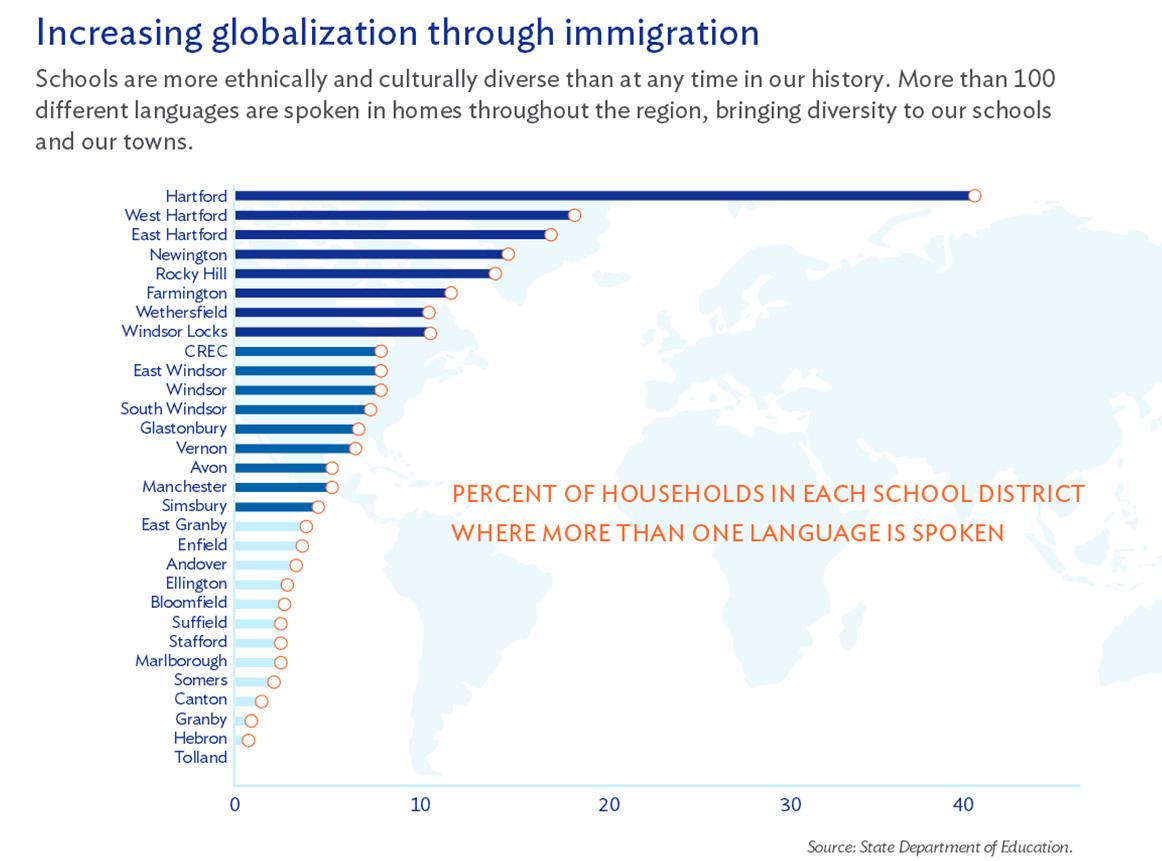
The number of languages spoken in Connecticut is considerably larger than most people expect.  That fact was highlighted in the recent MetroHartford Progress Points Report, prepared for the MetroHartford Alliance.  The linguistic diversity and global connections of the region are reflected in schools and employers, with more than 100 different languages spoken in homes of students attending schools throughout the region, according to the report.progress points report The “number of students with non-English home language” according to data on the website of the State Department of Education include Avon, 185; Bloomfield, 59; East Hartford, 1,124; Farmington, 474; Hartford, 8,371; Manchester, 335; Newington, 653; Simsbury, 228; South Windsor, 328; Tolland, 14; West Hartford, 1,876; and Windsor, 280.  The report indicated that 75 percent of English language learner (ELL) students are Spanish-speaking, 25 percent speak other languages at home.
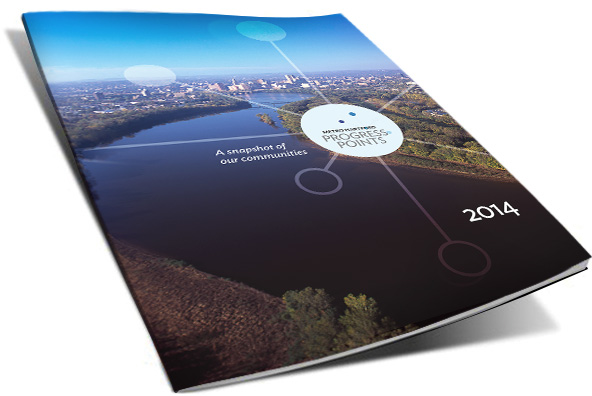
Some of the languages spoken in the homes of students attending schools in the region may be unexpected.  In Manchester, for example, the lead languages are Spanish, Bengali, and Urdu, and the list also includes Twi/Fante, Telugu, and Gujarati.

The Hartford region consists of 750,000 people living in the city of Hartford, its surrounding inner-ring suburbs, and outer-ring and rural towns that have historical, economic or social ties with the city.

In 2013, the Hartford Foundation for Public Giving gathered a group of regional stakeholders to develop a unique community partnership that came together to collect, analyze and disseminate a broad range of data, to place a spotlight on some of the central challenges and opportunities for the region. The goal was to share critical information “with residents and policymakers that will result in meaningful dialogue and propel action in our communities.”  Among the report’s areas of research is “increasing globalization through immigration,” using data from the state Department of Education (SDE).progresspointslogo
Sponsoring organizations of Metro Hartford Progress Points include Capital Workforce Partners, Trinity College’s Center for Urban and Cultural Studies, the Capitol Region Council of Governments, the Hartford Foundation for Public Giving, Hispanic Health Council, MetroHartford Alliance, United Way of Central and Northeastern Connecticut, Urban League of Greater Hartford and the City of Hartford.

Data on English-language learners and languages spoken in schools is based on reports retrieved from the SDE CEDAR Data Tables on English Language Learners, for both Number of English Language Learners (ELL) and Languages Spoken by Connecticut Students for the 2010-11 school year, the most recent data available.

Statewide, the variety of languages spoken by Connecticut students is considerable.  Nearly 73,000 students live in homes with a “non-English home language,” according to the State Department of Education. The leaders include:

  • Spanish                        47,190
  • Portuguese                  2,846
  • Polish                          2,279
  • Albanian                      1,263
  • Chinese                       2,215
  • Creole-Haitian             1,714
  • Arabic                         1,159
  • Vietnamese                 1,157
  • Urdu                            1,131
  • Russian                        811
  • French                         762
  • Gujarati                       738
  • Serbo-Croatian            705

For the uninitiated, Gujarātī is an Indo-Aryan language spoken by about 46 million people in the Indian states of Gujarat, Maharashtra, Rajasthan, Karnataka and Madhya Pradesh, and also in Bangladesh, Fiji, Kenya, Malawi, Mauritius, Oman, Pakistan, Réunion, Singapore, South Africa, Tanzania, Uganda, United Kingdom, USA, Zambia and Zimbabwe.  And, apparently, Connecticut - in the homes of 738 slanguages spokentudents.
Close to 100 million people around the world speak Urdu. It is the official language of Pakistan, a status and is also spoken and understood in parts of India, Bangladesh, Nepal, the Middle East.

The Progress Points partners include: Capital Workforce Partners, Capitol Region Council of Governments, City of Hartford, Hartford Foundation for Public Giving, Hispanic Health Council, MetroHartford Alliance, Trinity College Center for Urban and Global Studies, United Way of Central and Northeastern Connecticut , and the Urban League of Greater Hartford.

https://www.youtube.com/watch?feature=player_embedded&v=0zTQjsbNlw0