New “Digital Cookie” Program Brings On-Line Sales to Girl Scouts of Connecticut
/Another time-honored tradition has transitioned to the digital age. Girl Scouts are now selling their celebrated line of cookies on-line. Connecticut is one of the Girl Scout Councils across the country to be participating in the inaugural year of the Digital Cookie program – and the response has been better than expected.
The new Digital Cookie program strengthens, expands, and enhances the well-known and highly regarded Girl Scout Cookie Program by “combining the values and lessons of door-to-door and booth sales with crucial 21st century business and entrepreneurial skills,” official say, “continuing Girl Scouts’ long tradition of preparing today’s girls to be the female leaders of tomorrow.”
Here’s how it works: Prospective cookie customers are able to purchase cookies on-line, after having been contacted by a Girl Scout. (Or you can tell a Girl Scout you know that you're interested in becoming a Digital Cookie customer.) Each scout has their own personal page thru which the cookies are ordered, so the scout will receive credit for the sale, just as when the transaction is completed in-person. Officials say that some girls will market their online cookie business by inviting customers to visit their personalized cookie websites through a link sent via email. Others will take in-person orders using a unique mobile app designed specifically for Girl Scouts.
 “We were excited here in Connecticut to give our Girl Scouts the opportunity to participate in a pilot of Digital Cookie, a first-of-its-kind web platform that lets girls sell cookies from their own protected, personalized websites,” said Tiffany Ventura Thiele, Communications & PR Manager for Girl Scouts of Connecticut.
“Digital Cookie represents the next evolution of the iconic Girl Scout Cookie Program, adding a digital layer that broadens and strengthens the Five Skills girl learn, while introducing modern elements like website customization and e-commerce,” Thiele explained.
Those skills haven’t changed: goal-setting, decision-making, money management, people skills and business ethics. With the new on-line system, customers will be able to pay by credit card and have cookies either delivered by the Girl Scout or shipped.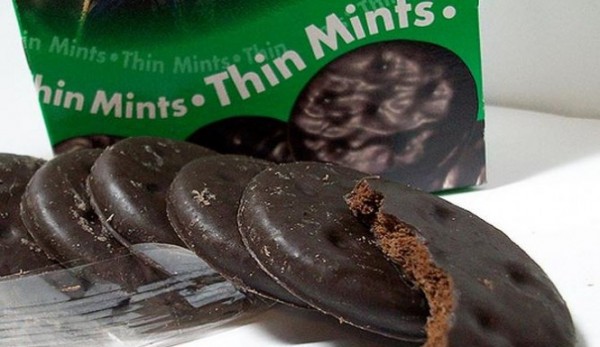
Sales are running strong thus far. To date, in Connecticut, nearly 38,000 packages have been sold on-line, with more than 2,500 girls participating. In fact, orders placed in Connecticut have been shipped to 49 states and the District of Columbia, as well as to military personnel. (If you’re wondering, nearly two million boxes of cookies were delivered this past weekend, based on initial orders taken by Girl Scouts in Connecticut.)
Nationwide, a majority of the 112 local Girl Scout councils are participating in the Digital Cookie program for the inaugural 2014–2015 cookie season, which began in January. Additional councils expected to be on board by the end of the year, using an updated version of the program, which will be tweaked based on the feedback received from participating Councils.
 Officials stress that “because 100 percent of the net revenue raised through the Girl Scout Cookie Program stays with local councils, when you purchase Girl Scout Cookies you’re not only getting a delicious treat — you’re also making an important investment in your community.”
There are two new cookie options locally this year: Rah-Rah Raisins, an oatmeal cookie, and Toffee-tastics, a gluten-free butter cookie with toffee pieces.
An informal poll on the national Girl Scouts website asks visitors to vote for their favorite Girl Scout cookie. The top three thus far: Samoas (30%), Thin Mints (27%), and Samoas (13%).
If you’ve yet to place an order, there’s still time if you have a sweet tooth for Samoas, Thin Mints, Tagalongs, Do-Si-Dos, Savannah Smiles, Trefolis or the two new offerings. The Girl Scouts of Connecticut’s cookie program will continue with booth sales through the month of March, so there’s still a chance to fill the cookie jar.
 n,
n, 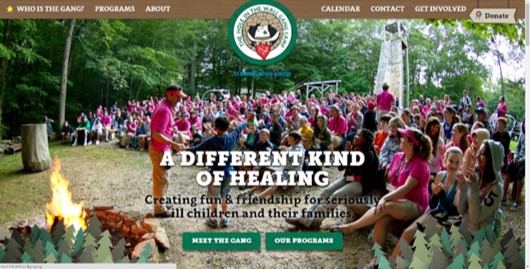
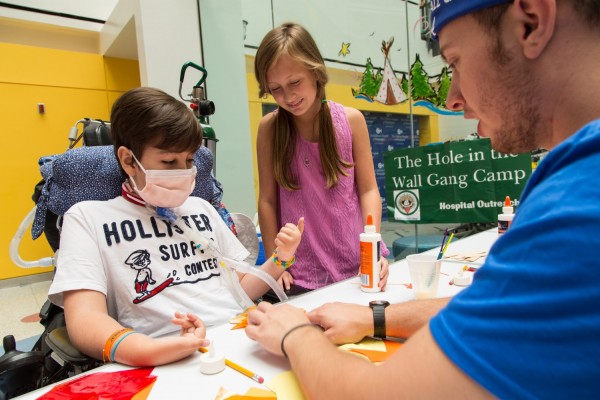
 ll, there were “approximately 800 healing experiences with children and families throughout the week, bringing the safety, respect and love of Camp to many families” in Philadelphia.
 s.
s. The top 10 institutions are Johns Hopkins, University of Michigan (Ann Arbor), University of Washington (Seattle), University of Wisconsin (Madison), University of California (San Diego), University of California (San Francisco), Harvard, Duke, University of North Carolina (Chapel Hill) and University of California (Los Angeles).
 The survey collects information on R&D expenditures by field of research and source of funds and also gathers information on types of research and expenses and headcounts of R&D personnel. The survey is an annual census of institutions that expended at least $150,000 in separately budgeted R&D during the fiscal year.


 elephant venues and out-of-control costs that have plagued Olympic hosts for decades.” Recently adopted IOC guidelines are aimed at reducing costs by host cities and are more amenable to having some events take place outside the immediate Olympic perimeter.
 s far on whether such a tour has been scheduled. Possible sports at the Connecticut venues, as suggested by CRDA, include badminton, table tennis, wrestling, martial arts, and weightlifting. Basketball, volleyball and soccer could be additional possibilities, along with tennis. The Connecticut Tennis Center is described as the fourth largest tennis venue in the world, with seating capacity of 15,000. Within the past week, options for major renovations or reconstruction of Hartford’s XL Center have been announced, with a decision on how to proceed due later this year.
 opened a state-of-the-art 300,000 square foot facility headquartered in
 tently and robustly in research.” Describing Connecticut as “the home of innovation in engineering,” Esty said that engineers provide “the inspiration to solve the world’s problems.”
 Among the faculty award recipients was Dr. Alfred A. Gates, Professor of Engineering at Central Connecticut State University, whose two decades at the university have been a steady stream of technical innovation and teaching. Gates noted that CCSU has just become the first university in the United States to receive a

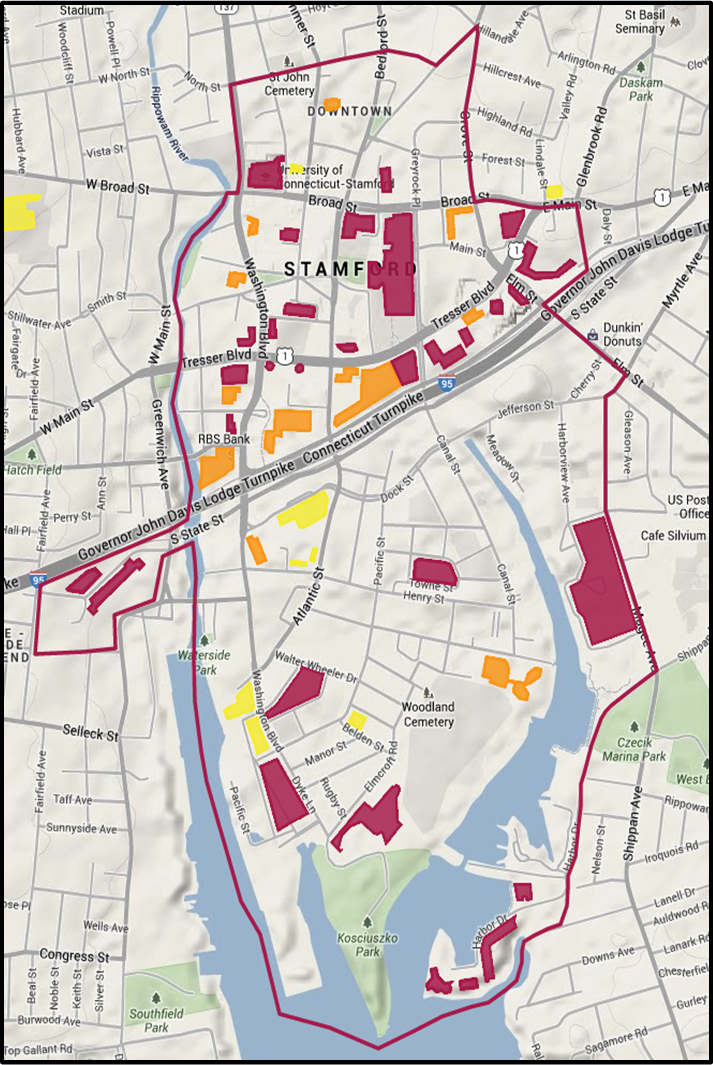 “These collective efforts will establish the Stamford 2030 District as an example of a financially viable, sustainability focused, multi-sector driven effort that maximizes profitability and prosperity for all involved. Through collaboration of diverse stakeholders, leveraging existing and developing new incentives and financing mechanisms, and creating and sharing joint resources, the Stamford 2030 District will prove the business case for healthy and high performing buildings.”


 o their teams as “Raiders” – not “Red Raiders.” Promoting their 2014 Thanksgiving Day football rivalry, the Torrington website said “Come out to see the Raiders take on the Watertown Indians in the 49th renewal of this holiday classic. The Raiders have held off the Indian attack the past two seasons…”

 chester High School (Indians), Montville High School (Indians), and Newington High School (Indians). Also, the Nonnewaug (Woodbury) High School (Chiefs), North Haven Senior High School (Indians), RHAM Junior Senior High School (Sachems), Valley Regional (Deep River) High School (Warriors), Wamogo (Litchfield) Regional High School (Warriors), Watertown High School (Indians), Wilcox Technical (Meriden) High School (Indians), Wilton High School (Warriors), Windsor High School (Warriors), Windsor Locks High School (Raiders).