State Economy Stagnating, Residents Have Less Optimism but Fewer Plans to Leave, Survey Shows
/Connecticut residents generally view the state’s economy as stagnating, even as a majority consider the state a good place to live and raise a family, and fewer residents say it is likely that they will move out of the state. According to the latest quarterly Connecticut Consumer Confidence Survey, those who view the Connecticut economy as improving has dropped by 10 points between the end of March and the end of September, from one-third of those surveyed (33%) to less than one quarter (23%).
An increasing percentage of state residents consider business conditions as having worsened during the past six months, and fewer think business conditions will improve in the next six months, as compared with the March survey. Only 22 percent believe that conditions have improved during the past six months, and 74 percent believe business conditions will stay the same or worsen during the next six months (53% stay the same, 21% worsen).
Administered for InformCT by the Connecticut Economic Resource Center, Inc. (CERC) and Smith & Company, the analysis is based on the responses of residents across Connecticut and addresses key economic issues such as overall confidence, reactions to housing prices, upscale consumer purchases, leisure spending and current investments. The research provides a measure of the strength of the Connecticut economy as well as a gauge of select economic factors, officials said.
Reflecting the diminishing consumer confidence in the state’s economy, the percentage who would make a major consumer expenditure has also dropped 10 points since the end of the 1st quarter – from more than 1/3 to just one-quarter (26%). Nine in ten state residents believe that there are not enough jobs in Connecticut or that jobs are very hard to get, and those percentages have nudged upwards through the year.
“A higher percentage of respondents have accepted the fact that business conditions “are what they are” and are not going to change soon. This feeling is also reflected in the ‘not improving’ job market,” said Alissa DeJonge, Vice President of Research at CERC.
Nonetheless, those who live in Connecticut are more inclined to stay, according to the survey. Those who say it is likely they’ll move out in the next 5 years has shifted dramatically between March and September. At the end of the first quarter, in March, there was an even split, 39%-39% on the likely to stay or go question. The latest data indicates that a 12 point differential has developed, with 46 percent saying it is unlikely (either somewhat unlikely or very unlikely) that they will move out in the next five years, and only 34 percent respond that moving is likely. The largest segment, one-third of those surveyed, say a move out of Connecticut is very unlikely.
The survey also found that a narrow majority agree that Connecticut is a good place to live and raise a family (51 percent), although the percentage who "strongly agree" has declined by 2 percentage points in each of this year’s quarterly surveys and now stands at 14 percent.
Among other economic indicators, the percentage concerned about being able to afford health insurance has edged up slightly, from 53 percent to 55 percent, those who anticipate refina ncing or purchasing a home in the next six months dropped from by one-third, from 18 percent in the first quarter of the year to 12 percent by the end of the third quarter. Interestingly, buying a car appears immune to economic outlook – the percentage who anticipate that purchase in the next six months has been nearly identical in each quarterly survey this year.
“Many feel that they are worse off now than 6 months ago and this downward spiral may continue through the next 6 months,” added Stephen A. Smith, President of Smith & Company. “In addition, many do not feel that the Connecticut economy is improving and over half continue to express concern about their ability to retire comfortably.” In the survey, 55 percent indicated they do not believe they will “have enough money to retire comfortably,” up from 51 percent in March and 53 percent in June.
As the state moves forward with major investments in transportation, the percentage who believe traffic congestion is severe enough to justify tolls on major highways hasn’t budged all year – only one-quarter agree. The percentage of those who disagree has decreased slightly – from 56 percent to 50 percent, with 6 percent shifting to the “not sure” category between the first quarter and third quarter surveys.
InformCT is a public-private partnership that currently includes staff from CERC and the Connecticut Data Collaborative. CERC, based in Rocky Hill, is a nonprofit corporation and public-private partnership that provides economic development services consistent with state strategies, leveraging Connecticut’s unique advantages as a premier business location. Smith & Company LLC is a market research firm. More information about the survey, and subscribing, can be found at www.informct.org.
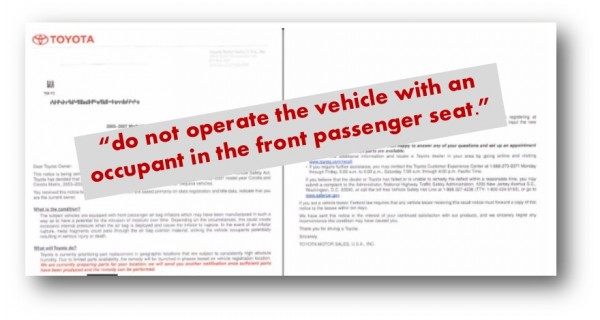

 The company, and impacted automakers, are making parts necessary to accomplish repairs available in regions of the country with humid climates first, because humidity has been said to increase the risk of air bag rupture. Connecticut residents, living in a region not known for its humidity, are not a priority for the repair, and continue to wait for word when repairs for their recalled vehicles can be made.



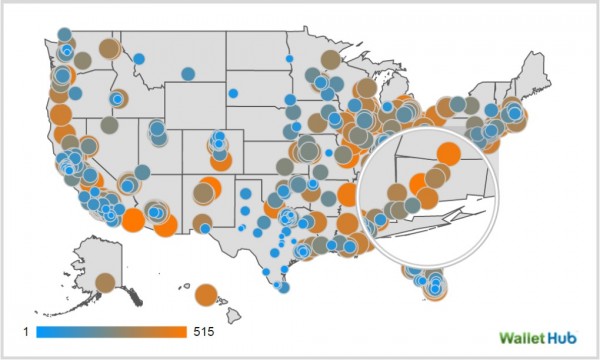 Joan Fitzgerald, Professor of Public Policy and Urban Affairs at Northeastern University, told WalletHub: “It is not an accident that many of the fastest growing cities have thriving high tech and biotech sectors along with financial services and usually a strong health care sector. But another priority has to be balance. In many cities, manufacturing loses out over other uses.”
 sustainable lifestyle beverate brand for teens and tweens. The company's goal is to inspire young people to realize the power of consumer choices to effect social and environmental change.
 The five awards judges - Sherrell Dorsey of Uber and Triple Pundit, Adam Dotson of Ironwood Capital, Claire Leonardi, an advisor to reSET's Social Enterprise Investment Fund and former CEO of Connnecticut Innovations, Anthony Price of LootScout and Paul Witinski of Ironwood Capital - narrowed down more than 100 applicants to 12 honorees. The People’s Choice winner was selected via more than 1,800 online votes.
 “I would like to congratulate all of the members of Stamford 2030 for joining together to make vital changes for our community," said Stamford Mayor David Martin. "The partners in Stamford 2030 have really stepped up for the success and sustainability of our city and the surrounding area. And they are not alone. For our part, the city is committed to improving storm resiliency and moving forward with the Energy Improvement District. We believe these efforts are tied to our economic development and ability to attract people to Stamford while conserving important natural resources, all necessary for sustained growth and prosperity.”



 Alabama’s special session – the first in five years - was held over the summer, convening on July 13 and ending in disarray in mid-August, with a second special session on the state budget convened and concluded in mid-September. Among the
 Democratic legislative leaders and Republican legislative leaders are

 k of Connecticut network.
 7 through 2006, and continues to consult. He has also served multiple terms as chairman of the NAB. Prior to founding NewCity Communications, he was president of Katz Broadcasting Co.