Seven CT Financial Institutions Earn Federal Designation to Assist Low Income Communities
/Across the country, there are 963 institutions designated by the U.S. Department of the Treasury’s Community Development Financial Institutions Fund as having earned CDFI Certification. Seven of them are based in Connecticut’s urban centers, the focus of their financial activities.
CDFIs are specialized community-based financial institutions with a mission to promote economic development by providing financial products and services to people and communities underserved by traditional financial in stitutions, particularly in low income communities and to people who lack access to financing. By offering tailored resources and innovative programs that invest federal dollars alongside private sector capital, the CDFI Fund serves mission-driven financial institutions that take a market-based approach to supporting economically disadvantaged communities. The institutions to receive CDFI Certification in Connecticut are in the state’s major cities:
- Housing Development Fund (Stamford)
- HEDCO Inc. (Hartford)
- Community Capitol Fund (Bridgeport)
- Greater New Haven Community Loan Fund (New Haven)
- Hartford Community Loan Fund (Hartford)
- Seasons Federal Credit Union (Hartford)
- Start Community Bank (New Haven)
CDFIs include regulated institutions such as community development banks and credit unions, and non-regulated institutions like loan and venture capital funds. By building the capacity of a nationwide network of CDFIs, the CDFI Fund works to empower low-income and underserved people and communities to enter the financial mainstream.
Certified CDFIs are eligible to apply for awards through a variety of programs offered by the CDFI Fund. These awards enable CDFIs to finance a wide range of activities—including mortgage lending for first-time homebuyers, flexible underwriting for community facilities, and commercial loans for businesses in low-income areas. Through varying strategies, each CDFI contributes to the cultivation of a healthy and stable local economy, the CDFI website points out.
Speaking last week in Detroit, where CDFI Certified institutions are involved with the city’s rebound, CDFI Director Annie Donovan said “CDFIs have always led the way, demonstrating to mainstream investors that there are opportunities in communities that have been overlooked, or judged to be too risky. If mainstream financial institutions move into markets behind us, we must continue to blaze new trails, to find the next community that is even harder to serve than the last one.”
The Housing Development Fund, Inc. was established in 1989 as a nonprofit organization to finance the development of affordable housing in Stamford, CT. Today, with offices in Stamford, Bridgeport, and Danbury, HDF provides lending and homeownership counseling services to the entire state of Connecticut as well as Nassau, Suffolk, Rockland, and Westchester counties in New York.
Community  Capital Fund facilitates the flow of capital and expertise into housing and economic developments that “benefit low and moderate income people in the Greater Bridgeport Area.” It was formed in 2005 from the merger of two loans funds.
The 27-year old Greater New Haven Community Loan Fund’s mission is to create and sustain vibrant neighborhoods and communities. Through its lending and investment, the Loan Fund is the flexible source of alternative financing for affordable housing and community development in the greater New Haven area.
Since 1975 HEDCO Inc. has helped clients and their communities improve, achieve and succeed by supporting their growth and progress. They “build productive partnerships, create new programs that meet the changing needs of entrepreneurs and increase the funds available to help people build and improve their business and non-profit organizations.”
Formerly t he Middlesex Credit Union, Seasons Federal Credit Union was renamed in 2006 after expanding into New Haven County. Over the years, the credit union has “broadened its services beyond simple share savings and small loans to meet the increasingly diverse financial needs of its growing membership.”
The First City Fund Corporation (FCFC), Start Community Bank’s parent company, was formed in 2004 as a result of a challenge of the city of New Haven to New Haven Savings Bank’s conversion to a public company. In the fall of 2012 the bank received certification as a Community Development Financial Institution, (CDFI). There are only 100 CDFI certified banks in the country, and Start Community Bank is the only bank so designated in New Haven.
The work of the Hartford Community Loan Fund is to provide and promote just and affordable financial services that benefit low-wealth residents of Hartford. HCLF helps borrowers overcome barriers— such as credit history, language, cultural differences, financial literacy, or lack of economic assets--that can isolate people from the financial mainstream. As the Fund’s slogan indicates, “We Finance Hope.”
Providing access to affordable financial products and services in underserved communities is a vital part of the CDFI Fund’s mission. By building the capacity of a nation-wide network of specialized financial institutions serving economically distressed communities, low- income people are empowered to enter the financial mainstream, the CDFI website emphasizes.
Donovan, in her Detroit speech last week, underscored that “CDFIs do connect their strategies with many community stakeholders, but let’s make sure we aren’t leaving out the important voices of the people who live in the communities we serve. If we are to deepen our impact and increase economic opportunity, we must know and serve our target markets from the bottom up.”

 ncing or purchasing a home in the next six months dropped from by one-third, from 18 percent in the first quarter of the year to 12 percent by the end of the third quarter. Interestingly, buying a car appears immune to economic outlook – the percentage who anticipate that purchase in the next six months has been nearly identical in each quarterly survey this year.


 The company, and impacted automakers, are making parts necessary to accomplish repairs available in regions of the country with humid climates first, because humidity has been said to increase the risk of air bag rupture. Connecticut residents, living in a region not known for its humidity, are not a priority for the repair, and continue to wait for word when repairs for their recalled vehicles can be made.



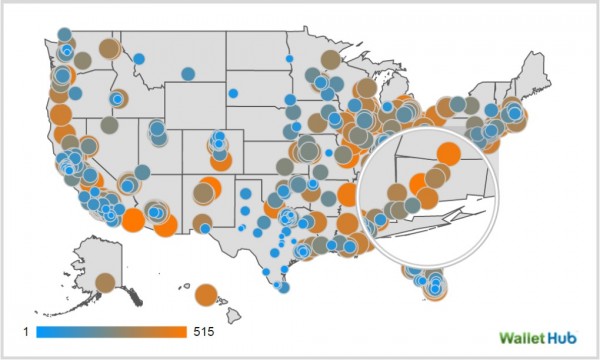 Joan Fitzgerald, Professor of Public Policy and Urban Affairs at Northeastern University, told WalletHub: “It is not an accident that many of the fastest growing cities have thriving high tech and biotech sectors along with financial services and usually a strong health care sector. But another priority has to be balance. In many cities, manufacturing loses out over other uses.”
 sustainable lifestyle beverate brand for teens and tweens. The company's goal is to inspire young people to realize the power of consumer choices to effect social and environmental change.
 The five awards judges - Sherrell Dorsey of Uber and Triple Pundit, Adam Dotson of Ironwood Capital, Claire Leonardi, an advisor to reSET's Social Enterprise Investment Fund and former CEO of Connnecticut Innovations, Anthony Price of LootScout and Paul Witinski of Ironwood Capital - narrowed down more than 100 applicants to 12 honorees. The People’s Choice winner was selected via more than 1,800 online votes.
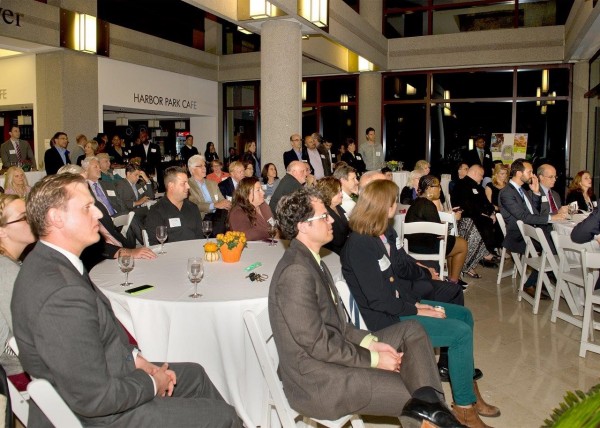 “I would like to congratulate all of the members of Stamford 2030 for joining together to make vital changes for our community," said Stamford Mayor David Martin. "The partners in Stamford 2030 have really stepped up for the success and sustainability of our city and the surrounding area. And they are not alone. For our part, the city is committed to improving storm resiliency and moving forward with the Energy Improvement District. We believe these efforts are tied to our economic development and ability to attract people to Stamford while conserving important natural resources, all necessary for sustained growth and prosperity.”



 Alabama’s special session – the first in five years - was held over the summer, convening on July 13 and ending in disarray in mid-August, with a second special session on the state budget convened and concluded in mid-September. Among the
 Democratic legislative leaders and Republican legislative leaders are

 k of Connecticut network.
 7 through 2006, and continues to consult. He has also served multiple terms as chairman of the NAB. Prior to founding NewCity Communications, he was president of Katz Broadcasting Co.