Hartford, Stamford Among Nation's Most Congested Highways
/A new study by the American Highway Users Alliance identifies America’s 50 worst bottlenecks and finds that the very worst bottleneck, as measured by hours of delay, is in Chicago, IL. Los Angeles, CA owns the next six of the top 10. While Connecticut’s highways did not reach the top 50, two bottlenecks did receive honorable – or dishonorable – mention.
The I-84 section in Hartford between Trumbull Street and Park Street, and the I-95 section in Stamford between Fairfield Avenue and Elm Street, both made the list of 43 “Other Zones of Congestion” in the U.S. -thereby earning status as among the nation's 100 most congested traffic tie-ups. According to the data, the average length of the back-up in Hartford is 1.4 miles; in Stamford 1.3 miles. The average total annual delay at the Hartford bottleneck is 705,000 hours; in Stamford 494,000 hours of lost productivity.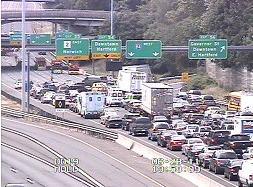
Speaking at the American Highway Users Alliance press conference where the report was released, U.S. Transportation Secretary Anthony Foxx said, “This report furthers the unassailable truth that America is stuck in traffic. The good news is that this problem is solvable, and Congress can be part of the solution. As a long-term surface transportation bill moves through conference, I urge our elected leaders to provide the funding growth and policies that are necessary to improve commutes, to raise the bar for safety, and to keep the country moving in the 21st century.”
Hartford and Stamford were among 43 “zones of congestion” around the country that were noted in the report in addition to the top 50. The report indicated that “although congested, the worst segments of highway do not have the same severe delays/mile as the nationally ranked bottlenecks.” They are, the report points out, in many cases “the most congested in their states.”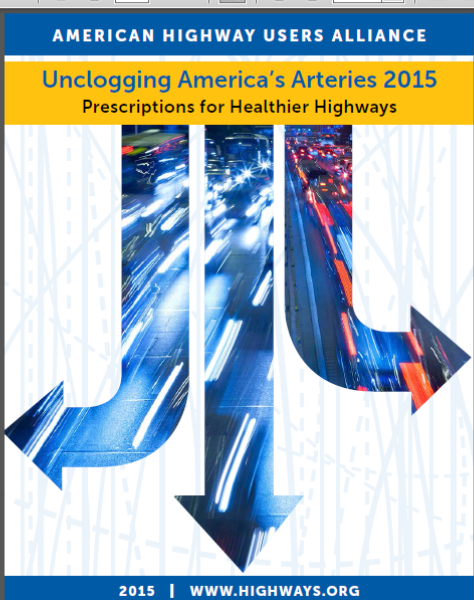
I-84 in Hartford may be receiving a re-make over the next decade. The Department of Transportation is in the midst of determining the preferred option among three possibilities - to replace the I-84 raised viaduct or replace it with a ground-level highway or dig a tunnel. The various options have been presented in a series of public meetings in recent months, and a decision is anticipated early next year.
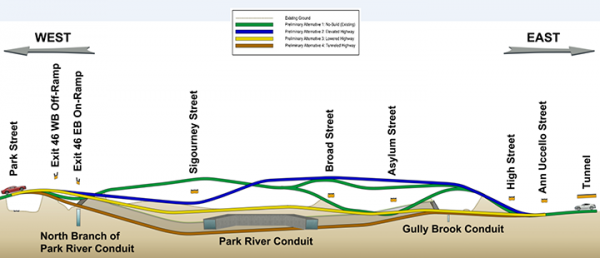 The work, which has yet to be funded, is likely to include moving or eliminating some exits and entrances – and possibly adding others in new locations - to improve traffic flow. Cost estimates range from $4 billion to $12 billion, depending on the option selected. Upcoming public meetings are to be held in East Hartford on Dec. 2 and Hartford on Dec. 10.
In the top-ranked Chicago traffic bottleneck highlighted in the report, the Kennedy Expressway (I-90) between the Circle Interchange (I-290) and Edens junction (I-94), was found to extend 12 miles, costing motorists 16.9 million hours’ worth of time, equivalent to $418 million in 2014. More than 6.3 million gallons of fuel is wasted on I-90 while cars idle or crawl in traffic.
Besides identifying and ranking the nation’s 50 worst traffic bottlenecks, the study, Unclogging America’s Arteries 2015, examines the top 30 chokepoints closely and details many of the major benefits that will accrue to society by fixing them. In addition to improving mobility and quality of life for motorists, the report indicated that fixing the top 30 bottlenecks alone would, over 20 years:
- Save $39 billion due to lost time,
- Save 830 million gallons of fuel,
- Reduce over 17 billion pounds of greenhouse gas emissions (CO2), and
- Prevent 211,000 vehicle crashes
“These findings are critically important and mean that our nation will derive huge benefits from fixing the worst gridlock in our nation’s highway system: benefits that go way beyond improving mobility for highway users,” states Greg Cohen, President and CEO of the American Highway Users Alliance.
Amongst the top 10 was New York City with the 8th and 9th worst bottleneck at the notorious Lincoln Tunnel and on I-95 from Manhattan across the Bronx. Metropolitan New York also had the 18th, 19th, 21st, 31st, 33rd, 37th, and 42nd – ranked chokepoints.
As for the bottlenecks themselves, the study’s top 50 list includes trouble spots in the following Metropolitan Areas: 12 in Los Angeles, 9 in and around New York City, 3 in Chicago, 3 near Washington DC, 3 in Houston, 3 in Boston, 3 in Dallas, 3 in Miami, 2 in Atlanta, 2 in Philadelphia, and 2 in San Francisco/Oakland.
The report notes that bottlenecks can be fixed and points to specific chokepoints that have been addressed and, as a result, were not included in the rankings. Projects cited include the Woodrow Wilson Bridge replacement on I-495 in the Washington, DC area, the Marquette Interchange in Milwaukee, and the Katy Freeway reconstruction in Houston.




 “Key and First Niagara are a powerful combination, driven by a shared commitment to the clients and to the communities we serve,” KeyCorp Chairman and CEO Beth Mooney said. “This transformational opportunity will bring compelling and complementary capabilities to our shared three million clients, while driving meaningful synergies and enhancing shareholder value. KeyBank and First Niagara both have values-based cultures and a long-term commitment to and experience with the region.”

 The celebration also included a tour of the lab’s research and development projects. Employees from Alstom’s nearby Windsor, campus, where the
  company employs more than 1,000 people, also attended tours of the new facility.


 In
In  stitutions, particularly in low income communities and to people who lack access to financing. By offering tailored resources and innovative programs that invest federal dollars alongside private sector capital, the CDFI Fund serves mission-driven financial institutions that take a market-based approach to supporting economically disadvantaged communities. The institutions to receive CDFI Certification in Connecticut are in the state’s major cities:
 Capital Fund facilitates the flow of capital and expertise into housing and economic developments that “benefit low and moderate income people in the Greater Bridgeport Area.” It was formed in 2005 from the merger of two loans funds.
 he Middlesex Credit Union, Seasons Federal Credit Union was renamed in 2006 after expanding into New Haven County. Over the years, the credit union has “broadened its services beyond simple share savings and small loans to meet the increasingly diverse financial needs of its growing membership.”
 such as credit history, language, cultural differences, financial literacy, or lack of economic assets--that can isolate people from the financial mainstream. As the Fund’s slogan indicates, “We Finance Hope.”

 ncing or purchasing a home in the next six months dropped from by one-third, from 18 percent in the first quarter of the year to 12 percent by the end of the third quarter. Interestingly, buying a car appears immune to economic outlook – the percentage who anticipate that purchase in the next six months has been nearly identical in each quarterly survey this year.
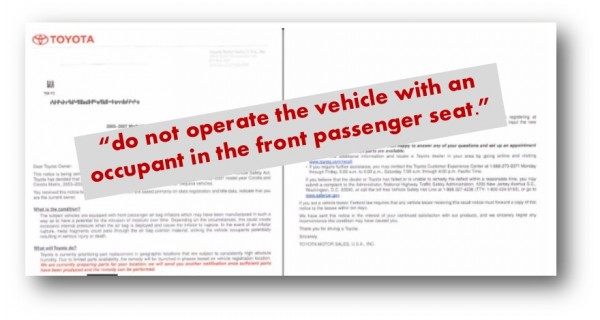
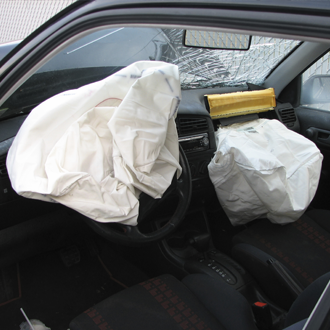
 The company, and impacted automakers, are making parts necessary to accomplish repairs available in regions of the country with humid climates first, because humidity has been said to increase the risk of air bag rupture. Connecticut residents, living in a region not known for its humidity, are not a priority for the repair, and continue to wait for word when repairs for their recalled vehicles can be made.


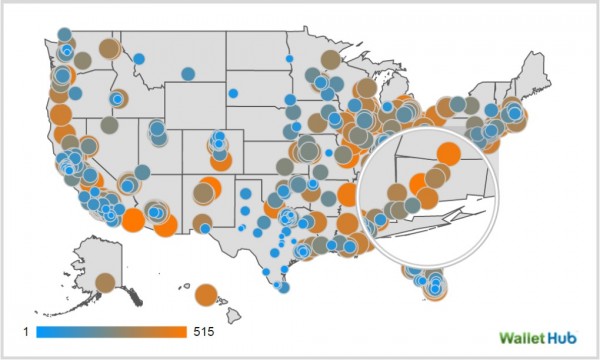 Joan Fitzgerald, Professor of Public Policy and Urban Affairs at Northeastern University, told WalletHub: “It is not an accident that many of the fastest growing cities have thriving high tech and biotech sectors along with financial services and usually a strong health care sector. But another priority has to be balance. In many cities, manufacturing loses out over other uses.”
 sustainable lifestyle beverate brand for teens and tweens. The company's goal is to inspire young people to realize the power of consumer choices to effect social and environmental change.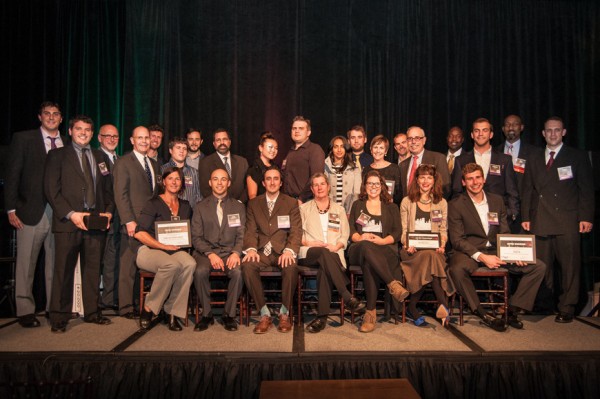
 The five awards judges - Sherrell Dorsey of Uber and Triple Pundit, Adam Dotson of Ironwood Capital, Claire Leonardi, an advisor to reSET's Social Enterprise Investment Fund and former CEO of Connnecticut Innovations, Anthony Price of LootScout and Paul Witinski of Ironwood Capital - narrowed down more than 100 applicants to 12 honorees. The People’s Choice winner was selected via more than 1,800 online votes.