Connecticut Ranks Third Among Least Tax-Friendly for Retirees

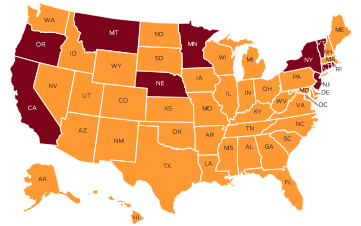
“The Constitution State is a tax nightmare for many retirees.” That is the thumbnail summary for Connecticut, which ranked third among the 10 Least Tax-Friendly States for Retirees, according to a list compiled by the business and personal finance publication Kiplinger’s.

Worst in the nation, according to the list, is Rhode Island, followed by Vermont, Connecticut, Minnesota and Montana.  The publication used data from state tax departments, Commerce Clearing House and the Tax Foundation to develop the rankings. “Some states offer attractive tax benefits to woo retirees,” the publication indicated. “Then there are these ten states that are stingy with retirement tax breaks.”

Kiplinger’s pointed out that “Conneticut’s “real estate taxes are the second-highest in the nation, according to the Tax Foundation.”  Rhode Island was described as “particularly tough on retirees,” and retirees in Vermont should “prepare to pay lofty taxes,” according to Kiplinger.

  1. Rhode Islandtax friendly map
  2. Vermont
  3. Connecticut
  4. Minnesota
  5. Montana
  6. Oregon
  7. Nebraska
  8. California
  9. New Jersey
  10. New York

“When you're living on a fixed income, every penny counts, which makes these states particularly unwelcoming for retirees,” the publication noted.  Most of the states tax at least a portion of Social Security benefits. Some also have higher-than-average income taxes. Others make up for low income and sales taxes with high property taxes. The survey also considered  estate and  inheritance taxes.

The tax friendliest state for retirees is Alaska, which has no income tax, no sales tax and no inheritance tax. Alaska is followed by Wyoming, Georgia and Arizona.

Connecticut’s high cost of living —  more than 30% higher than the national average, according to Sperling’s Best Places.  However, “high prices and taxes don’t deter retirees who like the scenery and who want to stay close to children, grandchildren and lifelong friends in the nearby metropolitan areas,” according to MarketWatch, a service of the Wall Street Journal, published this week.  The data compiled by Kiplinger’s Senior Associate Editor was first reported last summer.

Kiplinger is a Washington, D.C.-based publisher of business forecasts and personal finance advice, available in print, online, audio, video and software products.  The company’s best-known publications are The Kiplinger Letter, a weekly business and economic forecasting periodical for people in management, and the monthly Kiplinger's Personal Finance magazine.

International Migration Growth Keeping Population Numbers Steady

The Hartford region ranked third in the nation among metropolitan areas showing significant international migration amidst near-stagnant overall population change during the past three years.  The New Haven-Milford and Norwich-New London regions also ranked in the top 20 nationally among metro regions with less than one percent overall population growth but strong international migration.

The overall population change for the three metro areas in Connecticut were two-tenths of a percent population growth in the Hartford region, and virtually no change at all for New Haven and Norwich-New London region, each having zero percent population growth over the past three years.

The migration into the Hartford region from outside the U.S. during the three years was 16,251 people, behind only to Chicago and Detroit among the 20 metro areas where overall population change was at or near zero.  The New Haven metro area ranked 7th, with an international migration total of 10,717 and Norwich – New London was 19th, with 4,008.

During the past three years, the Norwicworld-map-background1h-New London region total population change reflected a net loss of 95 people, New Haven had a net loss of 187 people and Hartford region saw a slight increase of 2, 827 people.migration

The analysis of U.S. Census data by Governing magazine indicates that in some American cities, international migration far outpaced population gains from natural change (births and deaths) and domestic migration.  The three Connecticut metropolitan areas were among those that experienced little to no change in total population, but welcomed sizable tallies of residents from abroad.

The analysis indicated 20 metro areas across the country where total population change between 2010 and 2013 was at or near zero, while international migration was substantial – and made up, or nearly made up, for population declines to due domestic migration or natural factors. Among the other metro regions were Providence, St. Louis, Cleveland, Springfield, Pittsburgh, Rochester, Buffalo and Trenton.

Across the U.S. between 2010 and 2013, metro areas welcomed a net total of 2.6 million residents from international migration. Over the same three-year period, net domestic migration increased by just 382,000 as those who did move mostly relocated to other metro areas, the magazine reported.

The Census Bureau’s international migration estimates include not only foreign immigrants, but natives moving back home and movement of members of the military.

The country’s largest immigration hubs welcomed significant numbers of residents from abroad. Since 2010, the New York City-Newark metro area gained nearly 400,000 residents from other countries, followed by the Miami-Fort Lauderdale-West Palm Beach, Fla., area (+164,000) and the Los Angeles-Long Beach-Anaheim (+156,000) area.

According to the data, Hartford lost 18,917 people to domestic migration while it picked up 16,251 people through international migration, nearly off-setting the departing over the past three years.

University of New Haven Named a “Best for Vets” College

The University of New Haven (UNH) has been ranked among the nation’s best colleges for veterans.  The 2014 “Best for Vets Colleges” list, developed by Military Times, places New Haven among the top 80 institutions in the nation, ranking at number 59.  UNH is the only higher education institution from Connecticut to earn a place on the list.

In addition to ebfv-colleges-2014valuating schools’ veteran-focused operations, the publication considered more than a dozen different measures of academic success, quality and rigor, as reported by schools and the Education Department, to develop the rankings.

Representatives of about 600 schools responded to the Best for Vets: Colleges 2014 survey, comprising of 150 questions that delved into school operations in unprecedented detail, according to the publication.

The results indicated that many more schools are tracking the academic success of their military and veteran students — but the majority still do not.  Last year, fewer than 11 percent of school representatives responding to the survey said they track completion rates for current and former service members. This year, more than a third said they track similar academic success measures for such students, the publication’s website pointed out.660556

Military veterans of UNH (MVUNH) is a Student Group formed to both support current UNH Veteran student and encourage a UNH "Veteran friendly" campus to attract new Veteran students.  The university’s purpose is to create a community of veterans who will use their knowledge and experiences to educate the university community and advocate on behalf of student veterans.  Members meet once a month to discuss current events and provide new information.

The newly renovated and furnished Veterans Success Center on the UNH campus serves as common place for students to study, gather for MVUNH club meetings and relax.  The Center has four computers with access to printing, a microwave and refrigerator available to student veterans to use during breaks between classes.  The Veteran Success Center is heralded as a great place to meet fellow veterans and find out about veteran programming on campus and within the community.

In an effort to strengthen support for student veterans, Veteran Services and the University of New Haven have created a Student Veteran Emergency Fund.  Entirely dependent upon donations, the Student Veteran Emergency Fund has been established to assist student veterans who encounter an unforeseen financial emergency throughout the semester, including a delay iLove Your Country1n benefits, BAH and book stipends from the VA.

The University of New Haven is also a partner of the VA Connecticut Healthcare System, located in West Haven.  VITAL is a VA initiative aimed to support student veterans on campus in their successful transition to academia and in completion of their educational goals.  The University also participates in the Yellow Ribbon Program for veterans.

Playground Remembering Ana Grace Marquez-Greene Opens April 4 at Hartford’s Elizabeth Park

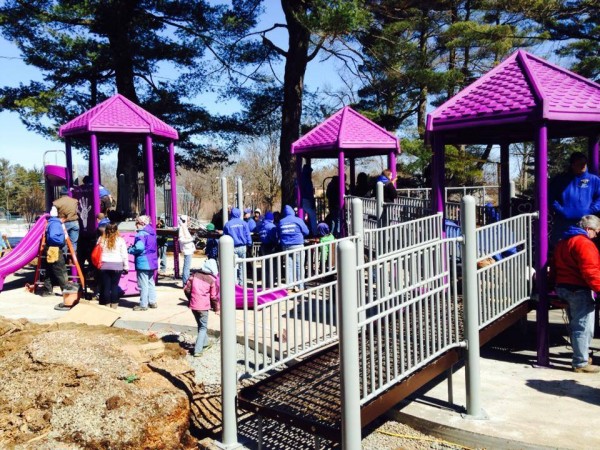
Early next month, Hartford will become the eighth Connecticut community to welcome a playground commemorating one of the children and educators killed at Sandy Hook Elementary School in Newtown on December 14, 2012. The Hartford playground, at Elizabeth Park, will commemorate Ana Grace Marquez-Greene, who was 6 years old. The official opening of the playground on Friday, April 4 will also commemorate her birthday.Bez-nazwy-4

New Jersey-based The Sandy Ground Project: Where Angels Play has been building the playground on the East Lawn of Elizabeth Park along the Hartford-West Hartford town line, with the help of volunteers from throughout the region.

The Sandy Ground Project was founded in the wake of the Newtown shootings and the devastation of Hurricane Sandy the month before. The idea was inspired by three playgrounds the New Jersey State Firefighters Mutual Benevolent Association, the organization behind the project, had built in Mississippi after Hurricane Katrina. The New Jersey firefighters plan to build 26 playgrounds across the tri-state area, each one dedicated to the memory of a Sandy Hook student or educator lost on that day.

Ana Grace’s parents, Jimmy Greene and Nelba Marquez, both graduated from the University of Hartford, and at a brief ceremony marking the beginning of construction on a cold wintery day just a few weeks ago, they recalled good times at Eliz1979705_694808787224242_110546287_nabeth Park.

“I used to play with Ana and Isaiah right here, in this park, when they were little,” Marquez said. “We’re so incredibly grateful to this community, to embrace this here where it means so much to us.”  Ana Grace’s brother, Isaiah, played piano at the ceremony, and was joined by a chorus of children, in tribute to his sister. (watch video)

Friends and family from Hartford, Newtown, New York, New Jersey and Winnipeg, Canada, where the Marquez-Greene family lived prior to moving to Newtown, were on hand to lend a hand at the start of construction, at the corner of Elizabeth Ave. and Whitney St. in the Park.  The opening ceremony on April 4 begins at 6 PM.

The playground at Elizabeth Park is the 18th constructed to date in the tri-state region of New York, New Jersey and Connecticut as part of the Where Angels Play project.  Among the playgrounds located in Connecticut are those in memory of James Mattioli in Milford, Josephine Gay in Bridgeport, Dylan Hockley in Westport, Allison Wyatt in Norwalk, Emilie Parker in New London, Jessica Rekos in Fairfield, and Victoria Soto in Stratford.AnaGrace-logo1

The Marquez-Greene family selected Elizabeth Park as the site for the playground honoring their daughter’s memory, and it’s playscapes feature the vibrant purple color that was her favorite.

In December, the family held “Love Wins: A Conference on Promoting Love, Connection and Community for Every Child & Family” at the University of Hartford.  It was the inaugural event of the Center for Community and Connection, a transformative initiative of the Ana Grace Project of the Klingberg Family Centers, attended by more than 500 people.  Participants in the December 2 symposium represented the fields of medicine, nursing, education, mentoring, early childhood, mental health, foster care, and the faith community, as well as state and local government.

Prison System As De facto Mental Health Service Center Brings Personal, Fiscal Costs

The UConn Health Center, on the pages of its Correctional Managed Health Care website, points out that “the public health burden that jails and prisons bear is enormous. A disproportionate number of incarcerated individuals are medically and/or psychiatrically compromised.” Connecticut is one of only six states with an integrated jail and prison system.

Statewide, each of the 24,936 annual jail and prison “admissions” requires a medical and mental health intake health screening. Generally, the website notes, “one out of five requires prompt medical or mental health intervention.” Schizophrenia, bipolar disorder, post traumatic stress disorder, depression, severe personality disorders, traumatic brain injury and addictive disorders are “overrepresented in this population,” the website indicates.

Mental health services aMental_Healthre available at all prisons and jails in the state, with comprehensive mental health programs at Osborn, Northern, York, Manson Youth, and Garner correctional institutions. Mental health services are comprehensive from admission to discharge, the website explains, and “focus on access to care and outreach, screening and assessment, identification, treatment planning, classification, provision of distinct levels of service and continuity of care upon discharge to the community.”
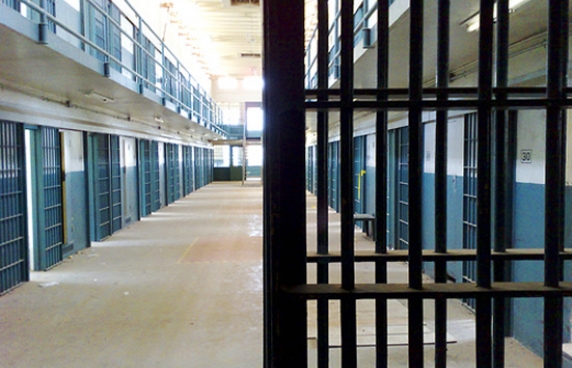
The mental health department includes approximately 14 psychiatrists, 17 psychologists, 10 mental health nurse practitioners, 19 psychiatric nurse clinicians, 69 social workers, and 15 professional counselors to serve the needs of approximately 19 percent of the inmate population, about 3,400 individuals.  The website indicates that as of June 2013, the prison population was 17,998 individuals (16,985 incarcerated and 1,013 in halfway houses).

A  recent The New York Times column by Nicholas Kristof posited that people suffering from mental illness often commit a crime in order to obtain treatment.  Because of the acute shortage of treatment facilities outside of prison, decades after the wholesale closing of mental health care facilities nationwide, prisons have become the nation’s de facto treatment centers.  Among the stark facts outlined:

  • More than half of prisoners in the United States have a mental health problem, according to a 2006 U.S. Justice Department Study.
  • Among female inmates, almost three-quarters have a mental disorder.
  •  Nationwide, more than three times as many mentally ill people are housed in prisons and jails as in hospitals, according to a 2010 study by the National Sheriffs’ Association and the Treatment Advocacy Center.
  • Forty percent of people with serious mental illnesses have been arrested at some point in their lives
  •  Taxpayers spend as much as $300 or $400 a day supporting patients with psychiatric disorders while they are in jail, partly because the mentally ill require mediation and extra supervision and care.
  • In 1955, there was one bed in a psychiatric ward for every 300 Americans; now there is one for every 3,000 Americans, according to a 2010 study.

Writing in the Connecticut Law Review, Christina Canales pointed out in 2012 that “Although a good plan in theory, deinstitutionalization quickly became one of the main reasons for the substantial increase in mentally ill individuals in prisons.  Many of the originally considered community mental health centers were never developed, leaving such individuals with nowhere to turn for treatment.”

The 2013 Legislation Report of the National Alliance on Mental Illness indicated that “Disproportionate numbers of people with mental illness are involved in the criminal justice system often as a result of untreated or undertreated mental illnesprisons. Thoughtful release planning and progressive probation or parole procedures increase the likelihood of successful re-entry for prisoners living with mental illness.”

In FY 2013, the UConn Health Center website details, there were 191,202 visits to social workers, psychologists and psychiatric nurse clinicians, including suicide risk assessments within DOC facilities. In addition, there were 20,056 visits to psychiatrists and 16,826 visits to Advanced Practice Registered Nurses.

The Connecticut Health Investigative Team (C-HIT) has reported that in 2003, "an estimated 13 percent were considered mentally ill."  In 2003, Connecticut’s prison population was 19, 605, according to the Office of Policy and Management’s Criminal Justice Policy and Planning Division.  That would have been approximately 2,549 individuals.

Connecticut Ranks #30 in Nation in Native Born Residents; Louisiana #1, Nevada Has Least

Just over half of Connecticut’s residents were born here, ranking the state 30th in the nation for the percentage of population who are native born.

Data from the U.S. Census Bureau’s American Community Survey, as analyzed by AARP, indicate that 55.2 percent of Connecticut residents were born in the Constitution State.   That places Connecticut fourth30 in New England, behind Massachusetts, Maine and Rhode Island.

The top 8 states with native born residents – all above 70 percent - are Louisiana, with 78.7 percent, followed by Michigan (76.7%), Ohio (75%), Pennsylvania (73.8%), Mississippi (72%), Iowa (71.6), Wisconsin (71.5%) and Alabama (70.2%).  The Rust Belt and Deep South generally had the highest percentages of resident born and raised in the states were they still live.

The lowest percentages of native born residents were in the states of Nevada (25%), Florida (35.7%), the District of Columbia (37%), Alaska (40.4%), New Hampshire (42%)  and Colorado (42%) .  The only Western state above 60 percent was Utah, at 61.8 percent.

In the tri-state region, native New Yorkers came in at 63.6 percent (ranked #18) and New Jersey at 52.6 percent, slightly lower than Connecticut.  Just one-tenth of a percent ahead of Connecticut was Georgia, with 55.3 percent.Born-in-the-USA

Just behind Connecticut in the rankings at #31 was California, with 54.5 percent of residents born in the state, and Hawaii, at 54.2 percent.

In thirteen states and Washington, D.C. – mostly in the West but also including Delaware (44.9%) and New Hampshire (42%) - less than half of residents are native sons and daughters.

1.       Louisiana78.7%

2.       Michigan 76.7%

3.       Ohio 75.0% 4.       Pennsylvania 73.8%

5.       Mississippi 72%

6.       Iowa 71.6%

7.       Wisconsin 71.5%

8.       Alabama 70.2%

9.       West Virginia 69.6%

10.   Kentucky 69.8%

11.   Indiana 68.4%

12.   Illinois 66.9%

13.   North Dakota 66.9%

14.   Missouri 66.6%

15.   Maine 65.2%

16.   Nebraska 65.1%

17.   South Dakota 64.4%

18.   New York 63.6%

19.   Massachusetts 63%

20.   Utah 61.8%

21.   Arkansas 61.5%

22.   Tennessee 61.4%

23.   Oklahoma 60.9%

24.   Texas 60.6%

25.   Kansas 59.4%

26.   Rhode Island 58.1%

27.   North Carolina 58%

28.   South Carolina 58.25

29.   Georgia 55.3%

30.   Connecticut 55.2%

31.   California 54.4%

32.   Hawaii 54.2%


14 Connecticut Mayors Will Spotlight National Service, Joining Colleagues Nationwide

Fourteen Connecticut municipal chief elected officials - 12 mayors and two first t selectmen -  will be joining colleagues from across the country on April 1 in spotlighting the impact of national service and thanking those who step up to provide voluntary service to their communities.  The nation’s mayors are increasingly turning to national service as a cost-effective strategy to address city challenges, officials say. By unleashing the power of citizens through AmeriCorps and Senior Corps, the two lead national service programs, participating individuals have a positive and lasting impact – making our communities better places to live.

The second-annual Mayors Day of Recognition for National Service will include Bridgeport’s Bill Finch, Fairfield’s Mike Tetreau, Hartford’s Pedro Segarra, Middletown’s Dan Drew, New London’s Daryl Finizio, and Wesmayor's dayt Haven’s Ed O’Brien.  Also signing on as participants in the day of recognition are Deb Hinchey of Norwich, Mark Boughton of Danbury, Hamden’s Scott Jackson, Manchester’s Leo Diana, New Haven’s Toni Harp, North Haven’s Michael Freda, Stamford’s David Martin and  Windham’s Ernie Eldridge.

On April 1, mayors will hold public events and use traditional and social media to highlight the value and impact of national service to the nation’s cities.

Officials report that more than 3,700 people of all ages and backgrounds are helping to meet local needs, strengthen communities, and increase civic engagement through national service in Connecticut. Serving at more than 600 locations throughout the state, these citizens tutor and mentor children, support veterans and military families, provide health services, restore the environment, respond to disasters, increase economic opportunity, and recruit and manage volunteers.

This year, the Corporation for National and Community Service (CNCS) will commit more than $9,390,000 to support Connecticut communities through national service initiatives. Through a unique public-private partnership, this federal investment will leverage an additional $2,720,000 in other resources to strengthen community impact, build local support, and increase return on taxpayer dollars.logo

The Corporation for National and Community Service is a federal agency that improves lives, strengthens communities, and fosters civic engagement through service and volunteering. CNCS annually engages more than five million Americans in service to meet local needs through Senior Corps, AmeriCorps, and national days of service; improves communities through the Social Innovation Fund, and leads President Obama's national call to service initiative.

Last year, 832 Mayors representing nearly 100 million citizens participated in the inaugural Mayors Day of Recognition for National Service. The initiative is being led by the Corporation for National and Community Service; Cities of Service; the National League of Cities; and Mesa, AZ, Mayor Scott Smith, President of the U.S. Conference of Mayors.

Amateur Radio, Invented in Hartford, Will Celebrate 100 Years with National Convention Here

Before smart phones, before the internet, there was Amateur Radio, better known as Ham Radio.  And it began in Hartford – spreading quickly around the world a century ago.  The province of hobbyists and enthusiasts, Ham Radio often became a lifeline when disasters struck and traditional phone lines were rendered inoperable.

Technology has surely changed, but a thriving American Radio Relay League (ARRL), the national association for Amateur Radio, will mark the 100th anniversary of its founding this summer at the Connecticut Convention Center in its birthplace, Hartford.

The organization’s Centennial Convention will be July 17-19, 2014, according to ARRL President Kay Craigi.  The theme will be: Advancing the Art and Science of Radio—Since 1914.  Ham Radio remains a popular hobby and service in which licensed Amateur Radio operators (hams) operate communications equipment.  ARRL has over 162,000 members and eCentennial_Banner_Artmploys approximately 100 people, with national headquarters in Newington.

Federal Emergency Management Agency (FEMA) Administrator W. Craig Fugate, call sign KK4INZ, will be the keynote speaker at the ARRL Centennial Banquet on July 18.

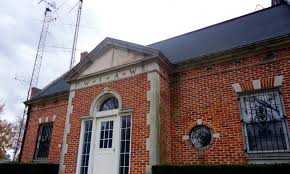
It all began in May 1914 when Hiram Percy Maxim (1869-1936), a leading Hartford inventor and industrialist, founded the American Radio Relay League (ARRL), together with Clarence Tuska, secretary of The Radio Club of Hartford.  ARRL headquarters moved to Newington in 1938 and is visited by nearly 2,000 groups and individuals each year. The site is home to The Hiram Percy Maxim Memorial Station, call sign W1AW. HAM radioARRL's mission is based on five pillars: Public Service, Advocacy, Education, Technology, and Membership.

Although Amateur Radio operators get involved for many reasons, officials say, they all have in common a basic knowledge of radio technology and operating principles, and pass an examination for the FCC license to operate on radio frequencies known as the "Amateur Bands." These bands are radio frequencies reserved by the Federal Communications Commission (FCC) for use by ham radio operators.

“The 2014 ARRL Centennial is a once-in-a-lifetime opportunity,” said ARRL Marketing Manager Bob Inderbitzen, who explained that the convention will include presentations and forums, exhibits, vendors, demonstrations, flea market, activities for youth, and a banquet.

 “We’ve also planned some very special ceARRL Newingtonntennial-themed activities,” Inderbitzen added, “including coach bus trips to ARRL headquarters and W1AW—the Hiram P. Maxim Memorial Station in nearby Newington. We want ARRL members to come with all of their experiences from the first one hundred years of Amateur Radio and ARRL, and leave with a shared vision for ARRL’s second century.”

More information about ARRL and Amateur Radio is online at www.arrl.org/what-is-ham-radio. Details on the centennial convention are available at www.ARRL2014.org.  The organization has also developed a 25 minute documentary about the history of Amateur Radio, which is available on You Tube.  Fans of the ABC Television show “Last Man Standing” may be aware that its main character, “Mike Baxter” — played by Tim Allen — is supposed to be a radio amateur, KAØXTT

Fifth Time A Charm? Vulnerable User Bill Back Before Legislature

“Study after study reveals that more people would be willing to make more trips by bike or on foot if they felt they could do so without taking their lives in their hands.”  That comment at a legislative hearing by Kelly Kennedy, Executive Director of Bike Walk Connecticut, highlights the reason behind proposed legislation that would “help hold accountable careless drives who injure or kill non-motorized users of the road.”

Dubbed the “don’t hit me” bill, it is baambulance_ck for a fifth consecutive year at the State Capitol, endorsed by an array of 23 organizations.  In each of the past two years, it passed the Senate but was not considered by the House.  It recognizes that “vulnerable road users,” such as pedestrians, bicyclists, first responders, and highway workers need additional legal protections, and provides enhanced penalties for careless driving resulting in injury or death of a vulnerable road user.

The "Vulnerable User" bill:

  • Provides for a fine of up to $1,000 for injuring or killing a vulnerable user due to careless driving; and
  • Defines a vulnerable user as a pedestrian; cyclist; animal rider or driver; highway worker; farm tractor driver; user of a skateboard, roller or inline skates; user of a wheelchair or motorized chair; or blind person and his or her service animal.

The statistics behind the effort are clear:

  • Careless drivers injure hundreds of people every year in Connecticut--130 pedestrians and cyclists were killed between 2010 and 2012 and approximately 1,400 pedestrians and cyclists are injured every year, according to Bike Walk Connecticut.  Between 2006 and 2012, there were more than 10,000 deaths or injuries.
  • The League of American Bicyclists' top recommendation for Connecticut in its Bike Friendly State Report Card calls for Connecticut to "Adopt a vulnerable road user law that increases penalties for a motorist that injures or kills a bicyclist or pedestrian."  (CT's Bike Friendly State ranking was #18 in 2013.)

Nora Duncan, State Director of the Connecticut AARP, testified in support of the bill, noting that “an older pedestrian is 61 percent more likely to die from a crash than a younger pedestrian.”  The bill, she said, “could improve pedestrian safety by deterring negligent behavior that puts vulnerable uses at risk of injury or death.”  In a survey, 47 percent of people over age 50 in Connecticut said they felt they could not safely cross main roads close to their home.

share the roadThe proposal was also supported by the State Department of Transportation, which suggested that the definition “be all encompassing to include all users such as persons on a legal non-motorized device” such as scooters and skateboards.  Transit for Connecticut, a statewide coalition of 33 business, social service, environmental, planning and civic organizations advocating the benefits of mass transit, supported a vulnerable user law indicating that “with emphasis on energy conversation and healthy lifestyles, the number of walkers and bicyclists is growing.  These residents, along with residents living in close proximity to bus stops and transit services need proper access if they want to use public transit.”

Kirsten Bechtel of the Yale School of Medicine’s Department of Pediatric Emergency Medicine, called for individuals who commit an infraction under the proposed law to “attend driver retraining and perform community service.”  In written testimony, she said that “vulnerable user laws in Oregon, Washington and Delaware include these requirements to ensure that drivers are held accountable and operate their vehicles safely in the future.”  Others, including the Tri-State Transportation Campaign, supported that idea.

Clinton resident Debbie Lundgren, in an email to the Transportation Committee, said succinctly, “pass the Vulnerable User Bill this year.  We have waited long enough!”

The  Committee is expected to consider SB 336 later this month.  If approved there, it would go on to the Senate for consideration.  A road well traveled.

Volleyball to Overrun CT Convention Center Twice in 2015; New Event Coming to Hartford

2015 is shaping up as a banner year for the Connecticut Convention Center.  For the second time in the span of a few weeks, the convention center  has announced a new event will be coming to town.  The New England Region Volleyball Association (NERVA) will bring its first-ever Northeast Junior Championships to Hartford over Memorial Day weekend in 2015.

The tournament, featuring junior teams from throughout the Northeast, is expected to bring over 2,000 players, 400 coaches, 75 officials and volunteer tournament staff, and 3,500 family members and fans downtown, from Friday, May 22 through Monday, May 25, 2015.

Better yet, NERVA has committed to holding the event at the venue for the next three years, through at least 2017, with over 3,000 overnight rooms and 1,100 rooms anticipated for the new annual event. 2013 CTCC NERVA Winterfest

Tournament organizers are planning to fill the facility with 200 teams playing on 25 courts set up inside the Convention Center’s exhibit halls. They have experience in turning the space into an enormous multi-court facility, having held its annual Mizuno New England Winterfest at the facility in January over the long Martin Luther King, Jr. weekend, for each of the past five years.

Also on the docket at the Connecticut Convention Center in 2015 is the Museum Store Association national conference, to be held in Hartford for the first time next April.  It is the organization’s first conference in the Northeast in a decade.  They met in 2003 in Philadimage_logo1elphia, and will meet next month in Houston.

Other multi-year contracts continue.  ConnectiCon, which has been hosted at the Connecticut Convention Center since 2005, will return this year and next.  Mary Kay will return to the facility in 2015 and 2016.  And the National Association of Campus Activities (NACA), which has gathered at the Convention Center annually since 2007, will do so again this year and in 2015. The STITCHES-East regional knitting enthusiasts will be back every year through 2017.

“We have always valued our partnership with the Connecticut Convention Center and the Connecticut Convention and Sports Bureau,” states David Peixoto, NERVA Commissioner. “Our partnership has grown to develop Winterfest as the Premier Volleyball tournament in the Northeast. We look forward to making the Northeast Junior Championship just as successful.”6

The new four-day event does not require teams to qualify to participate. While it will serve as a season-ending tournament for some, the event will allow for additional preparation to teams continuing on to nationals. Participants are 12-18 years old, as NERVA follows USA Volleyball age guidelines.

Winterfest, which is the largest volleyball tournament held in New England, is designed to showcase female high school volleyball players to college coaches and recruiters from throughout the Northeast.  The event brings in around 6,000 visitors to the area every year.

The New England Region is one of many Regions in the United States that aid in the governing of the sport of volleyball. Regional Volleyball Associations (RVAs) are member organizations of USA Volleyball (USAV). The RVAs serve as the grassroots function for the USAV and individually and collectively serve as a catalyst for USAV functions.

The Connecticut Convention Center is the state’s premier meeting venue and the largest full-service convention facility between New York and Boston. Overlooking the Connecticut River, it features 140,000 square feet of exhibition space, a 40,000-square-foot ballroom and 25,000 square feet of meeting space, as well as ample sheltered parking.