Immigration Drives Growth, Vibrancy of New Haven Region, Study Finds
/If Greater New Haven is thriving, the region’s rapidly-growing immigrant population is a key reason, according to a new research study. The report, entitled Understanding the Impact of Immigration in Greater New Haven, compiles data from federal, state and local government agencies, as well as information generated locally by DataHaven and The Community Foundation of Greater New Haven.
Viewed as “an important step in its effort to enhance the civic and economic participation of immigrants in Greater New Haven,” the report was undertaken to provide a snapshot of the immigrants living in Greater New Haven and Connecticut, the impact of local population change and diversity, and the community and economic impact. It is intended to help the general public, policymakers and local leaders understand the impact of immigration in the region to inform discussions and community action.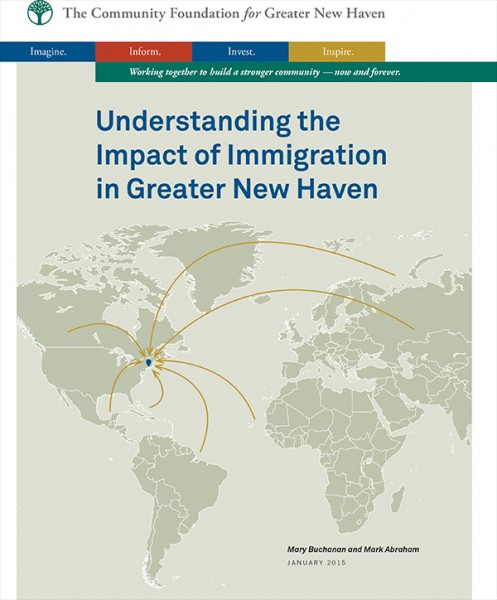
According to the report:
- Approximately 1 in 8 residents of Greater New Haven is foreign-born, originating in countries in all the world’s regions.
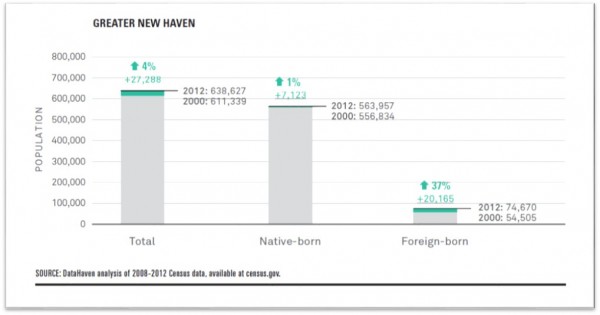
- While the native-born population in Greater New Haven has barely increased since 2000, immigrants settling in the area have caused rapid population growth, making New Haven the fastest-growing city in Connecticut over this period
- About half of all immigrants are naturalized US citizens; the other half are legal permanent residents, legal temporary residents or undocumented immigrants.
- Greater New Haven is attracting immigrants from a wide range of countries, with the greatest increases in numerical terms between 2000-2012 attributable to immigration from Mexico (3,168), India (2,729), China (2,292), Jamaica (1,532) and Ecuador (1,382).This report explores how immigration impacts the development of both Greater New Haven and Connecticut.
“It is clear from the report that the Greater New Haven community is enhanced in many ways by immigration,” says William W. Ginsberg, President & CEO of The Community Foundation for Greater New Haven. “The data demonstrate that our rapidly growing foreign-born population is successfully building productive and contributing lives here – by working, by creating small businesses that build wealth, by owning homes, by educating their children, and by contributing to the diversity and cultural richness of this community.”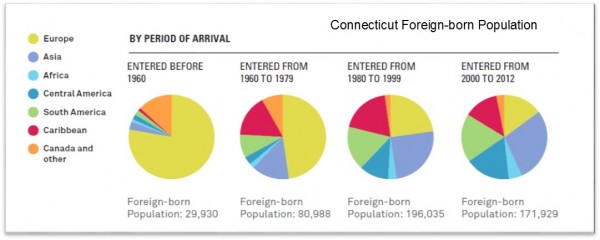
The report also cites data indicating that the immigrant population in Greater New Haven is highly-skilled, compared to other areas. Among immigrants in this region, there are more than twice as many high-skilled workers as low-skilled workers in the region, while data for the United States as a whole show slightly less than one high-skilled worker for every low-skilled worker.
From 2000 to 2012, Greater New Haven’s population as a whole increased by more than 27,000 people, according to the report. Of that growth, about 75 percent (20,165) were foreign-born residents. About half of immigrants in Greater New Haven are naturalized citizens.
The Community Foundation for Greater New Haven explored local public opinion on immigration by interviewing key stakeholders and administering an online survey to its constituents. The survey found that “although immigration is a complex issue, the Greater New Haven community widely agrees that foreign-born people contribute to the economic, cultural, and social well-being of the region.” Nearly all (97 percent) respondents said that the issue of immigration is very or somewhat important to Connecticut. Only 31 percent of respondents thought they understood immigration policy extremely or fairly well.
 In New Haven’s neighborhoods in particular, the boost in immigrants has revitalized communities and spurred new businesses. From 1970 to 1990, the foreign-born population in most New Haven neighborhoods remained flat or declined, and these neighborhoods suffered from overall population decline—similar to other central city neighborhoods in post-industrial cities. Since 1990, the report found, the foreign-born population in many city neighborhoods has rebounded sharply, particularly in areas such as Edgewood, West River, Fair Haven, and the Hill. These areas have seen a large influx of population and business overall.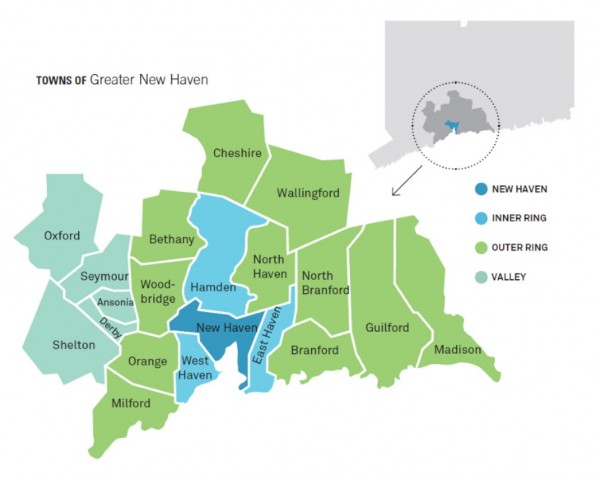
Statewide, among Connecticut’s immigrant population entering the US since 2000, only 15 percent are Europeans. 29 percent were born in Asia, and 19 percent come from South America. By contrast, 78 percent of Connecticut’s immigrant population that entered the US before 1960 was born in Europe.
The report was compiled and written by Mary Buchanan and Mark Abraham of DataHaven, with assistance from staff at The Community Foundation.
In 2015, The Community Foundation’s work will include dedicated grantmaking and other support for nonprofits working in this area, including support for advocacy efforts on State and Federal immigration policy, efforts to identify and support emerging leaders in the immigrant community, and public education and other efforts to enhance the community’s understanding of the social, cultural and economic benefits of immigration for Greater New Haven.
“New Haven has always been a welcoming community, and the surge of immigration in recent years shows us yet again how important immigration is to the growth and success of our community,” Ginsberg added.The Community Foundation is making immigrant integration a strategic focus with the goal that immigrants in Greater New Haven, including undocumented, will achieve greater civic and economic participation and success thereby becoming more fully integrated members of a more welcoming community, the report indicates.
More information on the Foundation’s philanthropy is available at www.giveGreater.org. The report is available online at www.cfgnh.org/immigrationreport or by calling The Community Foundation at 203-777-2386.
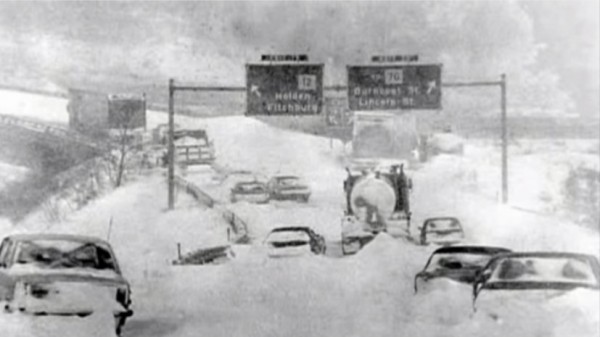 The website recalls that “in Connecticut, Governor Ella Grasso was trying to drive from the Governor’s Mansion to the state storm center in downtown H
 artford. She didn’t quite make it. Forced to abandon her car and walk the remaining blocks to the state armory, Grasso was not slow in taking the storm seriously. Thanks to (Massachusetts Governor Michael) Dukakis and Grasso, both state and National Guard troops would soon be on their way.”




 The Mayors will engage with Administration officials, Congressional leaders business leaders to “ensure the health and economic recovery of America’s cities,” according to program organizers. Vice President Joe Biden is scheduled to address the Mayors on Thursday.
 ttending from Connecticut are Bridgeport Mayor Bill Finch, Bristol Mayor Ken Cockayne, Danbury Mayor Mark Boughton, East Hartford Mayor Marcia Leclerc, Hartford Mayor Pedro Segarra, New Britain Mayor Erin Stewart, New Haven Mayor Toni Harp, Norwich Mayor Deberey Hinchey, Shelton Mayor Mark Lauretti, Stamford Mayor David Martin, Stratford Mayor John Harkins, Trumbull First Selectman Timothy Herbst and Waterbury Mayor Neil O’Leary.
 The Preservation of Place grant program provides a source of funding for new initiatives that can be integrated into, and leverage, comprehensive Main Street preservation and revitalization programs. The funds are meant to be flexible to meet individual community need.

 oblems for the state.”
 83, which exposed a poor record of road and bridge maintenance in the state, with creation of a Special Transportation Fund to set aside money to maintain and repair the state's bridges.
 ll station that killed seven people and galvanized public opinion. The state had collected tolls at 14 locations - eight on the Connecticut Turnpike between Greenwich and Plainfield, three on the Merritt and Wilbur Cross Parkways, and at three bridges in the Hartford area. The tollbooths generated $66 million a year, The New York Times

 rcentage increases in ELL students, between 2001 and last year, came in Windham (11.8% increase), Danbury (up 9.4%), Norwich (up 9.1%), and New London and West Haven (both up 7.4%).




 .
.