Helping Families Experience Joy of Adoption Is Goal of Start-Up Nonprofit

After six long, challenging and frustrating years, and spending thousands of dollars, a Norwalk couple adopted a child.  And in that moment, a new mother vowed that she would do everything possible to make sure that others would not be prevented from experiencing the joy of becoming a parent due to a lack of financial resources. Today, her daughter is an energetic and engaging 3-year-old and she is following through on the commitment she made to herself, launching a non-profit organization named The Adoption Hope Foundation.  The organization’s mission is to help break the financial barrier of adoption by providing grants to people who hope to build their families through adoption.  The fledgling organization is about one-third of the way towards meeting their initial fundraising goal, with a GoFundMe crowdfunding campaign underway that seeks to raise $10,000 by April 15.2910715_1420349980.101_funddescription

“The thought that some people would not be able to have a family simply because of the financial barrier was heartbreaking to me.  And thinking about babies and children who would not be adopted simply because families couldn’t afford it was unacceptable.  With the average adoption costing approximately $35,000, many qualified, loving families are unable to pursue it due to the high cost.”

It was a long and winding road for Laura Loffredo.  “My husband and I struggled with infertility for six years.  We spent thousands of dollars.  We had eight failed fertility treatments and a miscarriage.  I prayed every night for a baby and the longing inside my heart was unbearable.  I was angry, bitter and heartbroken.  I couldn’t breathe.  I have often referred to this time as the darkest time of my life.”

“When we finally made the decision to adopt, it was like a light in the darkness. The first time I held my daughter in my arms when she was only a few minutes old, I was overcome with emotion,” she recalls.  “Adoption is a beautiful gift.  It is a life altering experience that has allowed me to feel the deepest kind of love imaginable. We believe that every waiting family deserves a child, and every waiting child deserves a family.”

She has spent the past two years researching how to start and run a nonprofit organization, including taking seminars offered by the Connecticut Nonprofit Association.  She has “talked to anyone who would listen – anyone who knew anything about the nonprofit world.”

Some suggested that starting a nonprofit was a tough road, but Loffredo is determined.  “I am compelled to do this - it was a calling.”  She has gained much support and encouragement from long-established nonprofit leaders and professionals in the field in Connecticut. “They have helped me tremendously by constantly answering my start-up questions and supporting me with their expertise in this area.”adoption

More information about the new nonprofit, and their efforts to raise the necessary funds to begin grant-making, are available at www.gofundme.com/adoptionhope or by contacting Laura Loffredo at loffredo.laura@gmail.com

Thinking back on the adoption process, Loffredo recalls “I felt overwhelmed by the extremely high cost of the process.  I felt blessed that we were able to afford it but immediately felt upset thinking about people who could not afford this whose dreams were to have a family. I envisioned an organization that would support adoption by providing grants to people who wanted to build their families through adoption.”

The new business is filing the legal documents required to gain non-profit status, and they expect to have 501c3  in place by June. A website is being developed, and applications for grants will soon be available.  There will be no application fee, so as not to create an additional economic burden on prospective families.  The Adoption Hope Foundation anticipates awarding $5,000 grants by the end of this year.

a quoteA home study by a social worker, along with background checks, must be completed before applications will be accepted, and grant awards will be determined by members of a board, based on criteria including need and personal circumstances, such as “why they want to build their family through adoption.” Board members already in place include individuals with backgrounds in finance, law, fundraising, and social work, whose lives have been touched by adoption. Additional board members are now being determined.

In addition to launching the nonprofit organization, Loffredo is writing a memoir about her struggle with infertility and a children’s book about adoption.  She hopes to have both volumes published within a year, with the sale of the books to be used to help support The Adoption Hope Foundation.

A report by the U.S. Department of Health and Human Services Administration for Children and Families, using the most recent data available in 2011, indicated that “approximately 136,000 children were adopted annually in the United States (in 2006 and 2007). This represents a 6-percent increase in adoptions since 2000 and a 15-percent increase since 1990.”

In a 2007 survey, the Department noted that “of the 1.8 million adopted children in the U.S., 37 percent were adopted from foster care, 38 percent joined their families through private domestic adoptions, and 25 percent were adopted internationally.”  They also reported that “overall, parents of 86 percent of adopted children report that their relationship with their child met or exceeded their expectations.”



As Hartford Nears Stadium Groundbreaking, Norwich Ranked #6 Minor League Baseball City in USA

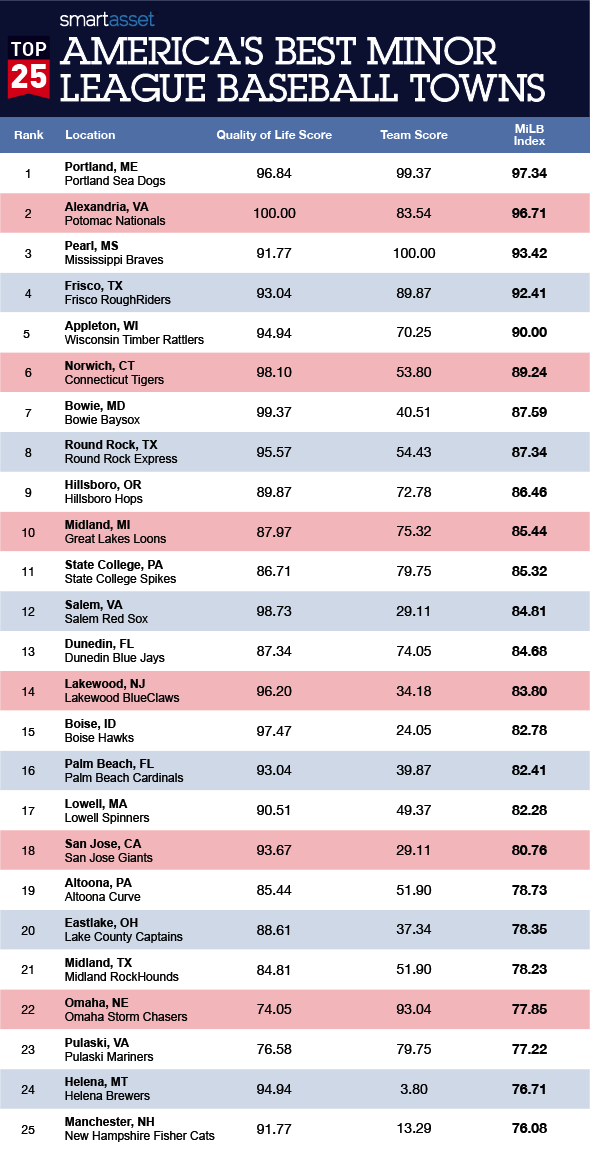
With winter snow piling up and the planned groundbreaking for a new minor league baseball stadium in Hartford only weeks away, it seemed the perfect time to turn attention to baseball – and which cities are earning notice in the minor league landscape.  Among local franchises, tops on the list is Norwich, home of the Connecticut Tigers, the Class-A affiliate of the Detroit Tigers, and a member of the NY-Penn League. An analysis of baseball’s 159 minor league cities following the 2014 season by the website smartasset.com, ranked Norwich #6 among the Top 25 Best Minor League Towns.

The top ten were: Portland, ME; Alexandria, VA; Pearl, MS; Frisco, TX; Appleton, WI; Norwich, CT; Bowie, MD; Round Rock, TX; Hillsboro, OR; and Midland, MI.  Other New England franchises earning a slot in the top 25 include Lowell, MA and Manchester, NH. minor_league_baseball_1-1

The analysis considered five “quality of life” factors in determining the top 25 baseball cities.  The factors were:

  • Violent Crime per 100,000 Residents
  • Property Crime per 100,000 Residents
  • Disposable Income – The difference between average income and the average monthly rent for a two bedroom apartment.
  • Unemployment Rate
  • Dining & Entertainment Establishments per 100,000 Residents

As a secondary consideration, the analysis sought to determine which cities enjoyed the best baseball experience, dubbed the “team” score. Three factors were considered:

  • Team Win Percentage – During the 2014 regular season.
  • Stadium Experience – A ranking of every minor league ballpark, courtesy of StadiumJourney.com, which attended a game at every single minor league stadium.
  • Minor League Class – A measure from 0-50 based on the level of competition: Triple-A teams receive a 0, Double-A teams a 10, Class A Advanced a 20, and so on.

To determine America’s Best Minor League Baseball Towns, the Quality of Life Score and the Team Score were added, giving 80% weight to the former and 20% to the latter, according to the website.

Ranked at #6, the Connecticut Tigers had their best season on the field in 2014, setting a franchise record for wins and clinching a sTigerspot in the postseason for the first time in their five year franchise history.  The franchise plays home games at Dodd Stadium in Norwich.  The facility celebrated its 20th year in 2014.

Of Norwich, the website noted that “The Rose of New England sits at the confluence of three rivers in Connecticut’s serene southeast corner,” and “had the third highest concentration of (restaurant and entertainment) attractions of any Minor League town.”

Ranked #25, the New Hampshire Fisher Cats are owned by Art Solomon, father of New Britain Rock Cats owner Josh Solomon.  The Rock Cats will be moving to Hartford from New Britain for the 2016 season, with groundbreaking on their new stadium in Hartford slated for later this month. The Colorado Rockies signed a two-year player development contract with the Rock Cats last fall, after the Minnesota Twins ended a two-decade affiliation agreemDoddent.

No state had more than three top 25 towns, and 19 different states had at least one. Texas and Virginia were the leading Minor League Baseball states, with three towns each in the top 25.  SmartAsset is a financial technology company that provides data and advice related to personal finance decisions.


newhartford_sept3Artists conception of planned baseball stadium in Hartford.

Frontier CEO Is Half of Only “Sister Act” Among Fortune 1000; Company Opening Retail Stores

Until last year, most Connecticut residents were unfamiliar with Frontier Communications, even though the telecommunications company has operations in 28 states across the nation.  When the company purchased much of AT&T’s local operations in Connecticut in a $2 billion deal, they suddenly became a dominant player for residential and businesses customers in their home state.  But Frontier, despite its shaky hand-off from AT&T, was, and is, no small player on the national scene. On the latest list of the Fortune 1000 companies, Frontier ranks at #514.  They have hovered just above or below #500 in recent years.  The company is led by one of only 52 female CEO’s on the list, Maggie Wilderotter.  In fact, Wilderotter is half of the only sister act among the 52 – her sister is Campbell’s Soup CEO Denise Morrison, leading one of the nation’s best known brands, #315 on the Fortune 500.Frontier-logo-red

Wilderotter has served as Chief Executive Officer at Frontier since November 2004 and as Chairman of the Board since December 2005. She also served as President until April 2012.  The July/August 2013 issue of Chief Executive magazine described her as the “longest-tenured woman CEO of a Fortune 500 company.”

Sister-CEOs-480x320Denise Morrison, the subject of the lead business story in the February 2, 2015 issue of TIME magazine, has led Campbell’s since 2011.  The magazine described family dinners when Denise, Maggie and their two younger sisters were growing up, that included discussions led by their father, an executive with AT&T, in which “he taught basic business skills through childhood activities like negotiating over chores and identifying the target market when selling Girl Scout cookies.”  He “thought it was important to prepare his daughters for a business world that was growing more open to women,” the magazine reported.
The lessons were well learned.  According to Catalyst, which tracks the number of women in corporate America, women currently hold 4.8 percent of Fortune 500 CEO positions and 5.2 percent of Fortune 1000 CEO positions.  Wilderotter told TIME:  “We grew up in an environment where we would get the highest level of satisfaction from doing things people never expected us to pull off.”

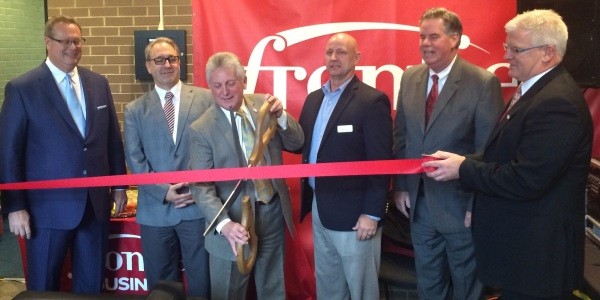
Even as Frontier finds its footing among Connecticut consumers, the company’s has begun to roll out a retail store presence.  Frontier opened its second retail outlet in Connecticut, in Norwalk, last month.  The location at 2 Washington Street joins one in New London, at 200 State Street.  The company is actively pursuing plans to add two more retail stores in Connecticut by April.  Primarily geared toward residential customers, the stores are also expected to sell business products later this year.  Frontier currently has retail stores in 23 states.F09_Frontier_bf-e1418658074267-600x300

The CEO sisters, 13 months apart in age, “talk passionately about supporting women in the boardroom and the lessons they learnt from their parents which enabled them to be self-confident and have the belief that anything was possible coupled with a focus that getting a good education would give them the freedom and flexibility to do anything they wanted,” reported the business website Footdown in 2012.


http://youtu.be/nmcHRQ3y8LM

Immigration Drives Growth, Vibrancy of New Haven Region, Study Finds

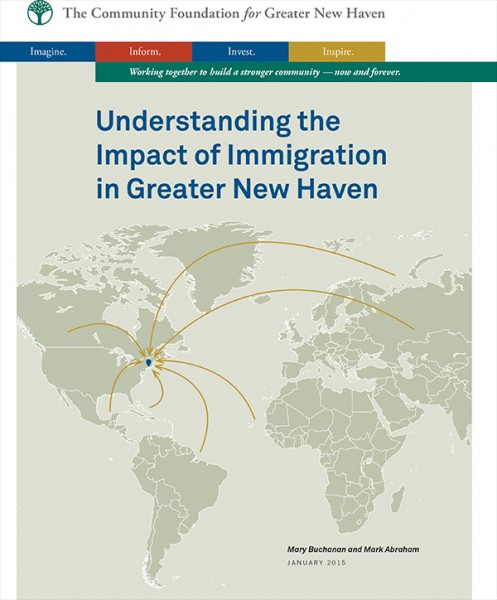
If Greater New Haven is thriving, the region’s rapidly-growing immigrant population is a key reason, according to a new research study. The report, entitled Understanding the Impact of Immigration in Greater New Haven, compiles data from federal, state and local government agencies, as well as information generated locally by DataHaven and The Community Foundation of Greater New Haven. Viewed as “an important step in its effort to enhance the civic and economic participation of immigrants in Greater New Haven,” the report was undertaken to provide a snapshot of the immigrants living in Greater New Haven and Connecticut, the impact of local population change and diversity, and the community and economic impact. It is intended to help the general public, policymakers and local leaders understand the impact of immigration in the region to inform discussions and community action.UIGNH_cover_600

According to the report:

  • Approximately 1 in 8 residents of Greater New Haven is foreign-born, originating in countries in all the world’s regions.
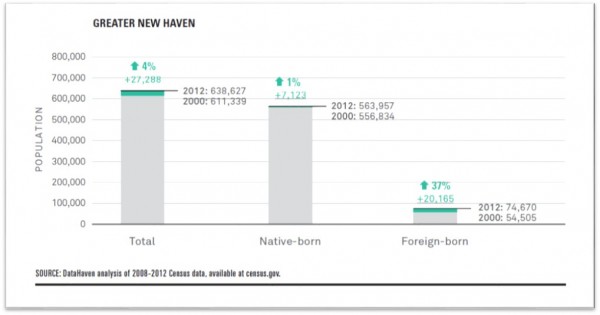
  • While the native-born population in Greater New Haven has barely increased since 2000, immigrants settling in the area have caused rapid population growth, making New Haven the fastest-growing city in Connecticut over this period
  • About half of all immigrants are naturalized US citizens; the other half are legal permanent residents, legal temporary residents or undocumented immigrants.
  • Greater New Haven is attracting immigrants from a wide range of countries, with the greatest increases in numerical terms between 2000-2012 attributable to immigration from Mexico (3,168), India (2,729), China (2,292), Jamaica (1,532) and Ecuador (1,382).This report explores how immigration impacts the development of both Greater New Haven and Connecticut.

“It is clear from the report that the Greater New Haven community is enhanced in many ways by immigration,” says William W. Ginsberg, President & CEO of The Community Foundation for Greater New Haven. “The data demonstrate that our rapidly growing foreign-born population is successfully building productive and contributing lives here – by working, by creating small businesses that build wealth, by owning homes, by educating their children, and by contributing to the diversity and cultural richness of this community.”foreign born population

The report also cites data indicating that the immigrant population in Greater New Haven is highly-skilled, compared to other areas. Among immigrants in this region, there are more than twice as many high-skilled workers as low-skilled workers in the region, while data for the United States as a whole show slightly less than one high-skilled worker for every low-skilled worker.

From 2000 to 2012, Greater New Haven’s population as a whole increased by more than 27,000 people, according to the report. Of that growth, about 75 percent (20,165) were foreign-born residents. About half of immigrants in Greater New Haven are naturalized citizens.

The Community Foundation for Greater New Haven explored local public opinion on immigration by interviewing key stakeholders and administering an online survey to its constituents. The survey found that “although immigration is a complex issue, the Greater New Haven community widely agrees that foreign-born people contribute to the economic, cultural, and social well-being of the region.”  Nearly all (97 percent) respondents said that the issue of immigration is very or somewhat important to Connecticut.  Only 31 percent of respondents thought they understood immigration policy extremely or fairly well.

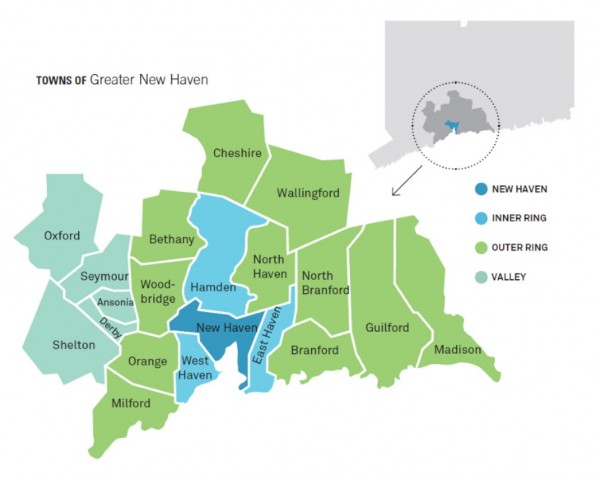
pop growthIn New Haven’s neighborhoods in particular, the boost in immigrants has revitalized communities and spurred new businesses.  From 1970 to 1990, the foreign-born population in most New Haven neighborhoods remained flat or declined, and these neighborhoods suffered from overall population decline—similar to other central city neighborhoods in post-industrial cities. Since 1990, the report found, the foreign-born population in many city neighborhoods has rebounded sharply, particularly in areas such as Edgewood, West River, Fair Haven, and the Hill. These areas have seen a large influx of population and business overall.new haven map
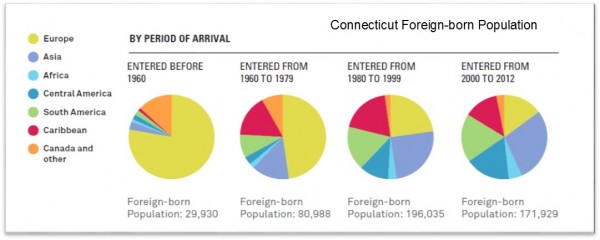
Statewide, among Connecticut’s immigrant population entering the US since 2000, only 15 percent are Europeans. 29 percent were born in Asia, and 19 percent come from South America. By contrast, 78 percent of Connecticut’s immigrant population that entered the US before 1960 was born in Europe.

The report was compiled and written by Mary Buchanan and Mark Abraham of DataHaven, with assistance from staff at The Community Foundation.

In 2015, The Community Foundation’s work will include dedicated grantmaking and other support for nonprofits working in this area, including support for advocacy efforts on State and Federal immigration policy, efforts to identify and support emerging leaders in the immigrant community, and public education and other efforts to enhance the community’s understanding of the social, cultural and economic benefits of immigration for Greater New Haven.

“New Haven has always been a welcoming community, and the surge of immigration in recent years shows us yet again how important immigration is to the growth and success of our community,” Ginsberg added.The Community Foundation is making immigrant integration a strategic focus with the goal that immigrants in Greater New Haven, including undocumented, will achieve greater civic and economic participation and success thereby becoming more fully integrated members of a more welcoming community, the report indicates.

More information on the Foundation’s philanthropy is available at www.giveGreater.org. The report is available online at www.cfgnh.org/immigrationreport  or by calling The Community Foundation at 203-777-2386.

Will Blizzard of '78 Be Repeated in 2015?

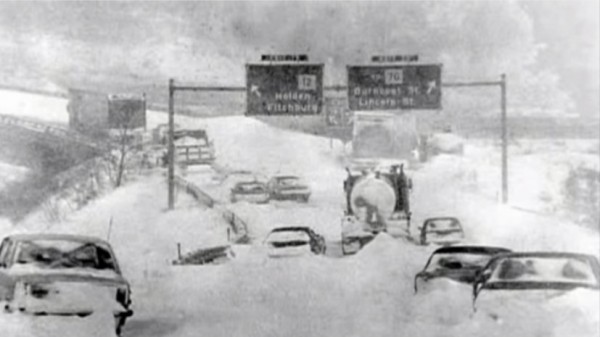
Is Connecticut in for another Blizzard of ’78?  For those old enough to remember, there has been nothing like it since.  The blizzard shut down the state of Connecticut and much of New England - roads, businesses, schools, just about everything.  The legendary storm is not only vivid in memories - it has been the subject of a documentary on Connecticut Public Television, and has its own website, Blizzardof78.org, the work of amateur historian Matt Bowling.blizzard photo The website recalls that “in Connecticut, Governor Ella Grasso was trying to drive from the Governor’s Mansion to the state storm center in downtown Hella helpartford.   She didn’t quite make it.  Forced to abandon her car and walk the remaining blocks to the state armory, Grasso was not slow in taking the storm seriously.  Thanks to (Massachusetts Governor Michael) Dukakis and Grasso, both state and National Guard troops would soon be on their way.”



Recalled former WTNH-TV newscaster Kenn Venit, “By Monday afternoon if you weren't home, you weren't going home." More than two feet blanketed the state, with drifts as much as eight times that height.

Gov. Grasso shut down the state for three days (including the interstate highways), and President Jimmy Carter declared Connecticut, Rhode Island and Massachusetts federal disaster areas, recalled The Hartford Courant in a retrospective published a year ago.   A contingent of 547 soldiers from Fort Hood, Texas, flew in to help National Guard crews clean up the mess and help the region slowly re-start daily routines that had been abruptly halted.connnatgrd

Snow fell at a rate of 4 inches an hour at times during the storm, which lasted for 36 hours, according to published reports. The unusual duration of the 1978 Nor’easter was caused by a Canadian high pressure system, which forced the storm to loop east and then back toward the north. Thunder, lightning and hail was seen in the blizzard as it blanketed the Northeast with over three feet of snow, and the shoreline was battered by high tides and hurricane force winds.

Two years ago, in early February 2013, a sizable blizzard rolled into New England which threatened to usurp the Blizzard of '78's place in the recent record books.  Despite heavy, sustained snowfall,  it didn't.

 Videos from CPTV and NBC News (with reports from John Chancellor, David Brinkley, Brian Ross and Robert Hager) highlight the Blizzard of  '78 in Connecticut.


http://youtu.be/ZDEl_kZw9EE

https://www.youtube.com/watch?v=XPdcFbbpaD4

Year of Volleyball Underway; First Tournament in the Books

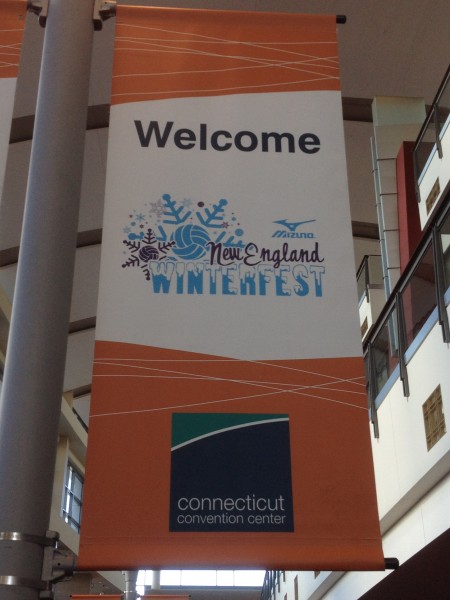
More than 2,000 female volleyball players from across the Northeast spent the holiday weekend in Hartford for the New England Region Volleyball Association’s 2015 Mizuno New England Winterfest Volleyball Tournament, held at the Connecticut Convention Center.  The event, which started in Hartford six years ago, has steadily grown in popularity, and will be returning for at least the next two years. Tournament organizers, the Connecticut Convention & Sports Bureau (CTCSB), and the Connecticut Convention Bureau said the three-day event brought in close to 10,000 visitors over the long weekend including approximately 2,000 players, 250 coaches, 100 officials and volunteer tournament staff, and thousands of family members and fans – and tremendous enthusiasm.25

There were 25 volleyball courts arrayed on the Convention Center floor, with 12 matches per court every day, simultaneously, each lasting no more than one hour.  Five years ago, the tournament was launched with 18 courts in continuous operation.

“The Mizuno New England Winterfest is designed to showcase female volleyball players – ages 12 to 18 – to college coaches and recruiters from throughout the Northeast,” explains Tournament Chair Alex Temkin. “The Northeast has one of the largest concentrations of Collegiate Division II and Division III schools in the country, and there are many Division I schools here as well.”

“We are excited to welcome back this successful tournament, one that is projected to generate over $3.3 million in revenue for the Greater Hartford region,” said H. Scott Phelps, Interim President of the Connecticut Convention & Sports Bureau (CTCSB), prior to the tournament. Phelps reports an estimated 885 jobs in the hospitality industry will be supported by this tournament, and $270,500 in Connecticut Sales Tax will be generated.sign

Where's UConn?

”Having more than 800 matches in a single location encourages college recruitment decision-makers to come and scout as many players as possible.” Temkin said.  On Friday evening, a College Showcase was held to showcase athletes for college coaches and recruiters, as well as a College Recruiting Seminar for parents of volleyball players.

Approximately 38 colleges had coaches on hand, watching the talent.  Surprisingly absent:  the University of Connecticut.  Among the coaches on hand from local colleges were representatives of University of Hartford, University of Saint Joseph, and Sacred Heart University.  By Saturday morning, a number of institutions with volleyball teams still had materials on hand touting their programs, aimed at prospective college applicants.  None of the material was from a Connecticut school.

Temkin notes that volleyball teams’ interest in registration for Winterfest was so great this year – 25 percent more than in 2014 – that organizers established a smaller, independent volleyball tournament called the “Husky Sweet 16” to accommodate the additional athletes. That competition was held at a facility in Windsor.

More in May

There’s more volleyball to come later this year at the Connecticut Convention Center.  Building on the success of the Winterfest tournament, the New England Region Volleyball Association (NERVA) will bring its first-ever Northeast Junior Championships to Hartford over Memorial Day weekend.

The tournament, featuring junior girls and boys teams from throughout the Northeast, is expected to bring nearly 200 teams, more than 2,000 players, 400 coaches, 75 officials and volunteer tournament staff, and 3,500 family members and fans downtown, from Friday, May 22 through Monday, May 25, 2015. volleyballs

NERVA has committed to holding the event at the venue for the next three years, through at least 2017, with over 3,000 overnight rooms and 1,100 rooms anticipated for the new annual event.

“We have always valued our partnership with the Connecticut Convention Center and the Connecticut Convention and Sports Bureau,” states David Peixoto, NERVA Commissioner. “Our partnership has grown to develop Winterfest as the premier volleyball tournament in the Northeast. We look forward to making the Northeast Junior Championship just as successful.”

The new four-day event does not require teams to qualify to participate. While it will serve as a season-ending tournament for some, the event will allow for additional preparation to teams continuing on to nationals. Participants are 12-18 years old, as NERVA follows USA Volleyball age guidelines.

“Downtown Hartford is a great location for our sports event and the city and region really make our players and fans feel welcome,” added Temkin. “Restaurants extend their hours and customize the menus, the Dash shuttle bus that circulates Downtown adds hours of operation, and everyone does their best to accommodate our group.”

The New England Region is one of many Regions in the United States that aid in the governing of the sport of volleyball. Regional Volleyball Associations (RVAs) are member organizations of USA Volleyball (USAV). The RVAs serve as the grassroots function for the USAV and individually and collectively serve as a catalyst for USAV functions.

Volleyball footnote:  While many know that the sport of  basketball was invented in Springfield, MA; fewer are aware that volleyball was also invented in nearby Massachusetts, in Holyoke.  That’s where the National Volleyball Hall of Fame is located.

2013-CTCC-NERVA-Winterfest-300x200


13 Connecticut Mayors Head to D.C. for National Conference

When 300 of the nation’s Mayors convene in Washington for a three-day conference beginning on Wednesday, a baker’s dozen from Connecticut will be among them.  Thirteen chief elected officials from Connecticut comunities, including two who serve as co-chairs of key committees, will be participating in the 83rd Winter Meetings of the National Conference of Mayors.  The organization convenes on the heels of President Obama’s State of the Union Address, just as the new Congressional session gets underway. us_conference_mayors The Mayors will engage with Administration officials, Congressional leaders business leaders to “ensure the health and economic recovery of America’s cities,” according to program organizers. Vice President Joe Biden is scheduled to address the Mayors on Thursday.

Amayorsttending from Connecticut are Bridgeport Mayor Bill Finch, Bristol Mayor Ken Cockayne, Danbury Mayor Mark Boughton, East Hartford Mayor Marcia Leclerc, Hartford Mayor Pedro Segarra, New Britain Mayor Erin Stewart, New Haven Mayor Toni Harp, Norwich Mayor Deberey Hinchey, Shelton Mayor Mark Lauretti, Stamford Mayor David Martin, Stratford Mayor John Harkins, Trumbull First Selectman Timothy Herbst and Waterbury Mayor Neil O’Leary.

On Wednesday, the Mayors’ Energy Independence and Climate Protection Task Force, which is co-chaired by Bridgeport Mayor Bill Finch will meet.  The panel is co-chaired by the Mayor of Carmel, Indiana.  The session will include a discussion of recommendations of the President’s State, Local and Tribal Leaders Task Force on Climate Preparedness and Resilience.

On Thursday, the Immigration Reform Task Force, which is co-chaired by Hartford Mayor Pedro Segarra and Anaheim Mayor Tom Tait will gather to hear from the Secretary of the Department of Homeland Security, Jeh Johnson.

Topping the agenda, according to officials are community policing, the economy, innovation & transportation.   The Mayors will head to the White House on Friday afternoon, concluding the conference.

The U.S. Conference of Mayors is the official nonpartisan organization of cities with populations of 30,000 or more. There are nearly 1400 such cities in the country today.

Eight Communities to Receive Funds to Support Downtown Improvement Initiatives

Connecticut Main Street Center (CMSC), the downtown revitalization and economic development non-profit, is awarding eight organizations and municipalities a total of $80,000 in 2015 Preservation of Place grants.  The grants will be used to provide Bridgeport, Canton, Hartford, New Milford, Newtown, Putnam, Torrington, and Windsor Locks with targeted resources to increase their capacity to plan for preservation and revitalization initiatives in their downtowns and neighborhood commercial districts.preservation of place The Preservation of Place grant program provides a source of funding for new initiatives that can be integrated into, and leverage, comprehensive Main Street preservation and revitalization programs.  The funds are meant to be flexible to meet individual community need.


The 2015 recipients of Preservation of Place Grant funds are:

  • Bridgeport Downtown Special Services District for a feasibility study of the creation of a regional food hub and community supported agriculture in downtown BridgeportCT Main Street LOGO
  • Town of Canton for a comprehensive market study and brand strategy for Collinsville
  • Hartford Business Improvement District for the creation of a community vision plan for a six block area of the Asylum Hill neighborhood
  • Town of New Milford for a historic downtown New Milford branding & marketing program
  • Town of Newtown for the Sandy Hook Village Signage & Wayfinding Design Plan
  • Town of Putnam for Downtown Putnam design guidelines & standards
  • City of Torrington for a Downtown Torrington market study & branding/imaging program
  • Town of Windsor Locks for the historic train station reuse studytorrington

"Historic preservation and the revitalization of our Main Streets create jobs, bring vacant buildings back on the tax rolls and add value and vitality to adjacent buildings and neighborhoods," said John Simone, CMSC President & CEO.

"The diversity of locations, from the Northwest Corner of Connecticut to New London, matched with the diversity of projects, from creative placemaking in urban open spaces to organizational and leadership development that will improve the management function in downtown, will allow each community to respond to their greatest current need, actively creating their direction of growth," he added.

Since 2008, CMSC has awarded $446,130 through the Preservation of Place grant program to twenty four Connecticut communities, leveraging over $1 million in local Main Street initiatives.  The program receives support from the State Historic Preservation Office with funds from the Community Investment Act. A year ago, a total of $70,000 in grants were awarded to Bridgeport, Canton, Essex, New London, Norwalk, the Northwest corner, and Willimantic.

The mission of Connecticut Main Street Center is to be the champion and leading resource for vibrant and sustainable Main Streets as foundations for healthy communities. CMSC is dedicated to community and economic development within the context of historic preservation, and is committed to bringing Connecticut's commercial districts back to life, socially and economically.

40 Years Ago, Transportation and Fiscal Austerity Highlighted Inauguration Day

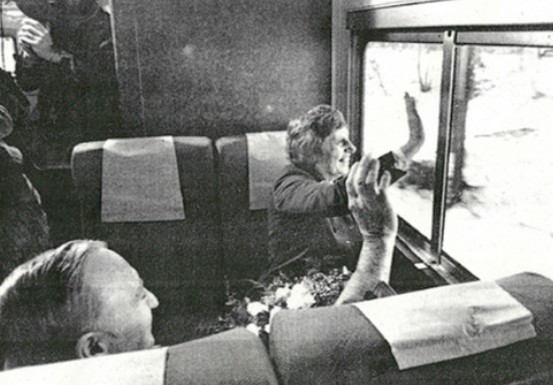
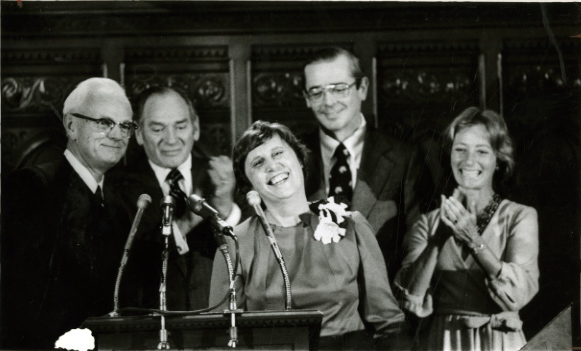
On  inauguration day, Connecticut’s incoming Governor would be “commuting by train to the Capitol for the inauguration to dramatize the need for more mass transit,” local news media reported. The Governor-elect was Ella Grasso, and the year was 1975.  She took the train from her hometown of Windsor Locks into Hartford.

Four decades later, transportation will once again be center-stage on inauguration day, as Governor Dannel Malloy has indicated in the weeks prior to taking the oath of office for a second time that transportation will be a leading issue of his second term. ella train

The Wall Street Journal has reported that a White House economic analysis from July 2014 found that 41 percent of the state’s roads were in poor condition, noting that Connecticut was tied with Rhode Island with the highest percentage of poor roads.  The state is also in the midst of improving the New Haven - Springfield rail corridor, poised to launch a revitalized "Hartford line."

Grasso, according to news reports of the day, also took the opportunity “to emphasize the need for fiscal authority in the face of projected money pr1000px-seal_of_the_governor_of_connecticut.svgoblems for the state.”

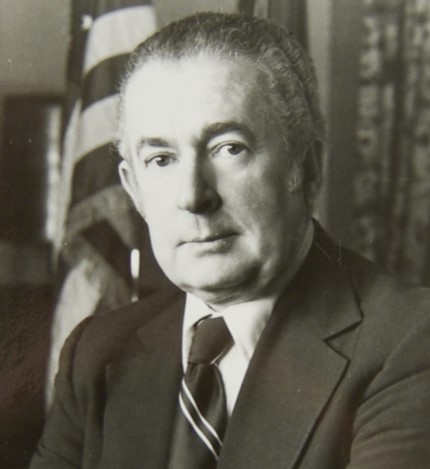
Dollars and sense were also central to the first inaugural address of Governor William A. O’Neill on January 7, 1981.

Published reports indicated “that he favored cutting spending rather than increasing taxes to eliminate a deficit in this year's budget. But he said that balancing spending with existing revenues would be even harder for the fiscal year beginning July 1.”

Speaking before a joint session of the State House of Representatives and Senate, The New York Times reported that Mr. O'Neill said: ''Government at all levels faces increasingly tough decisions, finding itself forced to do more with less. It seems we have only one choice: Curb spending and control taxation.''

O’Neill, who had succeeded to the office just a week earlier upon Grasso’s resignation due to ill health, said 'To maintain a budget balance, we can raise taxes or cut spending even further,'' he said. ''I do not want to raise taxes.''

Later in his term, O’Neill would respond to the collapse of the Mianus River Bridge on I-95 in Greenwich on June 28, 19oneill83, which exposed a poor record of road and bridge maintenance in the state, with creation of a Special Transportation Fund to set aside money to maintain and repair the state's bridges.
That same year, the legislature agreed to eliminate tolls from Connecticut roads, in part due to a horrific accident in January at the Stratford tograssoll station that killed seven people and galvanized public opinion.  The state had collected tolls at 14 locations - eight on the Connecticut Turnpike between Greenwich and Plainfield, three on the Merritt and Wilbur Cross Parkways, and at three bridges in the Hartford area. The tollbooths generated $66 million a year, The New York Times reported that year.
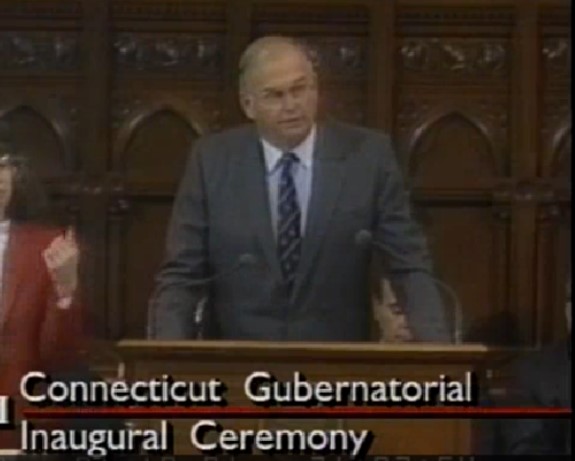
On January 9, 1991, former U.S. Senator and newly elected Governor Lowell P. Weicker said in his inaugural address that “The people of Connecticut have sent us here to do the right thing: to face up squarely to the facts of a state in fiscal trouble.'' Describing the state as ''rudderless,'' he said ''A deficit has taken control of our lives, coloring all else as it climbs beyond comprehension, sapping our confidence, humbling our visions. The past is not worth the best of our courage and creativity. That belongs to the future. 'So let's get this deficit business done, and fast.''weicker

Although he did not propose it on day one, he would soon recommend imposition of a state income tax in Connecticut, which was approved in August 1991 by a reluctant state legislature and signed into law.  Just a few weeks later, Gov. Weicker signed legislation increasing transportation fees by $6 million, clearing the way for dozens of stalled road and bridge projects.  The New York Times reported that the $6 million” will raise the state transportation fund to $63 million” and “insure enough money to pay for road projects for the next six years.”


As Latino Population Increases, Schools See More English Language Learners

A snapshot of America in 2044, based on U.S. Census Bureau data and current trends, will show this:  a nation with a youthful, growing minority population juxtaposed against an aging, slow-growing and soon to be declining white population. New population projections show whites will become a minority by 2044, according to published reports. The new projections from U.S. Census Bureau figures shows two trends for America's population -- a long-term decline for the nation's white population, making up just 49.7 percent of the population by 2044, and a growth of new minorities -- Asians, Latinos and multiracial persons. The populations among the rapidly-growing Latinos, Asians and multiracial populations are all expected to double in size over the next 30 years. Specifically, the rise of Latinos is projected to make up 25.1 percent of the U.S. population in 2044, doubling African-Americans, according to the data projections reported in the Latino Post.  By 2027, more than half of America's 20-somethings will be racial minorities, and in the 2028 presidential election, 40 percent of all eligible voters will be racial minorities._Hispanic_students

In Connecticut, the demographic shift is underway.  The Hispanic percentage of the statewide population in 2013 stood at 14.7 percent, steadily climbing during the past decade.  The Hispanic percentage of statewide population under age 18 in 2013: 22 percent.

When the website ctlatinonews.com selected five “Young Latinos to Watch” this month, two of the five were newly elected legislators.  Aundré Bumgardner was a surprise winner on Election Day.  The Republican, whose family is from Panama and Puerto Rico, will be the youngest State Representative in Connecticut’s legislature.  The 20 year-old won his party’s nomination to run for the state House from the 41st District, which covers Groton and New London.  Rep.-elect Christopher Rosario may be new to the state’s legislature, but he is not new to advocacy, politics  and working on behalf of the Latino community. He will represent his hometown of Bridgeport in the state legislature from the 128th District.   He has been Bridgeport’s youngest department head as Director of Anti-Blight under the Office of Neighborhood Revitalization.

Recent news reports highlight one of the issues that the legislature will be grappling with.  An analysis by CT Mirror found that during the 2013-14 school year, Hartford Public Schools had the most English Language Learner (ELL) students, with 3,550, but Windham had the highest percentage of ELL students at 23.8 percent.  The largest peeducation_student_newsrcentage increases in ELL students, between 2001 and last year, came in Windham (11.8% increase), Danbury (up 9.4%), Norwich (up 9.1%), and New London and West Haven (both up 7.4%).


The increasing number of ELL students in Connecticut is reflected in the current top 20 communities, according to the CT Mirror data, compiled from the State Department of Education:

  1. Hartford 3,550
  2. New Haven 2,709
  3. Bridgeport 2,685
  4. Danbury 2,204
  5. Waterbury 2,114
  6. Stamford 1,870
  7. New Britain 1,659
  8. Norwalk 1,277
  9. Meriden 1,011
  10. Windham 774
  11. West Haven 678
  12. East Hartford 606
  13. New London 588
  14. West Hartford 490
  15. Greenwich 486
  16. Norwich 465
  17. Manchester 351
  18. Torrington 334
  19. Bristol 317
  20. Wallingford 275

The top twelve municipalities with ELL students, by percentage of their student population:demographics_icon

  1. Windham 23.8%
  2. Danbury 20.4%
  3. New London 19.2%
  4. Hartford 16.7%
  5. New Britain 16.5%
  6. Bridgeport 12.9%
  7. New Haven 12.7%
  8. Meriden 12.5%
  9. Norwich 12.4%
  10. Stamford 11.8%
  11. Norwalk 11.5%
  12. West Haven 11.4%
  13. Waterbury 11.4%

The legislature's Latino and Puerto Rican Affairs Commission (LPRAC) is hosting this public policy forum on English Language Learners (ELL) and bilingual education in Connecticut on Tuesday, January 13, at the State Capitol in Hartford.  It will feature classroom teachers, business, professors, and legislators discussing the status of ELL/bilingual education and how to improve outcomes for Connecticut’s non-English speaking children.