Medical Device Tax Seen as Inhibitor to Innovation, Repeal Sought
/Emerging technologies that can develop breakthrough medical devices are at the intersection of innovation and tax policy, and a growing list of businesses and organizations are urging Congress to repeal a tax, instituted as part of the Affordable Care Act, that they say is harmful to industries with the potential to improve lives and boost local economies. The issue has particular resonance in Connecticut, where efforts to grow technology, precision manufacturing and the medical and pharmaceutical industries have accelerated in recent years.  Medical technology creates more than two million jobs directly and indirectly across the United States. The industry is one of the few U.S. manufacturing sectors that is a net exporter, and its innovations help reduce the human and economic burden of chronic disease. Industry officials point out that while U.S. leads the world in the development of new medical technology, the device tax “threatens that leadership.”
Earlier this year, a bipartisan majority of the U.S. House of Representatives voted to repeal the medical device tax. The fate of the proposal in the Senate is unclear. A growing coalition of research advocates, disability rights leaders, patient groups and others support repeal of the device tax because, they say, it drains critical resources away medical innovation. According to a 2015 study by opponents of the tax, two-thirds of med-tech companies that were surveyed said they had to either slow or halt job growth at their companies because of the medical device tax.
Between 2002 and 2012, the number of jobs in the Medical Equipment and Supplies Manufacturing industry in Connecticut increased by 10.75 percent, with the addition of about 700 jobs, according to the Connecticut Economic Resource Center (CERC). CERC’s research indicated that jobs in the field were almost twice as concentrated in Connecticut in comparison to the United States, with average wages above the national average, with more than 150 companies in the medical equipment and supplies manufacturing business.
Connecticut’s medical device industry continues to see new entries. Just two years ago, a company launched by a 2011 UConn graduate, Orthozon Technologies, received local notice for its newly developed “minimally invasive tool for spine surgeons,” which led to the company’s quickly “gaining momentum in the medical device field,” the Fairfield County Business Journal reported that year.
The Stamford-based company’s Lumiere™ is a state-of-the-art minimally invasive surgical retractor that provides “access and visibility for physicians as well as faster and less painful recovery time for patients,” according to the company website. Utilizing a patented technology with powerful unobstructed fiber optic lighting, translucent retractor blades, full medial access, and an expandable field of view, the medical device provides surgeons with a tool “for quicker and more efficient spinal decompressions.”
Earlier this month, when the state’s fastest growing technology firms were honored at the 2015 Marcum Tech Top 40, in partnership with the Connecticut Technology Council, medical devices were among the technologies highlighted. 
One of the leading categories included “Medical Devices companies manufacturing medical instruments and devices including medical diagnostic equipment (X-ray, CAT scan, MRI), medical therapeutic devices (drug delivery, surgical instruments, pacemakers, artificial organs), and other health related products such as medical monitoring equipment and handicap aids.”
Among the companies selected was Guilford-based Bio-Med Devices, which designs, manufactures, and markets a complete line of critical care and transportable respirators/ventilators, air - oxygen blenders, ventilation monitors, disposable and reusable breathing circuits, and accessories.
Connecticut Innovations. The state’s leading source of financing and ongoing support for Connecticut’s innovative, growing companies, highlights six Connecticut companies in the medical device industry within its investment portfolio, with some investments dating back to 2007.
Nationwide, an aging population, people with disabilities living longer lives, and chronic disease rates growing at faster rates, lead advocates of repeal say now is the time for more—not less—resources to advance cures and treatments that help people live longer and healthier lives. The industry survey indicated that 85 percent of respondents plan to reinstate forgone R&D projects if the tax is repealed.
https://youtu.be/uqTdNffOaas
 Recognizing that families and caregivers are the first teachers— and homes and neighborhoods are the first learning environments – the EDI process strives to discern what works best. The EDI is an assessment that provides population-level data by neighborhood on school readiness, and has been used in over 40 communities in the United States and extensively internationally.
 dren and families in their neighborhoods.”
 on for Public Giving
  The Lawrence W. O’Toole Award is given out each year to an individual, organization, school or district exhibiting great leadership through innovation or courage in moving student-centered approaches to learning forward in New England. The winner will receive a $100,000 grant from the Nellie Mae Education Foundation.




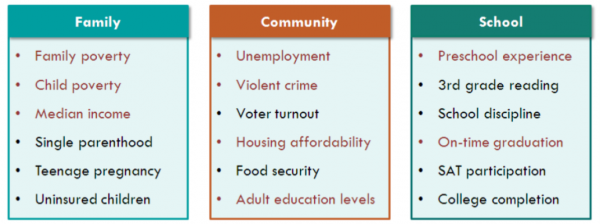 Connecticut Voices for Children is a research-based think tank that focuses on issues that affect child well-being, from educational opportunity to healthy child development to family economic security. Its mission is to ensure that all of Connecticut’s children have the opportunity to achieve their full potential.










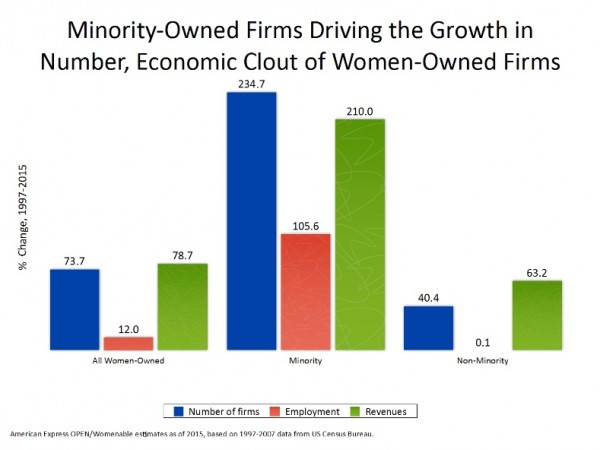
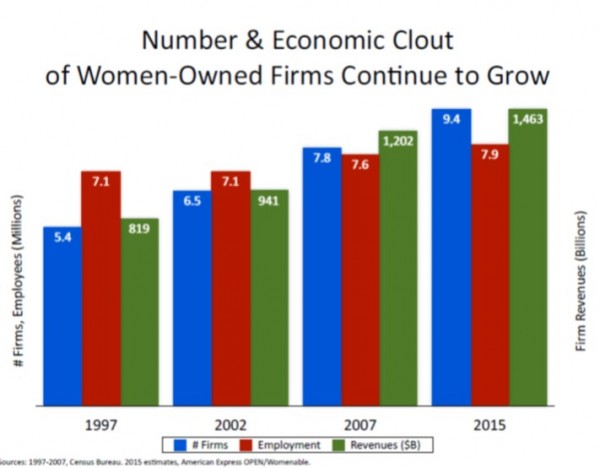 Of the nation’s women-owned businesses, African-American women own 1.3 million, Latinas 1 million, and Asian women more than 700,000. Businesses owned by women of color tend to be smaller in terms of their average employment and revenue, the report indicated. But their growth, both in numbers and in their economic clout—the combined average of their growth, revenue, and employment—continues to outpace that of their white peers, the data indicates.
 ow, there are an estimated 3.1 million minority women-owned firms, representing one in three (33 percent) women-owned firms,” pointed out Julie Weeks, President and CEO of