CT Ranks #12 in Meeting Long-Term Care Needs of Older Residents
/When it comes to support for seniors and caregivers, it matters where you live – and Connecticut is better than most places. According to a new, comprehensive state-by-state Scorecard from AARP, Connecticut ranks 12th in the nation in meeting the long-term care needs of older residents and people with disabilities. Even with the solid showing, AARP officials stress that more needs to be done, especially as the state’s 50-plus population continues to grow. Specific areas cited include more support and training for family caregivers, and easing patient transitions to and from the hospital or a skilled nursing facility.
 Raising Expectations 2014: A State Scorecard on Long-Term Services and Supports for Older Adults, People with Physical Disabilities, and Family Caregivers – an update of the inaugural 2011 Scorecard – ranks each state overall and within 26 performance indicators along five key dimensions:
- affordability and access;
- choice of setting and provider;
- quality of life and quality of care;
- support for family caregivers; and,
- effective transitions.
New indicators this year include length of stay in nursing homes and use of anti-psychotic drugs by nursing homes, raising serious concerns about the quality of institutional care. The Scorecard was complied by AARP with support from The Commonwealth Fund and SCAN Foundation.
According to the state Scorecard, a majority of family caregivers (59.4%) face a degree of stress and worry. In addition, Connecticut ranks last (51) when it comes to the percent of home health patients with a hospital admission. This signifies a need for more resources and training for family caregivers - especially around comp lex medical tasks – so that their loved ones don’t end up back in the hospital and can continue to live independently at home, according to AARP officials.
“The vast majority of older Connecticut residents want to live independently, at home, as they age – most with the help of unpaid family caregivers,” says Nora Duncan, state director of AARP Connecticut, which serves nearly 600,000 members age 50 and older in Connecticut.
Today, unpaid family caregivers provide the bulk of care for older Connecticut residents, in part because the cost of long-term care remains unaffordable for most middle income families. In Connecticut, it is estimated that more than 486,000 residents help their aging parents, spouses and other loved ones stay at home by providing assistance with bathing and dressing, transportation, finances, complex medical tasks like wound care and injections, and more.
 “When it comes to helping older Connecticut residents live in the setting of their choice, this silent army of family caregivers assumes the lion’s share of responsibility,” explains Duncan. “Many juggle full-time jobs with their caregiving duties; others provide 24/7 care for their loved ones. With every task they undertake, these family caregivers save the state money by keeping their loved ones out of costly nursing homes – most often paid for by Medicaid. They have earned some basic support.”
The top 12 states overall are Minnesota, Washington, Oregon, Colorado, Alaska, Hawaii, Vermont, Wisconsin, California, Maine, District of Columbia, and Connecticut, which make up the top quartile among the states. At the bottom of the rankings are Tennessee, Mississippi, Alabama and Kentucky.
According to the Scorecard, Connecticut ranks 29th in the percent of Medicaid long-term care dollars that support care provided at home and in the community – the care setting that most residents prefer. The Scorecard spotlights specific areas that call for improvement, including:
- Percent of home health patients with a hospital admission;
- Percent of nursing home residents with low care needs;
- Percent of people with 90+ day nursing home stays successfully transitioning back to the community.
- Family caregivers without much worry or stress, enough time, well-rested;
Of the 26 Scorecard indicators, 13 may be improved through state policy changes, which officials say points to the importance of AARP’s multi-state advocacy campaign, launched this year, to help older Americans live independently, at home, and the family caregivers that support them. “Even facing tight budgets following the Great Recession, Connecticut is making clear progress to help our older residents. However, this Scorecard shows we have more to do – and with a predicted ‘silver tsunami’ sweeping over our state in the next 20 years, the time to act is now.”
The full state Scorecard, along with an interactive map of state rankings and information, is available at www.longtermscorecard.org.


 tion, Mamoun’s, Prime 16, Skappo, Bella’s Care and Da Legna.
 The first Knights game took place on April 11, 2014. (photo at left) The stadium features a two-level club with skyline views as well as a VIP, climate-controlled club with full service bar. In addition to corporate suites, there are 987 club seats at the new Charlotte stadium. Of those, 170 on the upper level sell for $41.50 per game, or nearly $3,000 per season. The remaining 817 club seats, at $21 per game, sell for about $1,500 annually. All of the club seats were sold out 10 months prior to the season opener, according to the Knights



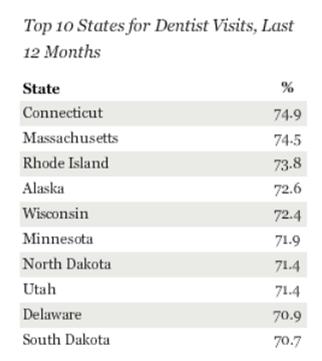
 These findings are based on interviews with more than 178,000 American adults conducted during 2013 as a part of the Gallup-Healthways Well-Being Index. Respondents were asked whether they visited the dentist in the last 12 months.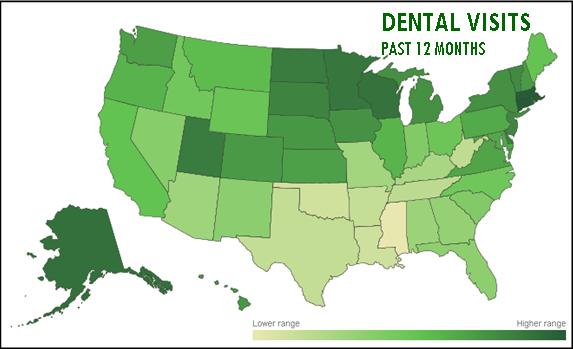

 e rankings is the Washington, D.C., metro area with a score of 77.3, followed by Minneapolis-St. Paul, Portland, Denver, San Francisco, San Jose, Seattle, San Diego, Boston Sacramento and Salt Lake City.
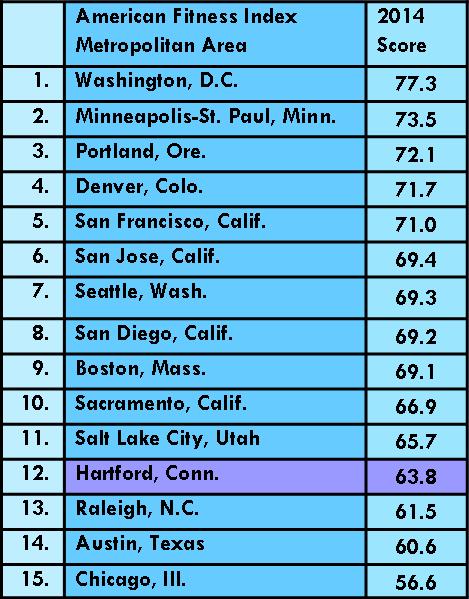 Hartford-East Hartford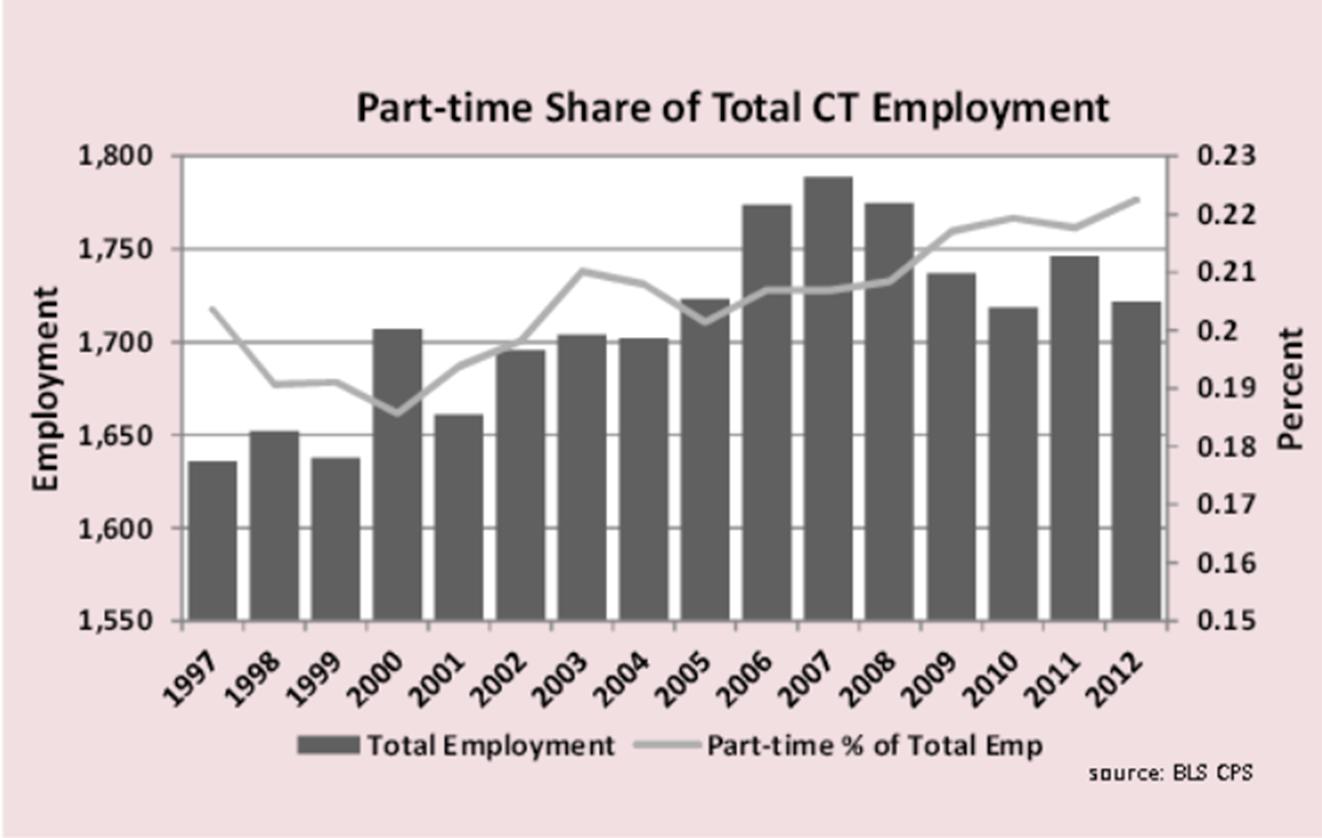
 a and the basis for the analysis. The breakdown of hours worked shows that Connecticut has less under 35 hours per week employment than other New England states but more than the Northeast region overall.
Part-time employment was 23.3% of all New England employment in 2012, higher than any other census division in the country. The other eight census divisions averaged 19.3% with the West- South Central division lowest at 16.4%.
a and the basis for the analysis. The breakdown of hours worked shows that Connecticut has less under 35 hours per week employment than other New England states but more than the Northeast region overall.
Part-time employment was 23.3% of all New England employment in 2012, higher than any other census division in the country. The other eight census divisions averaged 19.3% with the West- South Central division lowest at 16.4%.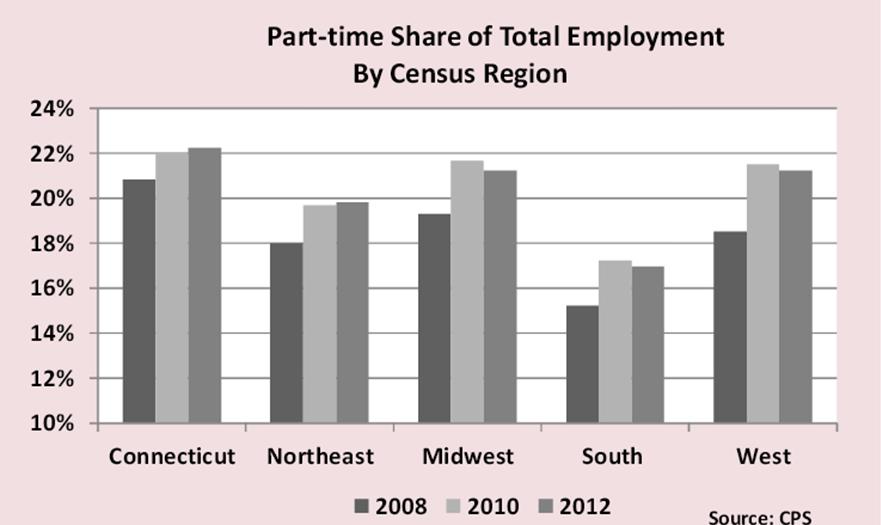
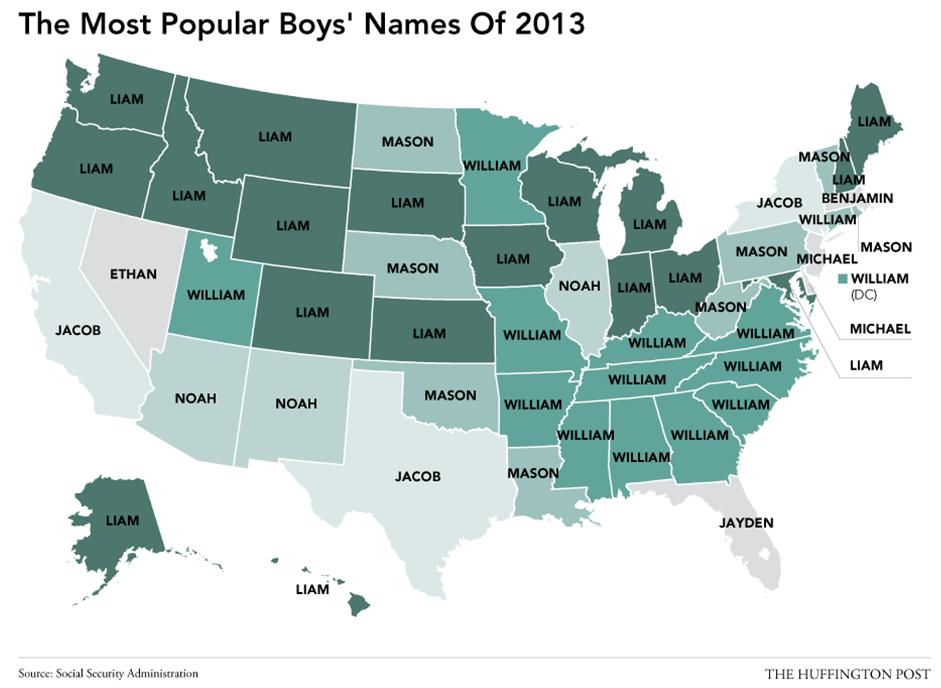
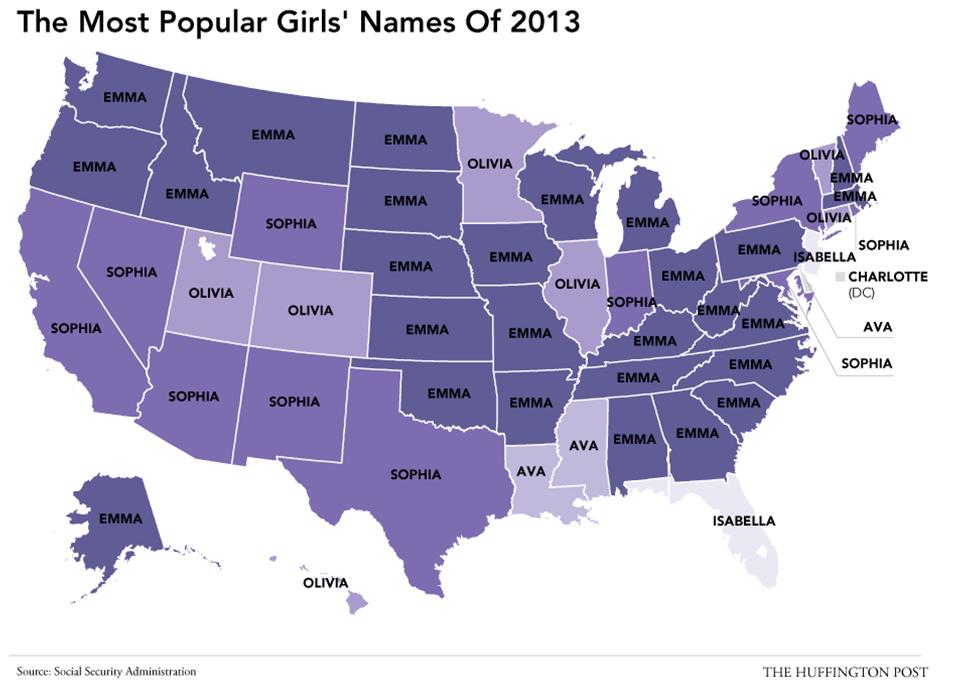
 The top names by state differ from the top national names overall, where Sophia and Noah take the top spots. For the first time since 1960, a new name unseated Michael or Jacob as the most popular for newborn boys, according to the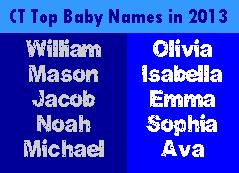
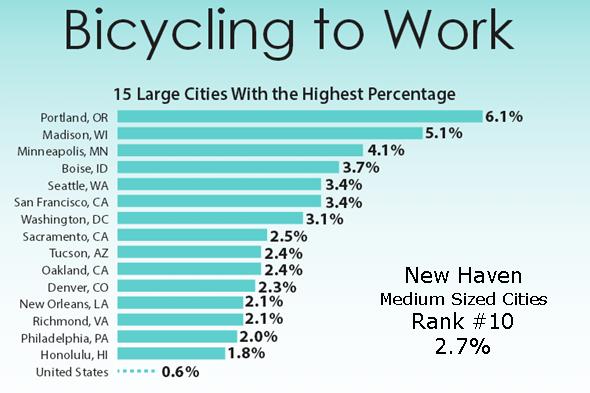 y bicycle remains low, according to the U.S. Census American Community Survey. In 1980, 0.5 percent of workers commuted by bicycle. This rate dropped to 0.4 percent in 1990, where it remained in 2000, before nudging upward in the latest survey.
 Among the nation’s medium sized-cities, (with p
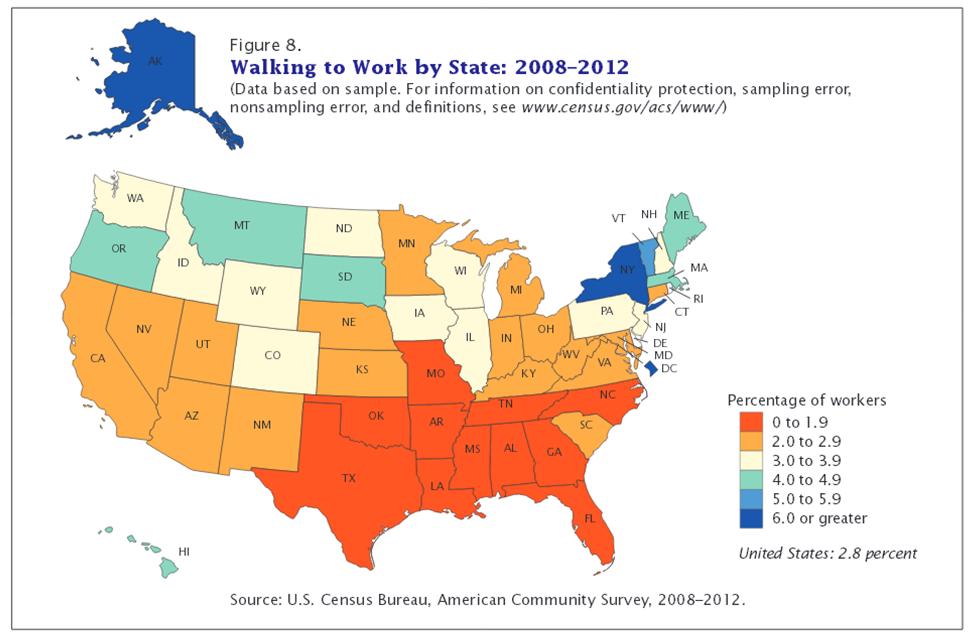
 opulations between 100,000 and 199,999) New Haven ranks at #5 with 12.4 percent walking to work and at #10 with 2.7 percent of the population using bicycles to get to work. Hartford ranks at #10 among the top walk-to-work medium sized cities with 8.2 percent, and did not reach the top 15 in bicyclists.
 average commute to work in Connecticut is about 25 minutes, ranging from 28 minutes in Fairfield County, 27 minutes in Litchfield County, 26 minutes in Windham County, 25 minutes in Middlesex County and Tolland County, to 24 minutes in New Haven County, 23 minutes in New London County, and 22 minutes in Hartford County.
 the top tier of states in the percentage of residents
  es (often with state financial incentives) the report offers guidance of factors influencing the frequency of entrepreneurial launches. Connecticut Innovations, established and supported by state government, helps Connecticut businesses grow through creative financing and strategic assistance, and is the nation's sixth most-active early stage investor.
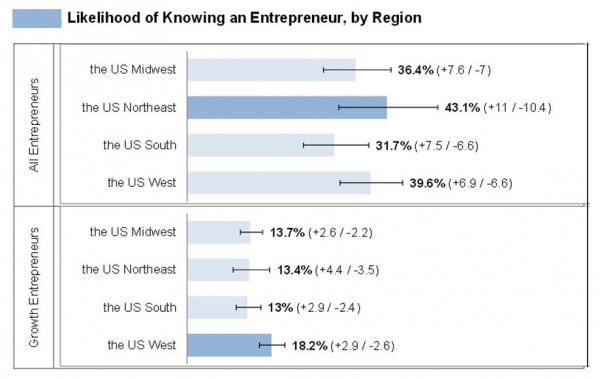 in the United States was 36.7 percent. The likelihood of knowing a growth entrepreneur was considerably lower, at 15.4 percent.