Immigration Drives Growth, Vibrancy of New Haven Region, Study Finds

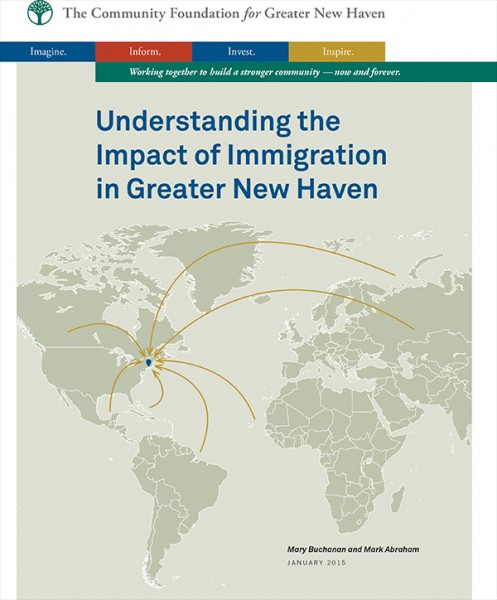
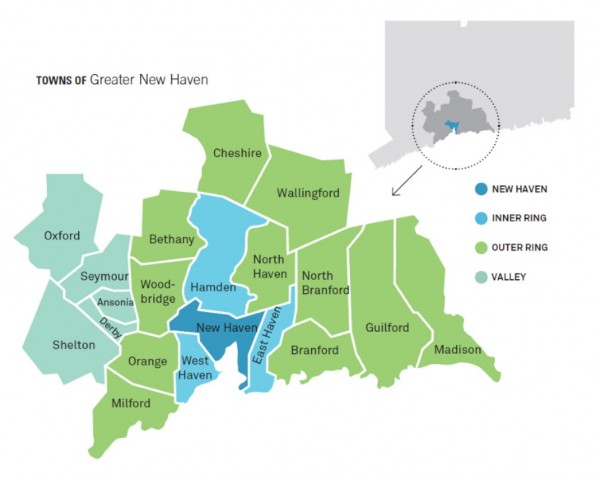
If Greater New Haven is thriving, the region’s rapidly-growing immigrant population is a key reason, according to a new research study. The report, entitled Understanding the Impact of Immigration in Greater New Haven, compiles data from federal, state and local government agencies, as well as information generated locally by DataHaven and The Community Foundation of Greater New Haven. Viewed as “an important step in its effort to enhance the civic and economic participation of immigrants in Greater New Haven,” the report was undertaken to provide a snapshot of the immigrants living in Greater New Haven and Connecticut, the impact of local population change and diversity, and the community and economic impact. It is intended to help the general public, policymakers and local leaders understand the impact of immigration in the region to inform discussions and community action.UIGNH_cover_600
According to the report:

  • Approximately 1 in 8 residents of Greater New Haven is foreign-born, originating in countries in all the world’s regions.
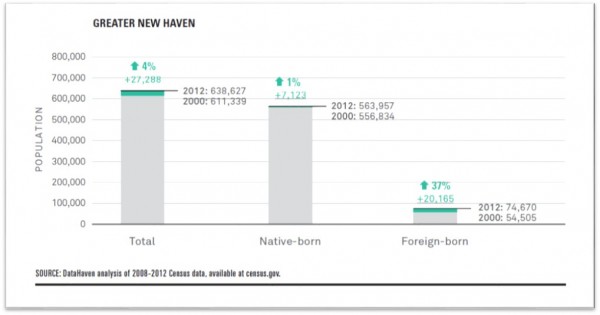
  • While the native-born population in Greater New Haven has barely increased since 2000, immigrants settling in the area have caused rapid population growth, making New Haven the fastest-growing city in Connecticut over this period
  • About half of all immigrants are naturalized US citizens; the other half are legal permanent residents, legal temporary residents or undocumented immigrants.
  • Greater New Haven is attracting immigrants from a wide range of countries, with the greatest increases in numerical terms between 2000-2012 attributable to immigration from Mexico (3,168), India (2,729), China (2,292), Jamaica (1,532) and Ecuador (1,382).This report explores how immigration impacts the development of both Greater New Haven and Connecticut.

“It is clear from the report that the Greater New Haven community is enhanced in many ways by immigration,” says William W. Ginsberg, President & CEO of The Community Foundation for Greater New Haven. “The data demonstrate that our rapidly growing foreign-born population is successfully building productive and contributing lives here – by working, by creating small businesses that build wealth, by owning homes, by educating their children, and by contributing to the diversity and cultural richness of this community.”foreign born population
The report also cites data indicating that the immigrant population in Greater New Haven is highly-skilled, compared to other areas. Among immigrants in this region, there are more than twice as many high-skilled workers as low-skilled workers in the region, while data for the United States as a whole show slightly less than one high-skilled worker for every low-skilled worker.

From 2000 to 2012, Greater New Haven’s population as a whole increased by more than 27,000 people, according to the report. Of that growth, about 75 percent (20,165) were foreign-born residents. About half of immigrants in Greater New Haven are naturalized citizens.

The Community Foundation for Greater New Haven explored local public opinion on immigration by interviewing key stakeholders and administering an online survey to its constituents. The survey found that “although immigration is a complex issue, the Greater New Haven community widely agrees that foreign-born people contribute to the economic, cultural, and social well-being of the region.”  Nearly all (97 percent) respondents said that the issue of immigration is very or somewhat important to Connecticut.  Only 31 percent of respondents thought they understood immigration policy extremely or fairly well.
pop growthIn New Haven’s neighborhoods in particular, the boost in immigrants has revitalized communities and spurred new businesses.  From 1970 to 1990, the foreign-born population in most New Haven neighborhoods remained flat or declined, and these neighborhoods suffered from overall population decline—similar to other central city neighborhoods in post-industrial cities. Since 1990, the report found, the foreign-born population in many city neighborhoods has rebounded sharply, particularly in areas such as Edgewood, West River, Fair Haven, and the Hill. These areas have seen a large influx of population and business overall.new haven map
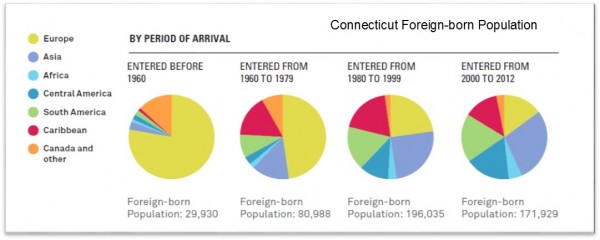
Statewide, among Connecticut’s immigrant population entering the US since 2000, only 15 percent are Europeans. 29 percent were born in Asia, and 19 percent come from South America. By contrast, 78 percent of Connecticut’s immigrant population that entered the US before 1960 was born in Europe.

The report was compiled and written by Mary Buchanan and Mark Abraham of DataHaven, with assistance from staff at The Community Foundation.

In 2015, The Community Foundation’s work will include dedicated grantmaking and other support for nonprofits working in this area, including support for advocacy efforts on State and Federal immigration policy, efforts to identify and support emerging leaders in the immigrant community, and public education and other efforts to enhance the community’s understanding of the social, cultural and economic benefits of immigration for Greater New Haven.

“New Haven has always been a welcoming community, and the surge of immigration in recent years shows us yet again how important immigration is to the growth and success of our community,” Ginsberg added.The Community Foundation is making immigrant integration a strategic focus with the goal that immigrants in Greater New Haven, including undocumented, will achieve greater civic and economic participation and success thereby becoming more fully integrated members of a more welcoming community, the report indicates.

More information on the Foundation’s philanthropy is available at www.giveGreater.org. The report is available online at www.cfgnh.org/immigrationreport  or by calling The Community Foundation at 203-777-2386.
Connecticut Ranks #2 in Millionaires; New Jersey Drops to #3

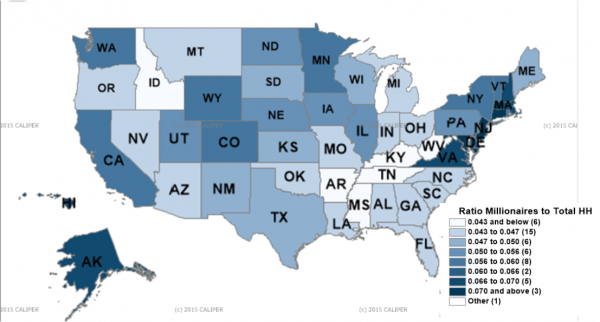
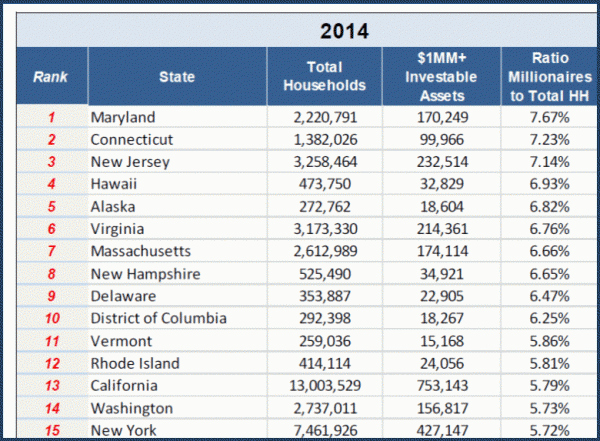
Which state has 99,965 millionaires?  Connecticut.  How many states have a greater percentage of millionaires, based on population?  Only one. Connecticut is ranked at #2 among the states in an analysis of the number of millionaires, as a percentage of population, developed by Phoenix Marketing International.  Only Maryland has a higher percentage – and Connecticut moved up one notch this year, surpassing New Jersey, which was ranked second a year ago.

Perhaps surprisingly, it’s not all about Fairfield County.  David Thompson, Managing Director of the Phoenix Global Wealth Monitor and the lead researcher, points out that the data shows “pockets of wealth” throughout the state – in the Bridgeport-Norwalk-Stamford corridor, but also in Litchfield County, Hartford-West Hartford, and Norwich-New London.  In fact, only California has more metropolitan areas in the nation’s top 30 for millionaires per capita.top states

And while some have suggested that Connecticut’s tax structure and economy are pushing people to exit the state, millionaires seem to be quite comfortable here.  The total number of millionaires dropped slightly during the past year from 100,754 to 99,965, a loss of 789 millionaires.  New Jersey lost more individuals with investable assets over a million dollars as a percentage of population, dropping behind Connecticut.  New Jersey's total number fell from 242,647 to 232,514, a loss of more than 10,000 millionaires during 2014 (from 7.49 percent to 7.14 percent of the state's population).

“Connecticut holds on to its wealthy population.  There’s no downward trend (compared with other states),” Thompson notes.  “The tax structure isn’t so onerous, the state offers stability, and attracts industries that grow wealth.”  Thompson, a Connecticut resident, adds that the quality of life in the state, as well as its accessibility to New York and Boston also prove attractive.

Maryland has 170,248 millionaires, a ratio of 7.67 to total households.  Connecticut ranks #2, with 99,965 and a ratio of 7.23, followed by New Jersey with a ratio of 7.14 and 232,514 millionaires.  Connecticut has consistently been a top five state, placing third  in 2013, fourth in 2012, 2011 and 2010.

Among the key findings for 2014:millionaire_1890954b

  • Maryland held strong in the first position for its fourth year in a row
  • On the strength of its oil boom, North Dakota continued its meteoric rise in the millionaire rankings, moving up to number 20 in 2014. Its neighbor, South Dakota, however, was the biggest gainer this year, rising twelve points to number 26
  • The top ten states remained the same, with only slight shifts: New Jersey #3 (down one point), Hawaii, Alaska, Virginia (up one point), Massachusetts (down one point), New Hampshire, Delaware and the District of Columbia.

Besides Maryland, the top ten states remained the same, with slight shifts: Connecticut rose one notch to hold the #2 spot, followed by New Jersey (down one spot), Hawaii, Alaska, Virginia (up one position), Massachusetts (down one slot), New Hampshire, Delaware and the District of Columbia.

“The amazing rise of North Dakota in the millionaires rankings clearly demonstrates the power of an industry to quickly create wealth,” Thompson said.  But he indicated that “new industries may not be a sustainable economy,” and cited the nation’s large population centers, including those along the east coast, as more likely to retain their positions as most attractive to wealthy individuals.

There were a few notable declines in the rankings: Louisiana dropped 6 positions to number 38, Texas dropped 5 slots to number 27, erasing gains it made last year; and Georgia lost another 5 places this year for the second year in a row, falling to number 40.

Smallest percentage of millionaires?  Mississippi, Idaho, Arkansas, Kentucky, Tennessee and West Virginia.

The PMI Global Wealth Monitor (GWM) provides ongoing intelligence on the attitudes, behaviors and needs of affluent and High Net Worth consumers to leading organizations in the U.S., Canada, and Europe.

millionaires map

CT Has 3rd Lowest Percentage of Low Income Students in Public Schools, Nationwide Numbers Exceed 50 Percent

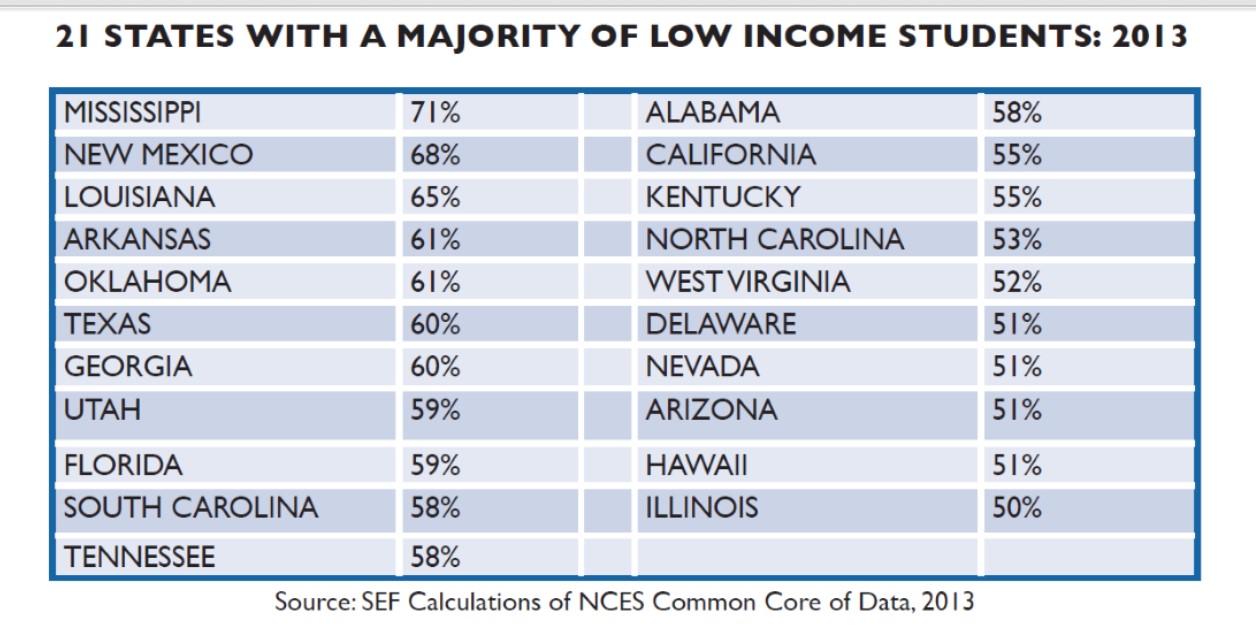
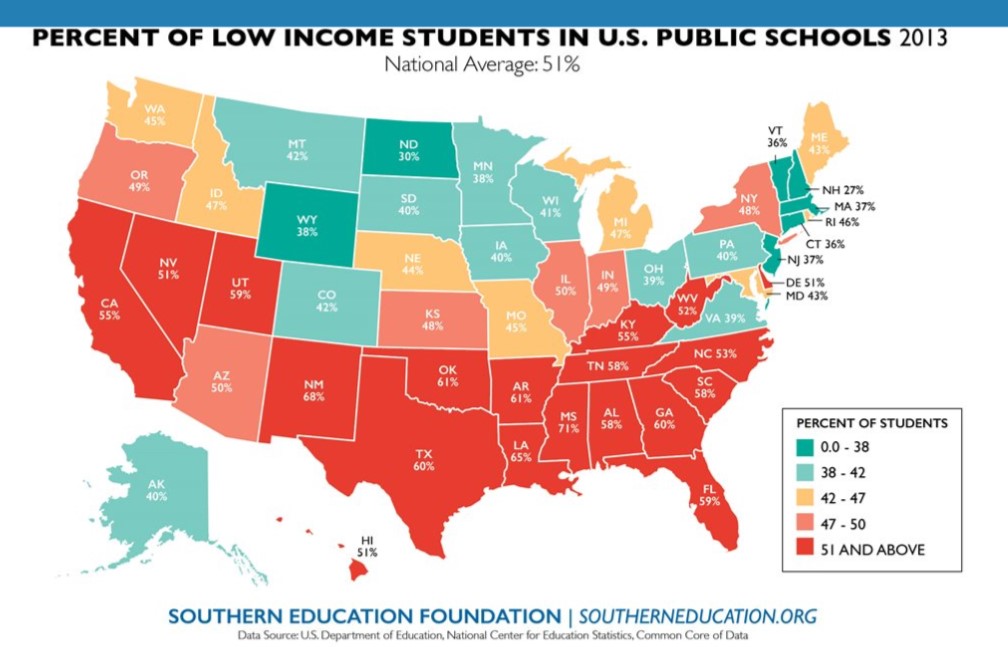
For the first time in at least 50 years, a majority of public school students across the country are considered “low-income," according to a new study by the Southern Education Foundation. While poor children are spread across the country, concentrations are highest in the South and in the West. Connecticut has among the lowest percentages in the nation. The latest data collected from the states by the National Center for Education Statistics (NCES), show that 51 percent of the students across the nation’s public schools were low income in 2013. In 40 of the 50 states, low income students comprised no less than 40 percent of all public schoolchildren. In 21 states, children eligible for free or reduced-price lunches were a majority of the students.student computers

Connecticut, which ranked tied for third, was among only ten states where the percentage of “low-income” students was below 40 percent. The states are Virginia (39%), Ohio (39%), Wyoming (38%), Minnesota (38%), Massachusetts (37%), New Jersey (37%), Connecticut (36%), Vermont (36%) North Dakota (30%) and New Hampshire (27%), which had the nation’s lowest percentage of low income (eligible for free and reduced lunches) public school students.

Thirteen of the 21 states with a majority of low income students in 2013 were located in the South, and six of the other 21 states were in the West. Mississippi led the nation with the highest rate: 71 percent, almost three out of every four public school children in Mississippi, were low-income. The nation’s second highest rate was found in New Mexico, where 68 percent of all public school students were low income in 2013.SEF

The report noted that “this defining moment in enrollment in public education in the United States comes as a consequence of a steadily growing trend that has persisted over several decades.”

In 1989, less than 32 percent of the nation’s public school students were low-income. By 2000, the national rate as compiled and calculated by NCES had increased to over 38 percent. By 2006, the national rate was 42 percent and, after the Great Recession, the rate climbed in 2011 to 48 percent, the report indicated.

The 2013 data suggests that six other states are on the verge of reaching a majority of low income students in the near future, if current trends continue. In Indiana and Oregon, 49 percent of the public schoolchildren were low income. In New York and Kansas, the rates were 48 percent. In Idaho and Michigan, rates were 47 percent.

The report concludes by stating t21 stateshat “The trends of the last decade strongly suggest that little or nothing will change for the better if schools and communities continue to postpone addressing the primary question of education in America today: what does it take and what will be done to provide low income students with a good chance to succeed in public schools? It is a question of how, not where, to improve the education of a new majority of students.”
Founded in 1867 as the George Peabody Education Fund, the Southern Education Foundation’s mission is to advance equity and excellence in education for all students in the South, particularly low income students and students of color. The organization's "core belief is that education is the vehicle by which all students get fair chances to develop their talents and contribute to the common good."


map


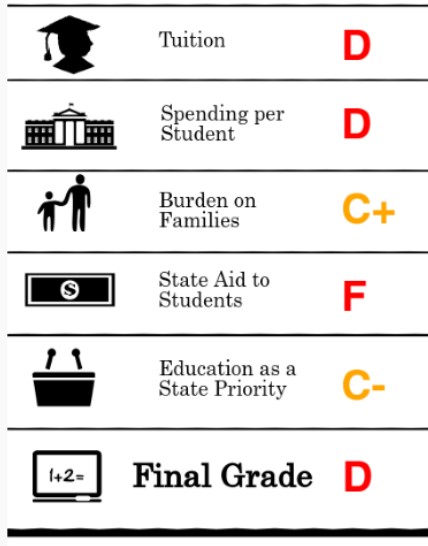
Connecticut Ranks 33rd in College Funding, Tuition, Burden; Grade: D

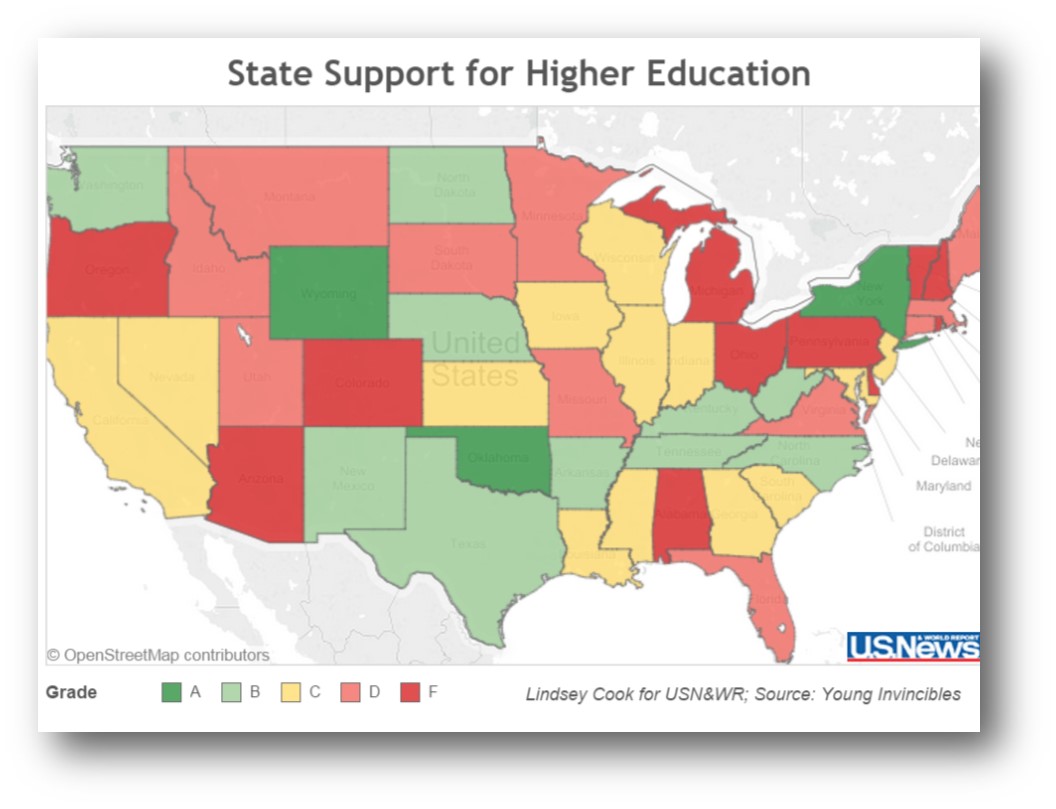
The Student Impact Project, an initiative of the youth advocacy group Young Invincibles, tracked trends in higher education finance in states across the country, and graded each state based on tuition levels, state funding per student, state aid to students, the financial burden to families and higher education spending as a portion of the total state budget.  Connecticut's report card grade:  D. In state-by-state reports published this week and reported by US News & World Report, the group found that on average, tuition at four-year public colleges and universities increased 37 percent between 2007 and 2013, which is three times the rate of inflation.  The data indicated that 47 states spend less per student today than they did before the Great Recession.map

Connecticut ranks 33rd among the nation’s 50 states in support for higher education.  Overall, just four states – Wyoming, New York, Alaska and Oklahoma – received a total grade equivalent to an A, while 10 got a B, 13 got a C, 12 got a D and 11 received an F, US News reported.

Overall, the state’s average in the five categories was 63 percent, which placed it ahead of only 16 states, including New Hampshire, which placed last, and Vermont, Colorado, Michigan and Oregon.  Connecticut received an F in the “aid for students” category, D in “state appropriation average” and “tuition” categories, C- in “Higher Ed as a Priority,” and the state's highest grade, C+, in “Burden on Families Average.”

New Hampshire, which at a 17 percent overall grade scored lowest in the country, spends the least amount of money per student than any other state ($1,708), and has cut the budget almost in half since the recession, according to the report. New Hampshire also provides no state aid to students, and spends 2 percent of its overall budget on higher education.  In Connecticut, the report indicated, that figure is 11 percent.

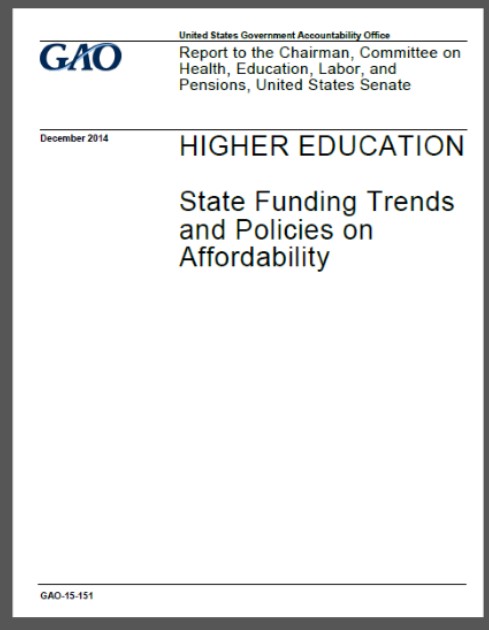
A report issuedCT report card last month by the General Accounting Office in Washington, D.C. for the U.S. Senate found “persistent state budget constraints have limited funding for public colleges” across the country. The result, according to the GAO report: “Students and their families are now bearing the cost of college as a larger portion of their total family budgets.”
A report by Connecticut’s Office of Higher Education in March 2014 found that for the 2013-14 academic year, “UConn’s increase of 5.8 percent for in-state commuting students compares to a national average of 3.7 percent for state flagship institutions. CSCU’s increase of 5.4 percent for in-state commuting students attending its State Universities compares to a national average of 4.1 percent for similar types of institutions; the Community Colleges’ increase of 5.5 percent for in-state commuting students compares to a national average of 4.5 percent for like institutions.”

The Connecticut report also noted that “from 2009 to 2014, tuition and fees for in-state undergraduates have increased 24.7 percent at the Connecticut State Universities, 26.9 percent at the Community Colleges, and 28.7 percent at UConn.”  Last fall, Connecticut’s largest public college system (CSCU) said it will need an 11 percent increase in its base-level state funding for the next fiscal year if they are to keep  an anticipated tuition-and-fee hike to 2 percent.  If additional state funding is not provided, steeper tuition hikes are possible.GAO report

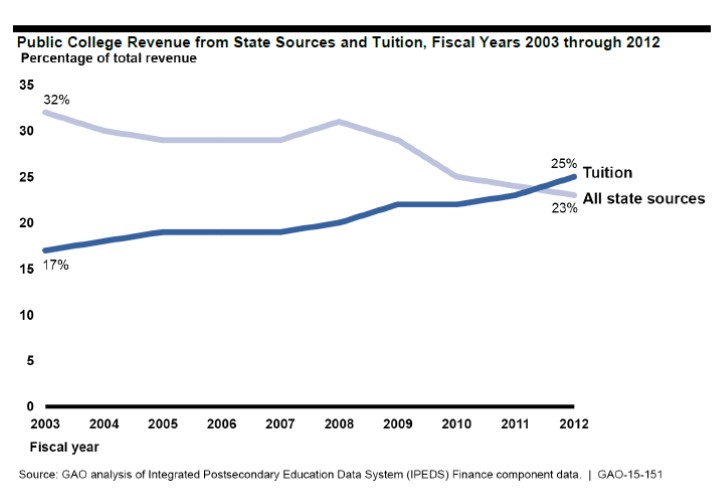
From fiscal years 2003 through 2012, the GAO report outlined, state funding for all public colleges decreased, while tuition rose. Specifically, state funding decreased by 12 percent overall while median tuition rose 55 percent across all public colleges. Tuition revenue for public colleges increased from 17 percent to 25 percent, surpassing state funding by fiscal year 2012 (see chart below).

In their report, “State Funding Trends and Policies on Affordability,” GAO identified several potential approaches that the federal government could use to expand incentives to states to improve affordability, such as creating new grants, providing more consumer information on affordability, or changing federal student aid programs. “Each of these approaches may have advantages and challenges, including cost implications for the federal government and consequences for students,” the report noted.

The report also indicates that GAO tuition state support“state grant aid directly affects students in that it can reduce their out-of-pocket expenses for college… state grant aid, both merit- and need-based, has positive effects on enrollment.”  The results of one program, in Washington State, cited by GAO “suggests that receiving the aid increased a student’s probability of enrolling in college by nearly 14 to 19 percentage points.”


Footnote to the story: to underscore the data, US News is running a video news story broadcast on FOX Connecticut, reporting on possible tuition increases at the Connecticut State Colleges & Universities.  The story, which is not referenced by date, was aired two years ago.

FOX


Nominations Sought for Women of Innovation as Efforts to Boost Representation in STEM Fields Intensifies

The Women of Innovation® awards gala, held annually, recognizes Connecticut women accomplished in science, technology, engineering, math and those who are involved in their community.  As the January 16 nomination deadline for this year’s 11th annual event approaches, organizers at the Connecticut Technology Council are urging state residents to nominate their peers, colleagues, mentors and students, teachers and business leaders, research associates and inventors. A study last fall for the U.S. Small Business Administration found that “the gender gap persists for women in STEM fields. Women have increased their representation in STEM graduate enrollment, but that increase has been uneven across STEM fields,” the report found.women of innovation

“While women have achieved parity for PhDs in biological and medical sciences, their enrollment continues to lag in some of the most entrepreneurial fields, such as bioengineering, mechanical, and civil engineering and materials science,” the report pointed out.

Last month, the White House urged women in the technology fields to share their stories as a way of attracting more women to the STEM disciplines. “When it comes to inspiring young women to pursue careers in STEM fields,” the White House website explained, “research has already shown us what works: Providing early, hands-on experience and encouragement; sharing the stories of positive role models in these fields (like the women whose stories we share); and illustrating the broad impact of roles in these fCT-ORGields.”

In Connecticut, the Women of Innovation awards recognizes women who have demonstrated and sustained accomplishment in their field, from students to business owners.  Women can be nominated for awards in eight categories:

  • Research Innovation and Leadership
  • Academic Innovation and Leadership
  • Entrepreneurial Innovation and Leadership
  • Large Business Innovation and Leadership
  • Small Business Innovation and Leadership
  • Youth Innovation and Leadership
  • Collegian Innovation and Leadership
  • Community Innovation and Leadership

The awards event is "a time for like-minded, successful women to get together and celebrate their accomplishments” – and it provides a reminder that women are excelling in fields where their ranks have traditionally been slim.  The awards will be presented at the annual Women of Innovation Gala on Wednesday, April 1 at the Aqua Turf Club in Southington.  Presenting sponsors include Boehringer Ingelheim, Covidien, Day Pitney and United Technologies.

Keynote speaker for the event will be Maggie Wilderotter, Chairman and Chief Executive Officer, Frontier Communications, headquartered in Stamford.  Wilderotter serves on the boards of Xerox Corporation and Procter & Gamble Company and on the boards of a number of non-profit organizations. Frontier Communications Corporation  offers broadband, voice, satellite video, wireless Internet data access, data security solutions, bundled offerings, specialized bundles for residential customers, small businesses and home offices and advanced communications for medium and large businesses in 27 states.It recently began offering services in Connecticut for the first time.SBA

The SBA report also found that “women are more likely to start firms that provide research and consulting services and are less likely to start firms in semiconductor and aerospace manufacturing, navigational instruments or communications equipment, which may correlate with lower reported rates of R&D activities for women STEM PhDs.”

As Connecticut seeks to promote growth in the bioscience and related technology fields, the SBA findings may be of particular note, including that “High-tech women-owned businesses may also be less likely to locate in geographic regions where they can take advantage of regional clustering of highly skilled labor and knowledge spillovers.”  The report found, however, that “female STEM PhDs value the independence of self-employment more than their male counterparts.”

The White Houwhite hosuese Office of Science and Technology Policy notes that “Supporting women STEM students and researchers is not only an essential part of America’s strategy to out-innovate, out-educate, and out-build the rest of the world; it is also important to women themselves.”
Women in STEM jobs earn 33 percent more than those in non-STEM occupations and experience a smaller wage gap relative to men, according to the Office.  “Increasing opportunities for women in these fields is an important step towards realizing greater economic success and equality for women across the board.”

Demographics in New England Bring Enrollment Challenges for Higher Education

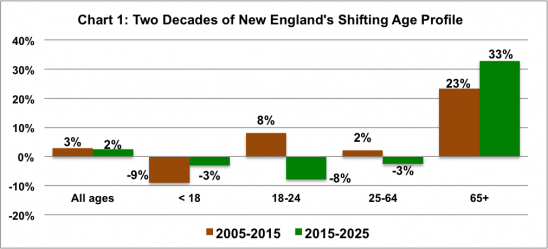
Connecticut’s public colleges and universities are pulling out all the stops to bring students back to campus who may have started – and stopped – their pursuit of higher education years ago.  Incentive programs – including free classes – are driven by an acute need to counter declining enrollment from “traditional” students that recent data suggests will continue to intensify for years to come. The New England Journal of Higher Education, using U.S. Census data, found that New England is demographically the oldest and most rapidly aging of the nine Census divisions in the United States. The Journal reported that “Its median age, which is now over 40, has risen by seven years since 1990. This region has six of the 12 states with the most rapidly rising median ages. Maine, Vermont and New Hampshire have the nation’s highest median ages (43.9, 42.4 and 42.3) and also rank first, second and third among the most rapidly aging since 1990.”Chart-1_Franchese-548x249

Between the 2000 and 2010 census, the number of children under age 18 in New England declined 197,000 or 6 percent, the Journal reported. From the 2010 census until mid-2013 this region dropped another 102,000 children, and that rate of decline is projected to continue. From 2010 to 2013, every New England state had more people move out than move in. In total, the region lost a net of almost 100,000 people through out-migration in just those three years.

After reaching an all-time peak in 2010, enrollment at Connecticut's 17 community colleges, state universities and the online-only Charter Oak State College – which make up the Connecticut State Colleges and Universities (CSCU) system - dropped to 92,989 last academic year, down 4.3 percent from its peak and its lowest level since 2008.  At Central, Southern, Eastern, and Western Connecticut State Universities combined enrollment reached its lowest level in 14 years, Hartford Business Journal has reported.

Writing in the New England Journal, a publication of the New England Board of Higher Education, demographer Peter Francese pointed out that “the most rapidly growing ages in New England are, by far, people aged 65 or older. That combined with the decline in numbers of children portend a very difficult decade for the region’s colleges and universities.”

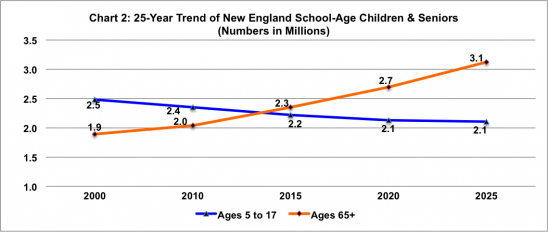
Using state published projections, he describes “a picture of continuing decline among children, but also forecasts a shift in the 18-to-24 age group and the 25-to-64 age groups from growth in the past to decline in the future. However, the past double-digit growth among residents age 65 or older is projected to continue at an even faster pace over the next 10 years.”Chart-2_Franchese-548x232

The data and projections also indicate that the region is fast approaching “a tipping point where the number of elderly will increasingly outnumber school-age children.”  Francese, director of demographic forecasts for the New England Economic Partnership and founder of the former American Demographics magazine, suggests that “that this trend will mean continuing erosion of financial support for local public education. It may also mean a gradual erosion in the quality of the region’s secondary schools and the consequent impact on those in higher education who depend on having a reliable source of college-ready high school graduates.”

Enrollment at the 17 CSCU institutions in Connecticut for Fall 2014 was down by 1,428 students, or 1.5 percent, from the previous year, according to data compiled by the state Office of Higher Education.  The total number of students, 91,192, includes more part-time than full-time students – 47,670 part-time versus 43,522 full-time.  At the flagship University of Connecticut, which is outside the CSCU system, enrollment climbed 2.1 percent between 2013 and 2014, boosted by the hiring of additional faculty and additional state funding for "Next Generation UConn" - expansion plans that project increasing enrollment at the university's main campus by one-third over the next decade.

Chart 1: U.S. Census Bureau 2005 population estimates, New England states projections and author’s calculations; Chart 2: Historical data is from the Census Bureau, population projections are by each New England state.  These charts first appeared in the New England Journal of Higher Education.

Diversity Appears Lacking On Boards Leading Connecticut’s Technology Efforts

As Connecticut steps up its push into technology fields, seeking increased economic activity and more jobs, two of the organizations often associated with propelling opportunity for entrepreneurs and existing tech businesses appear to be less than representative of the state’s diverse population. The Connecticut Technology Council, a statewide association of technology oriented companies and institutions, has 49 individuals on their Board of Directors, according to the Council website.  Based on a cursory review, among the 49 members of the board,  one is African American, two are Asian, and six are women. The seven officers of the organization are all white males. state-tech

Connecticut Innovations, a quasi-governmental organization, has 13 appointed members on its Board of Directors, along with four ex-officio members. Among the appointed members, none are women, none are African Americans, one is Hispanic, and one is Asian American.   Eleven of the 13 appointed members are white males, a review of the website reveals.

The Connecticut Technology Council provides leadership in areas of policy advocacy, community building and assistance for growing companies.  Speaking for over 2,000 companies that employ some 200,000 residents, the Council seeks to provide a strong and urgent voice in support of the creation of a culture of innovation, the organization’s website explains.

This includes working to position Connecticut as a leader in idea creation, workforce preparation, entrepreneurial aptitude, early stage risk capital availability and providing on-going support and mentoring to high potential firms.connecticut-technology-council

The mission of the Connecticut Technology Council is “to build an interactive community of innovators and their supporters that can leverage these great advantages to create a thriving economy, job growth, a global reputation for entrepreneurial support, and a lifestyle that attracts the best and brightest people to come here and retains the young people who have grown up here.”CTC board

Since its founding in 1994, the CTC has had the continued support of the state’s leading corporations, which have enabled CTC to stimulate and facilitate the growth and awareness of technology-based companies throughout Connecticut.  The CTC currently lists 10 major sponsors – including corporations, businesses and law firms – and 28 supporting sponsors.

Members include investors, startups, established public and private companies, university and private industry researchers, government agencies, academic institutions, local development agencies, and senior executives from a wide range of industries.

Connecticut Innovations (CI), a quasi-governmental organization created in 1989 to provide strategic and operational insight to companies to push the frontiers of high industries such as energy, biotechnology, information technology photonics, plays a key role in the deployment of the state’s efforts toward supporting innovation and entrepreneurship.  The Connecticut Development Authority was folded into CI three years ago.

Connecticut Innovations’ Board of Directors includes four women serving in ex-officio capacities - all by virtue of the elected or appointed positions they hold:  State Treasurer Denise Nappier, Department of Economic and Community Development Commissioner Catherine Smith, Deputy Secretary of the Office of Policy and Management Karen Buffkin, and Board of Regents for Higher Education Director of Innovation and Outreach Gail Coppage.  Among the appointed members of the Board, none are women, none are African Americans, one is Hispanic, and one is Asian American.

The 17-member board is composed of nine members appointed by the governor and four appointed by the leadership of the General Assembly, as well as four ex-officio members who serve by virtue of their positions with the state: the State Treasurer, Commissioner of the Department of Economic and Community Development, the President of the Board of Regents for Higher Education, and the Secretary of the Office of Policy and Management (or their designees).

Connecticut Innovations’ Board of Directors is responsible for developing the overall strategic framework from which the organization creates policies and initiatives to help it succeed. The board is responsible for adopting an annual plan of operation and budget, overseeing the organization’s financial activities, including its investments, and overall governance of Connecticut Innovations. CI Board

Connecticut Innovations’ board of directors announced earlier this month that Claire Leonardi has resigned as chief executive officer. Leonardi’s last day will be January 8, 2015, which will allow her to assist with the transition and help the board name a successor, according to a CI news release.  Leonardi led CI for three years, and her accomplishments include its consolidation with the quasi-public Connecticut Development Authority, absorbing CDA.

CI was also in the news earlier this fall, when the quasi-public put on hold its investment and entrepreneurial programs until early next year because it lacked sufficient state funds to cover additional commitments, according to published reports.  Funds were allocated by the State Bond Commission last month.

The State Department of Economic and Community Development (DECD) and CI have created an Innovation Ecosystem called CTNEXT. As a public-private partnership, CTNEXT catalyzes public and private resources to better support the formation, growth and attraction of companies with high growth potential, according to the state’s Economic Development Strategy report, published earlier this year.  That document notes that “Diversity of people is also a critical prerequisite to innovation.”


As Latino Population Increases, Schools See More English Language Learners

A snapshot of America in 2044, based on U.S. Census Bureau data and current trends, will show this:  a nation with a youthful, growing minority population juxtaposed against an aging, slow-growing and soon to be declining white population. New population projections show whites will become a minority by 2044, according to published reports. The new projections from U.S. Census Bureau figures shows two trends for America's population -- a long-term decline for the nation's white population, making up just 49.7 percent of the population by 2044, and a growth of new minorities -- Asians, Latinos and multiracial persons. The populations among the rapidly-growing Latinos, Asians and multiracial populations are all expected to double in size over the next 30 years. Specifically, the rise of Latinos is projected to make up 25.1 percent of the U.S. population in 2044, doubling African-Americans, according to the data projections reported in the Latino Post.  By 2027, more than half of America's 20-somethings will be racial minorities, and in the 2028 presidential election, 40 percent of all eligible voters will be racial minorities._Hispanic_students

In Connecticut, the demographic shift is underway.  The Hispanic percentage of the statewide population in 2013 stood at 14.7 percent, steadily climbing during the past decade.  The Hispanic percentage of statewide population under age 18 in 2013: 22 percent.

When the website ctlatinonews.com selected five “Young Latinos to Watch” this month, two of the five were newly elected legislators.  Aundré Bumgardner was a surprise winner on Election Day.  The Republican, whose family is from Panama and Puerto Rico, will be the youngest State Representative in Connecticut’s legislature.  The 20 year-old won his party’s nomination to run for the state House from the 41st District, which covers Groton and New London.  Rep.-elect Christopher Rosario may be new to the state’s legislature, but he is not new to advocacy, politics  and working on behalf of the Latino community. He will represent his hometown of Bridgeport in the state legislature from the 128th District.   He has been Bridgeport’s youngest department head as Director of Anti-Blight under the Office of Neighborhood Revitalization.

Recent news reports highlight one of the issues that the legislature will be grappling with.  An analysis by CT Mirror found that during the 2013-14 school year, Hartford Public Schools had the most English Language Learner (ELL) students, with 3,550, but Windham had the highest percentage of ELL students at 23.8 percent.  The largest peeducation_student_newsrcentage increases in ELL students, between 2001 and last year, came in Windham (11.8% increase), Danbury (up 9.4%), Norwich (up 9.1%), and New London and West Haven (both up 7.4%).



The increasing number of ELL students in Connecticut is reflected in the current top 20 communities, according to the CT Mirror data, compiled from the State Department of Education:

  1. Hartford 3,550
  2. New Haven 2,709
  3. Bridgeport 2,685
  4. Danbury 2,204
  5. Waterbury 2,114
  6. Stamford 1,870
  7. New Britain 1,659
  8. Norwalk 1,277
  9. Meriden 1,011
  10. Windham 774
  11. West Haven 678
  12. East Hartford 606
  13. New London 588
  14. West Hartford 490
  15. Greenwich 486
  16. Norwich 465
  17. Manchester 351
  18. Torrington 334
  19. Bristol 317
  20. Wallingford 275

The top twelve municipalities with ELL students, by percentage of their student population:demographics_icon

  1. Windham 23.8%
  2. Danbury 20.4%
  3. New London 19.2%
  4. Hartford 16.7%
  5. New Britain 16.5%
  6. Bridgeport 12.9%
  7. New Haven 12.7%
  8. Meriden 12.5%
  9. Norwich 12.4%
  10. Stamford 11.8%
  11. Norwalk 11.5%
  12. West Haven 11.4%
  13. Waterbury 11.4%

The legislature's Latino and Puerto Rican Affairs Commission (LPRAC) is hosting this public policy forum on English Language Learners (ELL) and bilingual education in Connecticut on Tuesday, January 13, at the State Capitol in Hartford.  It will feature classroom teachers, business, professors, and legislators discussing the status of ELL/bilingual education and how to improve outcomes for Connecticut’s non-English speaking children.

Pediatric I.V. Backpack Invented by 11-Year-Old Passes Another Milestone

Eleven-year-old Kylie Simonds of Naugatuck sought to raise $50,000 to manufacture a working prototype of the pediatric chemo back-pack she invented.  In just five months, she has.  Her gofundme campaign, which began on July 22, now stands at $53, 134. Kylie is a cancer survivor, and designed an I.V. backpack for children on chemotherapy, receiving transfusions, or other medical reasons.  Her goal was to improve mobility – to make moving around easier, eliminating the traditional I.V. poles. 1791872_1406591846.6065_multi

Kylie was challenged to come up with an invention through her school (Cross Street School) and the Connecticut Invention Convention, held annually. More than 130 Connecticut schools participate, creating over 10,000 young inventors each year. Kylie's invention was chosen by her middle school teachers, among others, and she attended the Invention Convention, where over 700 of the top inventions were displayed and many selected for awards and recognition.

Kylie's invention received four awards, including the "Patent Award", the highest award at the convention. The Patent Award has allowed Kylie's invention to be submitted to the US Patent & Trademark Office with the sponsor covering all costs.

Her accomplishment was recently noted in the Bulletin of the Connecticut Academy of Science and Engineering, and has been featured in news media stories in Connecticut and beyond.  Last month, she was among ten young people (she was the youngest) honored as “women in tech” at the Women of the Year Awards sponsored by Glamour magazine.

With help from her father, Kylie is now doing R&D to make the prototype.  She has found numerous infusion pumps that will suit this idea but the cost for them is thousands of dollars.  For example, the controller device will need to be customized to be mobile and also small enough to fit in a backpack.  Additionally, the backpack will need to be designed to support both the IV infusion pump and the carry rod.

Kylie, the oldest of three children in her family, underwent 46 weeks of chemotherapy and is in remission from rhabdomyosarcoma, a cancer that affects the soft tissues and connective tissues or bones.IV-Pediatric-Backpack-for-Kids-With-Cancer

“I used to have to use the IV poles and I always tripped over all the wires,” she said. “It was hard to walk around and I always had to have someone push it for me because I was kind of weak when I was in chemo.”

She hopes to begin production of lines of the backpacks for boys and girls, which will incorporate animal features into the design to make them fun for young children.  Next would be researching designs for a backpack line for teens and young adults.

A total of 1,289 people have donated to her fundraising initiative, which remains active, according to the webpage.  Kylie has indicated that all donations in excess of her $50,000 goal will go towards the manufacturing of the “first usable I.V. backpacks.  EVERY PENNY!”


One Percent of Last Year’s Unaccompanied Children Immigrants End Up in Connecticut

One-in-three (36 percent) of the nearly 54,000 unaccompanied children released to sponsors over the past year after their apprehension by U.S. immigration authorities have been placed in homes in three states – Texas, New York and California, according to Office of Refugee Resettlement (ORR) data. Connecticut is now home to 570 of the children, about one percent of the total, who have been temporarily resettled between October 2014 and October 2015, according to totals compiled by Pew Research Center using Department of Health and Human Services ORR data. OLYMPUS DIGITAL CAMERA

Among the New England states, New Hampshire has taken in 35 children, Maine 17, Vermont has 3, Rhode Island 215, and Massachusetts 1,405. The children are placed with sponsors, often relatives, while they wait for their next court appearance in immigration court. These cases can be delayed if asylum is sought, the Pew Research Center report indicated.

Last summer’s surge in the number of children without their parents apprehended at the Southwest border overwhelmed federal resources. Many of the children were making the dangerous journey from Mexico and Central America to the U.S., with sharp increases in apprehensions among children under 12. The issue brought widespread media attention, and strong opposition and support from people throughout the nation, especially in the southwest border states.

At the time, the Connecticut Commission on Children urged Governor Malloy to reverse his denial of a request by the Obama Administration to house children in a state facility.  In a July 21, 2014 letter, Commission Executive Director Elaine Zimmerman wrote:1=20=25

“Recently, the Obama administration asked the State of Connecticut for assistance in hosting a number of these children within our state while their status is processed by the federal government. While we fully support your decision to not host the children at the Southbury Training Facility, or any other facility ill-equipped to house children safely, we believe that there are state, private, institutional, as well as faith-based resources in Connecticut that could respond well, through your leadership, to the President’s request.”

Since last summer, apprehensions of unaccompanied minors crossing the U.S.-Mexico border has decreased dramatically, according to published reports, from 10,508 in June alone to 2,529 in October, U.S. Customs and Border Protection data indicates.

Texas took in the highest number of unaccompanied minors, with 7,409 children placed during fiscal year 2014, which ended on Sept. 30, government data showed. New York and California each took in just under 6,000 children. These three states account for more than half (53 percent) of the nation’s Hispanic population.


immigrantmap