Stamford Population Grows as Most Cities See Drop in Past Year
/The growth in Connecticut’s population in recent years is largest in Stamford and across Fairfield County, and Stamford is gaining on New Haven, the state’s second largest city. The U.S. Census Bureau has reported the municipalities in Connecticut that have experienced the largest increases in population last year, and over the past four years, revealing population declines in most of the state's largest cities during the past year. The municipality gaining the most people in Connecticut between July 1, 2013 and July 1, 2014, was Stamford, whose population rose by 1,590 over the period. Stamford was followed by Stratford, with a population increase of 502, Darien (310), Fairfield (230) and East Lyme (222). Between 2013 and 2014, Bridgeport, New Haven, Hartford, Waterbury, Danbury, New Britain, Bristol, and Meriden lost population while Stamford and Norwalk experienced growth, among the state's largest cities.
The estimated population in Stamford, the 208th largest city in the U.S., grew from 122,815 as of July 1, 2010 to 128,278 in 2014. Bridgeport, ranked number 175 in the nation by population and Connecticut’s largest city, grew from an estimated 144,845 in 2010 to 147,612 in 2014, which was a slight drop of 174 residents, from 147,786 in 2013, according to the census estimate data.
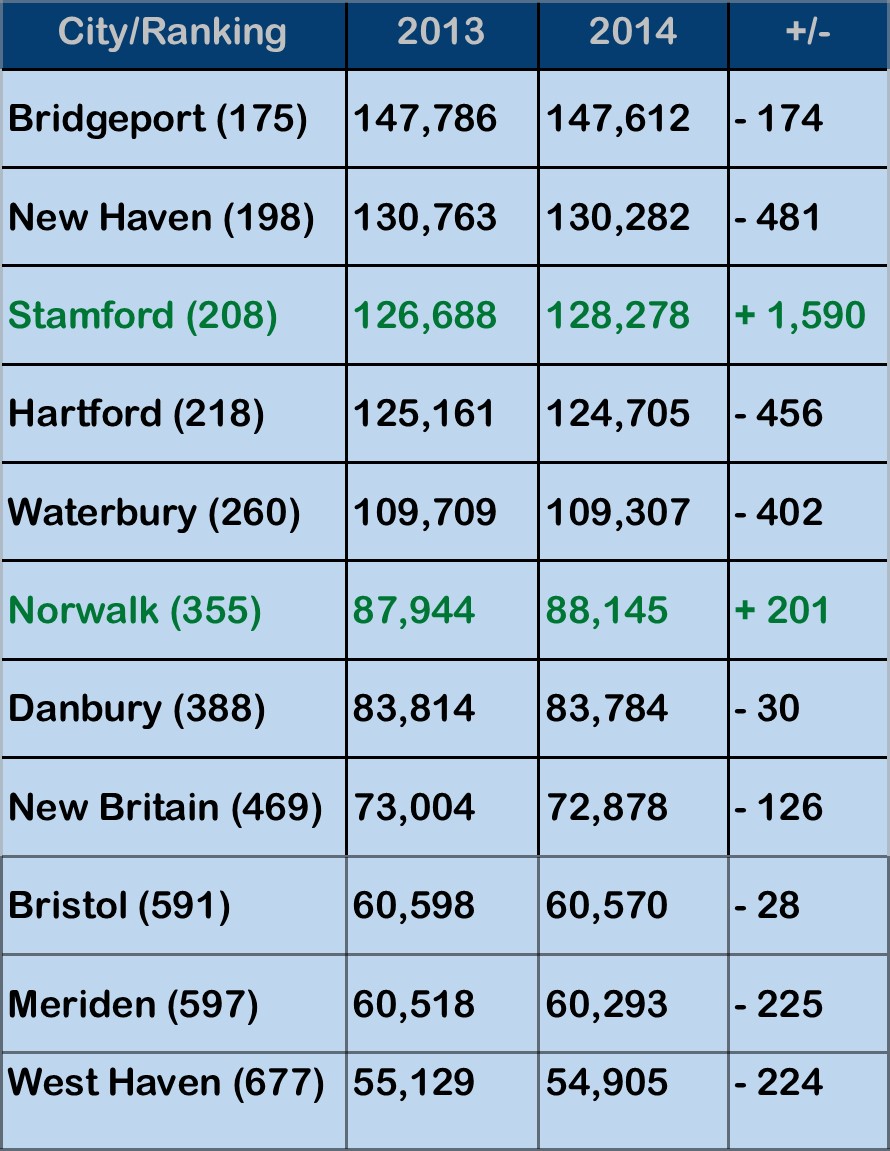 Over the past four years, population also grew in Hartford, New Haven, Stamford, Danbury and Norwalk, but declined in some of the state’s other large municipalities, including Waterbury, New Britain, Meriden and West Haven.
In New Haven, the 198th largest city in the nation, the population increased from 129,890 in 2010 to 130,282 in 2014. Connecticut’s Capitol City and the state’s 4th largest, Hartford, saw population grow narrowly from 124,314 in 2010 to 124,705 last year. Hartford’s population is now ranked #218 in the nation.
As New Haven gained 392 residents during the past four years, Stamford gained 5,463, which narro wed the gap between the two cities to 2,004. Just four years ago, the population differential was 7,075. Stamford passed Hartford to rank as the state’s third largest city three years ago.
Waterbury saw a population decline over the past four years, from 110,331 to 109,307. The Brass City is the nation’s 260th most populous city. Norwalk, the nation’s 355th largest city, saw population growth from 85,992 to 88,145 over the past four years, while Danbury, ranked number 388, experienced an increase in population, from 81,354 in 2010 to 83,784 in 2014.
New Britain, ranked number 469, also experienced a decline in population, from 73,240 to 72,878, 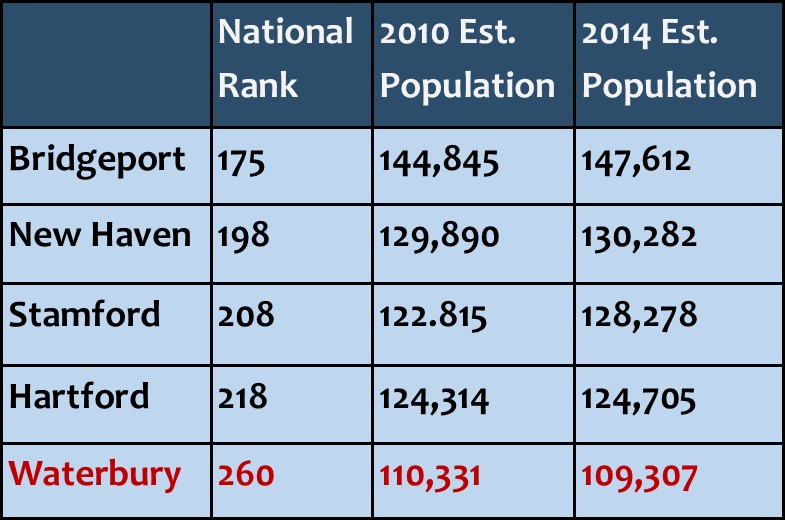 according to the census data, while Bristol (number 591) saw a slight uptick of just under 100 residents, from 60,477 to a 60,570. Meriden (number 597) saw population slip from 60,868 to 60,293. West Haven, the 677th most populous city in the nation, also experienced a drop in populations, from 55,565 to 54,905.
The population estimates are based on annual population estimates since the 2010 Census and the data includes annual estimates each July 1, through July 1, 2014.
San Jose, Calif., is now among the 10 U.S. cities with a population of 1 million or more, according to the new U.S. Census estimates. California has three cities with 1 million or more people (Los Angeles, San Diego and San Jose), tying Texas (Houston, San Antonio and Dallas) for the lead among states.
New York remained the nation’s most populous city and gained 52,700 people during the year ending July 1, 2014, more than any other U.S. city. Rounding out the top ten were Los Angeles, Chicago, Houston, Philadelphia, San Antonio, San Diego, Dallas and San Jose. The other top 20 cities are Austin, Jacksonville, San Francisco, Indianapolis, Columbus, Fort Worth, Charlotte, Detroit, El Paso and Seattle.
The only change in the rank order of the 15 most populous cities between 2013 and 2014 was Jacksonville, Fla., and San Francisco, each moving up one spot to 12th and 13th place, respectively, passing Indianapolis, which fell from 12th to 14th.
For the first time since Hurricane Katrina struck in 2005, New Orleans (384,320) returns to the list of the 50 most-populous cities this year at number 50, with Arlington, Texas, dropping off the list.
Connecticut’s is the nation’s 29th most populous state, with the population in 2014 estimated by the U.S. Census at 3,596,677, an increase from 3,574,096 in 2010. However, the state's population last year was less than the previous year (3,599,341 in 2013), down by 2,664 statewide, according to the U.S. Census data.


 The organization also accepts
 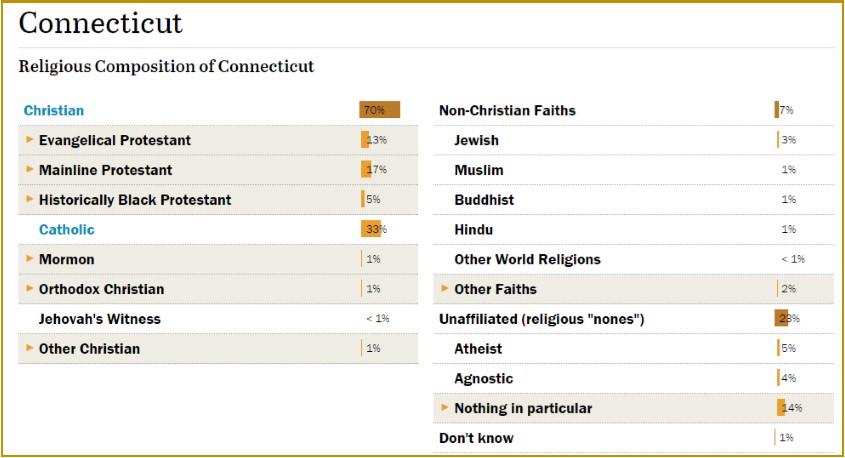 While the drop in Christian affiliation is particularly pronounced among young adults nationwide, it is occurring among Americans of all ages. The same trends are seen among whites, blacks and Latinos; among both college graduates and adults with only a high school education; and among women as well as men, according to the Pew data.





 Of a maximum five stars in the CEO ratings, Connecticut received 1.5 for Taxation and Regulations, 3.0 for Workforce Quality and 3.0 for Living Environment. The

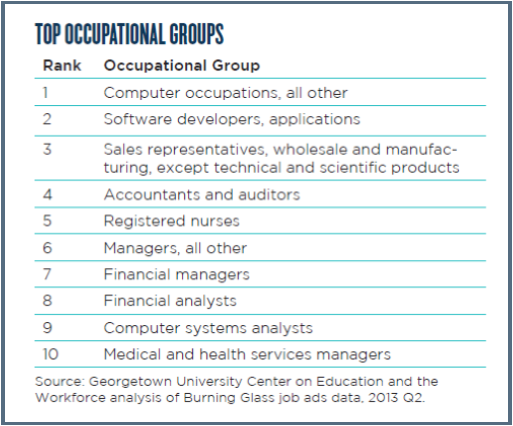 The top occupational groups reflected in the online job ads were 1) computer occupations, 2) software developers, 3) sales representatives,4) accountants and auditors, 5) registered nurses, 6) managers, 7) financial managers, 8) financial analysts, 9) computer system analysts and 10) medical and health services managers.
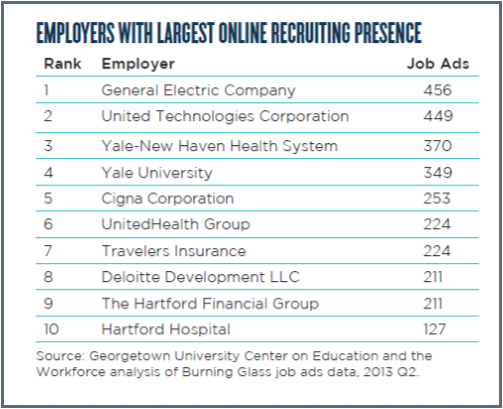 The Georgetown University Center on Education and the Workplace is affiliated with the McCourt School of Public Policy. The study was done by Anthony Carnevale, Tamara Jayasundera, Dmitrirepnikov and Artem Gulish.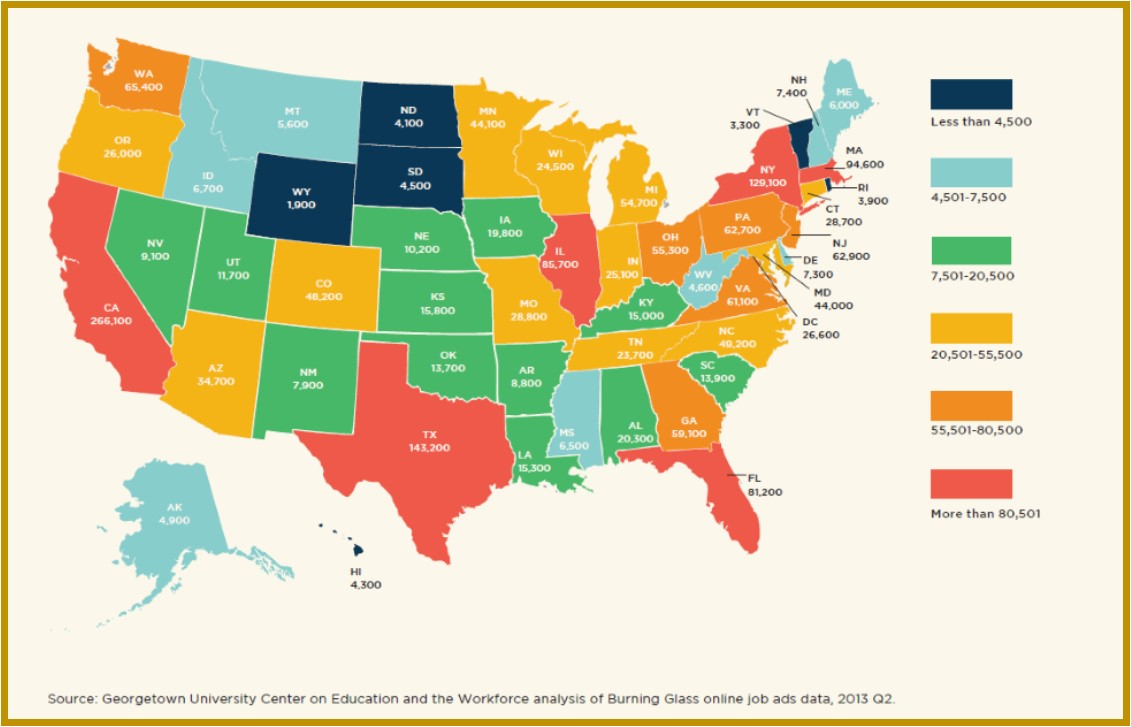
 is to bring together professionals from every aspect of Connecticut’s tourism industry — including hotels, restaurants, casinos, tourist attractions, entertainment venues, historic sites, and cultural and arts institutions — to share best practices and learn from national tourism and travel experts. The statewide conference is managed by the DECD Connecticut Office of Tourism in partnership with the Connecticut Convention & Sports Bureau.
 igher education resources, a focus on New York City meeting planners, experts on capturing a share of the international tourist market, ways to maximize use of social media, Tourism Awards for outstanding industry leaders, and an array of workshops on areas including mobile marketing and group bus tours, as well as an exhibition of the most innovative products and services in the tourism sector, according to state officials. Cost for the conference is $99, for industry professionals.
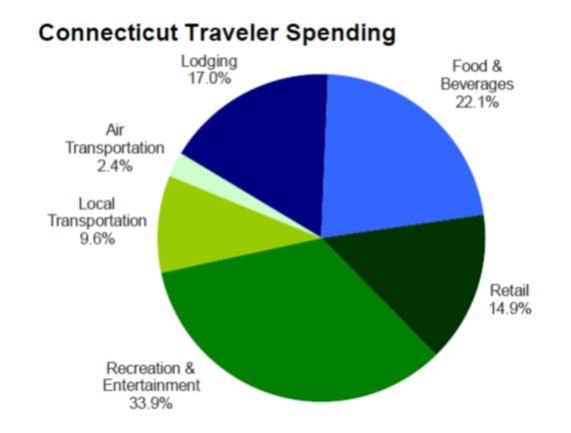 Traveler spending of $8.3 billion generated $14 billion in economic activity statewide in 2013, according to a study released recently by the office of Gov. Dannel P. Malloy. The study shows funds generated directly, through traveler spending, or indirectly, as employees, businesses and other beneficiaries turned around and paid for goods and services. Travelers to Connecticut destinations spent 3.0% more in 2013 than in 2012. Of all Connecticut travelers in 2013, nearly two-thirds were day travelers (66%). The tourism
sector supported more than 118,500 jobs in 2013, according to a recent state report.
Traveler spending of $8.3 billion generated $14 billion in economic activity statewide in 2013, according to a study released recently by the office of Gov. Dannel P. Malloy. The study shows funds generated directly, through traveler spending, or indirectly, as employees, businesses and other beneficiaries turned around and paid for goods and services. Travelers to Connecticut destinations spent 3.0% more in 2013 than in 2012. Of all Connecticut travelers in 2013, nearly two-thirds were day travelers (66%). The tourism
sector supported more than 118,500 jobs in 2013, according to a recent state report. irectors, a Greenwich-based live action production company, is producing a series of six on-air commercials for the Connecticut Office of Tourism, working in conjunction with Avon ad agency


 Often referred to as a Tech Ethicist,