
Fairfield County’s Community Foundation Strives to Create Opportunities for Young Adults Close to Home
/For Fairfield County’s Community Foundation, two local trends are unmistakable. Connecticut’s population is aging, and too many young people are unable to become self-sufficient by age 25.
The recognition that as older, experienced workers retire, Connecticut’s economy will increasingly rely on young adults to provide goods and services, lead companies, and start new businesses has been the impetus for action, and a new initiative underway this fall.
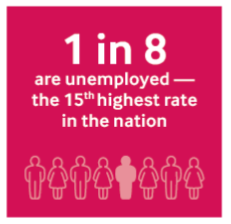
Fairfield County’s 100,000 young people ages 16 to 24 face youth unemployment rates between 13.6 percent and 49.5 percent, one of the nation’s most expensive housing markets, and a shortage of living-wage entry jobs.
A multi-faceted initiative, Thrive by 25, has begun with the clear goal of advancing opportunity for the region’s young adults – no easy task in Fairfield County.
“If our young people are not prepared for tomorrow’s jobs, or they relocate to find quality jobs and housing they can afford, employers will recruit from other states or leave. Businesses will struggle. Unemployment will rise, our tax base will shrink, and the need for government services will increase,” the organization’s website sums up the challenge.
“Our vision is for every young person in Fairfield County to achieve self-sufficiency, thrive by 25, and enrich their communities. We see three paths to this accomplishment: college readiness and scholarships, vocational education, and quality internships,” the website indicates.
The program brochure is encouraging, noting that in a local survey 95 percent of respondents ages 18 to 25 have some vision of what they want to achieve in a career and many are interested in completing a master’s degree. In addition, the “intersection of jobs and education” is highlighted: “a growing body of research suggests that low-income teens who participate in after-school internships and summer jobs during high school are likely to have higher grades, better attendance, a greater likelihood of graduation, and a higher average salary throughout their lifetime.”
 The action plan is spurred by clear concerns: “When young people are not attending school or working, they cannot attain necessary education or work experience, support themselves, save for their future, or contribute to the economy. What future do they face? What future does Fairfield County face?”
Seven steps have been developed to guide the effort:
- Listen to Fairfield County’s young adults.
- Reach out to others who have a role in making an impact on these issues.
- Make vocational-technical secondary school programs, apprenticeships and personalized training more widely available to high school students.
- Enhance early college programs and the transition from high school to college
- Tap into the lessons learned from other local and national efforts
- Ensure local nonprofits are prepared to be key participants in Thrive by 25
- Focus the Community Foundation’s resources as effectively as possible
A highly attended Kick-off Breakfast at the Trumbull Marriott launched the initiative, with JPMorgan Chase & Co. announcing an expansion in their commitment to Connecticut, joining the Community Foundation in supporting the Pathways to Careers Fairfield County pilot with a $200,000 grant. The grant is part of JPMorgan Chase & Co.’s New Skills at Work initiative, which seeks to address the skills gap that exists across many industries, where not enough trained workers have the specific skills to fill the jobs available.
Pathways to Careers Fairfield County is a multi-sector partnership with high-opportunity and high-growth employers and is based on Our Piece of the Pie’s Pathways to Careers model. Our Piece of the Pie, a Hartford-based, urban youth development and workforce opportunity non-profit organization, has developed the successful upstate CT Pathways to Careers program into a best-practice model for moving young people quickly into jobs with career pathways.
Fairfield County’s Community Foundation promotes philanthropy as a means to create change in Fairfield County, with a particular focus on innovative and collaborative solutions to critical issues impacting the community. Individuals, families, corporations and organizations can establish charitable funds or contribute to existing funds.
The vision of the Thrive by 25 initiative is “to give all Fairfield County youth the opportunity to thrive by age 25 – no matter their family income, school district or zip code.” For more information, visit www.FCCFoundation.org.

 "The Connecticut Council for Philanthropy along with other funding partners invested in the first ever statewide Community Wellbeing Survey, a scientific survey of the state’s entire adult population that will provide timely, powerful knowledge about our communities and enable us to better know the people and places we care about,” added Maggie Osborn, President of the Connecticut Council for Philanthropy.
 In Connecticut, the average rate between 1999 and 2001 was 4.1 per 100,000. Between 2010 and 2013, the drug overdose rate had risen to 8.3, above the national aver
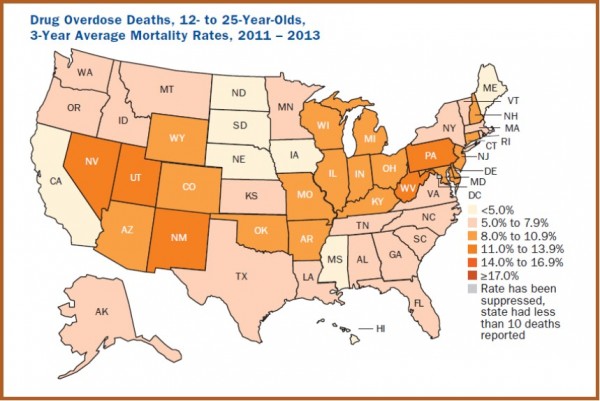 age but unchanged from a previous three-year period, 2005-2007. The data was compiled from the Centers for Disease Control and Prevention. Males are 2.5 times as likely to overdose as females (10.4 vs. 4.1 per 100,000), according to the report.

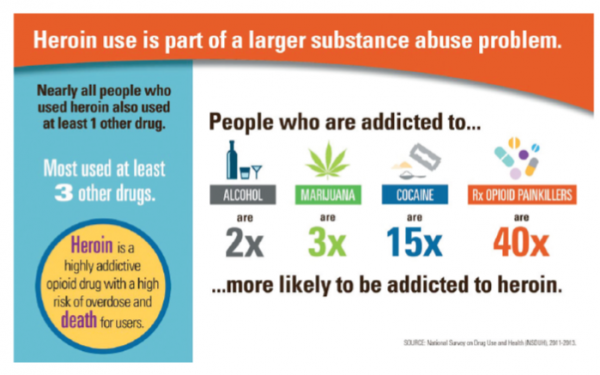 s to help practitioners identify potential abuse that leads to over prescribing by requiring them to check patient history to verify if patients seeking certain prescriptions have recently received these medications from multiple other prescribers or pharmacists.



 ncing or purchasing a home in the next six months dropped from by one-third, from 18 percent in the first quarter of the year to 12 percent by the end of the third quarter. Interestingly, buying a car appears immune to economic outlook – the percentage who anticipate that purchase in the next six months has been nearly identical in each quarterly survey this year.



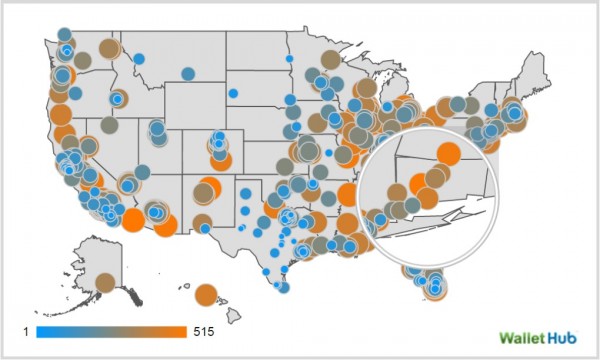 Joan Fitzgerald, Professor of Public Policy and Urban Affairs at Northeastern University, told WalletHub: “It is not an accident that many of the fastest growing cities have thriving high tech and biotech sectors along with financial services and usually a strong health care sector. But another priority has to be balance. In many cities, manufacturing loses out over other uses.”
 A survey to which 29 of the 60 black and Latino arts groups in the study replied showed that the median percentage of donations coming from individuals was 5%. The norm is about 60% for big mainstream arts organizations. “This is the most important single statistic in the study,” the report says. Minority arts organizations also trailed when it came to box office receipts and other earned revenue. Earned money accounted for 40% of their revenue, compared with 59% for the big mainstream groups.





 When asked in the survey about factors that influence their giving, the biggest portion, 68 percent, said it is very important the charity has evidence that its programs are effective. The other factors, in addition to the 50 percent who favored low overhead spending: the charity gets good ratings from watchdogs, 54 percent; it works on a cause that has affected me or my loved ones, 39 percent; it only occasionally asks for money, 27 percent; and I know people who work there, 24 percent.