
Report: Connecticut's Medicaid Expansion Increased Coverage, Access to Preventive Care and Behavioral Health Treatment
/A recently issued report found that emergency department visits are down; coverage seen as critical in fight against opioids has expanded, and preventative care and mental health care have become more prevalent – all resulting from a 2010 policy decision made by Connecticut’s elected officials to expand Medicaid coverage.
That decision, made collaboratively by a Republican Governor (M. Jodi Rell) and Democratic-controlled legislature – helped to reduce Connecticut’s uninsured rate from 9.1 percent in 2010 to 4.9 percent in 2016 and created a significant source of coverage for preventive health services and behavioral health care, according to the report developed by the Connecticut Health Foundation.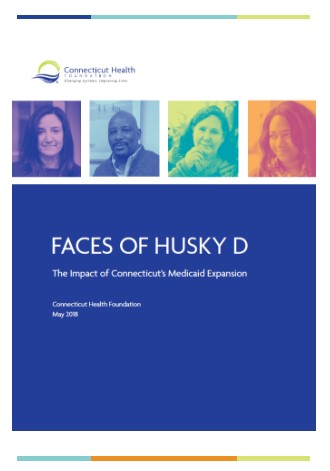
The report examines the impact of HUSKY D, as the Medicaid expansion is known, and highlights a number of key findings:
- Most people covered by HUSKY D are using their insurance to get care. Just over 80 percent of people with HUSKY D used the coverage for preventive or outpatient health services in 2016.
- Emergency department usage among HUSKY D members is down significantly. The rate of emergency department visits fell by 36 percent from 2012 to 2016.
- HUSKY D is a significant source of coverage for behavioral health care. In 2016, more than one in three HUSKY D members – 36 percent – used their coverage to get care for a mental health condition or substance use disorder.
- Outcomes have improved for diabetes patients with HUSKY D. A review of more than 500 HUSKY D members with diabetes found that the percentage whose blood glucose was under control rose from 31 percent to 50 percent from 2012 to 2016.
The report also examines the role HUSKY D plays in other policy work in the state, including addressing the opioid crisis and helping those leaving prison get medical and behavioral health treatment when they return to society. The report notes that before HUSKY D, individuals with substance use disorders were generally not eligible for Medicaid, creating a major barrier to treatment.
“Health insurance coverage is a critical first step to health, but it is also important to ensure that people are able to use that coverage to get care, and for that care to make a difference in people’s health,” said Patricia Baker, president and CEO of the Connecticut Health Foundation. “This research underscores the importance of HUSKY D in giving low-income state residents the tools to take care of their health.”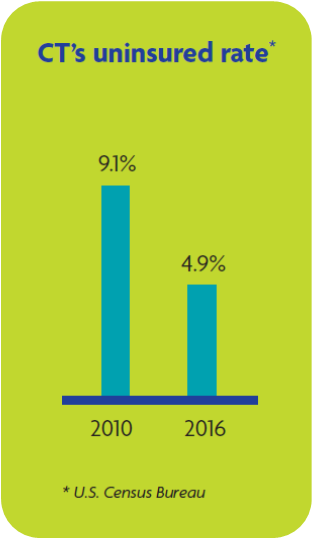
HUSKY D covers adults ages 19 to 64 who do not have minor children and whose income falls below 138 percent of the poverty level – the equivalent of $16,643 for an individual. (For comparison purposes, a person working 30 hours per week at Connecticut’s minimum wage – $10.10 per hour – would earn $15,756 in a year, the report indicates.)
The report concluded that “nearly eight years after Connecticut expanded HUSKY to cover more low-income adults, HUSKY D has made a significant impact on the state’s uninsured rate and the lives of thousands of people. The majority of those covered are using this insurance to get preventive care, and the rate of emergency department usage has declined, a promising trend.”
The report also notes that the federal government has “financed more t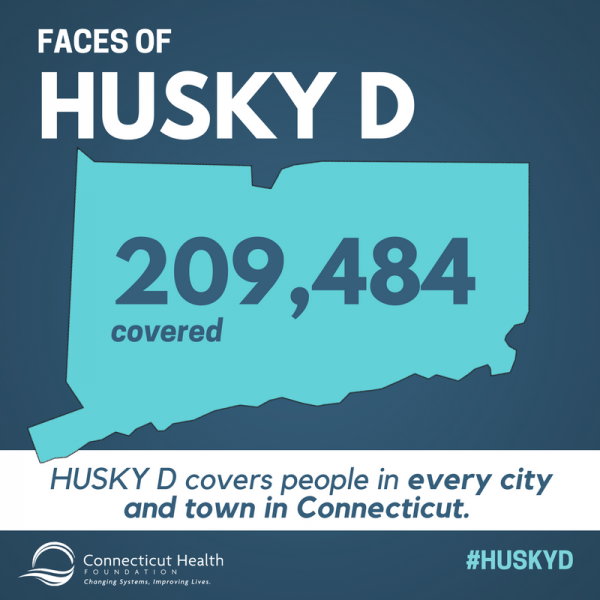 han 90 percent of the cost of the program, allowing Connecticut to cover more than 200,000 people with a relatively small budgetary impact.” Currently, the federal government pays 94 percent of the cost of coverage and the state pays 6 percent. The report also identifies challenges associated with HUSKY D, including concerns raised by health care providers about Medicaid payment rates and uncertainty in federal funding.
The report’s analysis indicates that HUSKY D enrollees live in every city and town in Connecticut. The largest number of covered individuals live in Hartford (18,404), Bridgeport (16,330), New Haven (15,583), Waterbury (13,989), New Britain (8,439) and Stamford (6,110).
The Connecticut Health Foundation is the state’s largest independent health philanthropy dedicated to improving lives by changing health systems. Since it was established in 1999, the foundation has supported innovative grantmaking, public policy research, technical assistance, and convening stakeholders to achieve its mission – to improve the health of the people of Connecticut. Since its creation, the Connecticut Health Foundation has awarded grants totaling more than $60 million in 45 cities and towns throughout the state.

 The survey found that 38 percent of students whose grades were mostly A’s texted or e-mailed while driving a car on at least one occasion in the 30 days prior to the survey. The percentage was slightly less among students with lower grades: 31% of students with mostly B’s, 30% of students with mostly C’s and 23% of students with mostly D’s and F’s.

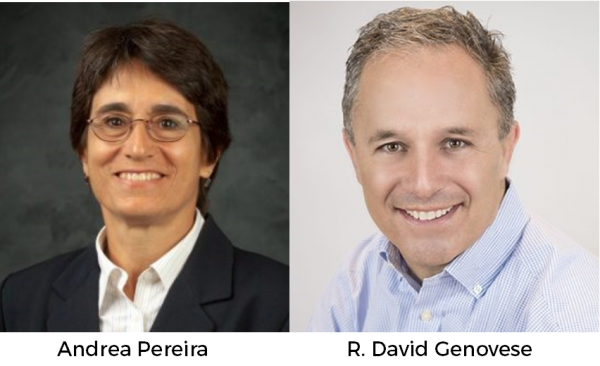 The Jack Shannahan Award for Public Service for 2018 goes to Andrea Pereira, a former Board Chair of Connecticut Main Street Center, who has been a partner in CMSC’s Come Home to Downtown program, providing financing through the Come Home to Downtown Loan Fund. Pereira, Executive Director of




 Conversations on Health Care

 Manufacturing, the sector with the most losses since 2012, is down 8,600 jobs in the five-year period. Educational Services employment (public and private) which has long been a sector with employment growth, declined during the 2015 to 2017 period, influenced by decreases in school-aged population and state and local budget issues.
 One of the most significant trends in American religion in recent years, according to Gallup, has been the increase in the percentage of Americans who have no formal religious identity, rising from 15% in 2008 to 21% in 2017. These so-called "nones" are most prevalent in the two most Western states of the U.S., Hawaii and Alaska, and also constitute relatively high proportions of the population in a number of other Western and New England states: Washington, Vermont, Oregon, Maine, Colorado, New Hampshire and California.


 Women working full-time, year-round have the highest earnings in the District of Columbia, where women’s median annual earnings are $65,000. Connecticut, Maryland, Massachusetts, and New Jersey are tied for second, with women in those states earning $50,000 at the median.

 More than 250 attendees will include consultants, coaches, funders, academics, and executives from across the country. The conference intends to “convene the diverse perspectives that shape and advance our field.”

 The five dimensions, mentioned above, were weighted to determine an overall score on a 100 point scale using thirty relevant metrics including the cost of living, rate of home ownership and insurance, average student loan debt, voter turnout rate, unemployment rate, percentage diagnosed with depression and the average price of a latte at Starbucks.