Connecticut Talks Issues at Forums, Conferences Across State
/
The Connecticut legislature, now underway for 2014, is not the only place for conversation on key issues impacting Connecticut. A range of news organizations, nonprofits, associations and community-based groups are sponsoring forums, summits and sessions to better-inform the public and bring interest and attention to specific issues. Among them:
February 10 - Hartford’s Edgy Arts, Mark Twain House & Museum
The Hartford area attracts an array of creative people from actors to musicians, poets to painters. What is it that so draws artists? What to they need to flourish here? A discussion of the creative economy, in the Capitol City. Refreshments at 5:30; panel discussion at 6:15. Advance articles published in The Hartford Courant; a program of Hartford Young Professionals & Entrepreneurs (HYPE), FOX Connecticut and The Hartford Courant.
February 20 - Pay-for-Success Informational Conference, Legislative Office Building
National leaders from the emerging field of Pay for Success will be speaking, with a focus on three key elements: 1) Offering high-quality preventative services; 2) Requiring rigorous measurement of results; and 3) Capturing savings or avoided costs. The 2014 Pay-for-Success (PFS) Informational Conference, 10:00-12:30 PM, will offer interested stakeholders the chance to discuss the field with leaders from around the country, while hearing about projects underway in the areas of early childhood, juvenile recidivism, health care and workforce development. Sponsoring organizations include BlumShapiro, Connecticut Institute for the 21st Century, Capitol Region Council of Governments, Connecticut Center for Social Innovation, Community Impact Strategies Ltd, and Connecticut Association for Human Services.
February 24 - The Knowledge Economy; Connecticut Conference of Independent Colleges, CT Mirror, Quinnipiac University
Connecticut is home to almost 50 colleges and universities and has created an industry in surrounding towns and cities. What is expected as we continue into the 21 st Century? Join the Connecticut Conference of Independent Colleges and The Connecticut Mirror in the lively discussion, "The Knowledge Economy," on Monday, Feb. 24 , from 7-9 p.m., in the auditorium at the Quinnipiac University Frank H. Netter MD School of Medicine. This event is free and open to the public. No registration is necessary. Panelists include Sal Filardi - Vice President, Facilities & Capital Planning, Quinnipiac University; Rich Jacob - Vice President for Federal and State Relations, Yale University; Todd Andrews - Vice President for Economic & Strategic Development, Goodwin College and Jeff Seemann - Vice President for Research, UCONN.
February 26 - Vital Voices in Entrepreneurship, Goodwin College
A special spea ker series focused on the first-hand perspectives of leaders making a mark in business and the community. The next event at Goodwin College's Community Room on February 26 will feature Stew Leonard, Jr., President and Chief Executive Officer of the unique, family-owned and operated farm fresh stores, Stew Leonard's. The keynote address will commence at 6:00 p.m., preceded by a networking reception at 5:00 p.m. with wine, beer and hors d'oeuvres.
February 28 – Retrofitting Our Towns: Can We Add Density, Affordability and Walk-ability to Help Municipalities Survive…And T hrive? The Lyceum, Hartford
Can suburbs and smaller towns reshape and respond to the demographic, economic and lifestyle pressures of the 21st Century? One of the nation’s leading experts – Lynn Richards of the EPA Office of Smart Growth – assesses four Connecticut municipalities and offers lessons for all the others. Program 9:00-111:00 AM. Sponsored by the Connecticut Main Street Center, Partnership for Strong Communities and the American Planning Association - Connecticut.
March  7 - An Honest Look at Mental Illness, Connecticut Forum, The Bushnell
The Connecticut Forum presents a conversation about perceptions, realities, and what it’s like to work and live with the stigma of mental illness. Panelists include journalist and mental health advocate Andrew Solomon, Dr. Hank Schwartz, Chief of Psychiatry at Hartford’s Institute of Living, former NBA player Royce White and bipolar disorder authority Dr. Kay Redfield Jamison. Founded in 1992, The Connecticut Forum is a one-of-a-kind 501(c)(3) nonprofit organization serving Connecticut and beyond with live, unscripted panel discussions among renowned experts and celebrities, and community outreach programs including the award-winning Connecticut Youth Forum.
March 14 – Hartford Business Journal Municipal Collaboration Summit, Goodwin College
An opportun ity to learn about the benefits of collaboration which save money and leverage the purchases and agreements for towns. The event will highlight people that are already implementing positive changes. Panel discussions, workshops and Q&A with key leaders and a panel of experts.
March 26 - Student Debt and Financial Aid: What (if anything) can we do?, Southern Connecticut State University
Sponsored by the Center for Higher Education Retention Excellence, 9AM-3PM, at Southern Connecticut State University, featuring Sandy Baum, Research Professor of Education at the George Washington School of Education and Human Development and Senior Fellow at the Urban Institute, and panel of Connecticut financial aid directors (representing a public university, community college and private college) and a student panel. Registration now available; limit 75 attendees.

 The
The 


 e surveyed in the tri-state area viewed healthcare among the favored sectors for 2014 - 55% “good” in the tri-state region vs. only 45% nationally.
 Connecticut’s high net worth investors, Barber said, are a savvy lot, reflecting greater knowledge of investments than the national numbers reflect, yet more than 7 in 10 say they consult financial professionals. Another clear distinction came in the percentage of investors who said dividend-bearing stocks are a good investment: 49 percent nationally, 61 percent in the tri-state area, and 71 percent in Connecticut. “There are clear indications that Connecticut’s high net worth investors are focused on opportunity,” Barber said.
 t the 34-year-old XL Center (formerly the Hartford Civic Center, rebuilt after a roof collapse three decades ago). Improvements will include an upgraded videoboard, a new fan club area, renovated bathrooms, concession stand upgrades, a new bar area within the arena bowl, renovated locker rooms and improvements in handicap accessibility. Construction is expected to take place in the summer and be completed by the start of the 2014-15 hockey season.
 e start of the hockey season last fall, and will continue “until the last top prize in the game is claimed” according to lottery officials.
 ed Middlesex County Chamber of Commerce remains by far the state’s largest, with over 2,350 members that employ over 50,000 people. The organization, led by longtime President Larry McHugh, “strives to be the voice of business in Middlesex County and the surrounding area,” according to its
 n Chamber and the Quinnipiac Chamber began to “officially collaborate on all aspects of their respective organizations, while continuing to operate as separate business units in separate office locations.”

 who will discuss topics such as career placement basics, salary and promotions, communication, creating support groups, being culturally aware, finding a work/life balance, and appreciating the value of staying true to oneself in male-dominated fields.”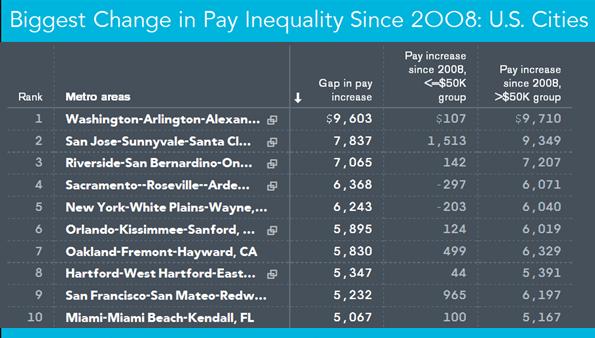
 New York metropolitan area ($6,243), greater Orlando ($5,895) and metropolitan Oakland ($5,830).
 nd nonprofit officials were meeting in Washington, the University of Connecticut, the state’s flagship institution, announced that the number of high school students seeking admission to UConn’s Storrs campus next fall has jumped significantly over last year’s figures, comprising a pool of potential freshmen with even higher average SAT scores and more diversity than previous years’ applicants.
 n in UConn’s commitment to diversity. Officials pointed out that the jump in UConn applications runs counter to national and regional trends in which declines in the number of high school graduates have caused many universities to see their applications and enrollments level off or decrease.
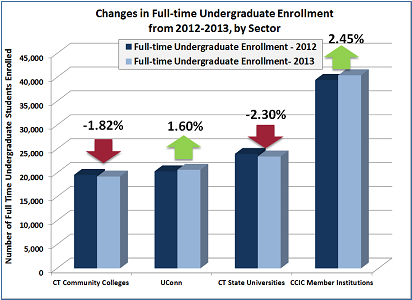
 ment at the community colleges fell 2.1 percent to 56,977, reflecting losses in both full and part time students.
 ll be hosting two upcoming events focusing on the remediation issue, the White House report indicated:
 nd math) curricula.
 wing Marion Kauffman Foundation. The
  Though they start lean, new high-tech companies grow rapidly in the early years, adding thousands of jobs along the way, according to the study findings. In fact, high-tech startup job creation is so robust that it more than makes up for the job destruction from early-stage businesses failures – a key distinction from the private sector as a whole where job losses from early-stage failures turns this group into net job destroyers, the report indicated.
 in the report, observed that “Each of the high density metro areas has one of three characteristics, and some have a combination of them all: 1) They are well-known tech hubs with highly skilled workforces, 2) They have a strong defense or aerospace presence, and 3) They are university cities.”
 , according to Payscale economist Katie Bardaro, “are dominated by high wage industries like tech (both IT and Biotech), finance or oil.” (Metro San Jose, San Francisco and Houston.) Unlike the top three, number 4 is dominated by the finance industry.
 workers there is $71,800 annually, while average starting pay is $55,500 and mid-career is $96,900 a year, on average, the magazine reported. Coming in at #7, the Hartford-West Hartford-East Hartford metro area has overall median pay of $69,200; starting median pay of $53,000; and mid-career median pay of $92,000.
 10.
10.