Community Plates Rescues Food to Help Hungry; Norwalk-Based Nonprofit Has Appetite for Growth
/Hunger in the United States makes no sense. That, in a nutshell, is what drives Norwalk-based nonprofit organization Community Plates.
Now in six regions of the country (including it’s home county) and seeking to take root elsewhere, Community Plates is committed to ending American food insecurity by directly transferring fresh, usable food that would have otherwise been thrown away from restaurants, markets and other food industry sources to food-insecure families throughout the U.S.
Community Plates is up and running in Fairfield and New Haven in Connecticut as well as in Columbus, OH, Albuquerque, New Mexico and New Orleans, Louisiana. As the company website explains, “Food insecurity is a real problem in parts of the U.S. Many families don't have a good idea where their next meal is coming from. Some people go to work every day and by the time they pay for the roof over their head, their heat and electricity, there isn't always enough money left for food that week. So we definitely have people in need of that resource.”
Jeff Schacher founded the company in 2011, and it has delivered 4.5 million meals to people in need in Fairfield County alone. Yet, as the organization’s website points out, one “would never imagine that in one of the wealthiest counties in America, there are over 100,000 people (38,000 children) that are classified as food insecure.”
The process is dependent upon volunteers, at each step:
- Surplus fresh food is donated by restaurants and markets.
- Local volunteers donate their time, vehicles, and fuel to rescue the fresh food.
- Receiving agencies deliver rescued food to food-insecure people in their area.
 The organization is driven by volunteers – food donors, food runners and partner agencies. One such agency in Connecticut is the Manchester Area Conference of Churches, which indicates there are 8,000 food-insecure people in the greater Manchester area.
Community Plates New Haven is working to provide meals to the 123,000 food insecure residents of New Haven County - a stunning 14.4 percent of the county’s population. The organization’s website notes that “Sadly, over 19.2% of New Haven County’s children fall within the guidelines of being food insecure, and the number continues to increase.”
Community Plates began in Fairfield County, and over 80 percent of the 1.5 million pounds of food rescued since the organization’s inception has been “rescued right here,” the website explains.
Community Plates is “built on a foundation of social entrepreneurship, and we so strongly believe in the power of community, we built it right into our name,” officials point out. The organization highlights six Connecticut farms and farmers for their support of the effort in the Nutmeg State:
- Ambler Farm
- City Center Danbury Farmers’ Market
- Feeny Farms
- Millstone Farm
- Rowayton Farmers’ Market
- Sport Hill Farm
https://youtu.be/DagcKtlJi64
 A survey to which 29 of the 60 black and Latino arts groups in the study replied showed that the median percentage of donations coming from individuals was 5%. The norm is about 60% for big mainstream arts organizations. “This is the most important single statistic in the study,” the report says. Minority arts organizations also trailed when it came to box office receipts and other earned revenue. Earned money accounted for 40% of their revenue, compared with 59% for the big mainstream groups.
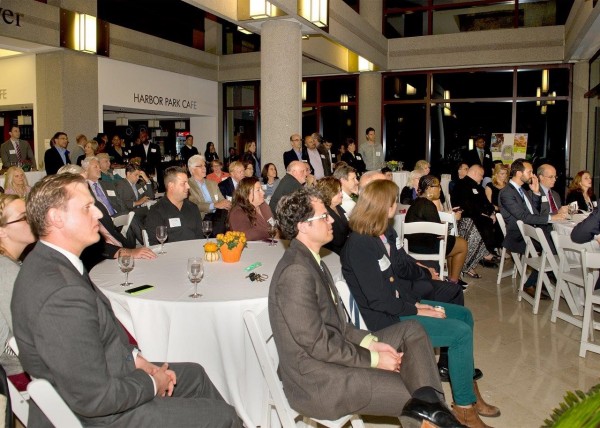 “I would like to congratulate all of the members of Stamford 2030 for joining together to make vital changes for our community," said Stamford Mayor David Martin. "The partners in Stamford 2030 have really stepped up for the success and sustainability of our city and the surrounding area. And they are not alone. For our part, the city is committed to improving storm resiliency and moving forward with the Energy Improvement District. We believe these efforts are tied to our economic development and ability to attract people to Stamford while conserving important natural resources, all necessary for sustained growth and prosperity.”

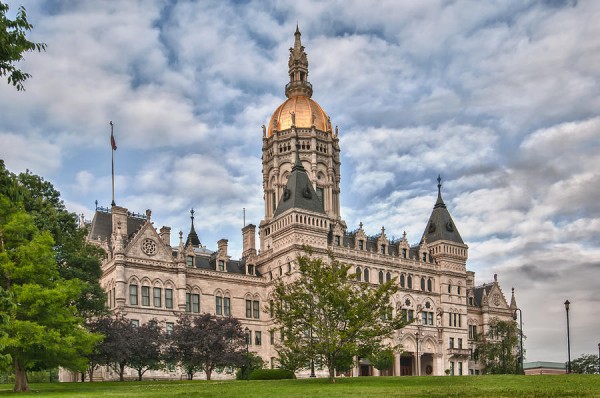 Alabama’s special session – the first in five years - was held over the summer, convening on July 13 and ending in disarray in mid-August, with a second special session on the state budget convened and concluded in mid-September. Among the
 Democratic legislative leaders and Republican legislative leaders are





 The Marcum Tech Top 40, now in its 8th year, recognizes technology companies with at least $3 million in annual revenue and a four-year record of growth, in six industry sectors. Both privately held and publicly traded companies are eligible. This year, 14 were publicly traded; 26 were privately held.