Yale Grad One of 12 to Win Emmy, Grammy, Oscar and Tony; Frozen’s “Let It Go” Was Family Affair
/As the Frozen juggernaut continues with no signs of slowing whatsoever, the ubiquitous anthem “Let It Go” rings in the ears of children and parents worldwide. What many may have missed in the phenomenon is the Connecticut connection.
The anthem “Let It Go,” sung in the movie by both Idina Menzel and Demi Lovato (over the closing credits), was penned by Yale graduate Robert Lopez, whose notoriety and track-record is virtually without recent parallel. The song was co-written with his wife, Kristen Anderson-Lopez. Together, they also wrote the songs for the 2011 Disney animated musical Winnie the Pooh.
Prior to Frozen, Lopez was best known for co-creating The Book of Mormon and Avenue Q, two of Broadway’s stand-out box office smashes of the past decade. He is one of only 12 people who have won an Emmy, Grammy, Oscar, and Tony Award, and the only person to win all four within a decade.
Lopez was born in Manhattan, developed an interest in music from an early age, and wrote his first song at age seven. He received a B.A. in English from Yale University (Class of ’97), where he was a member of the Yale Spizzwinks and wrote comedic songs for various student-run theater groups, according to the Avenue Q website.
Earlier this year, when Lopez took home an Academy Award for Best Original Song for co-writing "Let It Go" he became the youngest person, at age 39, to "EGOT", (win an Emmy, Grammy, Oscar, and Tony Award). Lopez previously won the Grammy and Tony for The Book of Mormon, and received Daytime Emmy Awards for music direction and composition for the kids TV series The Wonder Pets.
IMDb and Variety reported that "EGOT" members include Whoopi Goldberg, Audrey Hepburn, Mel Brooks, Mike Nichols, and Scott Rudin, among the 12 members of the exclusive club.
In 2011, he told the Yale Daily News “the Spizzwinks are still my best friends, longest-lasting friends from college. I first got my inkling in college that I might not want to just write serious stuff. That music could be funny. That was something I enjoyed doing. The Spizzwinks were really the first place where I started dabbling with that.” Success, however, did not come overnight. “Right out of college I lived with my mom and dad. I lived with them for four years after college. They were extremely supportive of me. Without that, I don’t know where I’d be,” he told the newspaper.
In an interview this year with People magazine, Anderson-Lopez said "Frozen has been a team, family effort," says Anderson-Lopez. "Every song we wrote, our [daughters Annie, 4, and Katie, 9,] were the first audience for it and if they didn't want to hear it again, we went back to the drawing board." The couple wrote eight songs for Frozen.
Lopez told NPR’s Terry Gross that “When this song came to us, we were on a little stroll through Prospect Park in Brooklyn near our house, and we both started to improv what Elsa might be feeling. So we stood up on picnic tables.” He added, “Once we had the idea for the song, it came quite quickly. It took about, you know, a day and a half.”
In April, Frozen became the highest-grossing animated film in box office history, just days after the film was released on DVD and Blu-ray. The Frozen soundtrack is also the best-selling digital soundtrack album in history and the top-selling album of 2014, having spent 31 consecutive weeks in the top 5 on the Billboard 200 chart, including 13 nonconsecutive weeks at No. 1. The "Let It Go" film clip from Frozen has been viewed nearly 300 million times on YouTube.
Disney had the song recorded in 25 different languages for international versions of the film: French, German, Dutch, Mandarin, Swedish, Japanese, Latin American Spanish, Polish, Hungarian, Castilian Spanish, Catalan, Italian, Korean, Serbian, Cantonese, Portuguese, Bahasa Malaysian, Russian, Danish, Bulgarian, Norwegian, Thai, Canadian French, and Flemish.
"The Story of Frozen: Making a Disney Animated Classic" will be broadcast by Disney-owned ABC television on Tuesday, Sept. 2 at 8 p.m.
 h school students - participants in week-long journalism workshops at UConn, Quinnipiac and Yale universities led by C-HIT - have been producing news stories that target issues facing a demographic they are not only familiar with, but, in most cases, part of. The students are learning research methods intrinsic to journalism and the results of their work have been eye-opening. Some of the highlights:
 Of the young people who reported cyber bullying incidents against them, one in three reported that they experienced threats online. Well over half of young people do not tell their parents when cyber-bullying occurs, the website says. Surveys show that girls are twice as likely as boys to be both victims and perpetrators of cyber bullying.
 ht) Mackenzie Brayman, a student at North Stonington High School; Julyanna Schreider and Shamoya Hanson, students at the Journalism & Media Academy, Hartford; Talon Cooper, a student at Hillhouse High School, New Haven; and Conner Fritchley, a student at Wilton High School. Information included in this article was researched and developed by the students for their news stories.
 for over a third of Connecticut's public school students, only 7 percent of the state's teachers and 2 percent of the administrators in Connecticut's public schools are minorities."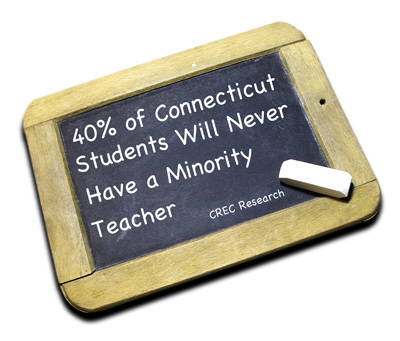
 from its Quest and Third Age Initiative programs to help rebuild the new Jonathan's Dream, working with the Mandell JCC.. The project is also supported by

 s median gross apartment rent of $948.


 In addition, it calls for creation of a consent form for parents of student athletes to sign on the warning signs, symptoms and treatment of SCA and relevant school policies. Similar legislation has already been adopted in Pennsylvania, several other states are also considering SCA bills, according to the SCAF. The provisions of the new law take effect a year from now, with the school year that begins in the fall of 2015.
 ven are “overflowing with impossible ideas and the people who make them happen. We believe connecting to all three -- the place, the thinking, and the people -- can increase the probability of success for others who have impossible ideas.”

 names that are of concern varies. Some consider “Indians” inappropriate, yet the Cleveland Indians of Major League Baseball (MLB) have received virtually none of the criticism that has been leveled at the NFL’s Washington franchise. MLB’s Atlanta Braves fans have long been known for doing the “tomahawk chop” at teams’ games, and the NFL’s Kansas City Chiefs are not seen as being as offensive as the franchise name used in D.C.
 d to be no longer appropriate.’”
 Canton High School (Warriors), Conard (West Hartford) High School (Chieftans), Derby High School (Red Raiders),Enfield High School (Raiders), Farmington High School (Indians), Glastonbury High School (Tomahawks), Guilford High School (Indians), Hall (West Hartford) High School (Warriors), H.C. Wilcox Technical (Meriden) High School (Indians),Killingly High School (Redmen), Manchester Senior High School (Indians), Montville High School (Indians), Newington High School (Indians), Nonnewaug (Woodbury) High School (Chiefs), North Haven Senior High School (Indians), Northwest Catholic (West Hartford) High School (Indians), Norwich Regional Vocational Technical School (Warriors), RHAM Junior Senior High School (Sachems), Torrington High School (Red Raiders), Valley Regional (Deep River) High School (Warriors), Wamogo (Litchfield) Regional High School (Warriors), Watertown High School (Indians), Wilcox Technical (Meriden) High School (Indians), Wilton High School (Warriors), Windsor High School (Warriors), Windsor Locks High School (Raiders).
 E program evaluates schools and districts based on funding, staffing of highly qualified teachers, commitment to standards, and access to music instruction. The NAMM Foundation with the assistance of researchers at The Institute for Educational Research and Public Service of Lawrence, Kansas (an affiliate of the University of Kansas) evaluate participants on these factors. Designations are made to districts and schools that demonstrate an exceptionally high commitment and greater access to music education.