Waterbury, New Haven Among Nation's Leading Cities for Healthcare Social Workers

Connecticut, always on the lookout for occupations with strong potential for job growth, appears to already have one in our midst.  New statistics indicate that Waterbury and New Haven are among the top five metropolitan areas in the nation for healthcare social workers – a status that could serve to attract individuals in the fast-growing field to the state.

Nationwide, the median salary for a healthcare social worker is $47,770, and the job outlook is bright: jobs are projected to grow 26 percent from 2010 - 2020, which is twelve percentage points above the projected national job growth of 14 percent.  In Waterbury, the median salary is $65,250, the second highest in the nation; in New Haven, ranked at #5, it is $61Waterbury CT,950, according to data compiled by the data analysis website ValuePenquin.

Healthcare social workers are professionals who provide a range of services that support patients' medical needs in their psychosocial environment, from advising caregivers to coordinating medical services.  With healthcare becoming increasingly complex, the need for healthcare social workers has grown, as reflected in the analysis that determined the Best Cities for Healthcare Social Workers, based on May 2012 data.

The U.S. Bureau of Labor Statistics has reported that Connecticut is ranked fourth nationwide in  job prospects and has the fourth highest annual wages, at $60,830.  The Bureau defines the occupation as one that provides individuals, families, and groups with the psychosocial support needed to cope with chronic, acute, or terminal illnesses.  Services include advising family care givers, providing patient education and counseling, and making referrals for other services. Individuals in the field may also provide care and case management or interventions designed to promote health, prevent disease, and address barriers to access to healthcare.

In the ValuePenquin study methodology, median annual pay - a substantial factor in the decision process for people looking for work – was considered, along with how expensive the city is to live in.  Since the focus was on job opportunities, the study also factored in cities’ concentration of healthcare social workers. The ‘location quotient’ measures the concentration of a particular occupation in a city as a proportion of all occupations relative to the national average. They infer a higher location quotient to mean a relatively higher demand for a profession's services.  Data from the Bureau of Labor Statistics underscored the recent study, ranking Connecticut fourth in the nation in location quotient, reflecting a field in demand.

While the study ranked Waterbury and New Haven in the top five, Massachusetts communities also had a strong showing, reflecting the regions attractiveness for professionals in the field.  The top ten:

  1. Carson City, NV
  2. Waterbury, CT
  3.  Cumberland, MD
  4. Taunton/Norton/Raynham, MA
  5.   New Haven, CT
  6.  Napa, CA
  7.  Yuba City,  CA
  8.  Springfield, MA
  9. Boston/Cambridge/Quincy, MA
  10. Hanford/Corcoran, CA

In addition, New Bedford ranked #14, Worcester was #16, Brockton/Bridgewater/Easton, MA was #17, Providence/Fall River/Warwick was #18, Pittsfield was #19 and Barnstable was #20.

BLS

Yale-New Haven is Connecticut's Only Hospital with Nationally Ranked Medical Specialties

Yale-New Haven Hospital is Connecticut’s best-performing hospital according to the annual list released this week by U.S. News & World Report, which analyzed hospitals across the nation.

Yale-New Haven Hospital is ranked nationally in 10 adult and 5 pediatric specialties. It was also ranked as high-performing in 3 adult specialties, according to the magazine’s analysis.  It placed 6th in the country in diabetes and endocrinology, 11th in psychiatry, fourteenth in gynecology and #18 in gastroenterology.  It was the only hospital out of the eleven ranked in Connecticut to be nationally ranked in any specialty category.

Yale-New Haven performed 15,340 annual inpatient and 22,559 outpatient surgeries, and ts emergency room had 137,911 visits last year. Yale-New Haven Hospital covers 1.9 million square feet, employs more than 7,000, and is affiliated with 3,600 physicians and 600 resident physicians practicing over 100 medical specialties, U.S. News reported.  In pediatric specialties, Yale-New Haven ranked #4 nationally in diabetes and endocrinology.

Hartford Hospital and Saint Francis Hospital and Medical Center took second and third place, respectively in Connecticut, with St. Vincent’s Medical Center in Bridgeport ranked #4 in the state, followed by Middlesex Hospital at #5, Norwalk Hospital ranked sixth, Danbury Hospital and Waterbury Hospital, tied at #7, Bridgeport Hospital and Lawrence and Memorial Hospital tied at #9, and Sthealth-carousel-hospitalsamford Hospital ranked eleventh.

Hartford Hospital, ranked#1 in Greater Hartford, “performed nearly at the level of nationally ranked U.S. News Best Hospitals” in 9 adult specialties, U.S. News reported.  The hospital had 36,841 admissions in the latest year for which data are available. It performed 11,828 annual inpatient and 20,955 outpatient surgeries and had 95,567 emergency room visits.

At #3 statewide, Saint Francis “performed nearly at the level of nationally ranked U.S. News Best Hospitals” in 8 adult specialties. The hospital had 29,113 admissions, performed 9,178 annual inpatient and 10,482 outpatient surgeries and its emergency room had 71,446 visits.

St. Vincent’s, top-rated in Bridgeport and Western Connecticut, “performed nearly at the level of nationally ranked U.S. News Best Hospitals in 6 adult specialties. The hospital had 21,019 admissions, performed 4,521 annual inpatient and 5,138 outpatient surgeries and its emergency room had 74,177 visits.

Among 87 children’s hospitals across the nation that made the rankings in at least one specialty, Connecticut Children’s Medical Center in Hartford was nationally ranked in six pediatric specialties. It is a 166-bed children's general facility with 6,096 admissions in the most recent year reported, performed 2,036 annual inpatient and 8,062 outpatient surgeries. Its emergency room had 53,488 visits.  Connecticut Children’s is national ranked at #25 in pediatric urology, #35 in diabetes and endocrinology and #39 in pulmonology.

In Only 37 Communities Do More Than 2/3 of 4th Graders Pass All Physical Fitness Tests

What do the towns of Preston, East Windsor, Bethany, Stafford, and Clinton, have in common?  Less than 20 percent of fourth grade students in those communities meet the standard on all four physical fitness tests – the lowest percentages in the state.  For Preston, it’s the second consecutive year in the bottom five. 

At the upper end of the spectrum, 95.5 percent of 4th graders in Eastford meet the standard on all four physical fitness tests, in Westbrook 89.5 percent, in Sterling 85.4 percent in New Canaan 83.3 percent and Union 80 percent – the only towns to exceed 80 percent in the most recent data, for 2011.  In 2010, 100% of fourth grade students in two towns – Union and Caanan – passed all four physical fitness tests, no towns reached that level in 2011 data.

Overall, in only 37 communities did more than two-thirds the fourth grade students pass all four physical fitness tests, and in another 63 communities more than half (but less than two-thirds) of the students did so.  In 69 communities, fewer than half of the fourth graders pass all four tests - compared with  67 communities the preceding year..  Connecticut has 169data visualization towns and cities.

The data is available on the web site of the Connecticut Data Collaborative, which is bringing together data from various state agencies, making it more readily available to the public, along with the means to combine data from different agencies and chart the information in data visualization charts that help to illustrate patterns that enhance understanding.

The Connecticut Data Collaborative is a collaborative public-private effort to improve the quality of and access to policy-related data in the state – a central portal where all Connecticut organizations and residents can access a wide range of data from federal, state, local and private sources relating to the health, well-being and economy of the residents of the State of Connecticut. The goals of the Collaborative include:

  • Advocacy – Advocating for the public availability of all state data to inform public debate and to drive planning, policy, budgeting and decision making in state government.
  • Standards – Promoting and modeling use of data standards around privacy, interoperability, data definitions and quality.
  • Access – Meeting demands for public access to data through the Collaborative’s data portal, CTData.org, and the associated Connecticut Nonprofit Strategy Platform.
  • Building Capacity — Creating opportunities for Collaborative and peer support in data development and use both online and in person.

Fatal Accidents Raise Isssue of Mandatory Motorcycle Helmet Law in CT

Since the beginning of June, motorcycles have been responsible for three deaths in the Fairfield County according to the Greenwich Time -- two in New Milford and one in Danbury -- as well as several injuries. The paper reported that “the recent fatalities have thrown long-standing debates over Connecticut's partial motorcycle helmet laws into a new light, prompting questions as to the efficacy of helmets and the future of statewide regulations requiring their use.”

In one recent incident – where the rider survived – the Time reported that “the bike burst into flames shortly after it collided with oncoming traffic, and its rider was thrown nearly 10 feet into the street.”

A report by consumerreports.org last month indicated that “in 2010, 98 percent of motorcyclists riding in states with helmet laws were wearing them. In states without the laws, helmet use was just 48 percent.”  The Insurance Institute for Highway Safety reports that:

  • Laws requiring all motorcyclists to wear a helmet are in place in 19 states (including New York, New Jersey and Massachusetts) and the District of Columbia
  • Laws requiring only some motorcyclists to wear a helmet are in place in 28 states (including Connecticut, which requires helmets be worn by individuals 17 and under)
  • There is no motorcycle helmet use law in 3 states (Illinois, Iowa, and New Hampshire)

National Highway Traffic Safety Motorcycle accident on Trans Canada HighwayAdministration research shows riders who wear helmets are three times less likely to suffer brain trauma than those without them. According to a 2012 study released by the Centers for Disease Prevention and Control, motorcyclists accounted for 12 percent of motor vehicle fatalities in 2010, despite making up less than 1 percent of vehicle miles traveled, the Time reported.

Motorcycle helmets have not been uniformly required in decades.  In 1967, to increase motorcycle helmet use, the federal government required the states to enact helmet use laws in order to qualify for certain federal safety programs and highway construction funds. The federal incentive worked. By the early 1970s, almost all the states had universal motorcycle helmet laws.

Michigan was the first state to repeal its law in 1968, beginning a pattern of repeal, reenactment, and amendment of motorcycle helmet laws. In 1976, states successfully lobbied Congress to stop the Department of Transportation from assessing financial penalties on states without helmet laws. The Connecticut General Assembly overturned the universal helmet requirement here later that year. The state passed its partial helmet law in 1989, applying only to individuals age 17 and younger.

Two years ago, The Hartford Courant was among the voices urging the mandatory helmet law be reinstated:

“In 2007, the most recent year for which statistics are available, 36 motorcycle riders died in crashes in Connecticut. That number may seem small, but it's not. Per mile traveled, the number of deaths on motorcycles was 37 times the number of people killed in cars, says the Insurance Institute for Highway Safety. A common saying among those in the medical community is that motorcycles ought to be called "donorcycles," because so often the organs of dead bikers are used for transplants.”

A 2011 Yale School of Medicine report analyzing state crash data between 2001 and 2007 found that two-thirds of the 358 riders killed in motorcycle accidents had not been wearing helmets. In an editorial this week, the Greenwich Time noted that “the National Highway Traffic Safety Administration estimated that in 2008, helmets saved the lives of 1,829 motorcyclists, and that 822 who died that year would have survived if helmets had been worn.”

The higher risk of serious injury or death that comes with optional helmets may also translate into economic losses. NHTSA data reportedly suggests that projected reductions in fatalities stemming from universal helmet laws could translate into savings in service costs and household productivity of up to $1,200,000 per avoided fatality.

The Connecticut Motorcycle Riders Association (CMRA) , formed in 1980, opposes helmet requirements, as it has for more than three decades.  In the organizations view, it is a matter of freedom of choice – whether or not to wear a helmet is a decision to be made by bikers, not government. It was that view that prevailed when the legislature changed the state’s mandatory helmet law in 1977.  In 1980, motorcyclists rallied in unprecedented numbers in Connecticut when a state legislator was involved in a motor vehicle accident in which a motorcyclist was killed.

Since then, the issue has been raised unsuccessfully at the state Legislature in bills or amendments 11 times. The CMRA website said, regarding the 2013 session, that “we are able to say that we have not had to fight any helmet laws this year,” and indicated that “we have repeatedly defeated attempts to reinstate the mandatory helmet law for adult motorcycle riders.”  The issue has not been considered since 2005, according to the Time.  The CMRA website also includes this tagline:  “Let Those Who Ride Still Decide.”  The organization has supported the creation of a self-funded rider education program and pushed for the adoption of a more comprehensive motorcycle license test throughout the state, the website points out.

Motorcycle-laws

Connecticut Ranks 17th in Beach Closings/Advisories in 2012

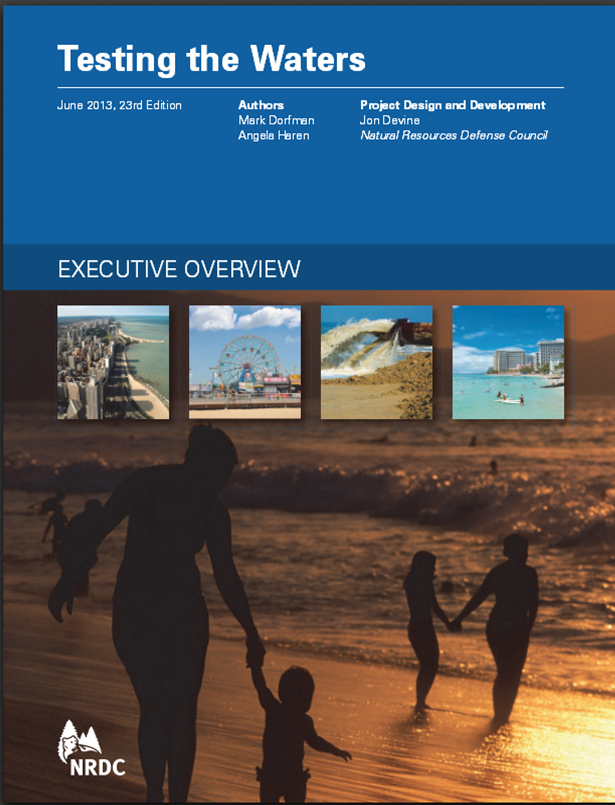
As the summer beach season moves into full swing, Save the Sound, a program of Connecticut Fund for the Environment, is calling attention to the number of days that Connecticut beaches had to be closed, or were under public advisories during 2012 due to environmental or related factors. The Natural Resources Defense Council’s (NRDC) annual “Testing the Waters” report, issued last week, found that Connecticut beaches were closed or under advisories for 198 days in 2012. That is down from 538 in 2011 but still more than twice the number of closings/advisories in 2010, 2009, or 2008.

The report analyzes beach closure and advisory statistics from beaches around the U.S.; Connecticut ranked 17th out of the 30 states listed.testing the waters

According to the NRDC report, 22 percent of Connecticut’s closing/advisory days last year were due to monitoring that revealed elevated bacteria levels and 29 percent were preemptive due to heavy rainfall, which can overwhelm outdated stormwater systems and wash untreated sewage into rivers and the Sound. The remaining days were preemptive due to wildlife.

The beaches with the worst records for exceeding the state's daily maximum bacterial standard were Pear Tree Point Beach in Fairfield County and Seabluff Beach in New Haven County, which tested above the maximum 28 percent of the time; Oak Street B Beach in New Haven County at 20 percent; and Fairfield County’s Calf Pasture Beach, Weed Beach, and Rowayton Beach, all at 19 percent.

“When it comes to clean water, being ‘middle-of-the-pack’ is not good enough,” said Leah Schmalz, director of legislative and legal affairs for Save the Sound. “One out of every ten American citizens lives within an hour’s drive of Long Island Sound, and they deserve clean, safe beaches—even one closing because of bacteria and pollution is too many.”

“Just an inch of rain in 24 hours causes many local health departments around the Sound to shut down beaches. Drought conditions may provide the perfect beach weather—no rain means no contamination from stormwater runoff—but we can’t rely on Mother Nature to do our pollution control for us. If we want to enjoy our coastline, eat local seafood, and promote tourism along the shore, rain or shine, we have to be proactive. That means stopping pollution at the source by upgrading our sewage treatment plants, separating the combined sewer overflows that dump almost two billion gallons of untreated sewage into our waterways each year, and investing in innovative stormwater runoff solutions like drain filters and green infrastructure.”DSC04553cropped

By comparison, the same NRDC report found that Westchester County in New York lost 112 beach days in 2012, and that New York State ranked 22nd out of 30 states, up from 24th in 2011.

Two Westchester County beaches had the first- and third-worst records in the state for the number of water samples that exceeded the state bacterial standard. Bacterial levels at Shore Acres Club in Mamaroneck tested above the standard fully 50 percent of the time, and Surf Club in New Rochelle exceeded 35 percent of the time. Overall, Westchester County beach samples exceeded the standard 14 percent of the time, making Westchester the fourth-worst tested county in New York. Bronx County, which also affects water quality in the western Sound, came in at number three.

Save the Sound issues weekly Sound Swim Alerts for Connecticut and Westchester County to inform residents when beaches are open for swimming and when they are closed. The alerts can be found on Save the Sound’s blog.

beach chart

Additional info on water pollution, contamination and depletion.

Top CT Trails Ranked for Hiking with Your Dog

Summer is officially underway, and Connecticut residents are responding to the great outdoors, hiking the state’s numerous scenic trails.  For those interested in bringing their dog along, the website bringfido.com has compiled the top 10 dog-friendly hiking trails in the state:

1.   The Cascades at Lake Mohigan (Fairfield)

2.       Housatonic Rail-Trail - Trumbull (Pequannock Valley Greenway) Trumbull

3.       Bear Mountain Reservation (Danbury)

4.       Farmington River Trail (Farmington)

5.       Timberlands (Guilford)

6.       Kettletown State Park (Southbury)

7.       Central Bark Dog Park at Copp Family Park (Groton)

8.       Winslow Park (Westport)

9.       Housatonic Valley Rail-Trail (Monroe)

10.   Hop River State Park Trail (Vernon-Rockville)

The publication “A Bark in the Park – Connecticut” lists the basics for taking your dog on a hike, including helpful hints on the collar, identification tags, bandanna, leash and water.  Also discussed are conditioning, trail hazards, and the perils of black bears, rattlesnakes and porcupines.

The basic do’s and don’t when hiking with your dog are also outlined by backpacker.com:fido

Find a canine-friendly trail Look for places that are "easy on the paws" -  shady trails with soft, leaf- or needle-covered terrain; avoid paths littered with sharp rocks, off-trail routes with steep drops, or any surface that gets very hot.

Fit & load his pack Adjust the harness on your dog so it's snug but won't chafe (remove saddlebags first, if the pack allows). You should be able to fit two fingers under it. Load the bags with dog food, treats, water (some packs come with hydration bladders), bowls, and extra gear for you–this is the time for beer or another pillow! Make sure both sides are weighted equally; total load shouldn't exceed one-third of your dog's body weight.

Camp with your dog

  • Keep dogs leashed around other hikers, bikers, horses, and on steep or slippery terrain (so they don't knock anyone over). Step aside and yield the trail to all others.
  • Pack out poop on dayhikes (double-bag it!). On longer trips, follow regulations and bury away from the trail and water sources.
  • Bring a camp towel and brush to clean and dry dogs thoroughly before letting them in the tent. Trim nails pretrip to prevent rips in the tent floor.
  • Pack a foam pad for sleeping, and a wool or down blanket in cold weather.
  • Keep track of dogs at night with LED lights or glowstick bracelets on collars.

dog safety chart


Connecticut Well Represented in National Mental Health Dialogue

Keeping a commitment made in the aftermath of the Sandy Hook Elementary School murders last December, President Barack Obama launched a national mental health dialogue at the White House Monday aimed at increasing understanding and awareness of mental health, and Connecticut organizations are involved in the efforts from the outset.

Among the initiatives announced during the day-long conference was a new national website, www.mentalhealth.gov, and a series of public meetings to be held around the country under the “Creating Community Solutions” rubric.  Two of those community conversations will be in Connectwhite hosueicut – in Hartford and Norwalk – and one of the six national organizations coordinating the initiative has its headquarters in East Hartford.

The Center for Civic Engagement at the Hartford Public Library will organize the Hartford event as part of the National Dialogue on Mental Health. In response to unprecedented need for civic engagement, Hartford Public Library created the Center for Civic Engagement (CCE). The CCE aims to create a community change process, foster development of a community vision, contribute to a stronger, more successful community, and establish a civic engagement model.

The dialogue in Norwalk will be co-sponsored by the Fairfield County Community Foundation and the Southwest Regional Mental Health Board.  The Fairfield County Community Foundation promotes philanthropy to build and sustain a vital and prosperous community where all have the opportunCCSity to participate and thrive.  The Southwest Regional Mental Health Board is dedicated to ensure a quality system of comprehensive, recovery oriented mental health and addiction services that enhances the quality of life and well being of all residents of Southwest Connecticut.

The Creating Community Solutions initiative will allow participants to learn about mental health issues - from each other and from research - and to develop plans to improve mental health in their own communities, according to officials.   The national dialogue is to include young people who have experienced mental health problems, members of the faith community, foundations, and school and business leaders.

Among the six national “deliberative democracy” organizations involved in developing the Creating Community Solutions program is East Hartford-based Everyday Democracy, according to federal officials.  Everyday Democracy helps people organize, have dialogues, and take action on issues they care about, so that they can create communities that work for everyone. Its ultimate goal is to contribute to the creation of a strong, equitable democracy that values everyone's voice and participation.    Details about Everyday Democracy's role in the initiative and how partner communities and organizations can get involved will be available on the organization’s website in the coming dEDLOGOays.

Details regarding the date, location and registration information for the Hartford and Norwalk sessions will be available on a new website, at www.creatingcommunitysolutions.org.  The site is part of the national mental health website, which was created by the U.S. Department of Health and Human Services.   Thus far, community dialogues have been scheduled in New Mexico, California, Alabama, and Arizona, and an additional 29 sites – including the two in Connecticut – are making plans.   A Facebook page, https://www.facebook.com/CreatingCommunitySolutions, has also been launched.

Materials to support the conversations are being developed and will shortly be available for download, including an Information Brief, Organizing Guide and Discussion Guide.  In addition to Everyday Democracy, the organizations working together to design and implement Creating Community Solutions are America Speaks, Deliberative Democracy Consortium, National Issues Forums, the National Coalition for Dialogue & Deliberation, and the National Institute for Civil Discourse.

In addition, a number of national associations are asking their members or affiliates to organize local events. These groups include the United Way, American Bar Association, National League of Cities, YWCA, National School Public Relations Association, 4-H, Grassroots Grantmakers, Alliance for Children and Families, National Physicians Alliance, Association for Rural and Small Libraries, and the International Association for Public Participation, among others.

Million Dollar Packages Routine Atop Connecticut Hospitals, CEO’s Receive Highest Pay at 26 of 30

Newly released data from the state Office of Health Care Access, which regulates hospitals in Connecticut, reflects that 18 Connecticut hospital executives received pay packages of over $1 million during fiscal year 2012.

Leading the top-compensated list – and exceeding $1.5 million in total compensation for their highest paid individual staff member - were William Backus Hospital ($3.4 million), Hartford Hospital ($3.3. million), and Yale- New Haven Hospital ($2.8 million).

In addition to the top three, there were seven other hospitals where the highest compensated official received a pay package exceeding one million dollars during FY2012.  Rounding out the top ten were officials at  Greenwich Hospital ($1.5 million), Saint Francis Hospital & Medical Center ($1.5 million), Stamford Hospital ($1.5 million), Hospital of Central CT ($1.5 million), Bridgeport Hospital ($1.1 million), Hospital of Saint Rafael ($1.8 million), and Middlesex Hospital ($1 million).

An analysis by Connecticut by the Numbers indicates that the top salary and benefit package at all but four of the state’s 30 hospitals went to top administrators, usually the President or CEO.  The exceptions included  Hospital signNew Milford Hospital, where the president’s total package ranked 5th and a lab physician led the list;  at Charlotte Hungerford Hospital, where the CEO also ranked 5th and a physician surgeon ranked first, and at Rockville General Hospital which was led by the Medical Director, with the CEO placing third in the salary hierarchy.    At Windham Community Memorial Hospital, the top administrator – the Vice President of Operations – placed 7th in salary and fringe benefits amongst hospital leadership.

Only five hospitals in the state saw the top ranked individual receive less than half a million dollars in compensation.  The lowest was at  Rockville General Hospital, where the Medical Director received $324,458, followed by Windham Community Memorial Hospital, where the top  Physician/Hospitalist earned $463,270, John Dempsey Hospital, where the CEO earned $477,518, New Milford Hospital, where the top package was $480,036 and Johnson Memorial Hospital, where the President’s pay package totaled $483,070.

The OHCA report did report the names of individual administrators, but listed the top 10 paid positions at the state's 30 acute care hospitals. The state's two largest hospitals—Hartford Hospital and Yale New Haven Hospital—each had four senior executives that received million-dollar plus pay packages last fiscal year, the Hartford Business Journal has reported, while Stamford Hospital had two administrators earn over $1 million.

The highest paid hospital executive in fiscal 2012 was the former president & CEO of William Backus Hospital, who received a total pay package of $3.4 million. That included $3.2 million in fringe benefits, the report said.  In addition, the President & CEO received compensation of $975,550 during the year.  The highest active paid hospital administrator was Hartford Hospital's vice president of academic affairs and chief academic officer, who received $3.4 million in compensation.

In 2007, there were seven hospital CEO’s earning in excess of $1 million in compensation, according to the Office of Legislative Research.  In fiscal year 2005, five of the top paid positions at the state’s 30 hospitals received more than $1 million, data from the Office of Legislative Research indicates – all of them CEO’s.

Hospitals are required to provide their top ten highest paid hospital positions annually to OHCA.  The full list for FY2012 is available on the OHCA website. The top salary at each hospital, according to the report:

Bridgeport Hospital, President & CEO: $1,101,139

Bristol Hospital, President & CEO: $605,526

Charlotte Hungerford Hospital, Physician Surgeon: $661,640

CT Children’s Medical Center, President & CEO : $748,347

Danbury Hospital, Chief Executive Officer: $955,838

Day Kimball Hospital, President & CEO: $514,375

Essent-Sharon Hospital, Chief Executive Officer: $736,907

Greenwich Hospital, President & CEO: $1,530,629

Griffin Hospital, Chief Executive Officer: $558,543

Hartford Hospital, VP, Academic Affairs & CAO: $3,351,507

Hospital of Saint Rafael, President  : $1,803,605

John Dempsey Hospital, CEO : $477,518

Johnson Memorial Hospital, President : $483,070

Lawrence and Memorial Hospital, President, CEO: $761,734

Manchester Memorial Hospital,CEO: $560,793

Middlesex Hospital, President/CEO:  $1,022,460

MidState Medical Center, President/CEO: $958,020

Milford Hospital, President: $579,475

New Milford Hospital, Lab-Physician: $480,036

Norwalk Hospital, President & CEO : $901,148

Rockville General Hospital, Medical Director:  $324,458

Saint Francis Hospital & Med Ctr., President: $1,521,090

Saint Mary’s Hospital, President & CEO: $791,256

Saint Vincent’s Medical Center, Chief Executive Officer:   $2,394,278

Stamford Hospital, President & CEO: $1,532,094

The Hospital of Central CT, President & CEO: $1,499,546

Waterbury Hospital, President: $520,298

William W. Backus Hospital, Former Pres. & CEO: $3,357,690

Windham Community Memorial Hospital, Physician/Hospitalist: $463,270

Yale-New Haven Hospital, President & CEO* : $2,803,228

*includes Yale-New Haven Hospital and Yale-New Haven Health System

State, AARP Seek Volunteer Resident Advocates to Give Voice to Facility Residents

AARP Connecticut is working with the state Department on Aging Long Term Care Ombudsman Program  (LTCOP) to help recruit and train Volunteer Resident Advocates who help residents of skilled nursing facilities, residential care homes and assisted living facilities solve problems and voice their concerns.  Orientation sessions will be held in June in Manchester, Meriden and New Fairfield for individuals interested in learning more about the program.

 The Volunteer Resident Advocate, along with the Regional Ombudsman, helps voice residents’ concerns and empower residents speak up themselves, consistent with their individual rights. This is accomplished through individual consultation and complaint resolution as well as follow-through with state agencies and advocacy organizations.

In lending its support to help identify volunteers for the program, AARP Connecticut gets the word out to nearly 600,000 members age 50 and over throughout the state of Connecticut.

The LTCOP, mandated by the federal Older American’s Act and state law, works to improve the quality of life and quality of care of Connecticut citizens residing in nursing homes, residential care homes and assisted living communities.  All Ombudsman activity is performed on behalf ofltcop_v4_header_01, and at the direction of residents.  All communication with the residents, their family members or legal guardians, as applicable, is held in strict confidentiality.

 Volunteer Advocates may speak to the dietitian about a resident’s desire for a change in diet, let the nurse know a resident needs more timely assistance, or discuss with the administrator a resident’s idea for weekend activities.  Volunteer Advocates and Ombudsman support quality of life for residents by listening to and working for resident’s needs and interests and helping residents and families work with nursing home staff for changes to improvseniorlady-570x230e nursing home life. They help residents, their families and staffs communicate better with each other.

 Orientation sessions are being held in Connecticut this June at the following locations:

  • Wednesday, June 19, 2013, 9am – 12pm, Manchester Senior Center, 549 East Middle Turnpike
  • Monday, June 24, 2013, 9am – 12pm, New Fairfield Senior Center, 33 Connecticut Route 37
  • Tuesday, June 25, 2013, 9am – 12pm, Meriden Senior Center, 22 West Main St.

To learn more or to RSVP for one of the upcoming orientation sessions, call toll-free at 1-866-388-1888.

In addition to recruiting and training Volunteer Resident Advocates, the LTCOP responds to, and investigates complaints brought forward by residents, family members, and/or other individuals acting on their behalf.  Ombudsmen monitor state and federal laws and regulations, and make recommendations for improvement.  The State Ombudsman also works with policy makers, legislators and stakeholders to advance and improve systems and protections at the state level.

Got Cocaine? Yale Center for Clinical Investigation May Need You

If researchers at the Yale University School of Medicine discover a cure for cocaine addiction, it may be because of people being paid $800 to participate in a clinical research study, after responding to an advertisement in the local Advocate newspapers and a phone call to the “Cocaine Clinic Research Recruitment” line.

The ad asks “Are you currently using cocaine?  Are you NOT CURRENTLY on medication?”  It then goes on to offer payment for those deemed eligible to participate “in a paid cocaine use" study.

No mention of the fact that cocaine remains an illegal drug.  The Drug Policy Alliance indicates that according to government surveys, eight percent of high school seniors reported using cocaine at least once during their lifetime.  In 2010, 23 percent of eighth graders, 32 percent of tenth graders, and 45 percent of twelfth graders reported that crack was “fairly easy” or “very easy” to obtain.

The Yale Cocaine Research Clinic studies the “causes and consequences of cocaine addiction in order to develop improved treatments and, ultimately, to prevent addiction to the drug,” the clinic’s website explains.  Who is eligible?  “Individuals who are now using or have used cocaine.”

The nationally-recognized research includes active studies in  the genetics of addiction, brain imaging (PET, MRI), psychopharmacology, medications development,  and sleep and cognition. The clinic is located at 34 Park Street in New Haven.

Among four pages of studies highlighted on the website of the School of Psychiatry are a handful that relate to cocaine use or cocaine abstinence, and the impact of various medications on the addiction.

One study among the nearly 40 “active addictive behavior clinical trials,” sets out its impetus and objective:

“Opioid and cocaine dependence are major problems among veteran and non-veterans and no effective pharmacotherapy exists for cocaine dependence. Methadone has not shown robust effectiveness in reducing cocaine abuse. Thus, new treatments are needed for the individuals who have developed cocaine dependence. This study is designed to test a new pharmacotmza_6176734930892204893.170x170-75herapy for cocaine dependence and is a placebo-controlled trail.”

A separate study outlines detailed eligibility criteria which includes a requirement that individuals “are using cocaine more than once per week in the previous 30 days, provide a cocaine-positive urine specimen at screening, and fulfill criteria for current cocaine dependence.”  Another is an initial investigation for “A Drug Treatment for Cocaine Users Who Are Also on Methadone Maintenance Treatment.”  The “small clinical trial with cocaine users” would, if deemed sufficiently promising,  be followed by a more extensive double-blind, placebo-controlled study.

Yet another current clinical trial tests whether a “learning enhancing medication will help methadone maintained cocaine abusers with their learning and memory.”  Eligible participants – those with current cocaine abuse or dependence – must be willing to commit to 12 weeks of treatment, or a placebo.

Other ongoing clinical research studies within the School of Psychiatry related to addictive behavior include those related to alcohol addiction, smoking addiction, and post traumatic stress disorder.  In addition, there are approximately 30 mental health clinical trials underway, ranging from postpartum depression and domestic abuse to obsessive-compulsive disorder and binge eating.

Beyond those, there are numerous clinical trials for “healthy volunteers.” Chronic conditions like diabetes, cancer, cardiovascular disease, and pediatric and geriatric illnesses, are all being studied at Yale. The Yale Center for Clinical Investigation website stresses that “staff members, study doctors, nurses and coordinators are available to answer questions” of individuals considering participation in clinical studies, “so that you can make an informed decision.”  Trial categories include cancer, mental health, heart/cardiovascular, brain, spinal cord & nervous system, women's health and children's health. trial vial

At the beginning of 2013, Yale University launched a major effort to recruit thousands of volunteers to participate in clinical trials being conducted at Yale's Schools of Medicine, Nursing, and Public Health. Posters, brochures, newspaper ads, radio spots, transit ads, and community health fairs encourage members of the Greater New Haven community, including students, to enroll in the hundreds of trials that are initiated every year. The campaign is called "Help Us Discover" because without community involvement, lab research cannot be translated into treatments, the campaign kick-off announcement stated.

The Yale Center for Clinical Investigation (YCCI) was launched in January 2006, specifically to support and facilitate clinical and translational research and training. The School of Medicine was the only academic medical center in New England among the 12 institutions across the nation that received Clinical and Translational Science Award (CTSA) funding – a program that has expanded to about 60 academic medical institutions across the country.

With support from the CTSA, the School of Medicine, the University, and the Yale-New Haven Hospital, YCCI has developed into a home for clinical and translational research at Yale. By expanding existing programs, forging collaborations with other NIH-funded centers and establishing new initiatives. As a result of these efforts, almost $200 million per year of Yale’s National Institutes of Health (NIH) grant support is now directly connected to YCCI, the institution’s website explained.