
State Mental Health Budgets, Cut During Recession, Increase After Newtown Tragedy, Report Finds
/
State mental health budgets were gutted during the recession, according to a report issued by the National Alliance on Mental Health (NAMI), and are only now beginning to return to previous levels in most states, even as mental health needs are becoming better known and growing.
“With reductions totaling $4.35 billion from FY2009 to FY2012, public mental health systems struggled to meet rising demand with diminishing resources ,” the report indicated. Then, the shooting at Sandy Hook Elementary School in Newtown on December 14, 2012 provided “a major impetus for lawmakers to propose legislation which would impact children and adults living with mental illness,” the 63-page report indicated.
Nearly 60 million Americans experience a mental health condition every year, according to the organization. Regardless of race, age, religion or economic status, mental illness impacts the lives of at least one in four adults and one in 10 children across the United States.
NAMI is the nation’s largest grassroots mental health organization. NAMI advocates for access to services, treatment, supports and research and is steadfast in its commitment to raise awareness and build a community for hope for all of those in need.
“Realizing the risks of failure to provide adequate public mental health services, governors and legislatures in many states began the process of restoring state mental health budgets,” according to the report, “Trends, Themes & Best Practices in State Mental Health Legislation.”
The report concludes that “Dramatic changes in American healthcare finance and delivery systems combine with an improving economy and a growing array of best practices to provide a window of opportunity in the next few years to transform the mental health system and integrate care across systems.”
In addition, NAMI recommends that “advocates and policy makers should continue the work of building the mental health system of the future, one in which mental illness is identified as it emerges and an array of proven, cost-effective services are available as needed to provide children, youth and adults with the mental health care they need to stabilize, recover and live healthy lives.”
Looking ahead to the 2014 state legislative sessions, NAMI issued a series of recommendations including: 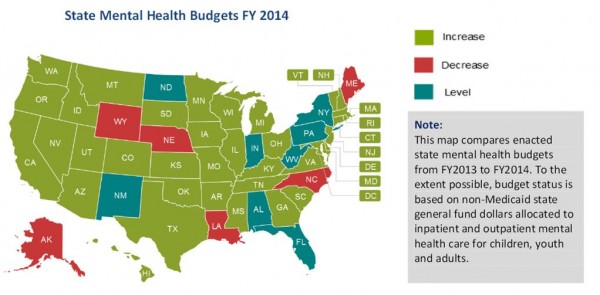
- Actively engage in outreach and enrollment
- Increase integrated care
- Increase the mental health workforce capacity
- Identify mental illness and intervene early
- Build the bridge from Medicaid to private health coverage
- Increase access to supported employment services
- Increase housing with supportive services
- Increase justice system diversion strategies
- Comply with mental health parity
- Expand Medicaid
Most states either increased or maintained state mental health authority budgets at current levels during 2013 legislative sessions. Of special note, the report indicated, is Texas which allocated a $259 million increase over the previous biennial budget, the largest mental health budget improvement in the state’s history. South Carolina reversed previous cuts to its mental health budget while Illinois restored $32 million that had been cut in 2011 due to an administrative error. In California, an additional $143 million was allocated to create crisis and triage positions throughout the state.
The report stated that “A tipping point on the heels of several recent mass shootings, the Newtown tragedy shaped the debate about the lack of access to mental health services and the barriers that many families and individuals face in light of the nation’s fragmented and grossly inadequate mental health system.”
After the Newtown tragedy NAMI advocated for policies supporting early identification and intervention, training for school personnel, families and the public, mental health services in schools and increased access to care.
The report highlights actions by states in 2013 in areas including mental health system monitoring, early identification and mental health screening, services for transitional youth, school mental health training and services, mental health facilities and suicide prevention. Also included are elements of state legislation in law enforcement areas such as juvenile justice, incarceration and the courts. A final section looks at stigma reduction efforts in the states.
Mental illnesses are medical conditions that disrupt a person's thinking, feeling, mood, ability to relate to others and daily functioning. Mental illnesses are medical conditions that often result in a diminished capacity for coping with the ordinary demands of life. Serious mental illnesses include major depression, schizophrenia, bipolar disorder, obsessive compulsive disorder (OCD), panic disorder, post traumatic stress disorder (PTSD) and borderline personality disorder.
Connecticut resident Marilyn Ricci, a past president of NAMI Connecticut, serves on the national NAMI Board of Directors, and is on the board of NAMI Farmington Valley in Connecticut, which she helped found in 2004. Kevin Sullivan, a former Connecticut Lieutenant Governor currently serving as Commissioner of Revenue Services, is a past Board member of the organization. The state legislative report was issued on October 28, 2013.
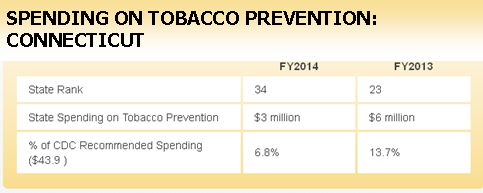
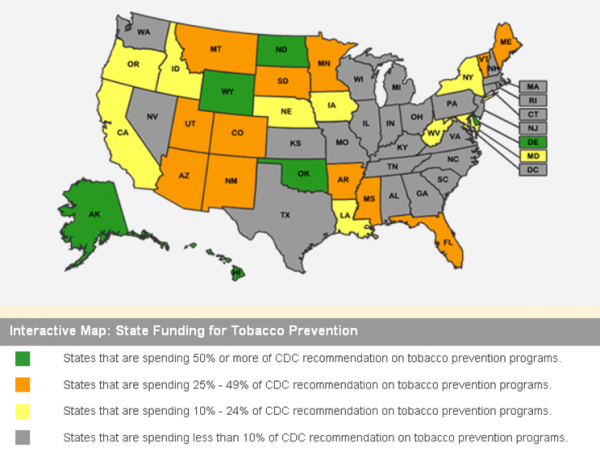
 or tobacco prevention programs. Altogether, the states have budgeted just 13 percent of the $3.7 billion the CDC recommends. Only two states – Alaska and North Dakota – currently fund tobacco prevention programs at the CDC-recommended level.

 vers.
 ervices and treatments, and provide much needed education to those impacted by mental illness.
 may be a lifelong condition, like diabetes. “However, as with diabetes, proper treatment enables many people with a mental illness to lead fulfilling and productive lives. By helping combat the stigma associated with mental illness, we can help increase the number of people that seek treatment.”
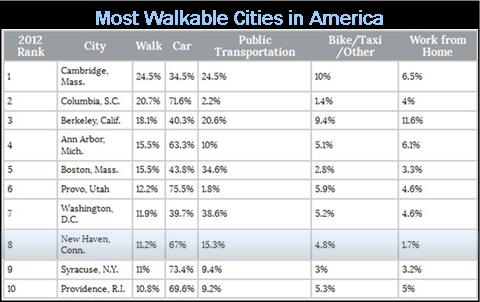
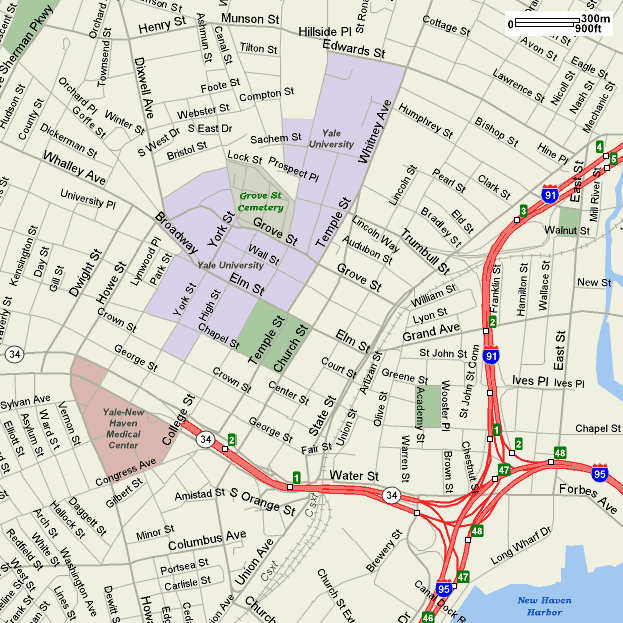 The top cities were Cambridge, MA (24.5%), Columbia , SC (20.7%), Berkeley, CA (18.1%), Ann Arbor, MI (15.5%), Boston, MA (15.5%), Provo, UT (12.2%), Washington, DC (11.9%), New Haven, CT (11.2%), Syracuse, NY (11%) and Providence, RI (10.8%).

 ne-minute educational video
 produced in the opening weeks of school, just prior to the mid-September entry deadline.

 pecifically designed to remove pain from the injection.
 ales. Baxter is one of Inc. Magazine’s Top Women in Tech to Watch, and is asked all over the world to educate physicians, nurses, Child Life specialists, and others about the importance of
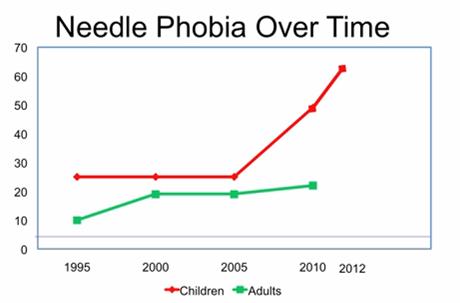 f needle-averse adults will have on their own health and the health care system.
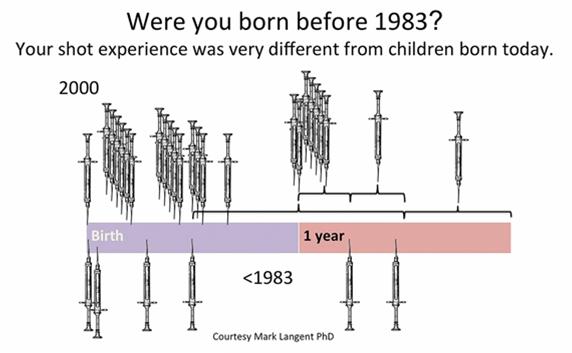 away from the very remedies that can improve their individual health and the health of entire populations, warning that “by ignoring pain we’re endangering the future of health care.”

 ich Time
 they immediately got involved. School administrators in Manchester last month suspended four Manchester High School students suspected of creating and posting degrading descriptions of female students,
 Young people are drinking more coffee than in recent years, according to the data compiled by the
 he National Coffee Association data indicates that 76 percent of adult Hispanic-Americans said they drank coffee yesterday, 13 percentage points ahead of the total population. By comparison, 47 percent of African-Americans and 64 percent of Caucasian-Americans said they drank coffee yesterday.