CT Ranks #12 in Meeting Long-Term Care Needs of Older Residents
/When it comes to support for seniors and caregivers, it matters where you live – and Connecticut is better than most places. According to a new, comprehensive state-by-state Scorecard from AARP, Connecticut ranks 12th in the nation in meeting the long-term care needs of older residents and people with disabilities. Even with the solid showing, AARP officials stress that more needs to be done, especially as the state’s 50-plus population continues to grow. Specific areas cited include more support and training for family caregivers, and easing patient transitions to and from the hospital or a skilled nursing facility.
 Raising Expectations 2014: A State Scorecard on Long-Term Services and Supports for Older Adults, People with Physical Disabilities, and Family Caregivers – an update of the inaugural 2011 Scorecard – ranks each state overall and within 26 performance indicators along five key dimensions:
- affordability and access;
- choice of setting and provider;
- quality of life and quality of care;
- support for family caregivers; and,
- effective transitions.
New indicators this year include length of stay in nursing homes and use of anti-psychotic drugs by nursing homes, raising serious concerns about the quality of institutional care. The Scorecard was complied by AARP with support from The Commonwealth Fund and SCAN Foundation.
According to the state Scorecard, a majority of family caregivers (59.4%) face a degree of stress and worry. In addition, Connecticut ranks last (51) when it comes to the percent of home health patients with a hospital admission. This signifies a need for more resources and training for family caregivers - especially around comp lex medical tasks – so that their loved ones don’t end up back in the hospital and can continue to live independently at home, according to AARP officials.
“The vast majority of older Connecticut residents want to live independently, at home, as they age – most with the help of unpaid family caregivers,” says Nora Duncan, state director of AARP Connecticut, which serves nearly 600,000 members age 50 and older in Connecticut.
Today, unpaid family caregivers provide the bulk of care for older Connecticut residents, in part because the cost of long-term care remains unaffordable for most middle income families. In Connecticut, it is estimated that more than 486,000 residents help their aging parents, spouses and other loved ones stay at home by providing assistance with bathing and dressing, transportation, finances, complex medical tasks like wound care and injections, and more.
 “When it comes to helping older Connecticut residents live in the setting of their choice, this silent army of family caregivers assumes the lion’s share of responsibility,” explains Duncan. “Many juggle full-time jobs with their caregiving duties; others provide 24/7 care for their loved ones. With every task they undertake, these family caregivers save the state money by keeping their loved ones out of costly nursing homes – most often paid for by Medicaid. They have earned some basic support.”
The top 12 states overall are Minnesota, Washington, Oregon, Colorado, Alaska, Hawaii, Vermont, Wisconsin, California, Maine, District of Columbia, and Connecticut, which make up the top quartile among the states. At the bottom of the rankings are Tennessee, Mississippi, Alabama and Kentucky.
According to the Scorecard, Connecticut ranks 29th in the percent of Medicaid long-term care dollars that support care provided at home and in the community – the care setting that most residents prefer. The Scorecard spotlights specific areas that call for improvement, including:
- Percent of home health patients with a hospital admission;
- Percent of nursing home residents with low care needs;
- Percent of people with 90+ day nursing home stays successfully transitioning back to the community.
- Family caregivers without much worry or stress, enough time, well-rested;
Of the 26 Scorecard indicators, 13 may be improved through state policy changes, which officials say points to the importance of AARP’s multi-state advocacy campaign, launched this year, to help older Americans live independently, at home, and the family caregivers that support them. “Even facing tight budgets following the Great Recession, Connecticut is making clear progress to help our older residents. However, this Scorecard shows we have more to do – and with a predicted ‘silver tsunami’ sweeping over our state in the next 20 years, the time to act is now.”
The full state Scorecard, along with an interactive map of state rankings and information, is available at www.longtermscorecard.org.

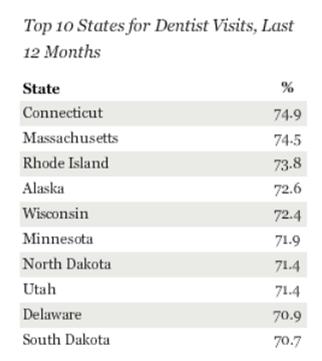
 These findings are based on interviews with more than 178,000 American adults conducted during 2013 as a part of the Gallup-Healthways Well-Being Index. Respondents were asked whether they visited the dentist in the last 12 months.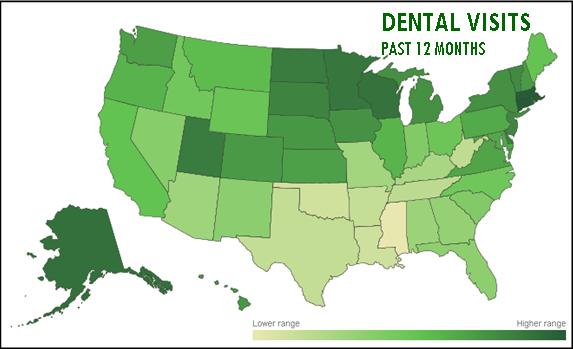

 e rankings is the Washington, D.C., metro area with a score of 77.3, followed by Minneapolis-St. Paul, Portland, Denver, San Francisco, San Jose, Seattle, San Diego, Boston Sacramento and Salt Lake City.
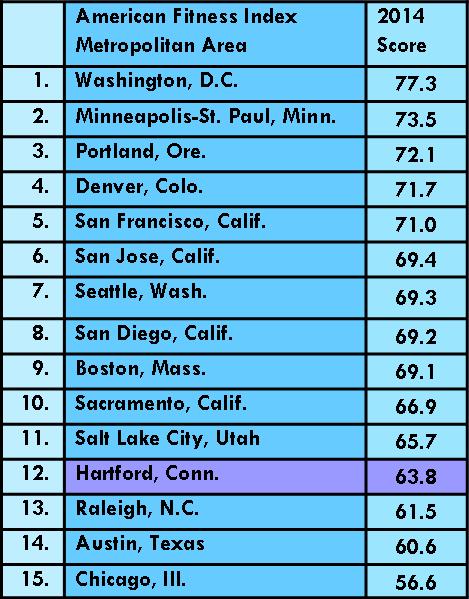 Hartford-East Hartford
 In health outcomes, Tolland County led the way, followed by 2)Fairfield County, 3)Middlesex County, 4)Litchfield County, 5)New London County, 6)Hartford County, 7)Windham County and 8)
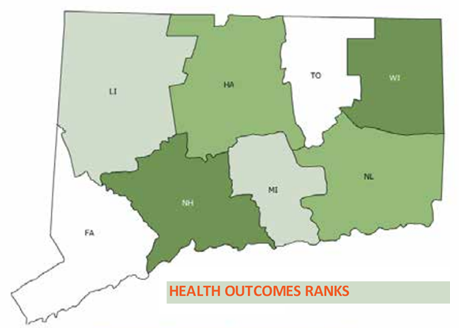 New Haven County.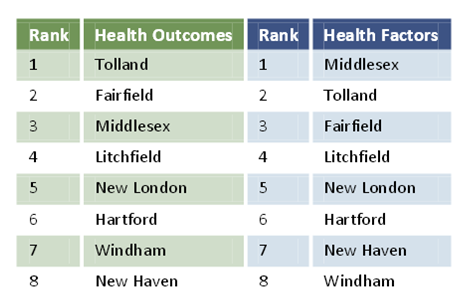
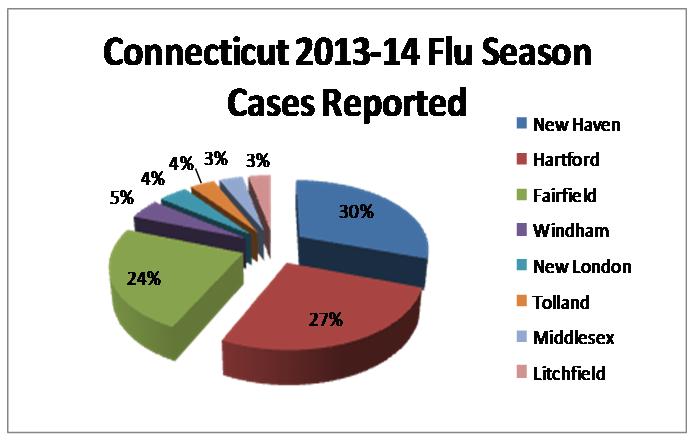 Connecticut is joined by regional neighbors New York, Massachusetts, New Jersey and Delaware in the recent spike in flu cases.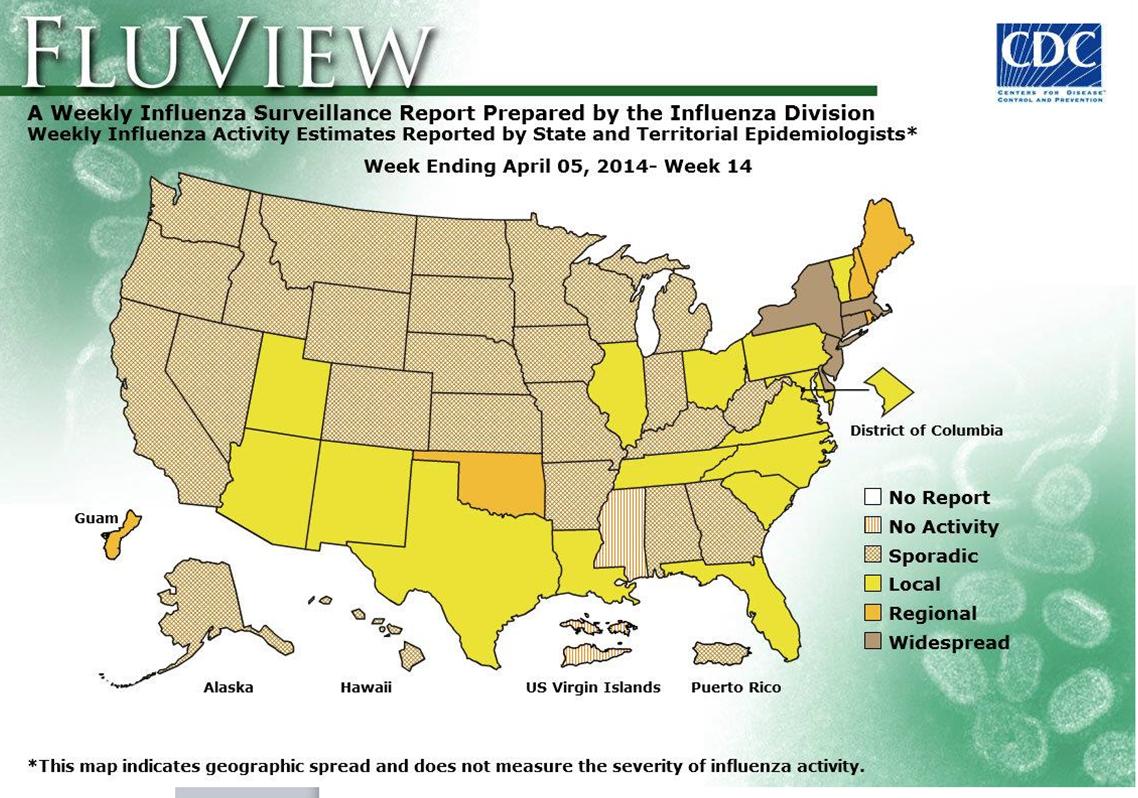
 an estimated
  as new spending from tax revenues. The other study says that tobacco taxes offer a how-to road map for policy makers.
 ished this month, researchers ran a simulation of the impact of 20-percent soda tax in Illinois and California—selected for regional differences—and found slight employment increases would occur, but the net effect would be close to nothing. They found that people choose to spend their money on other things, not to forego spending entirely, and that employment gains in other sectors of the economy far outweigh the job losses for soda makers, National Journal reported.

 re available at all prisons and jails in the state, with comprehensive mental health programs at Osborn, Northern, York, Manson Youth, and Garner correctional institutions. Mental health services are comprehensive from admission to discharge, the website explains, and “focus on access to care and outreach, screening and assessment, identification, treatment planning, classification, provision of distinct levels of service and continuity of care upon discharge to the community.”
 s. Thoughtful release planning and progressive probation or parole procedures increase the likelihood of successful re-entry for prisoners living with mental illness.”
 The proposal was also supported by the
  an estimated
  as new spending from tax revenues. The other study says that tobacco taxes offer a how-to road map for policy makers.
 ished this month, researchers ran a simulation of the impact of 20-percent soda tax in Illinois and California—selected for regional differences—and found slight employment increases would occur, but the net effect would be close to nothing. They found that people choose to spend their money on other things, not to forego spending entirely, and that employment gains in other sectors of the economy far outweigh the job losses for soda makers, National Journal reported.

 e ombudsmen, protective service employees probate judges and court personnel.
 of a “train the trainer” dementia course based on the existing Alzheimer’s Association leaders’ training, and drawing on the model of the American Red Cross’ CPR training program to offer “accessible and affordable dementia education to caregivers.”
 Health for homemaker and companion agencies and collaborative initiatives with the Department of Social Services.