Tough New Anti-Smoking Ads to Air in Connecticut, Nationwide
/The Centers for Disease Control and Prevention is launching its 2015 “Tips From Former Smokers” campaign with a series of powerful new ads featuring former smokers who suffer from smoking-related illnesses, including vision loss and colorectal cancer. Ads also highlight the benefits of quitting for smokers’ loved ones, and the importance of quitting cigarettes completely, not just cutting down. Cigarette smoking kills more than 480,000 Americans each year and remains the leading cause of preventable death and disease in the United States. For every American who dies from a smoking-related disease, about 30 more suffer at least one serious illness from smoking.
Beginning March 30, the ads will run for 20 weeks on television, radio, billboards, online, and in theaters, magazines, and newspapers. Connecticut is included in the national ad buy, which includes cable TV, magazine, and digital media, according to CDC officials. 
Data from the Centers for Disease Control and Prevention indicate that in 2013, 15.5 percent of Connecticut adults were smokers. This was lower than the national average of 18.1 percent, and lower than the other New England states, which ranged from 16.2 percent (New Hampshire) to 20.2 percent (Maine).
CDC’s successful Tips national tobacco education campaign has helped prompt millions of smokers to try to quit since it began in 2012, officials said. It has also proven to be a “best buy” in public health by costing just $393 to save a year of life.
“These former smokers are helping save tens of thousands of lives by sharing their powerful stories of how smoking has affected them,” said CDC Director Tom Frieden, M.D., M.P.H. “These new real-life ads will help smokers quit, adding years to their lives and life to their years.”
In 2014, Tips ads had an immediate and strong impact. When the ads were on the air, about 80 percent more people called the national quitline, CDC officials noted, for free help. Since 2012, Tips ads have generated more than 500,000 additional calls to the toll-free quitline number, 1-800-QUIT-NOW.
Nationally, about 3 in 4 adult e-cigarette users also smoke cigarettes. If you only cut down the number of cigarettes you smoke by adding another tobacco product, like e-cigarettes, you still face serious health risks, according to CDC offcials. Smokers must quit smoking completely to fully protect their health -- even a few cigarettes a day are dangerous, they emphasize.
The agency website, www.cdc.gov/tips, includes personal stories from the campaign. The website also includes detailed assistance developed by the National Cancer Institute to support smokers trying to quit.
Besides the human cost, smoking takes a devastating toll on the nation’s economy, CDC officials point out. Those costs exceed $300 billion a year—nearly $170 billion in direct medical care for adults and more than $156 billion in lost productivity.
The Tips campaign serves as an important counter to the more than $8.3 billion spent annually by the tobacco industry to make cigarettes more attractive and more affordable, particularly to young people, officials said.
https://youtu.be/GEWky9PEroU


 Among the students participating in the project were William Pritchard, interaction design and project management; Somaiyeh Ghaffarnia, animation and character development; Sean Dexter, 3D animation; Kevin Richetelli, 2D animation; Samantha Menza, game design; Tom Lee, game design and music composition; and Tiffany Hoang, game design. Prtichard and Ghaffarnia began working on the project as undergrads and continued while pursuing their graduate degrees. The other students were undergrads.

 motorized transportation networks and safety. Communities that routinely collect walking and biking data, they point out, are better positioned to track trends and prioritize investments.

 ll, there were “approximately 800 healing experiences with children and families throughout the week, bringing the safety, respect and love of Camp to many families” in Philadelphia.

 iagnose, treat, and ultimately, cure NEC. Named after Morgan, it celebrates his survival, courage and strength. Morgan and his twin brother were born at 28 weeks, nearly three months early and each weighing less than 2.5 pounds. At four days old, Morgan developed NEC and lost approximately 20 percent of his small intestine. Morgan not only survived but has also thrived since his bout with NEC. The fund is his family’s way of paying it forward.

 The report also suggests that policy makers “explore the possibility of incenting employer-based long-term care insurance coverage.” In 2009 almost 25,000 employers in the U.S. offered long-term care insurance to their employees – just 35 percent of the 7.5 million insurance policies in effect. In addition, the report encourages the Connecticut Congressional delegation to support a federal tax deduction for long-term care insurance, and urges policy makers to consider making reverse mortgages “a more viable option.”
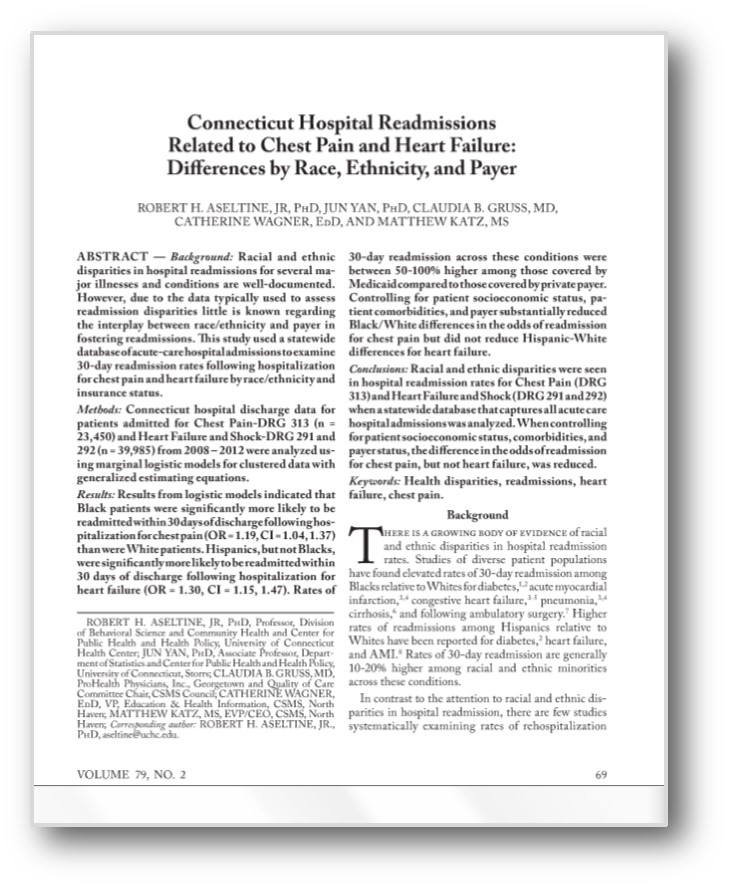
 The study also noted that “barriers to accessing community based care among Connecticut Medicaid beneficiaries are well-documented, often leaving such patients with few options other than hospital care for both urgent and non-urgent conditions.”
 ocations in Connecticut are in Bridgeport, Danbury,
 for Disease Control and Prevention (CDC) recently released new data showing that while cervical cancer screenings have been proven to save lives, about eight million women ages 21 to 65 have not been screened for cervical cancer in the past five years. More than 12,000 women in the U.S. are diagnosed with cervical cancer each year, and more than half of these cases are in women who have never been screened or in those who haven’t been screened in the past five years, according to Planned Parenthood.



 The small print in the ad cites ”FAN Data, IMS Health, Affected Population in Hartford for Week Ending Saturday, December 6, 2014.”