
Eight CT Companies Among the Fastest Growing Tech Companies in North America
/The Technology Fast 500 is a closely watched annual listing of the fast-growing tech companies, businesses that are releasing new, emerging technologies from the U.S. and Canada worldwide. The latest ranking includes eight Connecticut companies, including one, operating in Stamford, that reached the top 100.
Combining technological innovation, entrepreneurship, and rapid growth, Fast 500 companies—large and small, public and private—are located in cities all across North America and are “disrupting the technology industry,” according to consulting firm Deloitte, which has compiled the annual list for two decades.
Fast 500 award winners on the current list were selected based on percentage fiscal year revenue growth during the period from 2011 to 2014. Companies must own proprietary intellectual property or technology that is sold to customers in products that contribute to a majority of the company’s operating revenues in order to be considered for inclusion on the list, according to Deloitte.
The lone Connecticut company to crack the top 100 was Milford medical device manufacturer SurgiQuest, which was number 100. The company’s growth was pegged at 877 percent. It was incorporated in 2006, with a focus on laproscopy technology.
Not far behind, at number 119, was Revolution Lighting Technologies, a manufacturer based in Stamford. The analysis placed the company’s growth at 755 percent. Revolution Lighting Technologies Inc. engages in the design, manufacture, marketing, and sale of light emitting diode (LED) lighting solutions in the United States, Canada, and internationally. The company’s customers include the U.S. military.

Madison-based Clarity Software Solutions, Inc., with 298 percent growth, placed at number 247 on the top 500 fastest growing technology companies in North America. Clarity Software Solutions, Inc. helps health insurance clients optimize customer relationships-and save time and money-by enhancing flexibility and control over document management and communications delivery, according to the company’s website.
 Also making the list were Evariant of Farmington, a software developer, at number 272, and HP One, a software company in Trumbull at number 307. Biopharmaceutical company Alexion, in the midst of moving its headquarters from Cheshire to New Haven, was ranked at number 349, and etouches, a Norwalk software company ranked at number 357. Rounding out the Connecticut companies on the list is Wallingford oil extraction technology company APS Tecnhology, at number 466.
“Amid a fierce business climate, there seems to be no shortage of new and established companies that are unlocking a seemingly unlimited potential for growth and advancement th rough technology’s continued disruption and proliferation across industries,” said Sandra Shirai, principal, Deloitte Consulting LLP and US technology, media, and telecommunications leader.
“It is inspiring to witness the innovative ways companies are incorporating emerging technologies for business gains, be it cognitive computing, or the Internet of Things. We congratulate all those ranked on the Fast 500 and look forward to seeing their continued growth into 2016.”
Revolution Lighting Technologies ranked eighth among energy tech companies, and SurgiQuest Inc. ranked sixth among medical device companies.
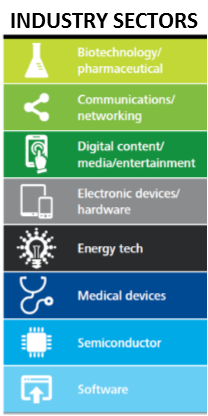 Overall, 283 of the 500 companies were in the software sector, and 67 percent of the 500 companies have received venture capital funding at some point in their company’s history. Topping the list was StartApp, with a growth rate of 21,984 percent from 2011 to 2014. Based in New York and founded in 2010, StartApp provides a free monetization and distribution platform that integrates with applications on mobile devices.
Two-thirds of the companies are private, and 33 percent are public. The average growth rate of the top 500 companies was 850 percent, with individual company growth on the list ranging from 21,984 percent to 109 percent. Broken down by region, 20 percent of the companies are based in the San Francisco Bay Area, 14 percent in the New York Metro Area, 7 percent in New England, and 6 percent in Los Angeles and Washington, D.C.

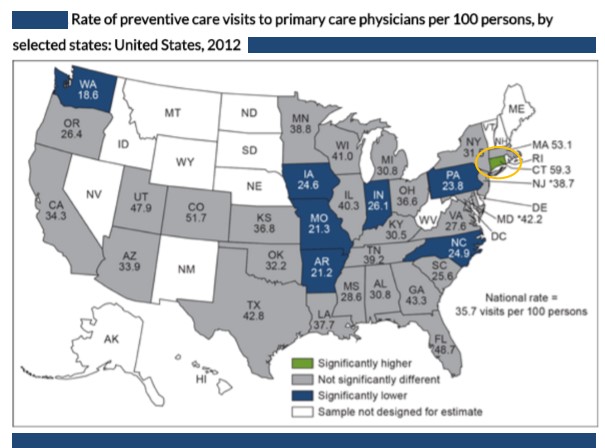
 The rate of preventive care visits in the 34 most populous states ranged from 33.1 visits per 100 persons in Arkansas to 120 visits per 100 persons in Connecticut. Among those 34 states, the rate of preventive care visits was lower than the national rate in 11 states (Arkansas, Indiana, Iowa, Michigan, Missouri, North Carolina, Oklahoma, Oregon, Pennsylvania, South Carolina, and Washington). The national average was 61.4 visits per 100 persons. The data is from 2012, the most recent year available from the National Ambulatory Medical Care Survey.


 The final

 On July 13, 2015, President Obama hosted the sixth White House Conference on Aging, joining older Americans and their families, caregivers, and advocates at the White House and virtually through hundreds of watch parties across the country.

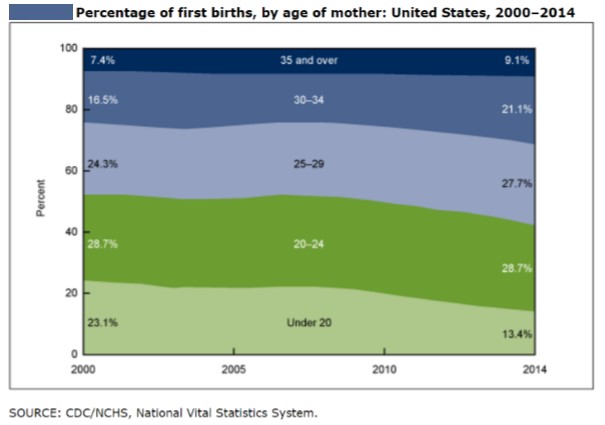

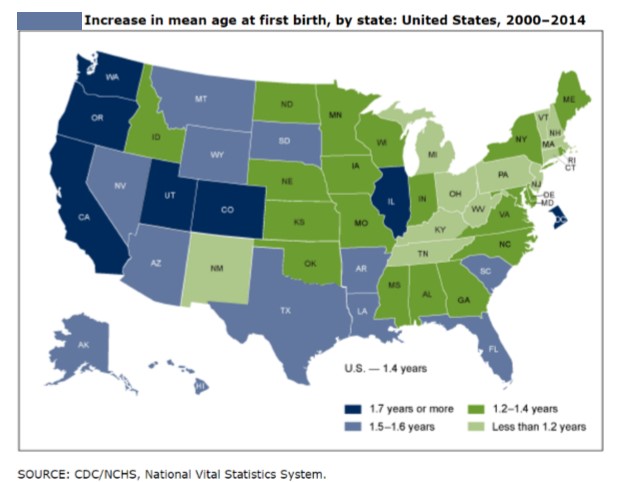 The report emphasized that over the past several decades, the United States continued to have a larger number of first births to older women along with fewer births to mothers under age 20. “This trend and the more recent uptick in delayed initial childbearing can affect the number of children a typical woman will have in her lifetime, family size, and for the overall population change in the United States,” the federal agency pointed out.


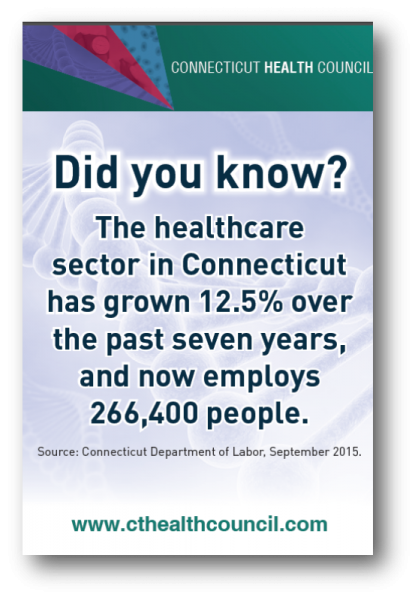
 In addition, the marketing campaign also highlights that thee of the top 10 fastest growing companies headquartered in Connecticut in 2014 were healthcare related companies, and that Connecticut’s healthcare sector has the fifth highest number of sole proprietorships of any sector in the state, with the seventh highest revenues. Connecticut’s “unique base of health sector assets” include health insurance companies, hospitals, medical schools, research capacity, and specialty practices, according to the organization’s website.

 The Council's primary activity is to host programs focused on health sector topics that feature speakers of regional, national and international renown, the website points out. The Council also provides “a forum for a robust network of experts, professionals and other parties interested in promoting Connecticut as a center of health excellence and the health sector as a primary driver of economic and employment growth in our State.”

 Since entering the Connecticut market in the summer of 2014, the company has been aggressively growing its customer base in a competitive market while working diligently to grow and expand its network of doctors. Harvard Pilgrim Health Care announced recently that its Connecticut membership has grown to more than 24,000, exceeding expectations for 2015. It now serves more than 800 Connecticut businesses. Twenty-nine of the state’s 30 hospitals are now in-network.
 With more than 500 business leaders in attendance at an annual Economic Summit & Outlook last week, brought together by the Connecticut Business and Industry Association and MetroHartford Alliance, Schmitt spent some time touting a new model launched in the state of New Hampshire that he believes may be a glimpse into the direction the industry is moving. Harvard Pilgrim Health Care’s footprint in New England now covers “where 90 percent of New Englanders live,” in Massachusetts, Connecticut, Maine and New Hampshire.
 Launched