Boston Children’s Hospital Delights with Interactive Wall Developed at UConn
/It lives in Boston, but was built at UConn. Boston Children’s Hospital’s recently installed Interactive Media Wall is an immense, high-tech, engagingly interactive product of the University of Connecticut’s Digital Media and Design program – a collaboration of students and faculty that is bringing smiles to children and families who encounter the massive 30-foot wall in the facility’s reconstructed lobby.
For a team of animators accustomed to designing for screens a few inches across, the task of designing a scene three stories high was daunting – but a challenge they took on energetically. The electronic wall consists of a large high-definition video screen, and a series of cameras and sensors that observe the presence and movement of people in the space below it, allowing people entering the space to control what appears on the screen. It can be a powerful experience, for children and adults, as their movement defines the action on screen.
Rather than just showing a pretty picture, the wall hopes to offer some therapeutic benefit to the children who interact with it, in support of the mission of the hospital, which is widely considered one of the best pediatric hospitals in the world.
“The idea was to empower emotionally and physically challenged children to take control of something in their life, at a time when things were spinning out of control,” Tim Hunter, Department Head of Digital Media & Design and Director of the Digital Media Center told UConn Today.
How did a major healthcare facility in Boston connect with Connecticut’s flagship university for the project?
Prior to joining UConn’s faculty in 2007, Hunter spent 25 years developing and producing national and international design projects through his New York City based company. His areas of expertise are in digital animation design & production, digital media design & production, lighting design, scenic design and video projection design.
Through that firm, he had worked for many years with Boston-based Elkus/Manfredi Architects, which in turn worked with Boston Children’s Hospital on various projects. When the project to renovate the facility’s lobby came along, the architects suggested that hospital leadership contact Hunter to see what he would envision as a centerpiece, interactive experience. 
It was a good match. Initial work began on the project at UConn in the fall of 2011, accelerating during the spring 2012 semester. Plans called for the UConn Digital Media Center faculty and students to develop a unique imaging and sensing system that would be controlled by guests of the hospital as they traveled through the lobby. The work was completed in mid-November 2014, and has been well-received by patients, visitors and staff, earning a not-to-be-missed following.
The UConn team drew on the expertise of faculty members from a broad range of disciplines. Experts in child psychology, in human behavior, and in several disciplines of computer science and engineering contributed to the development of the installation.
That kind of collaboration was critical to the success of the wall, says Hunter, even though such projects are not usually developed at an academic institution. “A university is not the first place you would look for something like this,” said the industry veteran-turned-educator.
 Among the students participating in the project were William Pritchard, interaction design and project management; Somaiyeh Ghaffarnia, animation and character development; Sean Dexter, 3D animation; Kevin Richetelli, 2D animation; Samantha Menza, game design; Tom Lee, game design and music composition; and Tiffany Hoang, game design. Prtichard and Ghaffarnia began working on the project as undergrads and continued while pursuing their graduate degrees. The other students were undergrads.
UConn faculty involved in the project, along with Hunter, were Samantha Olschan, animation and character development; Mike Vertefeuille, technology and installation; and Zsolt Palatinus, data mathematician. Also participating were staff member Michael Toomey, interaction design and project management, and CHIP members Tim Gifford and Christian Wanamaker, engineering and coding.
There may be more to come. UConn’s Digital Design department – with students in Storrs and Stamford - and Boston Children’s Hospital now have an ongoing relationship, with plans for UConn to develop new interactive experiences for the next five years.
https://youtu.be/DD7gk2kHP3g
 Also this week, an official at the FCC indicated that the "enforcement hold" status of the station’s license renewal was "unchanged," and the station continues to operate until a decision is made, as is customary with delayed renewal applications. The WTIC-AM license renewal application has been on enforcement hold at the FCC since the license expiration date of April 1, 2014, as the agency’s Enforcement Bureau continues to consider “an alleged violation of FCC rules,” according to an FCC official. The renewal application was filed by the station almost 16 months ago, on November 27, 2013. Stations must file an application for license renewal) four months prior to the expiration date of the station’s license.
 WTIC-AM, which is licensed to Hartford but operates from studios in Farmington and has its broadcast tower on Avon Mountain, can continue broadcasting under the license that expired on April 1, 2014, until the FCC acts on its renewal application. Until the enforcement hold is lifted the FCC Media Bureau cannot proceed with a decision on whether or not to renew the station’s broadcast license. The Enforcement Bureau must first determine whether or not a violation of FCC rules has occurred. If the allegation is substantiated, the agency has a range of options, such as warning that the violation not be repeated or imposing a monetary fine on the station, officials said.


 “We were excited here in Connecticut to give our Girl Scouts the opportunity to participate in a pilot of Digital Cookie, a first-of-its-kind web platform that lets girls sell cookies from their own protected, personalized websites,” said Tiffany Ventura Thiele, Communications & PR Manager for Girl Scouts of Connecticut.
 Officials stress that “because 100 percent of the net revenue raised through the Girl Scout Cookie Program stays with local councils, when you purchase Girl Scout Cookies you’re not only getting a delicious treat — you’re also making an important investment in your community.”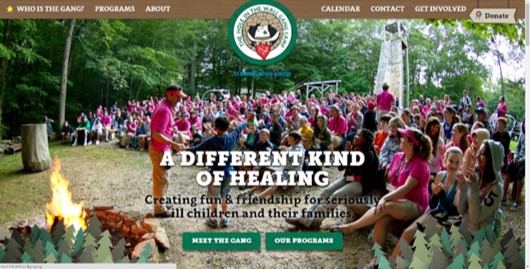
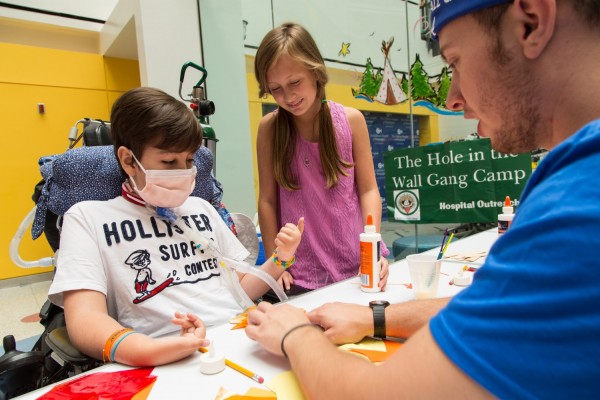
 ll, there were “approximately 800 healing experiences with children and families throughout the week, bringing the safety, respect and love of Camp to many families” in Philadelphia.
 s.
s. The top 10 institutions are Johns Hopkins, University of Michigan (Ann Arbor), University of Washington (Seattle), University of Wisconsin (Madison), University of California (San Diego), University of California (San Francisco), Harvard, Duke, University of North Carolina (Chapel Hill) and University of California (Los Angeles).
 The survey collects information on R&D expenditures by field of research and source of funds and also gathers information on types of research and expenses and headcounts of R&D personnel. The survey is an annual census of institutions that expended at least $150,000 in separately budgeted R&D during the fiscal year.


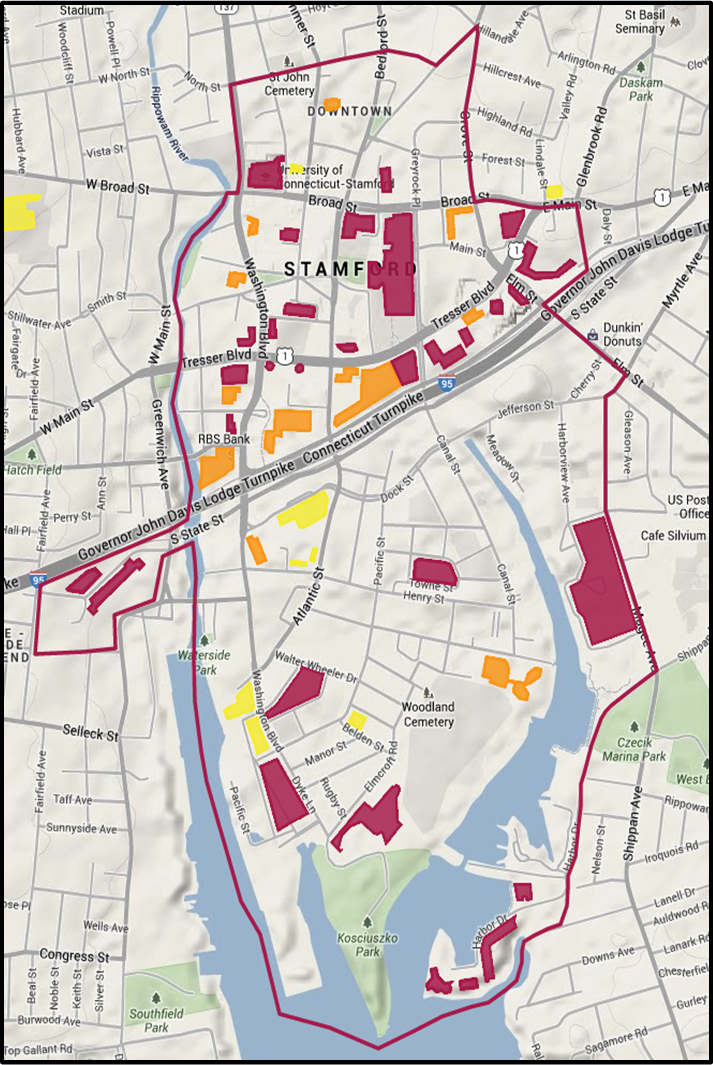 “These collective efforts will establish the Stamford 2030 District as an example of a financially viable, sustainability focused, multi-sector driven effort that maximizes profitability and prosperity for all involved. Through collaboration of diverse stakeholders, leveraging existing and developing new incentives and financing mechanisms, and creating and sharing joint resources, the Stamford 2030 District will prove the business case for healthy and high performing buildings.”
 oblems for the state.”
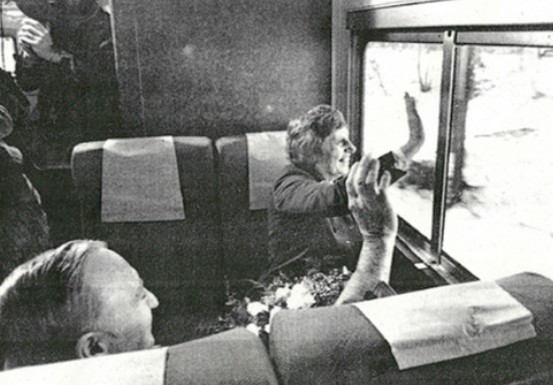
 83, which exposed a poor record of road and bridge maintenance in the state, with creation of a Special Transportation Fund to set aside money to maintain and repair the state's bridges.
 ll station that killed seven people and galvanized public opinion. The state had collected tolls at 14 locations - eight on the Connecticut Turnpike between Greenwich and Plainfield, three on the Merritt and Wilbur Cross Parkways, and at three bridges in the Hartford area. The tollbooths generated $66 million a year, The New York Times

 ields.”
 se Office of Science and Technology Policy notes that “Supporting women STEM students and researchers is not only an essential part of America’s strategy to out-innovate, out-educate, and out-build the rest of the world; it is also important to women themselves.”