Traffic Fatalities Increasing Nationwide, But Decreasing in Connecticut
/Across the United States, the number of traffic fatalities increased 14 percent in the first six months of 2015 compared with a year ago. In Connecticut, however, the number of motor vehicle deaths dropped by 20 percent.
From January through June of this year, there were 95 motor vehicle deaths in Connecticut, compared with 119 during the same period in 2014 and 116 during the first six months of 2013. Connecticut’s percentage drop in the number of traffic deaths was the 5th largest in the nation, comparing the first six months of this year to a year ago.
Nationwide, the number of traffic deaths rose from 16,400 during the first half of 2014 to 18,630 during the first six months of this year. According to the National Safety Council, which analyzed the data, the increase in fatalities in 2015 likely reflects the effects of the low gas prices that have averaged 30 percent below 2014 levels over the first two quarters of 2015, helping to produce a 3.4 percent increase in cumulative vehicle mileage through May.
Distracted drivers – specifically those behind the wheel attempting to talk or text on a cell phone – are also pushing the numbers. The NSC says cell phone related activities are to blame for 27 percent of all crashes.
Connecticut is one of 15 states where the number of traffic fatalities has dropped in the first six months of 2015, compared with a year ago. The others were Alabama, Alaska, Delaware, D.C., Hawaii, Kansas, Montana, New Jersey, New Mexico, Oklahoma, Rhode Island, South Dakota, Tennessee and Texas.
Three states – California, Texas and Florida – have seen more than 1,000 deaths through June of this year.
Medically consulted motor-vehicle injuries for the first six months of 2015 are estimated to be about 2,254,000, an increase of 30 percent from 2014 nationwide, the National Safety Council (NSC) indicated. The NSC estimated that the nation appears headed towards the deadliest year, in terms of traffic fatalities, since 2007.
“While the statistics point out a dangerous trend, we have the ability to influence outcomes through our choices and behavior,” said Deborah Hersman, president and CEO of the NSC. “Take your responsibilities behind the wheel this summer seriously and ensure that you get to your destination safety.”
In addition to the personal toll, the estimated cost of motor-vehicle deaths, injuries, and property damage through June was $152.0 billion, a 24 percent increase from 2014, according to the data reported by the Illinois-based NSC. The costs include wage and productivity losses, medical expenses, administrative expenses, employer costs, and property damage.
The number of traffic deaths reported this year nationwide is greater than the number for the same period in recent years; in 2012 there were 1,755 deaths, in 2013 there were 16,617; in 2014 there were 16,400. The NSC counts both traffic and non-traffic deaths that occur within a year of the accident, while NHTSA counts only traffic deaths that occur within 30 days, so the numbers reported will differ.
Founded in 1913 and chartered by Congress, the National Safety Council, is a nonprofit organization whose mission is to save lives by preventing injuries and deaths at work, in homes and communities, and on the road through leadership, research, education and advocacy. Deaths are reported by state traffic authorities, and all figures are preliminary.


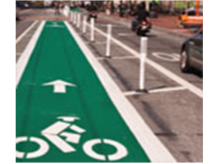 Later this month, Bike Walk CT is offering the League of American Bicyclist-designed Traffic Skills 101 program, a comprehensive day long course to give cyclists the skills, knowledge and confidence to handle on-road cycling.

 ws recently

 As one example, state officials are working on a plan to replace a swinging bridge over the Norwalk River, built in 1896. "As a piece of engineering, it's just amazing," John Bernick, assistant rail administrator for the state Department of Transportation told the AP. "But, it's certainly reached its retirement age.” The computer that operates the bridge is from the 1980’s, and replacing the bridge could cost as much as $650 million.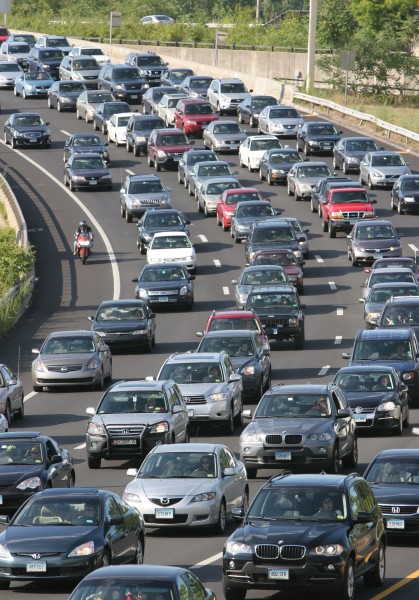

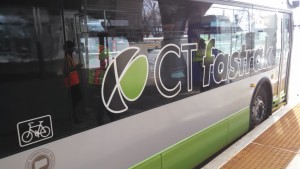 For the first time in the history of the awards program, a state agency was also selected to receive an award. The CT Department of Transportation received a special award for Starting a Revolution: Integration of Land Use and Transit in recognition of the progressive nature of CTfastrak, the bus rapid transit system opened earlier this year. The awards jury that selected the winners gave the award because they felt the new busway represents a cultural shift in how Connecticut views transit, and wanted to acknowledge the future promise of transit oriented development that will hopefully result around the station locations.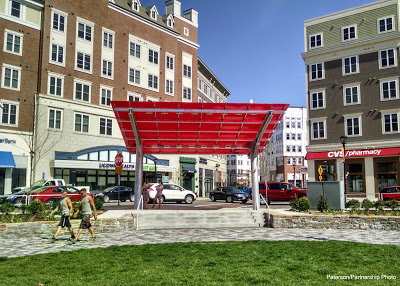



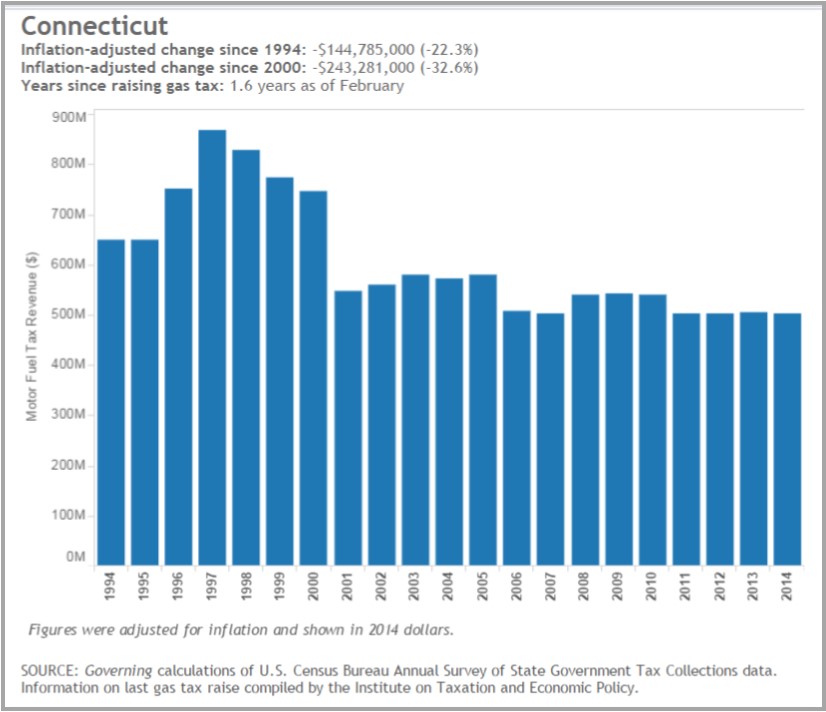 In Connecticut, the inflation-adjusted change is a reduction of in the value of the dollars provided by the tax of 32.6 percent since 2000 and 22.3 percent since 1994, according to the Governing analysis, using data from the U.S. Census Bureau and the Institute on Taxation and Economic Policy. Earlier this year, Governor Malloy announced a two-part transportation plan consisting of a
 tently and robustly in research.” Describing Connecticut as “the home of innovation in engineering,” Esty said that engineers provide “the inspiration to solve the world’s problems.”
 Among the faculty award recipients was Dr. Alfred A. Gates, Professor of Engineering at Central Connecticut State University, whose two decades at the university have been a steady stream of technical innovation and teaching. Gates noted that CCSU has just become the first university in the United States to receive a

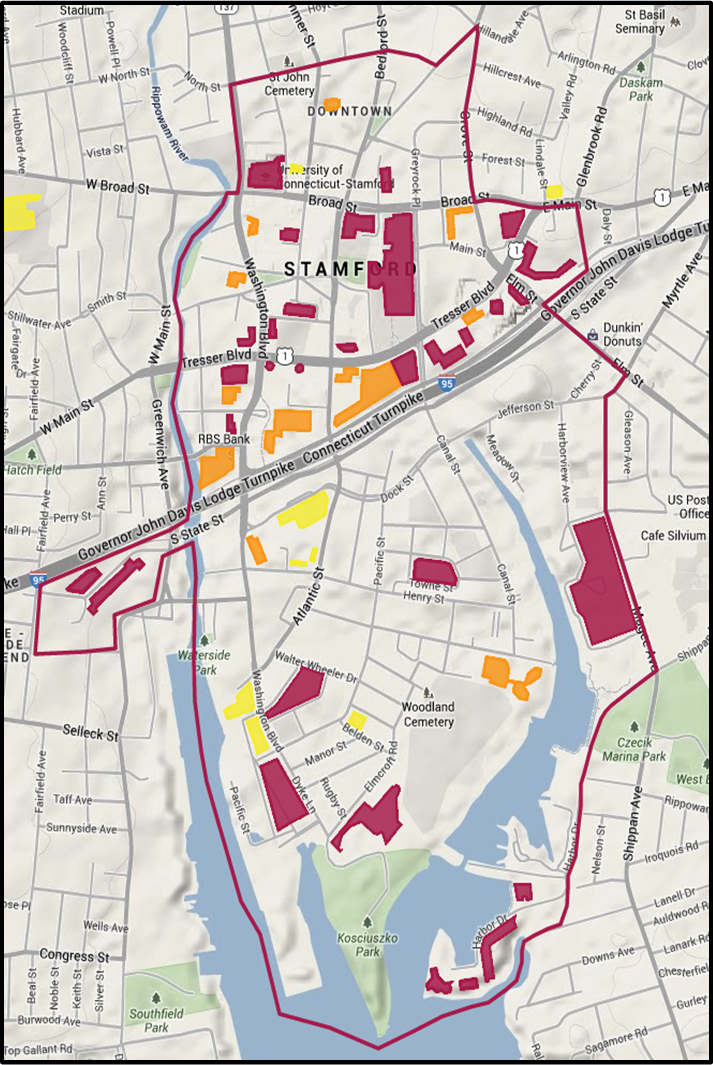 “These collective efforts will establish the Stamford 2030 District as an example of a financially viable, sustainability focused, multi-sector driven effort that maximizes profitability and prosperity for all involved. Through collaboration of diverse stakeholders, leveraging existing and developing new incentives and financing mechanisms, and creating and sharing joint resources, the Stamford 2030 District will prove the business case for healthy and high performing buildings.”
 The Mayors will engage with Administration officials, Congressional leaders business leaders to “ensure the health and economic recovery of America’s cities,” according to program organizers. Vice President Joe Biden is scheduled to address the Mayors on Thursday.
 ttending from Connecticut are Bridgeport Mayor Bill Finch, Bristol Mayor Ken Cockayne, Danbury Mayor Mark Boughton, East Hartford Mayor Marcia Leclerc, Hartford Mayor Pedro Segarra, New Britain Mayor Erin Stewart, New Haven Mayor Toni Harp, Norwich Mayor Deberey Hinchey, Shelton Mayor Mark Lauretti, Stamford Mayor David Martin, Stratford Mayor John Harkins, Trumbull First Selectman Timothy Herbst and Waterbury Mayor Neil O’Leary.