Listen, Look and Respond to Texts While Behind the Wheel – Legal in Connecticut?
/In Connecticut, Public Act 10-109, enacted into law in 2010, states that “no person shall operate a motor vehicle … while using a hand-held mobile telephone to engage in a call or while using a mobile electronic device while such vehicle is in motion. An operator of a motor vehicle who types, sends or reads a text message with a hand-held mobile telephone or mobile electronic device while such vehicle is in motion shall be in violation of this section.”
Now, technology and the nation’s automakers are doing their best to skirt the language of the law, with in-car electronics that allow drivers to listen to, read and send text messages while at the wheel. 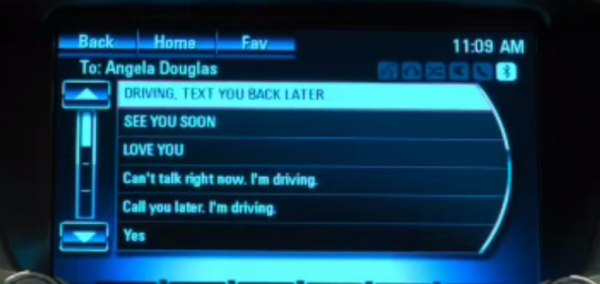
The technology, now being widely advertised as 2016 new car models reach showrooms, “may unintentionally cause greater levels of cognitive distraction,” according to AAA Foundation for Traffic Safety.
One advertisement seen recently on local television and appearing on-line, from Chevrolet, is for the company’s Text Message Alert system. The description of the new feature explains “When you’re in your vehicle, this convenient feature alerts you when a new text has been received and allows you to listen to messages, view messages (when your vehicle’s not in motion) and reply with a preset message with a compatible smartphone.”
Whether or not the new technology meets the letter and spirit of the Connecticut law, now five years old, has yet to be tested. And if it does, is that in the best interest of Connecticticut drivers, or should the law be revised to address changing technologies? Peter Kissinger, President and CEO of the AAA Foundation for Traffic Safety, points out that “Technologies used in the car that rely on voice communications may have unintended consequences that adversely affect road safety.”
“We already know that drivers can miss stop signs, pedestrians and other cars while using voice technologies because their mind is not fully focused on the road ahead,” adds Bob Darbelnet, President and CEO of AAA.
The Chevrolet ad exclaims that “Life doesn’t stop when you’re driving. With MyLink you can stay in touch and up-to-date safely with hands-free calling and access to your personal address book through Bluetooth® wireless technology.” But data indicates that hands-free is not necessarily safe, according to AAA.
AAA has pointed to recent research which indicates that “the accuracy of voice recognition software significantly influences the rate of distraction.” For example, a team led by Dr. David Strayer and researchers at the University of Utah found that using a speech-to-text system to listen to and compose emails or texts was a greater distraction than talking on a hand-held or hands-free cell phone or listening to the radio.
With three out of four drivers believing that hands-free technology is safe to use, AAA officials caution, Americans may be surprised to learn that these popular new vehicle features may actually increase distraction, according to the new research. AAA is urging manufacturers to “continue their efforts to develop and refine systems that reduce distractions: while encouraging drivers to “minimize cognitive distraction by limiting the use of most voice-based technologies.”
To assess “real-world” impact, Dr. Joel Cooper with Precision Driving Research evaluated the two most common voice-based interactions in which drivers engage – changing radio stations and voice dialing – with the actual voice-activated systems found in six different automakers’ vehicles. On the five point scale, Toyota’s Entune system garnered the lowest distraction ranking (at 1.7), which is similar to listening to an audio book. In comparison, the Chevrolet MyLink resulted in a very high level of distraction (rating of 3.7). Other systems tested included the Hyundai Blue Link (rating 2.2), the Chrysler Uconnect (rating 2.7), the Ford SYNC (rating 3.0) and the Mercedes COMMAND (rating 3.1).
Chevrolet also offers a feature called Siri Hands Free. The company’s website explains that “The system allows limited hands-free interaction for when you need to compose important messages on the go.”
“It is clear that not all voice systems are created equal, and today’s imperfect systems can lead to the perfect storm for driver distraction,” continued Darbelnet. “AAA urges vehicle and device manufacturers to use this research to improve their voice systems and promote road safety.”
As someone once described it during the consideration banning texting while driving in Connecticut earlier in this decade, “cell phones don’t cause accidents, distractions do.”
https://youtu.be/kY6ohMfY2gQ
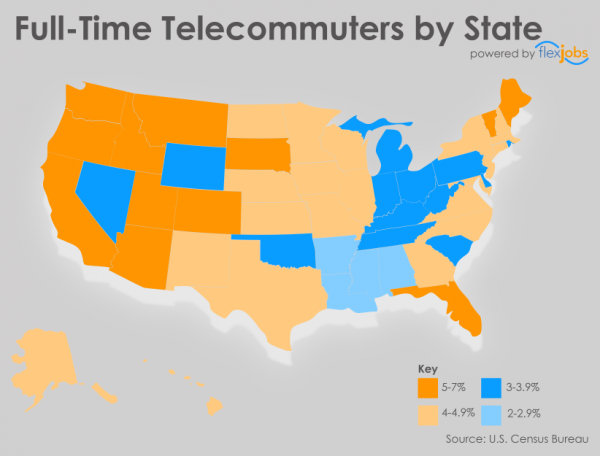
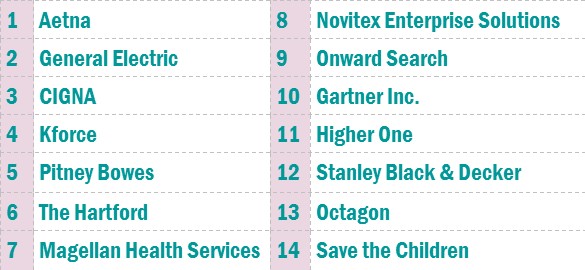 te more than 10 workdays -- meaning at least half of all workdays -- in a typical month. The majority of Americans, including both those employed and not employed, believe workers who work remotely are just as productive as those who work in a business office.
 15 states where the number of traffic fatalities has dropped in the first six months of 2015, compared with a year ago. The others were Alabama, Alaska, Delaware, D.C., Hawaii, Kansas, Montana, New Jersey, New Mexico, Oklahoma, Rhode Island, South Dakota, Tennessee and Texas.


 Later this month, Bike Walk CT is offering the League of American Bicyclist-designed Traffic Skills 101 program, a comprehensive day long course to give cyclists the skills, knowledge and confidence to handle on-road cycling.
 ws recently

 As one example, state officials are working on a plan to replace a swinging bridge over the Norwalk River, built in 1896. "As a piece of engineering, it's just amazing," John Bernick, assistant rail administrator for the state Department of Transportation told the AP. "But, it's certainly reached its retirement age.” The computer that operates the bridge is from the 1980’s, and replacing the bridge could cost as much as $650 million.

 For the first time in the history of the awards program, a state agency was also selected to receive an award. The CT Department of Transportation received a special award for Starting a Revolution: Integration of Land Use and Transit in recognition of the progressive nature of CTfastrak, the bus rapid transit system opened earlier this year. The awards jury that selected the winners gave the award because they felt the new busway represents a cultural shift in how Connecticut views transit, and wanted to acknowledge the future promise of transit oriented development that will hopefully result around the station locations.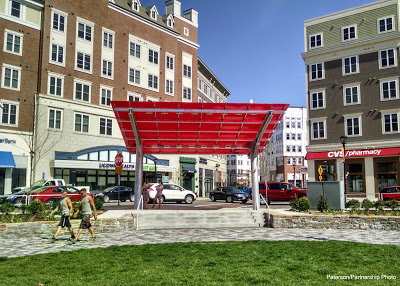



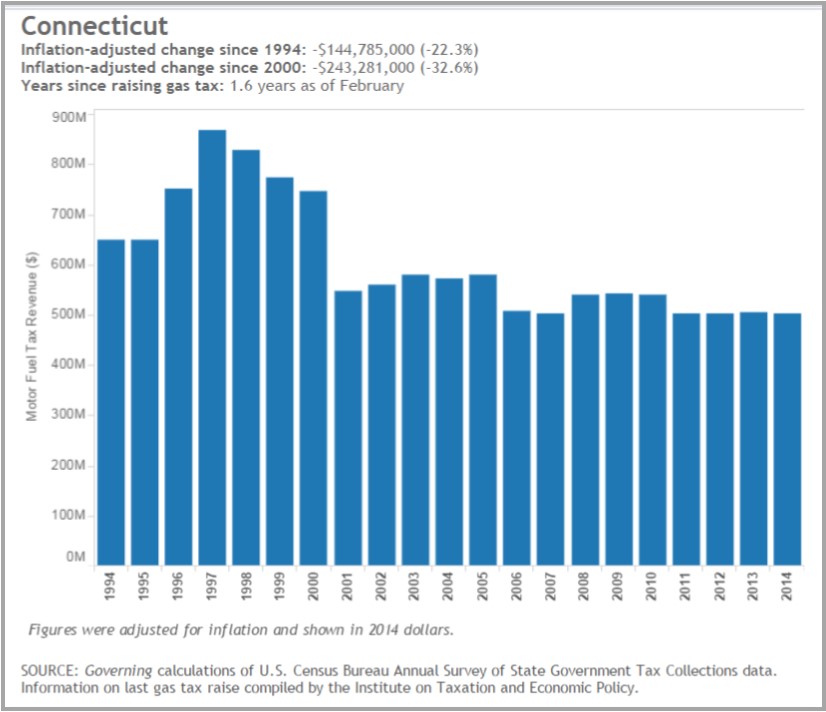 In Connecticut, the inflation-adjusted change is a reduction of in the value of the dollars provided by the tax of 32.6 percent since 2000 and 22.3 percent since 1994, according to the Governing analysis, using data from the U.S. Census Bureau and the Institute on Taxation and Economic Policy. Earlier this year, Governor Malloy announced a two-part transportation plan consisting of a
 tently and robustly in research.” Describing Connecticut as “the home of innovation in engineering,” Esty said that engineers provide “the inspiration to solve the world’s problems.”
 Among the faculty award recipients was Dr. Alfred A. Gates, Professor of Engineering at Central Connecticut State University, whose two decades at the university have been a steady stream of technical innovation and teaching. Gates noted that CCSU has just become the first university in the United States to receive a