Federal Transportation Funds to Increase As Connecticut Considers Long-Term Plan
/As Connecticut policy makers consider a long-term infrastructure investment in Connecticut’s transportation system, they do so just months after the federal government, after years of inaction, adopted the FAST (Fixing America’s Surface Transportation) Act at year’s end. It is the first comprehensive transportation law since 2005, according to Connecticut’s Office of Legislative Research (OLR).
The act includes $225.2 billion for highway investment, $61 billion for federal transit programs, and $10 billion for the Federal Railroad Administration and Amtrak. States will get about a 5.1 percent increase in funding in FFY 16 and annual increases ranging from 2.1 percent to 2.4 percent in subsequent years, according to OLR.
State lawmakers are considering Governor Malloy’s proposed $100 billion, 30-year Let's Go CT! program, unveiled earlier this month, which included a call to enact a constitutional amendment creating a financial lockbox to protect transportation funds. Officials have said that 47 percent of state-maintained roadways are in “less-than-good condition”, and 35 percent of Connecticut's bridges are functionally obsolete or structurally deficient. The Connecticut Business and Industry Association has said that 42 percent of businesses think the state's road congestion hinders their opportunities and growth.
As a result of the FAST Act, Connecticut will receive about $3.5 billion over five years, or about $700 million annually, for highway and transit programs, which is about $62 million more per year than Connecticut received in 2015. The state Department of Transportation says the act’s importance isn’t in the amount of money it provides, which does not change dramatically from previous levels, but in the predictability and assurance of funding it provides, OLR Principal Analyst Paul Frisman points out in a report to state legislators. 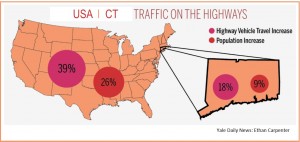
The FAST Act’s transfer of the $70 billion into the federal Highway Trust Fund (HTF) was essential to keep the fund solvent. The federal government has not increased the federal 18.4 cent gas tax in more than 20 years, and this has reduced the HTF’s purchasing power and reduced its ability to keep pace with rising infrastructure costs and inflation. Decreased revenues because of more fuel efficient vehicles and the popularity of alternative fuel vehicles also cloud the HTF’s future, the report indicates. There continue to be concerns that if revenues going into the fund are not increased, insolvency may await, as soon as 2020.
The FAST Act also includes two new freight initiatives, including a National Freight Program which authorizes $6.2 billion over five years for national and state projects to improve highway freight transportation. The OLR report indicates that to participate, a state must complete a State Freight Plan, which it must update every five years. The American Road and Transportation Builders Association (ARTBA) has said that participating states will be able to obligate up to 10 percent of this funding to improve freight rail services or ports, which may be of particular interest to Connecticut. The other new program is aimed at highway, bridge, rail-grade crossing, intermodal, and freight rail projects that cost at least $100 million, improve movement of both freight and people, reduce bottlenecks, and improve connectivity.
The FAST Act also makes changes to several highway funding programs, with a focus on surface transportation, local roads and bridges, transportation alternatives such as bicycling. To increase efficiency and speed up the project review process, ARTBA reports that the FAST Act encourages the use of a single environmental review document throughout the entire review process, instead of the current practice of having each agency involved in a project conduct a separate review.
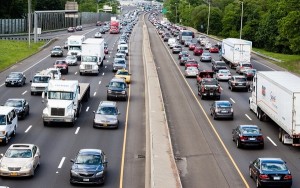 The OLR report also indicates that a Federal Highway Administration pilot program permits up to three states to toll existing Interstate highways that they could not otherwise adequately maintain or improve, and increase funding available for public transportation initiatives. In addition, $2.6 billion is provided to Amtrak’s Northeast Corridor (and $5.4 billion to other Amtrak lines) over five years. It separates the Northeast Corridor, from Boston to Washington, D.C, from other Amtrak accounts to ensure that the amounts assigned to that Corridor are used there, OLR reports.
Even with the additional funding nationwide, transportation officials in Connecticut and around the country continue to warn that “long-term, sustainable funding for transportation is yet to be achieved,” as described by the American Association of State Highway and Transportation Officials.





 locations in the United States to offer Aer Lingus flights to Ireland. The daily service will include one evening departure from Bradley and one afternoon departure from Dublin. Published
 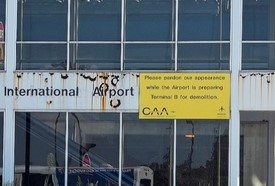 The demolition of the half-century old Terminal B is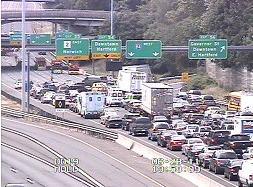
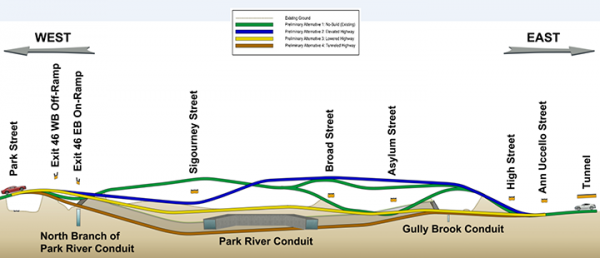 The work, which has yet to be funded, is likely to include moving or eliminating some exits and entrances – and possibly adding others in new locations - to improve traffic flow. Cost estimates range from $4 billion to $12 billion, depending on the option selected. Upcoming public meetings are to be held in East Hartford on Dec. 2 and Hartford on Dec. 10.
 Marking the launch of the new Share the Road campaign, this year's featured speaker is Colleen Kelly Alexander. Bike Walk Connecticut officials describe her remarkable story: After undergoing brain surgery in 2007 for a chiari malformation, Colleen overcame a lupus and cryoglobulinemia diagnosis in 2009, pushing forward to become a successful, competitive triathlete. In 2011, while on a routine bike ride, she was run over by a freight truck. Crushed, ripped apart and bleeding out, she flatlined twice, spent five weeks in a coma and has since endured over twenty surgeries. Defying diagnoses, dire predictions and death, Colleen stunned doctors by bucking the odds and coming back to run more than 50 races and complete 15 triathlons, including 4 half Ironman events since her trauma. Colleen and husband Sean Alexander were elected to the Bike Walk Connecticut board of directors in 2015.
 lnerable User Law Mandates $1000 Fine. Connecticut requires a fine of up to $1000 on drivers who cause the death or serious injury of a pedestrian, cyclist or other vulnerable road user who used reasonable care.
 For Pedestrians: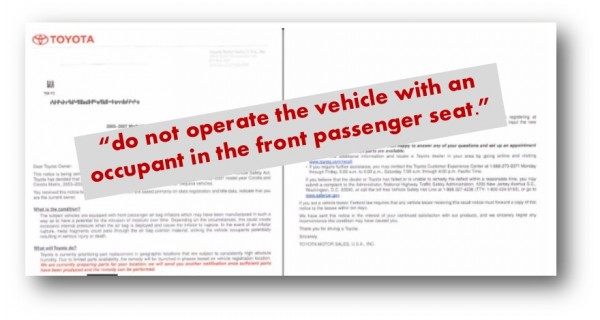
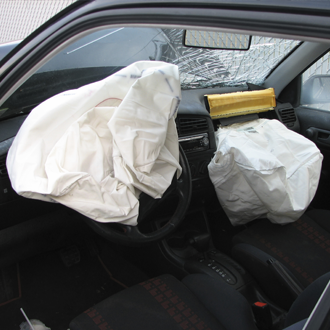
 The company, and impacted automakers, are making parts necessary to accomplish repairs available in regions of the country with humid climates first, because humidity has been said to increase the risk of air bag rupture. Connecticut residents, living in a region not known for its humidity, are not a priority for the repair, and continue to wait for word when repairs for their recalled vehicles can be made.


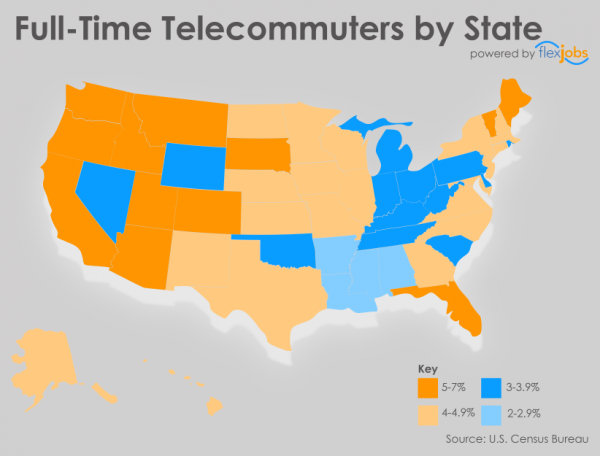
 te more than 10 workdays -- meaning at least half of all workdays -- in a typical month. The majority of Americans, including both those employed and not employed, believe workers who work remotely are just as productive as those who work in a business office.