Free Summer Meals Program for Children Aims to Provide Nutrition, Sustain Academic Progress

Turns out, there is a free lunch.  In fact, Connecticut’s summer meal program for children 18 and under is providing hundreds of lunches – and breakfasts.  As Governor Malloy points out in a radio commercial now being broadcast around the state, 3 in 4 Connecticut children who could receive free meals aren’t doing so.

Officials say that the absence of good nutrition over the summer – when children are out of school and school lunch programs are unavailable - may contribute to children slipping somewhat in their educational progress.  “Summer learning loss,” they say, may be caused in part by “summer nutrition loss.”  The free Summer Meals program aims to turn that around.

The statistics are startling.  There are 100,000 children in Connecticut who don’t know where their next meal is coming from, according to Lieut. Gov. Nancy Wyman, who helped to kickoff the statewide initiative, and joins the Governor in the radio announcement.   That is why more than 400 locations around the state,  including churches, parks, schools and even some pools, are serving free meals to children throughout the summer afree lunchs part of the summer meals program and the state’s ongoing End Hunger Connecticut initiative.

A new interactive website, www.ctsummerfoods.org, was launched at the beginning of the summer that lists all the locations serving the meals.  The site allows people to simply type in a town or zip code to see a list of locations in that area that offer the meals.

Children and teens, under 18, do not have to be receiving free or reduced price school meals during the school year to eat a free, nutritious, summer meal and/or snack at participating locations.  Connecticut ranks 5th in country, as of 2012, for such programs, with  about 25% of children who are eligible are receiving the breakfasts.  “We need to do better,” said Stefan Pryor, Commissioner of the State Department of Education, when the program began just after the school year ended.

The program website notes that “Only 25.8 of every 100 low-income students that participate in school lunch also participate in summer nutrition. If participation reached 40 percent, an additional 19,558 students would be reached and that would bring an additional $1.35 million federal dollars into the state.”

By heightening visibility of this program, the Connecticut No Kid Hungry campaign and its partners aim to increase participation in the state’s 2013 summer meals program by 9 percent. Flyers and other program material is available on-line to help local organizers get the word out in their communities.

In launching the program, “Blitz Days” were held in Hartford, Groton, Naugatuck, Norwalk and Waterbury to bring attention to the initiative, which is mostly funded by the federal government.  CT News Junkie has reported that program organizers don’t ask too many questions of those coming to receive meals. Income guidelines are not required because the idea is not to discourage anyone from receiving a meal, state officials said.

Last year the state of Connecticut received 20120717-ShareOurStrength_CT-0062-slider$1.55 million to administer the program. The bulk of that or $1.3 million was used to purchase food. Summer meals are paid for by the United States Department of Agriculture (USDA). The Connecticut State Department of Education works with the USDA to reimburse sponsors for the summer meals they provide to children and teens, under 18, at participating summer meals locations.

For details on dates and times that meals and/or snacks are being served at particular locations, individuals can use the Location Finder, text “CTmeals” to 877877, or call, toll-free, 2-1-1.  It is anticipated that the program will continue until the start of the school year in late August.

Patients Rate Hospitals in CT: Middlesex, Danbury, St. Vincent's Top Lists

When asked how they rated their hospital stay, about two-thirds of patients in Connecticut hospitals offer the highest, or very high, ratings.  And when asked if they would recommend the hospital to friends and family, a greater number, 72 percent on average, say they “definitely” would.  A closer look at the number  included in the U.S. News report on best hospitals, shows distinctions among Connecticut’s medical institutions – according to their patients.

Those receiving the largest percentage of very high overall ratings from patients are Middlesex Hospital (76%), St. Vincent’s Medical Center (73%), Danbury Hospital (72%) and Yale-New Haven Hospital (68%) – the only facilities to exceed the statewide average of 66 percent.

Topping the liPatient-Survey-st of those that would definitely be recommended to family and friends by patients were Middlesex Hospital and Danbury Hospital, both with 79%, and St. Vincent’s Medical Center and Yale-New Haven Hospital, each with 77%.  Others exceeding the statewide average of 72 percent were St. Francis Hospital and Medical Center, Hartford Hospital, and Stamford Hospital, all with 73 percent.

The hospitals with the lowest percentage of patients offering the highest overall rating were Waterbury Hospital and Bristol Hospital.  The lowest percentage who would recommend the hospital at which they were patients to their friends and family were Charlotte Hungerford Hospital in Torrington, Bristol Hospital, and Waterbury Hospital.

In addition to those responses, data is developed based on patient responses to questions related to pain control, staff courtesy, cleanliness of facilities, staff responsiveness to patient needs, and information provided related to discharge and recovery.

The data was compiled in August 2012 and release this month.

patients say

New Leadership at UConn's Roper Center for Public Opinion Research

There is new leadership at the helm of UConn’s Roper Center for Public Opinion Research - the leading educational facility in the field of public opinion. Paul Herrnson takes over this week as Executive Director of the Roper Center, and joins the faculty as a Professor of Political Science. The Roper Center, which was founded in 1947, promotes the intelligent, responsible and imaginative use of public opinion in addressing the problems faced by Americans and citizens of other nations. Dr. Herrnson comes to UConn from the University of Maryland, where he was a Professor in the Department of Government and Politics and recipient of outstanding teaching awards from the University and the American Political Science Association. He was also the Founding Director of the Center for American Politics and Government at the University of Maryland.roper

The Roper Center is an archive—it preserves the data from polls conducted by many leading survey organizations for the use of researchers, students, and journalists. Its collection now includes 18,000 datasets and continues to grow by hundreds of datasets per year. In total, it includes responses from millions of individuals on a vast range of topics.

Since its beginning, the Roper Center has focused on surveys conducted by the news media and commercial polling firms. However, it also holds many academic surveys, including important historical collections from the National Opinion Research Corporationherrnson and Princeton University's Office of Public Opinion Research.

Today, the Roper Center Facebook page includes current polling data from around the world, including questions culled from recent surveys on breaking news and topical events.

Herrnson is a well-published scholar whose research papers have appeared in the leading journals. His recent books include: Interest Groups Unleashed (2012), and the 6th edition of his widely used text, Congressional Elections (2011). According to the University of Maryland web site, Herrndon’s “dedication to civic responsibility and the political process fuels a number of activities on local and national levels.” He has provided expert testimony to the Maryland legislature, U.S. Congress and federal courts in the areas of voting technology, ballot access and campaign finance.

When the Center was launched, Elmo Roper and others in the emerging field of survey research recognized that the information they were gathering should be preserved for future generations of scholars, students, and journalists. Since that time, the Roper Center has continued to acquire and archive public opinion data.

Since its founding, the Center has maintained two key objectives: (1) to preserve the voice of the public in the form of public opinion polling data and maintain these data in the most current formats possible, and (2) to re-disseminate the data in detailed and complete form via intuitive access tools.

Most of the surveys in the Roper Center are national samples, but there are also some state and local surveys, as well as a number of surveys of special populations of interest. Nearly all of the surveys are based on representative samples drawn according to the best practices of the time. The Roper Center now focuses on data from the United States, but continues to acquire some surveys from other parts of the world, particularly Latin America.

The Roper Center contributes to education at the University of Connecticut.  Although the Roper Center does not offer any degree programs, it works with a wide range of programs-including the departments of Political Science, Sociology, and Statistics—in giving employment and research opportunities for graduate and undergraduate students.


Waterbury, New Haven Among Nation's Leading Cities for Healthcare Social Workers

Connecticut, always on the lookout for occupations with strong potential for job growth, appears to already have one in our midst.  New statistics indicate that Waterbury and New Haven are among the top five metropolitan areas in the nation for healthcare social workers – a status that could serve to attract individuals in the fast-growing field to the state.

Nationwide, the median salary for a healthcare social worker is $47,770, and the job outlook is bright: jobs are projected to grow 26 percent from 2010 - 2020, which is twelve percentage points above the projected national job growth of 14 percent.  In Waterbury, the median salary is $65,250, the second highest in the nation; in New Haven, ranked at #5, it is $61Waterbury CT,950, according to data compiled by the data analysis website ValuePenquin.

Healthcare social workers are professionals who provide a range of services that support patients' medical needs in their psychosocial environment, from advising caregivers to coordinating medical services.  With healthcare becoming increasingly complex, the need for healthcare social workers has grown, as reflected in the analysis that determined the Best Cities for Healthcare Social Workers, based on May 2012 data.

The U.S. Bureau of Labor Statistics has reported that Connecticut is ranked fourth nationwide in  job prospects and has the fourth highest annual wages, at $60,830.  The Bureau defines the occupation as one that provides individuals, families, and groups with the psychosocial support needed to cope with chronic, acute, or terminal illnesses.  Services include advising family care givers, providing patient education and counseling, and making referrals for other services. Individuals in the field may also provide care and case management or interventions designed to promote health, prevent disease, and address barriers to access to healthcare.

In the ValuePenquin study methodology, median annual pay - a substantial factor in the decision process for people looking for work – was considered, along with how expensive the city is to live in.  Since the focus was on job opportunities, the study also factored in cities’ concentration of healthcare social workers. The ‘location quotient’ measures the concentration of a particular occupation in a city as a proportion of all occupations relative to the national average. They infer a higher location quotient to mean a relatively higher demand for a profession's services.  Data from the Bureau of Labor Statistics underscored the recent study, ranking Connecticut fourth in the nation in location quotient, reflecting a field in demand.

While the study ranked Waterbury and New Haven in the top five, Massachusetts communities also had a strong showing, reflecting the regions attractiveness for professionals in the field.  The top ten:

  1. Carson City, NV
  2. Waterbury, CT
  3.  Cumberland, MD
  4. Taunton/Norton/Raynham, MA
  5.   New Haven, CT
  6.  Napa, CA
  7.  Yuba City,  CA
  8.  Springfield, MA
  9. Boston/Cambridge/Quincy, MA
  10. Hanford/Corcoran, CA

In addition, New Bedford ranked #14, Worcester was #16, Brockton/Bridgewater/Easton, MA was #17, Providence/Fall River/Warwick was #18, Pittsfield was #19 and Barnstable was #20.

BLS

Hour-Long Commutes to Work Rank CT 36th in USA; Bridgeport 5th in Extra Travel Time on Fridays

Connecticut is a relatively small state.  Only Rhode Island and Delaware are smaller.  Yet, the percentage of workers in Connecticut who commute for 60 minutes or longer - one way -  to go to work each day is 7.7 percent.  That ranks the state 36th in the nation in percentage of workers commuting an hour or longer each trip to get to work.

Perhaps surprisingly, Connecticut is not among the states with the lowest percentage of workers needing to make an hour-long commutes to get to work each day.  In fact, more than a dozen states have a smaller percentage of long-commute drivers than Connecticut.  The lowest percentages of long commutes are in South Dakota (3.6% of workers), Iowa (3.7%) , Kansas (3.3%)  and Nebraska (2.9%). The study compared 2011 data.

The states with a larger percentage of their workforce making hour-long commutes includes California (10.1%), Delaware, D.C., Georgia, Hawaii, Illinois, Maryland, Massachusetts, New Hampshire, New Jersey, New York, Pennsylvania, Puerto Rico, Virginia, Washington and West Virginia.  Connecticut ranks 22nd in population among the states.

Overall, Connecticut’s average commuting time ranked 19th in the nation, at 24.6 minutes, based on 2006-2010 data compiled by the website indexmundi.org.  The U.S. average was slightly higher at 25.2 minutes.  Among the state’s eight counties, the longest commutes – in time, not distance – were in Fairfield County, followed by Litchfield, Windham, Tolland, Middlesex, New Haven, New London and Hartford counties.cities

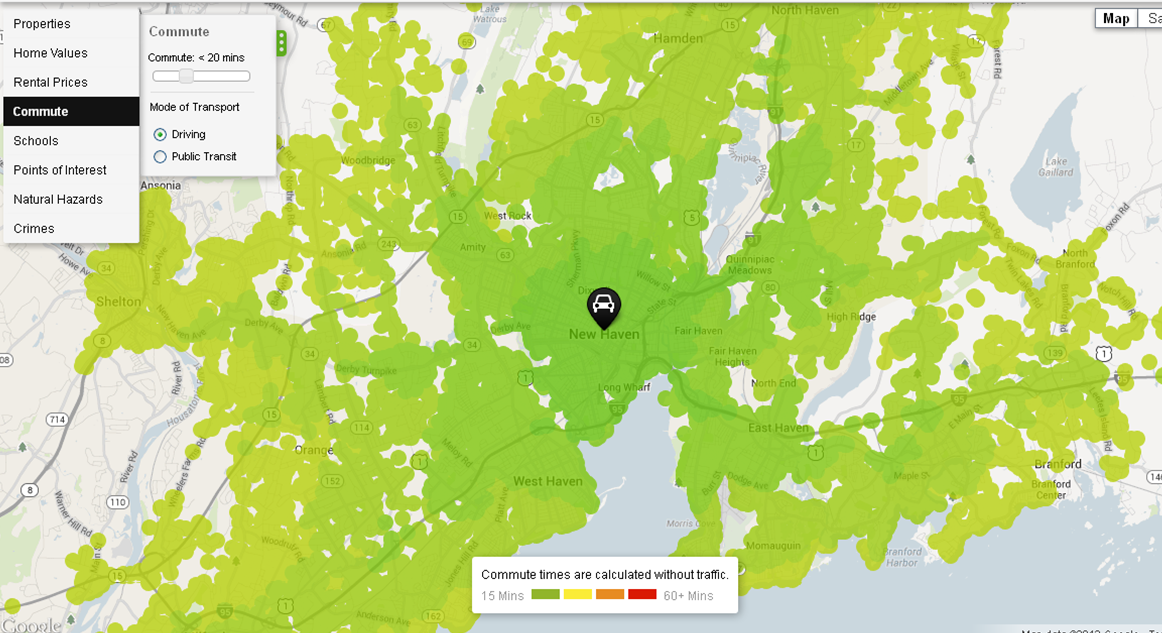
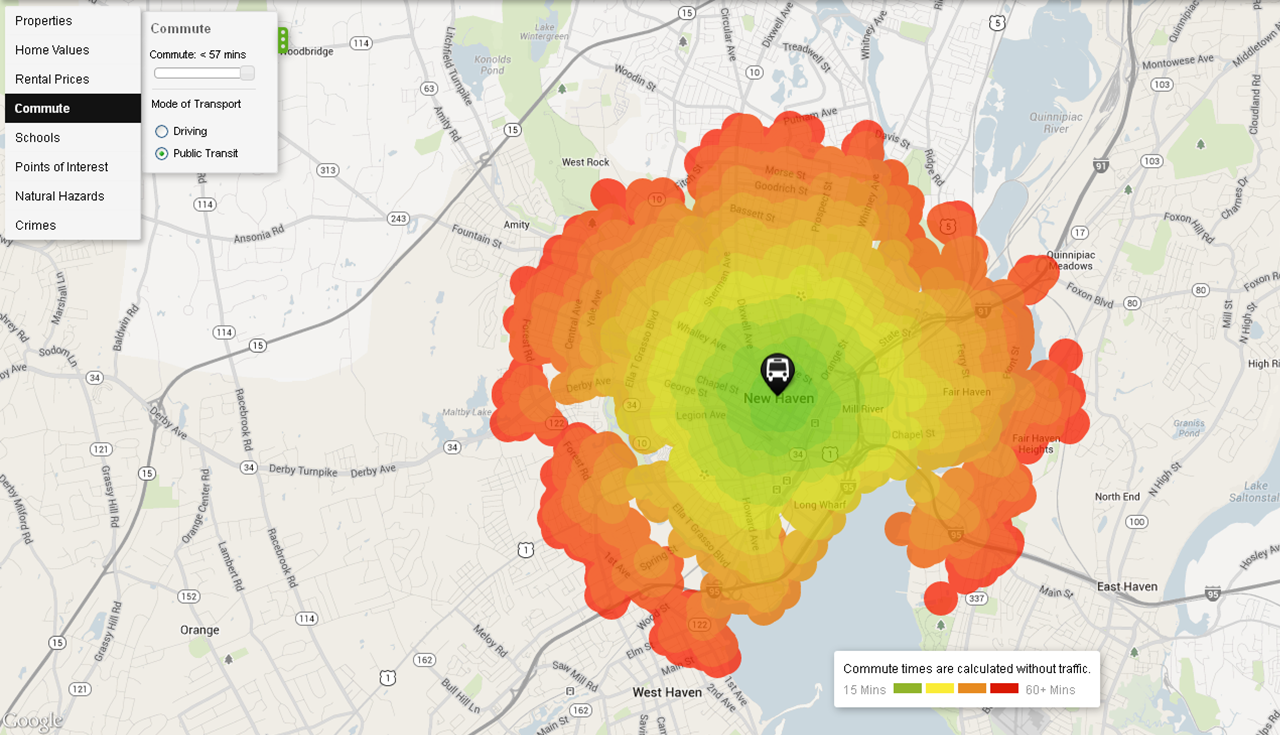
The website trulia.com provides graphic representations of travel time from areas surrounding major cities, including Hartford, New Haven and Bridgeport in Connecticut - looking at travel by car, and via mass transit.

A year ago, the Bridgeport metropolitan area was ranked as the 5th worst traffic delay corridor in the country by Governing magazine.  Data compiled for Governing by traffic research firm Inrix shows Friday afternoons are the worst time of the week to drive in nearly three-quarters of metro areas across the country.  For most cities with already lengthy rush-hour commutes throughout the week, time spent behind the wheel is further prolonged on Fridays.

Bridgeport came in just behind Los Angeles, San Francisco, Honolulu and Austin, Texas – and worse than Seattle, New York City, Portland, Washington and Chicago, which all fared somewhat better than the Park City in the Friday-afternoon traffic tie-up analysis done by the publication.    Areas with many workers living far outside a city can experience significant congestion when all flee the office early, the publication noted, citing Bridgeport, which recorded the nation’s fifth-longest Friday afternoon delays, as an example.

For the Bridgeport area, commuters added nearly 10 minutes in delays due to traffic congestion on Friday afternoons.  Boston, by comparison, added just under 7 minutes, New Haven 5 ½ minutes, Hartford just over 4 minutes.  Los Angeles, which topped the list, exceeded 13 minutes in the additional travel time necessary during car commute NHthe peak commute due to the traffic volume.

transit commute NH

New London Harbor Light Recognized as State's Leading Lighthouse in USPS Stamp

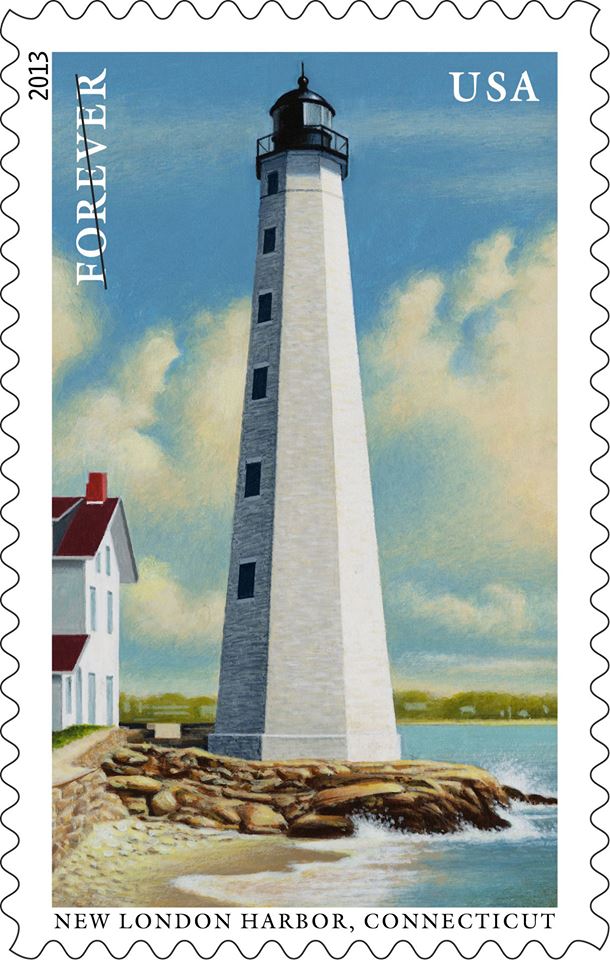
The U.S. Postal Service has unveiling a stamp featuring the New London Harbor Light, the oldest and tallest lighthouse on Long Island Sound. The USPS indicates that it was originally established in 1761, financed by a lottery held by the Connecticut colonial legislature. The present lighthouse, built in 1801, was one of the earliest American lighthouses with a flashing beacon.

The lighthouse, which is owned by the New London Maritime Society, is the featured lighthouse for Connecticut in the 2013 United States Postal Service’s New England Coastal Lighthouses series. The stamp series highlights lighthouses from throughout the country.

New England Coastal Lighthouses also features the lighthouses at Portland Head, Maine; Portsmouth Harbor, New Hampshire; Point Judith, Rhode Island; and Boston Harbor, Massachusetts. Each stamp shows a close-up view of one of the five lighthouses that captures not only the down-to-earth aspect of the tower but also the mysteriouNew Londons qualities that compel us to come closer.

These five lighthouses are among the oldest in the U.S., and each is on the National Register of Historic Places. Boston Harbor Light is also a National Historic Landmark.  Howard Koslow created original paintings for New England Coastal Lighthouses stamp art-and for the entire lighthouse series. Howard E. Paine and Greg Breeding served as art directors.

The New England Coastal Lighthouses stamps are being issued as Forever® stamps. Forever stamps are always equal in value to the current First-Class Mail one-ounce rate.  The USPS has also developed a short video about each of the lighthouses.

Previously, the Connecticut state 34 cent stamp from the Greetings From America commemorative stamp series featured the state. The United States Postal Service released this stamp on April 4, 2002. The retro design of this stamp resembled the large letter postcards that were popular with tourists in the 1930's and 1940's.

Last fall, Westport Now reported that Westport holds a special place in U.S. Postal Service history with more of its artists (17) designing more postage stamps (161-plus) than any other community in the nation.

Yale-New Haven is Connecticut's Only Hospital with Nationally Ranked Medical Specialties

Yale-New Haven Hospital is Connecticut’s best-performing hospital according to the annual list released this week by U.S. News & World Report, which analyzed hospitals across the nation.

Yale-New Haven Hospital is ranked nationally in 10 adult and 5 pediatric specialties. It was also ranked as high-performing in 3 adult specialties, according to the magazine’s analysis.  It placed 6th in the country in diabetes and endocrinology, 11th in psychiatry, fourteenth in gynecology and #18 in gastroenterology.  It was the only hospital out of the eleven ranked in Connecticut to be nationally ranked in any specialty category.

Yale-New Haven performed 15,340 annual inpatient and 22,559 outpatient surgeries, and ts emergency room had 137,911 visits last year. Yale-New Haven Hospital covers 1.9 million square feet, employs more than 7,000, and is affiliated with 3,600 physicians and 600 resident physicians practicing over 100 medical specialties, U.S. News reported.  In pediatric specialties, Yale-New Haven ranked #4 nationally in diabetes and endocrinology.

Hartford Hospital and Saint Francis Hospital and Medical Center took second and third place, respectively in Connecticut, with St. Vincent’s Medical Center in Bridgeport ranked #4 in the state, followed by Middlesex Hospital at #5, Norwalk Hospital ranked sixth, Danbury Hospital and Waterbury Hospital, tied at #7, Bridgeport Hospital and Lawrence and Memorial Hospital tied at #9, and Sthealth-carousel-hospitalsamford Hospital ranked eleventh.

Hartford Hospital, ranked#1 in Greater Hartford, “performed nearly at the level of nationally ranked U.S. News Best Hospitals” in 9 adult specialties, U.S. News reported.  The hospital had 36,841 admissions in the latest year for which data are available. It performed 11,828 annual inpatient and 20,955 outpatient surgeries and had 95,567 emergency room visits.

At #3 statewide, Saint Francis “performed nearly at the level of nationally ranked U.S. News Best Hospitals” in 8 adult specialties. The hospital had 29,113 admissions, performed 9,178 annual inpatient and 10,482 outpatient surgeries and its emergency room had 71,446 visits.

St. Vincent’s, top-rated in Bridgeport and Western Connecticut, “performed nearly at the level of nationally ranked U.S. News Best Hospitals in 6 adult specialties. The hospital had 21,019 admissions, performed 4,521 annual inpatient and 5,138 outpatient surgeries and its emergency room had 74,177 visits.

Among 87 children’s hospitals across the nation that made the rankings in at least one specialty, Connecticut Children’s Medical Center in Hartford was nationally ranked in six pediatric specialties. It is a 166-bed children's general facility with 6,096 admissions in the most recent year reported, performed 2,036 annual inpatient and 8,062 outpatient surgeries. Its emergency room had 53,488 visits.  Connecticut Children’s is national ranked at #25 in pediatric urology, #35 in diabetes and endocrinology and #39 in pulmonology.

In Only 37 Communities Do More Than 2/3 of 4th Graders Pass All Physical Fitness Tests

What do the towns of Preston, East Windsor, Bethany, Stafford, and Clinton, have in common?  Less than 20 percent of fourth grade students in those communities meet the standard on all four physical fitness tests – the lowest percentages in the state.  For Preston, it’s the second consecutive year in the bottom five. 

At the upper end of the spectrum, 95.5 percent of 4th graders in Eastford meet the standard on all four physical fitness tests, in Westbrook 89.5 percent, in Sterling 85.4 percent in New Canaan 83.3 percent and Union 80 percent – the only towns to exceed 80 percent in the most recent data, for 2011.  In 2010, 100% of fourth grade students in two towns – Union and Caanan – passed all four physical fitness tests, no towns reached that level in 2011 data.

Overall, in only 37 communities did more than two-thirds the fourth grade students pass all four physical fitness tests, and in another 63 communities more than half (but less than two-thirds) of the students did so.  In 69 communities, fewer than half of the fourth graders pass all four tests - compared with  67 communities the preceding year..  Connecticut has 169data visualization towns and cities.

The data is available on the web site of the Connecticut Data Collaborative, which is bringing together data from various state agencies, making it more readily available to the public, along with the means to combine data from different agencies and chart the information in data visualization charts that help to illustrate patterns that enhance understanding.

The Connecticut Data Collaborative is a collaborative public-private effort to improve the quality of and access to policy-related data in the state – a central portal where all Connecticut organizations and residents can access a wide range of data from federal, state, local and private sources relating to the health, well-being and economy of the residents of the State of Connecticut. The goals of the Collaborative include:

  • Advocacy – Advocating for the public availability of all state data to inform public debate and to drive planning, policy, budgeting and decision making in state government.
  • Standards – Promoting and modeling use of data standards around privacy, interoperability, data definitions and quality.
  • Access – Meeting demands for public access to data through the Collaborative’s data portal, CTData.org, and the associated Connecticut Nonprofit Strategy Platform.
  • Building Capacity — Creating opportunities for Collaborative and peer support in data development and use both online and in person.

Told You So, Nader's Latest Title, Replays Past Columns

In the beginning, Ralph Nader was often right.  In 1965, the publication of Unsafe at Any Speed changed the face of the automobile industry and made his a household name. The Winsted, Connecticut native became synonymous with consumer activism, and earned the designation time and again, revealing alarming and potentially harmful corporate actions and alerting consumers and government agencies to perils unknown.  That was last century.

As the current century got underway in earnest, Nader was campaigning for the office of President of the United States, appearing on the November 2000 ballot in states across the country, most notably New Hampshire and Florida, as it turned out.  Because in those states, Nader’s vote total exceeded the margin by which George Bush defeated Al Gore.  And, so the argument goes, had he not been a “spoiler,” most of those votes would have gone to Gore, who would then have won the Electoral College outright in addition to the popular vote, avoiding the Florida recount debacle and the U.S. Supreme Court decisnader2ion that ultimately decided the election’s outcome for Bush.

The rest, as they say, is history.  And a whole lot of columns.  (For the record, Nader received 22,188 votes in New Hampshire; Bush’s margin over Gore was 7,211 votes.  In Florida, after the aborted recount, Bush won the state by 537 votes out of 5.9 million votes cast.  Nader received 97,488 votes.  On the ballot in 43 states, he won 2,882,995 votes, or 2.74 percent of the popular vote.)

Fast forward to 2013, Told You Soand Nader’s latest book, which is neither modest in length, title or time period.  The book tour for “Told You So:  The Big Book of Weekly Columns,” which is hefty if not heavy, brought Nader, at age 79, to the Barnes & Noble at the Shoppes at Farmington Valley in nearby Canton on July 13, where stories were told, books were sold, and advice offered.

The Table of Contents – which runs 11 pages – indicates that “Big Book” is no euphemism.  The final column, circa 1972, is listed in the “Golden Oldies” category and begins on page 507.  The bulk of the entries, however, were written in the Bush and post-Bush era, between 2002 and 2012 – in other words, after the extraordinary 2000 election.

The book’s publisher says it provides a “panoramic portrait of the problems confronting our society and provides examples of the many actions an organized citizenry could and should take to create a more just and environmentally sustainable world.”  Nader continues to criticize those in power and corporations, and raise issues including increasing the minimum age.

Certainly a great many subjects are covered substantively in the book, and Nader spoke easily and expansively to a substantial audience of the curious and the book-buying snaking through the Barnes & Noble aisles.  (Autographs, of course, were free.)  Any rear-view mirror retrospective on Nader, however, cannot help but be seen through the prism of 2000 as well as 1965, and the consumer action organizations he launched.  Which may explain the volume of columns since his 2000 presidential run, and as the cover boldly states, the reminder directed to the reader (or even the passer-by), that Nader “Told You So,” even lately.

Fatal Accidents Raise Isssue of Mandatory Motorcycle Helmet Law in CT

Since the beginning of June, motorcycles have been responsible for three deaths in the Fairfield County according to the Greenwich Time -- two in New Milford and one in Danbury -- as well as several injuries. The paper reported that “the recent fatalities have thrown long-standing debates over Connecticut's partial motorcycle helmet laws into a new light, prompting questions as to the efficacy of helmets and the future of statewide regulations requiring their use.”

In one recent incident – where the rider survived – the Time reported that “the bike burst into flames shortly after it collided with oncoming traffic, and its rider was thrown nearly 10 feet into the street.”

A report by consumerreports.org last month indicated that “in 2010, 98 percent of motorcyclists riding in states with helmet laws were wearing them. In states without the laws, helmet use was just 48 percent.”  The Insurance Institute for Highway Safety reports that:

  • Laws requiring all motorcyclists to wear a helmet are in place in 19 states (including New York, New Jersey and Massachusetts) and the District of Columbia
  • Laws requiring only some motorcyclists to wear a helmet are in place in 28 states (including Connecticut, which requires helmets be worn by individuals 17 and under)
  • There is no motorcycle helmet use law in 3 states (Illinois, Iowa, and New Hampshire)

National Highway Traffic Safety Motorcycle accident on Trans Canada HighwayAdministration research shows riders who wear helmets are three times less likely to suffer brain trauma than those without them. According to a 2012 study released by the Centers for Disease Prevention and Control, motorcyclists accounted for 12 percent of motor vehicle fatalities in 2010, despite making up less than 1 percent of vehicle miles traveled, the Time reported.

Motorcycle helmets have not been uniformly required in decades.  In 1967, to increase motorcycle helmet use, the federal government required the states to enact helmet use laws in order to qualify for certain federal safety programs and highway construction funds. The federal incentive worked. By the early 1970s, almost all the states had universal motorcycle helmet laws.

Michigan was the first state to repeal its law in 1968, beginning a pattern of repeal, reenactment, and amendment of motorcycle helmet laws. In 1976, states successfully lobbied Congress to stop the Department of Transportation from assessing financial penalties on states without helmet laws. The Connecticut General Assembly overturned the universal helmet requirement here later that year. The state passed its partial helmet law in 1989, applying only to individuals age 17 and younger.

Two years ago, The Hartford Courant was among the voices urging the mandatory helmet law be reinstated:

“In 2007, the most recent year for which statistics are available, 36 motorcycle riders died in crashes in Connecticut. That number may seem small, but it's not. Per mile traveled, the number of deaths on motorcycles was 37 times the number of people killed in cars, says the Insurance Institute for Highway Safety. A common saying among those in the medical community is that motorcycles ought to be called "donorcycles," because so often the organs of dead bikers are used for transplants.”

A 2011 Yale School of Medicine report analyzing state crash data between 2001 and 2007 found that two-thirds of the 358 riders killed in motorcycle accidents had not been wearing helmets. In an editorial this week, the Greenwich Time noted that “the National Highway Traffic Safety Administration estimated that in 2008, helmets saved the lives of 1,829 motorcyclists, and that 822 who died that year would have survived if helmets had been worn.”

The higher risk of serious injury or death that comes with optional helmets may also translate into economic losses. NHTSA data reportedly suggests that projected reductions in fatalities stemming from universal helmet laws could translate into savings in service costs and household productivity of up to $1,200,000 per avoided fatality.

The Connecticut Motorcycle Riders Association (CMRA) , formed in 1980, opposes helmet requirements, as it has for more than three decades.  In the organizations view, it is a matter of freedom of choice – whether or not to wear a helmet is a decision to be made by bikers, not government. It was that view that prevailed when the legislature changed the state’s mandatory helmet law in 1977.  In 1980, motorcyclists rallied in unprecedented numbers in Connecticut when a state legislator was involved in a motor vehicle accident in which a motorcyclist was killed.

Since then, the issue has been raised unsuccessfully at the state Legislature in bills or amendments 11 times. The CMRA website said, regarding the 2013 session, that “we are able to say that we have not had to fight any helmet laws this year,” and indicated that “we have repeatedly defeated attempts to reinstate the mandatory helmet law for adult motorcycle riders.”  The issue has not been considered since 2005, according to the Time.  The CMRA website also includes this tagline:  “Let Those Who Ride Still Decide.”  The organization has supported the creation of a self-funded rider education program and pushed for the adoption of a more comprehensive motorcycle license test throughout the state, the website points out.

Motorcycle-laws