Fairfield County May Hold Key to Trans-Atlantic Flights at Bradley; Passenger Numbers Increasing

Bradley International Airport has seen passenger traffic increase for two consecutive months, and is stepping up efforts to re-establish service to trans-Atlantic destinations. The Connecticut Airport Authority (CAA) is working with the state’s business community and potential airline carriers to demonstrate the need for the overseas service. In May, passenger traffic at Bradley increased 9 percent, compared with a 7.8 percent decrease at T.F. Green Airport in Providence and a 9.5 percent decrease at Manchester Regional Airport in New Hampshire. Logan International Airport in Boston increased 7.5 percent that month.

During June, Bradley saw a 9.3 percent increase in passengers, while Providence saw a 7.3 percent decrease and Manchester saw passenger numbers drop by 14.6 percent. Logan experienced a 4.1 percent increase in June.  July data was not yet available.

Kevin A. Dillon, ExecuBradley_INTL_Logo.svgtive Director of the Connecticut Airport Authority, told members of the CAA at their August meeting that the state’s improved economy and ongoing efforts to add capacity at the airport are lead factors in the upbeat numbers. United Airlines recently announced plans to begin service to Houston in October. In June, JetBlue initiated service from Bradley to Reagan National Airport in Washington, D.C.

Year to date, Dillon reported, passenger numbers at Bradley are up 10.6 percent, while Providence is down 6.8 percent, Manchester is down 13.0 percent, and Logan is up slightly, 4.4 percent.

The return of trans-Atlantic service to Bradley is one of the CAA’s top priorities, Dillon said. Much of the business case for trans-Atlantic routes depends on corporate clients outside the immediate Hartford-Springfield market, Dillon explained. He indicated that the CAA would be “orienting our advertising program for the next year” toward Fairfield County and Southeastern Connecticut, to include targeted outreach urging potential business customers to “give Bradley a try,” underscoring that “Bradley is a great option” compared with the New York airports.

The CAA is also poised to move forward with the demolition of the old Terminal B at Bradley, with the contract awarded to S&R Corporation of Lowell MA, with a price tag of $12, 572,622.75. The CAA anticipates that the demolition will begin before the end of this month, consistent with the airport’s strategic plan. The goal of the CAA is to make Connecticut’s airports more attractive to new airlines, bring in new routes, and support Connecticut’s overall economic development and growth strategy.CAA logo

Members of the CAA also discussed a potential new retail business for the airport – Dairy Queen – and approved plans for a 20-year agreement with WFSB-TV for the lease of land at Bradley for a Doppler radar installation at Bradley, which would be relocated from Terminal B where it has been since 1999.

Bradley will also be enhancing band-with capacity of wi-fi at the airport, which has seen increased usage as passenger levels have increased.

Bradley International Airport is the second largest airport in New England. According to the most recent economic impact analysis, Bradley contributes $4 billion in economic activity to the state of Connecticut and the surrounding region, representing $1.2 billion in wages and 18,000 full-time jobs. The CAA was established in 2011 to develop, improve, and operate Bradley International Airport and the state’s five general aviation airports.
CT Women Underrepresented Among Top Earners; 4th Widest Gap in US

In only three states in the nation are women more underrepresented among the top 1 percent of wage owners, when compared with the state’s overall female population. Connecticut ranks 4th – after South Dakota, New Hampshire and Wyoming – in underrepresentation of women among the top earners in the state. Connecticut has a ratio of 6 men for every woman in the state’s top 1 percent of wage earners. South Dakota has the widest gap and largest ratio, at 8.2.

In Connecticut, 51.3 percent of the state’s population is female, yet only 14.4 percent of the top 1 percent of wage earners in the state are women. That is a gap of 36.9 percent, ranking the state fouTheOnePercentrth.  In Wyoming the gap is 37.1 percent, in New Hampshire 38.6 percent, and in South Dakota, 39 percent. In South Dakota, with the widest gap, only 10.9 percent of the wage earners in the top one percent are women.

On the other end of the spectrum, the gap in Delaware is 10.6 percent, in Hawaii 16.8 percent, Rhode Island 17.8 percent and Vermont 21.7 percent. The ratio of males to females among the top one percent earners is 1.4 in Delaware, 2.0 in Hawaii, 1.9 in Rhode Island and 2.5 in Vermont, compared with Connecticut’s 6.0.

Bloomberg ranked the U.S. states and the District of Columbia on the extent to which females are underrepresented in the 1% income bracket, utilizing U.S. Census data.

Connecticut also had the nation’s second highest threshold income to gain entry into the one percent club, at $429,793. Only Alaska, at $500,052 was higher. Just slightly lower than Connecticut was the District of Columbia, New York, New Jersey, North Dakota and Minnesota ($387, 414). At the opposite end of the states tally was Wyoming, with an income of $244,207 placing individuals in the state’s top one percent of earners.

In the percentage of women in the overall population, Connecticut ranked 10th, at 51.3 percent. Only 10 states have more men than women in their population. Alaska has the highest percentage of men, at 52.1, and the District of Columbia the highest percentage of women, at 52.7. Following closely behind are Rhode Island and Mississippi, both with 51.7 percent of their population being female.

Using data from the U.S. Census, Bloomberg calculated the approximate 99th percentile, or top 1%, of inflation-adjusted wage or salary income figures for those ages 16 and older and employed. Gender information was extracted and the gap between the percentage of females in the 1% bracket and the percentage of females in the state's population was calculated.

Teen Journalists Bring Attention to Issues of Cyber-Bulling, Underage Drinking, Social Media Stress

Connecticut teen girls drink at a higher rate than the national average, Connecticut’s teen drinking rate is higher than ever, cyber-bullying rates among girls in the state have increased, and moderate to high stress levels among a majority of teens nationwide – and how they respond to stress – are raising new concerns. Those are just some of the statistics highlighted this month by student journalists at the Connecticut Health Investigative Team (C-HIT), an investigative news website populated by veteran journalists focusing on health issues facing the state. In recent days, the higPicture1h school students - participants in week-long journalism workshops at UConn, Quinnipiac and Yale universities led by C-HIT - have been producing news stories that target issues facing a demographic they are not only familiar with, but, in most cases, part of. The students are learning research methods intrinsic to journalism and the results of their work have been eye-opening. Some of the highlights:

With access to social media reaching an all-time high, cyber-bullying rates have gone up among girls in Connecticut, according to the latest Connecticut High School Youth Risk Behavior Survey. In Connecticut in 2013, cyber-bullying rates among girls were at 22.8 percent - more than 1 in 5 girls reported being cyber bullied. That was an increase of 2.7 percent from 2011. Unlike among females, cyber bullying among males dropped by .2 percent, to 12.3 percent in 2013.

According to statistics from the Bureau of Justice, 37 percent of teenagers reported being bullied at school and 52 percent said they were victims of cyber bulling. Cyber bullying is tormenting, humiliating, or harassing another individual using the Internet, cell phones, or other types of social media.

journalismOf the young people who reported cyber bullying incidents against them, one in three reported that they experienced threats online. Well over half of young people do not tell their parents when cyber-bullying occurs, the website says. Surveys show that girls are twice as likely as boys to be both victims and perpetrators of cyber bullying.

The Youth Risk Behavior Survey of 2013 reported that Connecticut girls are more likely to drink than their peers nationally. In Connecticut, 8.5 percent of high school girls have driven drunk – which is higher than the national average of 7.8 percent. In Connecticut, 37 percent of high school girls surveyed said they had at least one alcoholic drink, at least one day before the survey, compared to 35.5 percent nationally.

Teen drinking is a problem nationwide, but it is more apparent among teenage girls. Roughly 90 percent of adults who have substance abuse problems now began as adolescents, according to Dr. J Craig Allen, the chief medical officer of Rushford Center, a Connecticut substance abuse and mental health treatment center. Overall, Connecticut’s teen drinking rate is higher than ever, with students experimenting with alcohol as early as 11 years of age -- nearly two years younger than the national average, according to the Rushford Center. Teens in Connecticut are consuming 26-28 percent more alcohol than their peers around the country, according to data from the Office of Juvenile Justice and Delinquency Prevention.

The availability of alcohol plays a factor in teen drinking. Other contributing factors in suburban areas include stress, with many teens placed under academic and other pressures on a day-to-day basis, experts suggest. A 2012 study by the Columbia University Teachers College found evidence that “affluenza,” described as a “metaphorical illness connoting hyper-investment in material wealth among upper-middle class families,” was a factor in negative behaviors including drug and alcohol use.

Nationally, teens are feeling stressed in and out of school, according to a survey done for the American Psychological Association. The survey showed that during the 2012-13 school year 55 percent of the 1,000 teens questioned said that they felt moderate stress during the school year, and 27 percent said that they felt “extreme stress.” Forty percent of teens said that stress is making them irritable or angry, and 36 percent said that stress made them nervous, angry or fatigued, according to the survey.

The survey also found that social media plays a role in teen stress. Thirty-nine percent of girls and 29 percent of boys questioned said that they do care how others perceive them on social media --- and that they need to keep up a persona on social media websites.

Of most concern to doctors in the survey findings was how teens dealt with stress. Forty-six percent of teens responded that playing video games was their way to manage stress, 43 percent said they surf the internet and only 37 percent said that they would exercise or walk.

This summer, C-HIT worked with 75 students in a 'newsroom' setting, with each student researching, reporting and writing his or her own story,  working with complex databases and conducting interviews.  The 2014 workshops were supported by organizations and individual donors including the Dow Jones News Fund, William Graustein, the Fisher Foundation, People’s Bank, the Knox Foundation, Quinnipiac University, and the Community Foundation for Greater New Haven. The journalism workshops will be offered again next summer.

Photo:  Among the C-HIT students are (left to rigCHIT internsht) Mackenzie Brayman, a student at North Stonington High School; Julyanna Schreider and Shamoya Hanson, students at the Journalism & Media Academy, Hartford; Talon Cooper, a student at Hillhouse High School, New Haven; and Conner Fritchley, a student at Wilton High School. Information included in this article was researched and developed by the students for their news stories.

Additional investigative news stories by the students participating in the C-HIT summer journalism program can be seen at http://c-hit.org/

Summer Sandwiches: Lobster Roll is Connecticut Standout, Zagat Says

When Zagat’s decided to take a bite into the uniqueness of sandwiches during August (It is national sandwich month! Who knew?) – highlighting particularly noteworthy culinary endeavors in every state in the nation – the focus in Connecticut landed squarely on the lobster roll. Their review of “delicious regional sandwiches” found in each state had some overlap (Maine was also noted for its Lobster Roll, for example) and some regional favorites with a national following. And some surprises (see bison, reindeer, and marshmallow, below). zagat_logo

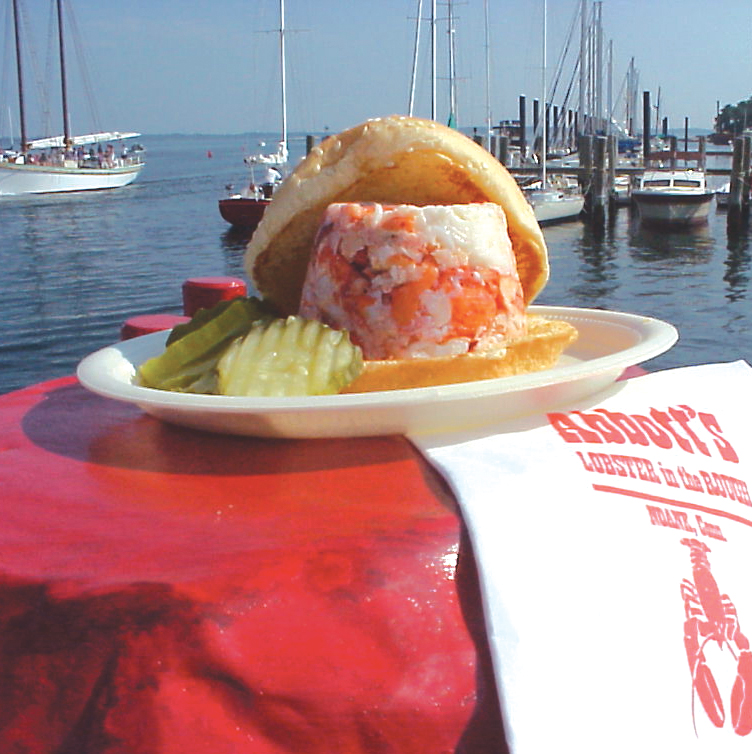
“While many consider the cold, mayonnaise-driven Maine lobster roll to be the quintessential version of the sandwich, the first lobster roll was actually a hot, buttered one served at a restaurant called Perry’s in Milford, Connecticut, in the 1920s,” Zagat’s explained. “This version is usually simpler, featuring just lobster meat, butter, and maybe some black pepper or lemon juice on a grilled, split-top hot dog bun, and served with potato chips or French fries. “

Cited by the Zagat surveyhotlob600 was Abbott’s Lobster in the Rough in Noank, founded in 1947. “They take the simplicity of the Connecticut-style hot lobster roll and turn it into an art form. Their award-winning sandwich is made with a full quarter-pound of lobster meat (more than is found in the average small lobster) drenched in melted creamery butter and heaped onto a bun. It’s a sandwich so opulent, it’s well worth the trip to this far-off-the-beaten-path lobster pound to get one (not to mention the crowds you have to battle to order).”

Noteworthy in the region were the Italian Sub in New Jersey and the Italian Grinder in Rhode Island. (A distinction without a difference?) In Massachusetts, the Zagat selection was the Fluffernutter: “The delectable marshmallow fluff was in fact invented in Somerville, Massachusetts, in 1917. A man named Archibald Query sold it door-to-door before he sold the recipe, though who it is that thought to pair it with peanut butter on white bread is not as clear. Nevertheless, the fluff is celebrated to this day with a Fluff Festival in Somerville” in September.

New Hampshire was noted for its “Beer-Battered Fish Sandwich” and Vermont for the aptly-named Vermonter, a “ sweet-and-savory sandwich that typically includes either turkey or ham (sometimes both), sharp Vermont cheddar cheese, thinly-sliced green apples and honey mustard, although there are many different variations (including a decent number that come with cranberry mayonnaise instead of honey mustard).”

In case you were wondering, in Alaska it is the Reindeer Sausage Sandwich, in Wyoming the Bison Reuben, in Alabama the Chicken Sandwich with White Sauce, and in Arkansas the Fried Bologna Sandwich, and Mississippi the Elvis sandwich (peanut butter, fried banana and bacon). The Zagat’s  reporting (and tasting) was conducted for the August 2013 observance of National Sandwich Month, with a tip of the plate to the notable Earl of Sandwich.

Hartford Region Improves Among Nation's Best Performing Cities in 2013

The Hartford region was the state’s only metropolitan area to improve its ranking relative to other metropolitan areas around the country in an analysis of job growth and regional economic factors in 2013 that ranked the nation’s top 200 Best Performing Cities. The top ranked Connecticut metropolitan area was Hartford-West Hartford-East Hartford, which ranked #85 among the nation’s top 200, an improvement in ranking from #93 the previous year.state map

Connecticut’s other major metro areas dropped in the rankings: Bridgeport-Stamford-Norwalk dropped to #106 from #94 in 2012, New Haven-Milford fell to #142 from #109 , and Norwich-New London ranked #187, falling from #152 the previous year.

Best Performing Cities Index Report (PDF)The 2013 Milken Institute Best-Performing Cities Index ranks U.S. metropolitan areas by how well they are creating and sustaining jobs and economic growth. The components include job, wage and salary, and technology growth.

Topping the list of Large Cities were Austin-Round Rock–San Marcos, Texas and Provo-Orem, Utah followed by San Francisco-San Mateo-Redwood City, CA, San Jose-Sunnyvale-Santa Clara, CA and Salt Lake City, UT. Rounding out the top 10 were the metropolitan areas of Seattle, Dallas, Houston, Boulder, and Greeley, CO.

Biggest gainers on the list include Hagerstown-Martinsburg, Md.-W.V. (70th, up 100 slots); Tulsa, Okla., (42nd, up from 118th), and Phoenix, (66th, up from 122nd). Within the top 25 metro areas, Texas claimed seven spots; Colorado and California each had four.

The website interactive features offer a means of comparing cities in the various economic factors.  In most years, according to the study authors, the factors evaluated in the index give a good indication of the underlying structural performance of regional economics.

A nonprofit, nonpartisan economic think tank, the Milken Institute works to improve lives around the world by advancing innovative economic and policy solutions that create jobs, widen access to capital, and enhance health.

New Haven - Milford Has Nation's Highest Concentration of Italian Heritage

The New Haven-Milford metropolitan area has the highest concentration of individuals of Italian heritage in the nation. In an analysis that ranked ancestries on the estimated percentage of U.S. population and then identified the three metropolitan areas with the highest concentration of each ancestry or origin, Bloomberg Businessweek determined that the concentration of individuals of Italian heritage made up just under 24 percent of the population in the New Haven – Milford area. The next highest concentration was in Kingston, New York, and Poughkeepsie – Newburg – Middletown, New York, each with just over 20 percent of their population of Italian heritage. Overall, the largest eHello-my-name-is_1267913358thnic populations across the country are German (15.6% of the population), Irish (11%), Mexican (10%), English (8%), Italian (5%), Polish (3%) French (2%) Scottish (1% and Puerto Rican (1%).

The Census Bureau defines ancestry as a person’s ethnic origin, heritage, descent or “roots,” which may reflect their place of birth, place of birth of parents or ancestors and ethnic identities that have evolved within the United States. Data for European, Middle Eastern, Arab and Sub-Saharan African ancestries were directly captured by ancestry questions in the Census Bureau’s American Community Survey.

The largest concentration of individuals of German descent was in Bismark, ND (60%) and the largest population of Irish was in Ocean City, New Jersey (30%) – followed by Barnstable, MA at 27 percent and Boston-Cambridge-Quincy at 24 percent.

Bangor, Maine had the highest concentration of individuals of Scottish ancestry, at 6 percent and the largest Puerto Rican population by percentage was in Vineland, Millville-Bridgetown, New Jersey at 14 percent and Orlando-Kissimmee-Sanford, Florida, at 12 percent.

In the data, South American ancestries were calculated using data from the "Hispanic or Latino origin by specific origins" tables, while Asian ancestries were calculated from "Asian race & ethnicity" tables. American Indians and Alaskan Native ancestries were counted only if individuals identified with specific tribes. Spaniards only included people who specifically identified their ancestry as Spaniard.

CT Ranks 4th in Participation in Summer Meal Programs for Low-Income Children

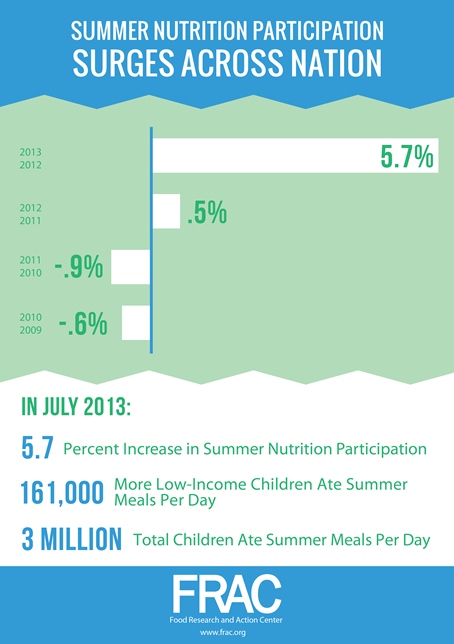
Participation in Summer Meal Programs for low-income children increased in Connecticut in 2013 as compared with the previous summer, with 26.4 percent of low-income children receiving summer meals on an average day in July 2013. This represents an increase of 2.4 percent from the previous summer and ranks CT 4th in the nation for participation. summerfoodwebbutton2012The numbers are increasing nationally as well as in Connecticut. In 2013, for the first time in a decade, the number of low-income children eating summer meals saw a substantial increase year-over-year, according to a report by the Food Research and Action Center (FRAC). Nearly three million children participated in the Summer Nutrition Programs in July 2013, an increase of 161,000 children, or 5.7 percent, from July 2012.
FRAC measures the success of Summer Nutrition Programs at the national and state levels by comparing the number of children receiving summer meals to the number of low-income children receiving school lunch during the regular school year. The programs grew to serve 15.1 children for every 100 low-income children who participated in school lunch during the 2012-2013 school year, a modest increase from the 14.3 per 100 served in the 2011-2012 school year.

Print

End Hunger Connecticut! noted that summer meals in Connecticut still only reached 26.4 students for every 100 low-income children who received regular school year school meals in the 2012-2013 school year. The number of sites increased slightly, from 217 to 236.

“When the school year ends, millions of low-income children lose access to school meals, including about 147,587 in Connecticut. It is in Connecticut’s best interest to ensure that such children have adequate nutrition during the summer so they stay healthy, active and return to school in the fall ready to learn,” Lucy Nolan, Executive Director, End Hunger Connecticut!, said. “While we are extremely proud of our place nationally, we still have a lot of work to do.”

Ranked just above Connecticut in participation were the District of Columbia, New Mexico and New York. Rounding out the top 10 were Vermont, Arkansas, Idaho, Delaware, Maine and Massachusetts.

To further increase the number of Connecticut children who participate in summer meals programs, End Hunger Connecticut! convened partners, community leaders and volunteers to distribute multilingual flyers, posters and other promotional materials at the start of the summer to promote Connecticut’s federally funded free summer meals program.

This year marks the third consecutive year that End Hunger Connecticut! has coordinated ‘blitz days’ in communities across the state to drive summer meals participation. Results of the initiative will be known later this year.

Increasing participation means more nutritious food for hungry children, but it also means more federal funding for communities, officials noted. If every state had reached the goal of 40 children participating in Summer Nutrition in July 2013 for every 100 receiving free or reduced-price lunch during the 2012-2013 school year, an additional 4.8 million children would have been fed each day, and states would have collected an additional $365 million in child nutrition funding in July alone, they point out.

FRAC reportThe Summer Nutrition Programs, which include the Summer Food Service Program and the National School Lunch Program, are designed to fill the food gap for the thousands of low-income Connecticut children who rely on school breakfast and lunch during the school year. These programs provide free meals at participating summer sites at schools, parks, other public agencies, and nonprofits for children under 18.
Connecticut families can find nearby summer meal sites at www.ctsummermeals.org, by calling toll free2-1-1 or by texting ‘CTMeals’ to 877-877.These tools are instrumental for families to find the closest free meals in their communities.

FRAC measures national summer participation during the month of July, when typically all children are out of school throughout the month and lose access to regular school year meals. The national report, including Connecticut data, is available online at www.frac.org

Celebrated DJ Who Started at WCCC Going Strong as Station's Rock Era Ends

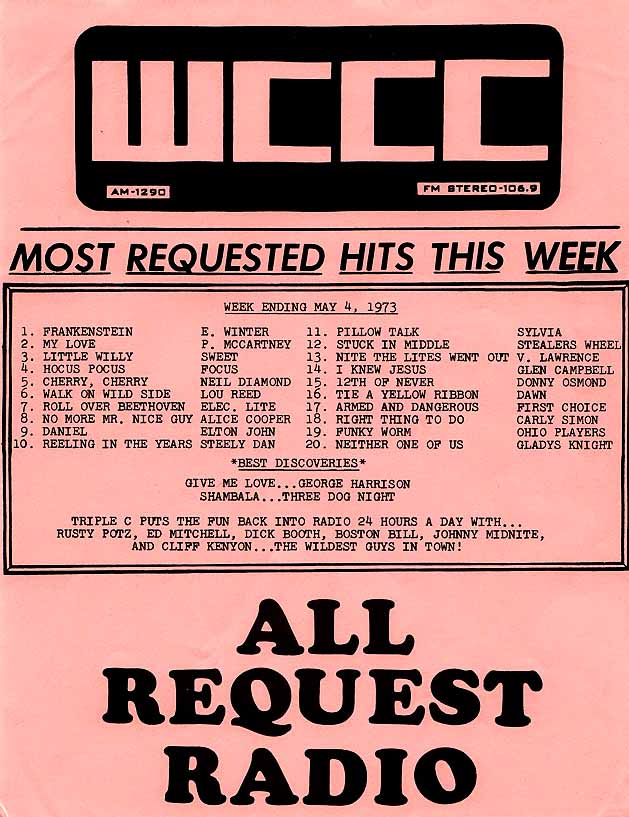
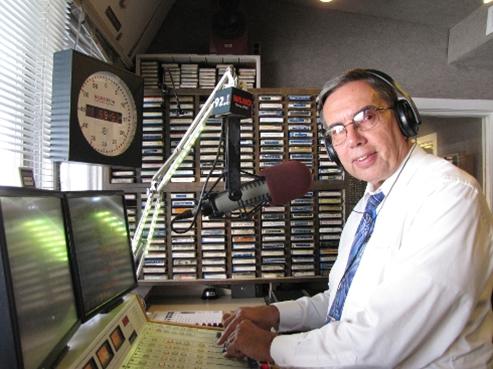
There were two milestones in radio broadcasting during the past 12 months that connected to the career of on-air personality and Hartford native Rusty Potz. Last week, Potz’ former radio home, WCCC in Hartford, was sold to new owners who abruptly ended the station’s decades-long rock-n-roll format. It was in the early ‘70’s that Potz was a leading DJ at the Hartford station, which later that decade featured a DJ named Howard Stern. Potz was well known in Hartford, moving on, like Stern, to new opportunities. That’s where the other milestone draws attention. Potz didn’t move too far – to radio station WLNG in Sag Harbor on Long Island. And he has been there ever since – from 1975 though the station’s 50th anniversary celebration last year, and continues on the air six days a week.

As WCCC has slipped away, WLNG is going strong. The station’s oldies format, local news coverage, and community orientation has loyal listeners in high places, as was evident in March this year.

The Sag Harbor Exprrusty potzess reported this spring that WLNG was the prime topic of conversation on the Tonight Show with Jimmy Fallon. Mr. Fallon asked Mr. Joel to join him in crashing Sag Harbor’s oldies station WLNG 92.1 and the singer, a longtime resident of Sag Harbor, enthusiastically agreed, the newspaper reported. The celebrities plugged the small station in front of a nationwide audience—over four million— resulting in a flood of listeners and website traffic for WLNG.

“We’re a nostalgia station,” Potz told the Sag Harbor Express last year. He is the executive vice president and has been with the station for 38 years. “We’re a part of people’s lives… People like a station that’s familiar. They want to know what they can expect. The oldies we play, we have just about every hit that ever came out.”WCCC All Request Radio

Potz earned his degree from the University of Hartford, and has been in radio since 1963 - on 20 different radio stations, most of them in Hartford, New Haven, and Springfield, MA.  At one time, he worked at four stations simultaneously.

In 1967, at WPOP Rusty's show was the top rated evening show in Connecticut, his station biography reports.  In 1969 WAVZ in New Haven received the TV-RADIO MIRROR award for Rusty's show as the top show on the east coast. Rusty was the program director at WCCC in Hartford for many years, including the years when the station featured the "All Request Radio" format, and came to WLNG on September 1, 1975.

The history of WCCC counted numerous broadcasters who went on to enduring careers. Howard Stern is perhaps the best known nationally. But for listeners in Eastern Long Island, Rusty Potz remains a household name.

An additional Connecticut connection was apparent recently. One of Potz’ guests on his WLNG program last month was former Channel 8 newscaster and ESPN broadcaster George Grande. Both were quite prominent on the Connecticut broadcast scene in the ‘70’s. Grande hosted the first edition of SportsCenter on ESPN in 1979, going on to a sportscasting career in New York, Cincinnati and as host of the annual Baseball Hall of Fame induction ceremony for more than two decades.


UConn is One of 10 Colleges Selected for Program to Recruit Minority Male Teachers

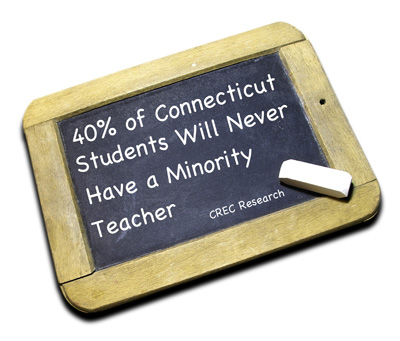
According to data collected by the American Association of Colleges for Teacher Education (AACTE), 80 percent of PK-12 teachers nationwide are white, middle-class women, and more than 40 percent of public schools have no teachers of color. Studies by the National Center for Education Statistics report that 2 percent of public school teachers are black males and fewer are Hispanic males. Forty percent of Connecticut public school students will never have a teacher who is not white, according to the Capitol Region Education Council (CREC), noting that "although minority students account diverseteachersfor over a third of Connecticut's public school students, only 7 percent of the state's teachers and 2 percent of the administrators in Connecticut's public schools are minorities."
If those numbers are to change and reflect a more diverse teacher population, recruitment of teacher candidates will be a pivotal component, education officials point out.

With that objective in mind, the University of Connecticut has been selected as one of 10 universities nationwide to participate in a program that seeks to increase the diversity of the teacher candidate pool. The Neag School of Education at UConn as part of the Networked Improvement Community (NIC), an AACTE initiative aimed at recruiting more black and Hispanic men into teacher preparation programs.

UConn, a member of the 800-member AACTE, was selected to participate in the organization’s first Networked Improvement Community project, which seeks to increase the diversity of the nation’s teacher candidate pool. The other institutions selected are Boston University, California State University Fullerton, Florida Atlantic University, MidAmerica Nazarene University, Northeastern Illinois University, University of Arkansas at Little Rock, University of Saint Thomas, Western Kentucky University, and William Paterson University of New Jersey.

Saroja Barnes, senior director for professional issues at AACTE, says universities were selected for the program based on great diversity within the school districts and community they serve, alignment of the project’s goals to the existing strategic initiatives and mission of the institution, and strategic attention to enrollment trends.chalkboard-MINORITY

According to a study last year by the American Association of Colleges for Teacher Education, 82 percent of candidates who received bachelor’s degrees in education in 2009-10 and 2010-11 were white. By contrast, census figures show that close to half of all children under 5 in 2008 were members of a racial or ethnic minority, The New York Times reported.

In the 2013 study, AACTE surveyed close to 700 colleges and universities that train just under two-thirds of new teachers, finding that few candidates graduate with credentials to teach math, science, special education or English as a second language, all subjects that experts say are increasingly important to prepare students for jobs and to meet the demands of an increasingly diverse student population.

A report by the Center for American Progress, Increasing Teacher Diversity: Strategies to Improve the Teacher Workforce indicated in 2011 that “increasing the number of teachers of color is not only a matter of a philosophical commitment to diversity in career opportunities.

Teachers of color provide real-life examples to minority students of future career paths. In this way, increasing the number of current teachers of color may be instrumental to increasing the number of future teachers of color. And while there are effective teachers of many races, teachers of color have demonstrated success in increasing academic achievement for engaging students of similar backgrounds.”  Adds CREC, "It is important that all children have access to positive role models from a variety of backgrounds in order to be successful in an increasingly global society."

Thomas DeFranco, Dean of the Neag School, says goals for expanding the diversity of teacher preparation within the Neag School of Education align closely with the objectives of AACTE. Those efforts, according to UConn Today, include the creation of the Teacher Prep Academy in Bulkeley High School in Hartford; designation of an academic advisor specifically charged with recruiting minority students into the Integrated Bachelor’s/Master’s Program; and providing a variety of scholarship opportunities, such as the Connecticut State Minority Teacher Incentive Grants.

More than 50 member institutions in 25 states applied to be a part of the inaugural NIC and 10 were selected following a rigorous review by the AACTE Committee on Professional Preparation and Accountability.

Child Support Caseloads Climb; Distributions to Families, Children Drop - Opposite of National Trend

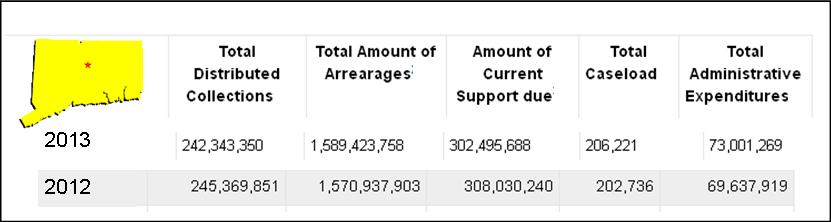
From fiscal year 2012 to fiscal year 2013, Connecticut’s child support caseload increased, administrative expenditures climbed, and collections distributed to children and families dropped, setting the state apart from national trends. During the FY2013, total child support collections nationwide increased by one percent from the previous year, to $31.9 billion. The amount distributed to children and families increased by 1.7 percent over FY2012, according to data compiled by the federal Office of Child Support Enforcement and reported by the National Conference of State Legislatures. child support chart

Connecticut’s caseload – 206,221 total cases – ranked the state 28th in the nation, the same position as a year ago. The previous year, Connecticut’s caseload was 202,736. Total distributed collections dropped to $242,343,350 in FY2013 from $245,369,851 in FY201child support wall2.

Nearly 95 percent of the amount collected was distributed to the family while just 5 percent was retained by the state as reimbursement for public assistance, according to the nationwide data. At the same time, caseloads and administrative expenditures decreased nationwide.

In Connecticut, however, the volume of cases increased by just under 3,500. Expenditures climbed from $69,637,919 to $73,001,269.

The largest caseloads in FY2013 were in Texas (1.42 million), California (1.29 million), Michigan (996,000), New York (918,000), Ohio (899,000), and Florida (855,000).

Each year, the federal Office of Child Support Enforcement (OCSE) releases a report detailing information about financial and statistical program achievements based on quarterly and annual data. OCSE compiles this information from status reports submitted by states and tribes detailing program performance.

The complete OCSE FY2013 Preliminary Report is available online.