Nominations Sought for Women of Innovation as Efforts to Boost Representation in STEM Fields Intensifies

The Women of Innovation® awards gala, held annually, recognizes Connecticut women accomplished in science, technology, engineering, math and those who are involved in their community.  As the January 16 nomination deadline for this year’s 11th annual event approaches, organizers at the Connecticut Technology Council are urging state residents to nominate their peers, colleagues, mentors and students, teachers and business leaders, research associates and inventors. A study last fall for the U.S. Small Business Administration found that “the gender gap persists for women in STEM fields. Women have increased their representation in STEM graduate enrollment, but that increase has been uneven across STEM fields,” the report found.women of innovation
“While women have achieved parity for PhDs in biological and medical sciences, their enrollment continues to lag in some of the most entrepreneurial fields, such as bioengineering, mechanical, and civil engineering and materials science,” the report pointed out.

Last month, the White House urged women in the technology fields to share their stories as a way of attracting more women to the STEM disciplines. “When it comes to inspiring young women to pursue careers in STEM fields,” the White House website explained, “research has already shown us what works: Providing early, hands-on experience and encouragement; sharing the stories of positive role models in these fields (like the women whose stories we share); and illustrating the broad impact of roles in these fCT-ORGields.”
In Connecticut, the Women of Innovation awards recognizes women who have demonstrated and sustained accomplishment in their field, from students to business owners.  Women can be nominated for awards in eight categories:

  • Research Innovation and Leadership
  • Academic Innovation and Leadership
  • Entrepreneurial Innovation and Leadership
  • Large Business Innovation and Leadership
  • Small Business Innovation and Leadership
  • Youth Innovation and Leadership
  • Collegian Innovation and Leadership
  • Community Innovation and Leadership

The awards event is "a time for like-minded, successful women to get together and celebrate their accomplishments” – and it provides a reminder that women are excelling in fields where their ranks have traditionally been slim.  The awards will be presented at the annual Women of Innovation Gala on Wednesday, April 1 at the Aqua Turf Club in Southington.  Presenting sponsors include Boehringer Ingelheim, Covidien, Day Pitney and United Technologies.

Keynote speaker for the event will be Maggie Wilderotter, Chairman and Chief Executive Officer, Frontier Communications, headquartered in Stamford.  Wilderotter serves on the boards of Xerox Corporation and Procter & Gamble Company and on the boards of a number of non-profit organizations. Frontier Communications Corporation  offers broadband, voice, satellite video, wireless Internet data access, data security solutions, bundled offerings, specialized bundles for residential customers, small businesses and home offices and advanced communications for medium and large businesses in 27 states.It recently began offering services in Connecticut for the first time.SBA
The SBA report also found that “women are more likely to start firms that provide research and consulting services and are less likely to start firms in semiconductor and aerospace manufacturing, navigational instruments or communications equipment, which may correlate with lower reported rates of R&D activities for women STEM PhDs.”

As Connecticut seeks to promote growth in the bioscience and related technology fields, the SBA findings may be of particular note, including that “High-tech women-owned businesses may also be less likely to locate in geographic regions where they can take advantage of regional clustering of highly skilled labor and knowledge spillovers.”  The report found, however, that “female STEM PhDs value the independence of self-employment more than their male counterparts.”

The White Houwhite hosuese Office of Science and Technology Policy notes that “Supporting women STEM students and researchers is not only an essential part of America’s strategy to out-innovate, out-educate, and out-build the rest of the world; it is also important to women themselves.”

Women in STEM jobs earn 33 percent more than those in non-STEM occupations and experience a smaller wage gap relative to men, according to the Office.  “Increasing opportunities for women in these fields is an important step towards realizing greater economic success and equality for women across the board.”


Flu Increasing in Connecticut, As Official Data and Marketing Ads Differ on Severity

Sometimes, the numbers just don’t add up.  How can a city with a population of 125,000 have 156,598 incidences of the flu reported – in just one week?  That question was posed, in a letter to the editor published in the Hartford Courant, by H. Wayne Carver, Connecticut’s former Chief Medical Examiner. Carver noticed a full page ad in the newspaper which ran on Christmas Day, asserting the number of flu incidences “reported in Hartford.”  That ad ran again on New Year’s Day and Sunday, January 4, promoting Puff’s tissues, and offering a 25 cent coupon to "soften the blow.”  Puffs is a product of Procter & Gamble.

A visit to the Puffs website reveals a national interactive map which can provide the incidence flu merely by typing in the name of a town or zip code.  The result for Hartford? “Current cold and flu levels in HARTFORD are MILD.  Mild means that 3% to 8% of the population is sick.”hartford flu ad - Courant  One does not need to be a math major to determine that 8 percent of 125,000 is not 156,598. And for a city of 125,000, how can this statement, on the Puffs facebook page, be accurate:  "FYI, Hartford. 156,598* of you have the flu."

So, where did the numbers come from? P&G The small print in the ad cites ”FAN Data, IMS Health, Affected Population in Hartford for Week Ending Saturday, December 6, 2014.”


IMS Health is a Danbury-based global company that provides information, services and technology for the healthcare industry.  IMS’s Flu Activity Notification (FAN) program is, according to the company website, “a comprehensive program that measures the total affected population with upper respiratory illness at the national level down to 135 markets.”head_logo

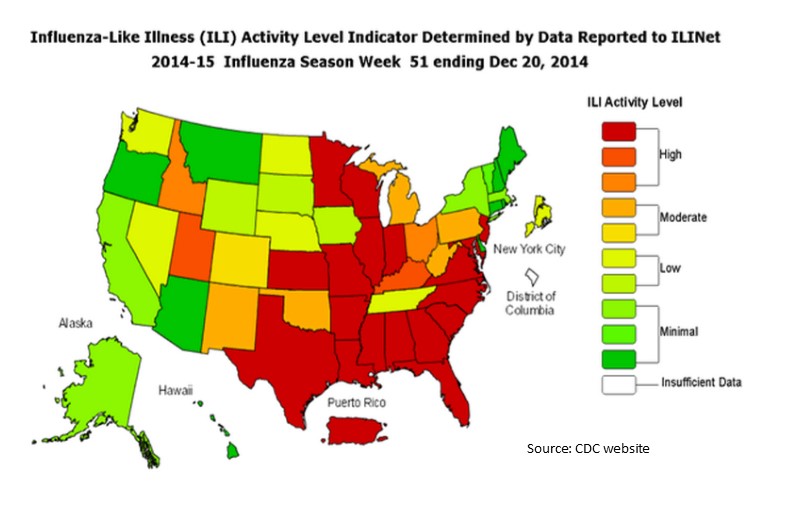
Within the past week, spurred by new data from the Centers for Disease Control and Prevention, increases in flu incidence around the nation, including Connecticut, have been reported.  The state Department of Public Health (DPH) reports a total of 444 positive influenza reports for the current season. Influenza was reported in all eight Connecticut counties: New Haven (141 reports), Fairfield (137), Hartford (68), Litchfield (30), New London (24), Middlesex (22), Windham (13), and Tolland County (9).

According to the CDC, widespread influenza activity was reported by 36 states, including New York, New Jersey and Massachusetts, in addition to Connecticut. As of last week, a total of 180 hospitalized patients with laboratory-confirmed influenza have been reported in Connecticut, DPH data indicates, with 19 associated with Type A (H3N2) influenza, 153 with Type A (subtype unspecified), and 8 with Type B. No flu-associated deaths have been reported to date in Connecticut, although the CDC reports more than a dozen deaths nationwide.

Public health numbers and marketing numbers are vastly different, with DPH reporting that “Connecticut influenza activity has been increasing during the last several weeks," but at levels in the hundreds statewide, not tens of thousands in a single city.  Advertisements for Puffs tissues in other major markets include these triple-digit numbers:  904,564 in Philadelphia, 369,631 in Detroit, 132,047 in Milwaukee, 157,298 in Kansas City and 348,801 in ColumbusCDC map

“FAN provides critical status levels for each regional market area, reflecting seasonal severity and potential spread rate of illness throughout the season. With consumers only purchasing cough-cold and flu-related products when afflicted, this data is vital for maximizing ROI on promotions, marketing, product placement, and supply chain. The FAN program offers retailer-specific reporting as well, designed to each retailer’s specific trading area and distribution network,” the IMS website indicates.

The website goes on to explain that “For today's consumers, managing health is often a do-it-yourself project. IMS Health provides the most in-depth and reliable information and tools available to monitor health and make informed decisions about care.”

Founded in 1954, Danbury, Connecticut-based IMS is now the largest vendor of U.S. physician prescribing data, according to the company’s website. IMS pays pharmacies for anonymized prescription data, which it sells to drug makers curious about individual doctors’ prescribing habits.

IMS Health Global Headquarters remain in Danbury, at 83 Wooster Heights Road. The company website lists more than two dozen locations throughout the United States and in Canada, Japan, China, Latin America, Asia Pacific, North Europe and Africa, South Europe and the Middle East, Central Europe and Eastern Europe.

Company President Ari Bousbib points to IMS Health’s 10,000 professionals as their “most valuable asset. They include clinicians, epidemiologists, technologists, software engineers, data scientists, health informatics specialists and services experts—all with a deep understanding of customers and local markets around the world.”phoenix

The company does consulting work and trend analysis of the drug business. That portion of the company is growing faster than its data business, driving the 4.1 percent increase in the company’s total revenue last year, according to published reports. IMS Health became a public company last April, following four years as a private company.  As a corporation, IMS Health has made support for cancer prevention, treatment and research a focus of corporate philanthropy efforts.  That support has included major contributions to the Connecticut-based Hole in the Wall Gang Camp, for children with cancer.

puff facebook


Demographics in New England Bring Enrollment Challenges for Higher Education

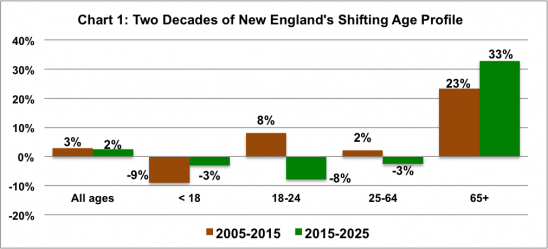
Connecticut’s public colleges and universities are pulling out all the stops to bring students back to campus who may have started – and stopped – their pursuit of higher education years ago.  Incentive programs – including free classes – are driven by an acute need to counter declining enrollment from “traditional” students that recent data suggests will continue to intensify for years to come. The New England Journal of Higher Education, using U.S. Census data, found that New England is demographically the oldest and most rapidly aging of the nine Census divisions in the United States. The Journal reported that “Its median age, which is now over 40, has risen by seven years since 1990. This region has six of the 12 states with the most rapidly rising median ages. Maine, Vermont and New Hampshire have the nation’s highest median ages (43.9, 42.4 and 42.3) and also rank first, second and third among the most rapidly aging since 1990.”Chart-1_Franchese-548x249

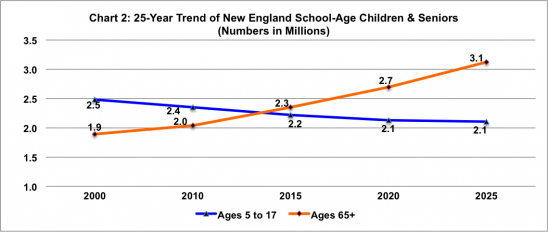
Between the 2000 and 2010 census, the number of children under age 18 in New England declined 197,000 or 6 percent, the Journal reported. From the 2010 census until mid-2013 this region dropped another 102,000 children, and that rate of decline is projected to continue. From 2010 to 2013, every New England state had more people move out than move in. In total, the region lost a net of almost 100,000 people through out-migration in just those three years.

After reaching an all-time peak in 2010, enrollment at Connecticut's 17 community colleges, state universities and the online-only Charter Oak State College – which make up the Connecticut State Colleges and Universities (CSCU) system - dropped to 92,989 last academic year, down 4.3 percent from its peak and its lowest level since 2008.  At Central, Southern, Eastern, and Western Connecticut State Universities combined enrollment reached its lowest level in 14 years, Hartford Business Journal has reported.

Writing in the New England Journal, a publication of the New England Board of Higher Education, demographer Peter Francese pointed out that “the most rapidly growing ages in New England are, by far, people aged 65 or older. That combined with the decline in numbers of children portend a very difficult decade for the region’s colleges and universities.”

Using state published projections, he describes “a picture of continuing decline among children, but also forecasts a shift in the 18-to-24 age group and the 25-to-64 age groups from growth in the past to decline in the future. However, the past double-digit growth among residents age 65 or older is projected to continue at an even faster pace over the next 10 years.”Chart-2_Franchese-548x232

The data and projections also indicate that the region is fast approaching “a tipping point where the number of elderly will increasingly outnumber school-age children.”  Francese, director of demographic forecasts for the New England Economic Partnership and founder of the former American Demographics magazine, suggests that “that this trend will mean continuing erosion of financial support for local public education. It may also mean a gradual erosion in the quality of the region’s secondary schools and the consequent impact on those in higher education who depend on having a reliable source of college-ready high school graduates.”

Enrollment at the 17 CSCU institutions in Connecticut for Fall 2014 was down by 1,428 students, or 1.5 percent, from the previous year, according to data compiled by the state Office of Higher Education.  The total number of students, 91,192, includes more part-time than full-time students – 47,670 part-time versus 43,522 full-time.  At the flagship University of Connecticut, which is outside the CSCU system, enrollment climbed 2.1 percent between 2013 and 2014, boosted by the hiring of additional faculty and additional state funding for "Next Generation UConn" - expansion plans that project increasing enrollment at the university's main campus by one-third over the next decade.

Chart 1: U.S. Census Bureau 2005 population estimates, New England states projections and author’s calculations; Chart 2: Historical data is from the Census Bureau, population projections are by each New England state.  These charts first appeared in the New England Journal of Higher Education.

Diversity Appears Lacking On Boards Leading Connecticut’s Technology Efforts

As Connecticut steps up its push into technology fields, seeking increased economic activity and more jobs, two of the organizations often associated with propelling opportunity for entrepreneurs and existing tech businesses appear to be less than representative of the state’s diverse population. The Connecticut Technology Council, a statewide association of technology oriented companies and institutions, has 49 individuals on their Board of Directors, according to the Council website.  Based on a cursory review, among the 49 members of the board,  one is African American, two are Asian, and six are women. The seven officers of the organization are all white males. state-tech

Connecticut Innovations, a quasi-governmental organization, has 13 appointed members on its Board of Directors, along with four ex-officio members. Among the appointed members, none are women, none are African Americans, one is Hispanic, and one is Asian American.   Eleven of the 13 appointed members are white males, a review of the website reveals.

The Connecticut Technology Council provides leadership in areas of policy advocacy, community building and assistance for growing companies.  Speaking for over 2,000 companies that employ some 200,000 residents, the Council seeks to provide a strong and urgent voice in support of the creation of a culture of innovation, the organization’s website explains.

This includes working to position Connecticut as a leader in idea creation, workforce preparation, entrepreneurial aptitude, early stage risk capital availability and providing on-going support and mentoring to high potential firms.connecticut-technology-council

The mission of the Connecticut Technology Council is “to build an interactive community of innovators and their supporters that can leverage these great advantages to create a thriving economy, job growth, a global reputation for entrepreneurial support, and a lifestyle that attracts the best and brightest people to come here and retains the young people who have grown up here.”CTC board

Since its founding in 1994, the CTC has had the continued support of the state’s leading corporations, which have enabled CTC to stimulate and facilitate the growth and awareness of technology-based companies throughout Connecticut.  The CTC currently lists 10 major sponsors – including corporations, businesses and law firms – and 28 supporting sponsors.

Members include investors, startups, established public and private companies, university and private industry researchers, government agencies, academic institutions, local development agencies, and senior executives from a wide range of industries.

Connecticut Innovations (CI), a quasi-governmental organization created in 1989 to provide strategic and operational insight to companies to push the frontiers of high industries such as energy, biotechnology, information technology photonics, plays a key role in the deployment of the state’s efforts toward supporting innovation and entrepreneurship.  The Connecticut Development Authority was folded into CI three years ago.

Connecticut Innovations’ Board of Directors includes four women serving in ex-officio capacities - all by virtue of the elected or appointed positions they hold:  State Treasurer Denise Nappier, Department of Economic and Community Development Commissioner Catherine Smith, Deputy Secretary of the Office of Policy and Management Karen Buffkin, and Board of Regents for Higher Education Director of Innovation and Outreach Gail Coppage.  Among the appointed members of the Board, none are women, none are African Americans, one is Hispanic, and one is Asian American.

The 17-member board is composed of nine members appointed by the governor and four appointed by the leadership of the General Assembly, as well as four ex-officio members who serve by virtue of their positions with the state: the State Treasurer, Commissioner of the Department of Economic and Community Development, the President of the Board of Regents for Higher Education, and the Secretary of the Office of Policy and Management (or their designees).

Connecticut Innovations’ Board of Directors is responsible for developing the overall strategic framework from which the organization creates policies and initiatives to help it succeed. The board is responsible for adopting an annual plan of operation and budget, overseeing the organization’s financial activities, including its investments, and overall governance of Connecticut Innovations. CI Board

Connecticut Innovations’ board of directors announced earlier this month that Claire Leonardi has resigned as chief executive officer. Leonardi’s last day will be January 8, 2015, which will allow her to assist with the transition and help the board name a successor, according to a CI news release.  Leonardi led CI for three years, and her accomplishments include its consolidation with the quasi-public Connecticut Development Authority, absorbing CDA.

CI was also in the news earlier this fall, when the quasi-public put on hold its investment and entrepreneurial programs until early next year because it lacked sufficient state funds to cover additional commitments, according to published reports.  Funds were allocated by the State Bond Commission last month.

The State Department of Economic and Community Development (DECD) and CI have created an Innovation Ecosystem called CTNEXT. As a public-private partnership, CTNEXT catalyzes public and private resources to better support the formation, growth and attraction of companies with high growth potential, according to the state’s Economic Development Strategy report, published earlier this year.  That document notes that “Diversity of people is also a critical prerequisite to innovation.”


As Latino Population Increases, Schools See More English Language Learners

A snapshot of America in 2044, based on U.S. Census Bureau data and current trends, will show this:  a nation with a youthful, growing minority population juxtaposed against an aging, slow-growing and soon to be declining white population. New population projections show whites will become a minority by 2044, according to published reports. The new projections from U.S. Census Bureau figures shows two trends for America's population -- a long-term decline for the nation's white population, making up just 49.7 percent of the population by 2044, and a growth of new minorities -- Asians, Latinos and multiracial persons. The populations among the rapidly-growing Latinos, Asians and multiracial populations are all expected to double in size over the next 30 years. Specifically, the rise of Latinos is projected to make up 25.1 percent of the U.S. population in 2044, doubling African-Americans, according to the data projections reported in the Latino Post.  By 2027, more than half of America's 20-somethings will be racial minorities, and in the 2028 presidential election, 40 percent of all eligible voters will be racial minorities._Hispanic_students

In Connecticut, the demographic shift is underway.  The Hispanic percentage of the statewide population in 2013 stood at 14.7 percent, steadily climbing during the past decade.  The Hispanic percentage of statewide population under age 18 in 2013: 22 percent.

When the website ctlatinonews.com selected five “Young Latinos to Watch” this month, two of the five were newly elected legislators.  Aundré Bumgardner was a surprise winner on Election Day.  The Republican, whose family is from Panama and Puerto Rico, will be the youngest State Representative in Connecticut’s legislature.  The 20 year-old won his party’s nomination to run for the state House from the 41st District, which covers Groton and New London.  Rep.-elect Christopher Rosario may be new to the state’s legislature, but he is not new to advocacy, politics  and working on behalf of the Latino community. He will represent his hometown of Bridgeport in the state legislature from the 128th District.   He has been Bridgeport’s youngest department head as Director of Anti-Blight under the Office of Neighborhood Revitalization.

Recent news reports highlight one of the issues that the legislature will be grappling with.  An analysis by CT Mirror found that during the 2013-14 school year, Hartford Public Schools had the most English Language Learner (ELL) students, with 3,550, but Windham had the highest percentage of ELL students at 23.8 percent.  The largest peeducation_student_newsrcentage increases in ELL students, between 2001 and last year, came in Windham (11.8% increase), Danbury (up 9.4%), Norwich (up 9.1%), and New London and West Haven (both up 7.4%).



The increasing number of ELL students in Connecticut is reflected in the current top 20 communities, according to the CT Mirror data, compiled from the State Department of Education:

  1. Hartford 3,550
  2. New Haven 2,709
  3. Bridgeport 2,685
  4. Danbury 2,204
  5. Waterbury 2,114
  6. Stamford 1,870
  7. New Britain 1,659
  8. Norwalk 1,277
  9. Meriden 1,011
  10. Windham 774
  11. West Haven 678
  12. East Hartford 606
  13. New London 588
  14. West Hartford 490
  15. Greenwich 486
  16. Norwich 465
  17. Manchester 351
  18. Torrington 334
  19. Bristol 317
  20. Wallingford 275

The top twelve municipalities with ELL students, by percentage of their student population:demographics_icon

  1. Windham 23.8%
  2. Danbury 20.4%
  3. New London 19.2%
  4. Hartford 16.7%
  5. New Britain 16.5%
  6. Bridgeport 12.9%
  7. New Haven 12.7%
  8. Meriden 12.5%
  9. Norwich 12.4%
  10. Stamford 11.8%
  11. Norwalk 11.5%
  12. West Haven 11.4%
  13. Waterbury 11.4%

The legislature's Latino and Puerto Rican Affairs Commission (LPRAC) is hosting this public policy forum on English Language Learners (ELL) and bilingual education in Connecticut on Tuesday, January 13, at the State Capitol in Hartford.  It will feature classroom teachers, business, professors, and legislators discussing the status of ELL/bilingual education and how to improve outcomes for Connecticut’s non-English speaking children.

Pediatric I.V. Backpack Invented by 11-Year-Old Passes Another Milestone

Eleven-year-old Kylie Simonds of Naugatuck sought to raise $50,000 to manufacture a working prototype of the pediatric chemo back-pack she invented.  In just five months, she has.  Her gofundme campaign, which began on July 22, now stands at $53, 134. Kylie is a cancer survivor, and designed an I.V. backpack for children on chemotherapy, receiving transfusions, or other medical reasons.  Her goal was to improve mobility – to make moving around easier, eliminating the traditional I.V. poles. 1791872_1406591846.6065_multi

Kylie was challenged to come up with an invention through her school (Cross Street School) and the Connecticut Invention Convention, held annually. More than 130 Connecticut schools participate, creating over 10,000 young inventors each year. Kylie's invention was chosen by her middle school teachers, among others, and she attended the Invention Convention, where over 700 of the top inventions were displayed and many selected for awards and recognition.

Kylie's invention received four awards, including the "Patent Award", the highest award at the convention. The Patent Award has allowed Kylie's invention to be submitted to the US Patent & Trademark Office with the sponsor covering all costs.

Her accomplishment was recently noted in the Bulletin of the Connecticut Academy of Science and Engineering, and has been featured in news media stories in Connecticut and beyond.  Last month, she was among ten young people (she was the youngest) honored as “women in tech” at the Women of the Year Awards sponsored by Glamour magazine.

With help from her father, Kylie is now doing R&D to make the prototype.  She has found numerous infusion pumps that will suit this idea but the cost for them is thousands of dollars.  For example, the controller device will need to be customized to be mobile and also small enough to fit in a backpack.  Additionally, the backpack will need to be designed to support both the IV infusion pump and the carry rod.

Kylie, the oldest of three children in her family, underwent 46 weeks of chemotherapy and is in remission from rhabdomyosarcoma, a cancer that affects the soft tissues and connective tissues or bones.IV-Pediatric-Backpack-for-Kids-With-Cancer

“I used to have to use the IV poles and I always tripped over all the wires,” she said. “It was hard to walk around and I always had to have someone push it for me because I was kind of weak when I was in chemo.”

She hopes to begin production of lines of the backpacks for boys and girls, which will incorporate animal features into the design to make them fun for young children.  Next would be researching designs for a backpack line for teens and young adults.

A total of 1,289 people have donated to her fundraising initiative, which remains active, according to the webpage.  Kylie has indicated that all donations in excess of her $50,000 goal will go towards the manufacturing of the “first usable I.V. backpacks.  EVERY PENNY!”


One Percent of Last Year’s Unaccompanied Children Immigrants End Up in Connecticut

One-in-three (36 percent) of the nearly 54,000 unaccompanied children released to sponsors over the past year after their apprehension by U.S. immigration authorities have been placed in homes in three states – Texas, New York and California, according to Office of Refugee Resettlement (ORR) data. Connecticut is now home to 570 of the children, about one percent of the total, who have been temporarily resettled between October 2014 and October 2015, according to totals compiled by Pew Research Center using Department of Health and Human Services ORR data. OLYMPUS DIGITAL CAMERA

Among the New England states, New Hampshire has taken in 35 children, Maine 17, Vermont has 3, Rhode Island 215, and Massachusetts 1,405. The children are placed with sponsors, often relatives, while they wait for their next court appearance in immigration court. These cases can be delayed if asylum is sought, the Pew Research Center report indicated.

Last summer’s surge in the number of children without their parents apprehended at the Southwest border overwhelmed federal resources. Many of the children were making the dangerous journey from Mexico and Central America to the U.S., with sharp increases in apprehensions among children under 12. The issue brought widespread media attention, and strong opposition and support from people throughout the nation, especially in the southwest border states.

At the time, the Connecticut Commission on Children urged Governor Malloy to reverse his denial of a request by the Obama Administration to house children in a state facility.  In a July 21, 2014 letter, Commission Executive Director Elaine Zimmerman wrote:1=20=25

“Recently, the Obama administration asked the State of Connecticut for assistance in hosting a number of these children within our state while their status is processed by the federal government. While we fully support your decision to not host the children at the Southbury Training Facility, or any other facility ill-equipped to house children safely, we believe that there are state, private, institutional, as well as faith-based resources in Connecticut that could respond well, through your leadership, to the President’s request.”

Since last summer, apprehensions of unaccompanied minors crossing the U.S.-Mexico border has decreased dramatically, according to published reports, from 10,508 in June alone to 2,529 in October, U.S. Customs and Border Protection data indicates.

Texas took in the highest number of unaccompanied minors, with 7,409 children placed during fiscal year 2014, which ended on Sept. 30, government data showed. New York and California each took in just under 6,000 children. These three states account for more than half (53 percent) of the nation’s Hispanic population.


immigrantmap

New Interactive Tool Brings Focus to Cuts in State Funding of Children's Programs

If a picture is worth a thousand words, the impact of a series of interactive data visualization graphs must be, well, off the charts.  For Connecticut Voices for Children, the new online, interactive visualization tool has been designed to help the public and policymakers see how funding for children's programming in Connecticut has fallen through the years.  Coming on the brink of a new legislative session and an ever-tightening state budget, the hope is that more widespread understanding of  past trends will forestall further cuts. logo.inddThe new interactive tool, on the Connecticut Voices for Children website, enables visitors to track spending across nearly 100 children’s programs over 25 years.  Over the last two decades, spending on children’s programs has declined from 40% to 30% of the state budget, according to the advocacy organization.  Had the state not changed its budgeting priorities, it would have invested about $1.5 billion more each year in children’s programs—enough, for instance, to be the first state to implement a universal early care and education system, Voices points out.Picture1
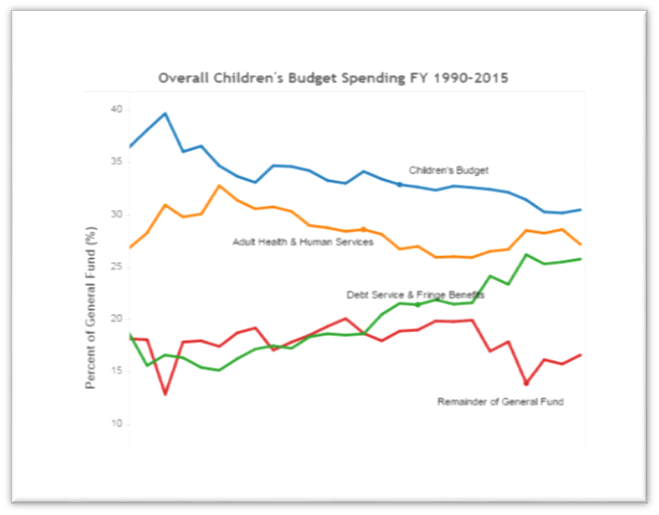
The new interactive tool, created by Connecticut Voices for Children, enables users to create their own graphs of state budget trends and then embed the charts in social media, blog posts, news articles, and reports. Users, for instance, can compare the dip in state support for K-12 education to the even steeper drop in support for higher education.

Detailed budget visualizations for Fiscal Years 1990 through 2015 are available for the following areas:

  • The overall Children's Budget (at right)
  • Early Care and Education
  • K-12 Education investments
  • Children's Health and Human Services
  • Debt and Fringe Benefits

In producing this resource, Connecticut Voices for Children seeks to draw attention to what they describe as "Connecticut’s long-term disinvestment in young people – a trend that is particularly troubling in a state with an aging and shrinking workforce that will result in an increasing demand for well educated, career ready young adults."

Regarding K-12 education, for example, the website points out "K-12 Education has declined substantially as a share of the General Fund since the early 1990s, from about one fifth to one seventh in the most recent budget. This decline is seen most clearly in Educational Equalization Grants, the state's main contribution to local school districts. State support for K-12 education in Connecticut is among the lowest of any state in the union. In Connecticut, we leave the large majority of education expenses up to towns, which have no major revenue source except the property tax, thus contributing to the state's high and inequitable property taxes."

The information used in creating the graphs is official appropriations data from the Connecticut legislature's non-partisan Office of Fiscal Analysis.

Connecticut Voices for Children's mission is to promote the well-being of all of Connecticut's children and families by identifying and advocating for strategic public investments and wise public policies. Connecticut Voices advances its mission through high quality research and analysis, policy development, strategic communications, and establishment of a sustainable and powerful voice for children.


Whittlesey & Hadley Joins BlumShapiro Among Nation’s Top 200 CPA Firms

Whittlesey & Hadley, P.C., one of the area's largest regional accounting firms, ranks #192 in the Inside Public Accounting (IPA) fifth annual ranking of the Top 200 public accounting firms in the United States.  It is the firms’ debut appearance on the industry ranking list. West Hartford-based BlumShapiro was the highest ranked Connecticut headquartered public accounting firm, ranking at #56, up from #68 a year ago.  BlumShapiro and Whittlesey & Hadley are the only Connecticut-based firms among the top 200.2014 inside

Inside Public Accounting (IPA), founded in 1987, is published by The Platt Group. The Platt Group publishes both the award-winning Inside Public Accounting newsletter and the award-winning National Benchmarking Report.

The top 10 firms – ranked by U.S. net revenue - include some well-known national names, and large regional firms not well known by businesses and consumers outside their regions.  The top 10 are:  Deloitte, PwC, Ernst & Young, KPMG, McGladrey, Grant Thornton, BDO USA, Crow Horwath, CliftonLarsonAllen, and CBIZ  & Mayer Hoffman McCan.  CohnReznick, which has a footprint in Connecticut (including a recent consolidation of suburban offices in downtown Hartford) ranked at #11.

Whittlesey & Hadley’s managing partner, Drew Andrews says, “We are pleased to see our firm join this prestigious list of growing CPA firms in the United States. This ranking represents our strategic plan to expand our professional services and talented team throughout the northeast.”

BlumShapiro was also named among the fifty “Best of the Best” by the publication, a category described as firms that “show strong growth and profitability, and rank high on numerous key metrics, they also demonstrate an enviable culture. These Best of the Best firms are at the top of their game.”accounting

“We are honored to be recognized for this prestigious award,” said Carl Johnson, BlumShapiro Firm Managing Partner.  “To be distinguished as one of the best firms … is a testament to the teamwork, leadership and vision of all employees at BlumShapiro,” said Johnson. BlumShapiro is the largest regional accounting, tax and business consulting firm based in New England, with offices in Connecticut, Massachusetts and Rhode Island.

According to the publication, net revenue at Whittlesey & Hadley grew by 7.9 percent from the previous year; at BlumShapiro up 6.5 percent.

whittlesey“With more than 540 firms participating in the IPA annual Survey and Analysis of Firms this year, along with many CPA firm associations contributing to the search to identify the IPA 200, this (is) the definitive ranking of the nation’s largest public accounting firms,” said Kelly Platt, principal of The Platt Group, the publisher of IPA.

Ablumshapiromong the industry trends cited by the publication are tighter margins, leadership changes, globalization, new regulations, acquisition pressures, evolving technology, cultural shifts, fierce competition, and commoditization of services (firms struggling to differentiate in the marketplace).

Three firms earned positions in the Top 100 for the first time, and 12 firms – including Hartford’s Whittlesey & Hadley – debut on the Top 200 list.

Other industry trends, as highlighted by Inside Public Accounting:

  • Cultural shifts – Younger employees often have different motivations and expectations than their elders at the firm. Up-and-comers who have “the right stuff” aren’t willing to wait the traditional 12 to 15 years to become partner and will challenge the firm to re-think normal career paths.
  • Lack of diversity among partners – The ever-diversifying population – in age, ethnicity, language and gender – is not reflected in the makeup of the owners of accounting firms and change is glacially slow.
  • Work environment challenges – Technology makes it possible for professionals to work anytime, anywhere. Balancing the needs of the individual with the needs of the firm, colleagues and clients can be tricky.

The IPA 200 are also engaged in acquisitions to grow in size, scope and capability, with 21 mergers reported for the group last year, adding more than 200 staff and more than $22 million into the aggregate numbers of the group.


Nonprofits Across CT Have Economic and Jobs Impact, New Database Shows

The interactive webpage was constructed and database developed prior to Election Day as a means of providing information about nonprofit organizations that their supporters could use to reach out to legislative candidates to advocate for the many charitable organizations in their local districts.  With the winning candidates now determined, the database may prove even more helpful in advocating for nonprofit organizations in what promises to be a tight state budget in 2015. The database, developed by Connecticut-based Blueprint for Impact, is an “advocacy tool” providing a range of data and information, broken down on interactive maps by Senate district and by House district.   Nonprofit organizations provide a wide variety of services throughout local communities, including some supported with state funds.  Blueprint-Horizontal

Among the categories of data available are the number of employees working in the nonprofit sector along with the total compensation paid to those employees and the payroll taxes paid and total revenue of nonprofits within each district.

In addition, the site reports on the value of grants made by nonprofit organizations, and the average age of the nonprofits operating in each district. The age of each nonprofit is the number of years since the IRS ruling on tax-exempt status was provided. In Connecticut, there are many nonprofits that have been tax exempt for over 50 years. Older organizations may be more influential in their community.

senate 13The points on the map were organized by NTEE category. NTEE is the National Taxonomy of Exempt Entities, which categorizes nonprofits based on their social purpose.

The mission of Blueprint for Impact is to “help nonprofits use data to rethink, reboot, and scale their social impact. We direct our impact into each of those three aspects.”  Christopher D. Brechlin  is the Founder of Blueprint for Impact, a registered Benefit Corporation based in Hartford, that offers a collection of data tools, services, and expertise specifically for nonprofitsonline-library.

The data used to populate the maps was accessed using the National Center for Charitable Statistics (NCCS) Enhanced Extract of IRS Financial Data, 2013. NCCS allows users to download data processed by the IRS during calendar year 2013 as submitted on forms 990, 990EZ, and 990PF. All data is therefore “as is,” or as it was reported on the forms to the IRS.