PERSPECTIVE l When Nonprofits Stories Earn Your Attention
/by Mary Cahalane What does your attention cost?
In today’s world, our attention – our mind-space – has become commodified. Ads at the checkout line, logos in every possible space – they’re filling our eyes and ears and demanding our attention. And all for some company’s profit.
 I read, nodding. I understand the value of quiet (or focus… I do work with music on). The best thinking only happens when we have our brains to ourselves. It’s precious today.
What about nonprofit organizations? Are we part of the problem? We ask for people’s attention every day.
But we use our powers for good, not evil, right?
If we stopped sending letters and emails, the void would be filled with more commercial appeals. And it’s not about who shouts loudest, though out-shouting the competition might be part of it. (That lovely woman won’t give to you if she doesn’t know you exist.)
Human attention spans are now shorter than a goldfish’s. So what’s the key to being seen and heard in our cacophonous world? How do we attract a donor or prospective donor’s attention long enough to get a response that will help support our cause?
An article in the New York Times suggested the answer to our disappearing attention spans is to be quick about it. Match your speed to the span. Say what you have to say - quickly.
But longer fundraising appeal letters generally get a better response than shorter letters. So short and fast is not always the right answer.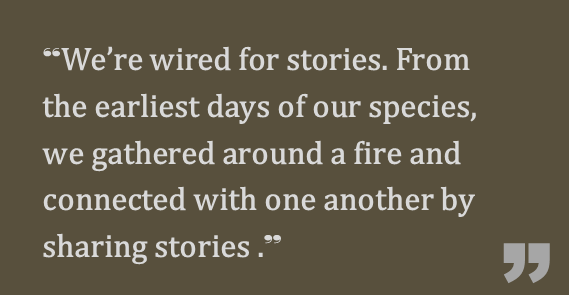
In my view, at least part of the answer is focus and intent. A sure-fire way to be seen as charming is to shut your mouth, open your ears and pay attention to the other person.
Most nonprofit organizations probably communicate too little, not too much. But we have to earn the attention we need to succeed. What we say to our donors has to be relevant – to their lives, not just to our needs and our schedules.
Are we writing about ourselves, our organizations? Or are we writing about the donor - her interest in the cause, her desire to help, her need to hear she can have an impact? If we’re going to ask for a person’s precious attention, we’d better be ready to make it worthwhile. That means making it all about them.
Another answer to short attention spans might be stories.
We’re wired for stories. From the earliest days of our species, we gathered around a fire and connected with one another by sharing stories. Diving into a story means I can put down the phone, turn off the computer and completely lose myself for a while.
Stories are powerful fundraising, too. We’re primed to enjoy them. They cut through the clutter. A great story can quiet our minds and reach our hearts. And that’s really what we hope for, isn’t it?
If you want to be noticed and want your organization to win support, use stories. Make sure your donor is the hero of the story – and leave her hanging a bit. The end of the story is up to her. Will she come to the rescue?
Mary Cahalane is a nonprofit fundraising consultant, and author of the blog Hands-On Fundraising. She has more than 30 years of experience with community-based organizations, major regional theaters and a variety of nonprofit organizations in Connecticut and beyond.
_________________________________________________________
CT by the Numbers publishes opinion articles of 600 words or less. Submissions should be emailed to info@ctbythenumbers.info. Perspectives are published at the discretion of CT by the Numbers.

 “We are equally fortunate in bringing Daniel Mackay to the Trust. Dan has tremendous experience, vision and a passion for historic preservation. We also know that he will nurture the relationships of the Trust with the Governor's office, our legislature and the other organizations we partner with. We are very excited for a bright future led by Daniel.”

 Idaho recorded the largest percentage increase over the four-month period (+2.2 percent), followed by Utah (+1.8 percent). The other leading job growth states, by percentage, were Washington, Oregon, Michigan, South Carolina, Florida, Nevada, California, North Carolina, Arizona and Vermont. In West Virginia, Louisiana and Maine, average monthly employment declined slightly.
 Much of how state economies are performing is due to the individual sectors making up their employment base, Governing reported, as several industries experienced weak growth to start the year. Nationally, construction and manufacturing employment expanded little over the first four months, and government employment (local, state and federal), similarly remained essentially unchanged since January, the analysis pointed out.


 “Studies show that kids who are physically active have higher test scores, are more likely to go to college, and smoke and drink less,” he added. ”Sports can also help build life skills, including enhancing self-esteem, unifying teams and driving social inclusion. By driving support to entities enhancing access to sports, we can help.”
 er on the Kansas state assessments than non-athletes, in all subject areas. They are clearly learning something in their classes.”
 will also receive professional guidance and mentorship from TFI staff and select media professionals. Along with the monetary grant, the three filmmaking teams will participate in a two-day workshop in the fall with activities tailored to their needs and culminating with an industry showcase to both celebrate their work and introduce them to the filmmaking community at large.
 As one example, state officials are working on a plan to replace a swinging bridge over the Norwalk River, built in 1896. "As a piece of engineering, it's just amazing," John Bernick, assistant rail administrator for the state Department of Transportation told the AP. "But, it's certainly reached its retirement age.” The computer that operates the bridge is from the 1980’s, and replacing the bridge could cost as much as $650 million.
 ent project on Twitter, where she is posting, one line at a time, the text of the novel “Gone With the Wind.” They object to the novel’s tolerance of racism.
 The July event is part of a year-long effort to listen, learn, and share with older adults, their families, their caregivers, community leaders, and experts in the aging field on how to best address the changing landscape of aging in the coming decade, officials said. Since the 1960’s the
 ment; how to remain healthy as we age; what types of services and supports can help older Americans remain independent in the community as we age; and how to support this care and the caregivers who provided it; and how to protect older Americans from financial exploitation, abuse and neglect.
 Iowa Governor Terry Branstad provided opening remarks at Wednesday’s session, followed by Malloy’s keynote address. Branstad, a Republican, and Malloy, a Democrat, were re-elected by voters in their respective states last fall.


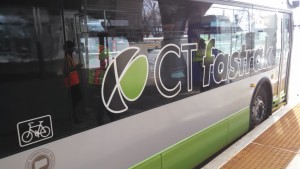 For the first time in the history of the awards program, a state agency was also selected to receive an award. The CT Department of Transportation received a special award for Starting a Revolution: Integration of Land Use and Transit in recognition of the progressive nature of CTfastrak, the bus rapid transit system opened earlier this year. The awards jury that selected the winners gave the award because they felt the new busway represents a cultural shift in how Connecticut views transit, and wanted to acknowledge the future promise of transit oriented development that will hopefully result around the station locations.