CT Ranks #21 for Working Women, New Analysis Finds
/Connecticut ranks 21st in the nation for working women seeking to balance the various aspects of work and family life, according to a new analysis by the Institute of Women’s Policy Research. The top five: New York, California, D.C., New Jersey and Rhode Island. The bottom five: Indiana, Utah, Montana, Mississippi and Wyoming.
Women make up almost half of the workforce, according to the report, which notes that “few families have someone who can stay at home to take care of health emergencies, pick children up from school and supervise ho mework, or take an elderly parent to a doctor’s appointment.” In half of all families with children, women are the primary or co-breadwinner, the report indicates, and low-income families are particularly likely to have all parents in the labor force.
“Yet, as mothers’ labor force participation has dramatically increased in the past decades (U.S. Bureau of Labor Statistics 2014) and the number of women and men aged 50 and older who provide care for a parent has tripled during the last 15 years (MetLife 2011), the development of an infrastructure to support workers with family caregiving responsibilities has been largely neglected," the report stresses.
The work and family composite compares states’ performance across three components of work-family policy—paid leave, dependent and elder care, and child care—and a fourth component, the gender gap in the labor force participation of parents of children under six, an indicator that highlights gender inequality in family care of young children.
Connecticut received an overall “C” grade in the analysis of work and family issues; no state received a grade higher than B. In breaking down the rankings, Connecticut ranked 5th in paid leave legislation, 27th in Elder and Dependent Care, 34th in Child Care, and 12th in the Gender Gap in Parents’ Labor Force Participation Rates. The report indicated that 11.6 percent of women in Connecticut have a person with a disability in their household.
 The analysis pointed out that nationally “many workers lack access to even the most basic supports such as earned sick days and job-protected paid parental leave. Quality child care is also out of reach for many families because it is not affordable. Women are the large majority of family caregivers, and in the absence of reliable family supports, too many women are forced to make difficult decisions between keeping their jobs and caring for their family members.”
New York, California, and the District of Columbia have the highest scores on the work and family composite index, which reflects, in part, high rankings on paid leave. None of the highest ranking states, however, consistently ranks in the top ten states for each of the four component indices, the analysis indicates.
The large majority of mothers are in the workforce, according to the data cited in the report, including 62 percent of mothers who gave birth within the last 12 months 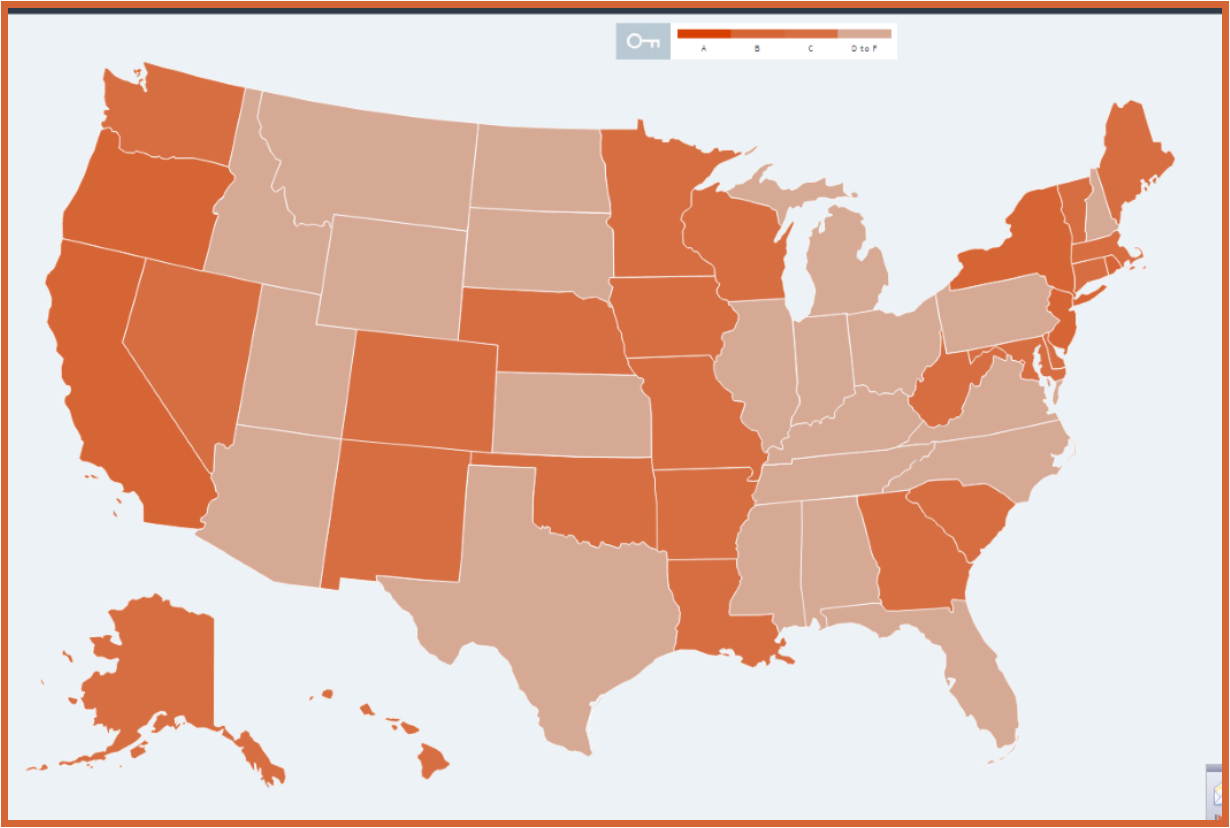 (U.S. Department of Labor Women’s Bureau 2015). The report indicates that Connecticut has 392,974 “breadwinner mothers in households with children under 18,” using 2013 data, ranking the state 25th in the nation at 29 percent.
The Work & Family index was one chapter in a larger report card developed by the Institute of Women’s Policy Research, in their Status of Women in the States report. Connecticut’s ranking was lowest in the Work & Family analysis. The state ranked as high as 4th in Poverty & Opportunity, 5th in Employment & Earnings, 6th in Reproductive Rights, 7th in Health & Well-Being, 12th in Political Participation, in addition to ranking 21st in Work & Family. Overall, Connecticut ranked 5th when all the areas researched were considered.
The Institute for Women’s Policy Research conducts rigorous research and disseminates its findings to address the needs of women, promote public dialogue, and strengthen families, communities, and societies. Among the partners in the study in Connecticut were the General Assembly's Permanent Commission on the Status of Women and Fairfield County's Community Foundation Fund for Women & Girls.
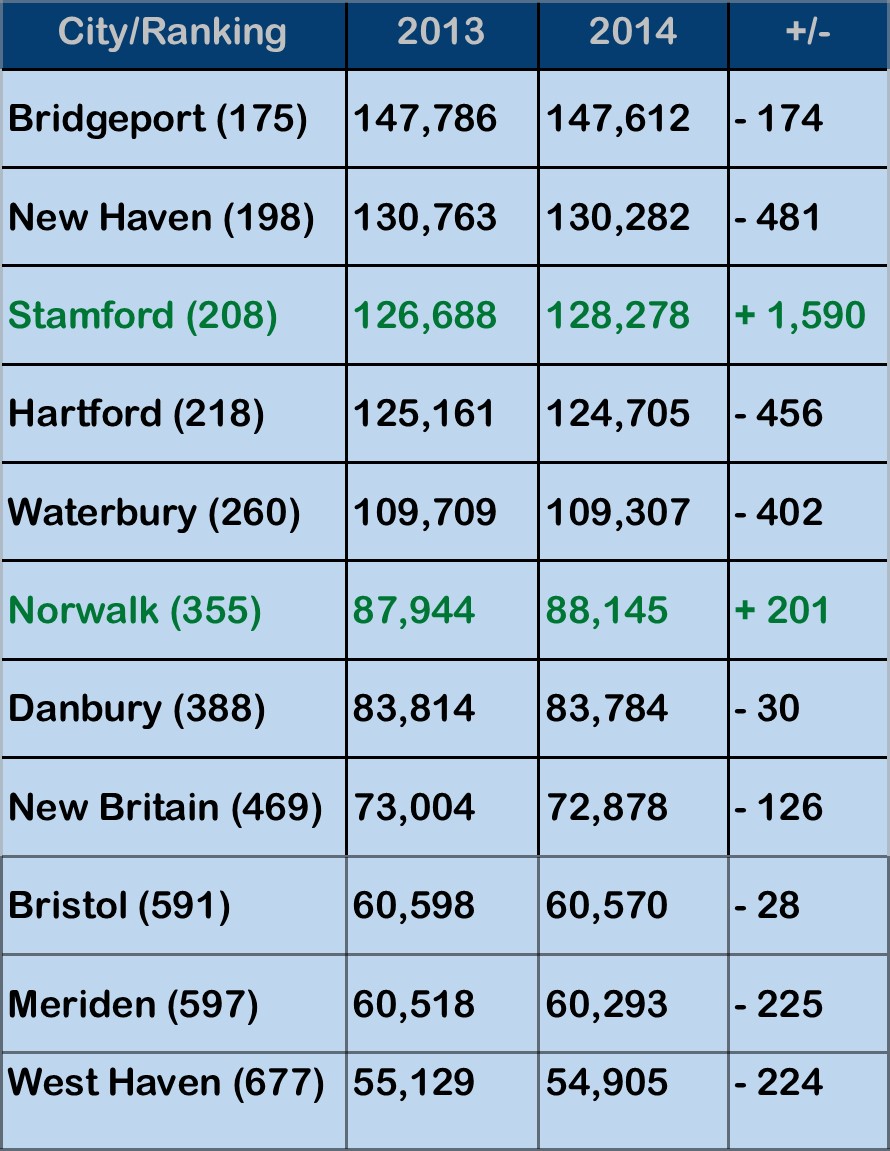 Over the past four years, population also grew in Hartford, New Haven, Stamford, Danbury and Norwalk, but declined in some of the state’s other large municipalities, including Waterbury, New Britain, Meriden and West Haven.
 wed the gap between the two cities to 2,004. Just four years ago, the population differential was 7,075. Stamford passed Hartford to rank as the state’s third largest city three years ago.
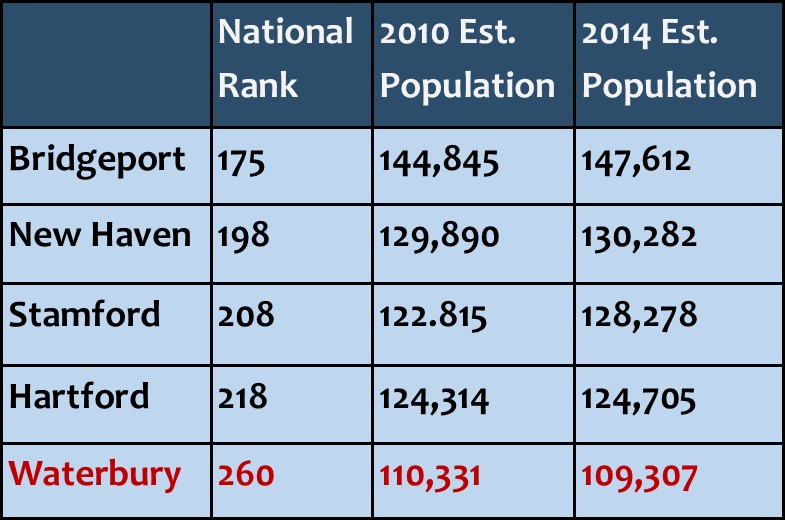 according to the census data, while Bristol (number 591) saw a slight uptick of just under 100 residents, from 60,477 to a 60,570. Meriden (number 597) saw population slip from 60,868 to 60,293. West Haven, the 677th most populous city in the nation, also experienced a drop in populations, from 55,565 to 54,905.
 The organization also accepts
 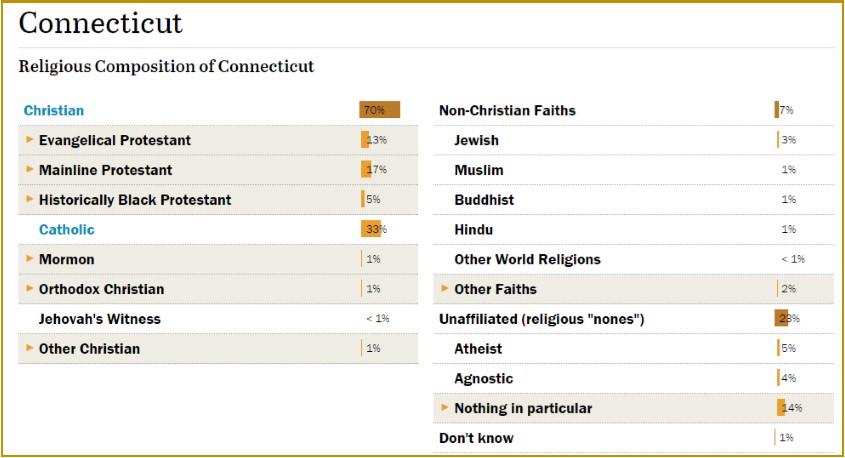 While the drop in Christian affiliation is particularly pronounced among young adults nationwide, it is occurring among Americans of all ages. The same trends are seen among whites, blacks and Latinos; among both college graduates and adults with only a high school education; and among women as well as men, according to the Pew data.


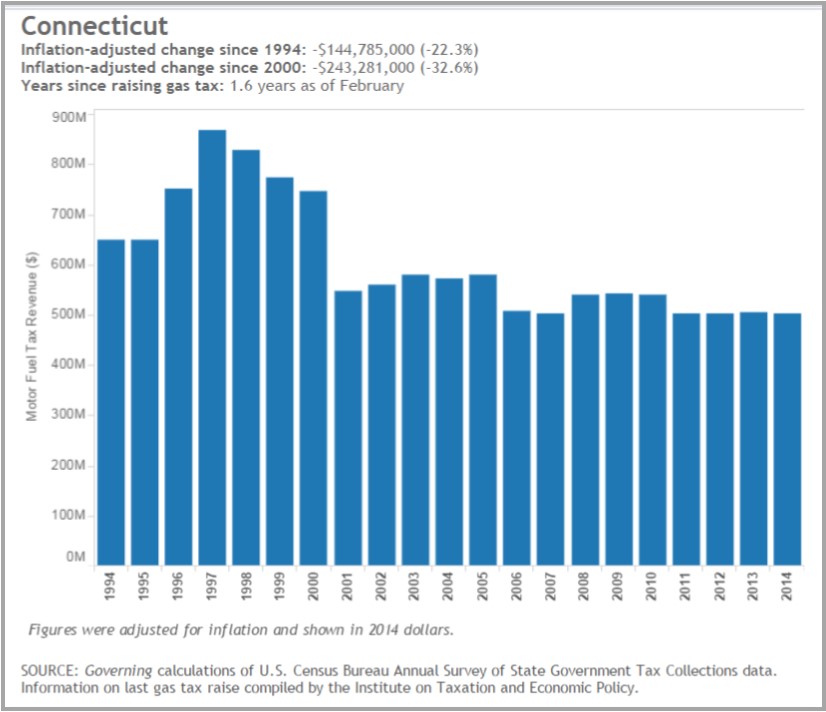 In Connecticut, the inflation-adjusted change is a reduction of in the value of the dollars provided by the tax of 32.6 percent since 2000 and 22.3 percent since 1994, according to the Governing analysis, using data from the U.S. Census Bureau and the Institute on Taxation and Economic Policy. Earlier this year, Governor Malloy announced a two-part transportation plan consisting of a
 Connecticut riders return year after year to the AngelRide — some to ride and some to volunteer for the statewide event. Westbrook resident Dan Shapiro was the first rider to register in 2004, and he has been participating in the AngelRide every year since. “I couldn’t imagine Memorial Day weekend without AngelRide,” said Shapiro. “The spirit of this ride is off the charts. We are all trying to do something bigger for the kids.”
 Day two begins at camp and ends 50 miles away in Mystic.
 There are three great areas of our domestic affairs in which, today, there is a danger that illusion may prevent effective action. They are, first, the question of the size and the shape of government's responsibilities; second, the question of public fiscal policy; and third, the matter of confidence, business confidence or public confidence, or simply confidence in America. I want to talk about all three, and I want to talk about them carefully and dispassionately—and I emphasize that I am concerned here not with political debate but with finding ways to separate false problems from real ones.



 Maryland was ranked at the top of the list, with nearly 30 percent of it’s schools earning gold or silver medals. California came in second with 27 percent, and Connecticut had 25 percent.