

CT Start-Up Wins MassChallenge, Takes Home $300,000 to Advance Work in Glucose Monitoring
/Connecticut-based Biorasis, with roots at UConn, was recently awarded the MassChallenge’s top prize at their annual awards ceremony in Boston. The company was one of only four “Diamond Winners,” receiving a cash prize of $100,000. They were also one of two teams to receive the Sidecar Award, providing an additional $200,000 in non-dilutive funding.
Biorasis Inc. is a rapidly growing medical device company committed to advancing the field of metabolic monitoring through development of implantable biosensor platforms and basic research in the areas of drug delivery, nanotechnology and microelectronics. The company’s goal is to vastly improve the quality of life of diabetics.
The technology developed by Biorasis, the Glucowizzard™, is an ultra-small implantable biosensor for continuous, reliable glucose monitoring. This needle-implantable device wirelessly transmits glucose levels to a watch-like unit for real-time display, which in turn communicates with personal digital accessories like a smartphone. Continuous metabolic monitoring “holds great potential to provide an early indication of various body disorders and diseases,” the company website explains, adding that Biorasis’ implantable multi-sensor platform is “capable of such real-time, continuous monitoring.”
Biorasis is in the business of developing a miniaturized, hypodermic-injectable biosensor for reliable continuous glucose monitoring (CGM) with autonomous operation for 3-6 months that requires no user intervention.
Their solution “eliminates surgery for sensor implantation and extraction, restores active life style, enables remote care for juveniles and the elderly, enhances compliance, and saves 50-70% in annual healthcare costs.”
The company’s co-founders and scientific advisors are:
- Faquir Jaina, a Professor of Electrical & Computer Engineering at the University of Connecticut. He has over 35 years of experience in design, modeling and fabrication of micro/opto-electronic devices, integrated circuits and multiple quantum-well light valves/modulators.
- Fotios Papadimitrakopoulos, a Professor of Chemistry and Associate Director of the Institute of Materials Science at University of Connecticut. He has over 20 years of experience in the areas of polymers, nano/bio-systems and supramolecular assembly of nanostructures.
The company continues to grow, and their scientific team is currently expanding. The Biorasis website indicates that the company is seeking individuals with “a proven track record and experience in the areas of medical devices, electrochemistry, polymer science, pharmaceutics, animal studies, microelectronics and device packaging.” Inquiries can be directed to Biorasis at the UCONN Technology Incubation Program in Storrs. Additional investors are also being sought.
 MassChallenge, an independent nonprofit organization, envisions “a creative and inspired society in which everyone recognizes that they can define their future, and is empowered to maximize their impact.” They note that “novice entrepreneurs require advice, resources and funding to bring their ideas to fruition. Currently there is a gap between the resources these entrepreneurs need and the ability of the entrepreneurial ecosystem to provide them.” To bridge that gap, the organization’s primary activities include running an annual global accelerator program and startup competition, documenting and organizing key resources, and organizing training and networking events. They “connect entrepreneurs with the resources they need to launch and succeed immediately.”

 nd compliance efforts, earned 3 points out of 4 for its combined heat and power policies and programs, 5.5 out of 7 points for state-led energy efficiency initiatives, and 1 point out of 2 for appliance standards.
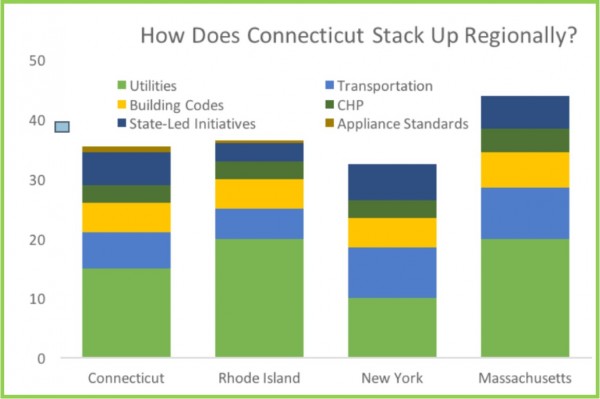 olar power in Connecticut has grown 221 percent per Capita since 2012, ranking the state 13th in the nation, the report points out. The top solar growth states in the nation, like Connecticut, have adopted renewable energy requirements, strong laws allowing solar customers to sell their excess power to the electric grid, and other policies encouraging growth of the industry, the report indicates. The industry is also adding jobs much faster than the overall economy, employing 1,600 people in Connecticut last year, according to
 ."
 United States currency will have value only to Numismatists, as a global currency replacing dollars, yuans, reals and rupees will be in increasingly electronic usage. And that currency will be paperless and coinless. In a visit to China last year, it was somewhat surprising to discover that in Beijing, coins are no longer used. All expenses are rounded up or down to the nearest paper yuan.
 out specific illnesses or perceived social injustices.




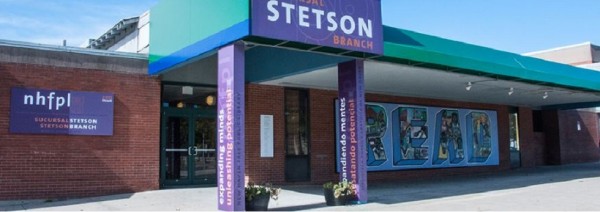
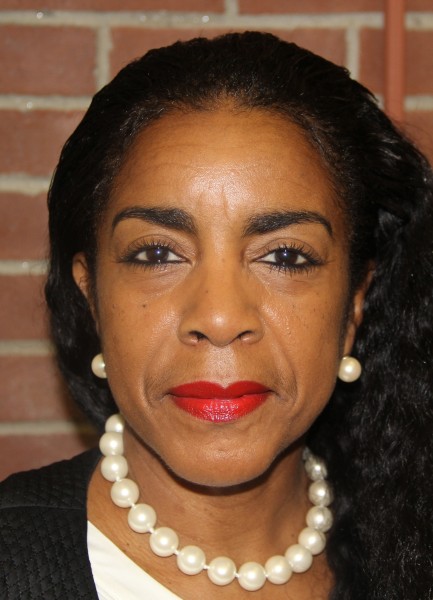 Diane Brown is branch manager of the New Haven Free Public Library’s Stetson Branch. Known as the “urban librarian” to her patrons, Brown develops valuable programs and services to meet the needs of the underserved residents in a community with high rates of poverty, crime and low literacy levels. Under Brown’s leadership, the library has been transformed into a true community center. She brings residents together by hosting cultural and educational events such as an international “pop up” festival, art exhibits, lectures and health fairs, according to officials. She has been praised for facilitating an afterschool tutoring program for K-8 students and providing opportunities for children and their families to spend time together by establishing history and game nights.
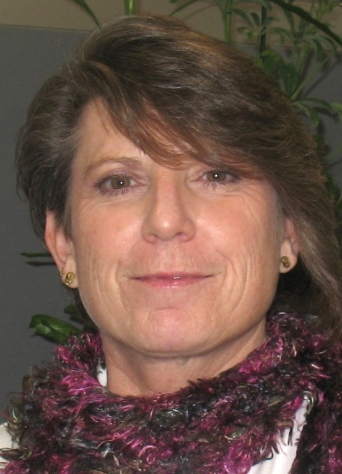 Elizabeth G. Rumery, library director for the Avery Point Campus Library at the University of Connecticut in Groton, has “transformed the library into a welcoming and dynamic place for students by modernizing the facility to meet the needs of 21st century learners.” Officials indicate that she worked with contractors and school administrators on renovating the library, with improvements including new media rooms and collaborative study spaces for students and faculty.
 The librarians join “an esteemed group of award recipients who are recognized as being catalysts for powerful individual and community change.” Only 80 librarians have received the national award since its inception in 2008, including six from Connecticut. In 2012, the recipients were Rachel Hyland, Tunxis Community College Library in Farmington, and Rae Anne Locke, Saugatuck Elementary "Secret Garden" Library in Westport. The 2011 winners included Jennifer O. Keohane, The Simsbury Public Library and Michelle Luhtala, New Canaan High School Library.
 The news came just weeks after it was announced that Laurencin is the recipient of the 2016 Founders Award, the highest honor of The Society For Biomaterials. He will be honored at the 2016 World Biomaterials Congress in Montreal, Canada on May 18, 2016.


 Thus far, eight leading funding institutions in Connecticut have expressed their intentions to commit financial contributions in support of the Collaborative goals utilizing their institutional grant-making process. Those organizations include Fairfield County’s Community Foundation, Hartford Foundation for Public Giving, Hispanic Federation, Perrin Family Foundation, Progreso Latino Fund (a committee-advised fund at CFGNH), Tariq Farid Foundation and The Community Foundation for Greater New Haven.


 This summer, Shemitz was among those appointed to serve on the state’s Commission on Economic Competitiveness, created by the legislature amidst concerns in the state’s business community about the perceived lack of competitiveness. The Commission is considering steps to improve Connecticut’s employment and business climate including measures to support workforce development and family and economic security. Recommendations are anticipated for legislative action next year.




















