Putnam High School Student Earns Spot on National Student Advocacy Board

As many Connecticut students are honored with end-of -year school awards for community accomplishments, Putnam High School Junior Jozzlynn Lewis has earned a coveted spot on a national teen board. She has been selected by Students Against Destructive Decisions (SADD) to join an advocacy-training program called SADD SPEAKs, the only youth from Connecticut to earn the distinction for the coming year. SADD state coordinator for Connecticut, the Governor’s Prevention Partnership, announced Lewis’ appointment:  “Jozzlynn was one of only 15 young people from across the country who was chosen. It is quite an honor!” said Jill Spineti, President & CEO, The Governor’s Prevention Partnership (The Partnership). “This is also significant for The Partnership because this is the first time in ten years that we have had a youth from Connecticut involved in a national SADD initiative.”speaks-300x215

Lewis’ appointment to SADD Speaks was announced recently at the Partnership’s Annual Governor’s Residence Reception, a private event at the Governor’s home, which recognizes the organization’s top corporate investors.  She addressed CEOs, Commissioners and other high level officials at the event hosted by Governor Malloy and other members of the Partnership’s Board of Directors.

Lewis, 17, underwent a competitive selection process which focused on her experience, leadership qualities, public speaking ability, and other criteria, officials said. She was recognized as a dynamic student leader who has also been involved in her local substance abuse prevention coalition, Putnam PRIDE, for many years, along with her mother, Cheryl. Her interest in SADD stems from seeing alcohol and substance use in her own school.

“Sometimes kids come to class under the influence,” explains Lewis, who will begin her senior year in the fall. “This has a negative influence on all of the students, not just the ones who use.  I became involved in SADD in order to make a difference and do my part to make things better.”image001

Spineti notes that “More than 50 percent of Connecticut's youth continue to deal with issues of drug use, family alcoholism, bullying and child abuse. We partner with SADD and exemplary students such as Jozzlynn to help children avoid all substances to ensure a healthier future.”

Although progress has been made, Spineti stresses that efforts need to be intensified.  According to the Substance Abuse and Mental Health Services Administration, nationally each month 26.4 percent of underage persons (ages 12-20) used alcohol, and binge drinking among the same age group was 17.4 percent. And nearly three quarters of students (72%) have consumed alcohol (more than just a few sips) by the end of high school, and more than a third (37%) have done so by eighth grade, according to the National Institute on Drug Abuse.

New data released this month reflected some results from efforts to reduce underage drinking during the past decade – from 2005 to 2015, there was a 15.1 percent drop in reported use by high school students.  This is better than the national average for the same time period, which shows a 10.5 percent decrease in youth alcohol use (CDC’s Youth Risk Behavior Survey), officials said.

jozzlynLewis’ commitment and dedication impressed the judging panel.

“Jozzlynn is deserving of this high honor. Her deep desire to empower her peers and change her community will serve her well, as she works to implement policy change at the local, state, and national level,” said Dawn Teixeira, SADD president and chief executive officer. “Motivated young people are a true catalyst for social change.”

“I am so very proud of Jozzlynn and her dedication to SADD, as well as her commitment to wanting to make Putnam High School and our community a safer place to learn and live,” adds Lisa Mooney, School Social Worker and SADD Advisor at Putnam High School.

SADD SPEAKs (Students for Policy, Education, Advocacy, & Knowledge) is an initiative of SADD National, funded by State Farm, that focuses on addressing an impaired driving issue. The participants will have a positive and lasting effect on public policy, demonstrating the power of America’s young people to speak persuasively on critically important issues. They will be trained in coalition building, public speaking and advocacy skills.

This year’s SADD SPEAKs delegates will develop an advocacy plan to address an impaired driving issue (distracted, drowsy, drugged or underage drinking and driving). The group will then lead the national organization’s efforts on Capitol Hill and before their own state and local governments, as well as mobilize thousands of SADD students across the country.

The SADD National Conference, held later this month in Pittsburgh, will include some attendees from Connecticut – nearly a dozen students, teachers and officials from New London will be among those on hand.

At the Governor’s Residence, The Partnership also shared its new strategic plan with the attendees who generously support the non-profit organization. The plan is focused on The Partnership’s mission to equip and connect community groups, business leaders and families to prevent substance abuse, underage drinking and violence among youth.tumblr_static_saddlogo

Created in 1989, the Governor’s Prevention Partnership is a not-for-profit partnership between state government and business leaders with a mission to keep Connecticut’s youth, safe, successful, and drug-free.  The organization focuses on positive school climate, mentoring, and the prevention of underage drinking and substance abuse.

Founded as Students Against Driving Drunk in 1981 in Wayland, Massachusetts, SADD has grown to become the nation’s leading peer-to-peer youth education and prevention organization with thousands of chapters in middle schools, high schools and colleges. In 1997, in response to requests from SADD students themselves, SADD expanded its mission and name and now sponsors chapters called Students Against Destructive Decisions.

PHOTO: Jozzlynn Lewis, left, newly appointed to the National SADD teen advocacy board with Jill Spineti, President & CEO of The Governor’s Prevention Partnership.
 

Enforcement Hold Lifted, FCC Will Now Consider License Renewal Application of WTIC-AM, Pending for Two Years

Just days after a federal appeals court upheld former Gov. John G. Rowland’s conviction for violating federal campaign laws, the Federal Communications Commission lifted an enforcement hold on WTIC-AM's license renewal. At the time that Rowland was accused of secretly accepting pay as a political consultant, he was also an afternoon radio host on WTIC-AM. His use of the airwaves in order to favor the candidate, Lisa Wilson-Foley, whose spouse was paying Rowland at the time, was raised during his trial.

The FCC is now “in a position to consider the objections that have been filed regarding the renewal application,”  an agency official told CT by the Numbers.  There is no timetable for that review, which is just beginning now that the agency’s enforcement hold has been “lifted,” or for a final decision on the station’s license renewal application.fcc-logo

The station’s broadcast license expired almost 27 months ago, on April 1, 2014.  In accordance with FCC procedures, the station filed a license renewal application on November 27, 2013.  By September 2014, the FCC’s enforcement division placed the renewal application on “enforcement hold,” which precluded any action by the agency on the renewal.

The station, owned by CBS Radio, could continue broadcasting while the FCC held the renewal application. Stations in such a status routinely continue to operate without any interruption until a decision on license renewal is made.

Even as the station remained on the air, the license renewal has been in limbo. As the agency’s Enforcement Bureau considered “an alleged violation of FCC rules,” the agency’s Media Bureau could not proceed with a decision on whether or not to renew the station’s broadcast license, typically an 8-year renewal.WTIC-AM-2

The FCC has not provided the reason that the license application was put on hold.  FCC officials have indicated that most often enforcement holds are instituted due to a complaint being filed that requires investigation, but they would not confirm whether that was true in this instance.  That information is only made available to the licensee or their attorney, according to an FCC official.

Now that the license renewal application has reached the agency’s Media Bureau, they will consider “how the allegation of violation was resolved,” as well as a range of other factors in deciding whether or not to renew the station’s license.  The other, more routine, factors include whether any other objections have been raised about the station, whether the station has been adequately serving the public in their area of license, their history of compliance with FCC regulations, and their overall performance.

Hartford Attorney Ken Krayeske filed an informal objection on October 1, 2014 to WTIC’s broadcast license renewal, alleging that the station “demonstrated serious malfeasance” and “helped conceal violations of federal law.”  The FCC has confirmed the receipt of that objection.

Rowland resigned from his drive-time talk show on WTIC-AM in April 2014.  The station currently airs a locally-originated sports talk program in that time slot. The FCC had no comment on whether the now more than two-year delay in making a determination on the license renewal is among the longest in FCC history.

Bridgeport-Based Wholesome Wave Receives $500,000 USDA Grant to Increase Food Access in Hartford and Vermont

The announcement of the second round of funding for the U.S. Department of Agriculture’s Food Insecurity Nutrition Incentive (FINI) Program, included the selection of national nonprofit Wholesome Wave to receive nearly $500,000 designated to increase affordable access to healthy food in Hartford, Connecticut, and the Northeast Kingdom of Vermont (the northeast corner of the state, comprising Essex, Orleans and Caledonia counties). The funds will flow through an innovative Farm-to-Grocery Nutrition Incentive model, which funds coupons for fresh fruits and vegetables that match the value of SNAP spent at participating grocery stores and increases locally-grown food those stores procure from nearby farmers.farmer

Combined with an additional $500,000 from other funding sources, this project will amount to a $1 million investment in Connecticut and Vermont’s local food economies, according to Wholesome Wave.

Wholesome Wave plans to work with two community nonprofits, Hartford Food System and Green Mountain Farm to School, and eight local grocery stores, to help an estimated 5,000 people purchase more fresh produce. Participating stores will purchase approximately $122,000 worth of regional produce from nearby farmers in Connecticut and Vermont.

The USDA award to Wholesome Wave was one of only 15 community-based initiatives across the country to be selected to receive multi-year grants.  The project is expected to trigger $920,000 in SNAP and incentive purchases in its first three years, officials project.  Overall, the initiative is aimed at  increasing food access for low-income residents, supporting grocery stores as healthy food providers, strengthening local economies, and driving revenue to nearby farms.

WWLogoFinal_gacrop_fullgreen_nat-01“Wholesome Wave is thrilled by the innovations that USDA is supporting through the new FINI grants, which are taking the work of increasing affordable access to healthy food to even greater levels of impact,” said Michel Nischan, CEO & Founder of Wholesome Wave. “So many SNAP shoppers are working parents with limited time to source healthier food choices. Through the new Farm-to-Grocery model, our partners in Connecticut and Vermont will be able to expand affordable access to SNAP consumers in a way that allows them to find and purchase more healthy food from a variety of retailers.”

The areas selected both face high levels of poverty and are home to farmers seeking new markets for their healthful crops, according to Wholesome Wave.  They point out that 40 percent of Hartford’s children live in poverty and 42 percent of the city’s residents use SNAP, formerly known as food stamps.

In the first iterations of healthy food incentives – which also match the value of SNAP spent – Wholesome Wave worked with local partners to offer them at farmers markets. By expanding healthy food incentives to grocery stores where many families already shop, this project is designed to offer a promising solution to each community’s food access challenges.

Wholesome Wave’s expertise in facilitating and scaling successful food access projects, combined with the local nonprofits’ experience within the communities, represents an ideal partnership to move this work forward, according to the organization.

This project builds on Wholesome Wave’s existing work across 40 states, including expansion through the large-scale FINI grant received last year, a $3.77 million grant from the USDA through the new Food Insecurity Nutrition Incentive (FINI) grant program.   Wholesome Wave began in Bridgeport in 2008; a 501(c)(3) nonprofit that strives to create a vibrant, just and sustainable food system. By making fresh, locally grown fruits and vegetables affordable and available, it enables underserved consumers to make healthier food choices.

In particular, this year’s FINI grant expands on the successes of Wholesome Wave’s and partners’ efforts to pilot nutrition incentives in grocery stores in Connecticut and Vermont.

In the first few months of 2016, Wholesome Wave invested in the Hartford food system by providing SNAP consumers with $23,000 in nutrition incentives to spend on fresh fruits and vegetables at two locally-owned grocery stores. During the program period, attributable at least in part to this project, SNAP sales at the local C-Town supermarket increased 7 percent and produce sales increased by 19 percent over the same period in 2015. USDA+Logo_wides

Executive Director of Hartford Food System, Martha Page, said: “As demonstrated in the pilot program, the SNAP Up! nutrition incentives are an excellent way to get more fresh fruits and vegetables on Hartford dinner tables. The enthusiastic response to the incentives by Hartford SNAP participants clearly shows that there is a demand for affordable, high quality produce.  For our local farmers, this will represent a new customer base that they have not been able to easily access. We are so excited at the opportunity to bring Hartford area farmers and Hartford consumers together; we believe that we will prove that good food is good business!”

National leaders emphasize how this new model will benefit their state’s economies, while increasing access to produce for low-income residents and improving the bottom line for regional farmers.

“Increasing access to fresh, healthy food for the low-income residents of food deserts will help move our communities one step closer to ending food insecurity. The federal funding awarded to Bridgeport’s Wholesome Wave to help provide fresh produce to Hartford’s local grocers is an investment in an incredible partnership that will help ensure the well-being and health of Hartford’s residents,” said U.S. Sen. Richard Blumenthal.WW-300x274

“Just a few days ago, I was at Hartford Regional Market talking to local farmers and Hartford community leaders about better connecting local food to city grocery stores,” recalled U.S. Sen. Chris Murphy. “This grant for Wholesome Wave is a great opportunity to make that happen. It just makes sense—we should help families afford locally-grown, fresh food at the grocery stores they already shop at. We worked so hard to get North Hartford its Promise Zone designation so that the city can hop to the front of the line when it comes to getting federal grants. This shows why that’s so important.”

“Food deserts correlate very highly with areas of poverty across our country, and a lack of healthy and affordable food options can have a very detrimental effect, especially on children,” said U.S. Rep. Jim Himes, who represents the Congressional District that includes Bridgeport. “With this grant, we will be able to help more families eat nutritiously in Hartford and also support the excellent work that Wholesome Wave is doing right here in Bridgeport, creating innovative ways to bring healthy, local produce into more stores and kitchens.”

In the initiative, neighborhood grocery stores will become access points for fresh local produce, and experience increased revenues. Beyond direct impact to the community, Wholesome Wave expects to use this project in the two states to develop a replicable Farm-to-Grocery Nutrition Incentive model that the organization hopes can spread nationally through their national network of over 110 organizations in 40 states – including 12 in Connecticut - with the promise of impact on a national scale.

The second-round USDA funding award to Wholesome Wave, announced this month, is for $499,720.  The programs in Hartford and Vermont’s Northeast Kingdom are expected to launch in August.


https://youtu.be/BU0sOg9GhWA

67,000 CT Homes At Risk from Hurricane Storm Surges; State Ranks 14th Among States Under Threat

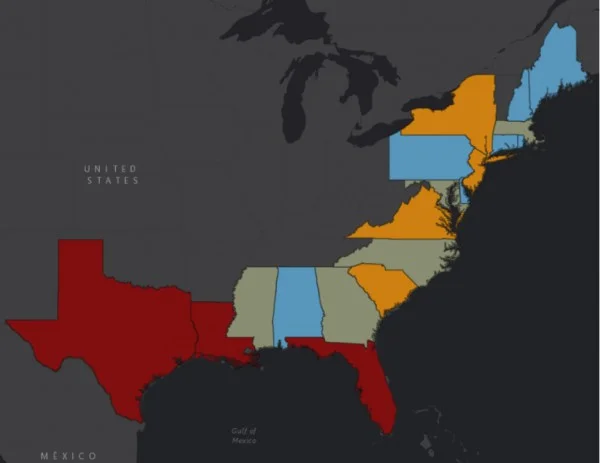
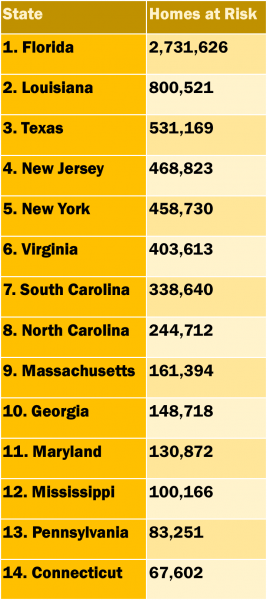
More than 6.8 million homes on the Atlantic and Gulf coasts are at potential risk of damage from hurricane storm surge inundation with a total reconstruction cost value of more than $1.5 trillion, according to a new analysis by CoreLogic.  Connecticut, which has felt the brunt of major east coast storms in recent years, ranks 14th among the states in the potential damage from future storms, with more than 67,000 homes at risk of flood exposure. According to the analysis, nearly 7,000 Connecticut homes are at extreme risk from future storms, another 21,600 homes are at very high risk, and nearly 18,000 are at high risk, depending upon the severity of the storm.  In addition, just over 21,000 homes are seen as being of moderate risk.  In the analysis, a category 1-5 storm would place a structure at extreme risk, a category 2-5 storm at very high risk, a category 3-5 storm at high risk, and a category 4-5 storm would put a home at moderate risk.

table

Among neighboring states, Connecticut ranked behind Massachusetts, New York and New Jersey.

hurricane-irene-damage-ct-nat-guard-east-haven

In addition to the number of homes at risk, the analysis also provides the reconstruction cost value (RCV), which is the cost to completely rebuild a property in case of damage, including labor and materials by geographic location, assuming a worst-case scenario at 100-percent destruction.  The analysis points out that the location of hurricanes that hit land is often a more important factor than the number of storms that may occur during the year.

At the state level, Texas and Florida, which have the longest coastal areas, consistently have more homes at risk than other states. Florida ranks first with 2.7 million at-risk homes across the five risk categories and Texas ranks third with 531,169 at-risk homes.  Since the number of homes at risk strongly correlates with the accompanying RCV, these two states rank first and fifth, respectively for having the largest RCV, according to the analysis.

The states with the most at-risk homes are Florida, Louisiana, Texas, New Jersey, New York, Virginia, South Carolina, North Carolina, Massachusetts, Georgia, Maryland, Mississippi, Pennsylvania, Connecticut and Delaware.

Rhode Island, Maine and New Hampshire ranked 17th, 18th and 19th respectively.

states

The CoreLogic storm surge analysis, officials say, complements Federal Emergency Management Agency (FEMA) flood zone information to provide a snapshot of potential damage exposure at the property level since many properties located outside designated FEMA flood zones are still at risk for storm surge damage.  The analysis examines risk from hurricane-driven storm surge for homes along the Atlantic and Gulf coastlines across 19 states and the District of Columbia, as well as for 88 metro areas.

“Using more granular-level data has given us an even clearer picture of which homes are at risk of storm surge damage,” said Dr. Tom Jeffery, senior hazard risk scientist for CoreLogic. “Despite the overall increases in risk, we were glad to see that the number and value of homes in the most extreme, and dangerous, category actually declined.”

At the regional level, the Atlantic Coast has just under 3.9 million homes at risk of storm surge with an RCV of $953 billion, and the Gulf Coast has just over 2.9 million homes at risk with $592 billion in potential exposure to total destruction damage.

When the states are ranked by the anticipated reconstruction cost value of the homes at risk, Connecticut ranks 12th.

Among the nation’s major metropolitan areas, those with the most homes potentially affected by all categories of hurricane are Miami, New York Tampa, New Orleans, Virginia beach, Cape Coral, Houston, Bradenton, Naples, Jacksonville, Philadelphia, Charleston, Boston, Myrtle Beach and Lafayette.

corelogic report

CoreLogic is a leading global property information, analytics and data-enabled services provider. The company’s combined data from public, contributory and proprietary sources includes over 4.5 billion records spanning more than 50 years.

The official hurricane season extends from June-November each year, but hurricanes are not limited to that timeframe.  The report indicates that most preseason forecasts to date have predicted an increase in both the total number of storms and the number of hurricanes in 2016, compared with the last three years. The storm predictions from Tropical Storm Risk, for example, show a 35 percent chance of this year being an above average season.

PERSPECTIVE: Cycling and Pedestrian Safety - A Progressive Movement

by Sean Alexander The majority of population within the United States utilizes automobiles for transportation.  Connecticut has the smallest percentage of people walking to work among states in the Northeast, and is one of two states with the smallest percentage of people who bicycle to work.  Although bicyclists account for less than 1% of all commuters, biking to work has increased by 60% in the last decade.CT perspective

In 2014, the Vulnerable User Bill took effect in CT and new legislation in 2016 seeks to increase fines for failure to yield.  These are stepping stones that are bringing the cyclists and pedestrians of Connecticut our deserved safety on the streets.

Although laws and bills like these are passed everyday, it is up to the authorities to enforce them.  Most importantly, it is the motorists and cyclist’s responsibility to see these rules are not just safety guidelines to follow when we see fit, but to proactively live by these rules.  When someone makes a mistake by causing a collision by speeding, forgetting to yield the right of way or disregarding a stop sign, this is no accident.  I’ve learned not to characterize such mistakes as accidents.

In 2011, my wife neaq1rly lost her life due to the carelessness and irresponsibility of a negligent driver who failed to obey the stop sign and also failed to avoid colliding with a cyclist.  My wife’s journey to this date has been exceedingly long and tortuously painful.  She has endured nearly 30 arduous surgeries and has been left with a body and mind crippled with pain and post traumatic stress.

Gaylord Rehabilitation Center is where Colleen began to rebuild her new life with her new scar stricken body.  Everyone has ups and downs during life’s journey, whether it bestows its appearance as emotionally or physically painful.  Colleen has said and will continue to say, “Everything is relative”, when someone complains of having a bad day and then realizing everything Colleen has endured.

Let me tell you, my wife has suffered an unfathomable amount of pain during this recovery process.

Jody Williams is a Nobel peace laureate and Vermont native whom Colleen and I have become friends with.  During an extreme low point in Colleen’s recovery at Gaylord’s, she recalled a quote of Jody’s, “Emotion without action is irrelevant”.  Colleen then used those enabling words and became a tool to build change starting at Gaylord’s Rehabilitation Center to q2organize a bike tour to raise money for their program.  Nearly 10 months later, the bike tour raised $12,000, which went toward purchasing four recumbent bicycles.

During the last several years, we have become cycling and safety advocates within our community.  Most recently, we joined the Board of Directors of Bike Walk CT and have become State Coordinators for the Ride of Silence.  Being tapped into these gateways of advocating for safety, our hearts and souls can feel some relief knowing we are providing ourselves as catalysts for change.

____________________________________________

Sean Alexander is a devoted husband, avid triathlete, shares the importance of laughter and works to make a positive impact in the world.   A graduate of Stetson University where he studied Marketing, he has seen first-hand what happens when drivers are careless on roadways, and has made it his passion to educate cyclists and motorists alike about mutual respect and safety.  Sean speaks about the role of care giving which encompasses nutrition, health and exercise and the importance to take care of oneself in order to care for others.

PERSPECTIVE commentaries by contributing writers appear each Sunday on Connecticut by the Numbers.

LAST WEEK: Highway Winter Maintenance Pay off?  Safety!


CT to Offer Digital Media Education to Create Employment Pathway

Connecticut’s push to strengthen its digital media workforce continues this summer, with the second year of the Digital Media CT (DMCT) summer training program, developed in partnership by the Connecticut Office of Film, Television & Digital Media and the University of Connecticut. The program is aimed at high school juniors and seniors, current college students, college graduates with majors in communications/film/television, veterans, and professionals who want to explore digital media. The four-week and two-week programs, which both begin on July 9, are designed for individuals with a demonstrated interest in digital media who want to develop the basic skills necessary to potentially seek work in the industry or augment their current skill set.

DMCT students will explore the industry’s many facets learning about media production for web, film, television, games, communications and marketing, and receive specialized skills and hands-on experience needed to pursue careers in the digital media industry. Tracks include 3D Animation, Game Design, Motion Graphics Design, Social Media Management and Web Design.brand

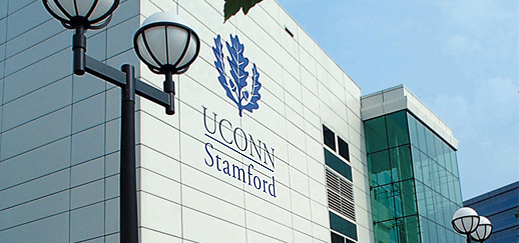
All DMCT classes will be hosted at the University of Connecticut Stamford Campus and taught by UConn's Digital Media & Design faculty and complemented with lectures from local/regional professionals and industry experts. This approach is designed to “provide students with the valuable and unique opportunity to build relationships with accomplished practitioners in respective fields.”

The training will be presented in classroom format and will provide a comprehensive introductory overview of the digital media industry, disciplines, and processes. Each of the various sections of the program will feature daily introductory seminars focused on digital art and technology. Both day and evening programs are offered to accommodate current students and those with a flexible day schedule, as well as working professionals.

stamfordxpert guest lecturers from Connecticut companies will speak regarding subjects and crafts not included in the general curriculum.  Officials indicate that upon successful completion of the DMCT, trainees will have completed a portfolio worthy project consistent with their selected track and representative of their work and learning. They will also receive a certificate of completion from the Connecticut Office of Film, Television & Digital Media for their selected track.

The cost for the four-week session, 9:30 – 4:30 daily, is $500; the intensive two-week, Monday-Friday, evening session is $250.

CTThe state’s Office of Film, Television and Digital Media supports and enhances Connecticut’s film, television and digital media industry. The film office is the statewide contact for motion picture, television and digital media production and serves as liaison between production companies, state agencies, municipalities, production facilities, local crew and vendors. The Office also administers the tax credit programs designed to incentivize the development of the industry here in Connecticut.

The Associated Press recently reported that Connecticut’s tax credit program provided $91.5 million in tax credits to 36 production companies that spent an estimated $348 million in fiscal year 2015 in the state on qualified digital and TV productions. The credit covers up to 30 percent of what's spent in Connecticut, ranging from salaries to rental equipment, according to the AP report.  The news story also indicated that the state’s job training emphasis in recent years has shifted from film-related jobs to television and digital media.

"We still have films that are shooting here, but really the lion's share of the production activity in the state is split between television and digital media. It's sort of our niche. That's sort of where we hunt," said George Norfleet, director of the Office of Film, Television and Digital Media, told the AP.

Blue Sky Studios, the digital animation studio in Greenwich, relocated to Connecticut from Westchester County, N.Y. in 2009, and Connecticut is home to ESPN, World Wrestling Entertainment, NBC Sports and NBCUniversal, which tapes Maury and the Jerry Springer Show at the Stamford Media Production Center in downtown Stamford.

More information is available from DMCT courses info@DigitalMediaCT.com or 860-270-8198.

13 CT School Districts Named Among Nation’s Best in Music Education

Thirteen Connecticut school districts are among 476 districts across the United States being recognized as among the Best Communities for Music Education (BCME) for 2016. Now in its 17th year, BCME recognizes outstanding efforts by teachers, administrators, parents, students and community leaders who work together to ensure access to music learning for all students as part of the school curriculum. The nearly 500 districts selected were culled from the nation’s 13,515 school districts.  The Connecticut districts selected are:BCME_16Logo

  • Bethel Public School
  • Bristol Public Schools
  • Canton Public Schools
  • Cheshire Public Schools
  • Glastonbury Public Schools
  • Newington School District
  • Newtown Public Schools
  • Simsbury Public Schools
  • Southington Public Schools
  • Torrington Public Schools
  • West Hartford Public Schools
  • Westport Public Schools
  • Wilton Public Schools

An additional 118 school districts, including Windsor in Connecticut, were named Support Music Merit Schools.

The NAMM Foundation advances active participation in music making across the lifespan by supporting scientific research, philanthropic giving and public service programs.  Founded in 2006, The NAMM Foundation represents the generosity and philanthropy of the music products industry.namm-logo

The organization’s website, citing a 2015 national report, indicates that 83% of teachers and 73% of parents do not see music education as a luxury, and believe that cuts to music programs are detrimental to student success.  Citing an earlier study, Namm points out that students in high-quality school music programs score higher on standardized tests compared to students in schools with deficient music education programs, regardless of the socioeconomic level of the school or school district.

brochureTo qualify for the Best Communities designation, school districts provided detailed information about funding, graduation requirements, music class participation, instruction time, facilities, support for the music program, and community music-making programs.

Studies have shown that there is a correlation exists between the amount of music training and the amount of improvement in reading fluency in children, and that music training improves scores in spatial-temporal reasoning used in higher levels of science and math.

In furtherance of music education, the NAMM Foundation and the Make Music Alliance are inviting interested businesses and organizations to organize a Make Music Day event. The annual global festival of music, “encourages first-time and seasoned music makers to come together on the longest day of the year to ‘Just Play’ and it is the perfect occasion to bring all people together to make music,” officials said.

Make Music Day is an annual celebration that occurs each June 21, when people in more than 700 cities around the world make music together on the summer solstice.


header_0

Four CT Community Health Centers Earn $1 Million Federal Grants to Expand Care

The federal Department of Health and Human Services (DHHS) has awarded Charter Oak Health Center, Inc. (COHC), located in the south end of Hartford, with a federal grant of $1 million to increase its capacity for patient care, one of four community health centers in the state to receive the federal grants. Grants of $1 million were awarded to three additional Connecticut community health centers:

  • Fair Haven Community Health Clinic in New Haven
  • Cornell Scott-Hill Health Corporation in New Haven
  • First Choice Health Center in East Hartford

The grants to the four facilities in Connecticut are anticipated to extend program services to an additional 18,776 patients, according to DHHS.  Nationally, over $260 million in funding is to be provided to 290 health centers in 45 states, the District of Columbia, and Puerto Rico for facility renovation, expansion, or construction.clinic image

Health centers will use this funding to increase their patient capacity and to provide additional comprehensive primary and preventive health services to medically underserved populations.

"We are truly excited about the award," said Nichelle A. Mullins, President and CEO of COHC. “It is an honor and a great responsibility to serve our patients and community.  It is a significant accomplishment to be recognized on a national level for our quality of care. Our mission since 1978 is to offer health care services to our community and with the funding from this grant we will be able to improve and expand our specialty services.”

COHC currently offers a wide range of services from primary medical care, to specialty services including women’s health and gynecology, pediatric care, podiatry, dental and eye care as well as nutrition and wellness therapy. The center offers urgent care services where the patients can be seen quickly rather than in hospital emergency departments. There is also an on-site pharmacy and bilingual services in all areas of care.

According to Health and Human Services Secretary Sylvia M. Burwell, “With these awards, health centers will be able to do things like increase their hours of operation, hire more behavioral health providers, add dental facilities, better treat patients with opioid use disorders, and help people get coverage through the Health Insurance Marketplace and make the journey from coverage to primary care.”

providersIn 2015, Charter Oak Health Center was one of 12 community health centers in the state to receive Expanded Service Awards from the Health Resources and Service Administration (HRSA) Health Center Program within the Department of Health and Human Services.

“Health centers are cornerstones of the communities they serve,” said Secretary Burwell.  “These awards will empower health centers to build more capacity and provide needed health care to hundreds of thousands of additional individuals and their families.”

The national grant was initiated in 2009, allowing health centers to add 6 million more patients. Health centers provide high quality preventive and primary health care to patients regardless of their ability to pay. Approximately 1 in 14 people in the U.S. relies on a HRSA-funded health center for medical care.

Nearly 1,400 health centers operate 9,800 service delivery sites in every U.S. state, D.C., Puerto Rico, the Virgin Islands and the Pacific Basin; these health centers employ more than 170,000 staff who provide care for nearly 23 million patients across the nation.charter oak

Charter Oak Health Center, Inc.  (COHC) was founded in 1978 and is an urban, 501(c) (3) federally qualified, Joint Commission-accredited, nonprofit community health center that serves the Greater Hartford, Connecticut Metropolitan Area and surrounding communities - Hartford itself being the poorest of the nation's cities with a population of greater than 100,000.

COHC is located in a medically underserved area (MUA) with an underserved population (MUP) and a health professional shortage area (HPSA). COHC is the only community health celogonter located in southern Hartford and provides Medical, Dental, and Behavioral Health services to over 18,000 patients annually.

Cornell Scott-Hill Health Center is a federally qualified community health center established in 1968 in a collaboration between the community and Yale School of Medicine. The first community health center in Connecticut, the Cornell Scott-Hill Health Center has a long history of serving New Haven neighborhoods, which are among the most disadvantaged in the State. Cornell Scott-Hill Health Center also provides health care services to those from West Haven, Ansonia, Derby, Seymour, Shelton, Naugatuck and Oxford.FirstChoiceLogo-300x164

East Hartford Community HealthCare changed its name to First Choice Health Centers in recognition of growth as a regional provider of primary care services.  First Choice provides health care to 17,453 patients who made 67,663 visits in 2014. First Choice provides comprehensive primary care from newborn through adult and elderly services. The Center offers family practice, internal medicine, pediatrics, dentistry, nutrition, sonography, and in 2011 added podiatry followed by optometry in 2012 and behavioral health services in 2014.

logo_0With locations in New Haven and East Haven, Fair Haven Community Health Clinic provide comprehensive primary health care, delivered through innovative and alternative systems of health delivery.  Healthcare teams provide access to ongoing care throughout our patients' lifetime, including preventative health services, chronic disease management, and acute illness treatment. Fair Haven began in August 1971, under the leadership of a community advocacy agency called the Alliance for Latin American Progress, opening in a local elementary school two evenings a week.  The Clinic, also renamed, grew steadily in the decades since, expanding services and patients served.

link to FOX 61 news story.


https://youtu.be/j80B4ckjOT8

health centers serve


Connecticut Is 2016’s 2nd Best State for Working Dads; Two Norwalk Businesses Earn Spot Among Nation’s Top 50 for New Dads

Working fathers in Connecticut are in a great place, according to a newly released analysis.  Connecticut is ranked only behind only Minnesota as the 2nd Best State for Working Dads, a glimpse of good news as Father’s Day approaches. Nearly 93 percent of dads with kids younger than 18 in the labor force, according to the personal-finance website WalletHub, which conducted an in-depth analysis of the Best & Worst States for Working Dads.fathers day

The top 10 states were Minnesota, Connecticut, Vermont, Massachusetts, New Jersey, Wisconsin, Iowa, Kansas, Virginia and North Dakota.  At the bottom of the list were Mississippi, West Virginia, Alaska and Nevada.

WalletHub analyzed the work-life balance, health conditions, financial well-being and child-rearing environments for working dads in the 50 U.S. states and the District of Columbia, using 20 key metrics, which range from day care quality to male life expectancy.

To identify the best and worst states for working dads, WalletHub analyzed the various factors in the work-life balance that affect paternal roles in the 50 states and the District of Columbia, focused on four key dimensions of fatherhood: 1) Economic & Social Well-Being, 2) Work-Life Balance, 3) Child Care and 4) Health.  Among the 20 factors included were parental leave policy, commute time, day care quality, pediatric services, median income, unemployment rate, and mental health.wallethub

Leading to its overall ranking of second in the analysis, Connecticut was 13th in “economic and social well-being,” third in “work-life balance,” eighth in “child care,” and third in “health.”  Among the sub-categories, Connecticut was:

  • 2nd – Male Life Expectancy at Birth
  • 2nd – % of Kids Younger than 18 with Dad Present Living in Poverty
  • 2nd – “Parental Leave Policy” Score
  • 6th – Access to Pediatric Services
  • 6th – % of Men Who Report Adequate or Any Physical Activity
  • 7th – Male Uninsured Rate
  • 14th – Average Freshman Graduation Rate for Men
  • 16th – Mortality Rate due to Heart Disease per 100,000 Men
  • 17th – Mean Hours Worked per Day Among Males
  • 19th - Median Income for Families (Dad Present) with Kids Younger than 18 Years, Adjusted for Cost of Living

50 new dadsAmong the nation’s top businesses for new dad, an analysis by the website Fatherly, determined that two Connecticut-based companies – alcoholic beverages producer Diageo and financial data and analysis provider FactSet, earned slots in the top 50.  Fatherly is a digital lifestyle guide for men entering parenthood.
Just a handful of states had companies on the list:  California (18), New York (9), Oregon (4), Massachusetts (3) and Georgia, North Carolina, Washington DC, and Connecticut, with two each.

Norwalk’s Diageo ranked 34th, and was praised for policies that include “employees receive up to 8 hours of school activity leave (up to 40 hours per year) so you won’t have to miss your kid’s big game or school play.”  FactSet, headquartered in Norwalk, ranked 46th.  The company was praised because it “recently upped it’s paternity leave from one week to 4.”  FactSet has 8,000 employees in 21 countries.  Diageo is a global leader in beverage alcohol with iconic brands in spirits, beer and wine, producing well-known brands from more than 200 sites in over 30 countries.

The top companiesdiagio factset were Netflix, Spotify, Facebook, Patagonia, Bank of America, Pinterest, Google, Microsoft, Twitter, Airbnb, Johnson & Johnson, Accenture, MasterCard, Intuit and Intel.
In addition, nine small businesses described as “leading the way,” were change.org (San Francisco), Laughing Planet Café (Portland), Upworthy (New York), Blue Corona (Maryland),  Badger Balm (New Hampshire), Square Root (Austin), Able Lending (Austin), Happy Family (New York) and ustwo (New York).

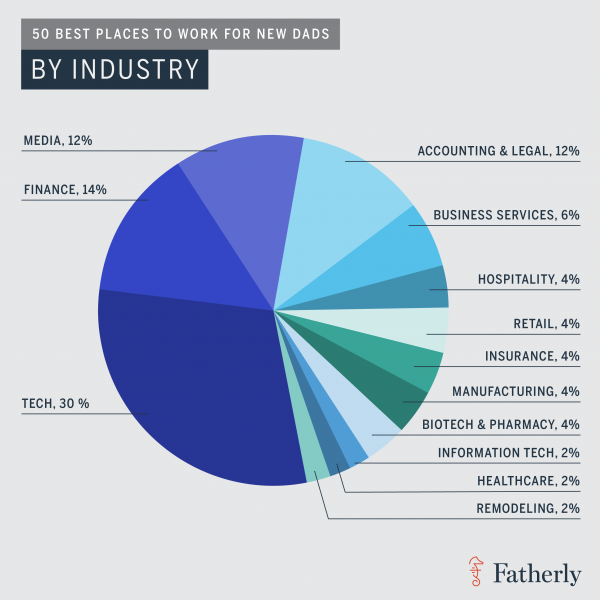
When Fatherly’s 50 Best Places To Work For New Dads was a year ago, nearly half the companies featured offered between one and 2 Fatherly_BestDadJobs_Sendoff-01-1weeks of paid leave to fathers. Twelve months later, 7.5 weeks is the average, 35 percent of companies offer between 6 and 8 weeks, and another 12 companies offer between 10 weeks and a full year, the website pointed out, attributing much of the increase to tech companies, which make up nearly a third of companies on the top 50 list.

Data used to create the WalletHub report were obtained from the U.S. Census Bureau, the U.S. Bureau of Labor Statistics, the Council for Community and Economic Research, the Centers for Disease Control and Prevention, the National Center for Education Statistics, the National Partnership for Women & Families, the American Urological Association, the Social Science Research Council, Child Care Aware of America and WalletHub research.