

Volatility Seen by High Net Worth Investors; Connecticut Views Differ From Region, Nation
/
Connecticut’s high net worth investors, coming off a year of substantial profits from Wall Street, remain optimistic, if cautious, about 2014. There are, however, distinct differences in how and where they view investment opportunities, as compared with investors nationwide, and even compared with those in neighboring New York and New Jersey.
A newly released survey conducted for Morgan Stanley Wealth Management, found that high net worth investors – those with $100,000 or more in investable household financial assets – were both realistic and optimistic about the immediate investment horizon, according to Bradley Barber, Executive Director and Family Wealth Director for Morgan Stanley Wealth Management serving coastal Connecticut, based in Greenwich.
The survey reflects “cautious optimism,” Barker said, indicating that investors understand that the 30 percent returns of 2013 are not likely to be repeated this year, but that potential remains for solid gains. “It’s a time to navigate the waters, not pull in the oars,” Barber told Connecticut by the Numbers. “It is a market of stocks, not a stock market. The high net worth investors surveyed were prescient about the volatility in the market we’ve seen since the first of the year.”
In the New York-New Jersey-Connecticut region, 86 percent of high net worth individuals said they expect their investment portfolios to be “better” or “the same” at year-end, and 84 percent believe their financial well-being will be the same or better. At the same time, three-quarters of respondents said they were concerned about stock market volatility. Among the top concerns of investors in the region are U.S. economic prospects (86%) and the federal budget deficit (83%).
Views on Industry Investment Potential Vary
There were also marked differences in the perceptions of investment potential for various sectors of the economy. Those most favored as “good” investments nationally were technology (79% nationally, 72% in CT), energy (77% nationally, 66% in CT), bio-technology (63% nationally, 67% in CT), and pharmaceuticals (56% nationally, 61% in CT). Connecticut policy makers have devoted financial resources to strengthening the state’s bio-technology industry in recent years, which may have contributed to the stronger upbeat attitudes here towards the sector as an attractive investment option.
The rocky national roll-out of the affordable health care act, and its comparatively smooth path in Connecticut, may also have been reflected in the survey findings. Unlike the national results, thos e surveyed in the tri-state area viewed healthcare among the favored sectors for 2014 - 55% “good” in the tri-state region vs. only 45% nationally.
Other industry sectors that have a strong presence in the state and region, however, did not fare as well. Aerospace was seen as a “good” investment choice by only 25 percent of those surveyed, both nationally and in the tri-state region. Insurance was viewed favorably by only 30 percent of high net worth investors, both in the region and nationwide. Those numbers, Barber said, should be “concerning” for Connecticut’s economic prospects.
Factors Close to Home of Greater Concern
Overall, the survey indicates that Connecticut’s high net worth investors have more concerns about internal factors, while New York residents expressed greater concerns regarding external factors, such as the possibility of terrorism or foreign entanglements. Connecticut investors were more concerned than their regional and national counterparts with regard to their families’ financial well-being or the ability to have sufficient funds to retire in their region of the country. While 53 percent of those in Atlanta and 59 percent nationally expressed concern over their families financial well-being, in the tri-state region seven in ten (70%) expressed that concern, with the highest numbers in the region in Connecticut.
 Connecticut’s high net worth investors, Barber said, are a savvy lot, reflecting greater knowledge of investments than the national numbers reflect, yet more than 7 in 10 say they consult financial professionals. Another clear distinction came in the percentage of investors who said dividend-bearing stocks are a good investment: 49 percent nationally, 61 percent in the tri-state area, and 71 percent in Connecticut. “There are clear indications that Connecticut’s high net worth investors are focused on opportunity,” Barber said.
High net worth investors, overall, are bullish on America. In the tri-state region 61 percent of those polled said the U.S. was their first choice for a positive investment outlook for 2014, even higher than the 52 percent who expressed that view nationally. There were also differences across the country in the issues of particular concern to high net worth investors. Regarding terrorism, 82 percent in the tri-state area, 66 percent in San Francisco and 63 percent in Denver indicated concerns, for example.
As part of the national survey of 1,004 US investors, age 25 to 75, with $100,000 or more in investable household financial assets, an oversample of about 300 tri-state area investors were interviewed. Approximately one-third of those interviewed had $1 million or more in household financial assets. The poll, released on January 29, 2014, was conducted October through December 2013, by GfK Public Affairs and Morgan Stanley Corporate Communications.
Morgan Stanley Wealth Management provides access to a wide range of products and services to individuals, businesses and institutions, including brokerage and investment advisory services, financial and wealth planning, banking and lending, cash management, annuities and insurance, retirement and trust services.

 reg Fischer, U.S. Labor Secretary Thomas Perez and Wendy Spencer, CEO of the Corporation for National and Community Service.
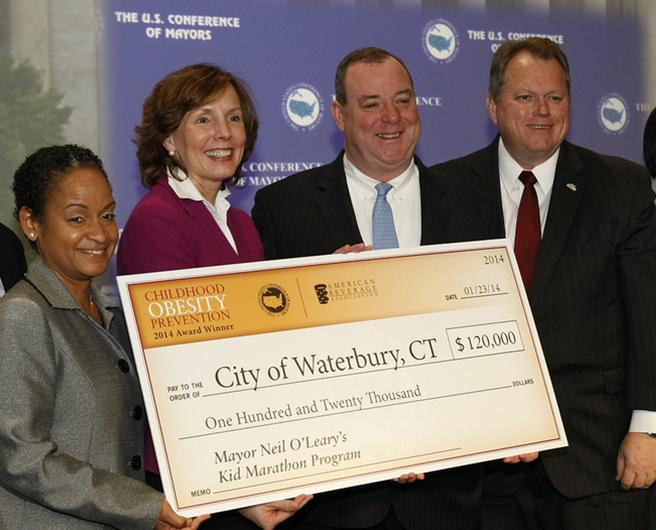
 The Kid’s Marathon Program is designed to target city youth lacking in physical activity and good nutrition habits. Students run 1-2 miles, two or three times per week, completing a cumulative 26.2 mile marathon over the course of the program. They also receive positive and practical guidance on nutrition that helps foster long-term healthy eating behaviors. In 2013, the program’s first year, 438 students participated, with the culminating 1-mile run occurring at Crosby High School before a crowd of family, friends and supporters.
 e Association (ABA), to support and/or enhance mayors’ ongoing childhood obesity prevention programs in their cities. A total of $445,000 in grants was awarded to support both new and existing programs. Denver, CO and Dallas, TX (large cities) and York, PA and Monrovia, CA (small cities) were the other recipients.
 ed Middlesex County Chamber of Commerce remains by far the state’s largest, with over 2,350 members that employ over 50,000 people. The organization, led by longtime President Larry McHugh, “strives to be the voice of business in Middlesex County and the surrounding area,” according to its
 n Chamber and the Quinnipiac Chamber began to “officially collaborate on all aspects of their respective organizations, while continuing to operate as separate business units in separate office locations.”

 who will discuss topics such as career placement basics, salary and promotions, communication, creating support groups, being culturally aware, finding a work/life balance, and appreciating the value of staying true to oneself in male-dominated fields.”
 nter - Outstanding Group:
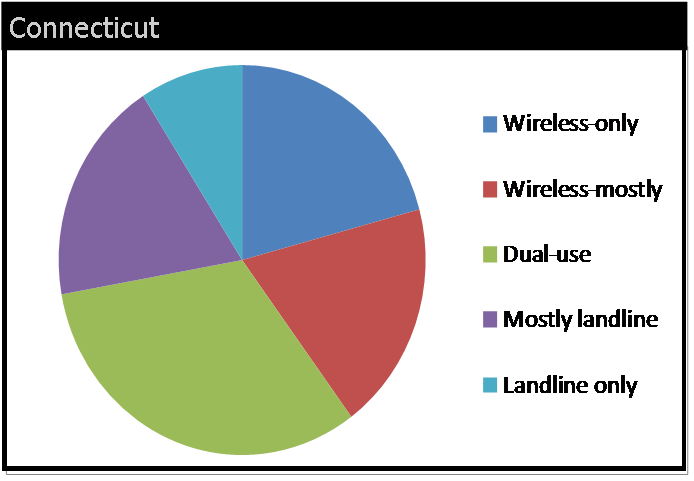
 t joined New Jersey with prevalence rates below 25 percent, including Connecticut (20.6%), Delaware (23.3%), New York (23.5%), Massachusetts (24.1%), and Rhode Island (24.9%).
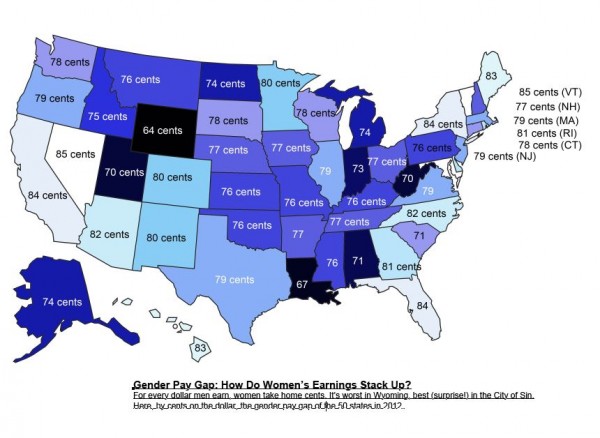 ogress is reflected in the total of 16 states in which women are now earning 80 cents or more to every male dollar, twice the count of 2010.
 wing Marion Kauffman Foundation. The
  Though they start lean, new high-tech companies grow rapidly in the early years, adding thousands of jobs along the way, according to the study findings. In fact, high-tech startup job creation is so robust that it more than makes up for the job destruction from early-stage businesses failures – a key distinction from the private sector as a whole where job losses from early-stage failures turns this group into net job destroyers, the report indicated.
 in the report, observed that “Each of the high density metro areas has one of three characteristics, and some have a combination of them all: 1) They are well-known tech hubs with highly skilled workforces, 2) They have a strong defense or aerospace presence, and 3) They are university cities.”
 , according to Payscale economist Katie Bardaro, “are dominated by high wage industries like tech (both IT and Biotech), finance or oil.” (Metro San Jose, San Francisco and Houston.) Unlike the top three, number 4 is dominated by the finance industry.
 workers there is $71,800 annually, while average starting pay is $55,500 and mid-career is $96,900 a year, on average, the magazine reported. Coming in at #7, the Hartford-West Hartford-East Hartford metro area has overall median pay of $69,200; starting median pay of $53,000; and mid-career median pay of $92,000.
 10.
10. he state’s downtowns, one that commands attention and respect for being forward-thinking while preserving the integrity and values of the past. At CMSC, “we'll continue to promote the





















