Aging Bridges, Considerable Disrepair Are Significant Challenge in CT, Nationwide

It was in 1983 that three people died in Connecticut when a section of the Mianus River Bridge on Interstate-95 collapsed into the water below, and unsuspecting drivers drove off the end of the road in the middle of the Greenwich night. That tragedy launched a multi-million dollar infrastructure investment program in Connecticut, but now, three decades later, the age and condition of the state’s bridges is front and center again, as a poorly functioning, 118-year-old railroad bridge has disrupted commuter service on the nation’s busiest rail corridor by repeatedly refusing to close. Mianus River Bridge I95

The extent of the nation’s bridge-related challenge is daunting, and yet represents only a portion of the overall infrastructure needs. Less than a year ago, a study released by the American Society of Civil Engineers determined that:

  • over two hundred million trips are taken daily across deficient bridges in the nation’s 102 largest metropolitan regions
  • one in nine of the nation’s bridges are rated as structurally deficient,
  • the average age of the nation’s 607,380 bridges is currently 42 years.

The report also pointed out that “it is of growing concern that the bridges in our nation’s metropolitan areas, which are an indispensable link for both millions of commuters and freight on a daily basis, are decaying more rapidly than our rural bridges.”
bridgesCTOnce every four years, America’s civil engineers provide a comprehensive assessment of the nation’s major infrastructure categories in ASCE’s Report Card for America’s Infrastructure (Report Card). The most recent report was issued in 2013.

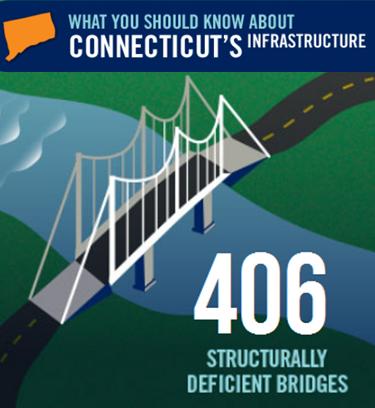
Connecticut, according to the data, has 406 of the state’s 4,208 bridges classified as structurally deficient and another 1,070 are considered to be functionally obsolete. The report also noted that Connecticut has 21,407 public road miles, and 73 percent of the state’s major roads are considered to be in poor or mediocre condition.

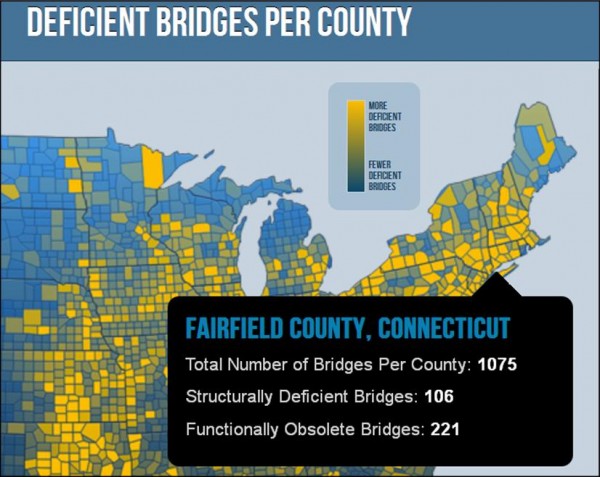
By county, the 406 structurally deficient bridges were: 106 in Fairfield County, 71 in Hartford County, 58 in New Haven County, 45 in New London County and Litchfield County, 27 in Middlesex County, 24 in Windham County and 14 in Tolland County. In addition, the report indicated that Connecticut had 1,023 functionally obsolete bridges in the state.

Structurally deficient bridges “require significant maintenance, rehabilitation, or replacement. These bridges, according to the report, “must be inspected at least every year since critical load-carrying elements were found to be in poor condition due to deterioration or damage.” Functionally obsolete bridges are those that “no longer meet the current standards that are used today. Examples are narrow lanes or low load-carrying capacity.” fairfield bridges
The Federal Highway Administration (FHWA) estimates that to eliminate the nation’s bridge deficient backlog by 2028, an investment of $20.5 billion annually would be needed, according to the report, while only $12.8 billion is being spent currently. The report stated that “the challenge for federal, state, and local governments is to increase bridge investments by $8 billion annually to address the identified $76 billion in needs for deficient bridges across the United States.”

The report indicated that 22 states have a higher percentage of structurally deficient bridges than the national average, while five states have more than 20% of their bridges defined as structurally deficient. Pennsylvania tops the list with 24.4%, while Iowa and Oklahoma are not far behind, each having just over 21% of their bridges classified as structurally deficient.

Overall, the nation’s grade for the condition of its bridges was C+, which was described as “mediocre” and in need of attention. “Some elements exhibit significant deficiencies in conditions and functionality, with increasing vulnerability to risk.” The 32-member Advisory Committee did not include any engineers from Connecticut, but did include two from Massachusetts and one from Maine, among the New England states.

Time magazine reported this week that the I-95 bridge over Delaware’s Christina River was quickly closed to all traffic on May 29, after “an engineer who happened to be working nearby noticed two of the span’s support pillars tilting.“ Officials hope to have the structure stabilized and reopened by Labor Day. The bridge had routinely handled about 90,000 vehicles per day.

The I-35W bridge over the Mississippi in Minneapolis collapsed during rush hour on August 1, 2007, plunging dozens of cars and their occupants into the river, killing 13 people and injuring 145. The bridge was Minnesota's fifth busiest, carrying 140,000 vehicles daily.asce-logo
The American Society of Civil Engineers, founded in 1852, is the country’s oldest national civil engineering organization. It represents more than 140,000 civil engineers in private practice, government, industry, and academia who are dedicated to advancing the science and profession of civil engineering. The first Report Card for America’s Infrastructure was issued in 1988.

Connecticut's Small Business Friendliness Grade Drops to "D"

A new survey of small business friendliness in the nation’s states has dropped Connecticut’s overall grade from D+ to D, and given the state a failing grade in seven of eleven small business friendliness categories.  The grades dropped as compared with last year's survey. Thumbtack.com, in partnership with the Ewing Marion Kauffman Foundation, released the third annual Small Business Friendliness Survey showing that small business owners in Utah, Idaho, Texas, Virginia and Louisiana gave their states the highest rating for friendliness to small business. In contrast, small business owners gave California, Rhode Island and Illinois an "F," while New Jersey joined Connecticut in earning a "D" grade. grade D

More than 12,000 entrepreneurs nationwide participated in this year's survey - the largest of its kind and  the only survey to obtain data from an extensive, nationwide sample of small business owners to determine the most business-friendly locations.

The survey ranked states on specific categories, including: the ease of starting a business, ease of hiring, state and local business regulations, health & safety regulations, employment, labor & hiring regulations, tax code and tax-related regulations, licensing forms, requirements and fees, environmental regulations, zoning and land use regulations, and the availability of training & network programs for small business owners.thumb logos

Connecticut received a B in two categories: ease of hiring and training & network programs, and a D in one: ease of starting a business. In all other categories, Connecticut received an F for small business friendliness.

Some of the key findings for Connecticut, according to the survey of small business owners:

  • Connecticut received a D for its friendliness towards small business, one of the worst grades in the country.
  • Connecticut received the worst grade in the nation for its regulatory friendliness.
  • The state rated in last place for its health and safety, licensing, environmental regulations, and zoning laws.
  • Small businesses in Connecticut had the second worst outlook for the national economy of any state.
  • Female entrepreneurs in Connecticut rated the friendliness of their state government 9 percent higher than their male counterparts.

connecticutIn last year’s survey, Connecticut did not receive a single grade of “F.” The state’s overall grade was D+, and included an A in training & networking,  B in ease of hiring, and  B- in health & safety regulations. Other grades were D+, C- and C. In the first survey conducted, in 2012, Connecticut’s overall grade was D, and the state was not graded F any category.

"Creating a business climate that is welcoming to small, dynamic businesses is more important than ever, but rarely does anyone ask small business owners themselves about what makes for a pro-entrepreneur environment," says Jon Lieber, chief economist of Thumbtack.com. "Thousands of small business owners across the country told us that the keys to a pro-growth environment are ease of compliance with tax and regulatory systems and helpful training programs."

Some of the survey's key findings include:

  • Small businesses in Texas, Utah and Idaho have rated their states in the top five every year this survey has run, while California and Rhode Island have been rated in the bottom five every year.
  • The friendliness of professional licensing requirements was the most important regulatory issue in determining a state's overall friendliness to small businesses. Closely following licensing requirements was the ease of filing taxes.
  • Once again, tax rates were a less important factor than the ease of regulatory compliance in determining the overall friendliness score of a jurisdiction. Two-thirds of respondents said they paid their "fair share" of taxes – that is, they felt like they were neither under-paying nor over-paying.
  • Small business owners who were aware of training programs offered by their government were significantly more likely to say their government was friendly to small business than those who weren't.


Connecticut’s Taxpayer Burden Among Nation’s Highest, Report Finds

The states with low tax burdens are experiencing net immigration, and states with high tax burdens are experiencing high net outmigration, according to an analysis by Governing magazine of data from the Tax Foundation. Connecticut, which the publication lists as having among the nation’s highest taxpayer burdens, is seeing more residents leaving than arriving, the data indicates. The 15 states with high “Tax Burdens and Taxpayer Burdens” are, ranked from highest to lowest, Connecticut, New Jersey, New York, California, Illinois, Massachusetts, Maryland, Hawaii, Rhode Island, Delaware, Vermont, Kentucky, Michigan, Pennsylvania and West Virginia.

Here’s how Governing described the Tax Foundation’s latest annual study: “Across the 50 states, the share of revenue coming from local and state taxes varies significantly, as does the mix of property, sales and income taxes. When measuring the burden imposed on a given state’s residents by all state and local taxes, one cannot merely look to collections figures for the governments located within state borders. There is a significant amount of tax shifting across state lines, and this shifting is not uniform. Further, this shifting should not be ignored when attempting to understand the burden faced by taxpayers within a state.”tax burden map

That is especially true in Connecticut, where significant numbers of residents work in New York, Massachusetts and Rhode Island. Addressing these issues, the Tax Foundation estimates the total state and local tax burdens arising from all sources as a share of state income. The Tax Foundation calls this statistic the "State-Local Tax Burden." In the Tax Foundation's most recent study, covering fiscal 2011, the "State-Local Tax Burden" ranged from a low of 6.9 percent (Wyoming) to a high of 12.6 percent (New York).

According to the report, “New York residents experienced the highest burden at 12.6 percent of income. Next were New Jersey and Connecticut, where residents paid 12.3 and 11.9 percent, respectively. Rounding out the top ten in highest state-local burdens are California, Wisconsin, Minnesota, Maryland, Rhode Island, Vermont, and Pennsylvania. Connecticut taxpayers’ burden has risen 0.8 percentage points from 11.1 percent in 1977 to 11.9 percent in 2011, putting the state in third place.

New York, New Jersey, and Connecticut have occupied the top three spots on the list since 2005. The report notes that “this may be partially attributed to high levels of expenditures which must be sustained by high levels of revenue. Further, in the case of Connecticut and New Jersey, relatively high tax payments to out-of-state governments add to already high in-state payments. This is likely related to the fact that these are high income states that pay high levels of capital gains. High levels of capital gains will result in residents paying an increased share of other states’ business taxes.”

The report also indicates that “Maine and Vermont have the largest shares of vacation homes in the country, and they collect a sizeable fraction of their property tax revenue on those properties, mostly from residents of Connecticut, Massachusetts, and other New England states.”

The organization Truth in Accounting calculates "Taxpayer Burden" -- the per-taxpayer share of the money needed (or available) to pay bills. In fiscal 2011 (the same year as the latest Tax Foundation results), the "Taxpayer Burden" ranged from a low of minus-$34,100 (a surplus, in Alaska) to a high of $50,900 (in Connecticut).

tax burdenAdded Bill Bergman, the director of research for Truth in Accounting, a Chicago-based nonprofit working to “promote truthful, timely and transparent government financial reporting”: “States that rank high on both Tax Burden and Taxpayer Burden face another challenge. The third whammy is that citizens in these states are leaving for other states, taking their taxable spending, property and income with them. It seems reasonable to suspect that their choice to leave may be directly or indirectly related to state fiscal conditions.”

Nationally, state and local tax burdens dropped in 2011 as compared with 2010, largely attributable to incomes rising that year for the first time since 2008, Governing reported. The study methodology noted that “when Connecticut residents work in New York City and pay income tax to both the state and the city, the Census Bureau will count those amounts as New York tax collections, but we count them as part of the tax burden of Connecticut’s residents.”

Since 1937, the Tax Foundation’s “research, insightful analysis, and engaged experts have informed smarter tax policy at the federal, state, and local levels” the organization’s website explains.

With Hockey History, North Carolina and Connecticut Look to Baseball, Attendance Growth

North Carolina and Connecticut – two states forever linked in the cross-currents of sports by the Hartford Whalers relocation to the Tarheel State in 1997, are both using 2014 to heighten their professional baseball credentials. The City of Hartford has announced that the Double A franchise currently in New Britain will be moving to the Capitol City in 2016 in a soon-to-be-built $60 million, nearly 10,000 seat stadium. Just two months ago, the Triple A Charlotte Knights opened their newly constructed 10,200 seat $55 million downtown stadium. The Knights are an affiliate of the Chicago White Sox. Ground was broken on the new stadium in September 2012, about an 18 month construction schedule.

BB_T_Ballpark_media_7suaxdjb_lv2jd5cuThe first Knights game took place on April 11, 2014. (photo at left) The stadium features a two-level club with skyline views as well as a VIP, climate-controlled club with full service bar. In addition to corporate suites, there are 987 club seats at the new Charlotte stadium. Of those, 170 on the upper level sell for $41.50 per game, or nearly $3,000 per season. The remaining 817 club seats, at $21 per game, sell for about $1,500 annually.  All of the club seats were sold out 10 months prior to the season opener, according to the Knights website.  Season tickets require either a two- or four-year commitment. Naming rights to the stadium were sold to BB&T Corporation in 2012. Published reports also indicate that multiple new hotels are expected to open in the area around the stadium in the coming years, along with restaurants and retail.

The Charlotte team’s website reports that “National ballpark consultants conservatively estimate that in its first year BB&T Ballpark should draw at least 600,000 fans just for baseball.” In addition to obtaining corporate sponsorships, among the fundraising initiatives along the way in Charlotte were commemorative bricks sold to be placed in the stadium’s entrance, at a cost of between $90 to $195, containing individual messages determined by purchasers. A portion of the sales went to local charities in Charlotte.

Comparing Attendance Numbers, Possibilities

The Rock Cats drew more than 307,000 fans to their 6,100-seat stadium in New Britain last year, ranking sixth in the 12-team Eastern League. The Knights were last in attendance in the Class AAA International League last year, with an average of 3,803 per game, down from a high of 4,736 in 2006, according to the Charlotte News Observer. In 2013, the New Britain Rock Cats averaged 4,653 fans per game, which ranked 59th among baseball’s minor league teams. Charlotte ranked 80th. The top team in the league - and in minor league baseball - the Columbus Clippers, drew 9,212 per game.

Knights website

The AAA Pawtucket Red Sox average attendance in 2013 was 7,827, ranked #10 in minor league baseball. The Double-A Portland Sea Dogs, also a Red Sox affiliate, ranked 47th, drawing an average of 5,096 per game. Among Double-A teams, Portland ranks tenth.

The top minor league teams, based on average attendance in 2013, are in Columbus, Lehigh Valley, Indianapolis, Sacramento, Dayton, Buffalo, Louisville, Round Rock (Texas) and Albuquerque. The top Double-A teams are in Frisco, TX (7,057); Richmond, VA (6,689); Reading, PA (6,321); Tulsa, OK (5,704); Birmingham, AL (5,669); Corpus Christi, TX (5,498); Trenton, NJ (5,373) and New Hampshire (5,125).

On July 12, 2008, the Rock Cats established a franchise record for single game attendance, with a crowd of 8,115 at New Britain Stadium. The record was broken on June 27, 2009, with a crowd of 8,212. The Rock Cats reached the 8,000 mark once again on May 31, 2014 with a crowd of 8,079.

For those who wonder if there is a Triple A future for a Hartford baseball stadium, the history of Pawtucket may be of interest. The first team to be named the Pawtucket Red Sox debuted in 1970 as a member of the Double-A Eastern League, according to Wikipedia. After three seasons as a Double-A Red Sox affiliate, Pawtucket's Eastern League franchise moved to Bristol, CT in 1973 to make room for the new Triple-A PawSox. And as most Connecticut sports fans recall, the Bristol franchise then moved to New Britain in 1983, first as a Red Sox Double-A affiliate (through 1994) and then as the farm team of the Minnesota Twins.IMG_6669

And might the presence of a stadium in Hartford, rather than New Britain, cause the Red Sox to return with an affiliate in Connecticut? Apparently not any time soon. The Sox appear set in Pawtucket and Portland.

In January 2013, the Portland Sea Dogs announced an extension of their affiliation with the Boston Red Sox as the Double A minor league team. Their contract was set to end after the 2014 season but the extension through the 2018 season was announced during the Portland Sea Dogs Hot Stove Banquet by Red Sox director of player development Mike Hazen and Sea Dogs president Charlie Eshbach. Eshbach served as Eastern League President for 11 years and is the league's longest serving active member  – dating back to his tenure as general manager of the Bristol Red Sox in Connecticut, not too many years after attending college at UConn.

“We are delighted to extend our relationship with the Portland Sea Dogs for an additional two seasons,” said Hazen at the time. “We are extremely fortunate to work with some of the best people in minor league baseball in Portland. The Burke family, Charlie Eshbach, and the entire Sea Dogs organization always go above and beyond to provide support to our players and staff. With the Sea Dogs, our minor leaguers experience the ideal environment to succeed and grow.”

The Sea Dogs are now in their 21st season at Hadlock Field, their 12th as an affiliate of the Boston Red Sox. The Red Sox originally entered into an agreement with the Sea Dogs following the 2002 season, when Portland changed affiliations from the Florida Marlins.

 (photo credit: Rob Kavaler)

rankings

Connecticut Ranked 2nd in Nation in Percentage of Workforce in Financial Industries

Connecticut ranks second in the nation in the percentage of its workforce in the financial industry, just behind Delaware and ahead of New York, Arizona and Nebraska, according to data compiled last month by the U.S. Bureau of Labor Statistics. In Connecticut, 7.9 percent of the workforce is employed in financial industries, which includes finance, insurance and real estate. The data is collected as part of the Current Employment Statistics (CES) program, a monfinancial imagethly survey of about 141,000 businesses and government agencies which provides detailed industry data on employment, hours and earnings of workers on nonfarm payrolls.

Delaware’s 10.3 percent tops the list of states, ahead of Connecticut’s 7.9 percent. The state’s percentage stayed between 8 percent and 9 percent for much of the past decade, dropping below 8 percent for the first time in May 2013. It has been at either 7.9 percent or 8 percent since then in the monthly reports. Between May 2010 and May 2014, Connecticut’s had the second largest decline among states in the percentage of workforce in the financial industry, with a reduction of 0.4 percent, exceeded only by Oregon’s 0.5 percent.

The states with the smallest percentage of workforce in the financial industries are Alaska, Vermont, Mississippi, Wyoming, West Virginia and Arkansas. Washington D.C. also has among the lowest percentages of population employed in the financial industries.

The U.S. average is 5.5 percent.

In terms of growth of the financial industry sector within a state’s workforce, the leading states are New Mexico, Montana,, West Virginia, and Delaware, among the13 states where there was an increase between May 2013 and May 2014. Connecticut was among 21 states were the percentage was virtually identical this year as compared with a year ago.

Higher Percentage of Part-time Workers in CT Than New York, New Jersey, Lower Than New England

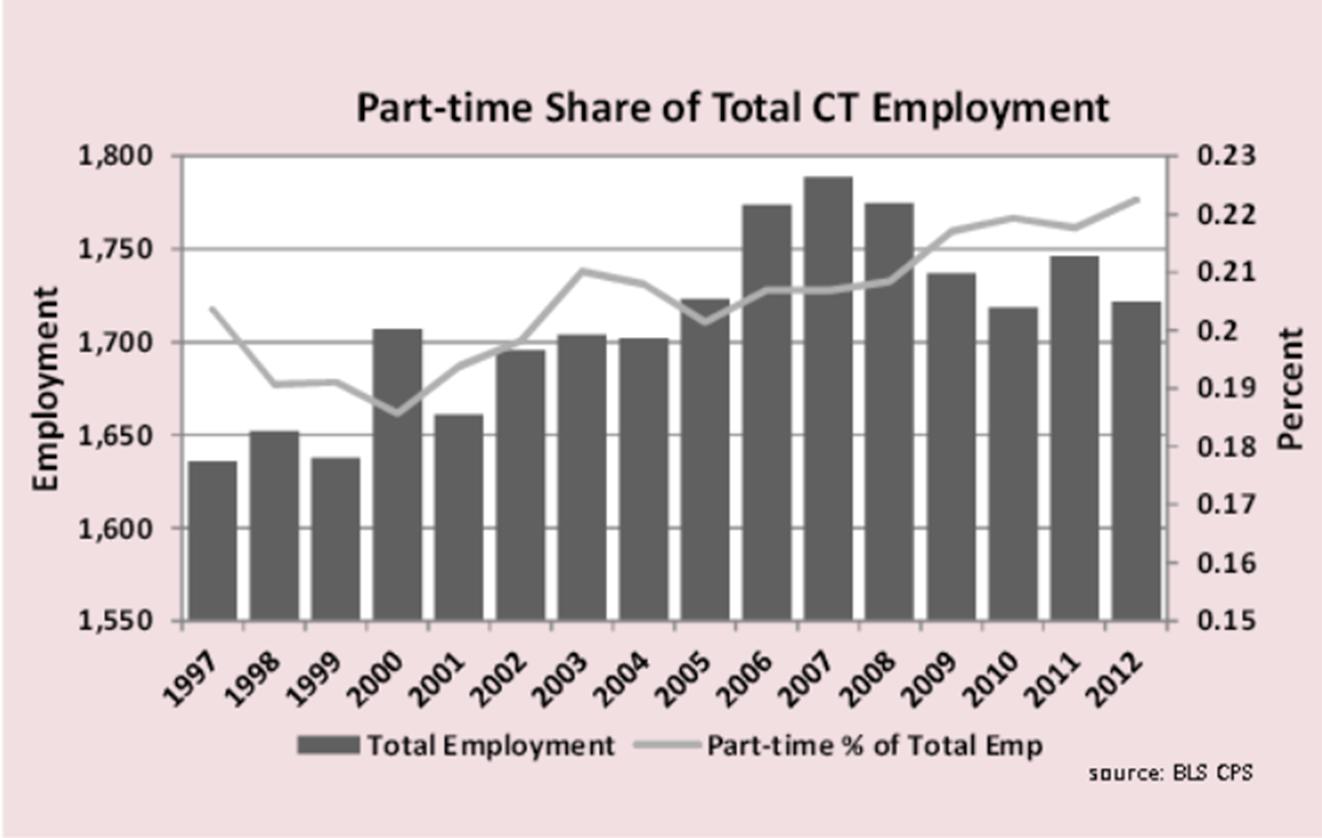
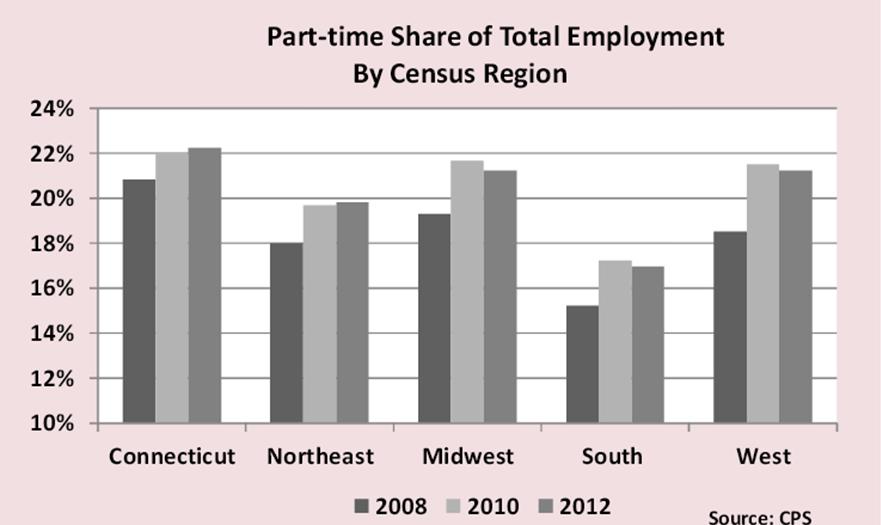
Connecticut's percentage of part-time workers (22.2 percent) outpaces much of the Northeast, South, Midwest and West, according to the latest Connecticut Economic Digest (CED), produced by the state Department of Labor and Department of Economic and Community Development. In the first examination of part-time employment in more than a decade, the publication noted that part-time employment in Connecticut numbered 383,000 - 69.5 percent of which (266,000) was women. This statewide share is among the highest in the country, which had a 50-state average of 64 percent.

part time chartConnecticut’s part-time employment share of 22.2 percent is the lowest in New England but considerably greater than neighboring states in the tri-state area, which have employment shares respectively of 17.6 percent (New York) and 17.9 percent (New Jersey), the analysis by the state Department of Labor indicated.

Part-time employment is all employment that amounts to less than 35 hours per week. Since 1997 it has averaged about 20 percent of total employment in Connecticut and fell to 18.6 percent in 2000, according to the CED, before climbing.

In recent years it has gradually trended upward and was 22.2 percent of employment in 2012, the most recent year of annual average datCEDa and the basis for the analysis. The breakdown of hours worked shows that Connecticut has less under 35 hours per week employment than other New England states but more than the Northeast region overall. Part-time employment was 23.3% of all New England employment in 2012, higher than any other census division in the country. The other eight census divisions averaged 19.3% with the West- South Central division lowest at 16.4%.
While those choosing to work part time remain the bulk of part-time workers, the number of those working less than full time has grown since 2005 as more workers have their hours cut by employers or were unable to find full-time jobs during or after the recession. From 2009 to 2011, the number of workers who wanted full-time employment but could only find part-time jobs rose 37.5 percent to 33,000 from 24,000, Hartford Business Journal reported. part time 2

The report points out, however, that a majority of part-time employment in Connecticut is due to voluntary reasons, and not a result of prevailing economic conditions. In 2012, voluntary part-time employment in Connecticut was 76.4 percent of all part-time employment, in line with the 50-state average of 76.8 percent.

The industries with the lowest average weekly hours worked are leisure and hospitality, other services, and education and health services. In 2013, these industries averaged 25.8, 30.9, and 31.2 work hours per week, according to the Connecticut Economic Digest report issued in May.


More Bicycling, Walking to Work; New Haven Leads the Way in Connecticut

Connecticut has the smallest percentage of people walking to work among states in the Northeast, and is one of two states with the smallest percentage of people who bicycle to work, according to newly released U.S. Census data.  Nationwide, both walking and bicycling to work are on the rise. Between 2000 and 2008–2012, the number of workers in the U.S. who traveled to work by bicycle increased by 60.8 percent, from about 488,000 in 2000 to about 786,000. This increase in the number of bicycle commuters exceeded the percentage increase of all other travel modes during that period, but the overall share of workers who commute bnew haveny bicycle remains low, according to the U.S. Census American Community Survey. In 1980, 0.5 percent of workers commuted by bicycle. This rate dropped to 0.4 percent in 1990, where it remained in 2000, before nudging upward in the latest survey.

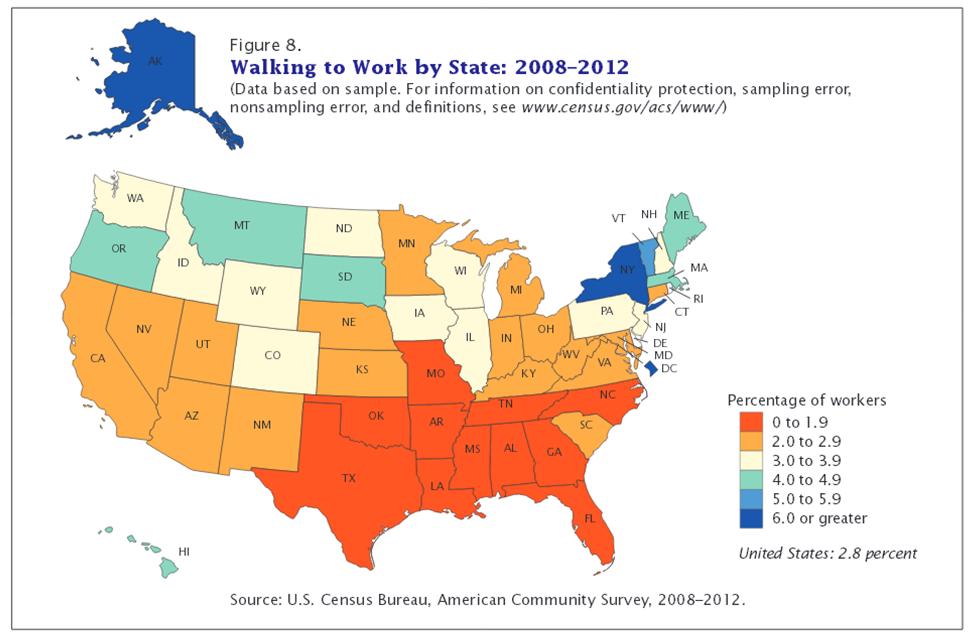
The 2008–2012 5-year data show that, among the approximately 140 million workers in the United States during that period, 2.8 percent walked to work and 0.6 percent commuted by bicycle, compared with 86.2 percent of workers who drove alone or carpooled to work.

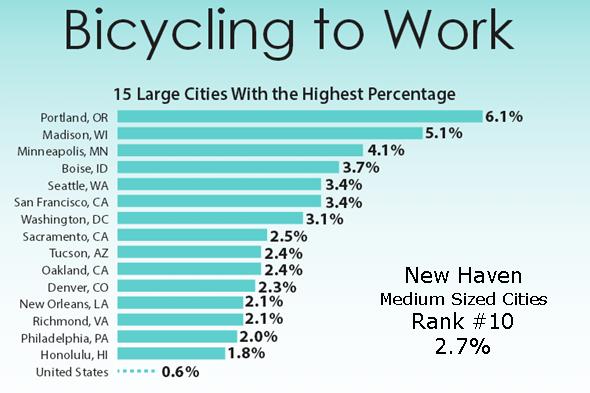
walk toAmong the nation’s medium sized-cities, (with pbike to workopulations between 100,000 and 199,999) New Haven ranks at #5 with 12.4 percent walking to work and at #10 with 2.7 percent of the population using bicycles to get to work. Hartford ranks at #10 among the top walk-to-work medium sized cities with 8.2 percent, and did not reach the top 15 in bicyclists.
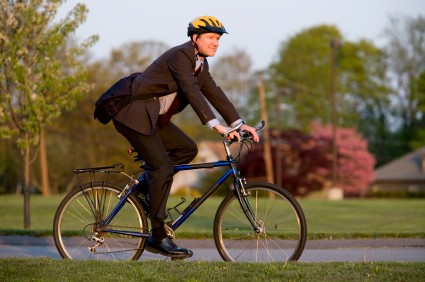
The top medium-sized cities for percent of the population walking to work were Cambridge, Berkley, Ann Arbor, and Provo, just ahead of New Haven. The top bicycle-to-work medium sized cities were Boulder, Eugene, Berkeley, Cambridge, and Fort Collins.

The nation’s #1 walk-to-work city is Boston (15.1 percent) followed by Washington, Pittsburgh, New York, San Francisco and Madison. For bicycling to work, the top cities are Portland (6.1 percent), Madison, Minneapolis, Boise and Seattle.

The nationwide data indicates that:

  • The combined rate of bicycle commuting for the 50 largest U.S. cities increased from 0.6 percent in 2000 to 1.0 percent in 2008–2012.
  • The Northeast showed the highest rate of walking to work at 4.7 percent of workers, while the West had the highest rate of biking to work at 1.1 percent. The South had the lowest rate of biking and walking to work.
  • Younger workers, those aged 16 to 24, had the highest rate of walking to work at 6.8 percent.
  • At 0.8 percent, the rate of bicycle commuting for men was more than double that of women at 0.3 percent.

The percentage of workers age 16 and over who carpool to work is below 10 percent in each of Connecticut’s eight counties, with the exception of Windham County, at 10.5 percent.

Fairfield County has longest commute, most use of mass transit

The walk to workaverage commute to work in Connecticut is about 25 minutes, ranging from 28 minutes in Fairfield County, 27 minutes in Litchfield County, 26 minutes in Windham County, 25 minutes in Middlesex County and Tolland County, to 24 minutes in New Haven County, 23 minutes in New London County, and 22 minutes in Hartford County.

The highest percentage of workers using public transportation to reach their place of employment each day is in Fairfield County, at 8.9 percent, more than double the percentage of the next highest county, New Haven County, at 4.1 percent.

The Census Bureau released a new commuting edition of the interactive map Census Explorer, which gives Web visitors easy click-and-zoom access to commuting statistics for every neighborhood in the U.S. It also shows how commuting has changed since 1990 at the neighborhood, county and state level — including how long it takes to get to work, commutes longer than an hour, and number of bikers. It uses statistics from the American Community Survey, the national source of commuting statistics down to the neighborhood level.

Mystic Aquarium Honored at White House Ceremony with National Medal

Mystic Aquarium has earned some high profile attention this month, recognized at a White House ceremony hosted by First Lady Michelle Obama. The Institute of Museum and Library Services (IMLS) honored Mystic Aquarium as the only aquarium or zoo nationwide to receive its National Medal for Museum and Library Service for 2014. Impressively, Mystic Aquarium was one of four Connecticut finalists considered for the National Medal, along with the Hartford Public Library, Mattatuck Museum in Waterbury and Otis Library in Norwich. A total of only 30 institutions across the country were finalists, from which ten winners were ultimately chosen.

The National Medal is the nation’s highest honor conferred on museums and libraries for service to their communities. The Institute of Museum and Library Services, an independent agency of the U.S. govemedal_lg-400x405rnment with the mission to create strong libraries and museums that connect people with information and ideas, is celebrating its 20th year of saluting institutions that make a difference for individuals, families and communities.


Mystic Aquarium gives back to the community with a direct financial impact of $72.2 million annually. In addition, the aquarium buys $5 million in services and supplies from Connecticut businesses annually. The institution’s conservation efforts protect the vitality of Long Island Sound, an important revenue-generating natural resource for Connecticut. It is the largest informal science education provider in Connecticut and Southeastern New England, reaching 100,000 students annually. whale

The work of Mystic Aquarium was brought to the attention of Susan H. Hildreth, Director of the Institute of Museum and Library Services, by some of Connecticut’s most prominent cultural, education and government leaders. Rodney A. Butler, Mystic Aquarium Trustee and Chairman of the Mashantucket Pequot Tribal Nation, nominated the Aquarium for the National Medal, noting the pivotal role the Aquarium plays with its education and cultural exchange program for Native American high school students from the village of Point Lay, Alaska, and the Mashantucket Pequot Tribal Nation in southeastern Connecticut.

A major criterion for the award is the institution’s impact on members of its local community. Dr. Stephen M. Coan, President and CEO of Sea Research Foundation, the parent of Mystic Aquarium, who accepted the National Medal from Mrs. Obama, said: “We are honored to receive this prestigious award. We are committed to our educational and public engagement programs that make Mystic Aquarium not only an enjoyable family destination, but also a research facility dedicated to protecting our oceans and its aquatic creatures.”

U.S. Senators Richard Blumenthal and Christopher Murphy supported the nomination along with Stonington Public Schools, which cited the Aquarium’s exemplary work with young people with intellectual disabilities. Michael Cotela, Executive Director of the Boys & Girls Club of Stamford extolled the Aquarium’s critical educational programming for underserved communities.

Founded in 1973, Mystic Aquarium has a collection of 4,00Medals2014_Mystic0 animals, including such species as beluga whales and the endangered African Penguin.

 

PHOTO (Left to right): Justin Richard, Stephen M. Coan, Mrs. Obama.

Who Knew? Northeast is Hotbed of Entrepreneurial Activity, For Some More than Others

Takes one to know one. Or, more accurately, know one and you may become one. That’s the bottom line of an exploration into entrepreneurship by a Kauffman Foundation researcher, who found that the Northeast is the best place to catch the entrepreneurial bug. As Connecticut sinks increasing dollars into initiatives to encourage entrepreneurship, develop jobs, and turn ideas into businessentrepreneurses (often with state financial incentives) the report offers guidance of factors influencing the frequency of entrepreneurial launches.  Connecticut Innovations,  established and supported by state government,  helps Connecticut businesses grow through creative financing and strategic assistance,  and is the nation's sixth most-active early stage investor.
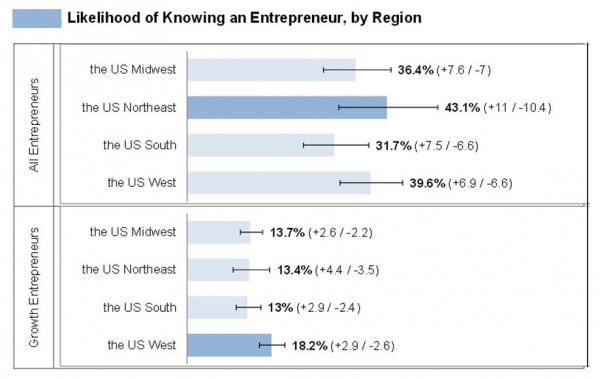
The survey indicated that the likelihood of a person knowing entrepreneurs varied widely by location, income, gender, and age. Respondents were much more likely to know entrepreneurs if they were male, had modest income, or were middle-aged. And they were much less likely to know entrepreneurs (or be entrepreneurs) if they were female, had a higher income, or were located in the Midwest or South.

The study suggests that there could be “material increases in entrepreneurship simply through doing a better job of exposing people to existing entrepreneurs, especially peers or contemporaries.” Entrepreneurship grows, the study found, where it is planted.

Key factors to consider when attempting to encourage entrepreneurship, according to the study:

  • Women have less exposure to growth entrepreneurs than men
  • The young have much more exposure to growth entrepreneurs
  • People in lower income strata are much less likely to be exposed to growth entrepreneurs

The study concluded that “In all cases, an individual’s exposure to entrepreneurs—and to growth entrepreneurs in particular—may increase his or her likelihood of being one. Entrepreneurship can be viral, but must be introduced early and often in environments where it is least often seen.”

The study distinguished between entrepreneurial companies and “growth entrepreneurial companies,” those companies growing more than 20 percent a year and with more than $1 million in sales, generate more employment and contribute more to wealth and GDP than do slower-growing ventures.

The likelihood of a respondent reporting knowing an entrepreneur by Region in the United States was 36.7 percent. The likelihood of knowing a growth entrepreneur was considerably lower, at 15.4 percent.

When broken down by gender, the likelihood of males knowing an entrepreneur was 39.9 percent, females 35.8 percent. For growth entrepreneurs, the gender gap was considerably wide, 24.8 percent to 12.1 percent.

A year ago, CTNext, Connecticut’s innovation ecosystem managed by Connecticut Innovations (CI), announced the launch of the Entrepreneur Innovation Awards (EIA), a competitive pitch process that provides awards up to $10,000 to entrepreneurs in Connecticut for growth-related activities. CI helps innovative companies in four key ways: by offering equity, debt, grants and strategic guidance.

A month ago CTNext announced the winners of the latest round of EIA awards; Connecticut-based companies and entrepreneurs, received $10,000 for their project ideas. CI also selected David Wurzer, formerly a senior managing director at CI, to be chief investment officer and executive vice president. As part of his new role, Wurzer will be responsible for the management of the investment function, staffing needs, portfolio and risk management, outreach to stakeholders, budget planning and performance measurement.

The study “Getting the Bug: Is (Growth) Entrepreneurship Contagious?” was conducted by Paul Kedrosky of the Kansas City-based Kauffman Foundation, and is aimed at providing data to guide efforts across the country to grow entrepreneurship. The survey, which categorizes responses of 2,000 individuals by age, income, gender, and location, was done via Consumer Google Survey.

When One CT Beer Week Is Just Not Enough

For Connecticut’s growing beer industry, a single beer week was just not enough.

The Connecticut Beer Wholesalers Association, which is comprised of six beer wholesalers in Connecticut and conducted the CT Beer Week marketing campaign for the first time last May, has decided to double down on the effort in 2014.  The second annual Beer Week later this month will be the first to two “weeks” planned for this year.

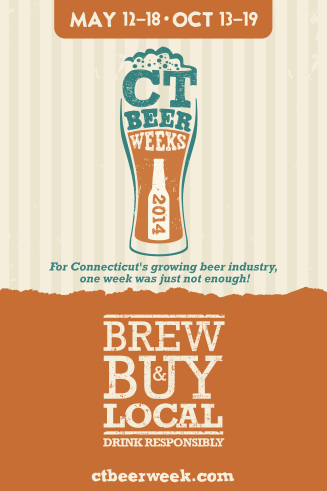
The first Beer Week ict-beer-week-2014s coming up during the week of May 12 – 18, the same week as American Craft Beer Week. The second one is slated for October 14-20, and coincides with CT Restaurant week. Consumers are asked to “join us as we celebrate the growth of an industry in partnership with craft brewers, restaurants and retailers.”

Organizers say the "Brew & Buy Local" campaign brings focus to the Connecticut organizations that work together to strengthen “a vibrant industry filled with cooperative spirit and a desire to brew something good for Connecticut!”

Among the events in Connecticut later this month will be the 4th Annual Rising Pint Brewfest, designed to kick off American Craft Beer Week. The event will be May 10, 2014 at Rentschler Field, featuring over 90 craft breweries, live bands and local restaurants.  Proceeds of the Rising Pint go to Folds of Honor, a foundation working to help the families of our fallen and severely injured soldiers.CTBeerWeekTshirts

A full calendar of beer week events has been developed, and features more than 40 events around the state.  Connecticut has 22 local breweries, with a dozen new breweries being developed including three slated to open later this year in Oxford and Glastonbury.