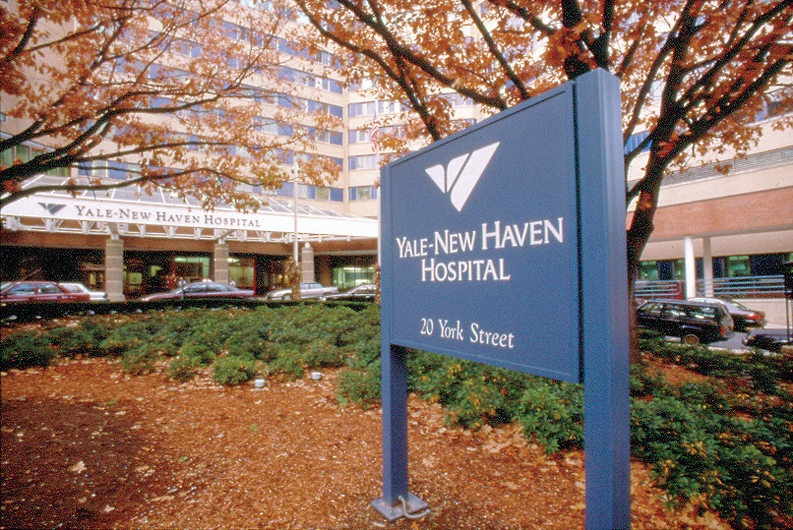
Yale-New Haven Hospital Ranked Among Best Employers in USA for Workers Over 50

Yale-New Haven Hospital (YNHH) in New Haven is being honored by AARP and the Society for Human Resource Management (SHRM) as one of the 2013 Best Employers for Workers Over 50.  YNHH, which ranked 23rd in the nationwide survey, joins a diverse group of health systems, corporations, government agencies, and non-profits from across the country on the list, announced this week by AARP and SHRM.  It is the lone Connecticut-headquartered organization on the list of the top 50.

Thirty percent of YNHH employees are age 50+ with an average tenure of 18 years. YNHH offers a number of programs and benefits that support mature workers, including tuition reimbursement and training opportunities, fleAARPxible work schedules and alternative work arrangements, free health screenings and wellness programs, financial and retirement planning and dependent care benefits.

One program of particular interest to mature employees at YNHH is the ‘School at Work Program’.  This seven month refresher educational program is for individuals who have been out of a traditional learning setting for a significant time period and prepares the employee for additional formal education or a career change.

In addition, Retiree Medical Accounts are offered for employees retiring at age 55+ with at least ten years of service.  The medical account is funded annually, starting at age 40, and the retiree can use the funds after retirement for medical expenses and insurance premiums.

Also on the national list of Best Companies, at number 27, is Cianbro a national construction engineering firm with a regional office on East Dudley Town Road in  Bloomfield, Connecticut.  Cianbro self-performs civil, structural, mechanical, electrical, instrumentation, fabrication, and coating, in twelve different mynhh1arkets, throughout the United States. The company has experience in Construction Management, Design-Build, and Engineer Procure Construct (EPC), in addition to Conventional Design-Bid-Build.
This year’s list of the top 50 organizations was led by the National Institutes of Health (NIH), one of the world’s premiere medical research institutions.  Scripps Health of Southern California, which headed the list in 2011, is runner-up this year.  Rounding out the top 10 are Atlantic Health System, The University of Texas MD Anderson Cancer Center, Mercy Health System, The YMCA of Greater Rochester, West Virginia University, Bon Secours Virginia, National Rural Electric Cooperative Association, and WellStar Health System.

Key areas of consideration include: recruiting practices; opportunities for training, education and career development; workplace accommodations; alternative work options, such as flexible scheduling, job sharing and phased retirement; employee health and retirement benefits, and retiree work opportunities. The list of 2013 winners includes employers from a variety of industry sectors, including for-profit and nonprofit, health care, universities, financial services, construction, aerospace, and federal and county government.

Among Connecticut-based organizations, Yale-New Haven Hospital was previously honored as a Best Employer for Workers Over 50 in 2005 and 2006.  Past winners from Connecticut also include CTTRANSIT, Pitney Bowes and Hartford Financial.

Announcement of the top 50 came jointly by AARP and SHRM, which is co-sponsoring the Best Employers program for the first time. SHRM is the world’s largest association devoted to human resource management.

Hands-Free Electronics Are Hazardous to Driver Safety, State Ban Proposed

For the second time in recent weeks, a major driving safety study has concluded that hands-free devices produce dangers much the same as hand-held cell phones for drivers.  The latest study comes from AAA, following a study by the Texas Transportation Institute at Texas A&M University, reported by Connecticut by the Numbers earlier this month.

Connecticut teen driving safety advocate Tim Hollister, who was a member of the Governor’s Safe Teen Driving Task Force in 2007-8 and publishes a national blog for parents of teen drivers, is calling for a ban on the use of electronic devices while driving, citing increasing evidence of the dangers of distracted driving.  His proposal, outlined in The Hartford Courant prior to the release of the AAA study:  "no driver of a vehicle in gear shall use any electronic device to text, type, read, watch a video or make a phone call."

Hollister pointed out that six leading public health and traffic safety organizations (World Health Organization, National Transportation Safety Council, Insurance Institute for Highway Safety, and the Governor’s Highway Safety Association) “now agree that hands-free cellphone use is just as dangerous as hand-held.  Both cause cognitive blindness.”  The head of the National Transportation Safety Board agrees, having previously stated “we know that electronic devices that pull a driver’s attention away from his or her primary task are unsafe.”Internet-ready-driver-side-computer

Texting a friend verbally while behind the wheel caused a “large” amount of mental distraction compared with “moderate/significant” for holding a phone conversation or talking with a passenger and “small” when listening to music or an audio book, the AAA Foundation for Traffic Safety found in the latest study, released this week, Bloomberg News and other national media widely reported.

Not a single state prohibits hands-free dialing, and neither state nor federal action appears on the horizon, despite initial efforts by NTSB more than a year ago.  In fact, just the opposite is true.  Even as evidence of hazards grows, so do the range of electronic options and efforts to develop more "connected" cars.

Using voice-to-text messaging, included in systems such as Ford Motor Co.’s Sync and Toyota Motor Corp.’s Entune, is more distracting to drivers than making calls with handheld mobile phones, the AAA found. The earlier study at Texas A&M also concluded that voice-to-text is as dangerous and traditional typed texting.

Two bills that offer responses to aspects of distracted driving – although not prohibiting the popular practice - were approved in the just-concluded Connecticut General Assembly session, according to media reports.

  • The first would give prosecutors the ability to seek up to $1,000 in fines, over criminal penalties, if a distracted driver hits and injures a jogger, pedestrian, horseback ride, and other lawful “vulnerable” roadway user.
  • The other bill adds distracted driving to the list of moving violations that would be made available to insurance companies. Currently, if someone disobeys the state’s distracted driving law, they pay a fine and the insurer doesn’t know about it.  The bill also increases fines and creates a task force to study distracted driving prevention.  Both await approval by Gov. Malloy.

Automakers have vigorously promoted voice-based messaging as a safer alternative to taking hands off the wheel to place a call or talk on a hand-held phone. The hands-free systems have not been opposed by the U.S. Transportation Secretary, but the head of the National Transportation Safety Board has expressed serious reservations.  Writing in the Washington Post in 2011, NTSB Chair Deborah Hersman pointed out that “studies published as early as 1997 and 2005 have shown that there is little difference between hands-free technology and handheld devices when it comes to cognitive distraction.”

About 9 million infotainment systems will be shipped this year in cars sold worldwide, with that number projected to rise to more than 62 million by 2018, according to a March report by London-based ABI Research.

With the addition of a new law passed in Hawaii this month, 40 states, the District of Columbia, the Virgin Islands and Guam have banned text messaging for all drivers using hand-held devices.  Hawaii becomes just the 11th state (including Connecticut, as well as the District of Columbia, Puerto Rico, Guam and the Virgin Islands) to prohibit all drivers from using handheld cell phones while driving.

Voluntary guidelines recently issued (April 2013) by the Department’s National Highway Traffic Safety Administration (NHTSA), recommended specific criteria for electronic devices installed in vehicles at the time they are manufactured.  The guidelines include recommendations to limit the time a driver must take his eyes off the road to perform any task to two seconds at a time and twelve seconds total.

The back-to-back studies by the Texas Transportation Institute and AAA raise questions about those recently-issued recommendations.

Faces of Distracted Driving  USDOT video 

Leadership Greater Hartford Initiative Selected for National Recognition

The Association of Leadership Programs, a national organization with affiliates across the country, will present Leadership Greater Hartford with its first "Excellence in Innovation" award for the implementation and success of the Leaders on Board program.  The presentation will take place during the 2013 National Leadership Conference to be held in Arlington, Virginia later this month.

Leaders on Board is an ongoing program that strengthens nonprofit organizations by training and connecting participants with boards of directors seeking new members.  The pLeaders on Boardrogram attracts individuals who want to serve on a board, develop their leadership skills and serve the community.

Leaders on Board has successfully matched nearly 300 individuals with more than 75 nonprofit organizations throughout the region since its inception in January 2009.  The list of organizations that have placed members on boards through the Express Match process is quite impressive – and a who’s who of community organizations.

Potential board members receive training in nonprofit organizational structure and management. They are introduced to the role and responsibilities of board members and are encouraged to explore their skills and interests.  Then nonprofit board leadership and prospective board members interview each other, and “matches” are pursued by the organizations and the individuals.

In announcing the recognition, LGH said the success of our Leaders on Board program is not only due to the hard work of the LGH staff, but also to the commitment and time that the participants and nonprofits invest in making sure the program is a success. "We are delighted to share this award with everyone who has been involved with Leaders on Board since 2009, especially the Hartford Foundation for Public Giving, our funding partner. Thank you for making Leaders on Board the best it can be." Leaders on Board is a program created by Leadership Greater Hartford with support from the Hartford Foundation for Public Giving and in collaboration with the United Way of Central and Northeastern Connecticut. Corporations and businesses also participate in the program by offering board governance training to encourage their employees who are interested in serving the community. IMG_1959

Also during the conference in Virginia, longtime LGH president Ted Carroll will be leading a workshop for conference participants, entitled “Building Community by Transforming Local Government.” The workshop description highlights that “As Leadership Greater Hartford’s consulting and training activities have increased, our most important, and most profitable client has become our city government. This workshop will provide insights into how community leadership programs can apply their services and expertise to help municipalities develop more collaborative, participatory cultures.”

Upcoming "Leaders on Board" Express Match The next Leaders on Board “Express Match” program is scheduled to be held on Tuesday, June 11, 5:30 – 8:30 at Asylum Hill Congregational Church (814 Asylum Avenue) in Hartford.  Pre registration required, on the Leadership Greater Hartford website.

Overwhelming Support Spells Defeat for Creation of Social Benefit Businesses in CT

Despite being introduced with the backing of Governor Malloy, overwhelming support in the House of Representatives where it passed by a lopsided 128-12 on May 20, and co-sponsorship by the legislature’s four top leaders, legislation establishing the “benefit corporation” as a new type of corporate entity never came up for a vote in the State Senate.  And thus it died when the legislative session ended on Wednesday.

“Despite a great deal of effort, we lost. It is a sad day for Connecticut that we couldn't get something so unequivocally positive done. I personally find it hard not to be disheartened by the whole process, but I guess that's politics,” said Kate Emery, founder and CEO of reSET, the Social Enterprise Trust.

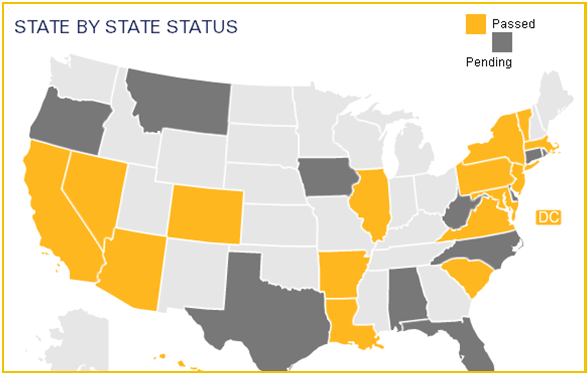
Similar legislation has already been passed and signed into law in California, Hawaii, Illinois, Louisiana, Massachusetts, Maryland, New Jersey, Pennsylvania, South Carolina, Vermont, and Virginia. It is pending in nine other states.

The bill (HB 6356) would have allowed businesses to legally incorporate as benefit corporations in Connecticut and was described as the most comprehensive piece of social enterprise legislation ever proposed in the United States.  It was designed to help social entrepreneurs protect their organization’s social mission, and provide a transparent, accessible, and simple mechanism for defining their business’s social goals.  Supporters said the legislation would also help drive job creation and increase the number of community-based partners benefit corpcommitted to solving some of Connecticut’s most pressing social issues without requiring additional state funding.

Here’s how Hartford Courant business editor Dan Haar described the bill in a column the day prior to legislative adjournment:  “The bill has few if any opponents, it would make it easier for private firms to do some good in the world and it wouldn’t cost the state any money (okay $62,000, once, to reprogram the computers).

Firms organized this way, known as type-B corporations, would have a stated social goal beyond profits for the owners — public health, perhaps, or promoting the arts or restoring the environment or creating economic opportunity for disadvantaged people. It’s the kind of stuff nonprofits tend to do, but allowing for-profit companies to set up with a social purpose simply adds an avenue.”

The bill not only required benefit corporations to publicly state their social mission within the business’s articles of incorporation, but it also would have created a culture of accountability within Connecticut’s social enterprise community by requiring that those businesses publish an annual benefit report detailing the public benefit that they have actually created, and make that information publicly available on their website.

It also would have given owners of social enterprises the option of locking in their commitment to the social mission that their business is designed to serve by electing to adopt its legacy preservation clause after a waiting period of two years. This would allow shareholders to ensure that their commitment to the creation of public good is maintained, even if ownership of that company changes over time.  But it was not to be.

“We did everything we could possibly do and we had a lot of great people working very hard to make it happen,” Emery said in an email to supporters of reSET across the state.  “It was a well fought battle and sooner or later we'll get it passed but for now we will have to take heart in knowing we did all we could.”

The broad coalition of supporters – all of whom submitted testimony during a public hearing on the bill -  included AARP, the Connecticut Association of Nonprofits, the Connecticut Conference of Independent Colleges and AT&T.  As Haar noted this week, Connecticut Innovations, the state’s technology investment arm, and the state Department of Economic and Community Development both supported it actively.  The Connecticut Bar Association, which opposed a similar bill last year, also supported this year’s revised version.

Benefit Corporations are a new class of corporation that 1) creates a material positive impact on society and the environment; 2) expands fiduciary duty to require consideration of non-financial interests when making decisions; and 3) reports on its overall social and environmental performance using recognized third party standards.

In her public hearing testimony, state Economic and Community Development Commissioner Catherine Smith said Connecticut “is poised to realize many benefits” from passage of the bill, which would “leave a lasting social and financial impact on our state for years to come.”

Connecticut Well Represented in National Mental Health Dialogue

Keeping a commitment made in the aftermath of the Sandy Hook Elementary School murders last December, President Barack Obama launched a national mental health dialogue at the White House Monday aimed at increasing understanding and awareness of mental health, and Connecticut organizations are involved in the efforts from the outset.

Among the initiatives announced during the day-long conference was a new national website, www.mentalhealth.gov, and a series of public meetings to be held around the country under the “Creating Community Solutions” rubric.  Two of those community conversations will be in Connectwhite hosueicut – in Hartford and Norwalk – and one of the six national organizations coordinating the initiative has its headquarters in East Hartford.

The Center for Civic Engagement at the Hartford Public Library will organize the Hartford event as part of the National Dialogue on Mental Health. In response to unprecedented need for civic engagement, Hartford Public Library created the Center for Civic Engagement (CCE). The CCE aims to create a community change process, foster development of a community vision, contribute to a stronger, more successful community, and establish a civic engagement model.

The dialogue in Norwalk will be co-sponsored by the Fairfield County Community Foundation and the Southwest Regional Mental Health Board.  The Fairfield County Community Foundation promotes philanthropy to build and sustain a vital and prosperous community where all have the opportunCCSity to participate and thrive.  The Southwest Regional Mental Health Board is dedicated to ensure a quality system of comprehensive, recovery oriented mental health and addiction services that enhances the quality of life and well being of all residents of Southwest Connecticut.

The Creating Community Solutions initiative will allow participants to learn about mental health issues - from each other and from research - and to develop plans to improve mental health in their own communities, according to officials.   The national dialogue is to include young people who have experienced mental health problems, members of the faith community, foundations, and school and business leaders.

Among the six national “deliberative democracy” organizations involved in developing the Creating Community Solutions program is East Hartford-based Everyday Democracy, according to federal officials.  Everyday Democracy helps people organize, have dialogues, and take action on issues they care about, so that they can create communities that work for everyone. Its ultimate goal is to contribute to the creation of a strong, equitable democracy that values everyone's voice and participation.    Details about Everyday Democracy's role in the initiative and how partner communities and organizations can get involved will be available on the organization’s website in the coming dEDLOGOays.

Details regarding the date, location and registration information for the Hartford and Norwalk sessions will be available on a new website, at www.creatingcommunitysolutions.org.  The site is part of the national mental health website, which was created by the U.S. Department of Health and Human Services.   Thus far, community dialogues have been scheduled in New Mexico, California, Alabama, and Arizona, and an additional 29 sites – including the two in Connecticut – are making plans.   A Facebook page, https://www.facebook.com/CreatingCommunitySolutions, has also been launched.

Materials to support the conversations are being developed and will shortly be available for download, including an Information Brief, Organizing Guide and Discussion Guide.  In addition to Everyday Democracy, the organizations working together to design and implement Creating Community Solutions are America Speaks, Deliberative Democracy Consortium, National Issues Forums, the National Coalition for Dialogue & Deliberation, and the National Institute for Civil Discourse.

In addition, a number of national associations are asking their members or affiliates to organize local events. These groups include the United Way, American Bar Association, National League of Cities, YWCA, National School Public Relations Association, 4-H, Grassroots Grantmakers, Alliance for Children and Families, National Physicians Alliance, Association for Rural and Small Libraries, and the International Association for Public Participation, among others.

Dangers of Distracted Driving Attract Renewed Attention; Responses Pending, Urged

There was a time when smoking was permitted in restaurants, when seat belt use was not mandatory, when children were not required to wear helmets when bike riding.  Then the science of safety interceded, and state lawmakers – in Connecticut and elsewhere - took notice.  The convenience of technology, however, may be another matter.

Writing in The Hartford Courant this week, teen driving safety advocate Tim Hollister, who was a member of the Governor’s Safe Teen Driving Task Force in 2007-8 and publishes a national blog for parents of teen drivers, called for a ban on the use of electronic devices while driving, citing increasing evidence of  the dangers of distracted driving.  And a new study by a Texas university concluded that voice-to-text is as dangerous and traditional typed texting.

Hollister points out that six leading public health and traffic safety organizations (World Health Organization, National Transportation Safety Council, Insurance Institute for Highway Safety, and the Governor’s Highway Safety Association) “now agree that hands-free cellphone use is just as dangerous as hand-held.  Both cause cognitive blindness.”textingdrivingtons

With the addition of a new law passed in Hawaii last week, 40 states, the District of Columbia, the Virgin Islands and Guam have banned text messaging for all drivers using hand-held devices.  Hawaii becomes just the 11th state (including Connecticut, as well as the District of Columbia, Puerto Rico, Guam and the Virgin Islands) to prohibit all drivers from using handheld cell phones while driving.

Not a single state prohibits hands-free dialing, and neither state nor federal action appears on the horizon.  In fact, just the opposite is true.

Even as evidence of hazards grows, so do the range of electronic options.  Ford is one of a number of companies aggressively marketing electronic devices that offer more in-car options.  The company’s voice activated Sync technology, available beginning with 2012 models, includes hands-free calling, 411 business search, audible text messaging, and internet connectivity.  Hollister points out that “on tv and the internet, advertisements tout devices that enable texting by allowing drivers to attach their cellphones to the windshield so the screen is aligned with their view of the road.”

Connecticut Action Pending

Two bills that offer responses to certain aspects of distracted driving are now progressing through the Connecticut General Assembly, which adjourns on Wednesday, June 5.  The Associated Press reported that the House of Representatives voted 139-1 last week to add distracted driving to the list of moving violations that would be made available to insurance companibikees.  Currently, if someone disobeys the state's distracted driving law, they pay a fine and their insurer does not know about it.  The bill also increases fines and creates a task force to study distracted driving prevention. The legislation now moves to the Senate.

The Senate unanimously passed a bill establishing a fine of up to $1,000 for a motorist who "fails to exercise reasonable care on a public way" and seriously injures or causes the death of so-called vulnerable users, such as a bicyclists. The bill now moves to the House, the AP reported.

Federal Guidelines 

The dangers of technology-enabled distracted driving are so insidious – and increasing so rapidly – that the federal government has launched a website, www.distraction.gov, solely devoted to educating the public about the severe risks of distracted driving.  Among the statistics cited:

  • Driving while using a cell phone reduces the amount of brain activity associated with driving by 37%. (Carnegie Mellon)
  • Text messaging creates a crash risk 23 times worse than driving while not distracted. (VTTI)
  • Sending or receiving a text takes a driver's eyes from the road for an average of 4.6 seconds, the equivalent-at 55 mph-of driving the length of an entire football field, blind. Headset cell phone use is not substantially safer than hand-held use. (VTTI)
  • In 2011, 3,331 people were killed in crashes involving a distracted driver. An additional, 387,000 people were injured in motor vehicle crashes involving a distracted driver.
  • 11% of all drivers under the age of 20 involved in fatal crashes were reported as distracted at the time of the crash. This age group has the largest proportion of drivers who were distracted.
  • 40% of all American teens say they have been in a car when the driver used a cell phone in a way that put people in danger. (Pew)

A new study from the Texas Transportation Institute at Texas A&M University reveals that sending those messages using voice-to-text software is just as distracting as looking down at your phone and typing messages by hand.

Voluntary guidelines recently issued (April 2013) by the Department's National Highway Traffic Safety Administration (NHTSA), recommended specific criteria for electronic devices installed in vehicles at the time they are manufactured.  The guidelines include recommendations to limit the time a driver must take his eyes off the road to perform any task to two seconds at a time and twelve seconds total. The guidelines also recommend disabling several operations unless the vehicle is stopped and in park, such as:

  • Manual text entry for the purposes of text messaging and internet browsing;
  • Video-based entertainment and communications like video phoning or video conferencing;
  • Display of certain types of text, including text messages, web pages, social media content.

The department has also issued Blueprint for Ending Distracted Driving, a comprehensive plan on the subject.   The use of all cellular phones while driving a school bus is prohibited in 14 states thus far, including Connecticut, and the District of Columbia.  A federal proposal in 20ll that would have extended a ban on cell phone use – including hands-free – to all vehicles has not been enacted into law nationwide, or in any state.

The Washington Post reported 18 months ago that “Vehicles are being transformed into mobile communications centers, with cellphones, DVD players, access to Facebook and Twitter, Global Positioning System devices, and satellite radio.”

 “Unfortunately, drivers are being encouraged to do everything but drive,” Jonathan Adkins, spokesman for the Governors Highway Safety Association, told the Post. “It’s a sign of the pressures of modern-day life to do 10 things at once. However, driving is a complex task, and our message continues to be that a singular focus is needed.”

West Hartford, Farmington, Cromwell Earn "Top Town" Titles

 West Hartford has been ranked as the Greater Hartford region's number one community in a new analysis published in the June issue of Hartford magazine.   Rounding out the top 10, in order, are South Windsor, Glastonbury, Manchester, Bristol, Farmington, Simsbury, Middletown, Avon and Enfield. The publication is produced by CT1Media, which also publishes The Hartford Courant.

The rankings are based on information highlighting more than three dozen factors, from school test scores to crime rate, property taxes to median home price, voter turnout to number of retail establishments. In 12 overall categories, the data was weighted to determine rankings broken down by small, medium and large towns, in addition to the overall results.

 top towns

  • The top-ranked large towns (over 30,000 population) are West Hartford, South Windsor, Glastonbury, Manchester and Bristol.  
  • The leading medium-sized towns (15,000-30,000 population) are Farmington, Simsbury, Avon, Berlin and Southington.
  • The top small towns (under 15,000 population) are Cromwell, Granby, Canton, Burlington, and East Granby.

Here’s the breakdown of the champions, by category (and size), according to Hartford magazine:

  • Best for Families/Schools: West Hartford (large), Simsbury (medium), and Granby (small).
  • Best for Seniors: West Hartford (large), Farmington (medium), and Cromwell (small).
  • Young and Hip: Hartford (large), Southington (medium), and Hebron (small).
  • City Living: Hartford (large), Southington (medium), and Cromwell (small).
  • Country Living: Glastonbury (Large), Simsbury (medium), and Granby (small).
  • Bang for the Buck: Bristol (large), Windsor (medium), and Windsor Locks (small).
  • Most Affluent:  West Hartford (large), Avon (medium), and Granby (small).
  • Most Educated:  West Hartford (large), Farmington (medium), and East Granby (small).
  • Lowest Crime:  Glastonbury (large), Simsbury (medium), and Hartland (small).
  • Leisure Life:  Hartford (large), Simsbury (medium), and Hebron (small).
  • Fastest Growing: Hartford (large), Southington (medium), and Cromwell (small).

West Hartford, en route to earning the top spot, finished first in five categories, second place in four, along with two fifth place finishes (Country Living and Lowest Crime) and one sixth place (Bang for the Buck).  Among the medium sized towns, Simsbury won four categories, and Southington and Farmington each  won three.   Among the small towns, Cromwell won four categories and Granby won three.

In addition to the rankings, the magazine outlines how they arrived at the rankings, explaining that data was gathered from a number of sources, “including the schools (we parsed 84 individual test score results for each town), town profiles compiled by Connecticut Economic Resource Center (www.cerc.com), Connecticut State Department of Education, Connecticut Secretary of the State and Nielson Pop-Facts 2013.”

Strategies to Advance Transit-Oriented Development Outlined by Coalition

Strategies including community engagement, placemaking, mixed-income housing, complete streets, parking configuration, green infrastructure and energy efficiency are outlined in a comprehensive 68-page “toolkit” focusing on opportunities to extend transit-oriented development in Connecticut, as the state moves forward with significant rail and bus initiatives.

 Working in partnership, Connecticut Fund for the Environment, Partnership for Strong Communities, Regional Plan Association and Tri-State Transportation Campaign have created a Transit-Oriented Development (TOD) Toolkit that highlights key strategies necessary for developing competitive and sustainable TOD in Connecticut.  The toolkit has been shared in recent weeks with interested officials  and organizations around the state, and discussed at two public forums in Bridgeport that brought together more than   80 municipal leaders from the region.TOD Toolkit

The document outlines the primary components of a TOD program that meets common community goals of strengthening town centers, supporting municipal budgets, expanding housing and commercial opportunities, and minimizing environmental impacts. Among the central components outlined:

  • The process and design for getting TOD built in a community, from developing a community vision and supportive zoning, to determining how accessible a station is for non-drivers.
  • The demographic trends that favor mixed-income, transit-accessible housing, the fiscal impacts of residential TOD, and mechanisms to include affordable housing within TOD development.
  • Complete Streets strategies that enhance streets and sidewalks to promote walking and biking to a station and to TOD built around it. Transit access, walking an bicycling, and the mix of uses in TOD mean that TOD districts require less parking than traditional development.
  • Best practices for managing parking, including parking maximums, shared parking, and transit incentives.  
  • Information and resources for incorporating green infrastructure and energy solutions in a community. Green infrastructure minimizes wastewater and pollutant impacts from development. Energy-efficiency, local energy generation and micro-grids help communities use less power and withstand disruptions to the regional energy supply. housing starts

Efforts are continuing by the organizations participating in the effort, and others pursuing a transit-oriented development agenda, to coordinate with key state agencies regarding strategies to move TOD forward in the state, especially along key transportation corridors.  Officials are working to secure funds for a new TOD position that would initially provide technical support to Meriden and other towns on the upcoming New Haven - Hartford - Springfield rail and CTfastrak bus lines and to develop a funding source to support financing and land acquisition for priority TOD sites.

 Transit-oriented development is described in the toolkit as “development that’s built to take advantage of the ability of people to access it with transit - a strategy for growth that produces less traffic and lessens impact on roads and highways.”  The overview also points out that “households located within walking distance of transit own fewer cars, drive less, and pay a smaller share of their income on transportation related expenses. Homes and businesses can be built with less parking, reducing the cost of development, making development more feasible in weak markets, and increasing local tax revenue.”


Northeast Homes are Older, Smaller than National Average

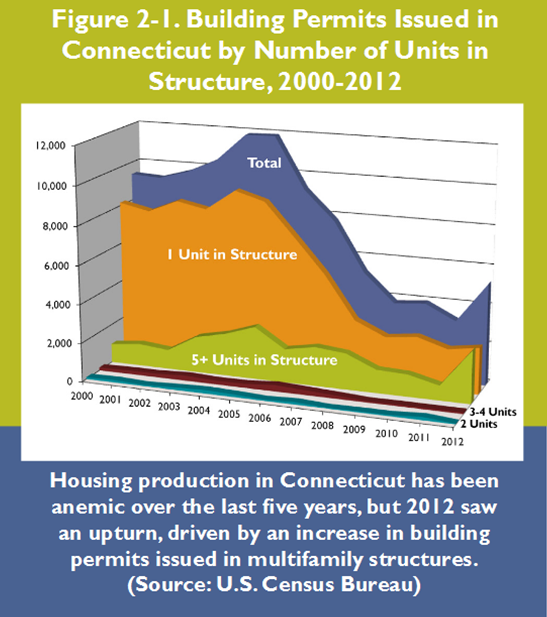
Applications for new home construction nationwide rose to a five-year high in April, offering evidence that the post-recession housing revival will be sustained, according to Associated Press reports on U.S. Commerce Department data.  Applications for building permits – considered an indicator of future demand - rose 14.3 percent to a rate of 1.02 million, the highest since June 2008.

The new construction data builds on a home ownership foundation that varies across regions.  There are 76 million owner-occupied homes in the United States, and three-quarters of them are in metropolitan areas.  The breakdown:  22 percent in central cities, 36 percent in urban suburbs, 17 percent in rural suburbs and only 25 percent outside of metropolitan areas.home size

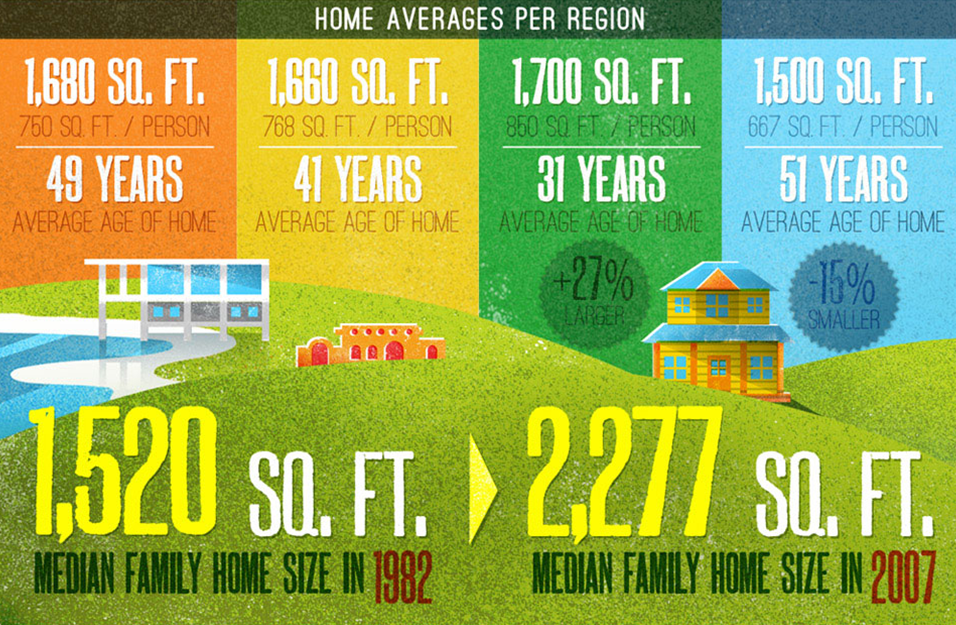
Not surprisingly, the oldest homes (51 years old on average) are found in the Northeast, where they are also 15 percent smaller than the national average; the newest homes are in the South – 27 percent larger than the national average and an average of 31 years old.  The average home in the west is 49 years old, in the Midwest 41 years old.

In Fairfield County, only 6.8 percent of homes were built after 2000, and in the entire state that figure is 7.1 percent, the Connecticut Post reported last month.

Nationwide, the median family home size has grown substantially in recent decades.  In 1982 it was 1,520 sq. ft.; by 2007, it was 2,227 sq. ft.

The data indicate an average of 2.6 people per household nationwide, with the percentage of households with children under age 18 greatest in the urban suburbs (37%), followed by rural suburbs (36%), central cities (33%) and those outside of metropolitan areas (30%).

The data, compiled by the websites of the National Association of Home Builders (nahb.org) and trulia.com, was featured in an infographic developed for Quicken Loans in partnership with Ghergich & Co.

The sites also compares Connecticut with national averages in key home-related categories:

  • Median Value of Owner-Occupied Housing Units: $166,900 [National Average $119,600]
  • Median Price Asked for Housing Units: $136,500 [National Average $89,600]
  • Median Household Income: $53,935  [National Average: $41,994]
  • Median Family Income $65,521 [National Average: $50,046]
  • Per-Capita Income: $28,766 [National Average: $21,587]

U.S. Census data featured by the state Department of Economic and Community Development indicates that Connecticut has 1,371,087 housing units occupied, led by the cities with the largest number of occupied housing units:  Bridgeport 51,255, New Haven, 48,877; Stamford, 47,357; Hartford, 45,124, and Waterbury, 42,761.

State, AARP Seek Volunteer Resident Advocates to Give Voice to Facility Residents

AARP Connecticut is working with the state Department on Aging Long Term Care Ombudsman Program  (LTCOP) to help recruit and train Volunteer Resident Advocates who help residents of skilled nursing facilities, residential care homes and assisted living facilities solve problems and voice their concerns.  Orientation sessions will be held in June in Manchester, Meriden and New Fairfield for individuals interested in learning more about the program.

 The Volunteer Resident Advocate, along with the Regional Ombudsman, helps voice residents’ concerns and empower residents speak up themselves, consistent with their individual rights. This is accomplished through individual consultation and complaint resolution as well as follow-through with state agencies and advocacy organizations.

In lending its support to help identify volunteers for the program, AARP Connecticut gets the word out to nearly 600,000 members age 50 and over throughout the state of Connecticut.

The LTCOP, mandated by the federal Older American’s Act and state law, works to improve the quality of life and quality of care of Connecticut citizens residing in nursing homes, residential care homes and assisted living communities.  All Ombudsman activity is performed on behalf ofltcop_v4_header_01, and at the direction of residents.  All communication with the residents, their family members or legal guardians, as applicable, is held in strict confidentiality.

 Volunteer Advocates may speak to the dietitian about a resident’s desire for a change in diet, let the nurse know a resident needs more timely assistance, or discuss with the administrator a resident’s idea for weekend activities.  Volunteer Advocates and Ombudsman support quality of life for residents by listening to and working for resident’s needs and interests and helping residents and families work with nursing home staff for changes to improvseniorlady-570x230e nursing home life. They help residents, their families and staffs communicate better with each other.

 Orientation sessions are being held in Connecticut this June at the following locations:

  • Wednesday, June 19, 2013, 9am – 12pm, Manchester Senior Center, 549 East Middle Turnpike
  • Monday, June 24, 2013, 9am – 12pm, New Fairfield Senior Center, 33 Connecticut Route 37
  • Tuesday, June 25, 2013, 9am – 12pm, Meriden Senior Center, 22 West Main St.

To learn more or to RSVP for one of the upcoming orientation sessions, call toll-free at 1-866-388-1888.

In addition to recruiting and training Volunteer Resident Advocates, the LTCOP responds to, and investigates complaints brought forward by residents, family members, and/or other individuals acting on their behalf.  Ombudsmen monitor state and federal laws and regulations, and make recommendations for improvement.  The State Ombudsman also works with policy makers, legislators and stakeholders to advance and improve systems and protections at the state level.