CT Ranks #27 in Pedestrian Safety; Vulnerable User Law May Help

Connecticut ranks #27 out of 50 states in pedestrian safety, according to a new report from the National Complete Streets Coalition, a program of Smart Growth America. There were 351 Connecticut residents killed while walking during the decade from 2003 – 2012, data included in Dangerous by Design 2014, indicates. That represents 12.6  percent of the 2,780 traffic-related fatalities in the state during this period. The report ranks each state and the nation’s major metropolitan areas according to a Pedestrian Danger Index that assesses how safe pedestrians are while walking.

fatalities mapAmong metropolitan areas, Hartford-East Hartford-West Hartford ranked #38 in the U.S. among the 50 with the highest “pedestrian danger index,” and at #37 in the percentage of traffic fatalities that were pedestrians.

The report also presents data on pedestrian fatalities and injuries by county and includes an online, interactive map showing the locations where people walking have been fatally struck by the driver of a vehicle. The report found that the majority of pedestrian deaths likely could have been prevented with safer street design.total pie

The majority of pedestrian deaths occur on roadways that are dangerous by design — engineered and operated for speeding traffic with little to no provision for the safety of people walking, biking or using public transit.

This week, Governor Dannel Malloy signed into law a vulnerable user bill, which increases penalties on reckless drivers who injure or kill pedestrians, cyclists and other roadway users.

“Although Connecticut is home to many high-speed arterial roadways with little in the way of pedestrian accommodations, there are signs of progress," said Joseph Cutrufo, Connecticut Advocate for the Tri-State Transportation Campaign. "We’re optimistic that the passage of this law, which advocates have supported for over four years, will have a positive impact on the safety of Connecticut’s roads.”

In Connecticut from 2003 – 2010, the average pedestrian death rate for non-Hispanic whites was 1.34, while the rate for Hispanics was 1.42 and 1.49 for African-Americans.

In addition, while comprising just 13.8 fatalities chartpercent of the total population, older adults over the age of 65 years old accounted for more than 28 percent of pedestrian fatalities between 2003 and 2010 and a pedestrian fatality rate of 2.76 in Connecticut. The worst state pedestrian fatality rates (per 100,000 persons aged 65 and older) are in Hawaii, California, New York, District of Columbia, Florida, Nevada, New Jersey Utah and Idaho.

“Older persons account for one in every five pedestrian fatalities and have the greatest fatality rate of any population group,” said AARP Executive Vice President Nancy LeaMond. “America’s state, federal and community leaders should focus on making our streets safer – which will benefit everyone, including the growing number of older Americans.”dangerous by design

During the decade, 35.2 percent of pedestrian deaths occurred on roadways with a speed limit of 40 mph or higher. 36.6 percent were on streets with a posted speed limit under 30 mph and just 0.3 percent of pedestrians died on streets with a speed limit of 20 mph or lower.

In New Haven-Milford, 15 percent of traffic deaths were pedestrians; in Bridgeport-Stamford-Norwalk the percentage was 14.4 percent, in Hartford-West Hartford–East Hartford, 12.9 percent, and in Norwich – New London, 11.5 percent.
CT Teen Completes Puzzle in World Record Time

Anyone who has ever labored over a puzzle on a rainy afternoon, take note. Fifteen-year-old Deepika Ravichandran, a resident of East Hampton and a junior at the University High School of Science and Engineering on the campus of the University of Hartford, is the latest Connecticut resident to earn a spot in the Guinness Book of World Records. guinness book She has become the fastest in the world to complete the "GWR Hasbro Puzzle,” assembling the unique and challenging jigsaw puzzle at a rapid rate of 18 pieces per minute, completing the puzzle in 13 minutes and seven seconds. Her time beat the previous record of 13 minutes and 14 seconds.
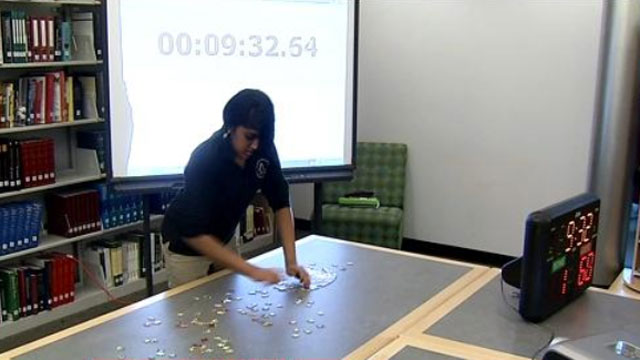
The official Guinness World Records 250-piece jigspuzzle progressaw puzzle is an oval shape and has no guiding picture on the box. Most of the pieces are very similar in appearence.

“There are pieces that are such odd shapes, I don’t know what goes where,” she told the Middletown Press, which along with WFSB and India New England, reported on her accomplishment.

Although she acknowledges her ability to solve jigsaw puzzles quickly, which was first noticed when she was a toddler, she does not exactly know what makes her successful. “It’s my thing. I have a talent for it,” she told the Press. This was second attempt; on her first attempt at age 12, she missed the world record by 30 seconds.

Part of her world record attempt was to raise funds for her UNICEF high school club. She was hoping to raise enough to provide three meals for a day to 250 (one for each of the puzzle pieces) needy children.

Ravichandran has a strong science, technology, engineering and mathematics background from her time at Hartford’s Annie Fisher STEM magnet school. More than 30 people watched the world record attempt on May 9, including six official witnesses and a videographer who filmed the successful attempt in the University High School's resource room.

New Haven Ranks as Best Connecticut City for Jobs

The Best Cities for Jobs in America? They’re generally not in Connecticut, according to a new national analysis, but a number of the states' leading metropolitan areas are moving up the list compared with their counterparts across the country. The New Haven, Bridgeport-Stamford-Norwalk, and Norwich-New London metropolitan areas all edged up the list compared with their rankings a year ago. Danbury dropped slightly. Hartford-East Hartford-West Hartford’s ranking was virtually unchanged.

The rankings of the nation’s cities was developed by the website newgeography, and published this week.

Among 92 Medium Sibestcities2014zed Cities that were ranked, New Haven ranked #42 (up from #65 last year) and Bridgeport-Norwalk-Stamfordnew haven ranked at #58 (up from #85 last year) and saw the 10th largest advance among the medium sized cities.
Danbury ranked #122 (down from #111 last year) and Norwich-New London at #231 (up from #233 last year) among 240 Small Sized Cities that were analyzed.

In the rankings of the nation’s Large Sized Cities, the Hartford-West Hartford-East Hartford region ranked #48, nearly identical to last year’s ranking of #47. The top rated cities included San Jose, San Francisco, Austin, Raleigh, Houston, Nashville, New York City, Orlando, Dallas and Denver.

This year's rankings use five measures of growth to rank all 398 metro areas for which full data sets were available from the past 10 years.

  • "Large" areas include those with a current nonfarm employment base of at least 450,000 jobs.
  • "Midsize" areas range from 150,000 to 450,000 jobs.
  • "Small" areas have as many as 150,000 jobs. This year’s rankings reflect the current size of each MSAs employment.

Among all 398 cities, New Haven and Danbury were the highest ranked from Connecticut, at #207 and #208 respectively. New Haven jumped 50 places in the overall ranking compared with last year; Danbury dropped 11 slots from a year ago.

The top-ranked city overall was Bismarck, North Dakota, which ranked first out of the 398 metro areas considered in the annual roundup of The Best Cities For Jobs. A metro area of 120,000 located in the country’s fastest-growing state and near the vast Bakken oil fields, the number of jobs in Bismarck is up 3 percent over the last year and 32.4 percent since 2002. Only one MSA—Modesto, CA—changed size categories moving from “Small” to “Midsized.”

The methodology for the 2014 rankings, according to newgeography, largely corresponds to that used in previous years, which emphasizes the robustness of a region's growth both recently and over time, with a minor addition to mitigate the volatility that the Great Recession has introduced into the time series. The rankings use five measures of growth to rank all 398 metro areas for which full data sets were available from the past 10 years.

The goal of the rankings methodology, according to the publication, is to capture a snapshot of the present and prospective employment outlook in each MSA and allow the reader to have a better sense of employment climate in each.

Included are all of the metropolitan statistical areas (MSAs) for which the Bureau of Labor Statistics reports monthly employment data. They are derived from three-month rolling averages of U.S. Bureau of Labor Statistics "state and area" unadjusted employment data reported from November 2002 to January 2014.

Northeast Utilities Becomes Title Sponsor of Hartford Marathon

The next Hartford Marathon, on October 11, 2014, will run under a new lead sponsorship banner, that of Northeast Utilities. Last October, more than 15,000 runners, tens of thousands of spectators, more than 1,200 volunteers, and 30 bands and local entertainers, flooded into the Capitol City  for the annual ING Hartford Marathon.  It was the last time they did so under the ING banner, as the company did not renew its sponsorship of the race following their sixth year as title sponsor. NU HMPrior to ING, United Technologies had been the title sponsor, following Aetna in the lead role in the marathon's early years.  The Hartford Marathon has served as an increasingly impactful economic stimulus to Greater Hartford, helping to fill hotel rooms, bars, restaurants, and other tourist attractions throughout the region. NU will be the new sponsor through at least 2016, officials said.

In 2013, the marathon - in its 20th year - brought in at least $14 million of economic value to the Hartford area, according to an analysis done for the Hartford Marathon Foundation by Avon-based Witan Intelligence Inc.  Race attendance was up 5.6 percent to 75,000 in 2013, based on police department estimates.

“We are thrilled to partner with Northeast Utilities, a New England company that shares our mission to support both the physical and economic wellness of our communities,” said Beth Shluger, Executive Director of the Hartford Marathon Foundation and Race Director of the 2014 NU Hartford Marathon and Half Marathon.

ING U.S., with major operations in Windsor, ended its association with the state’s signature running event as it separates from its Dutch parent and is rebranded into a new company — Voya Financial.  ING U.S. also ended its title sponsorships of races in New York and Miami. The Miami race was run earlier this year without a title sponsor. NU  newsconf

The Hartford Marathon Foundation had originally hoped to have a title sponsor in place by the end of 2013, but the search and negotiations took considerably longer, and some race materials for this year's race have already been circulated, in print and on line.  They are being revised and updated, as bright green becomes the new bright orange, as NU succeeds ING.

In addition to more than a dozen major sponsors drawn from the ranks of Connecticut’s leading corporations in recent years (including United Technologies, Hartford Hospital, Power Station, legrand, Aetna, Travelers, Baribault Jewelers and Executive Auto Group), volunteers  include staff members from Connecticut businesses, community groups and organizations that devote volunteers as a group service effort.In past years, staff volunteers from the title sponsor have taken the lead in anchoring water stations, handing out material (including medals for participants), and assisting in various capacities.

Hartford’s Post-Race is “one of the best in North America,” according to The Ultimate Guide to Marathons. The event has also developed a national reputation for extensive greening initiatives, and was certified as a "green race" in 2009 by the Council for Responsible Sport.    New last year were collaborative efforts with the UCONN EcoHusky Club and EcoHouse Learning Community and Hartford’s Knox Park.  Officials indicated that increased support services for runners will be provided in 2014, including special accommodations for active military and veterans. This year’s event will introduce solar power in Bushnell Park, a mark of its continuing commitment to sustainability, an important platform for both the Hartford Marathon Foundation and Northeast Utilities.

A month ago, the Hartford Marathon Foundation added Oz Griebel, of the Metro Hartford Alliance, and Robinson & Cole lawyer Andrea Donovan Napp to its 15-member board of directors. The Hartford Mar13-747athon Foundation, Inc. is a nonprofit organization founded in 1994 to create and manage fitness events that inspire people to be healthy and fit. The Hartford Marathon Foundation organizes nearly 42 annual athletic events, including the Hartford Marathon, and 25 training programs.
Mystic Aquarium Honored at White House Ceremony with National Medal

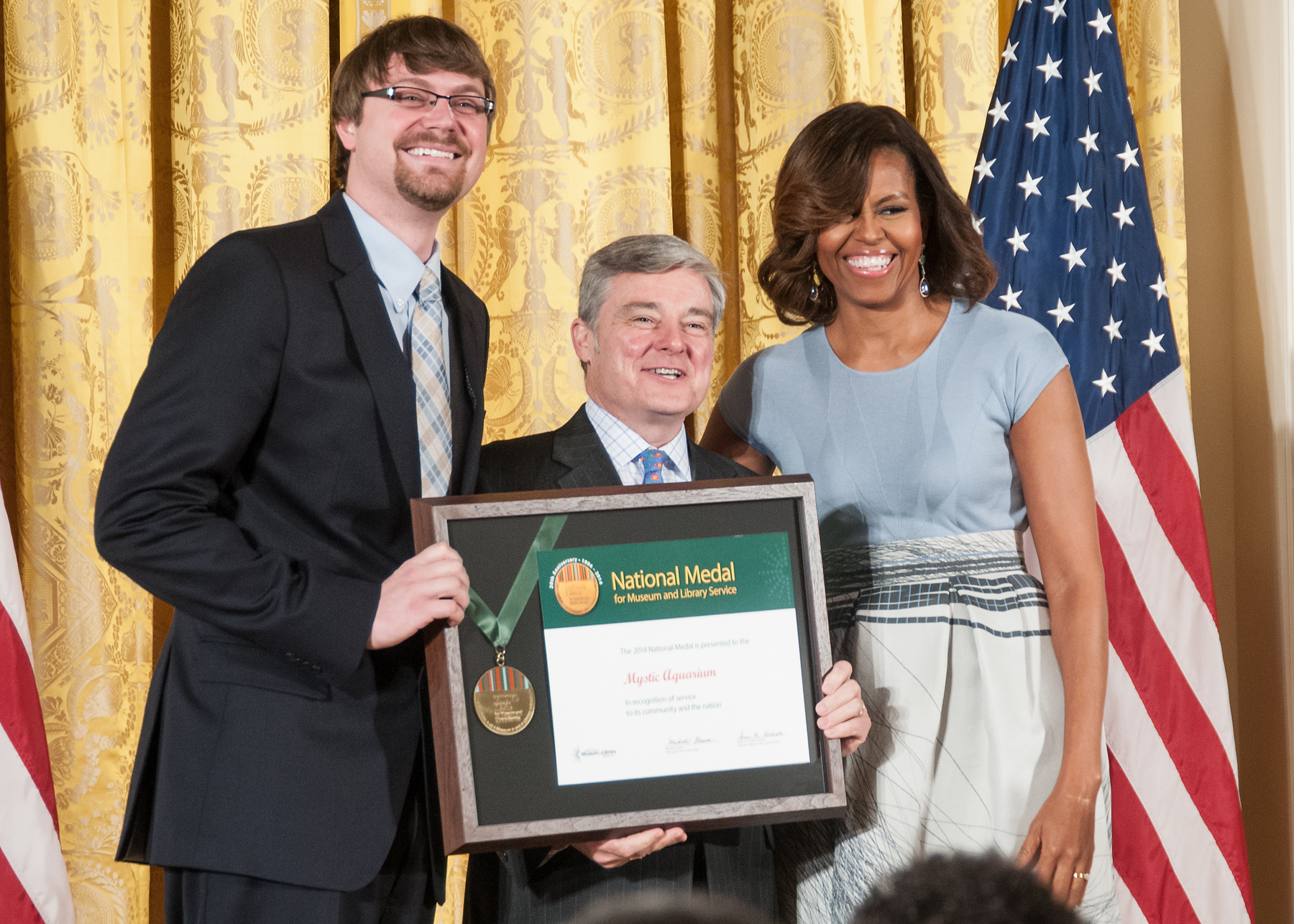
Mystic Aquarium has earned some high profile attention this month, recognized at a White House ceremony hosted by First Lady Michelle Obama. The Institute of Museum and Library Services (IMLS) honored Mystic Aquarium as the only aquarium or zoo nationwide to receive its National Medal for Museum and Library Service for 2014. Impressively, Mystic Aquarium was one of four Connecticut finalists considered for the National Medal, along with the Hartford Public Library, Mattatuck Museum in Waterbury and Otis Library in Norwich. A total of only 30 institutions across the country were finalists, from which ten winners were ultimately chosen.

The National Medal is the nation’s highest honor conferred on museums and libraries for service to their communities. The Institute of Museum and Library Services, an independent agency of the U.S. govemedal_lg-400x405rnment with the mission to create strong libraries and museums that connect people with information and ideas, is celebrating its 20th year of saluting institutions that make a difference for individuals, families and communities.

Mystic Aquarium gives back to the community with a direct financial impact of $72.2 million annually. In addition, the aquarium buys $5 million in services and supplies from Connecticut businesses annually. The institution’s conservation efforts protect the vitality of Long Island Sound, an important revenue-generating natural resource for Connecticut. It is the largest informal science education provider in Connecticut and Southeastern New England, reaching 100,000 students annually. whale

The work of Mystic Aquarium was brought to the attention of Susan H. Hildreth, Director of the Institute of Museum and Library Services, by some of Connecticut’s most prominent cultural, education and government leaders. Rodney A. Butler, Mystic Aquarium Trustee and Chairman of the Mashantucket Pequot Tribal Nation, nominated the Aquarium for the National Medal, noting the pivotal role the Aquarium plays with its education and cultural exchange program for Native American high school students from the village of Point Lay, Alaska, and the Mashantucket Pequot Tribal Nation in southeastern Connecticut.

A major criterion for the award is the institution’s impact on members of its local community. Dr. Stephen M. Coan, President and CEO of Sea Research Foundation, the parent of Mystic Aquarium, who accepted the National Medal from Mrs. Obama, said: “We are honored to receive this prestigious award. We are committed to our educational and public engagement programs that make Mystic Aquarium not only an enjoyable family destination, but also a research facility dedicated to protecting our oceans and its aquatic creatures.”

U.S. Senators Richard Blumenthal and Christopher Murphy supported the nomination along with Stonington Public Schools, which cited the Aquarium’s exemplary work with young people with intellectual disabilities. Michael Cotela, Executive Director of the Boys & Girls Club of Stamford extolled the Aquarium’s critical educational programming for underserved communities.

Founded in 1973, Mystic Aquarium has a collection of 4,00Medals2014_Mystic0 animals, including such species as beluga whales and the endangered African Penguin.
 

PHOTO (Left to right): Justin Richard, Stephen M. Coan, Mrs. Obama.

Growing Aging Population Brings Shifting Priorities, Possibilities

“Given the gift of longer life, better health, greater engagement and more possibilities, the fifty-plus generation of today holds new and very different ideals,” A. Barry Rand, CEO of AARP, told a  national AARP convention audience in Boston last week that included more than 250 people from Connecticut. “The old story of aging was about freedom from work. The new story is about freedom to do something different,” he said of what was described as “The Age of Possibilities- America’s second aging revolution.”

With one of the nation’s largest populations of older citizens on a percentage basis, the changes ring especially true in Connecticut. Past U.S. Census data, for example, indicates that Connecticut has consistently ranked in new-aarp-logo---resized-800x600the top tier of states in the percentage of residents age 65 and older, and as high as 5th (2010 census) in the percentage of population age 85 and olderThe Connecticut Post reported back in 2010 that Connecticut,  in less than a decade, moved from 15th in state rankings by the U.S. Census Bureau of people 65 years old and over to ninth-place -- seventh if those 60 and over are counted.
Between 2000 and 2010, Connecticut’s 65 and older population grew by 7.7 percent and the states’ 85 and older population grew by 32.1 percent, according to the U.S. Census.   Rand cited a series of national statistics that not only underscored his premise, but reflect that the demographic shift is already underway. Rand noted:

  • Most people turning 50 today can expect to live another 30-plus years.
  • They have over half their adult lives ahead of them. That’s more time than they spent in childhood, in adolescence, and for many, it’s more time than they spent working.
  • By 2030, one in every three Americans will have reached the age of 50.
  • At the same time, 10,000 people a day are turning 65 — and that will continue for the next 17 years.
  • The fastest growing age group consists of people 85-plus.
  • We’re quickly approaching a time when people 65 and older will outnumber children 15 and under for the first time in history.

“This reflects a monumental change in our social structure and how we live our lives,” Rand said.  AARP officials said that in Connecticut over the next 15 years (2010 to 2025), the total population is projected to grow by 275,254, an increase of eight percent. When looked at by age group, however, more distinct differences emerge:

  • The percentage of individuals under age 18 will decrease by 11 percent.
  • The percent of adults between the ages of 18 and 64 will only increase by three percent.
  • In contrast, the percent of individuals age 65 and over will increase substantially, by 63 percent, due to the aging of the Baby Boom generation.

The Populations Reference Bureau reports that projections of the entire older population (which includes the pre-baby-boom cohorts born before 1946) suggest that 71.4 million people will be age 65 or older in 2029.

In Connecticut, when the state Department on Aging was established last year, officials indicated that the 65 and older population made up 14 percent of the state's population and was expected to grow to 21.5 percent of the population by 2030.


Who Knew? Northeast is Hotbed of Entrepreneurial Activity, For Some More than Others

Takes one to know one. Or, more accurately, know one and you may become one. That’s the bottom line of an exploration into entrepreneurship by a Kauffman Foundation researcher, who found that the Northeast is the best place to catch the entrepreneurial bug. As Connecticut sinks increasing dollars into initiatives to encourage entrepreneurship, develop jobs, and turn ideas into businessentrepreneurses (often with state financial incentives) the report offers guidance of factors influencing the frequency of entrepreneurial launches.  Connecticut Innovations,  established and supported by state government,  helps Connecticut businesses grow through creative financing and strategic assistance,  and is the nation's sixth most-active early stage investor.
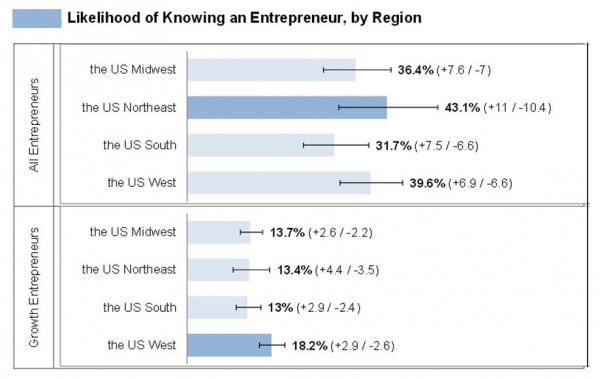
The survey indicated that the likelihood of a person knowing entrepreneurs varied widely by location, income, gender, and age. Respondents were much more likely to know entrepreneurs if they were male, had modest income, or were middle-aged. And they were much less likely to know entrepreneurs (or be entrepreneurs) if they were female, had a higher income, or were located in the Midwest or South.

The study suggests that there could be “material increases in entrepreneurship simply through doing a better job of exposing people to existing entrepreneurs, especially peers or contemporaries.” Entrepreneurship grows, the study found, where it is planted.

Key factors to consider when attempting to encourage entrepreneurship, according to the study:

  • Women have less exposure to growth entrepreneurs than men
  • The young have much more exposure to growth entrepreneurs
  • People in lower income strata are much less likely to be exposed to growth entrepreneurs

The study concluded that “In all cases, an individual’s exposure to entrepreneurs—and to growth entrepreneurs in particular—may increase his or her likelihood of being one. Entrepreneurship can be viral, but must be introduced early and often in environments where it is least often seen.”

The study distinguished between entrepreneurial companies and “growth entrepreneurial companies,” those companies growing more than 20 percent a year and with more than $1 million in sales, generate more employment and contribute more to wealth and GDP than do slower-growing ventures.

The likelihood of a respondent reporting knowing an entrepreneur by Region in the United States was 36.7 percent. The likelihood of knowing a growth entrepreneur was considerably lower, at 15.4 percent.
When broken down by gender, the likelihood of males knowing an entrepreneur was 39.9 percent, females 35.8 percent. For growth entrepreneurs, the gender gap was considerably wide, 24.8 percent to 12.1 percent.

A year ago, CTNext, Connecticut’s innovation ecosystem managed by Connecticut Innovations (CI), announced the launch of the Entrepreneur Innovation Awards (EIA), a competitive pitch process that provides awards up to $10,000 to entrepreneurs in Connecticut for growth-related activities. CI helps innovative companies in four key ways: by offering equity, debt, grants and strategic guidance.

A month ago CTNext announced the winners of the latest round of EIA awards; Connecticut-based companies and entrepreneurs, received $10,000 for their project ideas. CI also selected David Wurzer, formerly a senior managing director at CI, to be chief investment officer and executive vice president. As part of his new role, Wurzer will be responsible for the management of the investment function, staffing needs, portfolio and risk management, outreach to stakeholders, budget planning and performance measurement.

The study “Getting the Bug: Is (Growth) Entrepreneurship Contagious?” was conducted by Paul Kedrosky of the Kansas City-based Kauffman Foundation, and is aimed at providing data to guide efforts across the country to grow entrepreneurship. The survey, which categorizes responses of 2,000 individuals by age, income, gender, and location, was done via Consumer Google Survey.

Tolland County is Healthiest in Connecticut, Fairfield Next, Report Finds

The healthiest county in Connecticut is Tolland County, according to a new report analyzing health data from nearly every county in the country. The 2014 County Health Rankings & Roadmaps ranked Connecticut’s eight counties by health outcomes and health factors. According to the report, health outcomes represent how healthy a county is while health factors represent what influences the health of the county.

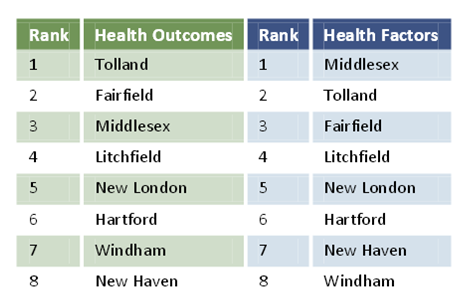
county_health_ranking_300In health outcomes, Tolland County led the way, followed by 2)Fairfield County, 3)Middlesex County, 4)Litchfield County, 5)New London County, 6)Hartford County, 7)Windham County and 8)health outcome ranksNew Haven County.
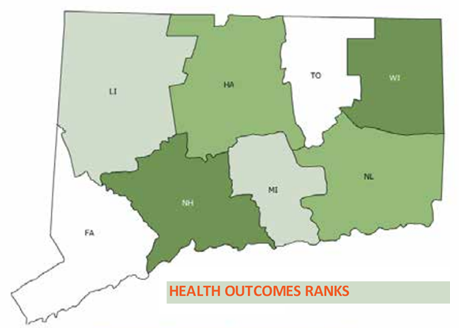
In health factors, Middlesex County ranked first, followed by Tolland County, Fairfield County, Litchfield County, New London County, Hartford County, New Haven County and Windham County.

The County Health Rankings & Roadmaps program helps communities identify and implement solutions that make it easier for people to be healthy in their schools, workplaces and neighborhoods, according to study authors. The Robert Wood Johnson Foundation collaborated with the University of Wisconsin Population Health Institute on the state-by-state analysis and report, which measured the health of nearly every county in the nation.

The report website includes “county snapshots” - detailed data for each county, in each of the health factors and health outcomes. Comparisons between counties, and the statewide numbers, are also available.ranks

Health factors data included in the analysis are health behaviors, such as tobacco use, diet and exercise, and alcohol and drug abuse; clinical care, including access to care and quality of care; social and economic factors, including education, employment, income, safety and family support; and physical environment, including air and water quality, housing and transit. Health outcomes date included length of life, and quality of life, with factors such as physical health and mental health.

The report website provides specific data in each of the categories, and ranks Connecticut’s eight counties in each factor. This year’s Rankings release marked the fifth anniversary of the first national release of the County Health Rankings.

When One CT Beer Week Is Just Not Enough

For Connecticut’s growing beer industry, a single beer week was just not enough.

The Connecticut Beer Wholesalers Association, which is comprised of six beer wholesalers in Connecticut and conducted the CT Beer Week marketing campaign for the first time last May, has decided to double down on the effort in 2014.  The second annual Beer Week later this month will be the first to two “weeks” planned for this year.

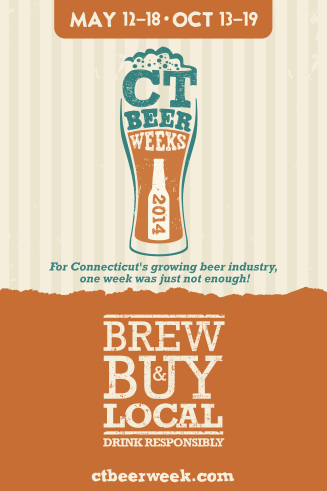
The first Beer Week ict-beer-week-2014s coming up during the week of May 12 – 18, the same week as American Craft Beer Week. The second one is slated for October 14-20, and coincides with CT Restaurant week. Consumers are asked to “join us as we celebrate the growth of an industry in partnership with craft brewers, restaurants and retailers.”

Organizers say the "Brew & Buy Local" campaign brings focus to the Connecticut organizations that work together to strengthen “a vibrant industry filled with cooperative spirit and a desire to brew something good for Connecticut!”

Among the events in Connecticut later this month will be the 4th Annual Rising Pint Brewfest, designed to kick off American Craft Beer Week. The event will be May 10, 2014 at Rentschler Field, featuring over 90 craft breweries, live bands and local restaurants.  Proceeds of the Rising Pint go to Folds of Honor, a foundation working to help the families of our fallen and severely injured soldiers.CTBeerWeekTshirts

A full calendar of beer week events has been developed, and features more than 40 events around the state.  Connecticut has 22 local breweries, with a dozen new breweries being developed including three slated to open later this year in Oxford and Glastonbury.

Top Main Street Revitalization Initiatives in Connecticut Named

Manchester, New Britain, Waterbury, Seymour and the Northwestern CT Regional Planning Collaborative are being highlighted by the Connecticut Main Street Center (CMSC) for their strategic downtown revitalization initiatives.

As recipients of the organization’s 2014 Awards of Excellence, the efforts include a community college partnering with the downtown and others to create a co-working space; connecting the Naugatuck River with the downtown through extended trails and a linear park; and regionalizing marketing for a collection of small village centers.

The annual  Connecticut Main Street AwardCT Main Street LOGOs of Excellence were created in 2003 to recognize outstanding projects, individuals and partnerships in community efforts to bring traditional downtowns and neighborhood commercial districts back to life, socially and economically. All of the award recipients continue the tradition of stimulating economic development and reinvigorating Connecticut's social centers, officials said.

"Our members continually inspire us with how creatively they respond to the needs of their community," said CMSC President & CEO John Simone. "They're deeply committed to every aspect of their downtown - the businesses, public spaces, local institutions, and above all, creating a place that people really enjoy living in and visiting. We couldn't be happier with how this year's winners represent all we stand for in downtown revitalization."

Submissions were judged on criteria which included innovation, replication, representation, partnerships utilized, and outcomes.  The awards will be presented at the 2014 Connecticut Main Street Awards Gala on June 9th at Roia Restaurant in downtown New Haven.  Award recipients, by category, are:

Events & Programming

Award of Excellence for Wine on Main St. to Main Street Waterbury, Terry Boyd, Braza Churrascaria, Courtyard by Marriott, Diorio's Restaurant, Shamrock Pub & Grill, Tryst Lounge, Signature's Restaurant, City Hall Café, Howland Hughes Center, and Nutmeg Fine Wine & Spirits.

Marketing & Communications

Award of Excellence for Discover NW CT to Northwestern CT Regional Planning Collaborative (representing the Towns of Sharon, Falls Village, Goshen, Cornwall, Canaan, Salisbury, Kent, and Norfolk), Studio Two, local business owners in the eight towns in the "Secret Corner", and local historical societies.

Public Space

Award of Excellence for Complete Streets Master Plan for Downtown New Britain to Downtown Streetscape Working Group, the City of New Britain (including the Mayor's Office, Public Works, Planning and Parks Departments), New Britain Downtown District, Polonia Business District, Central Connecticut State University/ITBE, Capitol Region Council of Governments, and Project Consultant Team.
Renewed Commitment to Main Street

Award of Excellence for Seymour Downtown Action Strategy to the Town of Seymour, Seymour Economic Development Commission, Seymour Downtown Committee, Greater Valley Chamber of Commerce, Naugatuck River Greenway Steering Committee, Naugatuck Valley Council of Governments, Downtown Merchants Association, Planimetrics, Milone and MacBroom; CT Department of Energy and Environmental Protection,and the National Oceanic and Atmospheric Administration.

Main Street Partnership

Award of Excellence for Axis901 and MCC on Main (Manchester) to First Niagara Bank, Manchester Community College (MCC) Foundation, and the Town of Manchester (Board of Directors and Staff).

Economic & Business Development

Award of Excellence to The Business Women of Grand Street (Waterbury) to The Dutch Flower Lady, Technology Forensics, John Bale Book Company, Fine Craft Jewelers, Dottie's 2, Princess Lingerie, Brass City Market on Field, and Fashion Addict.