Nationwide Bicycle Fatalities Increase; CT Takes Steps to Improve Safety

The number of bicyclists killed on U.S. roadways is increasing, according to a report by the Governors Highway Safety Association (GHSA). GHSA’s Spotlight on Highway Safety: Bicyclist Safety indicates that yearly bicyclist deaths increased 16 percent between 2010 and 2012, while overall motor vehicle fatalities increased just one percent during the same time period. While bicyclists killed in motor vehicle crashes increased in 22 states between 2010 and 2012, six states – California, Florida, Illinois, New York, Michigan and Texas – represented 54 percent of all fatalities.  In 2012, Florida had the highest proportion of motor vehicle related deaths that were bicyclists (5 percent), followed by California (4.3 percent) and Massachusetts (4.3 percent).2014_bike_increase

Connecticut, according to the report, had 7 bicyclist deaths in 2010, 8 in 2011 and 4 in 2012.  The state was one of 25 states to have the number of fatalities drop from 2011 to 2012.

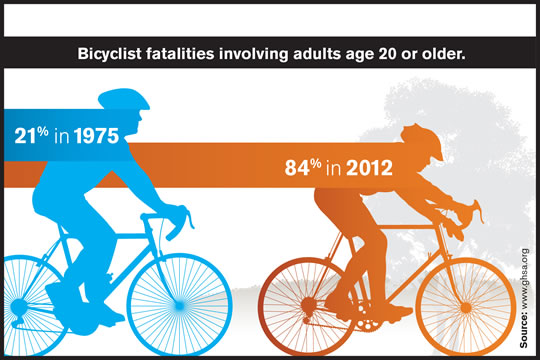
Bicycling is being used more for commuting, which is affecting the age of accident victims according to the study. In 2012, adults 20 and over comprised 84 percent of bicycle fatalities. That compares to adults making up only 21 percent in 1975.  Bicycle fatalities are increasingly an urban phenomenon, accounting for 69 percent of all bicycle fatalities in 2012, compared with 50 percent in 1975.

Until 2010, the number of cyclist fatalities annually had been dropping steadily since 1975 nationwide. The recent increase correlates with a 62 percent surge in bicycle commuting since 2000, according to 2013 Census Bureau data, as governments have promoted cycling as a way to reduce traffic, curb vehicle emissions and improve public health.2014_bike_adults
"The increase in cyclist fatalities on the road is tragic, but unsurprising, given the growth of the driving population and the number of cars on the road,” said Kelly Kennedy, Executive Director of Bike Walk Connecticut.   “Add to that the very real problems of distracted driving, aggressive driving, and street designs that put cyclists and pedestrians at risk. This is why we need complete streets, much better enforcement of speeding, distracted driving, and share the road laws, and the vulnerable user law that Connecticut just enacted."

Earlier this month, the state Department of Transportation (DOT)  issued a Complete Streets policy statement, which was praised by Bike Walk Connecticut.  The policy expressly promotes safe access for all users by providing a comprehensive, integrated, connected multi-modal network of transportation options.  DOT's policy is intended to improve safety and mobility and enhance Connecticut’s economic competitiveness by enabling communities to become livable, walkable, bikeable, drivable, efficient, safe and desirable.

report bThe new GHSA report indicated that in many states and urban areas, engineering measures are being adopted to accommodate bicycles on the road, “with the dual aim of protecting cyclists from collisions with motor vehicles, while encouraging cycling for its health and environmental benefits.”

In announcing the new Connecticut policy, DOT Commissioner James Redeker noted that Route 44 in East Hartford will undergo a “road diet” in 2015 to provide bike lanes, enhance vehicular safety and efficiency and improve pedestrian and transit accommodation throughout the corridor. The Department is also outfitting 50 train cars with bike racks on the New Haven Line operating between New Haven to New York City.

In its fifth year before the Connecticut legislature, the Vulnerable User bill passed earlier this year, and took effect on this month (on Oct. 1).  The new law requires a fine to be imposed on reckless motor vehicle drivers who cause the death or serious injury of a pedestrian, cyclist, wheelchair user, or other “vulnerable users” who were using reasonable care.

The GHSA report’s author, former Insurance Institute for Highway Safety Chief Scientist Dr. Allan Williams, analyzed current and historical fatality data to develop the bicyclist crash patterns.



Construction of New Rail Stations Set to Begin in 3 Connecticut Communities

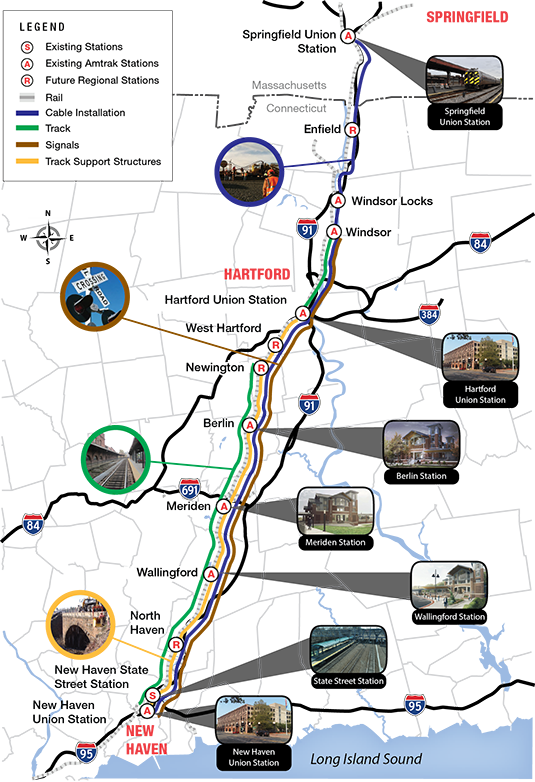
The start of construction is imminent this fall for new rail stations in Wallingford, Meriden and Berlin as part of the New Haven-Hartford-Springfield (NHHS) Rail Program.  The new, expanded commuter service, to debut in 2016, will be branded the “Hartford Line,” as a key component of an increasingly robust multi-modal regional transportation system being developed in the state and region. Improvements at the three stations include high-level platforms on both sides of the track, overhead pedestrian bridge with new elevators and stair towers, platform snow melt systems, electric vehicle charging stations, ticket vending machines and passenger information display systems,  high-resolution video surveillance systems, increased parking capacity and roadway access improvements, improved accessibility and bicycle racks.2014.10.22_Hartford_Line_s

Funded through the Passenger Rail Investment and Improvement Act (PRIIA) created under President Barack Obama in 2008, and State of Connecticut bonds proceeds, the NHHS Rail Program is aimed at providing significant new regional passenger rail service options.  Existing stations on the Hartford line are in New Haven, Wallingford, Meriden, Berlin, Hartford, Windsor Locks and Springfield.  Plans call for future stations in North Haven, Newington, West Hartford and Enfield. base_map

Officials point out that one of the primary objectives of the NHHS program is to serve as a catalyst for transit-oriented development (TOD) around the stations. The state Department of Transportation is working with towns to help leverage the investment in railroad infrastructure to capture local development benefits. TOD, in the form of compact, mixed-use districts, is pedestrian-friendly and contributes to vibrant and active communities. By promoting the use of transit, TOD also reduces reliance on automobiles, resulting in energy cost savings and improved air quality.

In June, officials from the U. S. Department of Transportation’s Federal Railroad Administration (FRA) toured parts of the NHHS Rail corridor, and state officials recently visited a proposed rail station site in Enfield.

The new NHHS rail service is expected to operate at speeds up to 110 mph, cutting travel time between Springfield and New Haven to as short as 79 minutes. Travelers  will be able to board trains every 45 minutes during the morning and evening peak hours and every 90 minutes during off-peak periods when the new system is operational.

A year ago, a West Haven rail station was added to the New Haven line.  Located midway between Milford and New Haven stations, West Haven was the first new station to open on the New Haven Line since Fairfield Metro Station was added in 2011. West Haven Station was designed by Vanasse Hangen Brustlin and built by a Connecticut company, Manafort Brothers of Plainville.

A New York City-based construction firm, Judlau Construction, has been awarded the $58.8 million contract to build the new railroad stations in Berlin, Meriden and Wallingford, the New Haven Register reported last month.  The firm specializes in large public works projects and design-build services, and currently ranks #132 on Engineering News Record’s list of the Top 400 Contractors, as well as #32 among Top Domestic Heavy Contractors. (In 2011, the company ranked #113 on the Top 400 list and #33 on the Top Domestic Heavy Contractors list.)

In June, the Chicago Tribune reported that the company was being awarded a $64 million construction contract by Illinois Tollway as low bidder for construction of new highway entrance ramps.  The Tribune also reported that Judlau “admitted improper hiring practices and paid a $7.5 million penalty in connection with an alleged minority hiring scheme” in New York, which the company said it had “self-reported” to the U.S. Attorney’s office.  The Tribune reported that “according to a 2012 civil lawsuit settlement with the U.S. attorney's office, Judlau and its partner in a Metropolitan Transportation Authority tunnel project admitted engaging in improper hiring practices involving minority- and women-owned businesses, otherwise known as disadvantaged business enterprises, or DBEs.”

13 CT High Schools in Nation’s Top 500, Up from 8 Last Year; Four CT Schools "Beat the Odds"

Thirteen Connecticut high schools rank among the nation’s top 500 according to a report compiled by Newsweek Magazine – an increase from eight schools a year ago. Connecticut did not have a school ranked in the top 100.  The highest ranked Connecticut school on the list is Amity High School in Woodbridge, which placed at #112, up from #667 last year.  Connecticut’s top-ranked high school in last year’s analysis, the Connecticut IB Academy in East Hartford, also ranked #112 that year.  This year the IB Academy was at #140, the second highest ranked school in Connecticut.bestschools-share

New to the top 500 from Connecticut this year were Litchfield High School, Greenwich High School, Daniel Hand High School in Madison, South Windsor High School, Fairfield Warde High School, East Lyme High School, Wolcott High School, East Lyme High School, Wolcott High School, Lyme-Old Lyme High School, Haddam-Killingworth High School, Pomperaug High School in Southbury and Cheshire High School. 

Every year Newsweek announces the nation’s best high schools that do an outstanding job of preparing students for college.  The magazine teamed up with a research group to compile the list.  They said their methodology was more stringent than ever with new measures of quality and a high standard of data, utilized a College Readiness Score that was based on the following six indicators:

  • Enrollment Rate—25 percenthigh school
  • Graduation Rate—20 percent
  • Weighted AP/IB composite—17.5 percent
  • Weighted SAT/ACT composite—17.5 percent
  • Holding Power (change in student enrollment between ninth and 12th grades; this measure is intended to control for student attrition)—10 percent
  • Counselor-to-Student Ratio —10 percent

The number one spot in the nation went to Thomas Jefferson High School in Alexandria, VA.  Connecticut’s 13 high schools ranked in Newsweek’s Top 500 include:

  • Amity High School in Woodbridge (#112)
  • Connecticut IB Academy in East Hartford (#140)
  • Litchfield High School (#164)
  • Greenwich High School (#168)
  • Daniel Hand High School in Madison (#179)
  • South Windsor High School (#226)
  • Fairfield Warde High School (#227)
  • East Lyme High School (#228)
  • Wolcott High School (#337)
  • Lyme-Old Lyme High School (#352)
  • Haddam-Killingworth High School  (#336)
  • Pomperaug High School in Southbury (#386)
  • Cheshire High School (#401)

A year ago, there were eight Connecticut high schools in the top 500.  The top-ranked school in the state was the Connecticut IB Academy in East Hartford, at #112.  Also ranking in the top 500 in 2013 were Weston High School at #190, Staples High School in Westport at #196, New Canaan High School at #227, Ridgefield High School at #270, Farmington High School at #405, and Valley Regional High School in Deep River at #441.  All but the Connecticut IB Academy fell out of the top 500 this year.

Among this year’s top 500, Greenwich High School was #573 a year ago, Daniel Hand High School in Madison ranked #589, Amity Regional High School in Woodbridge was #667, and East Lyme High School was #723.

"Beat the Odds" Schools

In a separate ranking of the nation’s top schools for low-income students, which Newsweek describes as "Beat the Odds Schools," the highest-ranked Connecticut high school was the Greater Hartford Academy of the Arts, which ranked #266.  It is one of four Connecticut high schools to reach the nation's top 500, according to the Newsweek analysis.  The Connecticut IB Academy was the second-ranked Connecticut high school on this list as well, coming in at #275.  Bunnell High School in Stratford was #290, and Common Ground High School in New Haven was #316.

With the list, Newsweek sought to “recognize schools that beat the odds, performing better than statistically expected for their level of poverty.” Schools were ranked on how well they prepare their students for college, taking students’ socio-economic background into account.

Postpartum Psychosis More Prevalent Than Most Realize

Listeners to the National Public Radio program “On Point” this week heard a Connecticut resident discussing the progress being made on a one-on-one basis, as well as through international efforts, to respond to the prevalence of postpartum psychosis. Teresa Twomey of Cheshire is co-coordinator in Connecticut for Postpartum Support International (PSI) the leading organization dedicated to helping women who experience perinatal mood disorders, working to increase awareness among public and professional communities.PSI-LOGO-best-copy-21

Approximately 15 percent of all women (1 in 8) will experience postpartum depression following the birth of a child, according to the nonprofit organization. Up to 10 percent will experience depression or anxiety during pregnancy. When the mental health of the mother is compromised, PSI explains, it affects the entire family.

A woman with postpartum depression might experience feelings of anger, sadness, irritability, guilt, lack of interest in the baby, changes in eating and sleeping habits, trouble concentrating, thoughts of hopelessness and sometimes even thoughts of harming the baby or herself.

In a TEDx talk in Hartford a year ago, Twomey described her own postpartum psychosis, which was both unexpected and severe.  While initially reluctant to discuss her circumstances publically, the well-publicized deaths of children in the U.S. at the hands of their mothers while suffering from postpartum psychosis prompted her to action. tedx

Based on her personal experiences, Twomey is the author of “Understanding Postpartum Psychosis: A Temporary Madness.” In an interview with FOX Connecticut when the book was published five years ago, she said "while most women who suffer postpartum psychosis eventually recover without harming anyone, they most often do so in silence.” Paranoia is a common symptom, explained Twomey, and “that moves women to hide their symptoms from everyone around them. The woman can hence appear normal, but be putting both herself and her baby at risk. We can prevent and treat this, but we need to recognize it by better screening of women postpartum."

While many women experience some mild mood changes during or after the birth of a child, 15 to 20 percent of women experience more significant symptoms of depression or anxiety, according to the PSI website. Women of every culture, age, income level and race can develop perinatal mood and anxiety disorders. Symptoms can appear any time during pregnancy and the first 12 months after childbirth.

PSI stresses that there are effective and well-researched treatment options to help advance recovery. Every perinatal mood disorder, no matter how strong the symptoms are, is temporary and treatable, PSI points obookut.

PSI Coordinators are volunteers who offer caring and informed support and resources to moms and their families. They also provide information and resources for area providers who are caring for pregnant and postpartum families.  In Connecticut, the volunteer organization has support groups based in Middletown, New Britain and West Hartford.  Support services provided are free of charge.

The organization states that there is no one cause for perinatal mood and anxiety disorders. Women who develop depression or anxiety around childbearing have symptoms that are caused by a combination of psychological, social, and biological stressors, and there does not need to be a family history of depression.  “Developing a perinatal mood and anxiety disorder is not your fault,” the website emphasizes. “You did not do anything to ‘get’ this.”

PSI headquarters is located in Portland, Oregon and has members all over the world, including volunteer coordinators in every one of the United States and in more than 36 other countries. PSI disseminates information and resources through its volunteer coordinators, website and annual conference. Its goal is to provide current information, resources, education, and to advocate for further research and legislation to support perinatal mental health.

Twomey said that postpartum psychosis should be treated as a public health issue, so that greater attention could be focused on prevention.  Although retelling and reliving her story is difficult, she does so because “if this helps one family, saves one life, it is worth it.”

Innovation and Impact of Manufacturing Companies in CT Is Focus of New CPTV Documentary

With Election Day less than two weeks away amid intensifying discussion of job growth in Connecticut, CPTV zeroes in on modern manufacturing and the role of innovation in companies. The CPTV Original documentary Made in Connecticut premieres Thursday, Oct. 23 at 8 p.m. on CPTV. Twelve businesses that exemplify the diversity of successful manufacturing “located and thriving right here in Connecticut” are featured in the program.made in CT

The documentary is part of a three-year, multi-platform initiative by Connecticut Public Broadcasting that celebrates Connecticut’s manufacturing future, from high-tech to hand-made.  The initiative includes additional special programming airing on CPTV and WNPR/Connecticut Public Radio.

Against the backdrop of such timely issues as outsourcing and a global economy, the Made in Connecticut documentary explores topics including:

  • the value that manufacturing provides to the state’s economy;
  • how the manufacturing sector is contributing to the creation of jobs in Connecticut;
  • how advances in technology have changed the nature of manufacturing and the skills needed to work successfully in the manufacturing environment; and
  • how science, technology and innovation are transforming manufacturing endeavors around the world, the nation and the state.

Featured in the documentary are:

  • Barnes Group headquartered  in Bristol, which started as a spring company in 1857 to supply the clock industry and has now exploded into a global leader in industrial and aerospace manufacturing;
  • Curtis Packaging in Sandy Hook, a nearly 170-year-old family-owned company that has reinvented itself as a world leader in luxury packaging and environmental stewardship;
  • Ola! Granola in Norwalk, where a mother of three produces hand-made granola in mouth-watering flavors such as vanilla almond, cranberry orange pecan and chocolate banana-chip;
  • Oxford Performance Materials in South Windsor, a plastics company on the edge of science fiction-like technology, using 3-D printing to create cranial implants for people who have suffered traumatic brain injury;
  • Pratt &Whitney in East Hartford, the industry leader in aerospace, creating breakthrough technology with its PurePower jet engine that will revolutionize air travel;
  • Protein Sciences in Meriden, which has a game-changing flu vaccine that takes just weeks to mass produce to fight pandemics worldwide;
  • Severance Foods in Hartford, a snack food company founded by three friends who invested in a tortilla-making machine in the 1980s, and now employs more than 85 people to produce 40,000 pounds of tortilla chips a day;
  • Tucci Lumber, which makes baseball bats in South Norwalk and was founded by a former Major leaguer.

Connecticut’s unemployment rate dropped to 6.4 percent last month as nonfarm jobs reached a new recovery high point. The unemployment rate last month was the lowest it has been in the state since November 2008, according to a state Department of Labor report.  The employment gain of 11,500 jobs in September is the largest since April 1994, the seventh monthly nonfarm employment gain this year and a "vigorous bounce-back" from the revised decline of 1,200 jobs in August, the Department of Labor said.  As the state takes proactive steps to ensure people are trained for manufacturing jobs, employment numbers are simultaneously rising. In the most recent data, manufacturing jobs increased from 163,500 last year to 164,100 this year, Fairfield County Business Journal reported.  The manufacturing industry plays a crucial role throughout Connecticut communities, U.S. Sen. Chris Murphy's office pointed out recently, noting that Connecticut’s 4,602 manufacturers account for 10.2% of the state’s jobs and 87% of the state’s total exports.

To prepare future workers, Manchester Community College will lead the state's 12 community colleges and Charter Oak State College in a federally funded effort to expand manufacturing education in the state as part of a $15 million grant from the U.S. Department of Labor, announced this month.  The grant  will support an expansion of the Connecticut Advanced Manufacturing Initiative, which trains students for jobs in the field. The grant will pay for equipment to provide hands-on training, new teachers and educational assistants and the development of registered apprenticeship programs for high-demand manufacturing occupations, among other investments.

CPTV_Logo

“In recent years, technological advances, as well as human innovation and creativity, have put Connecticut on the forefront of a manufacturing revolution. This revolution is not only exciting, it’s important to the local economy, as it’s helping to create jobs. Manufacturing has always been an important part of Connecticut’s culture and economy,” said Jerry Franklin, President and CEO of CPBN, who is to be honored next week by Hartford Business Journal with the publication’s Lifetime Achievement Award for his leadership in the broadcast industry.

The documentary Made in Connecticut is produced and hosted by Emmy Award-winning journalist Christina DeFranco. Funding was made possible by Founding Sponsor, KBE Building Corporation. KBE Building Corporation is a full-service, single-source commercial construction company strategically positioned to serve the Eastern and Mid-Atlantic, with offices in Connecticut and Maryland.

“We’re passionate about fostering innovation in Connecticut’s manufacturing and technology spaces, and we just happen to have built more technical high schools around the state than anyone else.  We’re thrilled to shine light on this critical aspect of the state’s current and future economy,” said Mike Kolakowski, KBE Building Corporation’s President and Principal Owner.

See preview on You Tube.   

Adult Obesity Rate Reduced in Connecticut; Climbs in Neighboring States

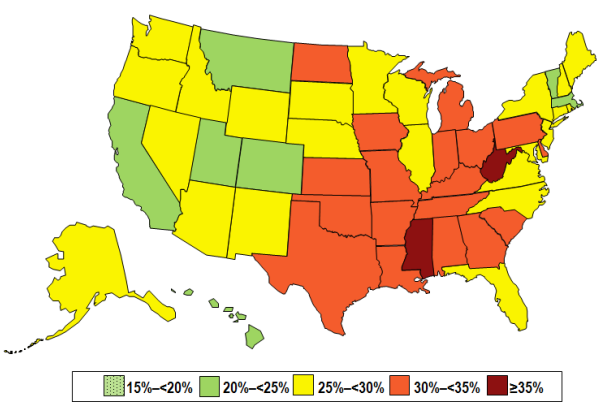
Obesity, a common and costly health issue that increases risk for heart disease, type 2 diabetes, and cancer, affects more than one-third of adults and 17 percent of youth in the United States. A state-by-state review indicates that the adult obesity rate in Connecticut has dropped slightly in 2013 compared with 2012, and remains at about one-quarter of the population, mid-range among the states.  Nationwide, improvement remains elusive. By the numbers, 78 million adu2013-state-obesity-prevalence-maplts and 12 million children are obese—figures many regard as an epidemic. Adults are considered obese when they are about 35 pounds overweight.


In Connecticut, the segment of the adult population considered to be obese dropped from 25.6 percent in 2012 to 25.0 percent in 2013.  It was the only state among those bordering Connecticut to see an improvement in the obesity rate.

In neighboring New York, the rate climbed from 23.6 percent in 2012 to 25.4 percent in 2013. In Massachusetts, the obesity rate was 23.6 in 2013, up from 22.9 in 2012.  In Rhode Island, the obesity rate increased from 25.7 percent of the adult population to 27.3 percent.

Data from the Behavioral Risk Factor Surveillance System, of the National Centers for Disease Control and Prevention was featured by the National Conference of State Legislatures.ObeseScale

In 2013, obesity rates among American adults remained high, and in numerous instances, was rising:

  • No state has an obesity rate below 21 percent.
  • In two states – Mississippi and West Virginia - obesity rates now exceed 35 percent for the first time, the highest in the nation.
  • 20 states have obesity rates at or above 30 percent. (In 2012, 13 states had levels that exceeded 30 percent.)

Overweight and obese individuals are at increased risk for many diseases and health chronic conditions, including hypertension (high blood pressure), osteoarthritis (a degeneration of cartilage and its underlying bone within a joint), dyslipidemia (for example, high total cholesterol or high levels of triglycerides), type 2 diabetes, heart disease, stroke, gallbladder disease, sleep apnea and respiratory problems, and some cancers (pancreas, kidney, prostate, endometrial, breast, and colon).

The lowest obesity rates in the nation are in Colorado, at 21.3 percent and Hawaii at 21.8 percent.  In both states, the rate declined between 2012 and 2013.

Jewel Mullen: Public Health Commissioner At Center of State's Ebola Response

Described on the Yale School of Public Health website as “a leader in building effective community-based chronic disease prevention programs,” Connecticut’s Commissioner of Public Health, Dr. Jewel Mullen, has a long academic association with Yale, even as both were catapulted into the breaking news spotlight with a possible case of the Ebola virus in a patient under care at Yale-New Haven Hospital. Mullen is also well-acquainted with the U.S. Centers for Disease Control and Prevention, having served on public health advisory committees, appointed by the CDC and the U.S. Department of Health and Human Services.  Little known by state residents outside of the public health community, she is well regarded within those circles.Dr. Jewel Mullen

She is the New England regional representative to the Association of State and Territorial Health Officials (ASTHO) Board of Directors and chairs ASTHO’s Prevention Policy Committee. In 2013, she was appointed to the Institute of Medicine’s Committee on Quality Measures for the Healthy People Leading Health Indicators.

Appointed as Commissioner by Governor Dannel Malloy at the start of his administration in 2011, Dr. Mullen has combined clinical work, research, teaching and administration throughout a career focused on improving the health of all people, especially the under served. Board certified in internal medicine, Dr. Mullen received her Bachelor (1977) and Master (1996) of Public Health degrees from Yale University where she also completed a post-doctoral fellowship in psychosocial epidemiology.dph-color_bigger

Earlier this month, Malloy declared a public health emergency in Connecticut, issuing a precautionary and preparatory order that allows state public health officials to coordinate a targeted quarantine in case Ebola arrives in the state, with decision-making authority residing in Commission Mullen.  Without the Governor’s declaration, there would not be a statewide ability to isolate or quarantine – instead, the authority would have remained with individual local public health directors.

Prior to joining the Department of Public Health, Dr. Mullen was director of the Bureau of Community Health and Prevention at the Massachusetts Department of Public Health. In 2012 the CDC appointed Dr. Mullen to its advisory committee on health disparities, a subcommittee of the Advisory Committee to the Director.  Earlier in her career, she was the medical director of Baystate Mason Square Neighborhood Health Center in Springfield, Massachusetts. She graduated from the Mount Sinai School of Medicine where she was elected to AOA, the National Medical Honor Society, after which she completed her residency at the Hospital of the University of Pennsylvania.

In addition to being a physician, Mullen is also an educator, who has taught medicine at several different universities including New York University, the University of Virginia, Yale and Tufts University. . She also holds a Master in Public Administration degree from Harvard University’s John F. Kennedy School of Government. She is currently listed as a lecturer in epidemiology (chronic diseases) and in public health by the Yale School of Public Health and is an ex-officio member of the state Board of Regents for Higher Education.

Her priorities at the Connecticut Department of Public Health, according to the Department website, include chronic disease and injury prevention, health care quality and safety, health equity, and supporting local efforts to create healthy communities.  She has lived in Connecticut since 1992.

View From Abroad: Connecticut, Land of Opportunity

Connecticut, seen from afar, is the land of opportunity.  At least that would appear to be the view of people from all over the world who moved into the Constitution State from outside the U.S. - an increase of 23,862 residents - during a recent five-year period. Data from the U.S. Census Bureau’s American Community Survey indicates that between 2008 and 2012, each of Connecticut’s eight counties saw an influx of people moving here from abroad.

The new Connecticut residents from beyond the nation’s borders landed mostly in Fairfield, Hartford and New Haven counties, but each county in the state saw new arrivals from abroad  during the five-year survey period.

Here is the county-by-county breakdown:translations-globe-300x300

Fairfield County                +8,569

Hartford County               +5,848

New Haven county         +5,510

New London County      +1,356

Tolland County                  +959

Middlesex County           +804

Litchfield County              +412

Windham County             +404

According to the Migration Policy Institute, 13.8 percent of Connecticut's overall population in 2012 was foreign born, up from 10.9 percent in 2000.  Of the 2012 immigrant population, 8.9 percent came to the United States after 2010, 31.6  percent between 2000 and 2009, and 22 percent between 1990 and 1999.

The American Community Survey (ACS) is a mandatory, ongoing statistical survey by the U.S. Census that samples a small percentage of the population every year -- giving communities the information they need to plan investments and services. The Migration Policy Institute is an independent, nonpartisan, nonprofit think tank in Washington, DC dedicated to analysis of the movement of people worldwide.


ctcountymap

CT's Captive Insurance Program Ranks #2 in US

The Connecticut Insurance Department’s Captive Insurance Program has been ranked the #2 program in the nation by an industry trade publication in only its third year of operations.   A captive insurer is an insurance company that is organized and owned by a parent firm or association to manage the owners’ risk and control costs. Captive insurance has become an increasingly important tool used by companies to manage their business risk and promote strategic initiatives.  Captives are best described as a form of self-insurance, but with all the advantages of traditional insurance. Once an alternative to the commercial insurance market, captives have evolved into strategic financial vehicles used for many different enterprises, such as manufacturing and health care, officials explain.captive association

Earlier this fall, the Connecticut Captive Insurance Association, along with the state Insurance Department and prominent industry sponsors, held the 2014 Symposium on Captive Insurance in Stamford.  The conference, “Captives Done Right:  Revolutionary Strategies for Optimizing Capital,” included sessions on risk mitigation strategies, corporate governance, risk retention and healthcare captives.  Participants included the chief financial officer of Frontier Communications, director of finance of the Archdiocese of Hartford, Chief Scientist Emeritus atcaptive Pitney Bowes, Senior Legal Counsel at Swiss Re America Holdings, and president & CEO of JANUS Associates.

According to the symposium’s website, the advantages of captive insurance include the opportunity to earn an underwriting profit, improved risk management and loss control, coverage for unusual or hard to place risks, direct access to reinsurance, and potential tax savings.

One of 37 states and U.S. territories that allow captives, Connecticut was ranked the second leading domicile by Captive Review, behind Vermont, in the magazine’s U.S. Captive Service Awards announced this week.  The annual awards recognize captive industry professionals who have demonstrated the highest levels of excellence over the past year.With 5,660 companies registered in captive domiciles across the world, according to the publication, the captive insurance sector remains a vital alternative risk transfer (ART) option and a significant part of the insurance sector.  Delaware was top-ranked a year ago.ctInsuranceDept

Connecticut currently has four licensed captive insurers and several more applications pending.

“Connecticut is taking a unique approach to the captive market,” said Connecticut Insurance Department Captive Unit Manager John Thomson. “We are working beyond a pure regulatory regime and are focusing on helping captive owners create sustainable risk financing vehicles. It is not about the CAPTIVE_web-300x81number of licensed captives but about an informed professional regulatory response.”

For 3rd Consecutive Year, Connecticut Resident Is Named White House Fellow

Lindsay Rodman, a Captain in the United States Marine Corps,  judge advocate, and foreign area officer (Latin America) from Kent, Connecticut, has been named as one of 15 White House Fellows for 2014-15. She is the only Connecticut resident named to the prestigious fellowship for the coming year, and the third state resident in the past three years.  The Fellows come from diverse backgrounds, varied professions, and have demonstrated a strong commitment to public service and leadership.1373887640000-IMG-3564-1307150728_4_3

Rodman most recently served as Deputy Legal Counsel in the Office of the Legal Counsel to the Chairman of the Joint Chiefs of Staff, where her portfolio included military justice, space law and human rights law issues. Her placement during her service as a White House Fellow will be with the National Security Council.

Before moving to the Joint Staff, Lindsay was assigned to Judge Advocate Division, Headquarters Marine Corps. From 2010-2011, she was deployed to Afghanistan as an operational law attorney. She previously served as a defense counsel and legal assistance attorney in Okinawa, Japan.

Founded in 1964, the President’s Commission on White House Fellowships is one of America’s most prestigious programs for leadership and public service. White House Fellowships offer exceptional young men and women first-hand experience working at the highest levels of the Federal government.

Selected individuals typically spend a year working as a full-time, paid Fellow to senior White House Staff, Cabinet Secretaries and other top-ranking government officials. Fellows also participate in an education program consisting of roundtable discussions with renowned leaders from the private and public sectors, and trips to study U.S. policy in action both domestically and internationally. Fellowships are awarded on a strictly non-partisan basis.white house fellows

Prior to joining the Marine Corps, Rodman worked as an associate at Arnold & Porter LLP in Washington, DC. In early 2014 she was selected as a Center for New American Security Next Generation National Security Leader. She has been a member of the Warlord Loop, and a term member at the Council on Foreign Relations.

Rodman graduated in 2003 from Duke University with an A.B. in Mathematics and in 2007 from Harvard Law School with a J.D. and the Kennedy School of Government with a Masters in Public Policy.  She has volunteered at the DC Rape Crisis Center, and authored an article on sexual assault in the military that was published in 2013 by the Wall Street Journal.

The class of White House Fellows for 2014-15 includes individuals from New York, San Diego, San Francisco, Woodside (CA), Naperville (IL), Miami, Norfolk (VA), Midland (MI), Missoula (MT), Los Angeles, Voorhees (NJ), Penn Valley (PA), McAllen (TX), and Irvine (CA).

It is the third consecutive year that Connecticut has had a resident appointed as a White House Fellow.  Last year, Justin Finnegan of Darien was selected, following Anne O’Connell of West Haven the preceding year.

The first class of White House Fellows, in 1965, included William R. Cotter, later elected to Congress representing Connecticut’s First District.  He was joined in that class by Robert E. Patricelli, who would go on to become one of Connecticut’s prominent health care entrepreneurs and business leaders.  The Patricelli Center for Social Entrepreneurship at Wesleyan University bears his name.

More information on the White House Fellows program is available at whitehousefellows@whf.eop.gov 

See White House Fellow video.