Attractive Candidates Have Evolutionary Advantage, Study Finds
/
Leaders of Connecticut’s Democratic and Republican parties declared victory in last week’s municipal elections around the state, and each had solid examples to back up their claims. Writing in the Journal Inquirer, one columnist summed it up, stating that “as usual the municipal elections were determined by local issues and personalities and both parties had successes and failures.”
But was there a factor that crossed party lines and helped determine winners? Were local issues and personalities only part of the story? Was it the pretty faces that won the day, in a string of election upsets (and some less surprising results) that propelled proponen ts of both political parties into mayoral offices in cities and towns across the landscape?
In a new article in the journal Psychological Science, “people’s preferences for good-looking politicians may be linked to ancient adaptations for avoiding disease,” wrote Andrew Edward White, a doctoral candidates in social psychology, and Douglas T. Kenrick, a professor of psychology, both at Arizona State University. “Modern humans,” they write, “may have a vestigial tendency to prefer attractive leaders when disease threats are looming.” (Flu season is approaching?)
The basis of their work is that “our ances tors frequently confronted devastating epidemics that wiped out many of the members of their groups; at such times, having a healthy leader might have been particularly important,” they wrote recently in The New York Times.
Their study, which tested their hypothesis in a series of tests of varying approaches and reviewed past voting patterns, produced these findings: People who said they were concerned with disease were more likely to desire that a more attractive person take charge. And the preference for attractive group leaders goes above and beyond the more general preferences for attractive group members. In one segment of the study, for example, they found that “in congressional districts with elevated disease threats, physically attractive candidates are more likely to be elected.” Their study abstract points out that “experimentally activating disease concerns leads people to especially value physical attractiveness in leaders.”
In their research paper, titled “Beauty at the Ballot Box: Disease Threats Predict Preferences for Physically Attractive Leaders,” they conclude that “the link between disease and leader preferences aligns with other new findings showing that disease concerns are connected in functional ways to a host of human decisions,” noting that their work is part of a “larger program of research exploring how human decision making reflects the influence of our evolutionary past.”
Photo montage: First-term winning candidates of Mayoral elections in Connecticut on November 5, 2013.
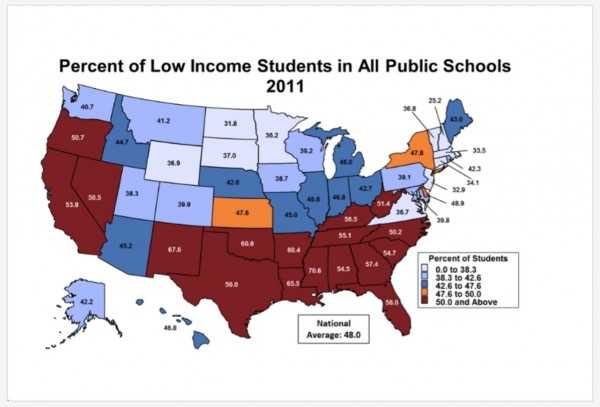 public schools moved from 38 percent of all students in 2001 to 48 percent in 2011.”
 st and 40 percent in the Northeast. The national average was 48 percent. As the report pointed out, “in 2011 the nation stood within only two percentage points of enrolling a majority of low income students in public schools across 50 states.”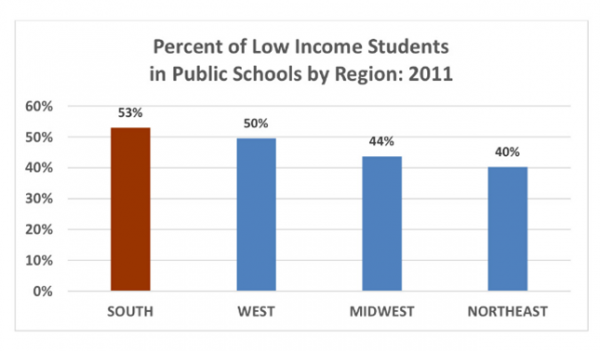
 ceed in public schools? It is a question of how, not where, to improve the education of a new majority of students.”
 Connecticut as compared with 78.2 percent nationally.

 ons from gunshot wounds increased from 4,270 to 7,730, and in-hospital deaths from 317 to 503, the researchers found. The study also found a significant association between the percentage of gunshot wounds occurring in the home and the percentage of households containing any firearms, loaded firearms and unlocked loaded firearms.
 , rates of gun possession ranged from a national low of 10 percent in New Jersey, for instance, to 62 percent in Montana, the researchers found.
 Francisco-Oakland (44%), Fort Collins-Loveland, Colorado (44%), and Seattle-Everett, Washington (42%). Yuma, AZ and Merced, CA, both at 11 percent, ranked last.
 education rise by about 7 percent as the share of college graduates in his city increases by 10 percent,” a statistical analysis indicates.