Economic Divide Evident in Comprehensive Statewide Survey; Residents Generally Happy in CT, But 1/3 Face Barriers, Financial Challenges
/The largest-ever quality of life survey of Connecticut residents, conducted during the past six months, has found that four out of five adults report feeling happy and satisfied with where they live; but one-third of adults report just barely or not getting by financially. The disparities in quality of life across the state’s population were a constant running through the survey results.
In-depth interviews were completed with 16,219 randomly-selected adults in every Connecticut city and town. Although Connecticut does well when compared to national and international averages of health, income, and education, survey officials said, results reflect that disparities are still great, with a sizeable share of residents continuing to face significant barriers to economic success, safety, health, and other critical aspects of well-being.
The 2015 DataHaven Community Wellbeing Survey, which asked more than 100 questions of survey respondants, created a detailed portrait of social and economic conditions in towns throughout Connecticut and adjacent sections of New York State. DataHaven, a non-profit group leading the collection and study of neighborhood-level public data on key social and economic trends, undertook the survey with assistance from Sienna College in New York. It is said to be the most intensive effort of its kind in the United States, according to the survey’s leaders. Among the key findings:
- 74% of men and 75% of women in Connecticut report feeling mostly or completely happy during the previous day. However, this measure varied widely by income, ranging from 53% among adults earning less than $15,000 per year to 89% among adults earning $200,000 or more.
- Although official unemployment rates have fallen substantially since 2012, 14% of Connecticut workers are still considered “under-employed,” meaning that they have no job and would like to work or they are currently working part-time but would prefer to have a full-time job. Within the Greater New Haven region, the “under-employment” rate among workers fell from 21% in 2012 to 13% in 2015.
- Two-thirds (66%) of Connecticut residents say that they are either doing alright or living comfortably when asked how they are managing financially these days. However, 11% are finding it difficult or very difficult, and an additional 21% say that they are just getting by.
- Many in Connecticut still struggle to afford food, adequate housing, and reliable transportation. One out of every ten adults identifying as white or Asian-American, and one out of every four adults identifying as African-American or Latino, reported that they did not have enough money to buy food for themselves or their family at some point during the past 12 months – in some cases, facing this situation almost every month of the year. About 6% of adults reported that they did not have enough money to provide adequate housing for themselves or their family, and 13% reported a lack of reliable transportation, at some point in the past year.

“The purpose of the DataHaven Community Wellbeing Survey is to produce the highest-quality, neighborhood-level information on issues that are most meaningful to local residents,” explained Mark Abraham, Executive Director of DataHaven. Abraham also pointed out that “the initiative is helping to strengthen collaborations between dozens of organizations and agencies that are working together to measure social progress and improve population well-being at the statewide and local levels.” The metrics in the survey complement traditional statistics on topics such as employment, personal income, reported crimes, tax base, and industry output.
More than 50 of Connecticut’s leading foundations, hospitals, community institutions, and government agencies have supported the survey initiative. Major funders are located in Hartford, New Haven, Bridgeport, Stamford, Waterbury, New Britain, Norwalk, Danbury, Greenwich, Middletown, Derby, Bristol, Norwich, New London, Manchester and other cities across the state.
The survey also found that residents of some urban neighborhoods have substantially lower rates of overall satisfaction with where they live as well as much greater concerns about government responsiveness, police effectiveness, and public services. On the other hand, cities such as Stamford, Norwalk, Bridgeport, and New Haven have relatively higher proportions of adults who are optimistic that their neighborhood is improving, and residents of higher-income neighborhoods within these city centers are in some cases significantly more satisfied with local quality of life than the average resident.
 "The Connecticut Council for Philanthropy along with other funding partners invested in the first ever statewide Community Wellbeing Survey, a scientific survey of the state’s entire adult population that will provide timely, powerful knowledge about our communities and enable us to better know the people and places we care about,” added Maggie Osborn, President of the Connecticut Council for Philanthropy.
In a departure from most statewide and national surveys, officials said, the DataHaven program brings together existing grassroots efforts across the state – effectively unifying more than a dozen pre-existing regional or local surveys into a single, high-quality effort that now covers all areas in Connecticut. The power of the survey results was greatly enhanced both by the number of respondents, as well as by having the same questions being asked of respondents in many different areas.
DataHaven designed its 2015 Community Wellbeing Survey with the support of nearly 100 local government, academic, health-care, and community partners as well as a panel of epidemiologists and survey research experts. The 20-minute survey, conducted by the Siena College Research Institute (SRI) in Loudonville, New York, involved landline and cell phone interviews with nearly 17,000 randomly-selected adults throughout Connecticut and adjacent sections of Westchester County between April and October, 2015.
 In Connecticut, the average rate between 1999 and 2001 was 4.1 per 100,000. Between 2010 and 2013, the drug overdose rate had risen to 8.3, above the national aver
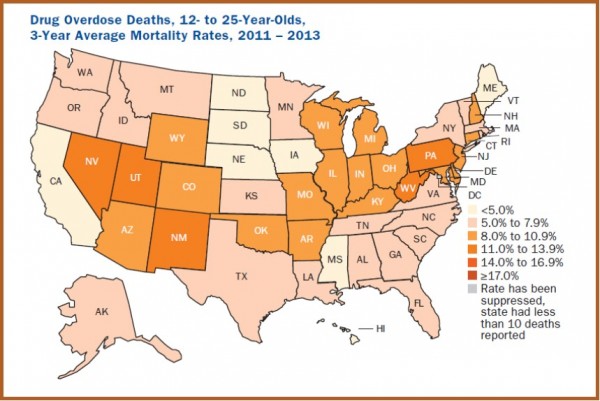 age but unchanged from a previous three-year period, 2005-2007. The data was compiled from the Centers for Disease Control and Prevention. Males are 2.5 times as likely to overdose as females (10.4 vs. 4.1 per 100,000), according to the report.
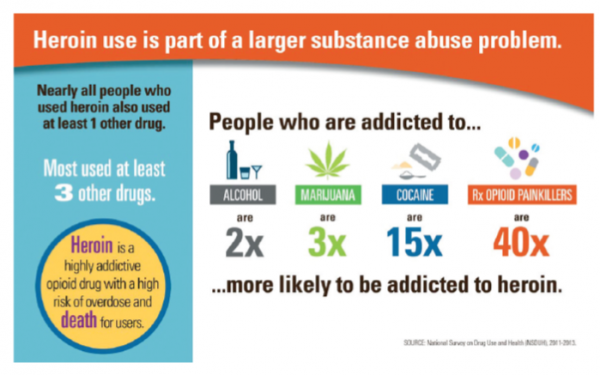 s to help practitioners identify potential abuse that leads to over prescribing by requiring them to check patient history to verify if patients seeking certain prescriptions have recently received these medications from multiple other prescribers or pharmacists.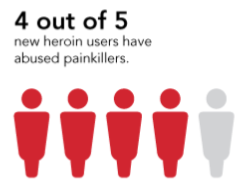



 ncing or purchasing a home in the next six months dropped from by one-third, from 18 percent in the first quarter of the year to 12 percent by the end of the third quarter. Interestingly, buying a car appears immune to economic outlook – the percentage who anticipate that purchase in the next six months has been nearly identical in each quarterly survey this year.


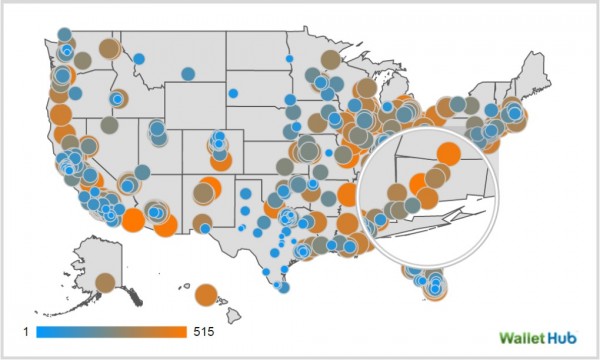 Joan Fitzgerald, Professor of Public Policy and Urban Affairs at Northeastern University, told WalletHub: “It is not an accident that many of the fastest growing cities have thriving high tech and biotech sectors along with financial services and usually a strong health care sector. But another priority has to be balance. In many cities, manufacturing loses out over other uses.”
 A survey to which 29 of the 60 black and Latino arts groups in the study replied showed that the median percentage of donations coming from individuals was 5%. The norm is about 60% for big mainstream arts organizations. “This is the most important single statistic in the study,” the report says. Minority arts organizations also trailed when it came to box office receipts and other earned revenue. Earned money accounted for 40% of their revenue, compared with 59% for the big mainstream groups.




 When asked in the survey about factors that influence their giving, the biggest portion, 68 percent, said it is very important the charity has evidence that its programs are effective. The other factors, in addition to the 50 percent who favored low overhead spending: the charity gets good ratings from watchdogs, 54 percent; it works on a cause that has affected me or my loved ones, 39 percent; it only occasionally asks for money, 27 percent; and I know people who work there, 24 percent.
 At the same time, another initiative in the city was taking root – one which soon reached the pages of
  Last month