From Connecticut, Only Hartford Region Reaches Top 50 Best Cities for Job Growth
/
The rankings of Best Cities for Job Growth don’t place Connecticut’s major metropolitan areas within reach of the top of the list.
Among the nation’s large-sized cities, "Hartford-West Hartford-East Hartford" made the top 50, ranking at #47 in the latest list from the website newgeography.com. Leading the 2013 list were metropolitan San Francisco, greater Nashville, and Salt Lake City. The rankings used four measures of growth to rank all 398 metro areas for which full data sets were available from the past 10 years. The Hartford region dropped four slots from the 2012 rankings.
New Haven ranked at #65 among the medium-sized cities, just behind Fresno, California and Scranton-Wilkes-Barre, Pennsylvania. Leading the list were Boulder, Colorado and Provo-Orem, Utah. The highest ranked New England community was Framingham, Massachusetts, at #30. The only other city from the region to reach the list was Springfield, Massachusetts, at #91. 
Among the leading Small Cities, Danbury was the highest ranked in Connecticut at #111, with Waterbury at #223, and Norwich-New London at #233, on a list of 241 small cities. Topping the list were Midland and Odessa, Texas followed by Columbus, Indiana; Cleveland, Tennessee; San Angelo, Texas and Owensboro, Kentucky.
"Large" areas include those with a current non-farm employment base of at least 450,000 jobs. "Midsize" areas range from 150,000 to 450,000 jobs. "Small" areas have as many as 150,000 jobs. The rankings reflect the current size of each MSA’s employment. Only two MSAs changed size categories, with Honolulu, HI moving from “Midsized” to “Large” and Savannah, GA moving from “Small” to “Midsized.”
In the overall rankings, Bridgeport-Stamford-Norwalk was #348, Waterbury ranked #380, and Hartford placed at #229. All the leading Connecticut metropolitan areas dropped in the rankings in 2013, compared with 2012.
NewGeography.com, based in North Dakota and California, is a site devoted to analyzing and discussing “the places where we live and work.” It includes “insights on economic development, metropolitan demographics, and community leadership.” 
The index is calculated from a normalized, weighted summary of: 1) recent growth trend: the current and prior year's employment growth rates, with the current year emphasized (two points); 2) mid-term growth: the average annual 2007-2012 growth rate (two points); 3) long-term trend and momentum: the sum of the 2007-2012 and 2001-2006 employment growth rates multiplied by the ratio of the 2001-2006 growth rate over the 2007-2012 growth rate (two points); and 4) current year growth (one point). The rankings include all of the metropolitan statistical areas (MSAs) for which the Bureau of Labor Statistics reports monthly employment data.
newgeography.com Executive Editor Joel Kotkin is distinguished Presidential Fellow in Urban Futures at Chapman University in Orange, CA and an adjunct fellow with the Legatum Institute in London. He is author of seven books including his most recent, The Next Hundred Million: America in 2050 from Penguin Press and is affiliated with the Praxis Strategy Group and the Center for an Urban Future.

 e surveyed in the tri-state area viewed healthcare among the favored sectors for 2014 - 55% “good” in the tri-state region vs. only 45% nationally.
 Connecticut’s high net worth investors, Barber said, are a savvy lot, reflecting greater knowledge of investments than the national numbers reflect, yet more than 7 in 10 say they consult financial professionals. Another clear distinction came in the percentage of investors who said dividend-bearing stocks are a good investment: 49 percent nationally, 61 percent in the tri-state area, and 71 percent in Connecticut. “There are clear indications that Connecticut’s high net worth investors are focused on opportunity,” Barber said.
 t the 34-year-old XL Center (formerly the Hartford Civic Center, rebuilt after a roof collapse three decades ago). Improvements will include an upgraded videoboard, a new fan club area, renovated bathrooms, concession stand upgrades, a new bar area within the arena bowl, renovated locker rooms and improvements in handicap accessibility. Construction is expected to take place in the summer and be completed by the start of the 2014-15 hockey season.
 e start of the hockey season last fall, and will continue “until the last top prize in the game is claimed” according to lottery officials.
 ed Middlesex County Chamber of Commerce remains by far the state’s largest, with over 2,350 members that employ over 50,000 people. The organization, led by longtime President Larry McHugh, “strives to be the voice of business in Middlesex County and the surrounding area,” according to its
 n Chamber and the Quinnipiac Chamber began to “officially collaborate on all aspects of their respective organizations, while continuing to operate as separate business units in separate office locations.”

 who will discuss topics such as career placement basics, salary and promotions, communication, creating support groups, being culturally aware, finding a work/life balance, and appreciating the value of staying true to oneself in male-dominated fields.”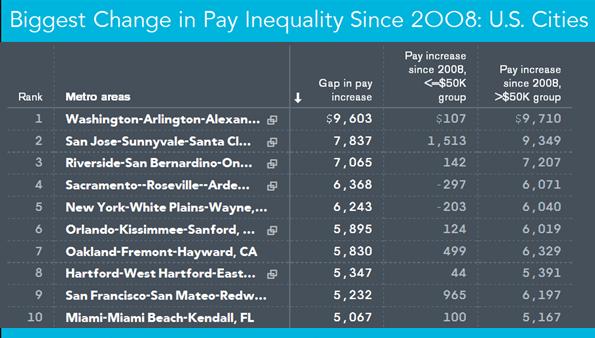
 New York metropolitan area ($6,243), greater Orlando ($5,895) and metropolitan Oakland ($5,830).
 nd nonprofit officials were meeting in Washington, the University of Connecticut, the state’s flagship institution, announced that the number of high school students seeking admission to UConn’s Storrs campus next fall has jumped significantly over last year’s figures, comprising a pool of potential freshmen with even higher average SAT scores and more diversity than previous years’ applicants.
 n in UConn’s commitment to diversity. Officials pointed out that the jump in UConn applications runs counter to national and regional trends in which declines in the number of high school graduates have caused many universities to see their applications and enrollments level off or decrease.
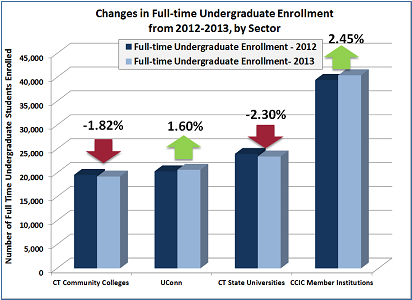
 ment at the community colleges fell 2.1 percent to 56,977, reflecting losses in both full and part time students.
 ll be hosting two upcoming events focusing on the remediation issue, the White House report indicated:
 nd math) curricula.
 wing Marion Kauffman Foundation. The
  Though they start lean, new high-tech companies grow rapidly in the early years, adding thousands of jobs along the way, according to the study findings. In fact, high-tech startup job creation is so robust that it more than makes up for the job destruction from early-stage businesses failures – a key distinction from the private sector as a whole where job losses from early-stage failures turns this group into net job destroyers, the report indicated.
 in the report, observed that “Each of the high density metro areas has one of three characteristics, and some have a combination of them all: 1) They are well-known tech hubs with highly skilled workforces, 2) They have a strong defense or aerospace presence, and 3) They are university cities.”
 , according to Payscale economist Katie Bardaro, “are dominated by high wage industries like tech (both IT and Biotech), finance or oil.” (Metro San Jose, San Francisco and Houston.) Unlike the top three, number 4 is dominated by the finance industry.
 workers there is $71,800 annually, while average starting pay is $55,500 and mid-career is $96,900 a year, on average, the magazine reported. Coming in at #7, the Hartford-West Hartford-East Hartford metro area has overall median pay of $69,200; starting median pay of $53,000; and mid-career median pay of $92,000.
 10.
10. he state’s downtowns, one that commands attention and respect for being forward-thinking while preserving the integrity and values of the past. At CMSC, “we'll continue to promote the