New CT Law Responds to Sudden Cardiac Arrest in Student Athletes As Debate Continues

Research shows that an EKG exam, coupled with a complete medical history, and a thorough physical exam is the best way to prevent sudden cardiac arrest. That statement, on the home page of the organization “Screen Across America,” is followed by this statistic: Cardiac arrest is the #1 cause of death of student athletes.” Screen Across America is a consortium of organizations that provide heart screenings to students. They have a presence in 26 states; Connecticut is not one of them. The organization “believes that this should be a standard of care because thousands of children die every year from sudden cardiac arrest.” New York, New Jersey, Massachusetts and Vermont are among the states with local organizations advocating for screening. Connecticut does have a chapter in the Sudden Cardiac Arrest Association (SCAA). The Naugatuck-based chapter raises funds to place Automated External Defibrillators in Connecticut schools. screen_across_america_iisymptons

A recent article in the Wall Street Journal highlighted the divided opinion among the medical community, as well as athletics departments, athletes and parents. The publication reported that “whether to screen young athletes’ hearts – as is done in nations such as Italy and Israel – represents one of the hottest debates in American cardiology.”

The article noted that opponents and proponents of screening each have medical studies backing up their positions, and that proponents were encouraged recently when the National Institutes of Health and the Centers for Disease Control and Prevention announced they would be creating a registry for studying sudden death among those 24 and younger.

Hartford Hospital’s chief of cardiology, Dr. Paul Thompson, told the WSJ that when a young athlete dies from hypertrophic cardiomyopathy (HCM), “it probably could hve been detected. But when a screen finds it in a young athlete without symptoms, we don’t know that it ever would have caused him problems. Meanwhile, he gest labeled a cardiac cripple for life.” you

The Screen Across America consortium does not have a particular organizational model across all locations. Each locale operates “independently of each other,” the website points out, with some being nonprofits and others for profits. “Some of us charge for heart screenings while others offer it free of charge. Our screening protocols may differ slightly. However, many of us have adopted the Seattle Criteria – a set of guidelines made by international experts in the field of sports cardiology,” the website explains.

Another organization advocating screening is “Parent Heart Watch,” which was founded in 2005, as was SCAA. It was started by four parents who each saw their child die from sudden cardiac arrest (SCA). The organization’s website says that “research has shown that SCA is the leading cause of death on school property with one student athlete falling victim to SCA every three to four days. Heart disease is the second leading cause of disease-related fatalities in youth according to the Centers for Disease Control and Prevention (CDC).” The organization also provides information on timely, effective medical responses to cardiac arrest.

According to the American Academy of Pediatrics, SCA takes the lives of thousands of children every year. The United States Centers for Disease Control and Prevention estimates at least 2,000 such deaths occur annually, according to the website of the Sudden Cardiac Arrest Foundation. During the 2014 Connecticut legislative session, a proposal that became Public Act 14-93 earlier this month was approved, which will direct the State Board of Education, in conjunction with health experts, to develop a sudden cardiac arrest awareness program for use by local boards of education. The program must include information on:

  • SCA warning signs and symptoms, including fainting, difficulty breathing, chest pain, dizziness and abnormal racing heart rate
  • Risks of continued athletic activity after exhibiting SCA symptoms
  • Means of obtaining treatment for a suspected occurrence of SCA
  • Proper methods for returning students who experience SCA to athletics.

It will also require school coaches to:

  • Review the SCA awareness program each school year, beginning in 2015
  • Immediately remove students from play who show symptoms of SCA
  • Not permit students removed from play to return without the written clearance of a licensed healthcare professional.

billIn addition, it calls for creation of a consent form for parents of student athletes to sign on the warning signs, symptoms and treatment of SCA and relevant school policies. Similar legislation has already been adopted in Pennsylvania, several other states are also considering SCA bills, according to the SCAF. The provisions of the new law take effect a year from now, with the school year that begins in the fall of 2015.

Connecticut’s legislation was inspired in part by the tragic story of Andy Peña, a Darien student athlete who died of sudden cardiac arrest in 2011, just one month away from turning 15. Andy’s parents, Victor and Giovanna, founded the Andy Smiles Forever Foundation in his memory, to educate the general public and support research on the causes and prevention of sudden cardiac death amongst youth, officials said.

http://www.youtube.com/watch?feature=player_embedded&v=hiheVyvFQiA
 

Middle School Girls to Focus on STEM Fields at Annual Innovation Event

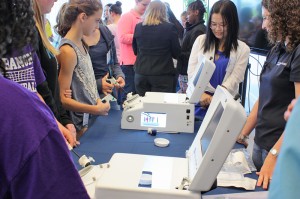
Connecticut’s drive to promote the development of the STEM fields – science, technology, engineering and math – to boost Connecticut’s economy and create sustainable jobs includes women and girls as essential to the efforts’ success. girls of innovationThat aspect will be front and center on Saturday, June 7, when the Connecticut Technology Council sponsors the annual Girls of Innovation program in Hartford, geared specifically to middle school age girls, entering grades 7 and 8, “to experience science and its challenges in a fun, interactive way,” according to program organizers.



Girls of Innovation “inspires today’s middle school students to consider careers in science and technology-related research, health services and business areas.” During the day, volunteers drawn from the Connecticut Women of Innovation program and CTC membership meet and work with the girls. They talk with the students about their experiences and careers and guide them through the challenges created by the Staff Scientists at the Connecticut Science Center.GOI-LOGO-crop-web

Hank Gruner, Vice President of Programs at the Connecticut Science Center, which hosts the program, understands the need to develop programs that will bring more middle school girls into science and technology fields. “The Connecticut Science Center feels strongly that this type of project is essential for Connecticut’s future science and technology workforce,” says Gruner.

Officials point out that although women fill close to half of all jobs in the U.S economy, they hold less than 25 percent of STEM related careers. A key message from the Girls of Innovation program is to show participating middle school students real scientists who are “like me” and to inspire girls with the confidence, enthusiasm and persistence to continue pursuing their scientific interests. The program achieves that by bringing the girls together with women working in STEM careers who can talk with the girls about their own career path and interests and choices they made while growing up. The program sponsor is Covidien. New this year, and as a thank you to the girls participating in the science challenge, program sponsors will be coordinating a hands-on activity and distributing Genius Boxes at the conclusion of the event. A Genius Box is a do-it-yourself, boxed project containing all the necessary materials a child needs to complete the challenge inside. genius-box-287x300

The Genius Box co-founders will be distributing their prototype Circuits Genius Box to the middle school girls at the event, completing a Flying Saucer circuits activity in small groups with program participants and then presenting each girl with a box to take home containing two remaining Circuits activities - a DIY Circuit Board to light up an LED and sound a buzzer, made up of a 3 volt battery, paper clips, and fasteners, and also a Pop-up LED Circuits card made from a 3 volt battery and copper wire.

A new entrepreneurial start-up developed as part of a college challenge by students Kate Pipa and Shivangi Shah, Genius Box delivers a monthly themed box of STEM (science, technology, engineering, and math) experiments “right to your door, packed with projects and learning opportunities.” The drive behind the business is clearly stated: “We empower the changemakers and problem-solvers of tomorrow, today.” CTC logo

The mission of the Connecticut Technology Council is to build an interactive community of innovators and their supporters that can leverage these great advantages to create a thriving economy, job growth, a global reputation for entrepreneurial support, and a lifestyle that attracts the best and brightest people to come here and retains the young people who have grown up here. The CTC recently hosted the 10th annual Women of Innovation awards, which recognized 59 women from across Connecticut for their innovation and leadership contributions in the STEM fields.

Who Knew? Northeast is Hotbed of Entrepreneurial Activity, For Some More than Others

Takes one to know one. Or, more accurately, know one and you may become one. That’s the bottom line of an exploration into entrepreneurship by a Kauffman Foundation researcher, who found that the Northeast is the best place to catch the entrepreneurial bug. As Connecticut sinks increasing dollars into initiatives to encourage entrepreneurship, develop jobs, and turn ideas into businessentrepreneurses (often with state financial incentives) the report offers guidance of factors influencing the frequency of entrepreneurial launches.  Connecticut Innovations,  established and supported by state government,  helps Connecticut businesses grow through creative financing and strategic assistance,  and is the nation's sixth most-active early stage investor.
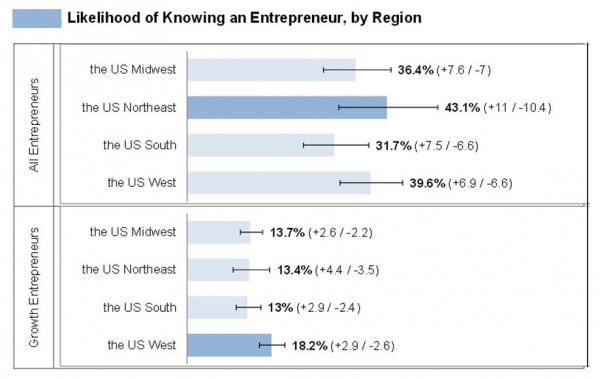
The survey indicated that the likelihood of a person knowing entrepreneurs varied widely by location, income, gender, and age. Respondents were much more likely to know entrepreneurs if they were male, had modest income, or were middle-aged. And they were much less likely to know entrepreneurs (or be entrepreneurs) if they were female, had a higher income, or were located in the Midwest or South.

The study suggests that there could be “material increases in entrepreneurship simply through doing a better job of exposing people to existing entrepreneurs, especially peers or contemporaries.” Entrepreneurship grows, the study found, where it is planted.

Key factors to consider when attempting to encourage entrepreneurship, according to the study:

  • Women have less exposure to growth entrepreneurs than men
  • The young have much more exposure to growth entrepreneurs
  • People in lower income strata are much less likely to be exposed to growth entrepreneurs

The study concluded that “In all cases, an individual’s exposure to entrepreneurs—and to growth entrepreneurs in particular—may increase his or her likelihood of being one. Entrepreneurship can be viral, but must be introduced early and often in environments where it is least often seen.”

The study distinguished between entrepreneurial companies and “growth entrepreneurial companies,” those companies growing more than 20 percent a year and with more than $1 million in sales, generate more employment and contribute more to wealth and GDP than do slower-growing ventures.

The likelihood of a respondent reporting knowing an entrepreneur by Region in the United States was 36.7 percent. The likelihood of knowing a growth entrepreneur was considerably lower, at 15.4 percent.

When broken down by gender, the likelihood of males knowing an entrepreneur was 39.9 percent, females 35.8 percent. For growth entrepreneurs, the gender gap was considerably wide, 24.8 percent to 12.1 percent.

A year ago, CTNext, Connecticut’s innovation ecosystem managed by Connecticut Innovations (CI), announced the launch of the Entrepreneur Innovation Awards (EIA), a competitive pitch process that provides awards up to $10,000 to entrepreneurs in Connecticut for growth-related activities. CI helps innovative companies in four key ways: by offering equity, debt, grants and strategic guidance.

A month ago CTNext announced the winners of the latest round of EIA awards; Connecticut-based companies and entrepreneurs, received $10,000 for their project ideas. CI also selected David Wurzer, formerly a senior managing director at CI, to be chief investment officer and executive vice president. As part of his new role, Wurzer will be responsible for the management of the investment function, staffing needs, portfolio and risk management, outreach to stakeholders, budget planning and performance measurement.

The study “Getting the Bug: Is (Growth) Entrepreneurship Contagious?” was conducted by Paul Kedrosky of the Kansas City-based Kauffman Foundation, and is aimed at providing data to guide efforts across the country to grow entrepreneurship. The survey, which categorizes responses of 2,000 individuals by age, income, gender, and location, was done via Consumer Google Survey.

Investor Opportunities in Mobile Technology, Consumer Products Focus of Back-to-Back Conferences

It is described as “the Biggest and Most Disruptive Platform in Human History,” by William Davidson, Senior Vice President of Qualcomm.  Davidson will be the keynote speaker Wednesday in New Haven at “Connecticut Mobile Summit – Exploring Mobile Venture Opportunities and Challenges.”  Connecticut’s top mobile industry executives will be meeting to discuss how to accelerate mobile adoption, engagement and monetization, according to conference organizers.

Conference officials note that “penetration of smart phones into the workplace has been persistent since the iPhone launch in June of 2007. More recently, tablets have supplanted PCs as productivity boosters.”  The Connecticut Mobile Summit is designed to help educate Connecticut’s investment and technology communities in mobile venture opportunities and challenges.

mobile summittIn addition to Davidson, expert panelists participating include Carissa Ganelli, Founder & CEO, LightningBuy; Drue Hontz, Founder & President, KAZARK, Inc.; John Nobile, Founder & President, Tangen Biosciences; and Nadav Ullman, Founder & CEO, Dashride.

“In three to five years any enterprise that has not implemented mobility solutions for its customers, employees, and suppliers will be leapfrogged, disintermediated, or go bankrupt. Connecticut cannot afford to be behind this curve,” observed event moderator, Brenda Lewis, Principal of Transactions Marketing, Inc.

Davidson is senior vice presidemobile-technologynt of strategy and operations for Global Market Development in Qualcomm Technologies, Inc. In this role, he handles reporting and operations as well as executing on strategic global business initiatives. In addition, Davidson is senior vice president of investor relations where he serves as the primary liaison with the investment community and Qualcomm shareholders. Davidson has more than 25 years of experience in technical sales, marketing and general management roles in the telecommunications industry.
The half-day conference is being presented by the Connecticut Technology Council, Crossroads Venture Group and AT&T. The event is supported by Mea Mobile.

Opening remarks will come from Bruce Carlson, Acting CEO & President of the Connecticut Technology Council, Liddy Karter, Executive Director of Crossroads Venture Group, and Claire Leonardi, CEO of the recently re-branded Connecticut Innovations.  The event is $40 for members of the Connecticut Technology Council and Crossroads Venture Group, $50 for non-members.

The following day, the Northeast Consumer Product Conference will be held in Stamford, with the Connecticut Technology Council and Crossroads Venture Group joined by the Connecticut chapter of the Association for Corporate Growth (ACG) as sponsors.  The conference is described as the Northeast’s largest ‘mergers and acquisitions’ conference focused on early state and middle market consumer-facing companies.  It brings together operators, buyers, investors, and transaction professionals to discuss the challenges and opportunities within consumer industries.

The Stamford conference will include expert-led panels reviewing the state of the capital markets and share strategies for consumer marketing in a digital world, for both early and late stage firms.

Keynote presentation will be from Mike McMahon, President, Spire, a Datalogix company.  Panelists for a session on “Raising Capital in Today's Environment,”  to be moderated by Ramsey Goodrich, Managing Director, Carter Morse & Mathias, include Richard Baum, Managing Partner, Consumer Growth, Partners; Christopher Bradley, Principal, Mistral Equity Partners; and Tom Hayes, MaACGnaging Partner & Principal, New England Consulting Group.
ACG CT President Karin (McKittrick) Kovacic said, “This conference brings together owners and managers with investors and transaction professionals to discuss the challenges and opportunities within the consumer products sectors.”

The Connecticut Chapter of ACG is one of the fastest growing ACG chapters in the country, with close to 300 local professionals focused on middle-market corporate growth (i.e.: mergers and acquisitions, financing opportunities, business development, joint ventures, licensing arrangements, etc.), including a diverse group of private equity funds, intermediaries, lenders, and service providers.

The Connecticut Technology Council (CTC) is a statewide association of technology oriented companies and institutions, providing leadership in areas of policy advocacy, community building and assistance for growing companies.  With over 2,000 member companies that employ some 200,000 residents, the CTC works to position Connecticut as a leader in idea creation, workforce preparation, entrepreneurial aptitude, early stage risk capital availability and providing on-going support and mentoring to high potential firms.

Amateur Radio, Invented in Hartford, Will Celebrate 100 Years with National Convention Here

Before smart phones, before the internet, there was Amateur Radio, better known as Ham Radio.  And it began in Hartford – spreading quickly around the world a century ago.  The province of hobbyists and enthusiasts, Ham Radio often became a lifeline when disasters struck and traditional phone lines were rendered inoperable.

Technology has surely changed, but a thriving American Radio Relay League (ARRL), the national association for Amateur Radio, will mark the 100th anniversary of its founding this summer at the Connecticut Convention Center in its birthplace, Hartford.

The organization’s Centennial Convention will be July 17-19, 2014, according to ARRL President Kay Craigi.  The theme will be: Advancing the Art and Science of Radio—Since 1914.  Ham Radio remains a popular hobby and service in which licensed Amateur Radio operators (hams) operate communications equipment.  ARRL has over 162,000 members and eCentennial_Banner_Artmploys approximately 100 people, with national headquarters in Newington.

Federal Emergency Management Agency (FEMA) Administrator W. Craig Fugate, call sign KK4INZ, will be the keynote speaker at the ARRL Centennial Banquet on July 18.

It all began in May 1914 when Hiram Percy Maxim (1869-1936), a leading Hartford inventor and industrialist, founded the American Radio Relay League (ARRL), together with Clarence Tuska, secretary of The Radio Club of Hartford.  ARRL headquarters moved to Newington in 1938 and is visited by nearly 2,000 groups and individuals each year. The site is home to The Hiram Percy Maxim Memorial Station, call sign W1AW. HAM radioARRL's mission is based on five pillars: Public Service, Advocacy, Education, Technology, and Membership.

Although Amateur Radio operators get involved for many reasons, officials say, they all have in common a basic knowledge of radio technology and operating principles, and pass an examination for the FCC license to operate on radio frequencies known as the "Amateur Bands." These bands are radio frequencies reserved by the Federal Communications Commission (FCC) for use by ham radio operators.

“The 2014 ARRL Centennial is a once-in-a-lifetime opportunity,” said ARRL Marketing Manager Bob Inderbitzen, who explained that the convention will include presentations and forums, exhibits, vendors, demonstrations, flea market, activities for youth, and a banquet.

 “We’ve also planned some very special ceARRL Newingtonntennial-themed activities,” Inderbitzen added, “including coach bus trips to ARRL headquarters and W1AW—the Hiram P. Maxim Memorial Station in nearby Newington. We want ARRL members to come with all of their experiences from the first one hundred years of Amateur Radio and ARRL, and leave with a shared vision for ARRL’s second century.”

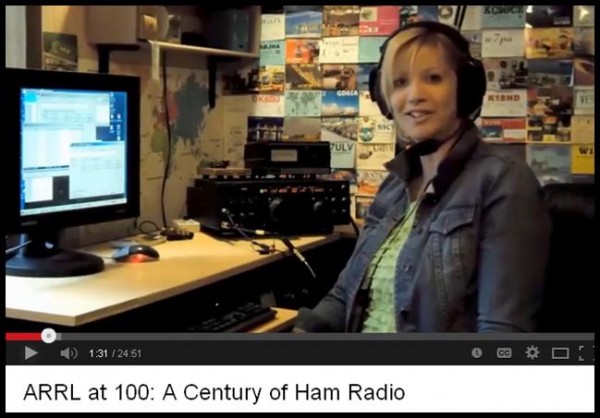
More information about ARRL and Amateur Radio is online at www.arrl.org/what-is-ham-radio. Details on the centennial convention are available at www.ARRL2014.org.  The organization has also developed a 25 minute documentary about the history of Amateur Radio, which is available on You Tube.  Fans of the ABC Television show “Last Man Standing” may be aware that its main character, “Mike Baxter” — played by Tim Allen — is supposed to be a radio amateur, KAØXTT

Fastest Internet Download Speeds in CT? Killingworth, Storrs & Stonington Lead 26 Towns in Top U.S. 1,000

Killingworth is the Connecticut town that has the fastest internet download speed.  It is one of 26 towns and cities in the state to rank among the top 1,000 communities with the fastest internet speeds in America, according to recently compiled data.  The only other Connecticut towns to rank among the top three hundred nationwide were Storrs, Stonington, East Haddam, and Weston.   Of the state’s cities, only Stamford and Norwalk reached the top thousand fastest download speeds nationwide.

Recent data reflects that although the national average speed is 18.2 Mbps, the highs and lows – or have’s and have-nots – are quite apparent by region, with the Northeast, especially the I-95 corridor, fairing quite well.  ookla_reverse_color_800

Data from over 5,600 cities and towns represented in Ookla's Net Index, illustrated by Congressional district, shows relative download speeds across the contiguous U.S., from January through July 2013. (Blue means a faster download speed; red means a slower download speed, on the map.)  The disparities are clearly evident between different regions of the country.

The fastest internet speed in Connecticut is in Killingworth, at 30.28, ranking #179 among cities and towns across the country.  Close behind is Storrs (Mansfield) at 30.20, ranking #181.  Rounding out Connecticut’s top 10 communities with the fastest internet download speeds are Stonington (29.09, #262),  East Haddam (29.00, #269), Weston (29.88, #280), Westport (27.36, #454), Greenwich (26.14, #630), and Bloomfspeed mapield (25.99, #655), Mansfield (25.99, #656) and Guilford (25.92, #664).
Seventeen of the top 25 towns are in New York or New Jersey The fastest single location, with an average download speed of 85.5 Mbps belongs to Ephrata, Wash., a small town of 7,000 that happens to be home to its own fiber optics provider.   Kansas City, Kan., where Google developed a fiber optic network, comes in second, clocking in at 49.9 Mbps. The worst speeds can be found in Northeastern Arizona, where Chinle and Fort Defiance both clock in at less than 1.5 Mbps, according to Gizmodo, which published a report on the data.

The next ten fastest communities include the only cities to earn a spot on the top 1,000, Stamford and Norwalk.  Connecticut’s second ten are: New Canaan (25.88, #672), Redding (25.79, #691), Tolland (25.40, #734), Canton (25.36, #743), Orange (25.00, #786), Avon (24.62, #834), Torrington (24.58, #837), Darien (24.57, #839), Stamford (24.51, #851), and Norwalk (24.49, #854).

Six additional towns were among the top 1,000 nationally.  They are:  Woodstock (24.43, #865), Fairfield (24.43, #866), Mystic (24.34, #879), Milford (24.25, #894), Woodbury (24.21, #900), and Hebron (23.93, #950).  All are well above the national average.

Ookla's data are primarily coming from the site Speedtest.net.  For a complete list of cities and towns by speed click here.  The metropolitan Northeast, Florida, and most of Arizona come in pretty strong.

Reaching the next five hundred (between 1,000 and 1,500) from Connecticut were Winsted, Coventry, Bridgeport, Monroe, Groton, Southbury, Pawcatuck, Litchfield, Woodbridge, Watertown, Danbury, Brookfield, Newtown, Shelton, Stratford, Deep River and Gales Ferry, at number 1,477.  There were 43 Connecticut towns and cities  among the top 1,500 nationwide.


Connecticut Gets An Additional Area Code - 959 to Join 860, Beginning in August

Some residents and businesses within Connecticut's 860 area code will have an additional area code to become familiar with beginning this summer.  The state Public Utilities Regulatory Authority (PURA) has announced that because of continuing local demand for telephone numbers, remaining unassigned telephone numbers in the 860 area code are expected to be exhausted by the end of this year.

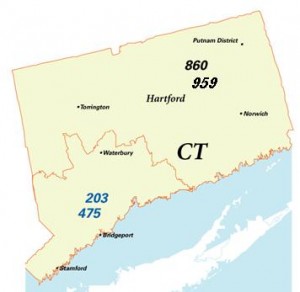
To meet the continuing demand, the PURA approved a new area code, 959, to be assigned as an overlay to the 860 region. An overlay is the addition of an area code to the same geographic region as an existing area code. An overlay does not require customers to change their existing area code, personal telephone numbers, or the manner in which they dial local calls.

Connecticut is far from alone in the introduction of new area codes across the country, and it's not the first time for an area code overlay in the state.

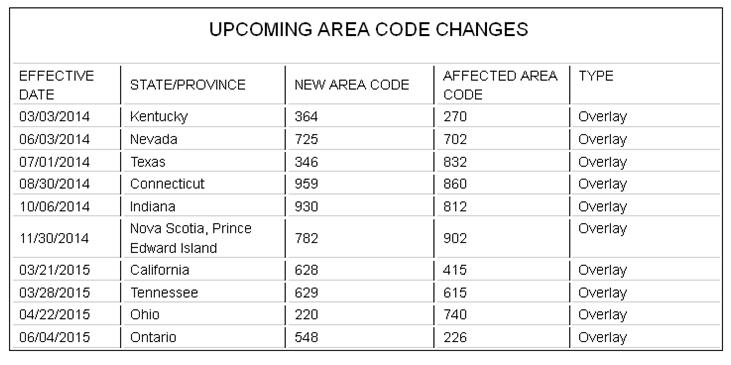
Kentucky residents in the 270 area carea code mapode saw the introduction of an overlay area code this week, as the 364 area code was introduced for some new customers.  Indiana introduced 10-digit dialing last week to prepare for the introduction of an overlay area code this fall.

According to the North American Numbering Plan Administration, which handles the allocation of additional area codes nationwide, sixty percent of the U.S. state regulatory commissions – a total of thirty - have ordered overlays as the method of area code relief.  Throughout 2014, 25 states will have overlays in place with five more states in various stages of implementation of their overlays.  Three states (Indiana, South Carolina and Tennessee) t ordered their first overlay late in 2013, while California, the most populous state in the U.S., recently approved what will be their sixth overlay – the 415/628 combination coming to San Francisco.

Current plans call for the new 959 area code in Connecticut to go into effect August 30, 2014. After that date, customers requesting new service, an additional line, or in some cases, moving their service may be assigned a number in the new 959 area code.  According to NANPA, area code 203, in the southwestern portion of Connecticut, has had an overlay of area code 475 available since December 12, 2009.  The first 475 phone numbers have been issued within the past year, according to PURA officials.

In Nebraska, however, overlay day is said to be four years away.  Published reports indicate that demand for new phone numbers has slowed as fewer people become first-time cell phone customers.

For most customers, the new 959 area code should have minimal impact:upcoming area code changes

  • existing telephone numbers, including current area code, will not change;
  •  customers will continue to dial area code + telephone number for local calls, and 1 + area code + telephone number for long distance calls;
  •  local calling areas will remain the same;
  •  prices for calls and coverage areas will not change due to the overlay;
  •  customers will still dial services such as 911 (211, 411, 811, etc.) with just three digits.

The North American Numbering Plan Administratin (NANPA) is an integrated telephone numbering plan serving 20 North American countries that share its resources. These countries include the United States and its territories, Canada, Bermuda, Anguilla, Antigua & Barbuda, the Bahamas, Barbados, the British Virgin Islands, the Cayman Islands, Dominica, the Dominican Republic, Grenada, Jamaica, Montserrat, Sint Maarten, St. Kitts and Nevis, St. Lucia, St. Vincent and the Grenadines, Trinidad and Tobago, and Turks & Caicos.

The Atlantic reported last month that for a brief period in the 1990s, Lockheed Martin oversaw the administration of area codes; after Lockheed got involved with telecom concerns, however, the FCC decided that it needed a neutral and non-governmental body to administer the nation's numbers. Lockheed's numbering division divested itself and became Neustar, which remains under contract with the FCC, according to the magazine.

Local Connecticut customers should contact their respective carriers with questions about the new 959 area code, and are advised that they can check PURA's website (www.ct.gov/pura) for updates.

Drive for More Electric Vehicles Continues to Gain Support, Funding in CT

The advance of electric cars continues, as does Connecticut’s encouragement of the trend.

The Connecticut Department of Energy and Environmental Protection (DEEP) and the Connecticut Automotive Retailers Association (CARA) will recognize state automobile dealers who sell or lease the highest number of electric vehicles (EVs) between February 1 and July 31, 2014 with the first ever “Connecticut Revolutionary Dealer Award.”  One award will be presented to the dealer that sells or leases the highest number of new EVs – incevconnecticutbannerluding plug-in hybrids – and the other will go to the dealer who sells or leases the most EVs as a percentage of total sales during the period.
The announcement this week follows by just a few months the agreement by eight states representing nearly a quarter of U.S. auto sales – including Connecticut - to promote infrastructure and take other steps to increase the number of electric- and hydrogen-fueled cars, trucks and buses on the roads. The states involved are Connecticut, California, New York, Maryland, Massachusetts, Oregon, Rhode Island and Vermont.

By developing standards for charging stations, expanding financial incentives to buy the cars and lowering consumer electric rates, the states hope to make the vehicles more appealing, The goal is 3.3 million non-polluting cars on the road by 2025. Zero-emission vehicles include battery-electric vehicles and hydrogen fuel-cell-electric vehicles

State Funding Leads to More Charging Stations

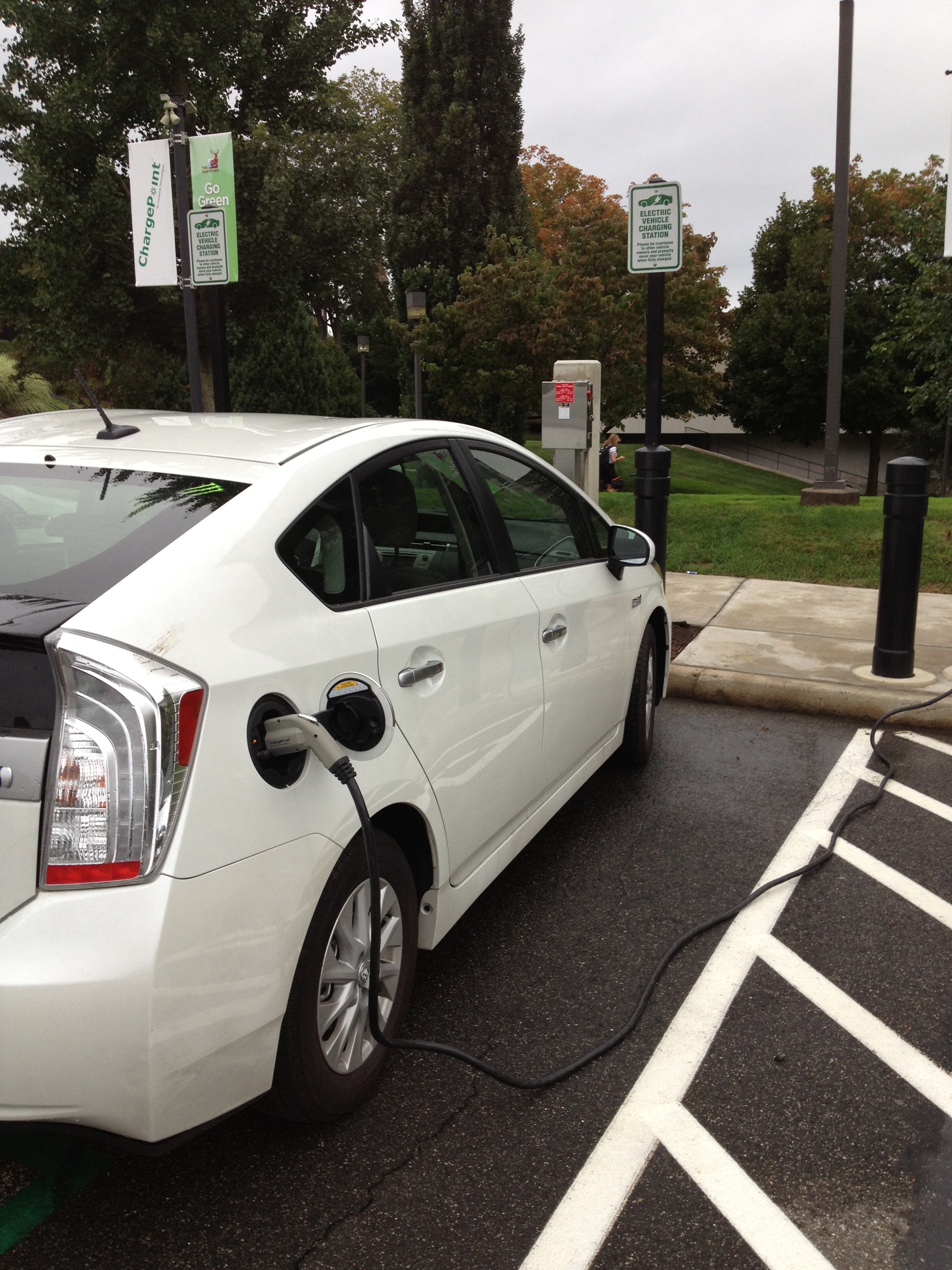
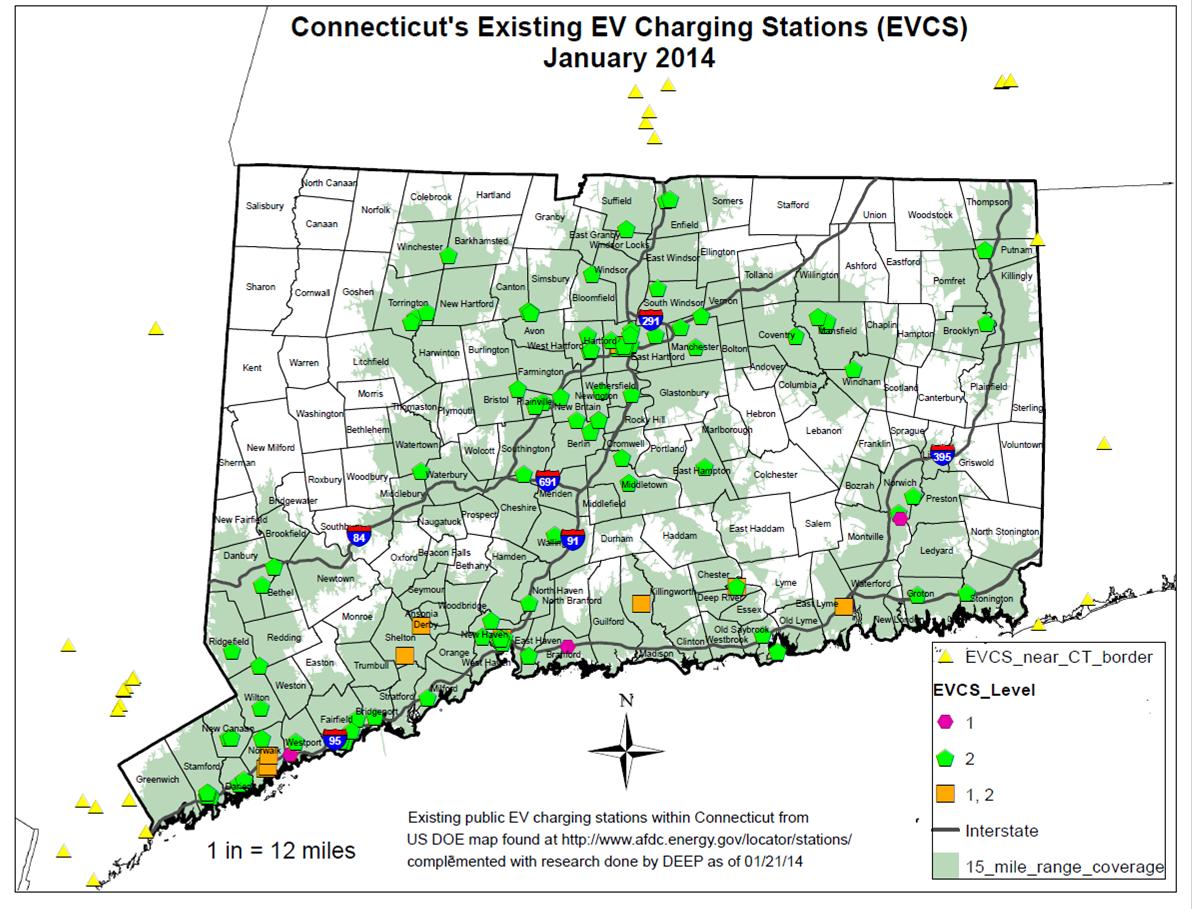
State officials said that Connecticut is leading the nation in developing ways to encourage residents and businesses to buy electric and other zero-emission vehicles when making transportation purchases.  Since July 2013, the state has provided $177,600 to 48 towns, businesses, and schools to build 75 electric vehicle charging stations throughout the state.  It is estimated there are already more than 164 publicly available charging stations in Connecticut, including many located at auto dealers.

The Department of Energy and Environmentcharging mapal Protection provides an up-to-date list of all the charging stations in Connecticut, as well as those near the state’s border in neighboring states.  Just over 50 of Connecticut’s 169 communities have at least one charging station.  Both Hartford and New Haven each have nine stations. Stamford has six, Bridgeport has one, Waterbury has none, according to the January 2014 data from DEEP.

Nationally, automakers are under pressure from the federal government to increase the average mileage of the vehicles they sell. Zero-emission vehicles are also supposed to make up at least 15% of sales by 2025. The Electric Drive Transportation Association told CNN Money said the market for electric and hybrid vehicles is growing steadily, especially as word of mouth spreads from satisfied customers.

 Electric vehicles are “a ‘win-win’ for our state because they can cut costs for motorists while improving our environment and public health,” said interim DEEP Commissioner Ronald Klee.  “Cars and trucks burning gasoline and diesel are one of the largest sources of harmful air pollution and greenhouse gases that contribute to climate change.” Expanding the number of publicly available charging stations in Connecticut is critical to meeting the goals of the eight-state agreement.”

Electric cars are powered entirely by an electric motor supplied by a large battery.  Unlike traditional hybrid cars, electric cars do not have a gasoline engine; they are “fueled” by plugging into an electric charging station.  A plug-in hybrid electric vehicle has an electric motor, an internal combustion engine and a plug to connect to the electrical grid.car charging

The Connecticut Automotive Retailers Association is a statewide trade association representing over 250 franchised new car and truck dealerships primarily engaged in the retail sale of new and used motor vehicles, both foreign and domestically produced.

Last fall, Luis Ramírez, CEO of GE Energy Industrial Solutions joined Governor Malloy in unveiling the GE Electric Vehicle (EV) Solar Carport in Plainville.  The project, one of the most expansive undertakings of its type in North America, uses GE’s new smart EV Charging Stations to charge electric vehicles.  DEEP’s stated goal, former Commissioner Dan Esty said at the time, is to provide “publicly accessible EV charging stations within a 15-minute driving radius of any location in Connecticut.”

U.S. electric car sales have more than tripled from 17,000 in 2011 to 52,000 in 2012, according to data from the DEEP. Motorists bought more than 40,000 plug-in cars in the first six months of 2013, the most recent data available.

State's Public Transportation Commission Calls for Service Improvements, Safeguards to Transit Fund

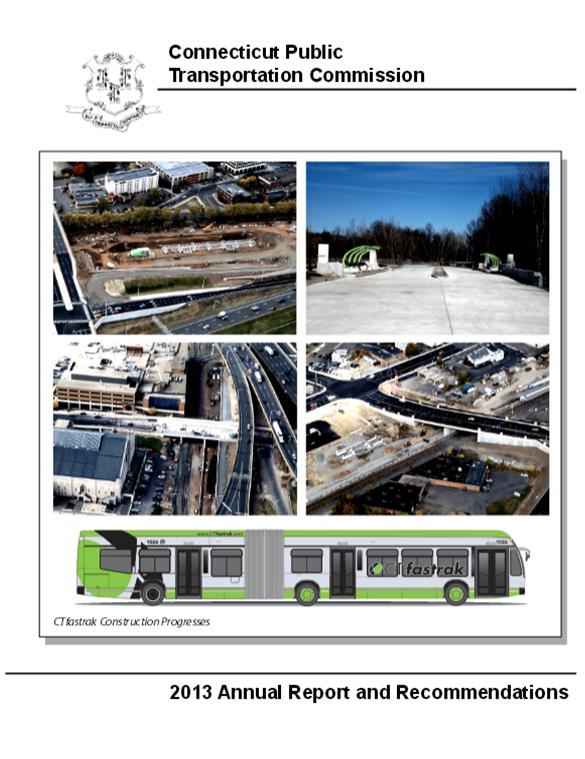
With the start of the legislative session, one of the many reports landing on legislators desks include a series of six recommendations for improving public transportation services, developed by the Connecticut Public Transportation Commission and outlined in their recently released 2013 Annual Report. The recommendations, according to Chair Kevin Maloney, “do not call for any major new State-funded initiatives, though some of the recommendations would require incremental expenditures to current projects or services.”

The Commission, a 14-member advisory body comprised of gubernatorial and legislative appointees, and including members from industry and the public, developed the recommendations following seven public hearings in Norwalk, Putnam, Bristol, Orange, New Milford, Enfield and New London, and monthly meetings throughout the year.  The Commission:

1.  Strongly supports efforts to safeguard the Special Transportation Fund, stating that resources of the fund “must be reserved to address the needs of Connecticut’s roads, bridges and transit systems.”  The report noted that:

  • transfer of Fund monies to the General Fund deprives Connecticut’s infrastructure and services of these much-needed resources
  • the transfer of Fund monies violates the trust that the Special Transportation Fund’s supporting revenues and user fees will benefit the transportation services and facilities upon which those who pay the gas tax, gross receipts tax, fares and license and permit fees rely
  •  “the continued deferred investment in our transportation infrastructure that the diversion of Special Transportation Fund resources causes will erode Connecticut’s attractiveness and make it harder to compete with other states for businesses and residents”

2. Recommends sustained support for adequate for the continued operation and growth of the Coastal Link bus service, operated by Greater Bridgeport Transit, Norwalk Transit and Milford Transit along the Route 1 corridor, be provided. The line – which the report describes as “highly successful” and “perpetually in jeopardy” due to insufficient funding - carries over 4,000 passengers per weekday and over 1.2 million passengers annually, and the butransportation reportses running this service are frequently at or above capacity with some occurrences where riders must be turned away.  “At a minimum,” the report recommends, “additional investment of state funds would be required to support additional buses to provide a consistent level of services and improve service quality.”

3. Commends ConnDOT for restoring funds to the Municipal Dial-A-Ride program – a “much needed program” that provides mobility to seniors and persons with disabilities across the state, and is “especially important to small rural communities.”  Funding had been reduced by 25 percent in 2011, which was restored in the FY2014 state budget, according to the report.  Approximately 130 municipalities apply for program funds each year.  The report notes that Connecticut is the seventh oldest state in the nation, with the over 65 population projected to grow by 64 percent by 2030. 

4. Encourages ConnDOT to apply the techniques used to inform the public about the progress and projected benefits of CT FastTrak (previously known as the Hartford-New Britain Busway) with information on other high profile projects such as the Stamford Transportation Center.   The report states that a “more vigorous and pro-active outreach effort...may pay dividends in lessening political headwinds and gain public support for these projects.”   Such actions “for other major transit projects such as the New Haven-Hartford-Springfield commuter rail service would also serve both ConnDOT’s and the public’s interests.”

5.  Urges State cooperation with an on-going effort by the Housatonic Railroad to develop a privately-run, unsubsidized passenger rail service between Danbury and Pittsfield.  With the commitment by Massachusetts of substantial funding for that state’s portion of the project, this proposal is starting to gain some momentum, the report indicates.

6.  Recommends “more effective dissemination of information about new and existing transit services,” recognizing that “the public does not have sufficient awareness of and information about existing transportation services to take full advantage of these services.”  The Commission indicated that this was a “recurring theme” at the Commission’s public hearings, and called for both high-tech and low-tech solutions.  The report noted that “addressing this need can be challenging,” because “ConnDOT has no dedicated marketing staff and no marketing budget,” and “marketing for individual services is often sporadic and inconsistent.” connecticut

Additional topics were noted in the Annual Report as a result of issues raised during public testimony, including:

  • the increasing popularity of cycling and the resulting demand for more bicycle amenities and facilities,
  • the desire of several smaller transit districts to implement designated and signed bus stops to increase system visibility and assist their riders,
  • the need for better communication on train platforms to alert riders as to which track an arriving train will be using,
  • the increasing demand for inter-regional bus services, repeated accounts of train fares going uncollected, and
  • the demand for bus and rail services which cross Connecticut’s boundaries into adjacent states.

The Commission is chaired by Kevin Maloney, President/CEO of Northeast Express Transportation, Inc. which operates NEXTAir, NEXTCourier and NEXTDistribution.  Commission members include Christopher Adams, Richard Carpenter, Morton Katz, William Kelaher, Yvonne Loteczka, Kevin Maloney, Edward McAnaney, Robert Rodman, Kiernan Ryan, Russell St. John, Richard Schreiner, Richard Sunderhauf, Alan Sylvestre, and John Zelinsky.  Among the ex-officio members are DOT Commissioner James Redeker, Sen. Andrew Maynard and Rep. Antonio Guerrera.

The Commission continues to meet monthly in accordance with state statute, with the next meeting scheduled for March 6 at New Haven’s Union Station.

Connecticut Talks Issues at Forums, Conferences Across State

The Connecticut legislature, now underway for 2014, is not the only place for conversation on key issues impacting Connecticut.  A range of news organizations, nonprofits, associations and community-based groups are sponsoring forums, summits and sessions to better-inform the public and bring interest and attention to specific issues.  Among them:

February 10  - Hartford’s Edgy Arts, Mark Twain House & Museum

The Hartford area attracts an array of creative people from actors to musicians, poets to painters.  What is it that so draws artists?  What to they need to flourish here?  A discussion of the creative economy, in the Capitol City.  Refreshments at 5:30; panel discussion at 6:15.  Advance articles published in The Hartford Courant; a program of Hartford Young Professionals & Entrepreneurs (HYPE), FOX Connecticut and The Hartford Courant.

February 20 - Pay-for-Success Informational Conference, Legislative Office Building

National leaders from the emerging field of Pay for Success will be speaking, with a focus on three key elements: 1) Offering high-quality preventative services; 2) Requiring rigorous measurement of results; and 3) Capturing savings or avoided costs. The 2014 Pay-for-Success (PFS) Informational Conference, 10:00-12:30 PM, will offer interested stakeholders the chance to discuss the field with leaders from around the country, while hearing about projects underway in the areas of early childhood, juvenile recidivism, health care and workforce development.  Sponsoring organizations include BlumShapiro, Connecticut Institute for the 21st Century, Capitol Region Council of Governments, Connecticut Center for Social Innovation, Community Impact Strategies Ltd, and Connecticut Association for Human Services.

February 24 -  The Knowledge Economy; Connecticut Conference of Independent Colleges, CT Mirror, Quinnipiac University

Connecticut is home to almost 50 colleges and universities and has created an industry in surrounding towns and cities. What is expected as we continue into the 21CCICst Century? Join the Connecticut Conference of Independent Colleges and The Connecticut Mirror in the lively discussion, "The Knowledge Economy," on Monday, Feb. 24 , from 7-9 p.m., in the auditorium at the Quinnipiac University Frank H. Netter MD School of Medicine. This event is free and open to the public. No registration is necessary.  Panelists include Sal Filardi - Vice President, Facilities & Capital Planning, Quinnipiac University; Rich Jacob - Vice President for Federal and State Relations, Yale University; Todd Andrews - Vice President for Economic & Strategic Development, Goodwin College and Jeff Seemann - Vice President for Research, UCONN.

February 26 - Vital Voices in Entrepreneurship, Goodwin College

A special speaGoodwin-College-B8665EC3ker series focused on the first-hand perspectives of leaders making a mark in business and the community. The next event at Goodwin College's Community Room on February 26 will feature Stew Leonard, Jr., President and Chief Executive Officer of the unique, family-owned and operated farm fresh stores, Stew Leonard's. The keynote address will commence at 6:00 p.m., preceded by a networking reception at 5:00 p.m. with wine, beer and hors d'oeuvres.

February 28 – Retrofitting Our Towns:  Can We Add Density, Affordability and Walk-ability to Help Municipalities Survive…And TPrinthrive?  The Lyceum, Hartford

Can suburbs and smaller towns reshape and respond to the demographic, economic and lifestyle pressures of the 21st Century?  One of the nation’s leading experts – Lynn Richards of the EPA Office of Smart Growth – assesses four Connecticut municipalities and offers lessons for all the others.  Program 9:00-111:00 AM.  Sponsored by the Connecticut Main Street Center, Partnership for Strong Communities and the American Planning Association - Connecticut.

March  Ct-forum7  - An Honest Look at Mental Illness, Connecticut Forum, The Bushnell

The Connecticut Forum presents a conversation about perceptions, realities, and what it’s like to work and live with the stigma of mental illness.  Panelists include journalist and mental health advocate Andrew Solomon, Dr. Hank Schwartz, Chief of Psychiatry at Hartford’s Institute of Living, former NBA player Royce White and bipolar disorder authority Dr. Kay Redfield Jamison.   Founded in 1992, The Connecticut Forum is a one-of-a-kind 501(c)(3) nonprofit organization serving Connecticut and beyond with live, unscripted panel discussions among renowned experts and celebrities, and community outreach programs including the award-winning Connecticut Youth Forum.

March 14 – Hartford Business Journal Municipal Collaboration Summit, Goodwin College

An opportunHBJity to learn about the benefits of collaboration which save money and leverage the purchases and agreements for towns.  The event will highlight people that are already implementing positive changes.   Panel discussions, workshops and Q&A with key leaders and a panel of experts.

March 26 - Student Debt and Financial Aid: What (if anything) can we do?, Southern Connecticut State University

Sponsored by the Center for Higher Education Retention Excellence, 9AM-3PM, at Southern Connecticut State University, featuring Sandy Baum, Research Professor of Education at the George Washington School of Education and Human Development and Senior Fellow at the Urban Institute, and  panel of Connecticut financial aid directors (representing a public university, community college and private college) and a student panel.  Registration now available; limit 75 attendees.