Hospital Outreach Program, New Website and Video Advance Mission of The Hole in the Wall Gang Camp
/The Hole in the Wall Gang Camp in Ashford, Connecticut began in 1988 as a way for seriously ill children, including those with cancer, to “raise a little hell,” as founder Paul Newman described it – a time and place when kids could simply be kids, without being self-conscious about their ongoing medical needs. Twenty-seven years later, it is much more than a summer camp, offering a robust range of programs year round, in Connecticut and beyond.
To tell that story, and increase public awareness of the array of programs available to children with acute medical needs, the Camp has launched a newly redesigned website (www.holeinthewallgangcamp.org) that eases navigation through the various program offerings, and produced a new video that highlights the range of activities and impact.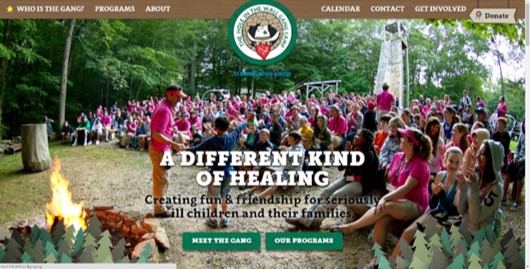
Among the programs highlighted is the less widely known Hospital Outreach Program (HOP), one of a number of programs that have blossomed in recent years to extend the mission and impact of The Hole in the Wall Gang Camp into communities to reach more children.
Through one-on-one interactions and group activities, HOP “brings Camp’s unique summer programming and spirit to hospitals and clinics. Whether working bedside, in playrooms or outpatient clinic settings, our interactions and activities with children and families include arts & crafts projects, and interactive games specifically adapted for use in the medical setting, as well as other Camp-inspired programming and events. Just like at Camp, all interactions are guided by the child’s choice and are child-driven,” the website explains.
Responding to the fact that children in the hospital often feel isolated, fearful, stressed, and uncertain because of their illnesses, the Hospital Outreach Program “brings the hopeful, playful spirit of The Hole in the Wall Gang Camp to children, families, and their caregivers in the hospital setting, at no cost, year-round on a weekly basis.”
The HOP program has expanded to 35 medical facilities in Connecticut, Massachusetts, New York, New Jersey and Pennsylvania. The Connecticut programs are offered at Connecticut Children’s Medical Center in Hartford, Yale-New Haven Hospital, Yale Pediatric Hematology and Oncology Clinic in Trumbull, and the Yale-New Haven Hospital’s Bridgeport Campus.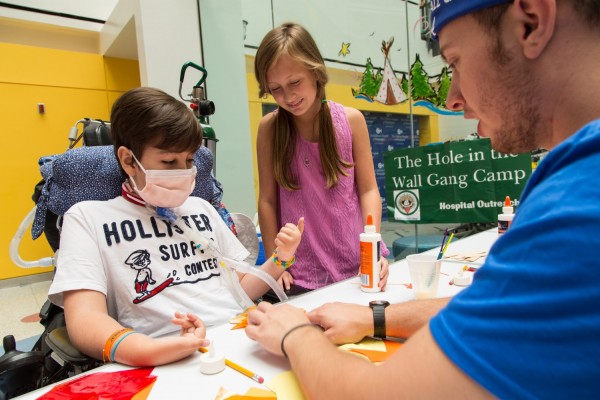
The HOP Specialists that provide one-on-one sessions visits “have a bachelor’s degree, excellent kid skills, experience developing fun and exciting programming and knowledge of hospitals systems. They attend both a HOP and Hospital Orientation and receive regular opportunities for professional development,” the website points out.
At Children’s Hospital of Philadelphia (CHOP) last fall, the facility was “transformed into Downtown Camp” for a week, as nearly 30 Camp staff and volunteers and more than 60 CHOP volunteers provided five full days of Camp programming. In a ll, there were “approximately 800 healing experiences with children and families throughout the week, bringing the safety, respect and love of Camp to many families” in Philadelphia.
Building on the success of the week, the Hospital Outreach teach is looking ahead to similar events across the network of partner hospitals.
Among the other programs offered during the year, in addition to the centerpiece Camp experience, are CampOut, which brings the Camp experience to campers in their own hometowns, weekend programs in Ashford in fall and spring, and Hero’s Journey for campers who have aged out of the summer program. In addition, programs are offered for parents, caregivers and siblings of children participating in The Hole in the Wall Gang Camp.
http://youtu.be/P2516LEl6AM
 s.
s. The top 10 institutions are Johns Hopkins, University of Michigan (Ann Arbor), University of Washington (Seattle), University of Wisconsin (Madison), University of California (San Diego), University of California (San Francisco), Harvard, Duke, University of North Carolina (Chapel Hill) and University of California (Los Angeles).
 The survey collects information on R&D expenditures by field of research and source of funds and also gathers information on types of research and expenses and headcounts of R&D personnel. The survey is an annual census of institutions that expended at least $150,000 in separately budgeted R&D during the fiscal year.


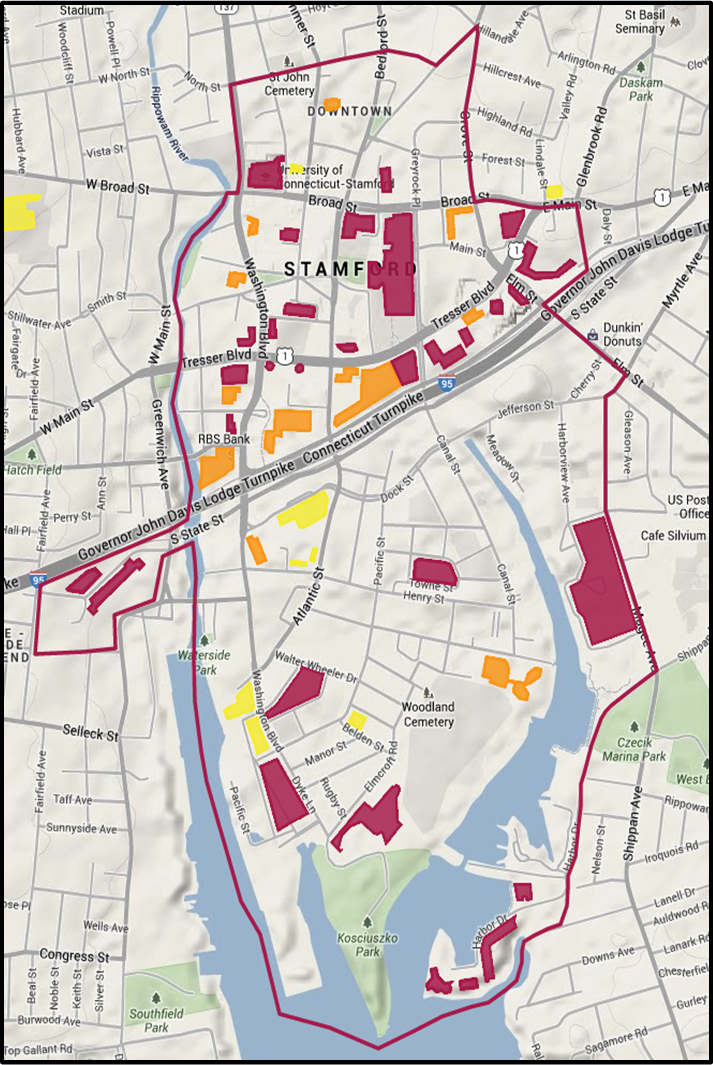 “These collective efforts will establish the Stamford 2030 District as an example of a financially viable, sustainability focused, multi-sector driven effort that maximizes profitability and prosperity for all involved. Through collaboration of diverse stakeholders, leveraging existing and developing new incentives and financing mechanisms, and creating and sharing joint resources, the Stamford 2030 District will prove the business case for healthy and high performing buildings.”
 has declined to comment on the ongoing review process at the FCC.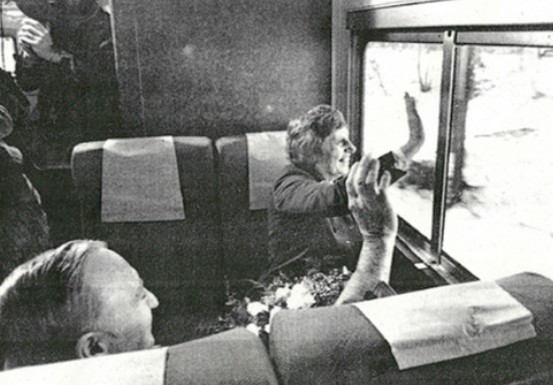
 oblems for the state.”
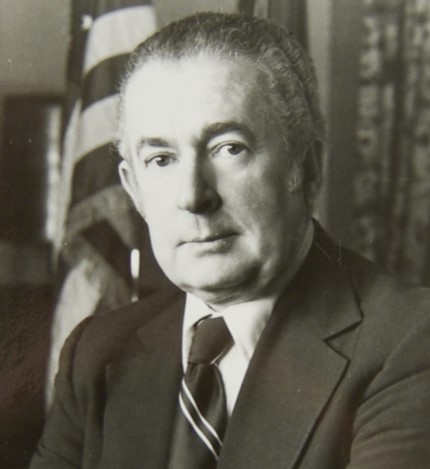 83, which exposed a poor record of road and bridge maintenance in the state, with creation of a Special Transportation Fund to set aside money to maintain and repair the state's bridges.
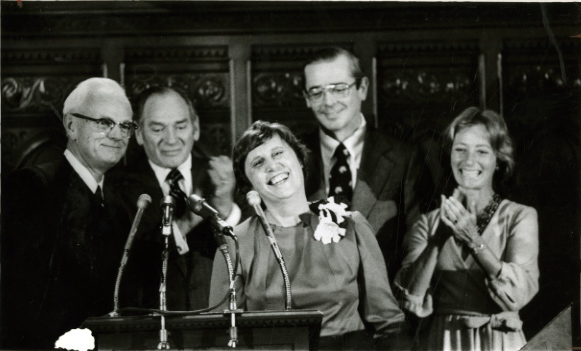 ll station that killed seven people and galvanized public opinion. The state had collected tolls at 14 locations - eight on the Connecticut Turnpike between Greenwich and Plainfield, three on the Merritt and Wilbur Cross Parkways, and at three bridges in the Hartford area. The tollbooths generated $66 million a year, The New York Times

 ields.”
 se Office of Science and Technology Policy notes that “Supporting women STEM students and researchers is not only an essential part of America’s strategy to out-innovate, out-educate, and out-build the rest of the world; it is also important to women themselves.”


 cut
cut
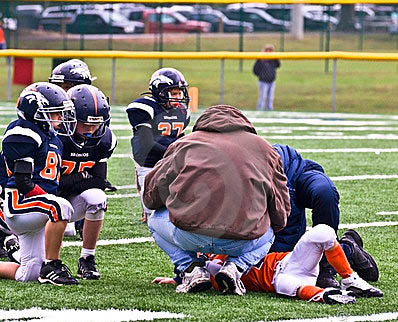
 e filled out by your physician when a concussion occurs, our procedures for concussion management, and our Return to Play protocol that will be followed by all athletes before returning to competition after sustaining a concussion.”