Driver Distraction Continues Almost 30 Seconds After Text is Sent, Research Reveals
/Groundbreaking research by the AAA Foundation for Traffic Safety reveals that the distraction drivers experience using voice activated technology - or their smartphones - to make a call, change music or send a text can linger for almost 30 seconds after the task is complete.
“This should be a wakeup call to anyone who feels safe texting while sitting at a red light”, says AAA spokesperson Amy Parmenter. “Just because you can hit the gas when the light turns green, doesn’t mean you’re good to go.”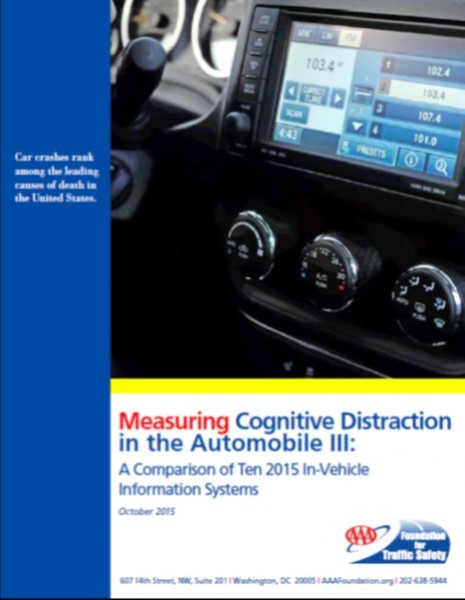
Researchers studying various push-to-talk technologies found that potentially unsafe levels of mental distraction lasted for as long as 27 seconds after completing a task in the worst-performing systems. And, at the 25 MPH speed limit in the study, drivers traveled the length of nearly three football fields during this time. Using the least distracting systems, drivers still remained impaired for more than 15 seconds.
The researchers discovered the residual effects of mental distraction while comparing the voice activated technology in ten 2015 vehicles and three types of smart phones. The analysis found that all systems studied increased mental distraction to potentially unsafe levels.
“Automakers often promote everything their connected cars can do, but this research paints a frightening picture of what drivers can’t do if they use the popular features” Parmenter says. “Hands free does not mean risk free. It’s that simple”.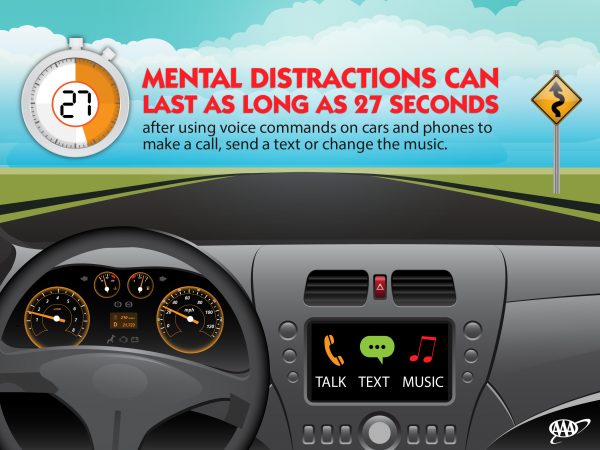
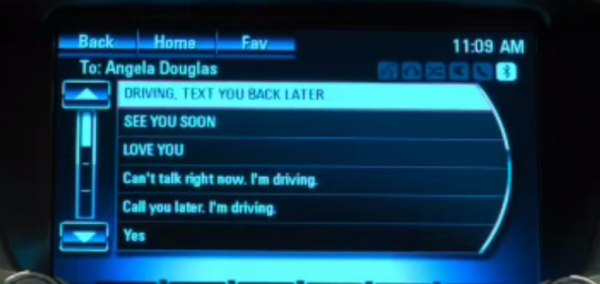
Last month, CT by the Numbers reported that in-car electronics that allow drivers to listen to, read and send text messages while at the wheel may be skirting the spirit, if not the letter, of Connecticut law. In Connecticut, Public Act 10-109, enacted in 2010, states that “no person shall operate a motor vehicle … while using a hand-held mobile telephone to engage in a call or while using a mobile electronic device while such vehicle is in motion. An operator of a motor vehicle who types, sends or reads a text message with a hand-held mobile telephone or mobile electronic device while such vehicle is in motion shall be in violation of this section.”
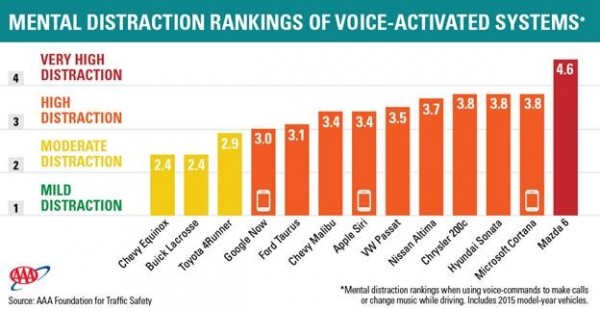
In the AAA study, researchers rated driver distraction on a scale of 1-5, with 1 being relatively safe, about equal to listening to the radio, and 5 being highly challenging in such a way as to overload the driver’s attention. The best performing system was the Chevy Equinox with a cognitive distraction rating of 2.4, while the worst performing system was the Mazda 6 with a cognitive distraction rating of 4.6.
The systems that performed best generally had fewer errors, required less time on task and were relatively easy to use. The researchers also studied voice activated smartphone technology and found that Google Now outperformed Apple Siri and Microsoft Cortana but, they say, all were dangerously distracting with ratings of 3.1, 3.4 and 3.8 respectively.
Dr. David Strayer and Dr. Joel Cooper of the University of Utah conducted the research. A total of 257 drivers ages 21-70 participated in the study of 2015 model-year vehicles, while 65 additional drivers ages 21-68 tested the three phone systems. Over the last two weeks, AAA has shared its findings with policymakers, safety advocates and manufacturers in hopes of improving the safety of future technology.
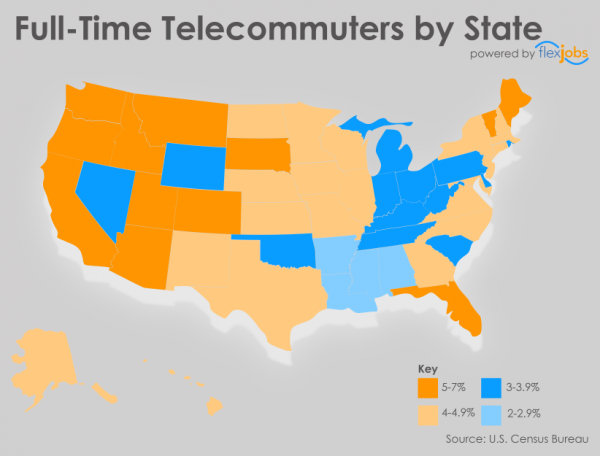
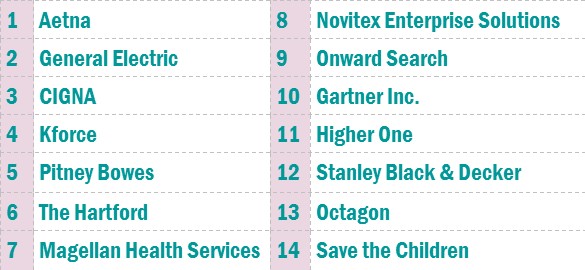 te more than 10 workdays -- meaning at least half of all workdays -- in a typical month. The majority of Americans, including both those employed and not employed, believe workers who work remotely are just as productive as those who work in a business office.
 15 states where the number of traffic fatalities has dropped in the first six months of 2015, compared with a year ago. The others were Alabama, Alaska, Delaware, D.C., Hawaii, Kansas, Montana, New Jersey, New Mexico, Oklahoma, Rhode Island, South Dakota, Tennessee and Texas.


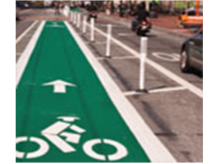 Later this month, Bike Walk CT is offering the League of American Bicyclist-designed Traffic Skills 101 program, a comprehensive day long course to give cyclists the skills, knowledge and confidence to handle on-road cycling.

 ws recently

 As one example, state officials are working on a plan to replace a swinging bridge over the Norwalk River, built in 1896. "As a piece of engineering, it's just amazing," John Bernick, assistant rail administrator for the state Department of Transportation told the AP. "But, it's certainly reached its retirement age.” The computer that operates the bridge is from the 1980’s, and replacing the bridge could cost as much as $650 million.

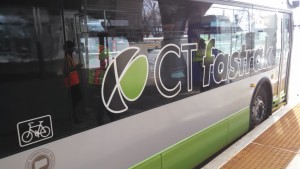 For the first time in the history of the awards program, a state agency was also selected to receive an award. The CT Department of Transportation received a special award for Starting a Revolution: Integration of Land Use and Transit in recognition of the progressive nature of CTfastrak, the bus rapid transit system opened earlier this year. The awards jury that selected the winners gave the award because they felt the new busway represents a cultural shift in how Connecticut views transit, and wanted to acknowledge the future promise of transit oriented development that will hopefully result around the station locations.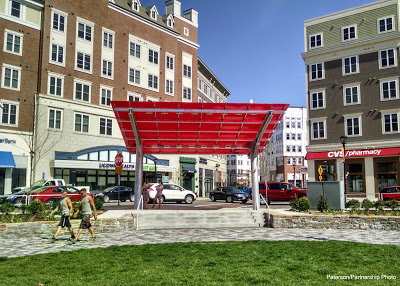



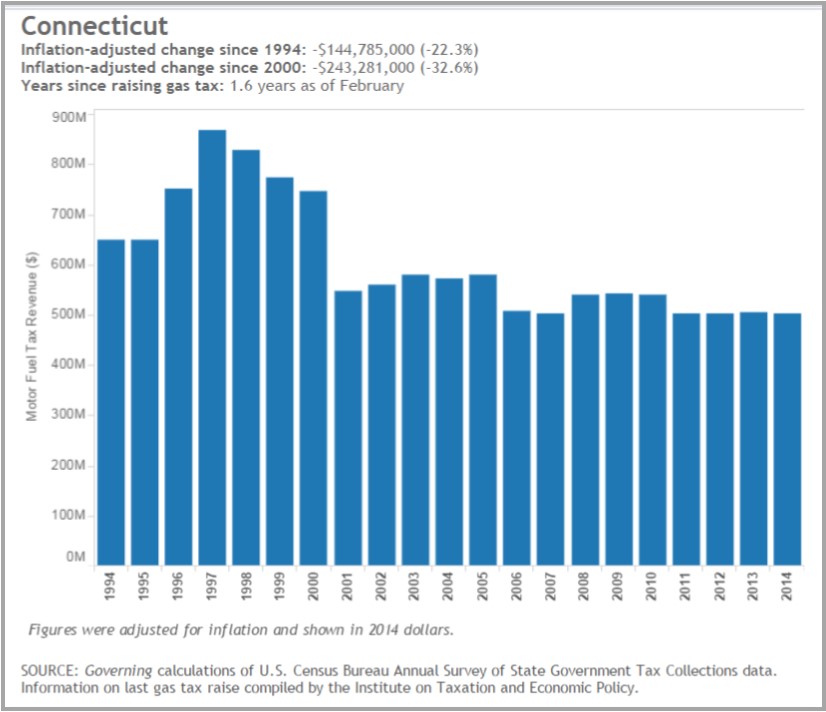 In Connecticut, the inflation-adjusted change is a reduction of in the value of the dollars provided by the tax of 32.6 percent since 2000 and 22.3 percent since 1994, according to the Governing analysis, using data from the U.S. Census Bureau and the Institute on Taxation and Economic Policy. Earlier this year, Governor Malloy announced a two-part transportation plan consisting of a