Safety of Fields with Crumbs From Rubber Tires Face Renewed Questions; CT Study Proclaims They’re OK

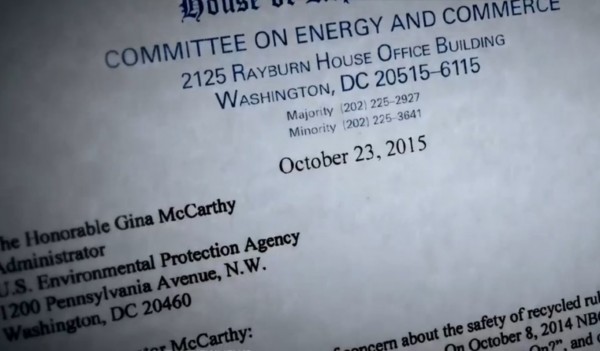
Despite a series of NBC News reports over the past year – the latest last week - on the growing debate about the safety of crumb rubber artificial turf, the federal agencies that regulate the product have remained largely silent of late, the network reported.  The Administrator leading the Environmental Protection Agency, former Connecticut Department of Environmental Protection Commissioner Gina McCarthy, would not answer a direct on-camera question about whether the surface found on playgrounds and athletic fields across the country is safe for kids to play on, NBC News said in a story aired on the network’s flagship news program. Now members of Congress are asking the Environmental Protection Agency to weigh in on whether crumb rubber used in artificial turf fields in thousands of schools, parks and stadiums is safe for young athletes.  A bipartisan panel gave the agency until Nov. 6 to answer 10 questions about what tests have been done to determine whether turf made from recycled tires poses a health risk and what investigators have found, NBC News reported.letter
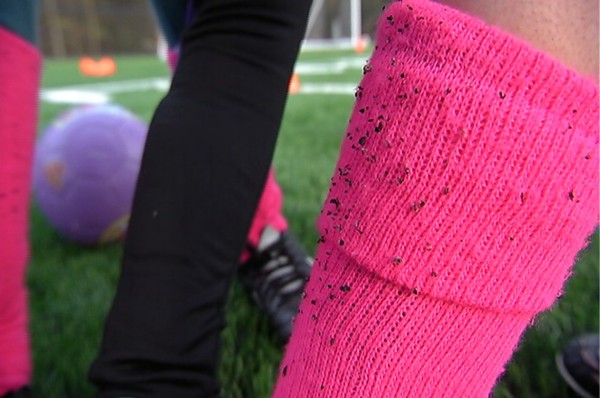
NBC News said that after a story about University of Washington women's soccer coach Amy Griffin aired on the network’s Nightly News last fall, many people contacted her, and the list she has developed of soccer players – especially goalies – afflicted with cancer has grown from 34 goalkeepers to at least 63. Griffin began keeping the list after she discovered that several goalies she knew had been diagnosed with the same cancer, the network reported. She and some of those athletes questioned whether crumb rubber could be exposing them to chemicals and carcinogens.Women's Soccer: SRJR at CCSF

NBC News reviewed dozens of studies, the network’s story pointed out. “Several studies that concluded crumb rubber does not present acute health risks also included the caveat that more research is needed,” according to NBC News.  “No study has examined the effects of regular exposure to shredded or crumb rubber on young children, over an extended period of time — something some experts believe should be done.”  Industry officials have stressed that the products are safe, and cite numerous studies supporting that view.

In Connecticut, like elsewhere around the nation, artificial turf fields have become a popular alternative to natural grass fields in many communities, according to the state Department of Public Health (DPH).  The department’s website points out that “the advantages of these fields include less maintenance costs, ability to withstand intense use and no need for pesticides.”

The state site notes, however, that “concerns have been raised about potential chemical exposures coming from the crumb rubber infill and the plastic grass blades commonly used in these fields.  The crumb rubber usually comes from recycled tires that contain man made compounds such as polycyclic aromatic hydrocarbons (PAHs) and volatile organic compounds (VOCs).”Carcinogens-in-crumb-rubber1-771x450

To address public safety concerns, four Connecticut state agencies collaborated in 2010 to evaluate the potential exposures and risks from athletic use of artificial turf fields, the DPH website explains. A two year, comprehensive investigation of releases from five fields during active play was conducted by the Connecticut departments of Public Health, Energy and Environmental Protection, University of Connecticut Health Center, and The Connecticut Agricultural Experiment Station. The study was peer-reviewed by the Connecticut Academy of Science and Engineering.

The overall conclusion of the report, according to the DPH website, is that “use of outdoor artificial turf fields does not represent a significant health risk.” The CT study did not find a large amount of vapor or particle released from the fields - findings that confirm prior reports from Europe and the US, according to the state public health agency.  “CT DPH put these exposures into a public health context by performing a risk assessment analysis. This analysis did not find elevated cancer risk,” the site emphasized.

An agency news release noted, however, that “higher contaminant levels at one indoor field indicate that ventilation of indoor fields should be considered.  Storm water run-off findings indicate that proper management of this run off is prudent to address possible environmental effects.”

The New England Center for Investigative Reporting indicated in an article earlier this year that David Brown, director of public health toxicology for the North Haven, Connecticut-based nonprofit Environment and Human Health, Inc., warned that as more is invested in artificial fields, it will be harder for state and local officials to change their position even if new information shows harm.tires

“A natural experiment is being conducted in which thousands of children are being exposed on playing fields to rubber,’’ said Brown, a former chief of Environmental Epidemiology and Occupational Health at Connecticut's Department of Public Health. “Given the high stakes, it is prudent to take action to protect children from this known hazard rather than wait for definitive evidence of harm.”

Brown’s organization reports that “there are now 153 cancer cases reported, and of those, 124 are soccer players with 85 being soccer goalies. Many of them are student athletes.” Gaboury Benoit, Ph.D., Yale Professor of Environmental Chemistry and Engineering and lead investigator of a study conducted by Yale in 2007, said, "Not surprisingly, the shredded tires contain a veritable witches' brew of toxic substances. It seems irresponsible to market a hazardous waste as a consumer product."NECIR1-1170x776
Of the state’s study released in 2010, then-DPH Commission Dr. J. Robert Galvin said: “This study presents good news regarding the safety of outdoor artificial turf fields.  While the findings indoors were below the health risk targets, the elevated contaminant levels suggest a need to ventilate these fields so they can be brought to the level of safety outdoors.  What we’ve learned from this study in Connecticut will provide valuable guidance to municipalities, schools and others who operate or are considering installing artificial playing fields.”

In this month’s NBC News report, Paul Anastas, former head chemist for the EPA, is said to disagree that studies have proven crumb rubber to be safe.  "Tires were not designed to be playgrounds," Anastas, who is now Director of the Center for Green Chemistry and Green Engineering at Yale, told NBC News. "They were designed to be tires."

Connecticut Businesses Encourage Voluntary Community Service on Company Time

Nearly two-thirds of Connecticut companies surveyed by the Connecticut Business & Industry Association report that they pay their employees for one or two days of volunteerism, another 17 percent offer three or four paid days, and 10 percent offer five or more paid days for employees to engage in community service activities. That data was included in the newly released 2015 Connecticut Corporate Giving Survey.  The survey includes nearly 200 businesses and has a margin of error of plus or minus 7.2 percent.giving report

Among survey respondents, 57 percent say they are more likely to hire candidates who are active in their communities, and one-third say customers do business with them based in part on their reputation for good corporate citizenship.  Just over half, 53 percent, say they encourage or allow employees to volunteer on company time.

Community volunteering is very important for employees who seek a higher purpose in life and look for meaning, says Khadija Al Arkoubi, an assistant professor of management at the University of New Haven: "Companies that allow it improve their employees' engagement and well-being," Arkoubi told Fast Company magazine. "They also develop their soft skills including their leadership capabilities."

The Society for Human Resource Management surveys employers about the benefits they offer. In 2013, about 20 percent said they give their workers a bank of paid time off specifically for volunteering, up from 15 percent in 2009.company time

A UnitedHealth Group study in 2013 found that 87 percent of people who volunteered in the previous year said that volunteering had developed teamwork and people skills, and 81 percent agreed that volunteering together strengthens relationships among colleagues, Fast Company reported. In addition, four out of five employed people who volunteered in the past year said that they “feel better about their employer” because of the employer’s involvement in volunteer activities, according to the publication.

“It is encouraging to see that not only do many businesses provide incentives for employees to volunteer for area charities, but many voluntarily pay them for their efforts,” said Brian J. Flaherty, Senior Vice President of CBIA.  In the CBIA survey, nearly one-third of businesses (31%) said they recognize or reward employees for volunteer service.

CBIA is Connecticut’s leading business organization, with public policy staff working with state government to help shape specific laws and regulations to support job creation and make Connecticut’s business climate competitive.

paid stat


Connecticut Not Alone; Six States Have Held Special Sessions on Budget

Connecticut, with a special legislative session a distinct possibility in the coming weeks, would not be alone in needing legislators to return to work on a state budget after their regular session had adjourned.  The states of Alabama, Alaska, Minnesota, Washington and Wisconsin all have conducted special sessions on budget issues this year, and New Mexico had a special session to discuss capital budget and supplemental appropriations, according to the National Conference of State Legislatures (NCSL).ct-state-capitol-building-guy-whiteley Alabama’s special session – the first in five years - was held over the summer, convening on July 13 and ending in disarray in mid-August, with a second special session on the state budget convened and concluded in mid-September.  Among the budget cuts, according to published reports: the Alabama Department of Environmental Management saw its appropriation drop from $1.2 million to $200,000, and the state’s hospitals, nursing homes, smokers and students took a hit.alabama
Alaska’s two special sessions to deal with that state’s budget, as well as other issues, ran for just under a month, adjourning on June 11, costing the state nearly $900,000, according to published reports.  That state’s deficit was driven by lower-than-expected oil revenue.

Minnesota had a two day session in June to work on the state budget, capital investments, and other issues and Washington State had a series of special sessions in April, May and June.  Wisconsin’s special session on budget and other issues convened in July.  Some in that state are urging another special session be convened this fall.

A number of states have had special session on other issues, including Congressional redistricting, Medicaid expansion, prison construction and the state’s child support system.

Official_Logo_mdDemocratic legislative leaders and Republican legislative leaders are scheduled to meet with Connecticut Gov. Dannel Malloy on Monday, Oct. 26, for their first budget discussion, in the run-up to an anticipated special legislative session to close the state’s projected budget deficit.

There are two main types of legislative sessions in states across the country, according to NCSL —regular and special (sometimes known as extraordinary). A regular session is the annual or biennial gathering of legislators, the starting date (and often, the length) of which is set by constitution or statute. Unlike regular sessions, there is no specific timing for special (or extraordinary) sessions. They occur intermittently to deal with the specific issues or topics.  Usually, the scope of a special session—that is, the topics that may be taken up—is limited to the issues specified in the notice calling for the special session, the NCSL website explains.

In 34 states, including Connecticut, a special session of the legislature can be called by either the Governor or the legislature.  In 16 states, only the Governor has that authority.  Connecticut’s regular legislative session, according to the state constitution, runs from early January to early June in odd numbered years and early February to early May in even numbered years.

house

12 Reach Connecticut Broadcasters Hall of Fame

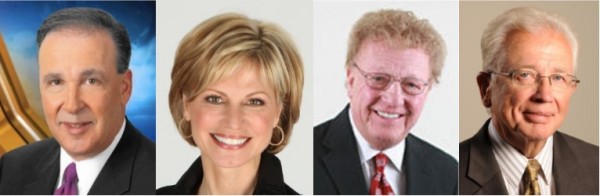
The 60th annual convention of the Connecticut Broadcasters Association (CBA) this week featured more than an array of informative seminars for radio/tv sales, news, programming, production, engineering, and technology professionals.  The attention-grabber was the first-ever induction ceremony for the newly launched CBA Hall of Fame. The honorees were a who’s who of broadcasting history in the state, including some very familiar names, and some less so.  Earning their place in the Hall of Fame were NBC Connecticut anchor Gerry Brooks, WFSB anchor Denise D’Ascenzo, WDRC talk show host Brad Davis, FOX 61's Al Terzi, WWUH general manager John Ramsey, WMRD sportscaster Bill Glynn, Radio Cumbre Broadcasting president/CEO Pablo de Jesus Colon Jr., NBC CT engineer Joe DiMaggio, Cox Radio's Rick Ferguson. Recognized posthumously were WTIC sportscaster Arnold Dean, WCCC and WHCN veteran Boyd Arnold, and WMRD’s Ed Henry.Medallion Front Color

“The Connecticut Broadcasters Association has served the common interests of radio and television broadcasters in our state since 1955 and, ultimately, the Connecticut community statewide,” Klarn DePalma, chair of the Connecticut Broadcasters Association, said in announcing the group of inductees earlier this year. “We have created this ‘Connecticut Broadcasters Association Hall of Fame’ to honor remarkable individuals for their long and particularly distinguished service to the broadcasting industry and to the people of Connecticut.”

Boyd Arnold was one of the founders of the Hartford Radio Association and a longtime board member. He was a partner and VP/GM of Beck-Ross Communications’ WHCN(FM), and later, for Marlin Broadcasting’s WCCC(FM). A mentor for numerous radio professionals, Boyd was involved with the Connecticut Broadcasters Association for as a board member, treasurer and president.

In addition to his TV work at WFSB and NBC Connecticut, Gerry Brooks began his career as news director for WAVZ(AM) radio in New Haven, and as a reporter for WMAS radio in Springfield, Mass. He then worked as sports director at WPOP news radio in Hartford while also serving as weekend sports Anchor for WVIT and provided color for University of Connecticut basketball games on the Connecticut Radio Network.

Pablo de Jesus Colon Jr. pioneered Hispanic radio in Connecticut. He spent two decades at WLVH in the roles of radio announcer, PD, sales manager and executive vice president. In 1989, he co-founded Radio Cumbre Broadcasting, WCUM in Bridgeport, and today is its president and CEO.

Denise D’Ascenzo is a nine-time Emmy Award and seven-time Associated Press-winning journalist who also has earned distinction as the longest serving news anchor at a single TV station. She came to Channel 3 in 1986 and is host of “Advancing Medicine.”

Brad Davis began working at a radio station in Chicopee, Mass., in 1956. He was hired by Channel 3 (then WTIC) to host “The Brad Davis Show” for 11 years. Prior to joining WDRC, he also did radio work at WTIC-AM. And, since 1977, he has continuously hosted his own early morning talk show on WDRC that now also is heard on WMMW Meriden, WWCO Waterbury and WSNG Torrington, on the Talbroadcastersk of Connecticut network.

Arnold Dean, joined WTIC-AM in 1965, was its sports director and the originator of the station’s nightly sports talk program, and did play-by-play for a range of live sports broadcasts. He also hosted music shows on the station.

Joe Dimaggio began his engineering career at WVIT in 1968. When he started in the industry he worked on 16mm and black & white film as a camera operator. He has done everything from lighting shows to operating master control, and then to his long career in engineering management.

Richard Ferguson retired in May 2006 after more than 40 years in radio. He served as chief operating officer and later as EVP of Cox Radio starting when Cox acquired NewCity Communications, a radio group he co-founded and led as president/CEO. He was a member of the Cox Radio Board from 199cba7 through 2006, and continues to consult. He has also served multiple terms as chairman of the NAB. Prior to founding NewCity Communications, he was president of Katz Broadcasting Co.
Bill Glynn of Wethersfield is the “voice” of high school sports and minor league baseball in Connecticut. He began his broadcasting career with WMRD in Middletown (originally WCNX).

Ed Henry hosts “Polish Melodies Show,” which airs every Sunday on WMRD and WLIS(AM), Old Saybrook, for 65 consecutive years.

John Ramsey, of West Hartford, entered the industry as a part-time announcer at the University of Hartford’s WWUH(FM) in 1970, and became a broadcast engineer in 1978. He currently is general manager of WWUH and is secretary of Chapter 14 of the Society of Broadcast Engineers, president of the Torrington Community Radio Foundation (licensee of WAPJ-FM in Torrington), and is the webmaster for HartfordRadioHistory.com.

Al Terzi has news anchored at three of Connecticut’s TV network affiliates over the past 47 years. He began his career at WTIC as a staff announcer in 1968. He stepped down as a daily anchor last year, but still co-hosts the station’s weekly political show “The Real Story.”

Established in 1955, the Connecticut Broadcasters Association is celebrating its 60th year as a respected industry leader in legal, governmental, education and community issues on both the State and National levels. Members include broadcast TV stations, radio stations, vendors and companies with a business interest in broadcasting, educational facilities, and individuals with involvement in the broadcasting industry.

Member radio and TV stations also participate in Connecticut Broadcasters Association public service campaigns supporting the work of the Connecticut Department of Public Safety’s Office of Statewide Emergency Telecommunications – Emergency Alert System (EAS) and AMBER Alert programs, among other efforts.

Highlight videos for the 12 inductees:

https://youtu.be/ffPKNJPtwek?list=PLJyWxh-cfxLshUszNWljlpPGNA4f0hbAu

Listen, Look and Respond to Texts While Behind the Wheel – Legal in Connecticut?

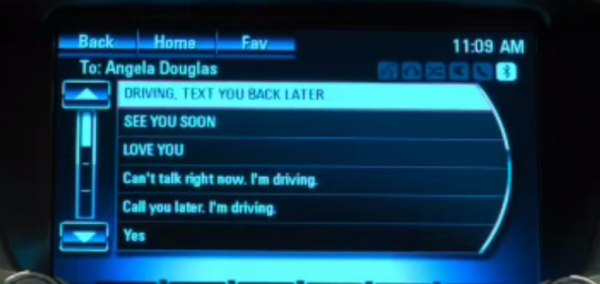
In Connecticut, Public Act 10-109, enacted into law in 2010, states that “no person shall operate a motor vehicle … while using a hand-held mobile telephone to engage in a call or while using a mobile electronic device while such vehicle is in motion. An operator of a motor vehicle who types, sends or reads a text message with a hand-held mobile telephone or mobile electronic device while such vehicle is in motion shall be in violation of this section.” Now, technology and the nation’s automakers are doing their best to skirt the language of the law, with in-car electronics that allow drivers to listen to, read and send text messages while at the wheel. text car

The technology, now being widely advertised as 2016 new car models reach showrooms, “may unintentionally cause greater levels of cognitive distraction,” according to AAA Foundation for Traffic Safety.

One advertisement seen recently on local television and appearing on-line, from Chevrolet, is for the company’s Text Message Alert system. The description of the new feature explains “When you’re in your vehicle, this convenient feature alerts you when a new text has been received and allows you to listen to messages, view messages (when your vehicle’s not in motion) and reply with a preset message with a compatible smartphone.”

Whether or not the new technology meets the letter and spirit of the Connecticut law, now five years old, has yet to be tested.  And if it does, is that in the best interest of Connecticticut drivers, or should the law be revised to address changing technologies?  Peter Kissinger, President and CEO of the AAA Foundation for Traffic Safety, points out that “Technologies used in the car that rely on voice communications may have unintended consequences that adversely affect road safety.”

“We already know that drivers can miss stop signs, pedestrians and other cars while using voice technologies because their mind is not fully focused on the road ahead,” adds Bob Darbelnet, President and CEO of AAA.

The Chevrolet ad exclaims that “Life doesn’t stop when you’re driving. With MyLink you can stay in touch and up-to-date safely with hands-free calling and access to your personal address book through Bluetooth® wireless technology.”  But data indicates that hands-free is not necessarily safe, according to AAA.

AAA has pointed to recent research which indicates that “the accuracy of voice recognition software significantly influences the rate of distraction.”  For example, a team led by Dr. David Strayer and researchers at the University of Utah found that using a speech-to-text system to listen to and compose emails or texts was a greater distraction than talking on a hand-held or hands-free cell phone or listening to the radio.

With three out of four drivers believing that hands-free technology is safe to use, AAA officials caution, Americans may be surprised to learn that these popular new vehicle features may actually increase distraction, according to the new research.  AAA is urging manufacturers to “continue their efforts to develop and refine systems that reduce distractions: while encouraging drivers to “minimize cognitive distraction by limiting the use of most voice-based technologies.”AAA

To assess “real-world” impact, Dr. Joel Cooper with Precision Driving Research evaluated the two most common voice-based interactions in which drivers engage – changing radio stations and voice dialing – with the actual voice-activated systems found in six different automakers’ vehicles. On the five point scale, Toyota’s Entune system garnered the lowest distraction ranking (at 1.7), which is similar to listening to an audio book. In comparison, the Chevrolet MyLink resulted in a very high level of distraction (rating of 3.7). Other systems tested included the Hyundai Blue Link (rating 2.2), the Chrysler Uconnect (rating 2.7), the Ford SYNC (rating 3.0) and the Mercedes COMMAND (rating 3.1).

Chevrolet also offers a feature called Siri Hands Free.  The company’s website explains that “The system allows limited hands-free interaction for when you need to compose important messages on the go.”

“It is clear that not all voice systems are created equal, and today’s imperfect systems can lead to the perfect storm for driver distraction,” continued Darbelnet. “AAA urges vehicle and device manufacturers to use this research to improve their voice systems and promote road safety.”

As someone once described it during the consideration banning texting while driving in Connecticut earlier in this decade, “cell phones don’t cause accidents, distractions do.”

https://youtu.be/kY6ohMfY2gQ

Three Connecticut Urban Initiatives to be Recognized by Regional Organization

When the Congress for the New Urbanism, New England Chapter, presents the 2015 Urbanism Awards recognizing achievement in the region later this month, Connecticut will dominate.  Initiatives in Stamford, New Haven and the Hartford region are three of the five award recipients. The Urbanism Awards honor the designs, plans, and policies that best embody the principles of New Urbanism in New England. The Congress for the New Urbanism (CNU) helps create vibrant and walkable cities, towns, and neighborhoods where people have diverse choices for how they live, work, shop, and get around. People want to live in well-designed places that are unique and authentic. CNU's mission, according to the orcongress logoganization’s website, is to help build those places.

The Glen Brook Springdale Transit Oriented Development (TOD) Plan in Stamford, the Downtown New Haven One-Way to Two-Way Conversion, and the CT Fastrack bus service in the Hartford Region each earned the organization’s top honors in New England.

New HavenThe submission by the City of Stamford of the Glen Brook Springdale TOD Plan is “a fine example” of creating “great livable and walkable spaces and bringing life back” to the area, the organization pointed out.  In selecting the Stamford plan, the Chapter said “The City initiated the study in order to promote much-needed public space improvements and to unlock the potential of each village as a transit-focused location for development. It promotes support and cooperation between the public and private investment for needed rail improvements and to promote walkability and bikability. The resulting plans are transit oriented development pockets and rail station improvements which lay a framework the land owners, developers and the City for good, strong New Urban development and improvements.”

Regarding the New Haven plan, the selection was made because “the Downtown New Haven One-Way to Two-Way Conversion Study strongly conveys the role that a retrofit of existing streets can have on improving the livability, safety, character, and economic development of an entire neighborhood area. The submission clearly articulates how this kind of street reclamation could both improve the efficiency of transit operations while also balancing all modes of transportation.”  Still to be completed, the selection team indicated they look forward to “seeing how this project can support overall revitalization in Downtown New Haven.”  Lead consultant on the plan is Fuss & O’Neill, Inc.stamford

CT Fastrak, operated by the state’s Department of Transportation, was selected “for their success in helping to deliver the first dedicated mass transit system to the region in over 50 years. This is an excellent example of regional cooperation which contemplates improvements at every scale of the rural to urban transect. At the regional level, the dedicated bus only roadbed maximizes mobility while reducing dependence on the automobile. This achievement is enhanced by the inclusion of a 5 mile long multi-use trail way with several access points to the busway for cyclists and pedestrians. Further, several of the new stations will foster transit oriented development (TOD).”

CT FasttrakThe awards will be presented on October 21 at The Union Club of Boston.  The Congress for the New Urbanism, New England Chapter (CNU New England) is a cross-disciplinary network of professionals and advocates working to build strong cities and towns in New England. The organization’s mission is to:

  • Educate the public and the development community about the benefits of New Urbanist planning, design and development
  • Support the implementation of projects consistent with the principles of New Urbanism at the local, state, and regional levels
  • Encourage the adoption of policies and regulations that promote traditional human-scaled urbanism

CBIA and reSET Go Head-to-Head Celebrating Business in Connecticut on Oct. 29

It’s not quite Christmas past and Christmas future, but observers of Connecticut’s business landscape will be forgiven if that’s the take-away from two simultaneous events the evening of October 29 in the state’s Capitol City of Hartford. The Connecticut Business and Industry Association, the state’s leading business membership organization, will be marking 200 years of “Connecticut innovation and ingenuity” at an historic anniversary gala at the Hartford Marriott Downtown, with MSNBC’s Joe Scarborough and Mika Brzezinski the featured guests.  Attendees will have an opportunity to “mix with Connecticut’s most successful and enterprising business leaders at this not-to-be-missed networking event,” according to the advance publicity.

The program is to be preceded by a brief CBIA business meeting. Governor Malloy is schedule to be among the speakers, along with CBIA President & Chief Executive Officer Joe Brennan. Tickets are now available for the celebratory event.

Meanwhile, across town at the Society Room, reSET, the Social Enterprise Trust, whose mission is advancing the social enterprise sector, will be highlighting the unfolding efforts of 12 impact businesses selected as honorees of the 2015 reSET Impact Challenge. Stressing social enterprise, the event has been described as “the future of business.”CBIA 200

The competition, now in its fifth year, recognizes the most innovative, impactful, and viable early stage ventures and start-ups from all industries. For the first time this year, the Challenge was opened to entrepreneurs throughout New England. Award winners will receive unrestricted seed capital, expert professional services, and public recognition. Nine of the 12 finalists are from Connecicut.

“This year’s short list was chosen from the over 100 enterprises that applied. That’s almost double that of last year, and a 700 percent increase since The Challenge launched in 2011. The talent pool gets stronger every year and narrowing it down this time around proved to be quite challenging,” said Rosie Gallant, Director of Programs at reSET.reSET

A panel of expert judges will decide the overall winners who will be revealed at an open-to-the-public celebration, starting at 5pm.   To hear the honorees’ stories and to cast your vote for the “People’s Choice Award,” people are urged to visit www.TheImpactChallenge.org/PeoplesChoice.  The honorees are:

  • Asarasi, Inc. (CT)
  • BookBugs (NH)
  • Beautiful Day / The Providence Granola Project (RI)
  • Daily General Counsel (MA)
  • Dream See Do (CT)
  • FRESH Farm Aquaponics (CT)
  • Harford Prints (CT)
  • Hugo & Hoby (CT)
  • LOTUS Alliance LLC (CT)
  • Movia Robotics (CT)
  • Parrot MD (CT)
  • Planet Fuel Beverage Company (CT)

Connecticut Public Radio host John Dankosky will moderate a panel at the celebration about how social innovation is transforming industries. The panel will feature Disruptive Innovators Jean Hammond, co-founder and partner of LearnLaunch; Makaela Kingsley, director of Wesleyan’s Patricelli Center for Social Entrepreneurship; and a co-founder of tech startup Send Help Back Home.  Tickets to the celebration next month may be purchased at www.ResetImpactAwards.Eventbrite.com.
A separate Impact Venture Showcase will begin at 4pm, with eight early stage, impact-driven startups pitching to an audience of investors, advisors, and guests seeking both social and financial returns. Seating for this pre-celebration event is limited. Separate tickets are required, available at: www.ResetImpactAwards.Eventbrite.com.

With both events spotlighting innovation and ingenuity, the state Department of Economic and Community Development’s statewide theme, “Still Revolutionary,” comes to mind.

This year’s Challenge and Awards are being made possible by a large community of supporters, including a fair number who may also be represented at the CBIA celebration.  The reSET even sponsors include Aeton Law Partners; Bank of America; BNY Mellon; Cantor Colburn; Carter Realty; Central Connecticut State University; Clark Insurance; Comcast Business; Community Investment Corporation; Connecticut Department of Economic and Community Development; Connecticut Innovations; Farrell & Farrell Consulting Services; Fiondella, Milone & LaSaracina; Health Educated, Inc.; HealthyCT; HEDCO Inc.; Murtha Cullina; Powerstation Events; Pullman & Comley, LLC; Qualidigm; Quinnipiac University; Remarkable Technologies; Tariq Farid Foundation; The City of Hartford; The Hartford; The Walker Group; Travelers; Trinity College; and Updike, Kelly & Spellacy.


https://youtu.be/07vC9ohKyyg

https://youtu.be/8hg7nUBL4P4

https://youtu.be/DR1KfGFqG5U

Survey Data Finds People Who Live Somewhere Longer, Like It Less

Criticism of state officials for public discontent about Connecticut and data indicating that more people are moving out of Connecticut than moving in has been quite steady for a number of years, and was advertised quite widely during the most recent gubernatorial campaign. Now, data reported by Governing magazine may put into perspective the consternation about Connecticut, given that the state’s population is among the oldest in the nation (ranking 7th).  Generally, Connecticut residents have been here for a long time.greetings-from-connecticut-ct-postcard

“Citizen survey data support the notion that those who have resided in their communities longest tend to have more negative feelings about them,” the magazine reported.

The National Research Center (NRC), a research firm that conducts citizen satisfaction surveys, provided Governing with data measuring citizens’ attitudes in roughly 300 localities nationwide. About two-thirds of those with residency of less than five years in a community rated the overall direction of their jurisdictions as “excellent” or “good,” compared to only 48 percent among those who had lived in an area for more than 20 years. Results for other questions yielded similar differences, according to the Governing article, titled “Familiarity Breeds Contempt” in print editions.residency

“The very characteristics of a community that attract new residents may serve as a source of frustration for some who’ve been around a while. Results for survey questions on confidence in government and treating all citizens fairly also show a drop off among longtime residents,” the magazine reported.

Ashley Kirzinger, who conducts citizen surveys at the University of Illinois at Springfield, told Governing she’s found the same link in her research on local governments in Illinois: The longer people live in a community, the lower the ratings they’ll give a jurisdiction after controlling for age, education, income and race.  Kirzinger’s research also shows that more civically engaged longtime residents tend to report more positive perceptions than those who are not as involved.png

A year ago, Forbes magazine reported that “the Nutmeg State rates third overall for quality of life thanks to low crime and poverty rates, a healthy populous and strong schools.”  A 2011 Civic Health Index report on Connecticut found that there was consider civic involvement. “Overall, Connecticut scored better than the national average when it came to voter registration and voter turnout, scored highly in terms of internet connectedness, and ranked 6th in the nation for the percentage of people who donate to charity,” the report found.

NRC President Tom Miller, reflecting on the national data, “suspects some residents gradually develop a lower tolerance for change, even in cities experiencing a transformation generally perceived as positive,” Governing reported.

CT’s Manufacturing Report Card Features Every Grade, From A to F

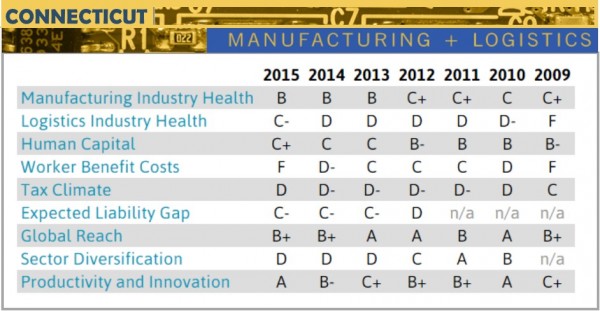
Connecticut’s report card on Manufacturing and Logistics is a mixed bag, according to data compiled by Indiana’s Ball State University Center for Business and Economic Data.  The state’s grades in nine categories range from an A in the Productivity and Innovation category to an F in Worker Benefit Costs. The other categories were Manufacturing Industry Health, Logistics Industry Health, Human Capital, Tax Climate, Expected Liability Gap, Global Reach and Sector Diversification. Overall the state received one A, one B+, one B, one C+, two C-, two D, and one F. manufac data

Connecticut’s manufacturing industry is 8.1 percent of the state economy, according to the report. The total personal income in Connecticut is $203,703,411,000 and earnings from manufacturing total $16,591,678,000, the report stated.

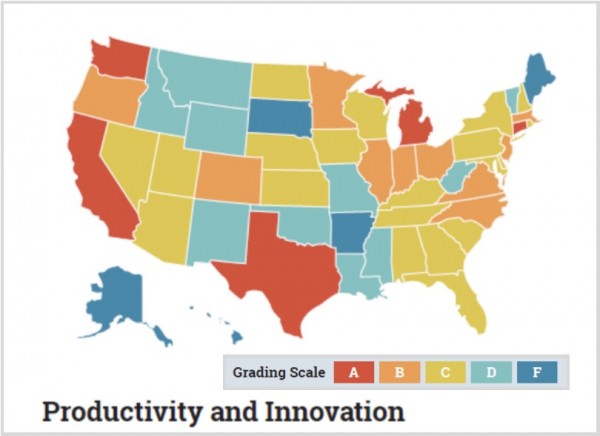
The state’s top grade was in Productivity and Innovation.  The researchers described that category as “the value of manufactured goods per worker – productivity – as well as firm access to inventions and innovations,” which “is critical to the long-term performance of a firm and the industry as a whole.”  To measure productivity and innovation, they used manufacturing productivity growth, industry research and development expenditures on a per capita basis, and the per capita number of patents issued annually.  Connecticut was one of five states to earn an A; the others were California, Michigan, Texas, and Washington State.

Compared with 2009, Connecticut’s grades improved in the categories of Productivity and Innovation, Manufacturing industry Health, and Logistics Industry Health, and declined in Tax Climate and Human Capital.  In Tax Climate, the state dropped from a D last year to a D- on 2015’s report card. Sector Diversification, which received an A in 2011, dropped to a C the following year, and has been mired at a D in each succeeding year.report card logo

The report authors note that “states that concentrate their manufacturing activity in a single sector typically suffer higher volatility in employment and incomes over a business cycle and are also more likely to experience greater effects of structural changes to the economy involving a single sector.

Connecticut’s Tax Climate grade has been a steady D or D- since 2010, after earning a C in 2009.

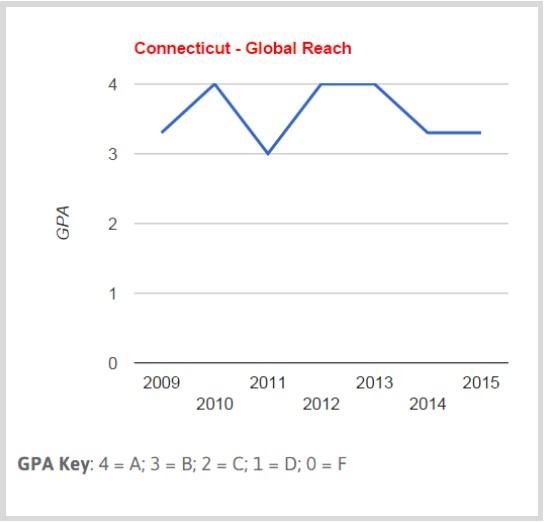
In the Global Reach category, in which Connecticut received a B+, only South Carolina, Ohio, Indiana, and Delaware received a higher grade.  Connecticut’s grade matched New Hampshire, placing Connecticut in the top six in that category.  The Ball State researchers indicated that “the level of international trade (in both imports and exports) is a robust measure of competitiveness in the production, movement and distribution of consumer durable and non-durable goods.”global reach

The university’s national report provided report cards to all fifty states in each of the categories.

The Center for Business and Economic Research is an economic policy and forecasting research center at Ball State University.  CBER research includes public finance, regional economics, manufacturing, transportation, and energy sector studies.

productivity and innovation

New Haven’s Square 9 Softworks Ranks #20 Among Nation’s Top 100 Inner City Businesses

The Inner City 100 are among the nation’s fastest-growing urban firms.  The list of the city-based businesses, thriving from coast to coast, is compiled by Initiative for a Competitive Inner City (ICIC) and featured in Fortune magazine.  The top firms range from a Philadelphia glass blowing outfit, to an Oakland-based 3D printing shop, from a high-end Brooklyn chocolatier to a New Haven software company, the only Connecticut company to earn a spot on the list. “America's urban core is filled with a wildly diverse array of fast-growing businesses,” Fortune points out in presenting this year's 100 fastest-growing inner city companies. Ranking at number 20 is Square 9 Softworks, a leading developer of innovative, business-centric software solutions, headquartered in New Haven. Square_9_Softworks_Logo

Education is paramount at Square 9 Softworks, the write-up by ICIC points out. The document management software maker “has led a number of tech-focused workshops for entrepreneurs in New Haven, as well as creating inner-city scholarships and business intern programs, while recruiting talent from local schools.”

DCIM100GOPRO

According to ICIC, half its employees are under 35 and come from area universities, and Square 9 plans to nearly double its workforce in two years. Clients and partners include Priceline, New York Life Insurance Company, Ohio State University, and Konica Minolta. According to Fortune and ICIC, the company’s 5-year growth rate is 489 percent, with 2014 revenue of $7.45 million.

The companies listed on “Inner City 100” list among the fastest-growing American companies in any location. Although based in the inner city, these companies derive more than half their revenues from regional, national and international sales, the ICIC explains.  The median firm is 11 years old with over $8 million in annual revenue, 45 full-time employees and a five-year compound annual growth rate (CAGR) of 39 percent.

The Inner City 100 Companies, according to the website listing, are producing jobs in their local communities, competitive advantage for their business partners and profits for their investors. Across all sectors, Inner City 100 firms are more productive than their sector peers throughout the U.S., according to U.S. Census data.

The top 10 companies:  Bithenergy (Baltimore); BWI (Indianapolis); Caduceus Healthcare (Atlanta); Rise Interactive (Chicago); Business Resource and Security Services (Washington DC); StreamLink Software (Cleveland); Concrete Constructors, Inc. (Jackson, MS); Impact Makers, Inc. (Richmond,VA); Creative Business Solutions, Inc. (Washington, DC); and The Onyx Company (Chicago).globalLogo

Square 9 Softworks is a privately held Connecticut-based corporation whose management team consists of tenured ECM industry professionals, according to the company’s website. Last month, Square 9 Softworks, announced that Buyers Laboratory LLC (BLI), the world’s leading independent evaluator of document imaging products and solutions, awarded Square 9’s “SmartSearch 4.2” the 2015 Summer Pick Award.

“SmartSearch is one of the few document management solutions that can be ideal for both large and small organizations,” said BLI Senior Editor, Jamie Bsales. “Unlike many document management systems, SmartSearch includes most functionality in the standard product, rather than requiring extra-cost add-ons. This makes SmartSearch much less expensive when matched feature-for-feature with other leading systems. Square 9’s SmartSearch has demonstrated to BLI its ability to satisfy complex business needs, streamline daily processes and increase productivity.”software

Square 9 is fully owner managed and as such is not subject to the direction of the markets or private equity, the website emphasizes. As a privately held corporation Square 9 has assumed a long term position of expanded growth and profitability, realizing triple digit growth in each of the four years from 2008 – 2011 while recording profitability in sixteen straight quarters, the website points out.2015-BLI

The Initiative for a Competitive Inner City (ICIC) is a nonprofit research and strategy organization and the leading authority on U.S. inner city economies and the businesses that thrive there. Founded in 1994 by Harvard Business School Professor Michael Porter, ICIC strengthens inner city economies by providing businesses, governments and investors with the most comprehensive and actionable information in the field about urban market opportunities. It is led by CEO Steve Grossman, a former Massachusetts State Treasurer and gubernatorial candidate.

https://youtu.be/5Z8qWU_nqLg