CT Women of Innovation To Be Honored This Week

The 12th annual Women of Innovation® awards gala this week will recognize 52 women who are accomplished in science, technology, engineering, math and who are involved in their community, five college students and seven high school students who have already begun to demonstrate similar accomplishment. The annual awards event is “a time for like-minded, successful women to network and celebrate their accomplishments,” continuing a tradition led by the Connecticut Technology Council aimed at recognizing women in a range of innovative businesses, education and communities, and highlighting role models for young women looking ahead to career pursuits.

The categories include:

  • Youth Innovation and Leadership
  • Collegian Innovation and Leadership
  • Community Innovation and Leadership
  • Research Innovation and Leadership
  • Academic Innovation and Leadership
  • Entrepreneurial Innovation and Leadership
  • Small Business Innovation and Leadership
  • Large Business Innovation and Leadership

One woman in each of the eight categories will be selected as a top Woman of Innovation in her category, at the April 6 awards ceremony.

Among the nominees, in the Entrepreneurial Innovation and Leadership category, are Marcia Fournier, Founder & CEO of BioArray Therapeutics, Inc.; Gloria Kolb, CEO/Owner of Elidah, Inc.; Wendy Davis, CEO of GestVision, Inc.; Amy McCooe, Co-CEO of Level Up Village; Nicole Bucala, CEO of MIFCOR; Kelly Simpson-Angelini, CEO and Chief Strategic Officer of Simpson Heathcare Executives; Janine Darling, Founder & CEO of STASH America, LLC; and Anuja Ketan, Chief Technology Officer at Zillion Group Inc.innovationlogo

The women nominated in the Small Business Innovation and Leadership category include Melissa Casini – etouches, Norwalk, (Director of Account Management); Dina Dubey – Z-Medica, Wallingford,  (Executive VP, Corporate Development); Merrie London – Connecticut Innovations, Rocky Hill (Manager, SBIR and Federal Leveraging Programs); Jackie Mulhall – SMC Partners, Hartford (Director); Pam Perdue – Continuity Control, New Haven (Founder, EVP Regulatory Operations); and Kathleen Roberge – etouches, Norwalk (VP of Global Sales).

The full list of nominees includes individuals at some of Connecticut’s leading companies, including Sikorsky Aircraft, Frontier Communications, Hartford Hospital, Pfizer, and Pratt & Whitney. Academic institutions with Women of Innovation include the University of Connecticut, Wesleyan University, University of Bridgeport, and Yale University.

The keynote speaker for the April 6 awards program will be Congresswoman Elizabeth H. Esty, U.S. Representative for the 5th Congressional District of Connecticut. During the past 11 years, more than 500 women have been honored by Women of Innovation.

“Our state’s innovation sector recognizes the essential contributions its female engineers, scientists, programmers, physicians, mathematicians and teachers make in developing new products and services, advancing health technologies and serving as educators and role models for generations of women that follow,”said Connecticut Technology Council President and CEO Bruce Carlson. “Women of Innovation® allows us to put the spotlight on these exceptional innovators and leaders and connect them with a professional network of other women who strive for excellence.”

https://youtu.be/Uz1gQ96Yk1c

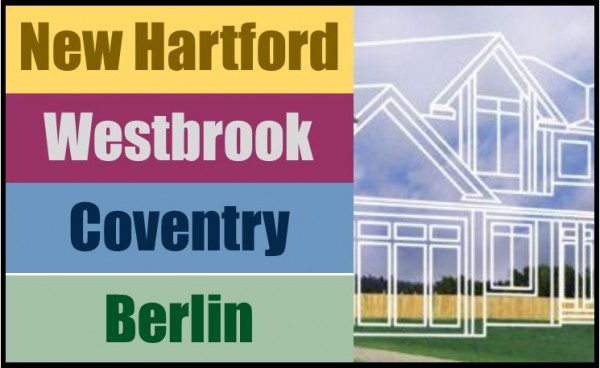
First Time Home Buyers: New Hartford, Westbrook, Coventry Most Attractive

In Connecticut, as elsewhere across the country, it is a home buyers’ market.  And that is especially prevalent in some of Connecticut’s smaller communities, and those in the central and northern parts of the state, according to an analysis by NerdWallet, a national finance website, which determined the top places for first-time homebuyers in Connecticut. The site identified the top communities for new home buyers, considering how much individuals would need to spend on a mortgage and examining the data on appreciation “to find the best locations, based on the health of the local housing market, the costs of housing, and the prosperity and safety in each community.”compare-mortgage-rates-1

“To be sure,” the website noted, “the state is not a magnet for first-time buyers based on affordability, but the places we identified stand out as being the most suitable for those looking for a foothold in the housing market.”

The top community was New Hartford, which was described as having “a population of just over 6,900, this small community was the 11th-safest among the 116 in the state we analyzed. Additionally, the select monthly ownership costs were the second-lowest among the top 10 cities, at $1,813; that’s $235 less than the median for all 116 communities.”

Runner-up was Westbrook, along the Connecticut shoreline.  Westbrook had “the second-most expensive home value among the top 10. But it also had the strongest home value growth rate among all 116 communities analyzed — a positive economic sign for homebuyers,” the website indicated.   “Although home values in many areas of the state fell between 2011 and 2014, they grew by 4.87% in Westbrook; that’s well above the median decline of 6.8% for all communities analyzed. Westbrook also had the lowest real estate tax rate among the top 10, at 1.15% of assessed value per year.

The top ten communities:home towns

  1. New Hartford
  2. Westbrook
  3. Coventry
  4. Berlin
  5. Colchester
  6. Windsor Locks
  7. Durham
  8. Ellington
  9. Marlborough
  10. Windsor

Of Coventry, the third-ranked community, the website said: “Homeowners here see median monthly ownership costs of $1,883, which is $165 less than the median of all communities analyzed. Among the top 10 locations, it takes the third-shortest amount of time to save for a down payment in Coventry (19.86 years). With a crime rating of "safe," low poverty rates and home values nearly $20,000 less than the state median, Coventry could be an ideal location for first-time homebuyers if they can find employment within commuting distance.”

The fourth-ranked town, Berlin, was cited for its population growth, “the third-highest of all 116 communities analyzed, rising 3.34% between 2011 and 2014 — much higher than the median population growth of 0.5% for all places analyzed. The median home value here as of 2014 was $286,800, slightly higher than the median of all places analyzed.”

Colchester, with a median age of 39, was described as the youngest among the to 10, and Windsor Locks, home of Bradley International Airport, was highlighted for the affordability of its homes, “the least expensive” among the top communities.

Rounding out the top twenty were South Windsor, Canton, Haddam, Suffield, Glastonbury, Burlington, Tolland, East Hampton, Southington and Lebanon.  A total of 116 communities were ranked in the analysis, with Stamford, Ansonia, Waterbury, New Haven,  and Bridgeport at the bottom of the list.  nerdwallet-logo-new

For their calculations, the website assumed a first-time homebuyer in Connecticut earns an annual income of $73,361, the 2014 state median for households headed by residents ages 25 to 44. They also assumed a personal savings rate of 4.8 percent, based on the U.S. 10-year average as measured by the Federal Reserve Bank. Assuming the homebuyers are starting with nothing in the bank, they then estimated how many years it would take to save for a 20 percent down payment

By following the Consumer Financial Protection Bureau's recommendation that homeowners shouldn't allocate more than 28% of their gross monthly income to housing costs, NerdWallet analysts determined that a first-time homebuyer in Connecticut could afford to spend $1,712 a month on ownership costs — mortgage, taxes, utilities and insurance.

CT Medical Examining Board Website Ranked 15th in US

If you’re looking for information about your doctor, you may find yourself searching the website of the state medical board.  In states across the country, those are the agencies that license physicians and also discipline them for offenses including sexual misconduct, substance abuse, and negligent care. But the accuracy and completeness of the information you find varies from state to state, according to a new analysis from Consumer Reports, which ranked the Connecticut Medical Examining Board as 15th in the nation for the information readily available to the public from the agency website.

Consumer Reports Safe Patient Project partnered with the nonprofit Informed Patient Institute to evaluate the websites of state medical boards in all 50 states. They found that most are difficult to navigate and the information on them varies widely.

consumerOverall scores were based on eight categories:  Search Capabilities, Complaint and Board Information, Identifying Doctor Information, Board Disciplinary Actions, Hospital Disciplinary Actions, Federal Disciplinary Actions, Malpractice Payouts and Convictions.


Connecticut, with an overall score of 58, was rated good in four categories, very good in two, and excellent in one category.  Only one category was given a poor rating.

The highest rated state medical board websites were in California (84), New York (79), Massachusetts (78), Illinois (76), North Carolina (76), Virginia (72), New Jersey (70), Florida (70) and Texas (68).medical examining board

The Federation of State Medical Boards, which represents the boards and facilitates communication among them, acknowledges that variation is a potential issue. “Consistency is certainly a worthy goal,” Lisa Robin, chief advocacy officer for the organization told Consumer Reports. “Looking at the disciplinary trends to make improvements in the system … we would always encourage that.” Still, she also says that, “the rate of discipline alone is probably not a good picture of really what the boards do and how well they’re able to protect patients in their state.”

But, as Consumer Reports’ analysis found, those state boards fall short in other measures, too. In fact, in many instances, physicians who have been severely disciplined continue to practice while their offenses remain relatively hidden, buried deep on the boards' websites or unavailable entirely online.

The Connecticut Medical Examining Board website includes a listing of disciplinary actions taken by the Connecticut Medical Examining Board or the Connecticut Department of Public Health but notes that “information is not intended for licensure verification purposes.”  Actions taken – ranging from reprimands to civil penalties to license suspension or revocation are listed.  Board meeting minutes are also available on the site, as well as procedures for individuals to file complaints.

states

Greater Hartford Residents Prefer Focus on Vibrant Communities Over Recruiting Businesses

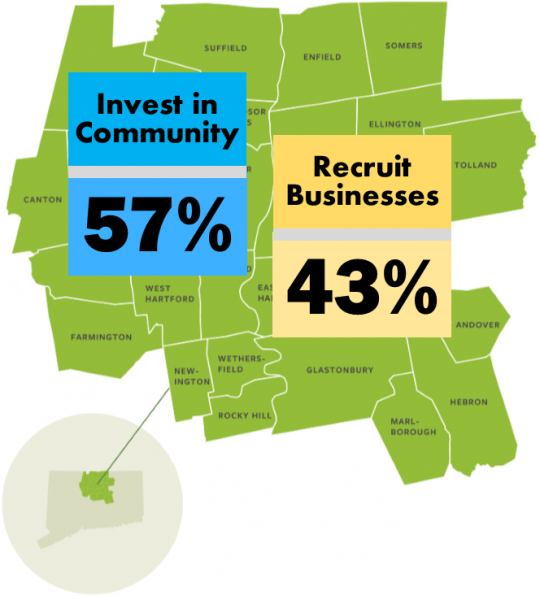
In a time of reduced resources and stark choices for policy makers, a survey of Greater Hartford residents suggests that investments aimed at creating vibrant communities, with the focus on local schools, transportation options, walkable, attractive physical environment is preferred to devoting greater resources to recruiting employers. In a survey for the Hartford Foundation for Public Giving as part of the Metro Hartford Progress Points effort, and conducted by Inform CT, residents of Hartford and Tolland County, by 57 percent to 43 percent, said that investing in communities was a better approach than recruiting businesses.HartfordFoundation

The findings reaffirm one of the key goals in the new three-year strategic plan of HFPG, launched earlier this year, developing vibrant communities.  The plan states that “All of our region’s residents should have the opportunity to live and contribute to strong, safe vibrant communities,” and calls for a “focus on people and places with the greatest need by engaging and supporting partners who promote meaningful civic engagement, safe affordable housing, quality health and mental health care and a rich diversity of cultural and other experiences to improve the quality of life.”

mapThe data from the survey reflect a difference of opinion among older residents of the region.  Individuals over age 46 took the opposite view from younger residents, with a majority expressing a preference for spending skewed toward recruiting companies.   The reversal was dramatic, with two-thirds of those age 36-45 preferring investing in communities, by a margin of 67%-33%, and individuals age 46-55 expressing a preference for resources to be aimed at recruiting companies, with two-thirds holding the opposite view, 63%-38%.


Across all age groups, a majority of homeowners preferred that the emphasis be on vibrant communities, 52%-48%, and an even larger majority of respondents who are not homeowners, 64%-36%, shared the same view.

The preference for policy to be targeted more towards assuring vibrant communities than recruiting companies was consistent across a majority of respondents of various education levels and among white, black and Hispanic residents of the region, according to the survey.  A majority of survey respondents who are currently employed full-time, as well as those working part-time, and those unemployed all expressed a preference for investing in communities rather than recruiting companies.

The Greater Hartford survey results are not inconsistent with data gathered elsewhere.  A March 2014 national survey by the American Planning Association (APA) found that Millennials and Baby Boomers want cities to focus less on recruiting new companies and more on investing in new transportation options, walkable communities, and making the area as attractive as possible. The national survey found that 65 percent of all respondents and 74 percent of millennials believe investing in schools, transportation choices and walkable areas is a better way to grow the economy than investing in recruiting companies to move to the area, according to the APA.mhppLogo

A 2013 study in Michigan, posing similar questions, brought similar results.  In the statewide survey, 64 percent of Michigan citizens said they believed the most important thing state government can do for job creation is to “provide quality education, good roads and transportation, good public services like safety, water, fire, parks and libraries that create an environment in which people want to live, work and run a business.”  This contrasts with 29 percent who said the most important thing state government can do is to “cut taxes for individuals and businesses.”

Earlier this month, at the annual Municipal Collaboration Summit organized by the Hartford Business Journal, one of the session’s was devoted to an exploration of “Building Vibrant Communities,” with observations from representatives of Connecticut Main Street Center, the Partnership for Strong Communities and the Connecticut Economic Resource Center.

The Hartford Foundation for Public Giving serves 29 towns, hundreds of nonprofits and more than 750,000 residents in the Greater Hartford region.  As Greater Hartford’s community foundation, HFPG brings together members of the community to “share information, understand local problems and put resources behind effective solutions.”Print

Developed by a group of key regional stakeholders, Metro Hartford Progress Points is a periodic 'check-up' to build greater understanding about issues facing the Greater Hartford community. The second edition of Progress Points, released late last year, takes a deeper look at key issues impacting our communities and how they are connected, with a particular focus on access to better schools, better jobs and stronger neighborhoods.  Along with the Hartford Foundation, partners include the Hispanic Health Council, MetroHartford Alliance, United Way of Central and Northeastern Connecticut, Urban League of Greater Hartford, Capitol Workforce Partners, Capitol Region Council of Governments, the Center for Urban and Global Studies at Trinity College and the City of Hartford.

The survey was conducted for the Foundation during the 4th quarter of 2015 by Inform CT.

PERSPECTIVE: The State Budget: What Do Demographics Have to Do With It?

by Alissa DeJonge A combination of factors are having a negative impact on state revenues, contributing to budget woes. The different age cohorts in Connecticut’s population tell an important story of one reason revenues are declining. State legislators need to examine Connecticut’s current and future demographics as they look to solve fiscal problems.CT perspective

Much of the daily news centers on the state budget deficit and the lengths that legislators are attempting to go to find ways to balance it. There is a projected $220 million shortfall for this fiscal year that was addressed by legislators on March 29.[1] And the projected shortfall for the next fiscal year is approaching $1 billion. quote 1

Legislators are quite aware that revenues are not coming in to the extent originally anticipated, and that this trend has been occurring for the past number of years. Indeed, Senator Beth Bye, during a March 23 conference about broadband infrastructure,[2] discussed the revenue woes and the dire situation that Connecticut is facing.

What makes this situation particularly serious is the fact that the reasons there is a ‘revenue problem’ have been long in the making, and the trend is poised to continue.

Of course, the overall state economy continues to struggle. Connecticut is one of 10 U.S. states that has not regained all the jobs lost since the last recession.[3] If jobs are sluggish, so too are revenues back to the state. And wage growth, while seeing improvements in 2015, has been relatively flat since the end of the last recession, which also keeps state revenues in a static to declining state.[4]

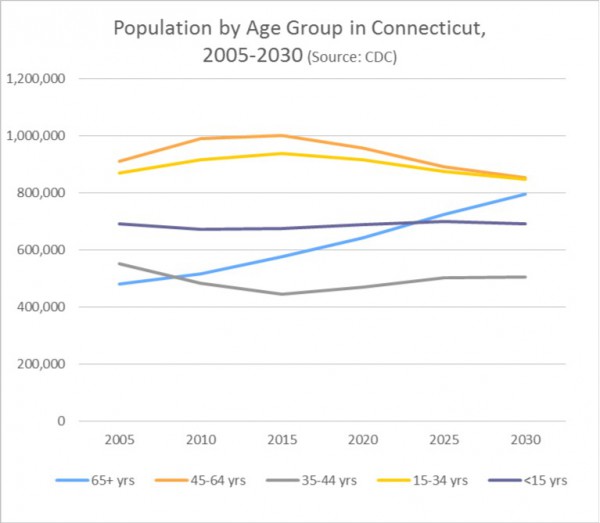
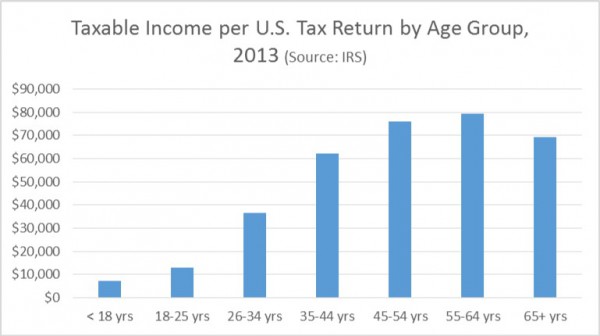
However, the lack of revenues also involves overall demographic patterns. The figure shows population by age for Connecticut between 2005 and 2015, and projections extending to 2030.

  • The age group over 65 is projected to increase 38% between 2015 and 2030. This will add much pressure to state services such as Medicaid and long term supports and services while at the same pop by age grouptime reducing revenues because this large age cohort is no longer working.
  • The Baby Boomer generation, those who are currently 45-64 years old, comprise the largest share of the state’s population. As they move from employment to retirement, the trend of increasing service needs and lessening revenues will accelerate.
  • Generation Xers will fill many Boomer jobs, but they are a much smaller group, which means that state revenues are unlikely to regain their previous higher levels because fewer people will be producing outputs.
  • The current Millennials (roughly ages 15-34 years) and the even younger Generation Z population have more people in their age groups then the Generation Xers. Therefore, demographic trends should eventually contribute to increasing state revenues. But it will be well over a decade before the Millennials begin to gain seniority and higher wages in the workforce and contribute more to the state revenues.

taxable incomeThis figure shows how taxable income ebbs and flows by age group. The Baby Boomers are in the best position to contribute to state revenues right now. However they are retiring in a consistent fashion, and the next younger cohort, of which there are fewer people to begin with, is earning less than their mature counterparts. This sets up a long-term issue for state revenue potential, one that will not be mitigated until the larger Millennial age cohort gets into their more profitable working years.


Revenue expectations are not what they used to be. In the 1960s, the economy consistently grew between three and five percent each year, and Americans assumed that it would continue to grow at that pace.  As a result, government was able to fund additional programs as economic and tax bases kept expanding. Today the economy is growing at only around two percent each year. This economic trend reduces the ability for the government to fund programs, and all demands cannot be met, with the current revenues coming in.[5]

If you multiply the taxable income per return by the number of people in each demographic group in both 2015 and 2030, excluding inflation, there would be a four percent decrease in the projected total amount of taxable income in the state.  This illustrates the effect of demographic trends on taxable income. Without even considering job trends, wage trends, or other long-term economic factors, the demographic shifts of the population are going to make it even more challenging for state governments to raise revenues.quote 2

The state revenue problem will not resolve itself with this legislative session, or even the next. While the current revenue problems are a combination of many factors, the demographic influence is significant and should not be overlooked because it can provide insight for decades into the future.

Since there are a number of longer term, structural issues that will continue to affect the state’s ability to raise revenues for many years, stakeholders and policymakers will have to adjust to this new economic reality. Prioritization of programs with specific intended targeted outcomes is the approach to the state budgeting process needed now.

_________________________________

Alissa DeJonge is Vice President of Research, Connecticut Economic Resource Center Inc. (CERC).

PERSPECTIVE commentaries by contributing writers appear each Sunday on Connecticut by the Numbers.

LAST WEEK: Freedom's Just Another Word For... 

_________________________________

[1] http://www.nbcconnecticut.com/news/local/Vote-on-State-Budget-Deficit-Expected-Tuesday-373779281.html (Accessed March 29, 2016)

[2] High-Speed Broadband Internet Infrastructure Informational Conference: A Toolbox for Municipalities (March 23, 2016)

[3] http://www.usnews.com/news/business/articles/2016-03-25/job-totals-trail-pre-recession-levels-in-10-us-states (Accessed March 29, 2016), from U.S. DOL calculations of jobs changes, December 2007 – February 2016.

[4] http://www.washingtontimes.com/news/2015/oct/8/comptroller-connecticut-wage-growth-continues-to-l/ (Accessed March 29, 2016)

[5] Robert Samuelson, Trump’s Wrong – We’re Hugely Well-Off (Op-Ed), The Hartford Courant, March 28, 2016.

Connecticut Tax Bite on Powerball Big Winner Would Be 15th Highest in US

If you happen to win a $1.5 billion Powerball lottery jackpot, you’d be well advised to be a resident of one of nine states that do not tax such winnings.  Connecticut is not among them.states Connecticut’s take on such a jackpot would be 15th highest in the nation, among the states that do tax such winnings at various income tax rates.  An analysis by Bloomberg found that the amount of state income taxes owed would be highest for residents of Oregon, Minnesota, Iowa, New Jersey, Washington D.C., Vermont, New York, Maine and Wisconsin.


Connecticut residents would need to pay the state $62.3 million, which, when combined with the federal tax bite, would leave the Powerball winner with just under $500 million of the $1.5 billion jackpot.bites

According to the analysis, the IRS takes 25 percent off the top. The winner will then have to pay the federal government an additional 14.6 percent at tax time, for a total of 39.6 percent–the maximum individual tax rate. That means the most a winner can hope to take home is $561.7 million.

Then the home state – with the exception of the nine states that don't go after such winnings – take their share, ranging from $92.1 million for an Oregon resident to $29.9 million for a North Dakota resident.  Connecticut is approximately in the middle of the pack.

States can also receive a revenue boost when there isn't a Powerball winner for quite awhile, as happened between November 2015 and January 2016.  As the jackpot grew each week, sales of tickets increased.  According to published reports,  the state of Connecticut received more than $20 million out of the $50.1 million in Powerball tickets sold.

map

Influx of Chinese Students in CT High Schools Reflects National Trend

When the soon-to-be-vacated UConn campus in West Hartford attracted the interest of a Chinese education company looking to establish their first international high school in the United States, some may have been surprised by the interest by the interest in having American, Asian, and other international students live and receive instruction on the suburban campus. But for those who have noticed the nearly exponential growth of Chinese high school students coming to the United States to study, the proposal submitted to the town of West Hartford and the UConn Board of Trustees was less surprising.

students CTChinese made up 35 percent of the 92,000 foreign secondary school students in the United States in 2015, according to the US Department of Homeland Security, by far the largest group studying here, the Boston Globe reported this week. That number has grown rapidly from only dozens a decade ago, fueled by the growing middle class in China and a desire to their children to gain an early advantage in efforts to attend college in the United States.

The number of international students across New England, with its long history and tradition of private schools, rose from 9,338 in 2010 to nearly 14,000 last year.

In Connecticut, with the second largest international student population in the region, the number has quickly climbed from 2,548 to 3.548, an increase of 39 percent in the past five years, the Globe reported, based on data from U.S. Immigration and Customs Enforcement.   In Massachusetts, the number has jumped from 3,780 to 5,963 during the past five years.  Every New England state has seen the number of international students attending local high schools increase, which Chinese students spurring the growth.

The number of Chinese K-12 students rose 290% percent to 34,578 as of November 2015 from 8,857 five years previously, according to data collected by the Student Exchange and Visitor Program, a unit of the Department of Homeland Security that tracks foreigners on student visas and the schools they attend, the Wall Street Journal reported.  Chinese students make up roughly half of the 60,815 foreign pupils in U.S. high schools and the 6,074 in primary schools, according to the newspaper.students

Founded in 1999, the Beijing-based Weiming Education Group is the largest and leading provider of private schools in China with over 40,000 students in 42 campuses. The Group, which is looking to establish the new international high school in West Hartford, has established a long-term international education partnership with more than 20 schools and education institutions from a dozen of countries including the United States, Britain, Canada, Singapore, and South Korea.

The company’s website points out that “Internationalized education has become the strategic direction” of the Weiming Education’s operation management, noting U.S. offices in Michigan and Connecticut. To date, about a half-dozen partner high schools in the United States are in Michigan.

The Hartford Courant reported last summer that Cheshire Academy, a private school with 400 boarding and day students in grades 8 through 12, had 85 students from mainland China this past academic year among its international contingent of 164 students from 32 countries, or more than 40 percent of its total enrollment.

West Hartford has yet to make a decision regarding the disposition of the UConn property, with a number of competing proposals under consideration.  The UConn Board of Trustees is poised to move forward with a sale of the property to Weiming, but the town retains right of first refusal, and ultimately has zoning control over the property, regardless of the owner.

Gender Identity in Schools Among Topics at Connecticut School Health Issues Conference

The keynote address “When Boys Will be Girls: Getting A Grip on Gender” will greet attendees – school nurses and school health officials from across Connecticut - attending the 38th Annual School Health Conference on Thursday in Cromwell. “Critical Issues in School Health 2016,” a two-day conference, will have expert presentations on issues ranging from absenteeism to infectious diseases, food allergies to mental health.  But no issue has grown in attention and interest recently than how to respond to LGBT students in the school setting.

The conference is coordinated by the Connecticut chapter of the American Academy of Pediatrics with the assistance of the Association of School Nurses of Connecticut.  school-health

The keynote will be given by Robin McHaelen, MSW, founder and executive director of True Colors, a Hartford-based non-profit organization that works with social service agencies, schools, organizations, and within communities to ensure that the needs of sexual and gender minority youth are both recognized and competently met. McHaelen is co-author of several books and articles on LGBT youth concerns, and has a national reputation as a thought leader in LGBT youth concerns, programs and interventions.

In her presentation, titled “When Pink and Blue Are Not Enough,” McHaelen offers suggestions on working with LGBT students, and seeks to increase “understanding, knowledge and cultural competency regarding LGBT students,” while identifying issues of “risk, challenge and strengths specific to LGBT youth.”  She also will point to “opportunities for intervention that will ensure appropriate care within a safe, affirming environment.”

Among the recommendations:  offer gender-neutral bathroom options, always use the patients’ chosen name and chosen gender pronouns, and “recognize that there are additional stressors (and that there may be significant feat on the part of) transgender patients.” logo

McHaelen will be offering a similar presentation at the New England School Nurse Conference, to be held in late April in Mystic, hosted by the Association of School Nurses of Connecticut.  The president of the Association is Suzanne Levasseur, Supervisor of Health Services for the Westport Public Schools.  The New England affiliates include Massachusetts, Vermont, New Hampshire and Maine.  The conference theme is “Waves of Change, Oceans of Opportunity.”

Lesbian, gay, bisexual, and transgender students are the targets of bullying, harrassment, and disproportionately high discipline rates at school, researchers have pointed out. But without consistently collected, reliable, large-scale sources of data, it's difficult to track the extent of those problems or the effectiveness of proposed solutions, a group of researchers at Indiana University said in a briefing paper released this week.

Expanding existing federal surveys on youth safety and well-being to include more questions about gender identity and sexual orientation could provide a clearer picture, according to the researchers, noting that “if you don’t measure it, you can’t improve it.”  They suggest addressing the data gap by adding discipline and harassment items to existing health surveys that currently include measures of sexual orientation and gender identity, such as the Youth Risk Behavior Survey, collected by the Centers for Disease Control and Prevention.logo

“Although these measures provide more specific information about sexual orientation and in some cases gender identity, they do not provide sufficient information about the specific negative outcomes experienced by LGBT students,” the research paper points out.  They conclude: “the availability of data documenting the experiences of LGBT students is a civil rights concern, and the expansion of data collection efforts to include sexual orientation and gender identity is a critical next step in ensuring the rights of LGBT and all students to participation and protection in school.”

The mission of the Association of School Nurses of Connecticut is to support, assist and enhance the practice of professional school nurses in their development and implementation of comprehensive school health services that promotes students' health and academic success.  The Connecticut Chapter of the American Academy of Pediatrics has over 600 active members committed to both improving the health and safety of Connecticut's children and supporting those who provide care to these children.


Survey Says: Parents Don't Trust On-line Doctor Ratings, But Use Them

As the annual observance of National Doctors’ Day approaches this week, a new national survey indicates that nearly one-third (30%) of parents report looking at online doctor ratings for themselves or a family member in the past year, with mothers (36%) more likely than fathers (22%) to visit such sites. Among these parents, two-thirds say they selected or avoided a doctor based on the ratings they viewed. Among parents who choose doctors based on the ratings, most (87%) say the online ratings accurately reflect their experience with the doctor. The survey was conducted for C.S. Mott Children’s Hospital at the University of Michigan.logo-2016

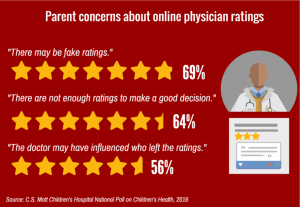
The survey also found, however, that a majority of parents have concerns about doctor rating websites in general. About two-thirds of parents believe some ratings may be fake; slightly fewer feel there are not enough ratings on the websites to make a good decision. More than half of parents feel doctors may influence who leaves ratings. Among parents in this survey who had ever left an online rating about a doctor (11% overall), nearly one-third (30%) reported that the doctor or office staff had asked them to do so.mouse doc

National Doctors’ Day was established to recognize physicians, their work, and their contributions to society and the community. National Doctors’ Day is observed on March 30 each year.  The holiday was officially signed into U.S. law in the early 1990s by President George H. W. Bush, although since the early 1930s patients and healthcare organizations across the country have been celebrating their physicians on this day.

In the on-line ratings survey, older parents generally had more concerns than younger parents. Of parents age 30 and older, 71 percent were concerned about the possibility of fake reviews compared to 59 percent of parents under age 30. Older parents (65%) also were more concerned about the low number of ratings compared to younger parents (55%).doctor

The survey analysis pointed out that “while the use of online physician rating sites is expected to keep rising, their growth may be limited by concerns from parents about accuracy and authenticity.”

In recognition of National Doctors’ Day, Connecticut Children’s Medical Center in Hartford has urged patients to post a message to their doctor, and many of the messages have been displayed on the hospital’s web site.  Other organizations around the state also take note of the contributions of physicians to the well-being of the population.