Frequent Gamblers Prefer Atlantic City; Connecticut Casino Customers Satisfied As Competition Grows
/
A new study shows that the Atlantic City casinos continue to lead the way in attracting the gamblers who visit casinos most often, but Connecticut’s casinos are not far behind. The review of players club members at casinos throughout the mid-Atlantic region reflects an industry becoming more competitive as frequent gamblers have more choices. The study found that

- the region’s biggest gamblers are playing in Atlantic City, NJ
- frequent gamblers at Connecticut's casinos bring more than $300 to gamble
- gamblers frequenting upstate New York casinos have the lowest daily gaming budget in the Mid-Atlantic region
- table gamblers generally have an average gambling budget of almost twice that of slots player,
- 35-44 year olds bring the most gambling money to the casinos.
The casino markets included in the survey were New York, New Jersey, Pennsylvania, Connecticut, Delaware, Maryland and Massachusetts. The survey, called Casino SCORES, conducted 3,000 interviews with individuals who live in one of the states, had made at least three visits to a casino in the region during the past year, and were members of at least one players club.
The study asked gamblers their average d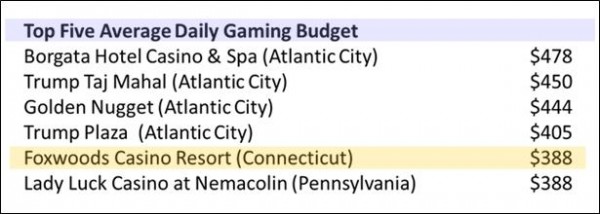 aily gaming budget when going to casinos in the region. Of the 43 casinos evaluated in the study, the highest daily gaming budgets were among individuals that go to the Atlantic City casinos most often, followed by Foxwoods in Connecticut and Lady Luck Casino at Nemacolin Resort in Pennsylvania.
The top five average daily gaming budgets were: Borgata Hotel Casino & Spa (Atlantic City), $478; Trump Taj Mahal (Atlantic City), $450; Golden Nugget (Atlantic City), $444; Trump Plaza, (Atlantic City), $405; and Foxwoods Resort Casino (Connecticut), and Lady Luck Casino at Nemacolin (Pennsylvania), both at $388. Mohegan Sun was further down the list at $324, but well above the majority of casinos. The bottom five, all in New York, ranged from $205 down to $120 average daily individual gaming budgets.
The Average Daily Gaming Budget among those who said they play table games most often was $493, compared with $250 among those who responded that they play slots most often.
The survey also found that the 35-to-44 year old age bracket brings the most money with them to the casino they visit most often, compared with other age groups. 21 to 34 - $334 35 to 44 - $359 45 to 64 - $308 65 and over - $288
Among those surveyed who had joined at least one casino's players club, 41 percent did so at an Atlantic City casino, 31 percent were members of Mohegan Players Club, and 25 percent joined Foxwoods Rewards. Membership overlapped, as some individuals surveyed were members of more than one players program.
Competition To Retain, Attract Frequent Gamblers Intensifying
With Massachusetts moving forward with its casino licensing process, the region will continue to see heightened competition in the coming years. A new casino opened in Maryland last year, and two more are planned in the next three years. The increasing competition is already having an impact on the revenue stream to the state in accordance with longstanding exclusivity agreements. At the end of the fiscal year last summer, the two Connecticut casinos sent a total of $296.4 million to the state, a drop of almost $48 million from fiscal 2012.
Massachusetts’ regulators recently awarded a slot parlor license to Plainridge Racecourse which is just 20 miles from Twin River Casino in Lincoln, Rhode Island. The Massachusetts gambling commission expects to award the license for Western Massachusetts in May, with an MGM proposal for Springfield the only project left in the running after a Mohegan Sun proposal was defeated in a local referendum in nearby Palmer. In addition, two proposals are competing for the license in the greater Boston region, Mohegan Sun in Revere and Wynn Resorts in Everett.
“As competition heats up,  keeping and growing loyalty is going to be key,” said John Antonello, Managing Director of Travel and Leisure Entertainment for Phoenix Marketing International (PMI). “The more perks that are provided, the better.” The trend is for loyalty programs to get “more sophisticated, so they can extend their reach,” Antonello added.
Both Foxwoods and Mohegan Sun players club members indicated a “good level of satisfaction,” with the benefit program currently offered,” Antonello said, reflecting program elements including restaurant dining and shopping discounts, complementary hotel rooms on-site, reserved parking, VIP check-in and special gaming events. Mohegan Sun, for example, offers three levels of benefits to cub members, Foxwoods offers five.
The data offered in the survey also includes cross-tabulations that indicate to which loyalty programs in other industries the club members at specific casinos belong – which can provide individual casinos a road map suggesting which perks might be most attractive to their existing customers. For example, 37 percent of Foxwoods club members are also members of Marriott Rewards, and one-third are members of airline pr ograms, such as Delta, American or JetBlue. Those aspects of the survey are proprietary, and available to clients of Phoenix.
Antonello said that players club programs are rapidly evolving, and are reminiscent of the hotel loyalty programs of just over a decade ago, when they aggressively began adding new perks to retain customers amidst growing competition. “Casinos are now looking for partnerships with other entertainment and travel companies as they go after a broader audience. The trend is to go beyond one industry,” he said. Foxwoods Rewards partners program, for example, now includes discounts at businesses ranging from FTD Florist to Mystic Acquarium and the Connecticut Science Center.
Completed interviews were conducted in December 2013 in proportion to each state’s population and all counties within each state were represented. Phoenix expects to repeat the survey later in the year. Additional information is available at casinoscores@phoenixmi.com
 nd Arizona (26,417).
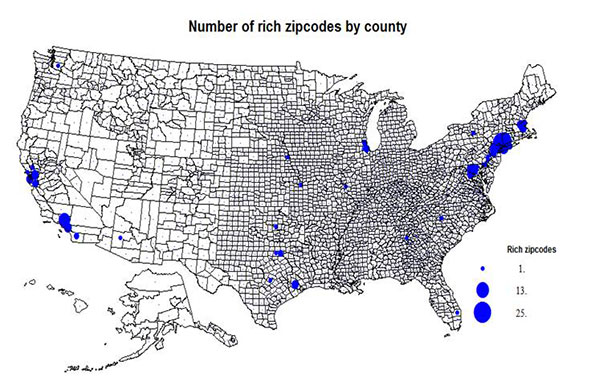
 ation of wealth in the United States is along the Interstate 95 corridor – including in Connecticut, which ranked #3 in the nation.
 reach the top 10.
 uns the Phoenix Global Wealth Monitor, told the
 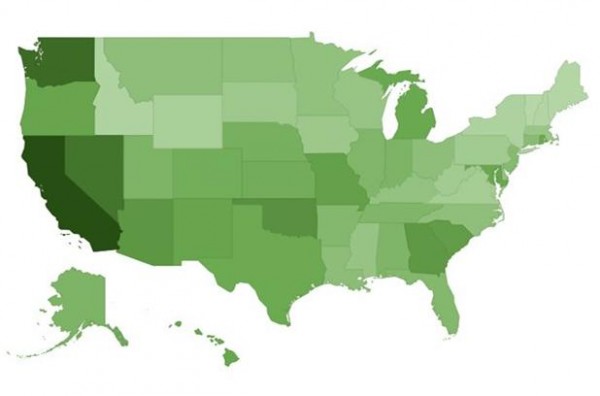 1, but still outdistanced all 50 states.
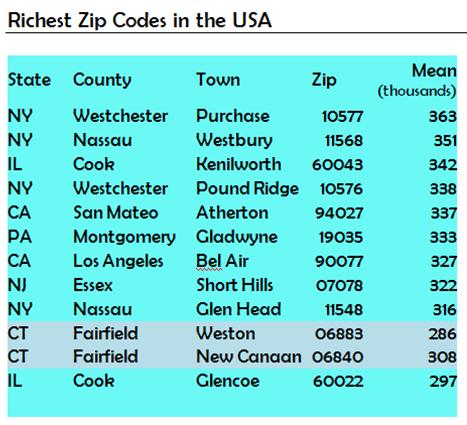 The zip code with the highest and the 4th highest incomes are in Westchester County, close to the Connecticut border. The second richest, Westbury, is in Nassau county, New York, which also has the 9th richest. Also in the New York City suburbs are the 8th, in New Jersey just 20 miles west of New York, while 10th and 11th richest are both located in Fairfield County, according to Richard Morrill, Professor Emeritus of Geography and Environmental Studies at the University of Washington, who outlined his research in
  e income level of the overall population of the zip code. Among the poorest of the inner city poor areas, the data indicated, were in Los Angeles, Waterbury, CT; Portland, OR; and Youngstown and Canton, OH.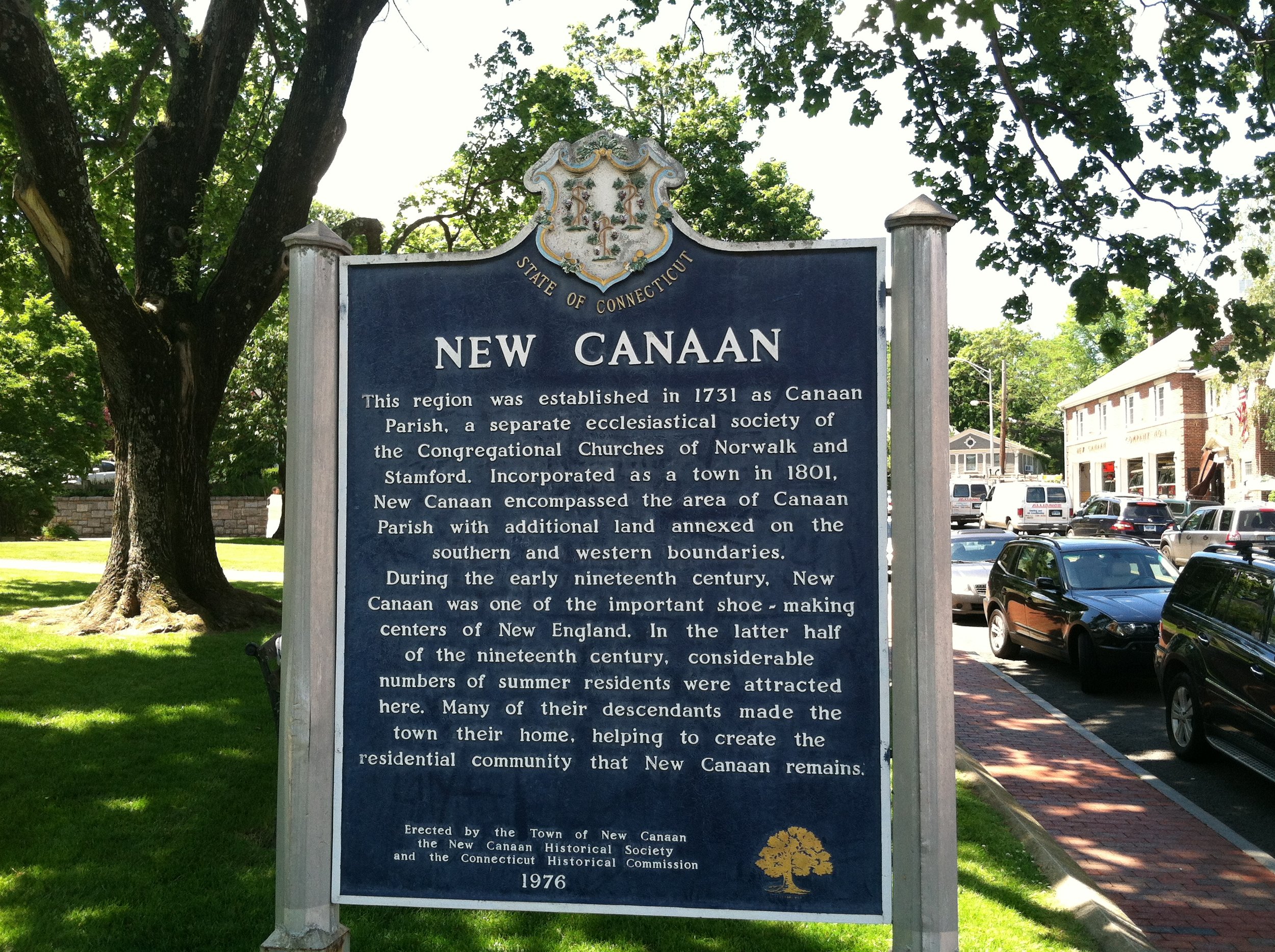
 ent, New London 29 percent, Cornwall, 27 percent, Norwich 23 percent, Meriden 22 percent, East Hartford and Preston, both at 21 percent, Stamford and Kent, both at 13 percent, and Danbury 12 percent.
 92 and 2014. The report, “Introducing the Children’s Budget,” is available on the Connecticut Voices for Children website at www.ctvoices.org
 vation of Place grant program provides a source of funding for new initiatives that can be integrated into, and leverage, comprehensive Main Street preservation and revitalization programs. The funds are meant to be flexible to meet individual community need.
 of Place grant program to twenty Connecticut communities, leveraging $842,727 in local Main Street initiatives. The program receives support from the State Historic Preservation Office with funds from the Community Investment Act.
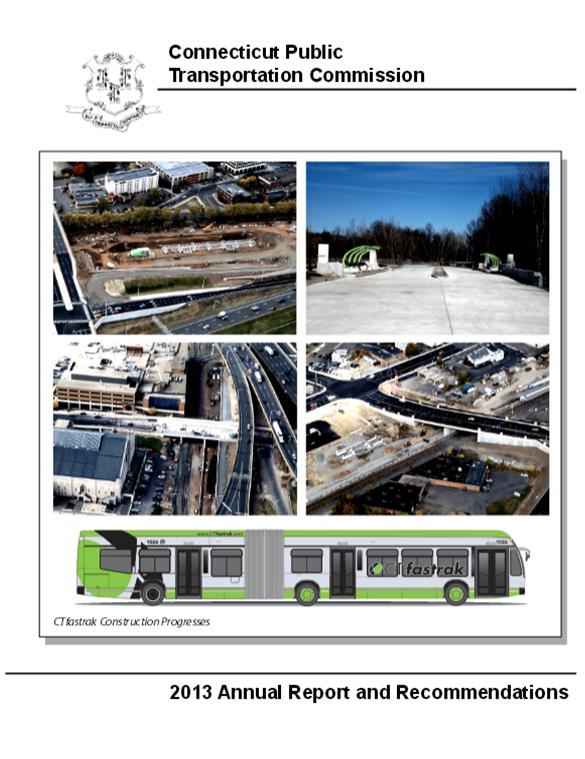 ses running this service are frequently at or above capacity with some occurrences where riders must be turned away. “At a minimum,” the report recommends, “additional investment of state funds would be required to support additional buses to provide a consistent level of services and improve service quality.”
 st Century? Join the
  ker series focused on the first-hand perspectives of leaders making a mark in business and the community. The next event at
  hrive? The Lyceum, Hartford
 7 - An Honest Look at Mental Illness, Connecticut Forum, The Bushnell
 ity to learn about the benefits of collaboration which save money and leverage the purchases and agreements for towns. The event will highlight people that are already implementing positive changes. Panel discussions, workshops and Q&A with key leaders and a panel of experts.
 e rates were in New Jersey, 8.6 percent, New York, 8.8 percent, and the District of Columbia, 9.2 percent. Utah, Pennsylvania, and Hawaii were tied at 9.5 percent.