State's Public Transportation Commission Calls for Service Improvements, Safeguards to Transit Fund
/
With the start of the legislative session, one of the many reports landing on legislators desks include a series of six recommendations for improving public transportation services, developed by the Connecticut Public Transportation Commission and outlined in their recently released 2013 Annual Report. The recommendations, according to Chair Kevin Maloney, “do not call for any major new State-funded initiatives, though some of the recommendations would require incremental expenditures to current projects or services.”
The Commission, a 14-member advisory body comprised of gubernatorial and legislative appointees, and including members from industry and the public, developed the recommendations following seven public hearings in Norwalk, Putnam, Bristol, Orange, New Milford, Enfield and New London, and monthly meetings throughout the year. The Commission:
1. Strongly supports efforts to safeguard the Special Transportation Fund, stating that resources of the fund “must be reserved to address the needs of Connecticut’s roads, bridges and transit systems.” The report noted that:
- transfer of Fund monies to the General Fund deprives Connecticut’s infrastructure and services of these much-needed resources
- the transfer of Fund monies violates the trust that the Special Transportation Fund’s supporting revenues and user fees will benefit the transportation services and facilities upon which those who pay the gas tax, gross receipts tax, fares and license and permit fees rely
- “the continued deferred investment in our transportation infrastructure that the diversion of Special Transportation Fund resources causes will erode Connecticut’s attractiveness and make it harder to compete with other states for businesses and residents”
2. Recommends sustained support for adequate for the continued operation and growth of the Coastal Link bus service, operated by Greater Bridgeport Transit, Norwalk Transit and Milford Transit along the Route 1 corridor, be provided. The line – which the report describes as “highly successful” and “perpetually in jeopardy” due to insufficient funding - carries over 4,000 passengers per weekday and over 1.2 million passengers annually, and the bu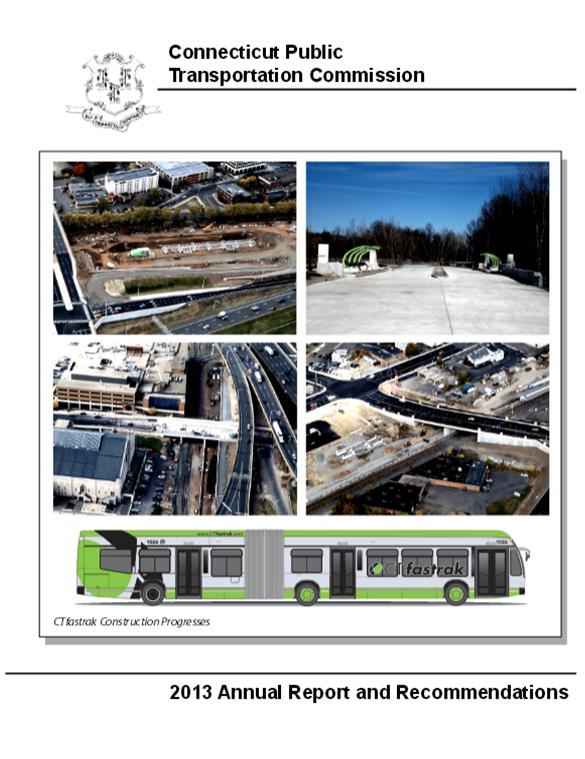 ses running this service are frequently at or above capacity with some occurrences where riders must be turned away. “At a minimum,” the report recommends, “additional investment of state funds would be required to support additional buses to provide a consistent level of services and improve service quality.”
3. Commends ConnDOT for restoring funds to the Municipal Dial-A-Ride program – a “much needed program” that provides mobility to seniors and persons with disabilities across the state, and is “especially important to small rural communities.” Funding had been reduced by 25 percent in 2011, which was restored in the FY2014 state budget, according to the report. Approximately 130 municipalities apply for program funds each year. The report notes that Connecticut is the seventh oldest state in the nation, with the over 65 population projected to grow by 64 percent by 2030.
4. Encourages ConnDOT to apply the techniques used to inform the public about the progress and projected benefits of CT FastTrak (previously known as the Hartford-New Britain Busway) with information on other high profile projects such as the Stamford Transportation Center. The report states that a “more vigorous and pro-active outreach effort...may pay dividends in lessening political headwinds and gain public support for these projects.” Such actions “for other major transit projects such as the New Haven-Hartford-Springfield commuter rail service would also serve both ConnDOT’s and the public’s interests.”
5. Urges State cooperation with an on-going effort by the Housatonic Railroad to develop a privately-run, unsubsidized passenger rail service between Danbury and Pittsfield. With the commitment by Massachusetts of substantial funding for that state’s portion of the project, this proposal is starting to gain some momentum, the report indicates.
6. Recommends “more effective dissemination of information about new and existing transit services,” recognizing that “the public does not have sufficient awareness of and information about existing transportation services to take full advantage of these services.” The Commission indicated that this was a “recurring theme” at the Commission’s public hearings, and called for both high-tech and low-tech solutions. The report noted that “addressing this need can be challenging,” because “ConnDOT has no dedicated marketing staff and no marketing budget,” and “marketing for individual services is often sporadic and inconsistent.” 
Additional topics were noted in the Annual Report as a result of issues raised during public testimony, including:
- the increasing popularity of cycling and the resulting demand for more bicycle amenities and facilities,
- the desire of several smaller transit districts to implement designated and signed bus stops to increase system visibility and assist their riders,
- the need for better communication on train platforms to alert riders as to which track an arriving train will be using,
- the increasing demand for inter-regional bus services, repeated accounts of train fares going uncollected, and
- the demand for bus and rail services which cross Connecticut’s boundaries into adjacent states.
The Commission is chaired by Kevin Maloney, President/CEO of Northeast Express Transportation, Inc. which operates NEXTAir, NEXTCourier and NEXTDistribution. Commission members include Christopher Adams, Richard Carpenter, Morton Katz, William Kelaher, Yvonne Loteczka, Kevin Maloney, Edward McAnaney, Robert Rodman, Kiernan Ryan, Russell St. John, Richard Schreiner, Richard Sunderhauf, Alan Sylvestre, and John Zelinsky. Among the ex-officio members are DOT Commissioner James Redeker, Sen. Andrew Maynard and Rep. Antonio Guerrera.
The Commission continues to meet monthly in accordance with state statute, with the next meeting scheduled for March 6 at New Haven’s Union Station.
 st Century? Join the
  ker series focused on the first-hand perspectives of leaders making a mark in business and the community. The next event at
  hrive? The Lyceum, Hartford
 7 - An Honest Look at Mental Illness, Connecticut Forum, The Bushnell
 ity to learn about the benefits of collaboration which save money and leverage the purchases and agreements for towns. The event will highlight people that are already implementing positive changes. Panel discussions, workshops and Q&A with key leaders and a panel of experts.
 The
The 


 e surveyed in the tri-state area viewed healthcare among the favored sectors for 2014 - 55% “good” in the tri-state region vs. only 45% nationally.
 Connecticut’s high net worth investors, Barber said, are a savvy lot, reflecting greater knowledge of investments than the national numbers reflect, yet more than 7 in 10 say they consult financial professionals. Another clear distinction came in the percentage of investors who said dividend-bearing stocks are a good investment: 49 percent nationally, 61 percent in the tri-state area, and 71 percent in Connecticut. “There are clear indications that Connecticut’s high net worth investors are focused on opportunity,” Barber said.
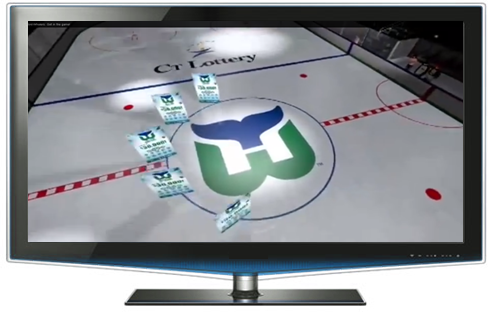 t the 34-year-old XL Center (formerly the Hartford Civic Center, rebuilt after a roof collapse three decades ago). Improvements will include an upgraded videoboard, a new fan club area, renovated bathrooms, concession stand upgrades, a new bar area within the arena bowl, renovated locker rooms and improvements in handicap accessibility. Construction is expected to take place in the summer and be completed by the start of the 2014-15 hockey season.
 e start of the hockey season last fall, and will continue “until the last top prize in the game is claimed” according to lottery officials.
 ed Middlesex County Chamber of Commerce remains by far the state’s largest, with over 2,350 members that employ over 50,000 people. The organization, led by longtime President Larry McHugh, “strives to be the voice of business in Middlesex County and the surrounding area,” according to its
 n Chamber and the Quinnipiac Chamber began to “officially collaborate on all aspects of their respective organizations, while continuing to operate as separate business units in separate office locations.”

 who will discuss topics such as career placement basics, salary and promotions, communication, creating support groups, being culturally aware, finding a work/life balance, and appreciating the value of staying true to oneself in male-dominated fields.”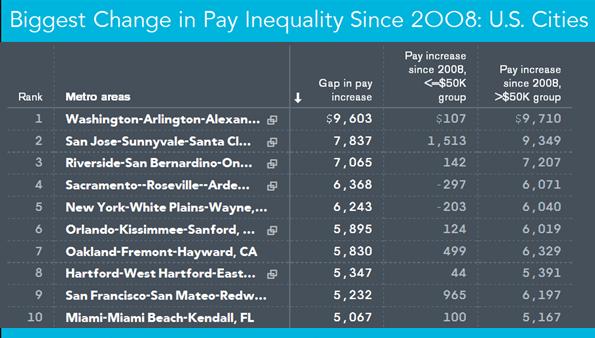
 New York metropolitan area ($6,243), greater Orlando ($5,895) and metropolitan Oakland ($5,830).
 nd nonprofit officials were meeting in Washington, the University of Connecticut, the state’s flagship institution, announced that the number of high school students seeking admission to UConn’s Storrs campus next fall has jumped significantly over last year’s figures, comprising a pool of potential freshmen with even higher average SAT scores and more diversity than previous years’ applicants.
 n in UConn’s commitment to diversity. Officials pointed out that the jump in UConn applications runs counter to national and regional trends in which declines in the number of high school graduates have caused many universities to see their applications and enrollments level off or decrease.
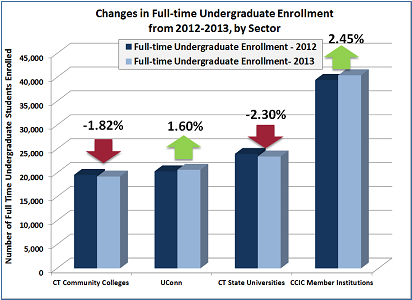
 ment at the community colleges fell 2.1 percent to 56,977, reflecting losses in both full and part time students.
 ll be hosting two upcoming events focusing on the remediation issue, the White House report indicated:
 nd math) curricula.
 wing Marion Kauffman Foundation. The
  Though they start lean, new high-tech companies grow rapidly in the early years, adding thousands of jobs along the way, according to the study findings. In fact, high-tech startup job creation is so robust that it more than makes up for the job destruction from early-stage businesses failures – a key distinction from the private sector as a whole where job losses from early-stage failures turns this group into net job destroyers, the report indicated.
 in the report, observed that “Each of the high density metro areas has one of three characteristics, and some have a combination of them all: 1) They are well-known tech hubs with highly skilled workforces, 2) They have a strong defense or aerospace presence, and 3) They are university cities.”